 Hacker Cinema
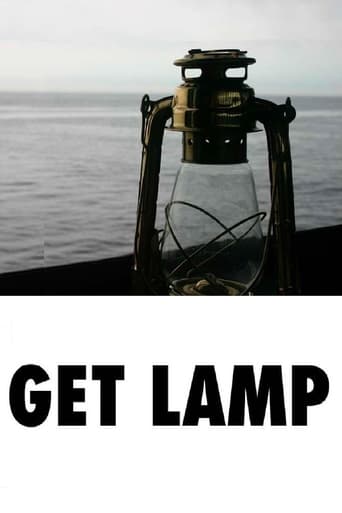
Get Lamp
2010 · Film · documentary · 78 min
Directed by Jason Scott
GET LAMP is a documentary about interactive fiction (also known as text adventures) filmed by computer historian Jason Scott.
25 positive1 negative3 neutralfrom 29 commenters
Where to watch
No streaming data for this title.
35 comments on Hacker News
A Mind Forever Voyaging is much overlooked IMO because it's less of a puzzle game. But it has some of the best writing of the Infocom games. Hitchhiker's is hard--maybe too much so but then I mostly struggled with Infocom games a bit absent over the phone hints from Steve :-)
The Infocom-oriented cut of @textfile 's Get Lamp documentary is worth a watch. (As is the original cut of course.)
MC Frontalot - It Is Pitch Dark:
https://www.youtube.com/watch?v=4nigRT2KmCE
>Front geeked around for an evening in a basement in Massachusetts. It got filmed in HD. Then Jason Scott made a whole video out of it. The song and the video are in service of Jason's upcoming documentary about text adventures, Get Lamp, but you get to enjoy it now. Peek the cameo by Steve Meretzky.
"Get Lamp" documentary:
http://www.getlamp.com/
Trailers:
http://getlamp.welcometointernet.org/trailers/
Full archive:
https://archive.org/details/GET_LAMP_The_Text_Adventure_Documentary
Interviews:
http://www.getlamp.com/cast/
He also made some great documentaries, as I'm sure a lot you guys will know, amongst which:
- Get Lamp: https://en.wikipedia.org/wiki/Get_Lamp - BBS: The Documentary https://en.wikipedia.org/wiki/BBS:_The_Documentary
"For anyone interested, there is a great book ..."
There is also a very well made documentary by Jason Scott[1]:
https://en.wikipedia.org/wiki/Get_Lamp
[1] https://en.wikipedia.org/wiki/Jason_Scott
Garriott explains all of this in the documentary "Get Lamp".
Not books, but Jason Scott's documentaries on the history of BBSes, text adventures and Infocom were really interesting:
Get Lamp: The Text Adventure Documentary (2010): https://yewtu.be/watch?v=zEJXZ2wnO3w
Infocom: The Documentary: https://yewtu.be/watch?v=OXNLWy7rwH4
BBS: The Documentary (2005): https://yewtu.be/playlist?list=PL7nj3G6Jpv2G6Gp6NvN1kUtQuW8QshBWE
Richard is a great contrarian thinker. I remember him from GET LAMP, a documentary about text adventures, and his take on the power of text in games was really memorable: https://www.youtube.com/watch?v=Zctp972y_Eg
He also did a documentary about text adventure games called "GET LAMP" which I enjoyed a lot: https://www.youtube.com/watch?v=LRhbcDzbGSU
I think Meretzky discussed _A Mind Forever Voyaging_ during his interview for the documentary _Get Lamp_.
Some material for those that want to dig further:
1. Get Lamp, a documentary film on text adventures and Infocom, a legendary publisher of test adventure games.
https://en.wikipedia.org/wiki/Get_Lamp
2. Twisty Little Passages by By Nick Montfort. A book applying literary critique to text adventure games.
https://mitpress.mit.edu/books/twisty-little-passages
Garriot talks about this in the documentary "Get Lamp!", which is about the history adventure games. He talks about the challenges of maintaining a huge MMO, especially how they were broadsided by the challenges of managing an economy because everyone was so greedy. He mentions how the admins came to work one day to find that players had killed every living thing on the planet and could no longer generate income. Kinda like a miniature "dark forest" theory.
If you like text adventure games, check out Jason Scott's documentary GET LAMP about the history of text adventure games, including interviews with some Infocom developers:
https://www.youtube.com/watch?v=LRhbcDzbGSU
http://www.getlamp.com/
I am grateful to the MIT AI Lab, whose Tourist Policy enabled me and other lucky people to use MIT's computers for free, and to be inspired by Zork, Logo, Lisp, and all the great people at the MIT-AI Lab and the community they attracted.
https://medium.com/@donhopkins/mit-ai-lab-tourist-policy-f73b77075631
With commands like :WHOIS, :WHOJ, :LUSER, :SEND, :OS, :PEEK and :UNTALK, ITS was the original social network.
In the HN "The Enduring Legacy of Zork" discussion, another tourist ZEMON told me he used the same NBS TIP as I did, to dial into the ARPANET without a password, connect to MIT-DM, :OS spy on other people playing Zork until it was your turn, then finally play Zork while the other people waiting watched.
MIT-DM was like a 300 BAUD ASCII version of Twitch!
Then he got seduced by networking and Lisp -- and he still uses Emacs too!
https://news.ycombinator.com/item?id=15081626
>MIT's friendly, unparanoid attitude towards people using their systems and basically just digging their technology was very formative in my career. Zork was the hook. I came to play adventure games, I stayed to learn Emacs and a bit about networking and LISP. I don't use PDP-10s anymore, but I work in the games industry, use Emacs every hour of my working day, and wish I could write more production LISP (though if you squint at Javascript just right...)
At the lab, the Knight TV displays let you watch anyone else's screen, and there was global "free display" screen saver showing all logged in users, what they were doing, where they were, free Lisp Machines, and other useful information, like the time and birthday announcements. They could also buzz open the door from the elevator lobby, and summon the elevator to your floor!
http://dspace.mit.edu/bitstream/handle/1721.1/41180/AI_WP_235.pdf;sequence=4 (page 22)
https://github.com/PDP-10/its/issues/279
ROBG was interviewed in the "Get Lamp" documentary on Zork, and eloquently described the experience.
https://archive.org/details/getlamp-rgriffiths
>Rob is a perfect example of the benefits of not going just for "names" in a documentary about a wide-ranging subject - nothing on his resume says he was a big text adventure game player or person who was at the beginning of Zork. But there he was, a kid who had gotten into the MIT lab and seen early Zork being played and the effect it was having on the students and computer lab users. He was articulate and provided a wonderful dash of emotion into the descriptions which I used liberally in GET LAMP. He had a number of printouts which I also filmed (but didn't use). Many documentaries wouldn't count "just a player" as worth interviewing - Rob is proof that approach is short-sighted indeed.
http://www.getlamp.com/
I'm surprised no one has mentioned the text adventure documentary "Get Lamp", so I will. http://www.getlamp.com/
Obligatory links to a great documentary on text adventures and infocom:
http://www.getlamp.com
https://www.youtube.com/watch?v=LRhbcDzbGSU
https://en.wikipedia.org/wiki/Get_Lamp
Related: there's a few versions of "get lamp" documentary online (https://www.youtube.com/watch?v=LRhbcDzbGSU) or you can get the movie directly from getlamp.com.
These histories (the maher link above, the getlamp doc, etc) bring back a lot of great memories.
EDIT: the youtube link above looks like it's actually the getlamp movie being shown at a google event, with an audience (audience sounds in there now and then).
Didn't see a link here, so I'll drop one for "Get Lamp", a documentary about text adventures.
http://www.getlamp.com
Thanks! I can always use another good documentary.
In return, I can recommend The KGB, The Computer, and Me, based on the excellent book The Cuckoo's Egg.
I can also recommend all of the documentaries done by Jason Scott (Get Lamp, BBS: The Documentary, Going Cardboard (although he only edited that: He's director on the rest), and DEFCON: The Documentary)
People might be interested in Jason Scott's documentary about text adventures: Get Lamp http://www.getlamp.com/
There are actually two films. The Get Lamp documentary and a recut version that's specifically about Infocom.
The Get Lamp documentary looks awesome. It's CC licensed so you can watch it for free, but they also have some physical DVD copies left with all the extras.
Nope, I'm going to do it, I'm going to focus right on one sentence and ignore all the compliments.
The BBS documentary was shot across 4 years on my own dime (no crowdfunding, my family helped pay for the camera) and traveling to 20 states, from 2001-2004, and then released in 2005. (10 years ago). This means some footage was shot as long as 14 years ago.
"Production Value" is a very specific term - it is almost always used to indicate skill or attention to the final product. All along the way for the BBS Documentary, I had to make choices. Remember, the Canon XL1 I shot with cost me $4000 in 2000, when it was bought. And instead of going with a handful of people, say, under 15, to tell the whole story, I chose instead to interview 201 people. This meant that sometimes in a single day I'd drive to up to 4 different homes, with miles between them, set up all the equipment myself, conduct the pre-interview and interview, and then move on to the next location. In one case I drove 500 miles to grab an hour interview with a figure who had popped up, and then drove back.
This was before DSLR became prominent, before HD was the norm. I could have gotten a full crew, but everything else would have suffered: the breadth of subjects, the locations, the variant voices. It's a choice I'm fine with.
I recognized, after BBS Documentary was done, that I'd want to move to HD, but in 2006, when I started filming GET LAMP, that cost me $10,000. I paid larger numbers for the new movies - $20,000 for the DSLR equipment. (Both GET LAMP and the new films are crowdsourced, based on the reputation of BBS Documentary.)
Choose your words carefully, please. I'll take "Dated", I'll take "SD", I'll take "Videotaped", but please don't imply I didn't sweat bullets over every aspect of the production, and that everything in there wasn't a best-of-all-circumstances choice made with the intent of finishing a project that many (at the time) thought was impossible.
In case you haven't seen it, check out the GET LAMP documentary: http://www.getlamp.com
Many Infocom employees are present in the documentary Get Lamp:
http://youtu.be/LRhbcDzbGSU
Recommended if text games are of interest to you.
If you liked this, you'd probably also like Get Lamp--also by Jason--which is about interactive text adventures in general and Infocom in particular. I'm probably biased because I know a lot of the people in the film but I thought it was great. (And more of a true film than BBS.)
There is certainly a niche for this and the others, but they're probably best served by direct documentaries, like BBS or Get Lamp. They're entertaining and informative and every bit as watchable as a fictionalized biopic.
Although having Douglas Englebart arriving at the mother of all demos on the back of a triceratops would be worth paying to see.
If you're interested in text adventures and their history you should check out the documentary Get Lamp (http://www.getlamp.com)
A great weakness of Get Lamp was not actually sharing what text adventures / interactive fiction are like. There was no content about the experience of actually playing. I showed the documentary to several people with no history with text adventures / IF and afterward they were quite puzzled by the documentary. Almost all of the screen time was dedicated to nostalgia.
_Get Lamp_ was a steller documentary! I pre-ordered the DVD, and had a chance to meet Jason Scott when he came to Denver for a showing. He's an awesome guy, and really seems passionate about creating these niche documentaries that help preserve a bit of computer history.
I've become something of a documentary fan lately, and while I don't have the time, resources, or skill to create them myself, I'm happy that I can at least help financially back projects like these.
And if the "Get Lamp" interactive fiction (text adventure) documentary wasn't long enough for you, there's an archive of the original interview footage of 15 of the subjects http://www.archive.org/search.php?query=collection%3Agetlamp-interviews&sort=-publicdate
I've also heard there's a good rip of the DVD on TPB but I'm not going there at work :)
Well interest in documentaries could be varied by your personal domain of interest. Since you've not mentioned any particular domain, I'll give you a list of the ones I think were great.
1. Century of Self 2. BBC Horizon Infinity and Beyond 3. BBC Horizon Is Seeing Believing 4. BBC Dangerous Knowledge 5. The Shadow Factory 6. Get Lamp 7. Human Experience
Hope that helps.
Here are some nerdy ones:
"BBS: The Documentary" and "Get Lamp" by Jason Scott are a couple great hacker docs, about BBSs and Interactive Fiction Games (though I would have to say they have a more Apple/wintel PC bent over other computers, but still historically interesting). Both have many great interviews with BBS and interactive fiction luminaries.
Tilt - The Battle to Save Pinball, this one covers the trials and tribualtions of Pinball 2000 the development of a digital/analog pinball hybrid. There's also The History of Pinball, its not as fancy but it's interesting.
The King of Kong is slightly entertaining about the world of Donkey Kong high scores and a peek into competitive arcade game competitions.
Revolution OS - About Linux/GNU kinda dry but interesting interviews.
Deathbed Vigil...and other tales of digital angst. Documents the last days of Commodore when it went bankrupt in 1994. I think mainly interesting to Commodore fans or folks who enjoyed seeing commodore fail...
His documentaries (Get Lamp and BBS) are also pretty interesting and well worth watching/purchase.
I for one will make this one torrent that I will perpetually seed until my ISP tries to stop me.
I just got done watching the 2nd DVD from Get Lamp and I was throughly impressed. I'd watched it at PAX East prior, and then the 1st DVD a few weeks ago. The 2nd DVD goes into some excellent depth.
Plus he isn't just making movies, but like you say, preserving history with his massive archives.
While we are on the topic of text games, I highly recommend Jason Scott's (textfiles.com, BBS Documentary) documentary on text adventures: GET LAMP
http://www.getlamp.com/
It might seem expensive compared to the latest hollywood movie but think of it as enabling a computer nostalgist to preserve our history.