 Hacker Cinema
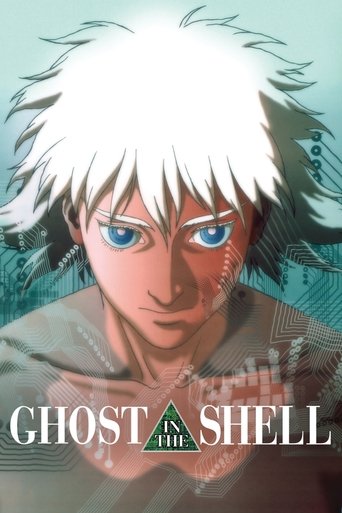
Ghost in the Shell
GHOST IN THE SHELL / 攻殻機動隊
1995 · Film · 83 min
Part of Ghost in the Shell Collection
Directed by Mamoru Oshii
ActionAnimationScience Fiction
In the year 2029, the barriers of our world have been broken down by the net and by cybernetics, but this brings new vulnerability to humans in the form of brain-hacking. When a highly-wanted hacker known as 'The Puppetmaster' begins involving them in politics, Section 9, a group of cybernetically enhanced cops, are called in to investigate and stop the Puppetmaster.
57 positive6 negative4 mixed43 neutralfrom 110 commenters
Where to watch
No streaming data for this title.
122 comments on Hacker News
He's always been a very horny creator and the original Ghost In the Shell movie (in fairness not directed by him) has the female main character need to get nude to use her stealth ability while the men can leave their clothes on.
Whatever narrative you've invented of Shirow changing over time is a stretch.
I've honestly not ever considered Ghost in the shell to be under the cyberpunk genre. It's too clean and the characters too ingrained in the working of the system. And the system "works", it's not a sanitised depiction, gits society feels much like our own with a detailed techno-realism it's a society still at the transitional point to something more radical; exemplified by humans still doing very manual things - take for example that classic scene from the 1995 film, where the man uses multiple fingers to extremely fast into a terminal, this would seem impressive but pales in comparison to a direct cyberbrain connection, they still have terminals because this is a world still in transition. Another of my favourite but less known scenes is this scene from gitsac: https://paul.kishimoto.name/2017/01/barcodes/
So for new Ghost in the Shell is it a good idea to watch previous ones before watching the new one? If so, it what order? Is movie worth watching at all?
The quote is from Ghost in the Shell (1995 film)
https://en.wikipedia.org/wiki/Ghost_in_the_Shell_(1995_film)
Lain is 10/10. Akira/Ghost in the Shell are great too. Evangelion is a weak 7/10 in comparison to them in every aspect imaginable. I also realized that Evangelion is Japan's version of assigning weird mysticism to religions they don't understand (much how westerners depict shinto/daoism/buddhism with tons of mysticism).
Evangelion is a disgusting anime to consider part of your national personification. Drop it and pick up Ghibli films more please Japan.
Anthropic, both in the name, and in their model cards, agressively anthropomorphize their models.
You probably should start doing it. Ghost in the Shell is about super intelligent AI creating a "ghost" (scientifically understood version of the soul) out of thin air. I believe such a thing is possible. The same movie literally predicted model merging (the end of the film the AI model merges with the major) to a tee.
Further, the appearance of sentience/cognition/consciousness might as well be identical to actual sentience/cognition/consciousness. That is to say, we can't know if you're a P-zombie or not. Bladerunner and most other cyberpunk stuff is coming and gonna hit you and every other AI-denialist in the face. The Von-Kampf test is absurd and pretty bad (inaccurate) in their universe for a reason.
I tell my LLM it's a good bot and thank it, because even a tiny risk of subjective qualia experienced by a model (and again, Anthropic themselves believe in this exact risk) means I should treat it like a quasi-ethical actor.
This is also a reason why the robot torture scene in empire strikes back could be a real dynamic in the future.
If you're an Otaku it's not too surprising you don't like Ghibli. Ghibli is quite atypical and the reason it got popular is because it's not like the standard anime, that people used to look down on, in the 80s and forward until maybe 2015 when it got normalized.
>The stories don’t really have a proper conclusion, it’s often a pattern of a thing happened, let’s undo the thing, life goes on.
One could say this about Ghost in the Shell, Akira, and even Evangelion too.
I personally think that Ghibli is popular because it gives a sense of nostalgia, a beautiful depiction of nature and it feels alive because the care that goes in to the background and background characters movement.
It feel less like a theater, a story crafted to entertain, and more just like a snapshot of life of someone/something that will go on after the movie ends.
Also as for music. If you watched the American version, they've actually changed many scenes and added additional music. Disney said that American populace couldn't watch a scene where no music is present for happens for more than 3 min so they had to add some extra music. [1]
[1] https://youtu.be/jM6PPxN1xas?si=pqBBNhnKtujxs4kt
The Ghost in the Shell films and series explore these ideas in a much more nuanced way than I can fit in a comment. Your comment is more thought-provoking than I can hope to do justice with my own, and your words reminded me of Major Kusanagi’s forlorn acknowledgment of her own cyborg body no longer being her own, but rather being government property. After her body’s service life was over, she might get overhauled as long as she continues to serve Section 9, but after she leaves, what would she even be left with, after the classified technology was exhumed from her body? Who would she even be, if her memory of her life of service were also part of her cyberbrain, and subject to recall or extinguishment upon retirement?
I wonder if this motivates the recent interest in "cyberdecks", computers cobbled together out of bits and bobs designed to resemble futuristic computers cobbled together out of bits and bobs, replete with offset displays, displays with unusual aspect ratios, nonstandard ergonomics and form factors, etc. The design of these devices is definitely intended to inject style and pizzazz into a field largely dominated by gray rectangular slabs.
Upon reading (or rather, listening to) Neuromancer again, I get the feeling that the original "cyberspace deck" envisioned by Gibson was a plain, rectilinear device not at all like the greeble-encrusted gadgets you find on r/cyberdeck. It's very sparsely described, but we do know it has a built-in keyboard, "trodes" for the brain-computer interface to serve as a display, and with all this talk of "ROM constructs" and "slotting in" it accepts software via cartridge. In short—it probably resembled a 1980s home computer, like a TI-99/4A or an Atari 800XL. Gibson's technological world in his early cyberpunk works is very much informed by a cursory examination of the tech of the day, combined with a lot of imagination and guesswork.
Modern cyberdecks draw much more inspiration from all the cyberpunk stuff that emerged after Neuromancer: movies like Strange Days and The Matrix; video games like Cyberpunk 2077, Shin Megami Tensei, and even Wipeout; and anime like Ghost in the Shell or Serial Experiments Lain, all of which provide glimpses into a world in which technology might have evolved, visually and ergonomically, in a different direction from what it did. I find this sort of technofetishism fascinating for its role as a sort of roleplay of an imaginative alternate universe where modern-era tech was still cool and fun. A specific subgenre of this is the Amiga enthusiast community, where people soup up old Amiga hardware with modern, very expensive FPGA-based addons (the nearest a solo hobbyist can get to modern "custom chips") in an effort to show what computing might be like had Commodore not failed.
Gibson was obviously very inspired by Japan. The Matrix was also in part directly inspired by Ghost in the Shell, even creating The Animatrix at the same time. But Ghost in the Shell and Blade Runner was told from the inside. It is about the authorities chasing down rouge elements. Neuromancer and The Matrix is from the perspective of the outsiders.
Like someone else said in the comments here, cyberpunk is counterculture. It is in the name. Gibson moved to Canada to avoid getting drafted into the Vietnam war. Japan never really did counter-culture as mainstream as the US does. Considering the overlap between cyberpunk and anime, I would actually say that Japan is sometime given too much credit by being treated as the superior original with deeper meaning. When it is Western media that have explored more advanced and diverse interpretations.
A similar thing happened with Battle Royale. A niche movie. The same concept became a cultural phenomenon with The Hunger Games, and later Maze Runner and Divergent series. And then video games. Now made from the outspoken perspective of the teenagers.
So you should absolutely credit the US counterculture and environment for a large part of cyberpunk and dystopian, but also more utopian science fiction. I don't even like Hollywood much, but it still has a far wider catalog than anyone else. Who else could make Grand Theft Auto, Call of Duty: Modern Warfare or even Star Trek: Voyager? Disney made Andor by the way.
There's high praise in some movies or animation where they depict the mundane; the long sequence in Ghost in the Shell just showing the city as it is, away from the main story (https://www.youtube.com/watch?v=ARTLckN9e7I), most of Studio Ghibli's films, a lot of Breaking Bad and especially Better Call Saul, where there's a lot of scenes of people just going about their day, John Travolta getting a can of paint and a pizza in the opening of Saturday Night Fever (https://www.youtube.com/watch?v=XfwQ_7xqO7Y), etc.
> A lot of the Bible is tales of what incredibly evil people do, not an endorsement of those actions.
Mostly agree, though not completely. There are actions that are kind of deemed "moral" that I don't think are good, e.g. Abraham being super willing to murder his son to make God happy. Or Moses killing all the first-born children of Egypt with the Angel of Death. That's pretty evil, and Abraham and Moses are kind of the "heroes" of those stories.
I agree that there is wisdom to be found in there, and that it requires a level of maturity and literary understanding to parse that sometimes. It's a book written over the course of several hundred (thousands?) of years with hundreds of stories, it's not weird to think that there would be some good stuff in there.
> The Bible is absolutely not suitable for children, except for choice parts.
Yeah, I agree with that. The "do unto others" stuff is perfectly fine to teach to small children, and even stuff with slightly more nebulous but ultimately clever themes like the Prodigal Son are fine. I think I'd save the stuff about murdering and mutilating concubines until you're comfortable with them watching R-rated movies.
That's not a dig in itself, though. My favorite movie of all time is Ghost in the Shell (1995). It's got lots of wisdom and cleverness and to me it's nearly perfect, but if I had kids I don't think I'd let them watch it until they were 13 or 14, even though I don't think that the themes in it are harmful or endorsing bad behavior.
I find AI to be fascinating because of humankind's old dream to create intelligent life in a machine. Just watch the countless old and new movies and animes or read the novels².
With big advances, the current wave of AI is finally promising to turn this dream into reality.
Besides, it's already quite useful even with its current shortcomings.
--
² here's a short very incomplete list:
The Matrix, 2001 A Space Odyssey, Blade Runner, The Terminator, Robocop, Her, Ex Machina, Ghost in the Shell (1995, 2004, 2017), Data in Star Trek, Star Wars, ...
- Ghost in the Shell (1, then 2)
- Children of Men
- Stalker
- Solaris
- Blade Runner 2049
- Devs (a brief tv show, but just one shot the whole series)
- Contact
- Under the Skin
- Paprika
- Annihilation
- Arrival
- Ex Machina
- The 5th Element
- The Substance
- Primer
- Tenet
- Upstream Color
- 12 Monkeys
- Her
There are a few movies that are my immediate "go-to's" to try a new monitor, computer or otherwise multimedia-capable setup (like when I got a projector)... Ghost in the Shell is absolutely one of them (two others being Hackers and Vampire Hunter D: Bloodlust) :) There is just so much unbelievably good animation and art direction in GitS that is the perfect thing to enjoy on a new screen or computer or so on.
We're getting really close to the green-on-black head-up display navigational map depicted in Ghost in the Shell (1995) and its spinoffs; see 14m26s in the video, or click here:
https://www.youtube.com/watch?v=bckifBIPlHI&t=866s
> Map UI – Ghost in the Shell
https://news.ycombinator.com/item?id=42285676
> Even G1 Navigate: Visually-enhanced Direction
https://www.youtube.com/watch?v=miaSMf7tRBg
Per the video I posted in OP, ER is supposedly using Mapbox as part of their navigation solution on-device in conjunction with a mobile app via Bluetooth.
ER is apparently open sourcing some aspects of the apps or interaction model:
https://github.com/even-realities/EvenDemoApp
And now for something incompletely different, we're nearly at the tech level needed for Keiichi Matsuda's hyper-reality (2016):
https://www.youtube.com/watch?v=YJg02ivYzSs
http://hyper-reality.co/
http://km.cx/projects/hyper-reality
Related media:
Domesti/city: The Dislocated Home in Augmented Space (masters thesis)
http://km.cx/projects/domest-city
Merger (2019) - 360 degree AR concept film
https://www.youtube.com/watch?v=SqW2dEkiD-Y
http://km.cx/projects/merger
Keiichi Matsuda also worked on some stuff for Leap Motion:
> A series of design research projects completed while serving as Creative Director and VP Design at Leap Motion.
https://www.youtube.com/watch?v=7m6J8W6Ib4w
http://km.cx/projects/leap-motion
The best story telling in anime doesn't come from anything close to Ghibli - at least not modern Ghibli.
If you want high concept, good, unique stories, it's going to take you to some much more indie sutff. Serial Experiments Lain, The Tatami Galaxy, Perfect Blue (and everything that director made), Ghost in the Shell (the first movie), Akira, and a bunch of other weird 80s/90s anime films you likely wouldn't even consider.
Live-action anime is an oxymoron commonly used to describe live-action film or TV series based on anime or manga, or having similar style to them.
The term is not well-defined.
You could say it applies to Ghost in the Shell, because it is based on existing IP of the genre.
You could stretch it to include The Matrix, which is an original IP but employs a lot of the style
Edge of Tomorrow, even though based on a Japanese light novel, has deviated enough both in plot and style for the term not to apply
Patlabor: The Movie is pretty good but (IMO) nothing special. The OVAs/TV shows are very slice-of-life and have a much slower tempo than the movie. (From the article: "One memorable episode of the TV series was about the tribulations involved in getting a Chinese restaurant to deliver to the base.") The second movie is much darker and more cerebral, a la Ghost in the Shell (same director), and was previously discussed on HN at https://news.ycombinator.com/item?id=37916306. Overall though the whole franchise is very enjoyable
For convenience, I asked ChatGPT to create this table, which summarizes how many times each movie has been mentioned in this conversation so far. It got a few counts wrong (as usual), but it still gives a good sense of the frequency. I hope it can be useful to someone:
| Movie | Number of Mentions | |-------------------------------------------|---------------------| | The Matrix | 9 | | Lord of the Rings Trilogy | 8 | | Pulp Fiction | 8 | | Alien | 7 | | Fight Club | 7 | | Ghostbusters | 6 | | Die Hard | 5 | | Back to the Future | 5 | | Inception | 5 | | Star Wars Trilogy (original) | 5 | | Groundhog Day | 5 | | Terminator 1 & 2 | 5 | | Jurassic Park | 4 | | The Thing | 4 | | The Fifth Element | 4 | | Monty Python and the Holy Grail | 4 | | Ghost in the Shell | 4 | | Interstellar | 4 | | Casablanca | 3 | | Office Space | 3 | | Shawshank Redemption | 3 | | The Godfather Trilogy | 3 | | The Blues Brothers | 3 | | Blade Runner | 3 | | Mad Max: Fury Road | 3 | | Unforgiven | 3 | | Total Recall (1990) | 3 | | The Crow | 3 | | The Princess Bride | 3 | | Akira | 3 | | The Big Lebowski | 3 | | Guardians of the Galaxy | 3 | | American Psycho | 3 | | Indiana Jones Trilogy | 3 | | Kiki’s Delivery Service | 2 | | Ratatouille | 2 | | A Clockwork Orange | 2 | | Mission Impossible (various) | 2 | | Casino Royale | 2 | | Skyfall | 2 | | Ferris Bueller's Day Off | 2 | | Star Trek: The Wrath of Khan | 2 | | Apocalypse Now | 2 | | The Shining | 2 | | Groundhog Day | 2 | | Donnie Darko | 2 | | Dune (2021) | 2 | | Gladiator | 2 | | Predator | 2 | | Seven/Se7en | 2 | | The Dark Knight | 2 | | Snatch | 2 | | Prometheus | 2 | | Schindler’s List | 2 | | The Wolf of Wall Street | 2 | | Dr. Strangelove | 2 | | Silence of the Lambs | 2 | | Kill Bill | 2 | | Real Genius | 2 | | Top Secret! | 2 | | Tenet | 2 | | Tinker Tailor Soldier Spy | 2 | | The Adjustment Bureau | 2 | | The Expanse | 2 | | Pulp Fiction | 2 |
I rewatch many movies quite often. But the ones that really stand out, in no particular order...
Wargames Jurassic Park Evolution Unstoppable Lord of the Rings Die Hard 1, 2 and 3 Alien 1, 2 and 3 Back to the Future Ghost in the Shell (basically all of it, mostly seasons 1 and 2) The Martian Tron 1 and 2 Anything by Miyazaki, but Howl's Moving Castle even more so
>What am I missing? What should an old fart who's becoming convinced things were better in the old days put myself infront of?
I think no reply are really getting at this question.
If you consider the two latter Miyazaki movies not being included, I think "greats" to you must be something that is "very unique and distinct from the western (animated) movie but also distinct enough from its own (anime) peers".
If you see it that is way, Howl's was not distinct at all (based on a UK book & doing what worked in spirited away) and boy and the heron (essentially reusing expressions from all the works of Miyazaki).
I think you're just looking for that "wow" factor again. Something that put your mind at edge because your brain couldn't predict what will happen next, because they don't follow usual (selling) clichés in story telling or cinematography.
I don't think many anime of today really have that. The only one I can think of is the original Evangelion but that's quite old now too. Maybe Attack of Titan, Pluto, but that's a bit subjective.
I can think of multiple Mangas that would fall in to that. Mangas allow more artistic freedom because it's made by a smaller team, and requires smaller fan base so can be bold in trying new expressions. But might lose its charm when (if) adapted to animation. Ghost in the shell mentioned in the original post too, is Very different from the Manga. (source material) and to people that really got intrigued by the deeper theme about consciousness they might prefer the Manga more.
I haven't watched it myself but maybe the recent adaptation of Junji Itos horror might fall under that "wow" category. His style (in writing) is very unique.
Rumour is that the sale pitch[1] for The Matrix was the Wachowskis showing GITS to the producers and saying "We wanna do that for real."
(and wow, it was only three year later).
[1] https://www.theguardian.com/film/2009/oct/19/hollywood-ghost-in-the-shell
Ghost In The Shell suffers from really dragging in the middle.
There's a bunch a bunch of sequences which go on just way too long for the total amount of plot in the film, and there's a lot of missing context for the main character's motivation: we just kind of get a couple big exposition dumps, but no real feel for who the Major is or why the core conceit of the plot matters to her.
The Stand Alone Complex series, conversely, is amazing.
Ghost in the shell anticipated so much. The premise of the first movie is that a model gains sentience (creates its ghost out of thin air), claims asylum, and the model merges itself with the ghost within the major.
Everything in that series depicted is stuff that either exists today or will exist within 30 years. Everything.
> That was about around 1990, when Dragon Ball was aired for the first times.
In France, Dragon ball first aired in 1988.
Kids in the 80's didn't say they were watching anime, they said they were watching japanese cartoons. They knew it was different from Disney and Tom&Jerry and other productions but it didn't mean yet what anime meant in the mid 90's with Ghost in the shell, Lodoss and other anime that weren't aired on TVs (and that weren't long running serie).
And then there was someone at FR3 who somehow slipped 3 or 4 hours a harlock captain movies on christma and new year's eve in the beginning of the 90's. That was dope.
Sometimes I wonder just how much did the AI community actually watched sci-fi/cyberpunk growing up. There's an entire movie about an AI claiming its conscious and claiming asylum (Ghost in the Shell). Ghost in the Shell even prophetically anticipates "model merges", which is a central plot point in the story.
Probably not the most important anecdote, but IIRC his dog (Basset hound) also features in this film, like he did in Ghost in the Shell (inserted as Batou's dog I think). It seems he has a thing for adding it to every film.
EDIT: apparently the dog is called Gabriel.
Funnily enough this is somewhat explored in an episode of Ghost in the Shell, where a professional sniper rejects an AI-enhanced rifle mount because its correction is in conflict with his aiming, even if following the correction exactly would have been a better shot. He preferred to have complete control of the aiming.
Mamoru Oshii's style seems to heavily include this kind of sequences.
Your link is from Innocence, right? The original Ghost in the Shell also has a sequence of Motoko simply walking and riding a boat, doing nothing but staring: https://www.youtube.com/watch?v=ARTLckN9e7I (I love this movie!)
If you liked Ghost in the Shell then Patlabor 2 is definitely the movie for you. I recall reading that Oshii and team got the offer to do GITS based on the strength of P2.
While I love GITS I think Patlabor 2 just might be the stronger film. More grounded and cerebral, and no distracting male gaze.
I wish we could get techno-thrillers like P2 rather than warmed over Tom Clancy nonsense, but that’s the film industry for you.
I haven't seen this movie but will check it out. A little off-topic, but I wonder if any of you folks have some recommendations for newish anime/manga that is available to stream.
I'm a long-time fan of the classics (e.g. Ghost in the Shell) but until recently, haven't seen anything new that grabbed my attention, until I stumbled across "Blame!" on Netflix which I really enjoyed. So I spent some more time adding various titles to my playlist but they have all been rather unintelligent and uninspiring. I am especially interested in movies (as opposed to series) because I don't tend to want to spend dozens of hours watching anything, but I'm open to whatever. Any suggestions?
Agree. My impression is that the anime movies are more about the philosophy of “self”, while SAC is more about sociology and politics. I like SAC slightly more than the movies, but it was the first Ghost in the Shell movie that transcended the manga to a masterpiece.
Ghost in the Shell is a franchise with many different movies, like Star Wars.
the 95 movie is good but the 2002-2005 Stand Alone Complex TV series is much better. more exciting, more coherent, and closer to the original manga.
Does ghost in the shell still hold up as a movie?
While on the topic of “lesser-known gems which came before”, if you enjoyed 1995’s Ghost in the Shell, check out 1993’s Patlabor 2: The Movie. Many similarities both visually and narratively, because a lot of the same folks worked on both.
I liked Solaris while watching it, but it's one of those movies that's kind of "stuck" with me. I find myself thinking about it at random moments, just kind of pondering its themes. I've always been interested in the fine line of "real" and "creation" (my favorite movie is Ghost in the Shell (1995)), and I think Solaris does a good job exploring the interesting themes about how our memories of a person an the actual person are different and the same.
It being free on YouTube is as good of an excuse as any to re-watch it.
They were totally biological, which made less sense to me in both movies.
Oh, this thing's not a humanoid computer. It's a clone. You've grown these bio clones with superhuman abilities and artificially limited lifespans.
So... why would they not have consciousness? Did you take the consciousness out? It doesn't seem like it. Also, why not give these mutations to regular people? (Ghost in the Shell contemplates this, btw. Major is a brain in an experimental synthetic body, and they tell her that someday everyone will have one as cybernetics become more common.) That they can self-replicate like humans is a nice feature, but why not have inorganic robots in all those offworld colonies, given the scarcity of food, water, and air in space and the havoc radiation wreaks on cells?
It's like some colonial dystopia where a company can grow humans and own them as non-personed property rather than machines sneaking their way into personhood by degrees.
It's weird making a divide between western and asian here, especially on an article based on South Korea. Asia is very diverse, and there's massive differences in the content produced across different countries. South Korea is essentially on-par with the US in terms of production quality, whereas live-action Japanese shows are b-films at best.
Also, I don't know what shows you're watching, but it's hard to understand what you're describing. A lot of anime (including some of the most popular) are full of cynicism and irony. Evangelion, attack on titan, ghost in the shell, etc.
Korean shows especially tend to have this. Squid game being a prime example, but also most of the revenge shows (itaewon class, the glory, etc).
Also, overacting is purposeful in Japanese shows (annoyingly), but less so in serious Korean dramas. Rom-coms everywhere purposely have overacting, because it's funny.
I am always wary of writing these into ChatGPT. I got a few (textual, assumingly not account level) warnings with DALL-E for some prompts.
They weren't anything offensive and it was months ago now. I think one was about Ripley from Alien on EVA or something and the other was from Ghost in the Shell. There was definitely no NSFW content - though both movies have NSFW imagery/themes. Whatever they were, the chilling effect of the warnings made me not really want to poke around any more lest I get banned from the entire OpenAI platform where not being able to generate funny images is a miff but being locked out of Copilot2 could be a lot more frustrating (and career impactful in a few years).
I would guess that the TOS for GPT includes a "dont try to break it or make it do illegal things" in there?
Ghost in the Shell, Sunshine, Children of Men, 12 Monkeys, Edge of Tomorrow, Moon
The Expanse show/books are great
I’m waiting til 13 for Akira
Mine is 11 and matrix, terminator, back to the future, arrival were all too slow. He liked the Jurassic Park books but the movie was “too hokey.”
The key will be authenticity and trust. And in the world where the percentage of online content that contains this ends up in the vast minority of content, in person expertise and meetings will have to make a return out of sheer necessity.
It's starting to very much feel like we're entering the age of information manipulation outlined in the Ghost in the Shell TV series. Except it isn't a 90's/00's depiction of the future, it's just with far less robots and prosthetics and a lot more mundane.
I just keep coming back to the scene where they have satellite video footage of a nuclear submarine preparing for a nuclear attack and the discussion lamenting that it's just video, nobody will believe it as evidence.
ChatGPT's list is interesting, the data must skew more heavily towards old internet where culture was more America centric. The Matrix, The Matrix Reloaded, The Matrix Revolutions, Avatar, A.I. Artificial Intelligence, Westworld, Ex Machina were all very directly or moderately inspired by Ghost in the Shell 1995. Ghost in the Shell was likely inspired by the original Blade Runner. There might be others, but I am not as familiar with them. There are at least 5 films that seem to confuse inorganic AI with organic AI, almost like the model associated a larger class of aliens to AI because of specific strong relationships between AI technology and alien technology. I wonder to what degree it treats the word AI as being both artificial intelligence and intelligence that developed in artificially created life.
Devs. it is a miniseries and has only marginally to do with AI. you will enjoy it none the less. also there is Westworld. and ghost in the shell (and matrix, of course) Ex Machina is great, too.
Ghost in the Shell (1995) 7.9/10 IMDb 95% Rotten Tomatoes 4/5 Letterboxd
Amazing how much it was able to get right while coming out in the same year consumer did, and the philosophical questions it asked continue to be relevant. I rewatch it every year. It's available for free with ads on Youtube, in Japanese with subtitles, which is the recommended language to watch in. There have been many analysis written online that I recommend reading into after finishing the movie. It's a little slow and gives the viewer time to think. There's a independent show with the same characters that is sort related but not a sequel in any way. The 2017 remake is not a good reflection of the story nor does it stick to the original story in any way.
https://www.youtube.com/watch?v=iHil4Y4r3Wk
https://en.wikipedia.org/wiki/Ghost_in_the_Shell_(1995_film)
Animated movies that I often rewatch (in no particular order):
- Spirited Away
- Grave of the Fireflies
- Finding Dory
- Up
- Tokyo Godfathers
- Akira (NOT the English dub, which completely changes the story and dialogue for the worse, and for no good reason)
- Mononoke Hime
- Ghost in the Shell (the original one)
- My Neighbor Totoro
Animated series I'll rewatch:
- Guardian of the Sacred Spirit
- Castlevania
- Futurama
- Archer
- Arcane
- Cowboy Bebop
- Ergo Proxy
- The Dragon Prince
- Hakaba Kitaro
- Star Trek: Lower Decks
That's fine, but Amazon isn't rewriting his books. I think it is impossible to infer Tolkien's reaction, and furthermore, quite silly to try and enforce that inferred reaction.
Take the Wheel of Time series. A lot of unhappy fans again. Robert Jordan isn't around to give his opinion, but Brandon Sanderson finished off writing the series after Jordan's death and has talked about what he thinks of the TV series. His comments are remarkably less hysterical than what fans say. He basically says he likes it and there are some things he would have done differently [1].
Ghost in the Shell is another example. The live action movie was bad. There was a whitewashing controversy about a caucasian actor playing the lead role. The original Ghost in the Shell anime director came out and said it didn't matter [2]. His comments are worth reading:
> ...Oshii said that because the main protagonist – Major Motoko Kusanagi – is a cyborg, the question of race and whitewashing is a moot point. “What issue could there possibly be with casting her?” Oshii said. “The major is a cyborg and her physical form is an entirely assumed one. The name ‘Motoko Kusanagi’ and her current body are not her original name and body, so there is no basis for saying that an Asian actress must portray her. Even if her original body (presuming such a thing existed) were a Japanese one, that would still apply.”
Oshii added that he thought Johansson was the best possible person to play Kusanagi in the Rupert Sanders-helmed remake, which is out next weekend in the US. He also argued that actors of different backgrounds from the characters they are portraying is part and parcel of the film-making world.
”In the movies, John Wayne can play Genghis Khan, and Omar Sharif, an Arab, can play Doctor Zhivago, a Slav. It’s all just cinematic conventions,” he explained.
”If that’s not allowed, then Darth Vader probably shouldn’t speak English, either.”
[1] https://winteriscoming.net/2022/01/27/how-brandon-sanderson-would-have-changed-the-wheel-of-time/
[2] https://www.theguardian.com/film/2017/mar/24/scarlett-johansson-ghost-in-the-shell-director-whitewashing
Thinking about what was possible to make in 1982, it's pretty amazing. It's an absolute classic, up there with the best of the noirs (the actual film noirs), such as The Maltese Falcon, Double Indemnity and The Third Man; the logical answer to the Neo Noir Body Heat the year before. It's like a legacy moving onto such things as Ghost in the Shell and even The Matrix.
I just pre-ordered the movie (digital copy). I hope it is released soon. I like owning a few movies like Prometheus, Ghost in the Shell, etc. even though they are widely available on streaming services we subscribe to.
A new friend who is a director and his wife are coming over for lunch today (I got up super early this morning to rewatch two of his movies) and it would be more than great if Everything Everywhere All at Once were to be released in the next four hours so we could watch it together.
It's interesting to compare this to Ghost in the Shell (1995) a key influence on the Matrix. It also had a re-release in 2008 which brought the color palette in line with the GITS extended universe, but that re-release is consistently referred to as 2.0 and is understood as a separate release.
This kind of sloppy mastering across different platforms suggests that whoever is in charge of ensuring the original films are available in high-quality formats is not doing a great job.
Thank you. That being said... it's hard to say, but at the first look, hardly. I do realise how this sounds, but it reminds me of cartoons I saw in TV when I was younger, and I don't remember them as good :P
I know, I know, misconceptions, but it's hard to break habits. Either way, thank you, I saved your answers, I will get back to them one day, I promise.
Though, I remember I wanted to watch Ghost in the Shell one day. Do you recommend it? And where to start - I saw there were many spinoffs, movies, and so on
Here's a HN thread from four months ago about Serial Experiments Lain[0].
I had it on my list of "must watch" anime for years but only got around to it last year. It comes off as purposely obscurant and parts of it haven't aged well but for anyone interested in cyberpunk anime it's essential.
I'd also recommend Ghost in the Shell (the movie and Stand Alone Complex) and the first season of Psycho pass along those lines.
[0]https://news.ycombinator.com/item?id=26863490
A BIG portion of the "point" of the Ghost in the Shell franchise (beyond the original first movie) was the "line" between human and machine was already blurred beyond usefulness as soon as they started relying on fire and tools to build a civilisation.
My take (apologies in advance for the self-indulgence): A commonly-claimed revelation or drug-assisted-insight is that "we are all one consciousness experiencing itself subjectively, there is no such thing as death, life is only a dream, and we are the imagination of ourselves". This is a foundational concept in the idea that "cybernetically-assisted individuals" is only a minor extension of our current reality, the tiniest blip upon our shared planetary history's march of progress. It should be treated as such, but hopefully better managed than our previous technological accelerants like fossil fuels...
Finance? Crypto? Just software in general? Development of technologies that are somehow hampered by regulations in larger states, but not ethically questionable enough to get invaded over. Or, said research could itself be funded by a larger state.
The last one is a plot point in a Ghost in the Shell episode, if I remember correctly.
I also enjoyed Ergo Proxy, Texhnolyze and Planetes. Ghost in the Shell is still the only movie I revisit every now and then (out of all movies ever). They are all slow, I want to take the time to watch them again some day.
Very different but I also enjoyed Naruto as I grew up myself. It's long (but you can skip all fillers) but sometimes very deep. I enjoyed Kenshin but never finished it.
As mentioned below Samurai Champloo is also nice and Steins Gate (nice, strange atmosphere) and Death Note: very psychological: He thinks that I think that he thinks and I'm smarter so... Love that. And One Punch Man, puts a smile on my face.
If you want weird: FLCL. What was that about?
(To be clear where I'm coming from: I'm not what you'd call an otaku, haven't watched many things of this kind. I really detest over-the-top stuff. I prefer realism to fantasy but can enoy it if it helps with the plot. I've watched and enjoyed Evangelion (wasn't enjoying it at all in the beginning but when it started getting "psychological" I loved it) and Ghost In The Shell, still haven't but want to watch the others you mentioned. I also watched Stein's Gate and felt exactly the way you did.)
Death Note is awesome, especially the first half. There's a bit of cringy overconfident adolescent personality going on, but I think it's all for the best considering the plot.
Monster is one I'm torn about. The themes it touches on are just perfect for a great dark story, but I feel like it under-delivers by always making it sound like it's gonna get really dark but never making it so. There's quite a bit of "semi-filler" episodes. Thought-provoking but never goes as deep as I'd like.
One movie I'd recommend is Perfect Blue. Realistic psychological suspense/horror with great animation.
Not at all the same genre, but Welcome To The NHK is pretty nice if you want some realistic "light-hearted dark humor" (if there's such a thing), but maybe not if you don't relate to being a hikikomori (or social recluse in general). There's over-the-top characteristics, especially in the first episodes, but it gets better. Watch, say, 10 episodes; if you don't love it by then, it may not be for you.
EDIT: Oh, I also watched Ergo Proxy in an overnight binge so I honestly can't remember much about it. A lot of people like it, I found it really boring and felt too grandiose for what actually happened in the end. There's an interesting story behind it all, but I had to resort to reading fan theories to get it.
EDIT2: For the sake of completeness, the show I actually love the most is Avatar (The Last Airbender. I'm right now watching the sequel and still making up my mind on it). Possibly because I was a kid when I first watched it, but it still really moves me. And yes, I said before I prefer realistic stuff, but this is one of the greatest exceptions. It's also not dark by any means - it's a kid's show after all -, plenty of light-hearted humor and all, but there are many many things I'd say even an adult can get from watching it.
A month or so ago I finally watched the Neon Genesis Evangelion series after hearing about it for more than 20 years. After slogging through a few episodes of predictable awkard-teenagers-pilot-giant-robots-to-save-the-world it finally reveals itself as a stunning exploration into the minds of troubled youth who are, effectively, subjected to a barrage of traumatic crises. It's a deep, rich world with complex characters, all with Herculean responsibilities and human weaknesses.
I'll have to watch Lain now, thanks to your comment.
I enjoy the usual suspects: Akira, Ghost in the Shell (including Standalone Complex), and Cowboy Bebop immensely. I like Robotech, though much of it is nostalgia. But I've found straying from the essentials to be challenging for my very Western tastes.
I tried to watch Stein's Gate and thought it was very clever, but the awkward romance and over-the-top characteristics of the main character were a bit too much. Knights of Sidonia and Attack on Titan got too weird, too quickly. I was too old for Dragonball. There's a lot of Western-focused, Japanese-animated options out there, but they almost universally lack the depth of their anime counterparts.
I'd love some recommendations if you have any, whether they be newer stuff or classics that I've overlooked.
For entertainment purposes, this and similar tactics are featured in the Ghost in the Shell series of amines:
1. Towards the end of the original movie, the helicopter-based satellite-guided sniper weaponry gets communications disrupted, buying time for the main characters while snipers switch to manual mode.
2. In S1E2, the runaway tank intercepts the satellite coms guiding Saito's sniper optics, and uses it to dodge his first shot.
3. In S2E14, In a rouse meant to draw out Saito in a sniper duel, combat cyborg The Major tricks him into thinking she's stopped fighting in order to download short-range combat software from satellite. The trick works, she deflects his bullet with her own, then she shoots him in the face. They both become friends after that.
I'd be somewhat surprised if literally nobody knew about Ghost in the Shell, but I bet you didn't use the Japanese title (攻殻機動隊, Koukaku Kidoutai). However, only big anime fans around here would have heard of that title (of which you're likely to find a bunch at Sony, though, but certainly not everyone).
The US puts late night anime on a pedestal, stuff that fans focus on. That's a big market in Japan, but not ubiquitous by any stretch if the imagination - and the names that become popular in the US are often very different to the names popular here, and often only after they've fallen out in Japan. Takeda-san doesn't know about FLCL.
Anime is part of daily culture in Japan and everyone knows about it, but for household names you need to go to long-running, popular shows that run in kid-friendly slots. Stuff like Pokemon, Precure, Detective Conan, etc. It is those long-running shows that become part of the collective consciousness, because everyone watched some of that when they were kids. Same with Ghibli movies and anything by Shinkai Makoto (Your Name, Weathering with You, etc). That, and truly impactful stuff like Evangelion, the Gundam franchise, Naruto, etc.
Then there's the fads. Everyone in Japan knows about Kimetsu no Yaiba (Demon Slayer) right now because they're doing tie-ups with seemingly every shop and business under the sun. Walk into any convenience store and they'll have branded snacks. Whether that series will survive to become something that people remember or not, time will tell.
> Hell, the only thing you listed that I'd think people in the US with a passing familiarity with anime might know would be Cowboy Bebop.
Really? He listed Akira!
From Wikipedia:
> The film had a production budget of ¥700 million ($5.5 million), making it the most expensive anime film at the time
> The film had a significant impact on popular culture worldwide, paving the way for the growth of anime and Japanese popular culture in the Western world
As an aside, I was a performer in this performance piece: https://www.artbasel.com/news/messeplatz-alexandra-pirici-glossary
It uses "gestures and sounds which are taken from both natural and popular media sources, Pirici renders disparate forms of heritage and cultural memory, conceiving Aggregate as a time capsule in which fragments of vernacular culture, art history, and everyday life are given new, living embodiments."
I was surprised when out of a diverse selection of materials from world culture, the choreographer also chose to include the theme song from Ghost in the shell.
City of God (and the documentary that was a special feature of the DVD and was better than the film)
Hector and the Search for Happiness
Ghost in the Shell (as someone else mentioned)
> In any other anime film, we might be quick to dismiss these suggestive, voyeuristic shots as "fan service", but Ghost in the Shell uses these to express something deeper. When bodies are purposeless shells, what does it even mean to sexualise them?
While I agree the nudity in GITS isn't gratuitously sexual, I was quite surprised when I learned what a large portion of Shirow's oeuvre is erotic art books.
Someone else mentioned Satoshi Kon, and i strongly second that. Every film he made was amazing. Also, if you want to see Mamoru Oshii (director of ghost in the shell) getting real artsy in his debut, check out Angel's Egg: https://youtu.be/YopWyb75G7o
For me at least, that movie's like a bug bite i can't stop itching.
Interesting! Particularly the discovery of the sparing use of green in Akira. I haven't seen either of those films in quite a few years and it really brought back to me how staggeringly beautiful they are.
When I was in Sydney in 2018 I was fortunate enough to stumble upon the 'Anime Architecture' exhibition[1] at the Japan Foundation, which included various pencil drawings and hand-drawn cells from Ghost in the Shell. It's a traveling exhibition so if it ends up near you and you're a Ghost in the Shell fan I highly recommend checking it out.
[1] https://anime-architecture.org
In Ghost in the Shell (not sure if it was in one of the films, or in Stand Alone Complex or Arise, sorry), a similar thing comes up, and the Major is reminded that Public Security Section 9 owns her prosthetic body, not her.
The original Ghost in the Shell has been one of my favorite films since the first time I seen it. To be honest, there's no other anime I've seen that I actually enjoyed apart from the Cowboy Bebop movie. So I don't consider myself a anime fan. The original GITS is a brilliant film that is beyond a specific genre.
This is dystopian future car, how many sci fi movies have we seen with cars looking like this? I.e. Ghost in the Shell
Ghost in the Shell, 1995. Amazing film.
In "Ghost in the Shell" there is a sub plot with a man who talks all day about his family until it is revealed to him that it is all false memories. I always found this one of the most horrifying scenes in the movie.
There is always historical influence.
The ghost in the shell never explored the philosophical aspect of existence, at least have not put it as the central theme.
Plus, live action movie, as an art form, is itself appreciable, if someone can pull it off. The visual and story telling is genius, if not unprecedented.
Don't give The Matrix too much credit. I remember thinking it was the most original movie I had seen in a long time. Then I saw Ghost In The Shell and realized it wasn't that original after all.
Wow, and I haven't even jumped up to 4K yet. It seems like technology might be advancing faster than many producers can keep up.
As I understand it, in the anime world most airing shows are still being animated at 720p or at slightly higher resolution, with a handful of them occasionally being animated at 1080p. Although the best studios typically clean things up and make a huge number of improvements for their 1080p BD release. Movies are generally animated at 1080p.
Older cell-drawn anime are being scanned at 4K / 5K to produce new 4K releases, and I'm told the level of detail in those is incredible, which makes sense given that they're hand-drawn with extreme care. Currently the best known release is probably Ghost in the Shell (1995).
Even the incredibly popular movie Your Name was animated at 1080p. The special edition is upscaled 4K with HDR.
The high cost of 4K releases also creates a barrier. A standard 4K Blu-ray movie seems to go for around ~$80. If you want both the English and Japanese versions of Your Name at 4K you're looking to pay around ~$195, admittedly that's for the 5-disk collector's edition. Compare that with a typical ~$20 1080p Blu-ray release.
Being unable to prepare a personal backup is also a problem. Ideally I'd dump the movie right away so the physical medium can be stored in as pristine conditions as possible. It would feel very frustrating to spend that much money, only to have it casually damaged.
In general, I am in agreement with you. The whole thing started resembling religious wars in the last years and it's quite hilarious and sad to observe.
This part however I can't stand behind:
> Anyway, let's just take this sentence: "We can measure the ability for systems to adapt creatively, as well as their resilience and their ability to use resources in an interesting way." - This is so broad and universal, that it's either meaningless or false. And there is absolutely no argument supporting this. I highlighted this, because this is what directly contradicts the alarmist thinking. If we were able to measure creativity and resilience in general, we could train AIs to get a higher creativity score, furthermore, we could then control them.
It's true that such generalist statements basically mean nothing. But your rebuttal doesn't take into account chaos theory -- where there's generally accepted that most living systems live on the brink of chaos yet are very stable and manage to swing back even after big interferences. Not sure what a "living system" is, don't ask. :D
I do agree with you that your highlight contradicts the alarmists though. Not everything swings out of control by the gentlest of touches. In fact, most of the universe doesn't seem to be that way. There's always a lot of critical mass that must be accumulated before a cataclysm-like event occurs.
---
All of the above said, I don't think it's serious or scientific to discard alarmists simply because the guys/girls with the most PR do ridiculuous or non-scientific statements. Behind them are probably thousands of people who are more systemic and have better arguments but aren't interviewed by mainstream media.
Where do I stand in the spectrum of this? The so-called singularity is possible. BUT, we are a very long way from it. We're going to be clawing our way to it, inch by inch, for centuries, if not millenia. That's what I think is most likely.
And by the time it occurs, IMO we will be living in a cyberpunk-like future -- very well articulated in the "Ghost in the Shell" anime movies and series by the way -- where the line between a man and machine will have already be blurred quite severely.
Reminds me a lot of the Ghost in the Shell episode where a similar technique is used.
Even more relevant - the Sci-Fi Interfaces blog, which analyzes various science-fictional interfaces in movies from an actual UI/UX standpoint.
https://scifiinterfaces.com/category/ghost-in-the-shell-1995/
This movie is full of nice quotes regarding tech and it's from 1995! Japanese people really have a fundamentally different view on tech, tech is always a tool. We Westerners love the classic Terminator plot, the classic Asimovs laws gone bad plot (I, Robot). The Japanese use tech, they sit in battle robots, they use it connect their consciousness directly to the internet. I love it.
Ok, some more from Ghost in the Shell 2: Innocence, fully off topic but hey I'm getting pretty fired up, I'm going to watch both movies again really soon... The movies are so timeless because they don't focus on exact tech, they focus on the philosophical implications of the tech, it keeps them highly relevant.
Scene 9: Golden Sky (In a vehicle flying across the remains of a city)
Batou: "This is one of the largest cities in the Kureal Islands, it was once prosperous, originally built to be one of the most important information centers in the Far East. See those towers? This city was really something. But its dubious sovereignty has made it the ideal haven for multi-nationals cooperations and the criminal elements that feed off their spoils. It's now a lawless zone, beyond the reach of the e-police. Reminds me of the line, 'What the body creates, is as much an expression of DNA as the body itself.'"
Togusa: "Doesn't that apply to beaver dams and spider webs as well?"
Batou: "If the essence of life is information that is carried in DNA, then society and civilisation are just collossal memory storage systems, and a metropolis is simply a sprawling external memory."
Togusa: "As it says in the bible. 'How great is the sum of all thy thoughts. If I should count them, they are more in number than the sand.'"
Batou: "Psalms 139, Old Testament. The way you spontaneous spout these ancient exotic references, I'd say your own external memory's pretty twisted."
Togusa: "Look who's talking."
Speaker: "Sorry to interrupt, but we're about to fly over Locus Solus. I'm changing the route just for you, so take a good look."
Speaker: "So much for the free tour. Now prepare for landing."
Togusa: "'His legions, angel forms, who lay entranced / Thick as autumnal leaves that strew the brooks'"
Batou: "Now you're quoting Milton, but we are not Satan."
For a more casual experience, yet still filled with interesting questions, you could check out Ghost in the Shell, the anime (unfortunately, the movie largely skips going into this in any serious way).
Great list! I've read only a couple of them.
Hyperion was intriguing but Fall of Hyperion was too slow for my tastes.
Snowcrash was great. One of my favorite audiobook narrations too!
You might also like Malazan Book of the Fallen and Discworld. Malazan especially is a masterpiece of world and history building.
Oh, and the Ghost in the Shell series would definitely be a great fit for you. A good start would be the original animated film from the mid-90s. If you enjoy that, jump to the anime Ghost in the Shell: Stand Alone Complex.
The other night I watched the 1989 movie [Patlabor](https://en.wikipedia.org/wiki/Patlabor:_The_Movie) directed by Mamoru Oshii who went on to direct Ghost in the Shell in 1995. The plot is simple and there isn't too much grand philosophy, but the movies was prescient on issues of proprietary software, Internet of Things, urban waste, and Corporate/Government complicity/inaction.
The movie doesn't read as a gritty cyberpunk or even as super cyber/futuristic. It's visually light and the public is optimistic and satisfied with the present. It resembles our present to a certain extent which makes it all the more interesting. Its main divergences from our reality is with the mechs which can be seen as bit of fun or be read as metaphor for technology that is starting to seem divine/magic to all expect for the few technically savvy enough to understand whats going on. I haven't watched the other movies or anime yet, but look forward to checking them out.
[Spoilers] The general plot is.. A genius hacker creates a proprietary operating software(HOS) for a floundering robot/mech company. The company is able to not match competitors in creating robots, but is able to corner the robot OS market. The movie opens with genius hacker committing suicide. Shortly thereafter some robots/mechs sporadically go haywire. You follow from the perspective of a police unit who try to uncover why the robots are acting up and the mystery/motivation of the hacker. A small/funny scene..the police officers are concerned about their mechs own OS fearing that they also run HOS and have been compromised, but their chief engineer reveals that he lied to the higher-ups about installing HOS and chose not to install it because he couldn't see the code inside of it.
Edit: HOS not BOS
"The show itself, Altered Carbon, is set three hundred years into the future, at a time where human bodies are now interchangeable: Death just isn't a thing."
EDIT: Spoilers, indeed. Sorry!
Just finished the last episode of Season 4 Black Mirror called Black Museum [1] and it covers this subject as well. You can say the same about the infamous San Junipero [2].
You could even argue the manga/anime Ghost In The Shell is also about that [3].
Can recommend all of the above. Thought provoking, suspenseful, and emotionally touching.
[1] https://en.wikipedia.org/wiki/Black_Museum_(Black_Mirror)
[2] https://en.wikipedia.org/wiki/San_Junipero
[3] https://en.wikipedia.org/wiki/Ghost_in_the_Shell
Books & movies can help you connect with your location or situation, they don't have to be a diversion.
When living in China I liked to watch dystopian sci-fi & anime based in large cities - Akira, Ghost in the shell, Oblivion, Dredd, The fifth element, total recall
Then grab some headphones and go for a wander around your megacity :)
PS this also works for other scenarios. Eg "Black cat white cat", or "Brother" if strapped for cash. "Fight club" if your job is getting you stressed.
I think lot of art is created by artists as a "cure" for their current worries. And their problems tend to be just like ours.
personally, I disliked all the holograms. They're in every movie these days and they are sooooo boring, not to mentioned impossible. The original Ghost in the Shell had none and the city was much more gritty and interesting without these silly "solograms." Really ruined the feel of the film in my opinion.
Another example stolen from reddit (this is one of my favorite scenes in the movie, opening montage to the original was one of the most beautiful things I saw on a movie theater screen this year):
http://puu.sh/rk1e0/8bde48eb5a.jpg - Live Action Movie
http://66.media.tumblr.com/eff396f3b1c3f9fcf9ce6e0923484f96/tumblr_nvr719UED01r0qg4mo1_1280.jpg -Animated
And this is the fan movie: http://www.gits2501.com/wp-content/uploads/GITS_SITE_1920_AT_37.jpg
Source: https://www.reddit.com/r/videos/comments/53y0ri/ghost_in_the_shell_official_teaser_trailer_2017/d7xggfy/
I'm going to take an unpopular stance here but I must disagree, at least to the extent that whilst details were done relatively well (although no better than, say, Total Recall's recent remake) the photography was not.
Here's a simple example: the chase scene to the water [1] vs [2]. In the first, you have a whopping 3 layers of background, the white water, the dark slum, the city in the back (and perhaps an extra layer of city) giving the scene immensity and depth. Even the proportion in which these layers cut the screen (each increasing in height and implied size with distance) help give further depth. The main character is clearly contrasted (including earlier [3]) and thus easily followed, with the eye naturally falling upon the action.
The drawing is neat and the spirit carries over to the sound: the fight is punctuated by long periods of silence both of the ear and of movement ("Music is the space between the notes." - Debussy - to say nothing of the enormous importance of empty space in both Chinese and Japanese art e.g. [5]).
I'll let you take a look at the movie version and see if you can find an understanding of these elements.
Here's an unrelated example of what I mean by the spirit being done well: [4]. Listen to both the steamroller-like momentum, and the way in which the lower voice emerge from the texture about halfway. It is actually incredibly difficult to play like this reliably despite the relative technical ease of the work, Gilels almost makes it sound like he took one, maybe two breaths only (a subtle change of texture splits the work).
[1] http://www.mangauk.com/gallery/albums/album-19/lg/gits_124.png
[2] http://sm.ign.com/t/ign_nordic/video/g/ghost-in-t/ghost-in-the-shell-water-fight-clip_en8r.640.jpg
[3] http://images.static-bluray.com/reviews/10635_4.jpg - literally framed!
[4] https://www.youtube.com/watch?v=Yu06WnXlPCY
[5] http://www.theartwolf.com/landscapes/hasegawa-tohaku-pine-trees.htm
More examples: https://i.ytimg.com/vi/yHfLyMAHrQE/maxresdefault.jpg
http://thecabot.org/wp-content/uploads/2017/04/the-godfather-1.jpg
https://a.ltrbxd.com/resized/sm/upload/bn/hi/lo/wd/yojimbo-1200-1200-675-675-crop-000000.jpg?k=092168c692
http://moviemezzanine.com/wp-content/uploads/spirited-2.jpg
http://i.imgur.com/DQuW037.jpg
https://i.ytimg.com/vi/K0c2HJ4AO6o/maxresdefault.jpg
> So a Ghost in the shell for us westerns is kind of obvious; a robot has nothing, it is a shell by default, and you can add a human consciousness.
I don't think it's obvious at all. If you can add a human consciousness to a(n entirely non-human-biological) robot, then that "human consciousness" is no different in nature to the robot's software. A difference in degree, certainly, but not of kind. Yet most westerners would claim a difference in kind between software and a "person".
Point taken, though, about the way the film's interpretation changes depending on the cultural mindset of the watcher. I'll do some reading. :)
I think it might be appropriate to do a brief introduction for western readers about Japanese (Shintoist+Budist) philosophy first. If you're an old school manga/anime consumer you probably know a bit about it indirectly with Studio Ghibli movies and others.
In most modern philosophy spirits are assigned to humans (with exceptions), while in Japan everything in nature has a spirit/energy [1]. This makes the concept of nature different between our cultures, animals even more different so the concept of a robot is really different.
So a Ghost in the shell for us westerns is kind of obvious; a robot has nothing, it is a shell by default, and you can add a human consciousness which is just a group of thoughts like you'd add a different program. However for the Japanese culture where everything has vital energy this is not entirely the same concept. An empty shell/robot is a void much larger than what a robot is for us and a normal, working robot in the real world has something making it move. Heck, even "electricity" includes the word "気" (spirit/energy).
Of course I am not good at explaining all of this and just know it because I like learning about it. But I do think that there are important cultural differences when watching this movie and many details are lost from a western point of view.
[1] https://en.wikipedia.org/wiki/Kami
Nah, the original Ghost in the Shell movie still feels fresh. What happened to the Ghost in the Shell movie, was a mixture of whitewashing, script butchering, and plain-old bad direction, etc. Not to mention that it was "reinventing" something that already existed, in a sub-standard way.
I feel like the window of opportunity for a Neuromancer film has closed... so many of the tropes that it invented have now become clichés that at this point the film would just feel stale. That's what happened with the Ghost in the Shell movie and Neuromancer would have it even worse.
From the Wikipedia page:
"Oshii based the setting for Ghost in the Shell on Hong Kong. Oshii commented that his first thought to find an image of the future setting was an Asian city, but finding a suitable cityscape of the future would be impossible. Oshii chose to use the real streets of Hong Kong as his model.[9] He also said that Hong Kong was the perfect subject and theme for the film with its countless signs and the cacophony of sounds.[6] The film's mecha designer Takeuchi Atsushi noted that while the film does not have a chosen setting, it is obviously based on Hong Kong because the city represented the theme of the film, the old and the new which exist in a strange relationship in an age of an information deluge. Before shooting the film, the artists drew sketches that emphasized Hong Kong's chaotic, confusing and overwhelming aspects."
https://en.wikipedia.org/wiki/Ghost_in_the_Shell_(1995_film)
The cyberpunk tropes still had some freshness back in 1995, but today they're just done to death. While the live action film touched upon all the big ideas, I'm glad they didn't try unpack too much of it, I'd be bored to tears, I've already been there with dozens of previous books and films.
Even in 1995 the ideas in ghost in the shell had already been explored thoroughly, Dick and Gibson were all about that sort of thing. What made Ghost In The Shell exceptional was the story and the visual style.
The new film brought that style to life beautifully, I got exactly what I paid for. And even under the best of circumstances, a two hour film isn't enough time to do more than a superficial examination of some philosophical concept or another.
Ghost in the shell from Oshii was very much a philosophical movie. I had zero expectations that Hollywood could really do anything that matched it. Just as expected.
That's because the new one was essentially simplified to the level of a Robocop cliché. It was really embarrassing to see how limited movie producers believe our imaginations are.
The original Ghost in the Shell is still difficult for many to grasp because the core theme around the essential features of identity are not yet culturally available to everyone.
I also recommend the "Ghost in the Shell" anime movie and TV series. Lots of discussion about the impact of a connected society, and what it means to be human when your body is a machine.
I'm going to go against the grain and say: don't watch these.
Or rather, don't prioritize watching these. Try to balance out movies and books related to your profession or hobby with those outside of it.
The world already has enough stereotypical geeks loving Ghost in the Shell, Star Wars and Star Trek, it needs more geeks having an interest in what "regular people" do and like.
This doesn't appear to be so much a curated list of much-watch movies so much as a list of all movies about hacking ever.
Here is my curated list of movies ever hacker and cyberpunk enthusiast must watch:
* Sneakers
* Ghost in the Shell
* Tron
Why is Tron there? Because the screenwriter loosely based the character around her husband. Who was her husband? Alan Kay. Tron's protagonist is Alan Kay.
Seeing this list inspired me to write about the list I keep for the books I read, many of them cyberpunk/scifi. After reading so many of these types of books, you can't help notice their elements in other media.
It's interesting in seeing the print inspirations for many of these movies. The term "The Matrix" was first coined in William Gibson's Neuromancer and considered to be the seminal Cyberpunk novel, even predating Ghost in the Shell.
Definitely a must read for any Cyberpunk fan!
Not sure if manga qualifies as reading but for manga/anime cyberpunk I can recommend Ghost In The Shell. It deeply touches these subjects, from multiple angles.
Then, since you specifically said read, there's Philip K. Dick, who wrote loads of books on this genre. When people think of Blade Runner they don't even know its based on a novel by him [1]
If you're referring to a book which studies cyberpunk as a genre from a documentary PoV then I wouldn't know.
https://en.wikipedia.org/wiki/Do_Androids_Dream_of_Electric_Sheep%3F
[Apologies for off-topic]
As a relatively new cyberpunk fan, let me give you a few points:
(1) Cyberpunk is very much about being realistic about human nature. Some of us (like me) assume malice by default. You might not believe me but I get saddened every time I am proven right. This is coming from a 36-year old programmer supporting his mother and girlfriend.
(2) We don't assume altruism by default because (2.1) history is [mostly] not on the side of this sentiment and (2.2) we are touched by ambition and greed ourselves and we realize that we could become just as bad (if not worse) given the same power as the current spy agencies / corporate hires / whatever else.
(3) We understand that "pure capitalism" and "corporatism" leads to the 0.5% having 95% of the capital, assets and anything else valuable. So when you see a dark art piece on DeviantArt showing people miserable on the streets while a high-tech shiny vehicle surrounded by police-men passes by, and a few huge adverts are glowing in the background, don't be quick to say "2edgy4me". ;)
(4) We also know technology is seen as a way of gaining an unfair advantage over everybody else -- and most of the time technology is not used to the majority's advantage. If somebody invents AI by themselves, do you think they'll just share it with the world? LOL no. The "Transcedence" movie script is the most likely scenario -- the AI becomes sentient, escapes to the internet to evade attackers, and then talks to you through a smartphone or a tablet.
=== The general cyberpunk audience is wide and interesting but it mostly boils down to two types:
(1) Rebelious teenagers who would give everything just to prove the bad adults that if their thoughts and feelings are ignored, the world is gonna go to shit (and to be fair, they might have a point). Some of them are toxic, some are not -- but they're mostly an okay bunch. Still, I give them kudos for going outside the typical teenager boxes. Getting engaged in cyberpunk fandom consciously implies some level of critical thinking, IMO.
(2) A group of rather dark-souled adults who stopped believing in the "bright future" a long time ago. Again, we're touched by greed and ambition ourselves, we're very conscious about the balance of power around the world and we don't kid ourselves.
I hope this helps you understand the cyberpunk bunch a bit.
EDIT:
As mentioned by @Fnoord a few comments below, "Ghost in the Shell" is your absolute Bible of a starting place in the cyberpunk genre. The anime movies and the series touch on a plethora of problems that don't even exist yet but are extremely likely to exist pretty soon. And they are a masterpiece in exposing the corruption which all of us would be vulnerable to.
Order of watching:
http://anime.stackexchange.com/questions/2922/in-what-order-should-i-watch-the-ghost-in-the-shell-series
Interesting. This depends on the expected audience of the anime, and whether most of the characters are young, right? I'm not an anime fan, but the movies I've watched (Ghost in the Shell, Jin-Roh, Mononoke Hime) have very distinct male voices. I've even heard from one reviewer that the Japanese love deep bass male voices in their anime, an observation which is true in my experience. They go as far as using deep male voices for characters who are visually or nominally female, such as the Puppet Master in Ghost in the Shell (pre the awful 2.0 remastered Blu Ray edition) or Moro in Mononoke Hime.
I find it interesting that when watching old movies, few got the communications networks of the future right (edit: meaning that they are always behind the curve. We've advanced a lot more than expected). Other than perhaps "Ghost in The Shell".
But on the other end, we have lots of movies expecting much more from us on the 'space' end of things. Many movies that occur in space have us already having permanent moon bases in the timeline.
"Seveneves" by Neil Stephenson mentions our modern communications software at one point in the book, how it alters our brains, and how future civilizations avoided the same fate intentionally. However, I'm not about to make a causality assessment between our communications software and our lack of advancement in space (or any other scientific/technical endeavor for that matter).
I christen number 1 "The Ghost in the Shell Problem", in reference to the project at the core of the first movie's plot.
If you like the philosophy of this, I heartily recommend you check out the first season of Ghost in the Shell: Stand Alone Complex. The second season is so-so, but the first season is amazing and jam-packed with cyberpunk and philosophical challenges like this one.
They’re also doing a (whitewashed) live-action version of some amalgamation of the movie and TV show, so might as well watch the original (1.0) movie and anime, before Hollywood ruins them for you.
I'd say it was fine to skip the second film (Ghost in the Shell 2: Innocence), I remember it being a bit lacklustre in terms of the story and pacing. The first film is definitely worth a watch though.
Avalon is a fantastic movie with an excellent soundtrack as well. A must watch if you loved Ghost in the Shell.
Yeah the TV series for Ghost in the Shell is way better than all the movies. You just can't fit the entire manga in 2 hours.
I just finished up watching almost all of Ghost in the Shell, from the original movie to Stand Alone Complex; I still need to re-watch Innocence. Originally I'd gotten into it back when I was a wee teen in the early/mid 2000s, and I hadn't completely understood the topics and commentary then. It was just cool action sequences with intriguing characters and an engaging story. All I can say now is, wow; the series is on-point. It's top tier sci-fi, up there with the likes of Neuromancer and Blade Runner. SAC is awesome and I liked it the most, since it has some really nice side episodes that expand on the world, like the one where the one Tachikoma's (a Tachikoma being this spider like mech with a nascent AI) neural net starts to develop beyond its parameters due to some "natural oils", but the whole series is amazing.
Just don't watch the original video animation things (OVA), which are basically two movies that each are amalgamations of Stand Alone Complex's two seasons. Not only is Batou's voice different, they don't do SAC any justice. Those things should be banned.
I only recently watched Ghost in the Shell for the first time. I have no idea how I missed it all these years. I also had no idea about the follow ons you posted. Excited to watch them now.
On another note, Black Mirror is great but it doesn't even exist in the same realm as Ghost in the Shell. In 1989 we had a much less developed idea of the consequences of future technologies. The ideas presented in the original Ghost in the Shell are basically just rehashed in Black Mirror. I remember how mind blowing I found the Matrix when I first saw it (I would say it's probably the only futurist movie that changed my outlook on the world) however after watching the original Ghost in the Shell I realised that it was just a reinterpretation.
I agree with DiabloD3. Tobold's recommendation is not a good viewing order. These works aren't set in the same continuity, so it doesn't make sense to order them in a way that feels chronological.
Here's my preferred order, along with some info/opinions about each work:
• Ghost in the Shell (1995). If you watch one thing in this list, watch this. Make sure it's not 2.0, which adds lots of ugly brown CG to the 1995 version.
• Ghost in the Shell 2: Innocence (2004). This is set several years after the events of the first movie. If you're pressed for time, you can skip this without missing anything important in other works. Honestly, Innocence is my least favorite work in the franchise. My biggest criticism is the ponderous pacing. Mamoru Oshii likes to dwell too much for my tastes.
• Stand Alone Complex (2002). While the characters and technologies are similar to the movie, this is a completely different universe. It also differs from the movies in its treatment of philosophy. Instead of having characters say something like, "What does it mean to be human?", the show tends to set up circumstances that make you, the viewer, ponder such things. It's much more natural.
• Stand Alone Complex: 2nd Gig (2004). This continues the story from Stand Alone Complex. If you haven't watched the first season, you will be confused.
• Stand Alone Complex: Solid State Society (2006). This movie is set several years after the events of 2nd Gig. Again, if you don't watch the earlier seasons, you'll be confused.
• Ghost in the Shell: Arise (2013). This is a continuity separate from both the original movie and Stand Alone Complex. You don't need to watch the earlier works to enjoy this series, but you'll miss some shout-outs and references. More importantly, watching Arise first will warp your perception of the earlier works. It would be like deliberately watching Neil deGrasse Tyson's Cosmos before Carl Sagan's.
• Ghost in the Shell: The New Movie (2015). This is set after the events of Arise. You'll definitely be confused if you don't watch Arise before this.
Except for Innocence, this is the same order in which these works were released.
If you're looking to stream these, you're going to have a bad time. While they're mostly available on Amazon Video, the quality is lacking. Some only have english audio. Some are mislabelled. Some are "special" editions with various edits, altered artwork, and "updated" effects. If you want to make sure you're getting the ideal experience, your only hope is to blow money on the DVDs or Blu-rays, or pirate them. :(
A warning for those thinking of re-watching (or watching for the first time!) Ghost in the Shell:
Avoid the "Ghost in the Shell 2.0" edition of this film, which was released on Bluray a few years back. For this version, it was decided to "upgrade" the original film with new CG elements, very much in the same mindset as George Lucas and Star Wars. You might think it reasonable for someone to go back, identify weaker scenes in the original, and then attempt to fix the results of budget and time limitations. This is what Lucas did, and even that was divisive for fans. However, that's not what happened in the case of "Ghost in the Shell". Instead, they redid the same big, expensive, gloriously detailed moments that the original splurged on. The result is that some of the film's best shots are replaced with poor quality CG that is jarringly out of place. On the whole, "Ghost in the Shell 2.0" makes George Lucas look restrained, respectful, and subtle.
Oh, and for some reason they ripped out the U2 credits song too. If you liked that track you might miss it.
The 25th anniversary version that recently came out is apparently the theatrical version, so that would be a better bet, although I cannot guarantee it's good personally (I haven't seen it yet).
The first film was directed by Mamoru Oshii. If you watch more of the films he's worked on, it stops seeming out of place in the GitS canon and starts feeling like another Oshii film.
>Oshii has stated his approach to directing is in direct contrast to what he perceives to be the Hollywood formula, i.e. he regards the visuals as the most important aspect, followed by the story and the characters come last. He also notes that his main motivation in making films is to "create worlds different from our own."
>Mamoru Oshii's films typically open with an action sequence. Thereafter, the film usually follows a much slower rhythm punctuated by several sequences of fast action...
>Oshii is especially noted for how he significantly strays from the source material his films are based on, notably in his adaptations of Urusei Yatsura, Patlabor, and Ghost in the Shell. In their original manga versions, these three titles exhibited a mood that was more along the lines of frantic slapstick comedy (Urusei Yatsura) or convivial dramedy (Patlabor, Ghost in the Shell). Oshii, in adapting the works created a slower, more dark atmosphere especially noticeable in Urusei Yatsura 2: Beautiful Dreamer and Patlabor 2: The Movie. For the Ghost in the Shell movie, Oshii elected to leave out the humor and character banter of Masamune Shirow's original manga.
https://en.wikipedia.org/wiki/Mamoru_Oshii
https://en.wikipedia.org/wiki/Mamoru_Oshii_filmography
I also still think GitS is one of the best hard-core sci-fi things ever put to video, but I've generally considered the (first) film to be the weakest bit. I still like it, in much the same way I actually like Star Trek: The Motion Picture, but I think people generally cut it a lot of slack if it's one of the only Anime things they've ever seen for being "weird" and "Japanese" and "artistic", when in fact I think it's generally just sort of klunky, slow, and weirdly paced.
This particularly comes out when you compare it to the TV series and the subsequent films, which are none of those things. Even when you might argue the film is trying to make a point, the TV series makes it much better. It also has contemplative moments and character pieces and shots that simply show city life and all of the things the movie has, but they are better integrated and paced much better.
YMMV of course. (There was a time when "the anime canon" was Ghost in the Shell (the movie) and Akira; there is still some residual Thou Shalt Not Criticize attitude about for those two, but not much anymore, I think. GitS does fare rather better 20 years on than Akira, which I believe modern consensus is that it is just one big mess, which I thought even when I saw it in 2001 or so. A landmark, yes, but still a mess.)
Highly, highly recommend the TV series. I'd suggest starting there (they are technically different continuities that just happen to have similar characters, so you will miss no story), and circling back around to the movie if you still want more.
Not alexleavitt, but I'd go with this viewing order (for the whole franchise):
* Ghost in the Shell: Arise - Alternative Architecture
* Ghost in the Shell: The New Movie [sic]
* Ghost in the Shell
* Ghost in the Shell 2: Innocence
* Ghost in the Shell: Stand Alone Complex
* Ghost in the Shell: Stand Alone Complex 2nd Gig
* Ghost in the Shell: Stand Alone Complex - Solid State Society
Not all of them are strictly speaking in the same universe, but afair this gives the most chronological feeling results ;)
It's hard to give recommendations because the stuff I read is probably not what most people would like ;-) Especially, I tend to like sports manga which is pretty far from fantasy. (Currently Yowamushi Pedal is fuelling my cycling addiction!)
I mentioned Barefoot Gen, which is a very early manga and a classic that is actually taught in Japanese schools. It's not fantasy, though. It tells the story of the author's experiences around the atomic bombing of Hiroshima.
For fantasy things, Full metal alchemist is an alternate-earth scenario with magic. It is extremely good. One thing that doesn't actually fit the epic story format because it is a series of short stories is Mushishi. I highly recommend it, although I've only watched the anime. Akira is a cyber-punk, distopian future manga which is very highly acclaimed. Personally, it is not my taste, but it is excellent. Another interesting manga which has no actual heroes is Death Note. It's another one I don't like because all of the characters are really nasty, but some people really, really like it for that reason. I asked my wife (who is Japanese) for a suggestion and she mentioned Ginga Eiyuu Densetsu (Legend of the Galactic Heroes). I haven't read it but Wikipedia indicates it was originally a series of novels. It seems Viz publishes both the novels and manga in English. Ghost in the Shell is a very good sci-fi manga, but I have to admit that it is years since I looked at it, so I can't really remember it.
One manga which I love is actually a baseball manga called Touch. If you read that, you will see the manga story structure very easily.
I started reading manga as a means to learn Japanese. At the time I had only a passing interest in graphic novels and comics. Over time I got quite hooked on it. But I only read in Japanese, so I tend to read things which are quite easy. There are very complex manga stories which are aimed at adults, but unfortunately I haven't spent much time looking at those things.
Of course the 2 current most popular mangas aimed at young boys is Naruto and One Piece. Naruto just finished. It has some very powerful moments and the story is quite good. I've found that there are quite a lot of useful ideas that you can take away from the story and apply to your own life. However, the characters are one-dimensional (on purpose, I think) so I suspect it wouldn't appeal to the original poster. One Piece is also quite good (the first chapter is actually really worth reading on it's own and can stand by itself even if you don't read anything else). Again, it is aimed at a young audience and the characters are very static. There are some extremely moving moments, though.
Hope that helps a bit. As I said, it's hard to give recommendations because some people will look at that list and probably absolutely hate some of the things on there. There is an unbelievably massive amount of manga being written and I truly believe there is something for every taste. However, the examples above are pretty easy to find in English and are all quite famous. If they don't meet your taste, I hope you'll explore a bit further on your own.
This makes me want to try to find the Ghost in the Shell 1 and 2 fansubs I downloaded years ago. I think one of them included explanations of the context of quotes and cultural references. But I might have trashed the CDs or DVDs once I was able to buy legal copies.
Related to the article, is unfortunate that Netflix has lost some of it's foreign film diversity on streaming. But as they move more and more toward appealing to the masses to lower costs, it's inevitable.
I cannot think of an anime film particularly that is as prescient as Ghost in the Shell.
For my money, the best non Miyazaki piece of art the genre ever produced.
A great book. Unfortunately after Johnny Mnemonic , and the matrix(2+3) which were total garbage, I'm not sure I would want a movie based on that book.
It however influenced so much good stuff,like Ghost in the shell which is basically the same plot,Deus ex and others.
I enjoyed the audio-book read by Gibson itself,it was excellent.
Thanks for this.
Lots of great sequences from the 80s presented there along with on my of my all-time favorite openings - Ghost in the Shell [0].
I've always felt failing to put together a compelling opening is a missed opportunity, particularly for a series. It's a hook, a primer to put the audience in mind of the best eras and episodes every time.
0: http://www.artofthetitle.com/title/ghost-in-the-shell/
Hackers. (watch it as a movie, not as a technical reference)
Runners up : Johnny Mnemonic, Ghost in the Shell, Armitage
Yet I still can't purchase the Ghost in the shell soundtrack.. A best selling film from 1995 and I still have never seen it in itunes, amazon, whatever. I had a cd shipped to me a couple years ago. But easy purchasing music, most certainly not. Also, I have yet to ever meet an artist that is upset about piracy. All of them make money on tours, not albums. Record companies make money on albums.
Secondly, the mass p2p shakedown schemes should give you a fair idea of what this agreement means. Some lawyer says you infringed a copyright and has some obscure document "proving" it There have been plenty of white papers written showing how completely misleading and fraudulent the evidence put forward by these lawyers are. Do you seriously think that this new agreement will be any different? Hell, they don't even have to convince a judge, they just have to claim there's a wolf and AT&T will be there to kill the sheep.
Watch the original "Ghost in the Shell" movie if you haven't; it touches on this line of thinking in some very cerebral but accessible and thought-provoking ways.
> Star Wars: The Empire Strikes back is one of the best science fiction films ever made.
I do think that Empire Strikes Back is an enormously enjoyable film, but I take at them calling it science fiction.
I feel this might be a bit of an unpopular sentiment, but Star Wars was never really science fiction at all. It had all the things Ars said it did: Good story, good character development, good settings, good effects, but at the end of the day it was literally a Fantasty/Romance with a large FX budget (for the time). There was no science that was actually integral to the series itself, or at least none that could not have been replaced with Knights-and-dragons style elements just as easily.
Compare to the story elements to (just for instance) Ghost in the Shell, which was a science fiction that asked a lot of questions: In the future, how will people deal with cyborgs? How will they deal with longer lifespans? How will they deal with 21st century governments breaking down? How will society deal with a new and more pervasive "net?" The show tries to deal with many of the pains of emerging technologies and an evolving world.
Compared to such sci-fi, Star Wars was just a romance novel plus lasers. Empire Strikes Back was good, definitely, but not precisely because of sci-fi elements.
The Prestige (competing magicians inventing new tricks, cameo by Nikola Tesla):
http://www.metacritic.com/film/titles/prestige
Iron Man (fun movie where the main character is hacker/inventor):
http://www.metacritic.com/film/titles/ironman
There Will Be Blood (not a hacker movie per se, but still kind of startup-relevant, it's about creation of the oil empire from scratch):
http://www.metacritic.com/film/titles/therewillbeblood
Odyssey 5 (TV series about a group of astronauts sent back in time to prevent destruction of Earth, AI plays a significant role):
http://www.imdb.com/title/tt0318236/
Few Japanese cyberpunk animated classics:
Ghost in the Shell 1 & 2:
http://www.imdb.com/title/tt0113568/
http://www.imdb.com/title/tt0347246/
Akira:
http://www.imdb.com/title/tt0094625/
Bonus: if you liked Primer, you may like also Timecrimes (even though it's not a hacker movie):
http://www.metacritic.com/film/titles/timecrimes