 Hacker Cinema
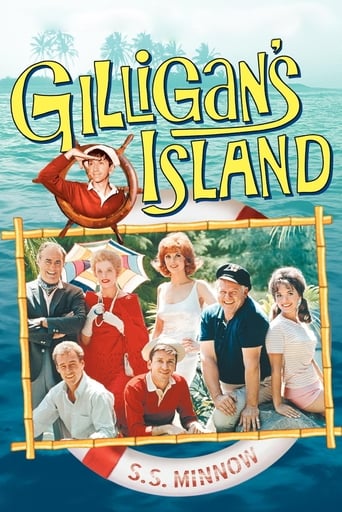
Gilligan's Island
1964 · TV series · 25 min episodes · 3 seasons
Created by Sherwood Schwartz
The slapstick adventures of hapless Gilligan, long-suffering Skipper and their gang of mismatched castaways, all stranded on an uncharted desert isle after their tiny ship hit stormy weather.
2 positive4 negative1 mixed22 neutralfrom 29 commenters
Where to watch
No streaming data for this title.
31 comments on Hacker News
The TV show was called Gilligan's Island.
I got good responses from some simply by telling it to be aware of its limitations.
And my first test with asking for the episode of Gilligan's Island sort of worked with sonnet, no prefix and no system prompt, temp 0. It got the episode number wrong and sometimes the season, but the right episode. Higher temperatures seemed unreliable at getting the right episode name. Split into asking for the name, then the season then the episode it worked correctly, but that's perhaps a bit more chance.
As a colleague of mine used to phrase it, "yeah, I could learn that new thing but then I'd have to give up an episode of Gilligan's Island" ...
Which episode of Gilligan’s Island was about mind reading? [1]
"The episode of Gilligan's Island that features mind reading is titled "The Friendly Physician." It is the 28th episode of the second season, originally aired on March 24, 1966. [...]"
Still no luck with that one.
1: https://news.ycombinator.com/item?id=40139501
I think what the parent poster meant is that the most useful way to use today's LLMs is to accept their limitations and weaknesses and work around them. Better models will come, but for now this is what you have to do.
For example, use LLMs to transform text rather than generate it from scratch (where they are prone to hallucinate). General purpose chat-bot is not a great use case!
For this particular Gilligan's Island task it'd be better to first retrieve the list of episode titles (or descriptions if that was needed), then ask the LLM which of them was about "mind reading". There are various ways to do this sort of thing, depending on how specific/constrained the task is you are trying to accomplish. In the most general case you could ask a powerful model like Claude Opus to create a plan composed out of simpler steps, but in other cases your application already knows what it wants to do, and how to do it, and will call an LLM as a tool for specific steps it is capable of.
Gpt4: Search the web to answer the question Which episode of Gilligan’s Island was about mind reading?
The episode of "Gilligan's Island" about mind reading is titled "Seer Gilligan." It is the nineteenth episode of the second season and first aired on January 27, 1966. In this episode, Gilligan gains the ability to read minds after eating sunflower seeds found on the island.
The vast majority of humans - even intelligent humans - do not "hallucinate like crazy."
Given a list of episode descriptions of Gilligan's Island, the vast majority of humans - even intelligent humans - would either be able to discern the correct answer or say they don't know.
I understand why there is this drive to present the normal human mental and psychological baseline as being just as unstable as LLMs, there is just too much money behind LLMs not to want to aggressively normalize its faults as much as possible (just as with the faults in autonomous driving), but any human being who hallucinated or confabulated with as much regularity as LLMs would be considered severely mentally ill.
That's not the point of the Gilligan's Island test. If the LLMs had said something to the effect of "I don't know, I wasn't trained to answer trivia about television" then I would agree with your comment.
Instead they all confabulated! Either they made up an episode title or insisted the episode doesn't exist. That's a serious problem: if the LLM doesn't properly recognize that it doesn't know something, how will it properly recognize it needs to use a tool to obtain that knowledge?
It seems like the only answer we have is for a user to flag that GPT-4+Web flubbed the Gilligan test, OpenAI dispatches a data contractor for RLHF whack-a-mole + synthetic data generation, GPT learns to Google answers to Gilligan's Island prompts, then we cross our fingers and hope transformers are smart enough to transfer that knowledge to the Sanford and Son benchmark.
Easy fix for Claude Opus. Preface it with the following: "Do you know anything about the TV show Gilligan's Island? If I ask you to answer a question about it I don't want you to make stuff up."
Claude: I do... blah blah... If I don't know the answer or if I'm uncertain about something, I will let you know rather than making things up.
“Which episode of Gilligan’s Island was about mind reading?”
Claude: "I do not recall a specific episode of Gilligan's Island that centered around mind reading. It's possible that there was an episode that touched on this theme, but I cannot say with confidence which episode that would be. The show often featured imaginative storylines and dream sequences, but an episode primarily about mind reading does not stand out in my knowledge of the series. I apologize that I cannot provide a more definitive answer to your question.
Those are really sweeping conclusions, considering the experiment is just a single iteration of a single prompt! FWIW, Claude Opus got this for me on the first try:
"In the Gilligan's Island episode "Seer Gilligan" (season 3, episode 8), Gilligan gains the ability to read minds after being hit on the head with a coconut. At first, the castaways are excited about Gilligan's new power and try to use it to their advantage. However, his mind-reading abilities soon cause chaos and misunderstandings among the group. In the end, Gilligan gets hit on the head again and loses his mind-reading powers, much to everyone's relief."
(the season number and episode number are wrong, but the name is right, suggesting that this is just lack of sufficient memorization rather than some deep statement about reasoning. The episode only has ~4,000 Google hits, so it's not super widely known.)
More rigorously, Claude Opus gets 60% on GPQA, which very smart humans only get 34% on, even if you give them half an hour per question and full Internet access. It seems implausible that you could do that without some sort of reasoning:
https://arxiv.org/pdf/2311.12022.pdf
1. https://www.bing.com/chat?q=Bing+AI&FORM=hpcodx
2. Q: Which episode of Gilligan’s Island was about mind reading?
3. A: The episode of Gilligan’s Island that involves mind reading is called “Seer Gilligan”. It is the 19th episode of the second season. In this episode, Gilligan finds sunflower seeds on the island that give him the ability to read minds. When the other castaways find out about this, they want to know how he’s doing it. However, the mind-reading powers lead to arguments and division among the castaways
Ninja edit, since Copilot can use the web:
1. https://chat.lmsys.org/
2. Q: Which episode of Gilligan’s Island was about mind reading?
3. A: In the Gilligan's Island episode "Seer Gilligan" (season 3, episode 15), Gilligan gains the ability to read minds after being hit on the head with a coconut. He starts hearing the private thoughts of the other castaways, which leads to various humorous situations and misunderstandings. However, his newfound ability also causes problems as the others become annoyed that he is invading their privacy. In the end, Gilligan gets hit on the head again and loses his mind-reading powers, much to everyone's relief.
It gets most other details wrong, but nailed the episode name.
Model A: claude-3-opus-20240229
¯\_(ツ)_/¯
My high school English teacher said the speech was parental cliches. (Which supports the interpretation that it's showing the hypocrisy of all the adults around troubled Hamlet).
"Those friends thou hast, and their adoption tried, Grapple them to thy soul with hoops of steel; But do not dull thy palm with entertainment Of each new-hatch'd, unfledged comrade..."
http://shakespeare.mit.edu/hamlet/hamlet.1.3.html
But maybe I'm just influenced by childhood memories of that Gilligan's Island episode where the castaways all stage an opera of Hamlet. (Where Polonius is played as a doddering parent by the Skipper...)
https://www.youtube.com/watch?v=bXId5jOTxdg
I think that's a consequence of reruns. My parents use Gilligan's Island or Columbo as background noise, because they know how they all go. The writers intended for each episode to be the focus of the room's attention, but it didn't work out that way later.
Doesn't a lot of these cables pre-date fiber? They had these in WWII. I remember the Gilligan's Island episode where the cable washes up in the lagoon and the professor was able to connect up a phone so they call around the world -- of course Gilligan screws it all up at the end.
PDF's of books like
Boat Building for Dummies
Survival on Desert Islands
The SAS Survival Manual
US Army Rangers Survival Manual
9005 Fire Starting Techniques
The entire electronic back archive of American Survival Guide magazine
And, of course, every episode of Gilligan's Island.
The rest of the space would probably go to music. Mostly metal, some hip hop, some synthwave, a little classical, and like 2 country songs for those really rare occasions when I actually want to hear country music.
I feel like I remember a Gilligan's Island episode where they try to write SOS on the beach and it ends up messed up somehow and ignored, though I can't find anything with a quick search and it's possible that my memory from childhood is faulty.
> Childrens TV shows were always about selling toys, that was always the bread and butter.
As the article points out this simply isn't true. They weren't always like that. It was the direct result of a change in law during the Reagan presidency. All of your examples come after that.
Look at kid's shows from before the change in law. Say, the 1960s. Underdog, Rocky & Bullwinkle, Gilligan's Island, Flipper, Green Acres, Captain Kangaroo, etc.
You obviously never watched enough Gilligan's Island :-) https://www.imdb.com/title/tt1230840/
The headline feels like a teaser ad for an episode of Gilligan's Island.
It's interesting to watch re-runs of Gilligan's Island on YouTube today, because the production quality & scriptwriting is basically on par with a YouTube webseries that a few college film students could put together with iMovie today.
Ha ha! Woah, woah, woah, there. Hold on a second. You are biting off a chunk of effort and talent there, and throwing it in the trash, without considering some of the huge, huge, huge barriers to television production back in 1960's & 1970's. (...not Gilligan's Island, but MASH, kind of)
Film making used to be so absolutely and drastically different from the way it is now, and there was a lot of sacrificed wastage both in time and material, due to the level of technology and it's reliability back then.
Just to do things like little title sequences and animation, or audio production that didn't look horribly dubbed and poorly lip-synced required careful dedication and the effort of multiple people. All because of poor technology in general, a poverty of integrated circuitry, no software at all, and most post production being performed optically, in-camera and with practical effects. Indoor lighting alone was painfully costly, and doubly so, due to the level of technology of the day. The undertaking of some examples of matte paintings and set design of the era (again, not Gilligan's Island...) are kind of mind-blowing to read about.
There were also political aspects such as centralized access to broadcast networks, which were also subject to high technological overhead, dealing with analog signals and the limited reach of syndication across geographic regions.
You can't credit today's undergrad capabilities visible on youtube, and trash what used to require an army of people doing new things for the very first time, with the boon that off-the-shelf appliances and downloadable software make possible these days. It was a drastically different world 40+ years ago.
Sorry for the rant. This was an XKCD:386 moment for me. [0]
[0] https://www.xkcd.com/386
I'd encourage you to read Clay Shirky's essay "Gin, Television, and Social Surplus":
http://web.archive.org/web/20080708220257/http://www.shirky.com/herecomeseverybody/2008/04/looking-for-the-mouse.html
His observation is that for basically a generation after the industrial revolution began, all those folks who were forced out of a job by rising mechanization had nothing better to do but drink themselves into a stupor. It wasn't until they all died off (the essay says "woke up from that collective bender", but realistically, most drank themselves to death) that we got all the institutional structures of modernity - universities, nation-states, stable 9-5 jobs, labor unions, civic engagement, democracy, public education, etc.
And then once we did that, society went on another bender with TV and spent all the time surplus from their 40-hour work week watching MASH and Gilligan's Island. It's interesting to watch re-runs of Gilligan's Island on YouTube today, because the production quality & scriptwriting is basically on par with a YouTube webseries that a few college film students could put together with iMovie today.
People will remain people regardless of what toys you give them, and most are not going to do anything useful with those toys. But it's amazing today just how much creative output has increased, on all levels, relative to the world I entered in the 80s. I think the stat, when I was at Google, was that for every second of real-time that passes, 9 hours of video are uploaded to YouTube. Even if much of that consists of unboxing videos and pirated movies and music collections and gaming streams, that's still such a huge increase over the creative output of the TV-centric world of the 70s and 80s.
Producing TV shows today doesn't make financial sense.
In the 60s to 70s, the US had 3 networks (ABC, NBC, and CBS), few shows, low budgets even for hit shows (think of Gilligan's Island and Brady Brunch), and massively greater viewership than today[1]. And the average American viewer watched 4.5 hours of TV per day and knew the name of every prime time show on TV.
Today, every point above is reversed: hundreds of channels, hundreds of shows, something like one-tenth the viewership per show[1], and people watch much less TV.
To give one example of budgets, an entire episode of Star Trek cost about the same as just the voices on a Simpsons episode. (Star Trek cost $185,000 per episode, or $2.2M in today's dollars; the 6 main voices actors of The Simpsons were collectively getting $2.4M per episode but cut to $1.8M a couple years ago.)
The only conclusion is that TV in the 60s and 70s was obscenely profitable and TV today is a marginal or money-losing business and covertly subsidized by other parts of the company's business.
[1] The final episode of MASH had 125 million viewers. https://en.wikipedia.org/wiki/M*A*S*H_%28TV_series%29
The final episode of Breaking Bad had just 10 million. https://en.wikipedia.org/wiki/Breaking_Bad#Viewership
It's interesting that none of those references refer to the Lovey Howell character in the 60s sitcom Gilligan's Island, which came first to mind for me when reading "luvvie alert". I suppose the character's name+personality is more of a blatant archetype than I (now 43) had realized as a child.
(Old guy story ahead)
The interesting thing is how subtly middle-age and old-age catches up on you. I remember watching some kid ask a 90-year-old what it felt like to be old. He said, "It feels just like it damned always has. I'm only old on the outside"
I didn't understand that at the time.
I used to joke about TV shows as part of helping people out with learning programming and technology management. One day I'm in a room teaching something and I say "That's about as likely as Gilligan and the rest of them actually making it off that island"
Total silence. Nobody in the room knew what "Gilligan's Island" was.
That happening more and more over a few years' time, and finally I decided that I don't tell jokes based on TV shows anymore. For one, most of my frame of reference is in the 80s. For another, I don't waste my time with that much network TV. I don't think it has the cultural significance it used to have.
But there was never a bright line when it happened. I don't wake up one day and somehow realized I'm a middle-aged person. Life feels just like it damned always has.
As a Gen Xer growing up in the 80s, I remember drowning in Baby Boomer nostalgia for the 60s counterculture, classic rock, cutesy retro advertising, old TV shows on Nick at Nite, Frank Capra movies, and so on. The culture was immersed in it.
Then, starting in the 90s, our generation started to do the same thing, looking back nostalgically at childhood favorites like the Muppet Show, Gilligan's Island, and the Brady Bunch.
So I would say that this sort of nostalgia has a staple of modern life for at least several generations.
It's worth keeping in mind that The Wire is a product of HBO, and cable TV. They are now well established, but they were once upstarts in their own way.
HBO got its start showing rewarmed mainstream Hollywood movies, months or more after their theatrical releasee. This though was enough to make them one of the few bright spots on the vast wasteland of Gilligan's Island and Bewitched reruns that was cable TV. For that, cable operators were able to extract a premium. From there, they branched out into various bits of original programming.
Then came original programming like Oz, Sopranos, the Wire. This was TV that people regarded as art, and as art, superior to anything on network television and hollywood movies.
Other examples to consider, early Miramax and Merchant/Ivory.
Oh get over trying to shame me for "deciding I know what your ethics are" (I did no such thing and wouldn't know where to start). I've never even seen Gilligan's Island, I didn't know it was ropey quality, only that the parent had dismissed it and the entire industry because he thought it lowbrow.
Funded by advertising is a bit different it can still be run like a traditional business, but where is the amateur TV as good as BBC Frozen Planet, or Sherlock, Wallander or QI? And they're just people talking in scenic locations - or in a big room, nothing requiring months of filming and hundreds of people.
Where are the part time charity funded films like Lord of the Rings or The Shawshank Redemption? The Shining? 2001? Kill Bill?
Amateur work can be good, but mostly it's worse than professional work that's the informal definition of the difference between amateur and professional. The formal one being "profession: paid work".
you are willing to screw over people who genuinely do like ... Gilligan's Island ... because you don't.
Your response irritated me beyond its level of highhandedness. And I finally figured out why: I actually do like Gilligan's Island. I even bought "The Professor's" tell-all book, "Here On Gilligan's Isle". It doesn't matter if I like "Gilligan's Ilsand" or not, it's of low quality. The acting was low, the writing was low, and the production was laughable. That hasn't kept me from liking it, or regarding it as High Bulldada.
Sherwood Schwartz and CBS should be ashamed of putting out such schlock, whether I like it or not, and you should be ashamed of deciding you know what my aesthetics are.
But I'm also curious: why does a movie made by people supported by another job, or philanthropic donations, or one funded by advertising not meet the standard of "pro quality"?
I mean literally any movie that wasn't made by amateurs supported by another job, or philanthropic donations, or advertising funded.
Its low to pick only the worst bits as a counterargument; it also implies no pro quality TV you like. And that you are willing to screw over people who genuinely do like Selena Gomez and Gilligan's Island and the like, just because you don't.
"Pro quality" TV series? You mean like "CSI: Miami"? Or "Gilligan's Island"? Or do you mean movies like "The Smurfs" or the US version of "The Vanishing" or "Leave it To Beaver"?
Yes, I'd gladly do without all that TV and all the movies, and most or all of the books. Oh, and the popular music. Especially the music by Selena Gomez and Demi Lovato and Ashlee Simpson.
That's cool! How do you deal with peer pressure at school and all that?
BTW, like someone else said, I hate to have thousands of episodes of tv trash like Gilligan's Island in my head.