 Hacker Cinema
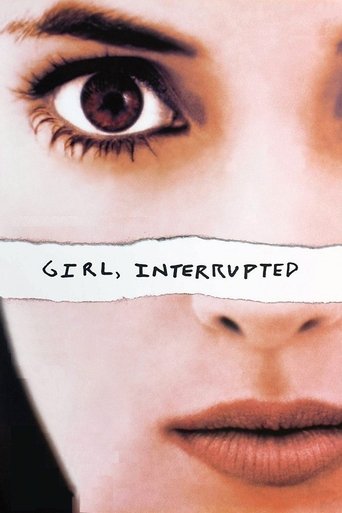
Girl, Interrupted
1999 · Film · 127 min
Directed by James Mangold
Set in the changing world of the late 1960s, Susanna Kaysen's prescribed "short rest" from a psychiatrist she had met only once becomes a strange, unknown journey into Alice's Wonderland, where she struggles with the thin line between normal and crazy. Susanna soon realizes how hard it is to get out once she has been committed, and she ultimately has to choose between the world of people who belong inside or the difficult world of reality outside.
3 neutralfrom 3 commenters
Where to watch
No streaming data for this title.




3 comments on Hacker News
From a more popular site:
https://en.m.wikipedia.org/wiki/Girl,_Interrupted_(film)
I think this idea that the teen mental illness epidemic began in 2012 is probably wrong. What is far more likely is that society began to open up more to these ideas, more people got diagnosed than before, and more young people identified with these struggles and felt more comfortable talking about them.
Susanna Kaysen's 1993 mental health memoir "Girl, Interrupted", which recounts her experience as a young female adolescent struggling with mental health in the late 1960s, for example, received an enormous amount of renewed attention and interest when it was adapted into a film in 1999.
The popularity of that film really opened up the conversation for a lot of young people in the 2000s, but even before that, similar struggles by teens were covered in the 1967 novel "The Outsiders", which also was adapted into a film in 1983, and if memory serves, there was also a similar rise in reports of an epidemic in the 1980s.
I’m not saying that any of these books or movies led to a mental health contagion, I’m saying that the struggles that today’s teens are going through have always been there, but in the past, they were either ignored or hidden away. Today, everything is shared far more widely and freely, which is why it looks like teens are suffering more than the past.
I also think if you go back into the literature of the past, you’ll find these same mental health concerns expressed just about everywhere. It’s just that instead of talking about them, they did everything possible to hide them away. Let’s not forgot Bertha Mason, the character in the 1847 novel Jane Eyre, who was locked away in a room in a house. We are no longer doing that to people so it seems like there is a new epidemic at work, when it’s always been with us.
What matters is the context or even what isn't being said.
For example, it can imply the person is saying they recognize a (typical) trait in themselves. It can also imply the person does not have a diagnosis, but does recognize themselves in the description. Or it can imply the person is interested in figuring out if they have a diagnosis. It can imply an affirmation of sympoms ('oh, now that you say it, I do recognize X or Y in your behavior). It can also be used to create common ground or sympathy. I wouldn't assume harm though (theory of mind!).
I have an ASD diagnosis and it was not a matter of a 15 minute questionnaire as suggested elsewhere in this thread with regards to ADHD. Yes, I did need to fill in a questionnaire. After that I had to wait almost a year til the diagnosis process was started. It included detailed historical analysis of a parent ('hetero anamnese'). I would like to assume all ASD diagnosis are proper, though mine was after DSM-V was introduced so I have autism but no specific label.
From what I understood, its being discussed in the scientific community AD(H)D is merely a variant of autism.
When I see a movie like Girl, Interrupted or Ik Ook Van Jou it is supposedly about a young woman with borderline (BPD) but all I see is a young woman with autism instead. That's just my personal take though.