 Hacker Cinema
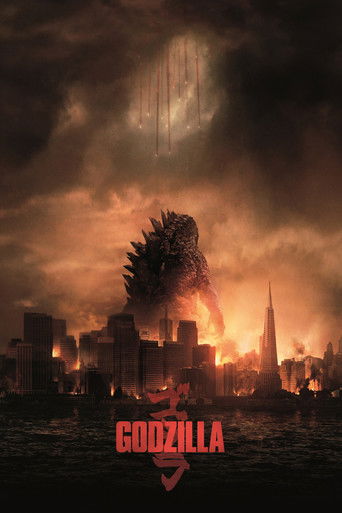
Godzilla
2014 · Film · 123 min
Part of Godzilla Collection
Directed by Gareth Edwards
Ford Brody, a Navy bomb expert, has just reunited with his family in San Francisco when he is forced to go to Japan to help his estranged father, Joe. Soon, both men are swept up in an escalating crisis when an ancient alpha predator arises from the sea to combat malevolent adversaries that threaten the survival of humanity. The creatures leave colossal destruction in their wake, as they make their way toward their final battleground: San Francisco.
2 positive5 negative28 neutralfrom 35 commenters
Where to watch
No streaming data for this title.
36 comments on Hacker News
This alloy is naturally the macguffin in a Godzilla and/or Sentai film.
Tend to follow climate-related news closely. But even then: eyebrows raised.
Heh.. Maybe in future we'll see wars being fought not over access to fossil fuels, but over attempts to stop other countries from pumping more fossils out of the ground.
"What the planet is going to experience over the next 12 months is just a preview of the movie that’s coming. Godzilla is going to return, and return, and return and return … and as bad as the movie gets, we won’t be able to walk out of the theater."
That's the scary bit: no escape hatch. We're all in this together.
That's why international co-operation on climate change should NOT be opt-in. Your countries' freedom to emit greenhouse gasses ends where my countries' (future) safety is at stake.
To simulate a Godzilla incursion and check if the movie where Godzilla attacks San Francisco makes an accurate depiction of what would happen.
For science.
I liken this to watching a godzilla esque movie. Just grab some popcorn and enjoy the ride.
This gargantuan rad fungus sounds like an awesome setup for a Godzilla movie.
> unspoken "show-don't-tell" internal logic
This is another axis separate or orthogonal to worldbuilding.
Recent Marvel and Disney films, the Jurassic Park and Star Wars sequels, and most Godzilla / Kong slop doesn't build believable worlds. The writers don't spend any time writing the universe that the story takes place in.
Lord of the Rings (the theatrical film trilogy), Game of Thrones (save for the last seasons), and Jurassic Park (1993) all build vast and credible worlds. Intricately detailed, living and breathing universes. Backstories, histories, technologies, warring factions, you name it. They then create believable characters that occupy those worlds and give them real character arcs within which they suffer, rise to prominence, grow, and die. Multiple heroes with multiple journeys. You're fully immersed in the fictional world, watching characters you care about occupying it. It's masterful storytelling.
Villeneuve's Dune has the same vast world and literature to draw upon as many of the other great epics, but he makes the rare mistake of not communicating anything to you about it. If you haven't read the books, much of the story is easily lost. He doesn't spend time on character arcs or even as much as dropping hints to what the subtitles of the world are. It's a super rare misstep, because most bad storytelling is from under baking the fictional world.
Then there's the mistake of sequels that try to expand on the mystery of the original world. The Matrix films and countless others have over-illuminated the mystery of their stories in trying to build universes. In doing so, the magic has been lost.
It's not about "hitting as hard" and I admitted I like, and love, tons of modern films... it's not even an "argument", it's a statement of preference, part of what I, and many other film fans, enjoy is the craft of film, and there was simply more to that before everything went digital, so pre-heavily-digital films are more interesting and impressive, to me and to others who appreciate those factors, all else being equal (though often enough, all else is not equal!)
I simply find film-craft more interesting and impressive, and the constraints to drive more-fun (and sometimes absolutely brilliant) creative choices, before they were ~all shot and edited digitally. It's not about good or bad, exactly, but about an aspect of older films that's now all but gone in modern ones. I also happen to appreciate silent film, and some things about those that were impressive and fun went away with talkies—it's not that the talkies were necessarily worse in some absolute sense, but some potentially-enjoyable qualities of silents took a back seat once talkies took over. If someone had really been into those aspects of cinema, they might have tended to prefer older silents over newer talkies, without necessarily disliking all talkies. Similar story with film vs. digital.
I happen to like the film-craft side of things enough that, for me, it in general makes film-era movies more appealing. That doesn't mean I don't watch and enjoy three dozen or more digital films per year, but I do lose out on some of that aspect of my enjoyment of film, with those. This is most-pronounced in action and "genre" (e.g. sci fi) movies.
Like, I watch the modern US Godzilla (I happen to think the first one in this US series is pretty good!) and the action's... fine, nothing particularly wrong with it, but I'm marveling at none of it, just zero. I watch 1954 Godzilla, or Return of Godzilla (1984) and sure, the action's mostly less-convincing (though some of those room-collapse shots in the '54 movie...) but it's also far more interesting.
> Even before autotune, there was no shortage of ways to make terrible music.
Did anyone claim there weren't absolute mountains of bad music in any age? Of course there were, most of anything is bad. Disliking autotune and related tech's effects on music (e.g. visual vs. by-ear editing) doesn't mean claiming that music lacking it is necessarily not-bad.
Ghidra is a monster from the Godzilla movies. I don't know if it's some Japanese version of "Hydra".
It's not fizzing, you're going to be able to say:
render 40 hours of Harry Potter film based on every detail of all books or:
create a sequel to Titanic where Leo DiCap comes back from the dead and rezzes Godzilla and you'll be able to watch that. Imagine that in every content vertical, we haven't even scratched the surface.
(1) Going Extinct: In the US and likely in all the developed countries, on average the number of children per woman is less than 2. Soooo, in those countries we are going extinct. Or, the population is shrinking. Right, this simple fact is made more complicated by mass immigration.
But, still, we have the lesson: In a developed country without lots of immigration, population is shrinking. Eventually the immigration will slow and then the population will start shrinking again.
(2) Cities. The economies in developed countries are heavily about just their cities.
(3) Land. The cities have a big problem: They are short on land and have no way to make more. So, house prices increase. Paying workers more will not create more land but will likely increase house prices.
Currently, in large US cities, house prices, that is, owner occupied, single family shelter, are too high for doing well at family formation, e.g., wife a full-time mother.
E.g., Dad got a Master's, got married, got a job teaching in high school, bought a house, and started a family. So, I guessed that I should get an education, get married, buy a house, start a family. So, I got a Ph.D. in applied math, got good at computing, got married, was never able to get the down payment or qualify for a mortgage, buy a house, or start a family.
Due to the pressures, visiting at her family farm, my wife, brilliant, astoundingly hard worker, PBK, Summa Cum Laude, Ph.D., killed herself.
So, she never had any children, and neither have I. I'm still hoping to be able to buy a house but so far still never have. So, in the case of my wife and I, due to the high costs of a house, we didn't have any children and contributed to population shrinking.
(4) More Land. Away from the larger cities, the US has lots of land, without buildings, not very good for farming, not very expensive. This cheap land has not solved the problem of houses being too expensive for family formation because (a) the jobs are in the cities and (b) that cheap land is too far from such a job to commute from a house on the cheap land.
E.g., trying to make money enough for family formation, I was working at FedEx. My wife was still in our apartment in Maryland working on her Ph.D.
With some computing and applied math, twice I'd saved the company from going out of business. A crucial investor on the BoD told me
"Just keep doing what you are doing until someone tells you to stop."
Looking back, I was in effect reporting to the BoD and the CEO. So, in the work, I was doing very well.
My official management kept trying to fire me (such is illustrated well in the movie Godzilla). And the promised stock was 18 months late. I had mostly been working in Memphis -- my office was next to the CEO's (who put up with my late night violin practice of the Bach Chaconne).
As it was, I didn't see a reasonably feasible path from the FedEx job to family formation. So, maybe I needed more education and applied to graduate school. I was accepted at Princeton, Brown, Cornell, and a fourth, and decided to go to the fourth for an applied math Ph.D. I submitted my letter of resignation from FedEx. On my last day, the CEO called me to his office and said:
"You know, if you stay, you are in line for $500,000 of FedEx stock?"
No, I didn't "know" that.
The first time I'd saved FedEx was with some software I wrote from my apartment in Maryland -- the output from the software resolved a crucial issue for the BoD -- that's why in effect partly I was reporting to the BoD.
Some days before my resignation I'd outlined a project that promised to save FedEx $millions a year in operating costs, and the CEO had written a memo making that MY project (implicitly reporting only to the CEO), and I planned to do the work also from my apartment in Maryland. But there on the last day, the CEO said I'd have to work in Memphis.
Since the promised stock was already 18 months late and since the $500,000 was not written down or solid, I didn't trust the promise of the $500,000. And without FedEx stock, I didn't see a reasonably feasible path to family formation working at FedEx.
For more, my best computing, a consultant I wanted to use, my apartment and wife were all in Maryland. I'd proven I could do good work, save the company, working in Maryland. So, since the CEO said I'd have to work in Memphis, I left FedEx and got the Ph.D.
(5) New Solution: (a) Still have a job in a big city. (b) Have a house, nice yard, maybe a small lake or a stream with a walking bridge over the stream, own water well, septic tank, and drain field, use wood for some of the winter heat. (c) Work from home and interact with the job via the Internet. (d) Occasionally drive into the office in the city but skip this on snow days!
(6) Population Growth. With this solution, we can do well with family formation, and the population can grow again.
So why not dump this very safe water on Japanese soil? There's lakes and reservoirs a short drive away. A few tankers a day over 30 years to clear up 1.25 million tons is cheap to losing 600M of fish exports per year to PRC and barely impact local enviroment on time scales involved. Maybe inspire some new Godzilla movies. Oh wait, it's because Japanese domestic politics wouldn't allow it. So gov would rather internationalize the issue.
Japanese domestic politics at it's worst.
> This makes a lot more sense when you look at less rich countries and see how much less popular iPhones are. It's only in America where people who aren't in poverty but rather deep into the lower class that will make sacrifices so they can buy an iPhone, or worse, pay $1600 over a two year payment plan and then UPGRADE after the plan is through. Americans are so terrified of being SEEN as poor, because they know how they vote for poor people to be treated.
Well said, and hence why I quoted Rage Against the Machine who later go on to say on a track for Sony's Godzilla movie no less:
Godzilla pure motherfucking filla'
Get your eyes on the real killa'
Despite being from the US, I will never understand this 'culture' and it seems so vapid and fake until you realize that is exactly what most people want out of their relationships as a whole: something so trite and cliche that fits in within the confines of a narrow attention span and is equally digestble on social media that signals to other like minded people in kind. The people who I see using phones as a status symbol are often the least economically stable I know: think children/teenagers or those older who simply have no other assets or investments to speak of.
>. Of course there are films that celebrate a made up, white washed version of America's history, like say, Mel Gibson's The Patriot, but America was never censored and not released movies critical of its own history
Not quite: https://www.theguardian.com/film/2022/may/26/top-gun-for-hire-why-hollywood-is-the-us-militarys-best-wingman
The US military had them delete the US bombing of Hiroshima and Nagasaki from the 2014 release of Godzilla - something pretty essential to the "lore".
The 2010s in sci-fi gaves us:
- Dredd
- Melancholia (may not qualify for some sci-fi fans, I suppose, and I can understand why—it's so very allegorical)
- High Life
- Under the Skin
- Annihilation
- Ex Machina
- Edge of Tomorrow
- Looper
- Blade Runner 2049
- Sorry to Bother You
- Arrival
- Mad Max: Fury Road
- The Last Jedi (I know lots of people hated it—I think it's the only more-or-less good Star Wars movie since the original trilogy, and was shocked at the broadly-negative reaction, having come out of the theater thinking "finally, we got a good one, even if it did play the ending way too safe; everyone's going to be so happy!". We're not gonna change each other's minds in HN comments. Agree to disagree.)
And that's just the ones I've seen and thought were somewhere between good and great. And that I could remember or quickly find a reminder of with a quick search. I hear very good things about the new Planet of the Apes series (like, "each entry is better than the last" good) but have only seen the first one. Lots of people liked Rogue One, Snowpiercer, Ad Astra, and Interstellar (I didn't, or at least didn't think they were notably good, but hey, lots of people did). Godzilla, Pacific Rim, and Kong were OK romps. Heard good things about Upgrade and Attack the Block, but haven't seen them. The Martian was OK (some loved it). Inception was alright (again, lots of others like it way more than I do).
How many really good sci-fi movies did the 70s produce? The 80s? I think we're doing fine.
I'm sure the ability to empathise with seven year olds has helped a fair few adults have successful careers in filmmaking, but the top line pitchdeck for Godzilla resembles the writing and production of a successful blockbuster film (even a really cheesy one) in roughly the same way as "I want Facebook for cats" resembles a computer program
I now NEVER watch any trailers at all. I watched Terminator Genisys and while it wasn't a brilliant movie I did gasp a little at the reveal part way through the movie.
I asked my brother what his reaction was and he said he already knew going in as the trailer had revealed it.
I don't get the point of trailers any more. Most of them just show you the whole movie in 2 minutes.
Saying that, probably the best trailer of recent times was for one of the Godzilla films, which actually gave away very little and just gave you enough of a vibe to make you want to watch it.
You know the scene in the 2014 Godzilla movie where the Japanese Godzilla expert says "Let them fight..."?
That's pretty much my reaction to recruiters and HR wasting time on linkedin bots.
How safe do you actually need it to be? Glass it and chuck it onto the abyssal plain. Watch as the ecological damage is less than a millionth (literally, not hyperbolicly) as damaging as ocean acidification caused by CO2.
It really isn't hard, just unintuitive thanks to movies like Godzilla and shouted against by environmentalists who refuse to quantify the damage.
The future is kids using Unreal Engine (or similar) and making a high definition "retelling" of the new Spiderman movie hours after its release, injecting their own humor and style into the process.
Just as kids now watch other people playing games, they'll soon watch other people acting out movies. Kids make Star Wars at home. Kids make Star Wars meets Godzilla at home. The possibilities are endless, and Hollywood won't be able to keep up.
It's interesting to even fathom that someone would put cultural domain issues entirely within a capitalist context.
There are two fundamental reasons that content everywhere is subsidized and protected. They are of course related.
First, more obviously is the cultural aspect. The things we believe, the stories we tell, are part of our identities. With critical mass and investment those stories some will take root.
It's a little bit of a myth to suggest that a small creative team just 'makes something' and it goes big. This does happen, but generally speaking, it takes a machine. Many layers. 'Taylor Swift' should be thought of as a 'Brand and Production Company' - as opposed to a person.
You'll find that almost all truly creative endeavours are at least partly communitarian. The ballet exists only because Louis XIV, the most powerful man in the Western Hemisphere, personally created it.
Almost all such endeavours have a purely creative component, it's actually more rare than not that those works are purely commercial. The creative world is in constant tension between 'art and money'. You often hear famous movie stars say 'One for Me, One for the Studio' hinting at that.
Some cultures are stronger than others (aka European), and some have more of a critical mass in terms of audience (aka Indonesia), some have both (aka Japan). Some have contiguous histories of relative sovereignty (aka Thailand), some the opposite (aka Laos, Tibet) and so varying levels of support and protection are needed otherwise a lot of it would just evaporate.
Most countries provide fairly significant tax advantages etc. for creative works.
Second, is the fact that creative works on the commercial side, like anything, are an industry with similar kinds of underlying components and critical masses.
In that context it's a little bit glib to say to a group of people in a little region for example to 'compete' with a massive established industrial base. Whatever the industry.
Hollywood is big enough, has several very institutionalized layers of production, incredible degree of hyper-specialization (i.e. you will find more 'kinds of trades' and people who are really good at it there, than anywhere in that field). That includes access to capital, legal frameworks, specialized talent, workers guild specialization, harmonization with government (i.e. getting locations), talent agencies, distribution channels and relationships with Netflix etc..
This extends to the rest of the 'support' aspects of the industry like bookings on talk shows, morning shows, cover placements in magazines, media dockets etc.. It's all professionalized and mostly corporate.
Marvel films, in particular are a really good example of this - they are not particularly good films, but the production quality of them is basically '1st rate' at every turn, from writing, production design, direction, story narrative, the immense production support, post-production / effects, marketing.
Once you add in language and cultural barriers, i.e. the fact that a movie about 'Captain America' will have a strong enough audience domestically, with some acceptance abroad, and you have insurmountable competitive advantage. (Nobody is going to watch a film about 'Captain France', or 'Captain Japan' - or rather, many fewer).
The only other place that can compete really is the UK, which has many of those same foundational advantages, plus a long history of 'popular theatre' and especially the BBC which exists in part as a systematic support / lynch-pin under the auspices relevant to Point #1.
Canada, pound for pound, actually punches above it's weight relative to the US in a lot of production aspects. The new Dune film is Denis Villneuve, and his 'posse' of creatives are from Montreal. In some ways, it's a 'Canadian-led' film, but that just happens to be talent, it's not really part of the industrial base. Villneuve exists because Quebec strongly supports creative endeavours (and FYI for every Villneuve, there are 10 you've not heard of, 50 who never really had support or a shot, and 1000 who tried and failed).
FYI there is actually a lot of film production in Toronto/Van/Montreal, but mostly the 'labour' bits of production, not the choice roles.
The raw economics of entertainment, in the short run, optimize like anything else. Take a 'Large Open Economy' and put it next to 'Small Open Economies' and you'll see consolidation hugely disproportionately in the 'Large' economy, which is where all the talent, surplus, and good jobs end up.
Entertainment happens to be at least one sector, where due to 'Point #1' (i.e. culture), there's wide recognition of the need to support it via non-market forces, so at least there's that. But really the same applies to any sector.
If we really think that we should just all enjoy Marvel and Netflix - and that's that - well then all of that is fine - but it's such a hugely narrow aspect of creative output.
Finally, the true globalization of the industry has seen the biggest budgets move towards ever dumber films. Fast and Furious, Transformers ... they have to appeal not not just to 'working class Americans', but to 'the global working class' which is barely literate, and of course they're from diverse cultures so there's a lot less to draw upon for cultural reference. 'Transformers' , 'Godzilla' etc. are basically giant action sequences and that's it. Of course that's totally fine - but they suck up the budget and attention of other potential works, which don't get made. So ironically, this problem has manifested itself even for the 'Large Open Economy'.
For your reference, here are quotes from a few dozen industry luminaries on that subject [1]. It's a good read.
[1] https://www.nytimes.com/interactive/2019/06/20/movies/movie-industry-future.html
to think that some people called the new godzilla movies dumb…
Wait... so Godzilla is going to end up being a documentary?
No problem. Regarding realness, you might want to compare the number of years it takes to move between socioeconomic classes in America versus the number of years it takes to evolve a distinct race of humans.
Unity is a fine sentiment. Lions are unanimously in favor of lions laying down with lambs. If it hasn't worked yet, that only shows the weakness of our faith. Give until it hurts! Thank you Jesus!
Sorry, I was channeling a televangelist there. I don't know what possessed me.
https://brewminate.com/divide-et-impera-a-history-of-divide-and-rule/
What bothers me is there are so many fun immigration combinations that never get any press. Where's the lobby for unlimited Chinese immigration into Japan? Can you imagine the Godzilla movies we'd get out of that? What has Japan done for us lately, besides Dark Souls? A new national trauma is just the thing to refresh that fatalistic warrior muse.
If the Chinese and Japanese can't coexist, despite belonging to the same race and often being mutually indistinguishable, then who can?
All the web sites that go with British newspapers (and for all I know, other newspapers in the world, but I live in Britain) have been doing grey-SEO stuff that's bound to get hit by algorithm changes.
By "grey SEO" here I'm thinking of articles that are intended to get "natural" traffic as a result of people asking questions, e.g.
"When is the new Avengers movie out?" "Which channel is The Crown on?" "Was Michael Jackson a Paedophile?" "Who is that girl from Stranger Things?"
An encyclopedia is often the natural result for questions like these, or some sort of specialist fact database, IMDB for example, or a TV channel's own listings site. But the newspapers decided they could get some of those clicks. If some people who were wondering if that's the same girl in Godzilla (yup) click through and see four adverts and read speculation as to whether Kate Middleton hates her brother-in-law's new wife (probably not, also who cares?) that's more profit for the publisher.
Anyway, Google's thing has always been trying to put the answers you wanted at the top. In defiance of Babbage's oft-cited remark, Google wants to give you the answer you were looking for even if you ask the wrong question. This may often mean that a Daily Mail article trying to get you to click through to more slop about nothing is NOT the best answer when you asked a mundane question and Google may tweak their algorithm to prefer say, the Netflix video trailer for this season of Black Mirror, higher than a Daily Mail article speculating that Charlie Brooker might be gay when users ask it "When is Black Mirror new series?" even if the Daily Mail team worked really hard setting metadata tags and fiddling with the layout.
I agree. When I suggested putting on a low-budget 50's monster movie on as background noise (e.g. Gamera, Godzilla, The Giant Claw, something that's amusing to look at for thirty seconds, laugh a bit, but not overly distracting), people act almost offended that I would waste company time like that. But if the TV has some form of ball on it, drop everything.
Ha! Get this. It's unassailable.
Godzilla... was just an ordinary human in a rubber suit, in a movie studio sound stage where scale models of cities and landscapes had been built. In later years, as film technology improved, the more detailed films of Godzilla were created with a CGI model, with the virtual skeleton and muscle movements derived from filming a human actor in a mo-cap suit. It only looks real because the animators are so skilled, and the actor is so good at mo-cap acting. It is in no way live footage of a real animal.
That's right. Godzilla doesn't exist. He never existed. He was always a made-up movie character. I bet you could get literally thousands of people to believe that. With enough gaslighting, I bet you could even get someone whose actual home was actually stepped on and burned by Godzilla to believe that it was due to an earthquake or tsunami or tornado or nuclear reactor meltdown or something equally farfetched.
I am fascinated by holocaust denial and the people who think the moon landing was faked. Does anyone believe both? Do the people who believe those have any other historic events that they think were made up?
Most importantly (too me) would it be possible to start one of these on purpose? If you wanted to, what would be a good candidate?
I concluded that the atomic bomb is an excellent choice. I say there never was an atomic bomb. It was propaganda to prevent the US and Soviet Union from engaging in a disastrous WWIII so soon after WWII. And it was very effective but it's time for all the suckers to wake up.
I know you've seen the films. Special effects! Hiroshima/Nagasaki? Regular fire bombing that happened to get out of control because of favorable (or unfavorable) winds! Godzilla? Well that's more difficult to explain but I'm sure if we put our heads together we could come up with something.
Who's with me?!?!?
Leased CGI sets / models / scenes.
Building full fledged models / generations of popular cities and places and leasing them to film producers. Its cheaper for them to lease than it would be to hire full devs and designers to start from scratch..I know there is some 're-use' in place by these companies such as pixar and disney. Re-use is not what i am talking about though. I am talking about movies like transformers / godzilla / etc which need on point rendering of actual cities and places.
Just a thought I had the other day when reading how film companies were struggling with growing movie budgets and diminishing returns.
My favorite lines:
The soldiers continue to battle Godzilla and the drivers motor across the bridge to safety, all oblivious to the physics errors that spared their lives.
and the parenthetical:
(I must note that the bridge featured in the movie’s climax is a cantilever bridge and therefore outside the scope of this article.)
isn't all that packed up debris just waiting another tsunami or other natural disaster to spread it? Seems awfully close to the ocean considering how the last disaster occurred.
So many of the scenes reminded me of the recent Godzilla movie, amazing to see so much of a recent bustling environment abandoned, returning to nature. The number of spider webs in the supermarket is remarkable, I assume the rotting food stores brought insects which in turn made for a good feeding ground for spiders
I love the UI and the results! I'd just say that I have two concerns; while the click-to-add nature of the genre list is great, I don't think it's immediately intuitive. Perhaps I'm just part of the old "if you click a link it takes you to a page" demographic, but clicking to add or subtract -- while in my opinion the right mechanic here -- isn't immediately obvious. Making it more clear how this works could save you some traffic by avoiding requests from people who don't immediately understand how the UI works.
The second thing is that, on browsing movies "from Japan," I immediately get Band of Brothers, Kill Bill, Lost in Translation, The Last Samurai, and the latest American reboot of Godzilla. If it's intended to show movies set in a particular country, that's potentially a really cool gimmick, but as it is it seems inaccurate.
Love the site, though! Great work!
I am not disagreeing with you in general, but for me Netflix really could be a replacement for traditional channels. Not too OT: I am visiting my Dad and yesterday morning we saw the new Godzilla movie in IMAX 3D and later last night watched Hitchcock's "Dial M for Murder" which was such a better experience than Godzilla. Old movie/TV technology done artfully beats less artful tech. Netflix can deliver old and some new content cheaply and on my time schedule.
Is this a promo video for the new godzilla movie?
That's just the first thought that I had while watching it. Off-topic, you say? true, but so is the story. Don't mean to be insensitive to the people who were affected.
To me the images are reminiscent of old Godzilla movies, etc...
Eh, I know plenty of 30-somethings who would be excited about robot godzilla movies.
Once something gets as big as reddit it's probably difficult to call it a "community" in any real sense. It's a community in the same way that usenet (in it's entirety) is a community.
Front page stuff is going to naturally be things that appeals to the largest cross section of people, you see this on HN too to an extent. A blog post talking about a novel application of an obscure algorithm languishes at the bottom with 10 comments whilst "popular blogger bashes Windows 8" gets to the top with ~300 comments.
I like to think of subreddits more as an easier alternative to installing phpBB than as a part of the whole.
That logic may be true about bikes.
But what if my Facebook profile says I like the movies Godzilla, Jurassic Park, and The Bourne Identity? It's very easy to extrapolate a common movie "typeness" that someone likes from a list. Then you can target new movies in that genre very specifically to users who would be most likely to watch them.
For movies, books, tv shows, etc, and repeatable purchases, the cache of information at Facebook is far, far more valuable than two words at Google.