 Hacker Cinema
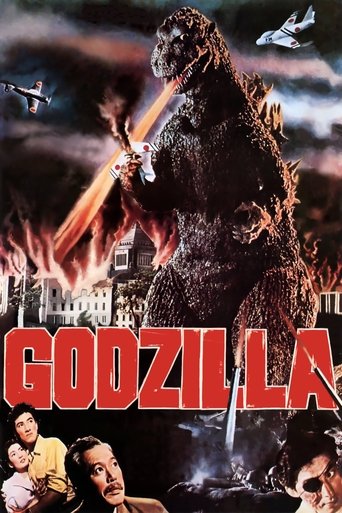
Godzilla
ゴジラ
1954 · Film · 96 min
Part of Godzilla (Showa) Collection
Directed by Ishirō Honda
Japan is thrown into a panic after several ships are sunk near Odo Island. An expedition to the island led by Dr. Kyohei Yamane soon discover something far more devastating than imagined in the form of a 50 meter tall monster whom the natives call Gojira. Now the monster begins a rampage that threatens to destroy not only Japan, but the rest of the world as well.
2 positive3 negative24 neutralfrom 29 commenters
Where to watch
No streaming data for this title.
30 comments on Hacker News
Perhaps someone could have some fun with this...
Feeding faked looped security camera footage is a classic plot device in many films, and could make some good comedy!
These days you could do with AI. Godzilla over Tokyo anyone?
It's not about "hitting as hard" and I admitted I like, and love, tons of modern films... it's not even an "argument", it's a statement of preference, part of what I, and many other film fans, enjoy is the craft of film, and there was simply more to that before everything went digital, so pre-heavily-digital films are more interesting and impressive, to me and to others who appreciate those factors, all else being equal (though often enough, all else is not equal!)
I simply find film-craft more interesting and impressive, and the constraints to drive more-fun (and sometimes absolutely brilliant) creative choices, before they were ~all shot and edited digitally. It's not about good or bad, exactly, but about an aspect of older films that's now all but gone in modern ones. I also happen to appreciate silent film, and some things about those that were impressive and fun went away with talkies—it's not that the talkies were necessarily worse in some absolute sense, but some potentially-enjoyable qualities of silents took a back seat once talkies took over. If someone had really been into those aspects of cinema, they might have tended to prefer older silents over newer talkies, without necessarily disliking all talkies. Similar story with film vs. digital.
I happen to like the film-craft side of things enough that, for me, it in general makes film-era movies more appealing. That doesn't mean I don't watch and enjoy three dozen or more digital films per year, but I do lose out on some of that aspect of my enjoyment of film, with those. This is most-pronounced in action and "genre" (e.g. sci fi) movies.
Like, I watch the modern US Godzilla (I happen to think the first one in this US series is pretty good!) and the action's... fine, nothing particularly wrong with it, but I'm marveling at none of it, just zero. I watch 1954 Godzilla, or Return of Godzilla (1984) and sure, the action's mostly less-convincing (though some of those room-collapse shots in the '54 movie...) but it's also far more interesting.
> Even before autotune, there was no shortage of ways to make terrible music.
Did anyone claim there weren't absolute mountains of bad music in any age? Of course there were, most of anything is bad. Disliking autotune and related tech's effects on music (e.g. visual vs. by-ear editing) doesn't mean claiming that music lacking it is necessarily not-bad.
You can see similar issues in the recent American Godzilla movies. In the first one, Godzilla seems huge and heavy. In the later ones, they keep making it faster and more agile and the result is that it seems light and small (and extremely fake) no matter how many buildings fall over or ships get sunk.
It was a thought and that’s why I said “one of the seeds”. I guess there’s such a thing as a “cultural zeitgeist” and when artists are creating stories and narratives they incorporate metaphors from things around them. They may not have explicitly read the newspaper article and said “giant lizards are a good bad guy” but that representation may have been culturally apt at the moment due to this story.
The creature design had to elicit fear and the actual representation on film may have been influenced by it. The stance may be more t-Rex than crocodile and I’m really not sure “whale” factored into the final appearance on film.
No one is questioning the impetus and relation to the fire bombings and nukes.
> We know what godzilla was about because the creators have told us so.
That’s the funny thing about culture and creation: a creator doesn’t always know their sources or have definite aspects to point to. Creation is a bit fuzzy. ;) (the same applies for LLMs!)
tl;dr: all kids need/deserve both choiceful and choiceless reading, regardless of skill or talent. Parents and teachers can and should assign kids choiceless reading that usefully challenges and/or tests them. But kids also deserve activities and rituals and games that encourage and reward them for choiceful reading, where their choices are not to be questioned.
I'm not sure how to read the question. I think freedom is one of the things that helps make reading attractive, and that stepping back and giving students/kids/whomever freedom in their reading choices can sometimes make even pretty surprising books attractive enough that people pick them up and read them.
But if I'm really committed to giving someone that space and freedom of choice, when they do choose something to read, that freedom includes freedom from the constraint of validation!
There are separate questions about whether or not someone's total literary diet is sufficient for their needs and goals. Parents (with respect to their kids), teachers (with respect to their students), and individuals (with respect to themselves) will likely formulate and answer those questions in different, if overlapping, ways.
One of the things my mom did that I'm very grateful for is rewarding me for reading without respect to my reading choices. She often did this with games where reading time or book reports could earn me screen time or points I could exchange for prizes, and that was really fun. For those games, any book would do.
Another thing she did to make reading a cite of freedom was suspend all household censorship rules when it came to books. There were no age-appropriateness checks for books like there were for TV and movies. And (sometimes?) if a movie I wanted to see was forbidden but it had a novelization, I could even get that restriction lifted by reading the novelization! (I used that to watch Godzilla. :D)
But incentives don't to be direct, external rewards like that, either. It could be quality time or an organized activity like 'choose any book, and we'll both read it and talk about our favorite parts', a informal little two-person book club.
Rewards can be weaved into a reading-adjaceng activity, too: I used to go to bookstores with my dad and we'd just sit in the book's coffee shop together. He'd get an Americano and I'd get one of whatever I wanted, and so trips to the bookstore meant a free coffee-themed milkshake at least. ;
Books can also be made into their own treats! On those bookstore trips soth my dad, when it was time to go, he'd offer me a deal: I'll buy you any one magazine. When I picked an expensive, imported Linux magazine, I felt like a winner— I was gaming the system. And since he'd only buy one, if I finished a magazine while sitting with him, that meant I got to take home one that was brand new to me instead of one I already started. That's practically a twofer!
When I was really lucky, he'd offer to buy a book instead. When the item I chose was expensive and his offer had been unconstrained, he'd always make a show of griping and balking, but he stuck to his word. And so he let me feel like I was getting away with something when my 'one book' was a fancy hardcover classic with golden-edged pages— even if the translation was from 1862 and I'd have to do some work to get through it. My dad's griping about prices kinda turned his offer into a game and the book itself into a treasured prize. :)
When I was little, my parents would also take me to the library often, and when they did, I was never restricted once I got there. Sometimes they took me to a specific event or activity. But afterwards and otherwise, I was on my own! I could play games on the library computers or just nap in a bean bag chair thw whole time, and that was fine. I could come home with books but I didn't have to. All of that helped to make the library a relaxing and fun place.
My examples so far were all outside of school, but allowing reading choices in school is necessary, too. One year in high school, my English class was presented with a pile of books, and told to each choose one to read and write about. One of my besties chose The Brothers Karamozov, and he loved it. He talked about it with me and all his other friends, sometimes making playful allusions to it by comparing classmates to characters or referring to them by the names of characters. That got some of us interested in it that book and its author, too. I ended up picking a Dostoevsky book, too (The Idiot, a blessedly thinner volume).
Assigning that same book to the whole class would probably have been a disaster. It definitely wouldn't have clicked with some of us, and it's long as fuck. I might've bitched about it myself! But in a context of freedom? The book was evidently perfectly choosable, rewarding for the student who chose it, and intriguing to at least some of his classmates. The freedom to choose is powerful.
That kind of freedom is something all learners deserve. And it's not surprising that in the absence of such freedom, students (of all skill levels) often shirk, cheat, or refuse to read what they're assigned. But that behavior doesn't necessarily indicate a general unwillingness or inability to read comparable books.
To try to kind of answer your question: not every book a kid reads will be their choice, and that's okay. Parents and teachers will want kids to read books that challenge them. They'll also want them to read books that help adults assess the kid's reading skills. For those purposes, there are probably some times that gifted and enthusiastic readers don't need any particular books prescribed to them at all. And for those purposes, there will be times when students (gifted or not) will be asked to do reading that feels like work to them. Maybe reading that feels like work will be more frequent for readers who are less advanced or less talented.
But both inside school and outside school, kids should be given opportunities to choose what they read, too. Sometimes that can be from s selection of prescribed options but imo sometimes their freedom of choice should be absolute. Whether they have a choice or not should always be clear (no take-backsies!). And when they do have a choice, their choices are sacred and not to be judged, regardless of how skilled or enthusiastic a reader they are. The only feedback they should get about their reading choices (if any) is some kind of sincere encouragement or congratulation.
24 Hour Party People
Dogtown and Z Boys (Documentary)
Godzilla
Rollerball
Monty Python and The Holy Grail
Star Wars
The Hunger
Caddy Shack
Fear of a Black Hat
Straight Out of Compton
> Whilst it seems to originate with Godzilla -- which honestly also doesn't seem to associate with a particular company but instead I would say it's a now traditional monster name in stories, like Dracula
This is a really weird take. Dracula is in the public domain, while every piece of Godzilla media is still copyrighted and trademarked to Toho, one of the big four movie studios of Japan.
If the author was aware that Godzilla was a metaphor for the atomic bomb, they may or may not have chosen a different movie monster. I would hate to think that faculty are unwitting weapons of complete and utter annihilation aimed primarily at students. Godzilla’s design and purpose was to indiscriminately destroy.
As US/Japan relations improved Godzilla could be seen as a protector, but that strains the faculty/student metaphor too far, imho. There are other movie monsters that may be more appropriate.
I'm with you. I think most of the star wars movies are pretty bad, but some of them are pretty good. And the bad ones don't make me feel worse about the good ones.
I think there has been a serious cultural shift in this regard sometime during the 00s. Most people used to understand that sequels are generally shitty and didn't make a big deal of this. S-tier classics from the likes of Disney used to get shitty straight-to-DVD sequels (e.g. Lion King 2) and nobody even thought to whine about it. Even movies that had very well received sequels would sometimes receive further sequels that were stinkers, and nobody started ranting about how the original was ruined because of it.
Alien and Aliens were great, then you got Alien 3, AvP, etc.. a bunch of mediocre slop to put it nicely (actually I like 3, but I admit it's deeply flawed). But when did you ever hear somebody say that AvP or Alien Resurrection ruined how they felt about Alien or Aliens? Terminator and T2; great movies that got a bunch of shitty spinoffs and sequels, but nobody said at the time that their enjoyment of the first two was ruined by what followed. James Bond has been a rollercoaster of quality for decades but it keeps going and fans enjoy calm respectful debates about which are their favorites. The Godzilla franchise has lots of quality interspersed with lots of crap, I don't hear many people saying that the horrible Minilla retroactively ruined King Kong vs. Godzilla, or for that matter, that King Kong vs. Godzilla ruined Godzilla (1954). The first Jurassic Park wasn't said to be ruined by the cashgrab sequels. The Land Before Time is still warmly remembered, despite 13(!) direct-to-dvd sequels.
Even in the early 2000s, I heard a lot of people saying they didn't like the Star Wars prequels, but I didn't hear many people saying the first three movies were ruined. Not until a few years later did this attitude start to find traction.
What, no mention here of Japanese movie monsters ? It is a fine sysadmin tradition.
godzilla and then the entire gallery of mutant rogues.
Maxis actually distributed a model of Kowloon as one of the original cities included with SimCity Classic (before it was called "Classic").
I recall that it was from the Japanese Fujitsu FM Towns version of SimCity, which included several extra Japanese cities that weren't shipped with other versions, but that I dug up from my archives and included with Micropolis, the open source version of SimCity Classic.
https://en.wikipedia.org/wiki/FM_Towns
https://www.mobygames.com/game/fmtowns/simcity
https://www.retroplace.com/en/games/46874--simcity
Directory of original Maxis SimCity save files, including Kamakura, Kobe, Kowloon, Kyoto, Senri, and Yokohama from the FM Towns version:
https://github.com/SimHacker/micropolis/tree/master/MicropolisCore/cities
Kowloon save file:
https://github.com/SimHacker/micropolis/blob/master/MicropolisCore/cities/kowloon.cty
Tokyo was also one of the original SimCity scenarios, shipped with every version of the game. That was the one that caused Toho (Godzilla's owner) to sue Maxis because the scenario originally referenced Godzilla, and the box featured a picture of Godzilla. Maxis had to change it to a generic orange monster and call it a "large reptillian creature" instead, and change the Godzilla on the box to a tornado. Original versions of the box with Godzilla are valuable collectors items!
>TOKYO, JAPAN 1957: A large reptilian creature has been spotted heading for Tokyo bay. It seems to be attracted to the heavy levels of industrial pollution there. Try to control the fires, then rebuild the industrial center. You have 5 years.
https://imgur.com/z5gy9GW
https://twitter.com/dancingcrab/status/928792064736874496
https://en.wikipedia.org/wiki/Godzilla_in_popular_culture#Video_games
>The "Monster" disaster in the computer game SimCity depicted an unnamed green monster that resembled Godzilla. A scenario in the game: Tokyo, Japan 1954 parodies the original movie. The depiction of the monster in-game and on the boxart led to legal issues with Toho, with Maxis changing the Monster's design in-game and swapping it on the packaging for the "Tornado" disaster instead.
It suffers from the same misfortune as the LOTR novels, Aliens, Friday the 13th, Godzilla, or countless other works that were among the first major works in their genres.
They were groundbreaking, foundational works that influenced everything came after them. The later works were often amplified takes on what came before; explicit attempts to out-do their ancestors.
(Sometimes this works, and sometimes it doesn't. You don't always improve things just by adding more...)
So, folks go back to the originals and wonder: "what's the fuss about? what was so groundbreaking about the hard-sci-fi-ish space marines and H.R. Giger visuals in Aliens? or the boring, soulless, pondrous killer in Friday the 13th? " The originals seem tame or quaint by comparison to what came after.
Know this: there is a whole world of enjoyment out there waiting for you should you ever decide to appreciate works of art in their appropriate historical contexts. Blade Runner has its faults and its charms and is by no means a perfect movie, but it is arguably the most visually influential movie in history or damn close to it.
Things are never entirely born from nowhere, but Blade Runner's now-cliched "neon cyberpunk dystopian future" look had never been really done before, certainly not on the big screen, and I'm honestly not sure if it's been done better since.
As far as discussing Blade Runner on its own merits, outside of any context... I understand why some think it's boring. It's slow and meditative. Deckard is a cipher. But this is by design. It works for me, mostly.
Of course, if you just want to skip all of that context business and focus on the latest/flashiest works in a particular genre... that's cool too. Literally nothing wrong with that. It's art. You can interact with it however you want. Don't let anybody tell you otherwise.
I think they were referring to the heavy edits the original 1954 Godzilla film underwent.
https://en.wikipedia.org/wiki/Godzilla,_King_of_the_Monsters!
The Japanese don't care much for Roland Emmerich's 1997 Godzilla. Because the rights to the character are owned by Toei, that character occasionally appears as a joke in Japanese Godzilla films as "Zilla" (because he is pathetic and not a god).
The current Western Godzilla from 2024 on fared better with Japanese audiences, but they consider him too fat or something.
If I had any point, it was to suggest that our ideas of "race" are anachronistic to the ancient world (and not even really scientific today), being so burdened with post-enlightenment ideas of "savage" and cultured peoples (I've tried to keep religion out of this, but it is a critical through-line) and which later finds its most sublime form as pseudo-Darwinist notions about "race" which renders the U.S. institution of slavery (like our flavors of Christianity) quite something new and different.
> I think there is a big crossover the post-apocalyptical fantasy, where the burdens of society are lifted.
I agree with you on this. In fact, I've had a thesis (that is surely bogus and which no one believes) that the Godzilla movies are about the sublimated desire to see the whole facade held up against earthquake, tsunami, and atom bombs finally be done in by a monster who casually destroys Tokyo Tower. If you like coastlines, maybe that idea will give you a chuckle.
The value of the ancient world to me, however, is as a counter-balance to everything timely. Sometimes it shines a brilliant light on what is today obscured by our modern confusions, but more often a deep well of fascination over how we used to speak and what we used to think, however errant it was.
If we're choosing power sources based on the amount of lies told about them, then I'm afraid renewables win on that metric as well.
They invented a conspiracy theory that the entire planet's scientific community was trying to destroy the economy for secret marxism reasons for goodness sake.
You'd need to find someone who thinks Godzilla is a documentary to equal that level of nonsense.
"Numerous entries in the Godzilla film series feature machines so large that they can crush portions of the Tokyo skyline with a single step (Honda, 1975)"
> silly old movies that portrayed nuclear plants as potentially exploding with ten megaton blasts
Don’t forget the radioactive monsters/kaiju (Godzilla, et al) or fish (Simpsons). Those couldn’t have helped much either.
If your only view of Tokyo is what you get through Godzilla movies then you definitely have a problem.
The solution is better movies on Tokyo, not no movies on Tokyo.
You're in luck, though, because there are plenty of great movies on Tokyo -- movies that even people living in Tokyo find give great insights in to their own society.
The problem is that movies influence what we think the truth is. Is Tokyo like the Godzilla movies? I would hope that everything not obviously related to the fictional attack is realistic to how the people actually live, because like it or not movies influence us.
So interesting story about this.
We originally didn't know Lithium-7 would be useful in thermonuclear weapons. It was assumed that it would be inert and that only the Lithium-6 would react with neutrons from the fission primary and breed tritium for the fusion secondary.
Then we tested a bomb [0] and the yield on it was accidentally 2.5x greater than anticipated. So large, in fact, that it is still the largest bomb ever detonated by the USA. It turns out that Lithium-7 will also breed tritium if the neutrons are powerful enough, and emits an additional neutron to continue the reaction. Reactions that we might never have discovered (or probably not until later) if it hadn't been for this mistake.
The end result was a lot more fuel for the bomb, and the explosion was so large that many of the measuring instruments were vaporized. The large yield also contributed to a radiological disaster [1], which was then the inspiration for the original Godzilla [2].
Anyways, that's how a math/chemistry mistake lead to the most famous kaiju movie (series) of all time.
[0] https://en.wikipedia.org/wiki/Castle_Bravo
[1] https://en.wikipedia.org/wiki/Daigo_Fukury%C5%AB_Maru
[2] https://en.wikipedia.org/wiki/Godzilla_(1954_film)
>> I think of Japan, nuclear power doesn’t spring to mind.
It does for me, but that probably has more to do with Godzilla movies. Japan is also unique in its experience with nuclear energy. I think of Japan as a country that has a mature understanding of nuclear power. I would not lecture them on the subject.
It would be great to see this written into something like a Godzilla film as a sleeping monsters heart beat.
Just to give a proportional representation - California is 2.5X of New York State's economy (2.5trn vs 1trn) and around 17% of the 2.5trn is from Bay Area. If you include greater NYC region (as opposed to just NYC and not NY State), then the economy of just NYC-related economy 1.3 trillion (2012 number, so may be 1.5trn is a fair number to adjust for baselines), which is 3X of Bay Area economy.
There is a reason why Godzilla stamps Empire State Building out more often than Golden Gate Bridge in the movies :)
It's like the transition from physical models to CGI in space SF - I don't think we've lost anything in the process
I would argue that it depends on the money spent. Cheap CGI looks just as bad as the physical models of a 70s Godzilla movie, IMO. And the comparison to movies about everyone's favorite fire-breathing lizard is apt because Godzilla's model were cheap, too. But no one watches Japanese mutant monster movies for the attention to detail in the model work.
OTOH, if you're going to argue that CGI bests the model work in 2001: A Space Odyssey, then we're just going to have to agree to disagree.
We were discussing various topics, fashion, film, and graphic arts, and of course, Godzilla:
http://www.oneikathetraveller.com/tokyo-style-and-infantilization.html
https://en.wikipedia.org/wiki/History_of_manga#After_World_War_II
http://motherboard.vice.com/blog/godzilla-is-our-never-ending-nuclear-nightmare
--
[p.s. edit: this thread got me surfing around and landed on the topic of Kawaii Ambassadors [below], which prompts the thought that another component of this very visible trend in post WWII Japanese culture may be a desire to present a non-threatening global image.]
http://web-japan.org/trends/09_culture/pop090827.html
http://www.japannewbie.com/2010/01/14/state-sponsored-cute-kawaii-ambassadors/
https://youtu.be/qAc3xXEx7lo
The original "Gojira" (Godzilla) in 1954 has been regarded as an expression of the impotence and powerlessness felt by many Japanese after being forced to surrender to the Allies in WW2, and the subsequent American occupation.
http://www.telegraph.co.uk/culture/film/10788996/Godzilla-why-the-Japanese-original-is-no-joke.html
Having some fun imagining what films would be available.
Godzilla, because he's the people's monster for destroying Tokyo.
The Sound of Music, where a family escapes an oppressive regime - probably not.
Without having heard the full talk, it sounds to me like he was using Godzilla movies as a reference point for an issue he was interested in, which is the moral and practical implications of interacting with an alien species if one were discovered.
I watched a documentary once that claimed the source (manipulated of course) was the sound of a metal gate opening.
Wikipedia says it was created via "...rubbing a resin coated glove along the string of a contrabass and then slowing down the playback" http://en.wikipedia.org/wiki/Godzilla
shrugs