 Hacker Cinema
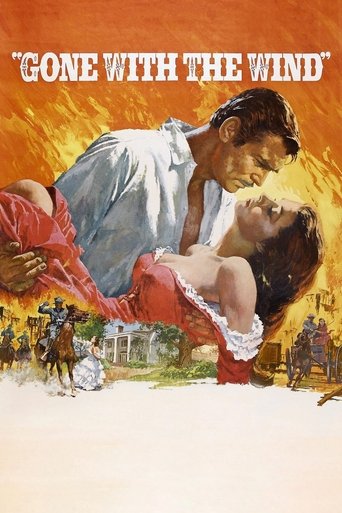
Gone with the Wind
1939 · Film · 238 min
Directed by Victor Fleming
The spoiled daughter of a Georgia plantation owner conducts a tumultuous romance with a cynical profiteer during the American Civil War and Reconstruction Era.
6 positive8 negative62 neutralfrom 76 commenters
Where to watch
No streaming data for this title.
80 comments on Hacker News
yep, and depending on what meaning you want to derive population matters too. also kinda like all kinds of movies have been breaking sales "Records" but if you look at the inflation adjusted top ten, #1 is still "Gone With the Wind".
I guess it's a sign of getting old when I see the world classic and expect Gone With the Wind and Casablanca, but instead the list has Arrival, The Martian, and the Bourne Identity. The Sixth Sense is on the list for the US and it's a movie I coincidentally rewatched last night, again finding it to be a masterpiece.
In any case, very different list in Canada: Rocketman, Ford v Ferrari, Little Miss Sunshine, Catch Me If You Can, Jurassic Park, and the Proposal.
A disclaimer on the site that you are not bigoted or genocidal, and that worldviews from the 1913 era were much different than today and don't necessarily reflect your project.
Movie studios have done that for years with old movies. TCM still shows Birth of a Nation and Gone with the Wind.
Edit: I saw further down that you've already done this! What more is there to do?
moviegoing has always been evolving. from kinetoscopes to grand movie palaces to suburban multiplexes. nothing has ever stayed the same for long in cinema.
heck, most theaters used to be continuous program viewing, meaning you’d show up not knowing what was playing, halfway through a movie, cartoon, or newsreel. scheduled viewing was pretty rare until the early 60s, only reserved for tentpole movies like Gone With The Wind or Ben-Hur.
in some ways, where we are heading is back to where we were: tentpole cultural moments like Barbie or Avatar thrive, but the bread and butter of entertainment happens informally, but now at home.
I don't think they came out later. They existed in the spec from the beginning and some very early long movies were a single disc (e.g., Titanic). Some movies still needed flipping or two discs, like Gone with the Wind but it's just too long.
Mainstream films (or works of art writ large) rarely trust their audience. Artists imbue their work with a lot of handholding for the audience's sake; if it's a need or a want on the audience's part, conscious or unwitting, who can say.
I don't particularly enjoy having my hand held through a narrative, but I know plenty of people who don't mind, don't care, or don't know. It's easier to "participate" as an audience by passively consuming the art than to engage with it actively, and no doubt such art is easier to produce.
Many people seemingly desire a contract to be enforced between artist and audience, where the artist constructs a narrative that is sensible and palatable and neat and tidy. Look at the reviews for Birdman (2014), for example. Plenty of people couldn't tolerate the ending, even if it thematically and tonally made sense.
Gone with the Wind (Mitchell, 1936) upholds such a contract; Light in August (Faulkner, 1932) does not. With no slight against the former, the latter could be used as an example of a work with a radical trust of its audience.
My mum watches the art form of cliche plots of first person AI narration with AI generated imagery. She always watched movies in bits and pieces on TV (also watched Gone with the Wind and other long movies in one sitting) so she would have appreciated "LoFi tv" forever.
A minor point, but it was hardly the first epic movie to have an intermission. Gone With the Wind has one, for example, and is a similar length.
If you think of an emotional scene in a movie, say "frankly my dear I don't give a damn" in Gone With the Wind or whatever, there is obviously emotion in the scene if you watch it and you see the characters/actors experience it but the film is a stationary thing when it's sitting on the shelf, similar to a fixed 4D structure. I figure reality is like that.
Hey, they clearly just keep making more and more popular movies.
/s
FYI for the curious: the highest inflation-adjusted lifetime grossing film is Gone with the Wind.
I grew up around horses and even rode some myself when I was in my youth. I think the average person does not realize how horribly dangerous horses are. Think like in the movie/book "Gone with the Wind." While useful animals, horses are responsible for countless deaths. And this is purely conjecture on my part, but I imagine horses were more dangerous than cars ever have been.
Even last year, my mother broke her neck from getting thrown, and miraculously made a full recovery despite almost severing her spinal cord. Her horse got spooked, bucked before she could react, and it was almost all over but the crying.
That happened to Spike Lee, with his "Malcolm X" movie. The big problem was length. The completion bond company pulled the plug at one point. Lee found enough rich black people to bail out the production, and eventually released the 202 minute version. It was a critical success, but just too long to make money in theaters.
With the notable exception of "Gone with the Wind", few Hollywood films over 3 hours made money.[1] This is less of a problem today, because there are alternatives to theatrical distribution. Long-form mini-series are a thing, and home screens are good enough for epic movies.
IMdb says of Megalopolis, "It's 138 minutes long, but feels like it exceeds the three hour mark." The worst of both worlds.
[1] https://www.digitaltrends.com/movies/the-longest-hollywood-movies-ever-ranked/
The only graph in that article that shows a strong trend supporting the thesis is the first one - essentially, "movies that are remakes or sequels to previous movies". It goes from 25% in the 1980s to ~80% today.
But doesn't that follow sort of naturally? Filmmaking took off as an industry not that long ago - roughly in the 1960s. Of course you didn't have too many remakes of old movies back when you just didn't have that many movies to begin with. And cinematic universes - often centered around superhero action - started popping up only in the 1980s. Before that, it wasn't easy to make a sequel to "Gone with the Wind" or "To Kill a Mockingbird". It was a literary problem, not a matter of corporate consolidation.
And it's dictated to a large extent by audience preferences. We like sequels, prequels, and remakes of the films we remember from our childhood. The same goes for video games; it's a lot harder to sell a brand new idea than it is to market Fallout 5 or Dragon Age IV. It's not the studios doing it to us, it's what we want to play.
I don't know. I don't find the thesis particularly compelling. On the flip side: it used to be that everyone was watching the same TV shows at once, because you only had so much choice. Now, you have far more variety than you used to (albeit the average quality has probably gone down). The same goes for music - sure, "top 100" lists are still dominated by studio-produced albums, but what percentage of people is listening to "top 100" when we all get personalized streams?
That resounds with me: reading fiction is a great way to share the life of other people. Some prefer movies for this, but it's only after ready novels that I've sometimes thought of people as if I had met them in real life. As a teenager, there were days where most of my thoughts went to Piotr Bezhoukov, Lev Mychkine, Rogojine... I was partly living in 19th century Russia.
There's another way to discover history through fiction, which is to read old books and try to understand the author's point of view. For instance, going on with your example of colonialism-slavery, I remember reading "Gone with the wind": I was astonished by the author's racism. Not a slaver's racism, but the permeating belief that Black people where inferior people, a kind of a big children, with big feelings and little intelligence.
I've also learned to be wary of history books, which are sometimes very imaginative (like the tale about about José Figueres in the OP's excerpt) and other times bent to suit the author's beliefs. If I'm really interested in the subject, I usually search for multiple sources.
Stross did not characterize it as "specific to some conservative 70s American culture".
He wrote: "The science-fiction genre that today’s billionaires grew up with—the one that existed in the 1970s—goes back to inventor and publisher Hugo Gernsback. ... His magazine’s strain of SF promoted the combination of the American dream of capitalist success, combined with uncritical technological solutionism and a side order of frontier colonialism."
The kids reading SF in the 1970s were reading SF from across multiple previous decades, not just the 70s.
One such example is Heinlein's 1947 book Rocket Ship Galileo. In it, they are trying to convince some parents to let their teen-aged children to go on an experimental atomic-powered rocket to the moon. The mother describes why she gives permission:
> “Oh, I know what I said,” she went on, “but a mother is bound to cry a little. Just the same, this country was not built by people who were afraid to go. Ross’s great-great-grandfather crossed the mountains in a Conestoga wagon and homesteaded this place. He was nineteen, his bride was seventeen. It’s a matter of family record that their parents opposed the move.” She stirred suddenly and one of her knitting needles broke. “I would hate to think that I had let the blood run thin.” She got up and went quickly from the room. - https://archive.org/details/isbn_9780441012374/page/40/mode/2up?q=conestoga
That's an explicit link between space colonization and the mythos of American westward expansionism and "strong blood".
(John Varley recontexualizes this scene in his "Red Thunder" where the protagonist is of Cuban descent, and it is his aunt, who fled Cuba by boat, who comes up with a very different reason to grant permission. Alas, I don't have a copy of that book, haven't read it for 20 years, and can't find it in the limited search available from archive.org.)
A lot of early SF was based on Westerns, but in space, with blasters, rockets, and aliens instead of guns, trains/horses, and Indians. "Star Trek" was characterized as "Wagon Train to the stars!" as it drew from the Western "Wagon Train." A old SF movie serial I watched from the 1930s had rockets to get from planet to planet, and horses to get from base to base.
And Westerns, as a genre, were full of revisionist white supremacist colonial expansionism that collapsed after the frontier myth it was based on collapsed. https://www.youtube.com/watch?v=x6zD1sjnClM
You write: "These are not arbitrary concepts that were uniquely dreamed of by some sci-fi authors because they had colonialism nostalgia."
But of course they are not, and I don't see Stross making that claim. They were embedded in a white-supremacist culture produced by violent colonial expansion. Gernsback was a racist even for his era, and used his influence to sideline and suppress alternative viewpoints.
John Carter of Mars was a captain in the Confederacy during the American Civil War, which meant he would have committed treason in the name of slavery he he been real. He was portrayed with all the honorable characteristics of Antebellum South, but without the slavery. This was part of a larger range of Lost Cause literature focusing on Southern honor, not "econ-fiction" exploring how slavery supported that culture.
The "taser" is an acronym for "Thomas A. Swift's Electric Rifle" because its inventor was inspired by the book "Tom Swift and His Electric Rifle", wherein the titular character invents an electric rifle so he can go to Africa and hunt elephants for their ivory. Africa, and where locals are described as "All about were the natives, tall, gaunt black men, hideous in their savagery, wearing only the loin cloth, and with their kinky hair stuck full of sticks, bones and other odd objects, they presented a curious sight." ("The witch-doctors ran around like so many maniacs, and it looked as much like an American Indian war dance as anything else.") - https://archive.org/details/tomswifthiselect00applrich/page/n113/mode/2up?q=+savagery
And these are some of the most popular series of the early SF era.
So you are an author and want to write SF. The readership is primarily white males reading a certain flavor of SF, who want to buy more SF in that flavor. What kind of story do you want to write, and will it make it to market?
And that's why the SF market is inherently slow to change, that is, conservative.
The existence of a market, and the need for the publishing company to make money, and the views of the editor, are why you can't simply say "that's idiosyncratic to the sci-fi author."
There's an old complaint along the lines that it was easier for an SF reader to put himself in the place of an alien named Zxtyqyz than it was to put himself in the place of a black man.
That's why Heinlein had to carefully write between the lines to figure out the protagonist in his 1950s "Tunnel in the Sky" is black, instead of saying so explicitly. (https://en.wikipedia.org/wiki/Tunnel_in_the_Sky#Rod's_ethnicity)
When you commented "it tells stories about what might go right ... or might go wrong", remember that you can't see the stories that weren't told. If you never revisit and reexamine the SF you read as a teen, you might easily forgot how you've also been enculturated with some outdated ideals.
Read "Gone With the Wind" and you get a very different account than reading "The Wind Done Gone".
Many old films are really long
Gone With the Wind is 4 hours long
That's a legit assessment, though I didn't feel as if De Laurentiis had in fact preserved the mythology. Again: far more time would have been required.
Checking, it appears that among the longest-running mainstream films of all time were Cleopatra (243 minutes, or 4h8m), Gone With the Wind (238 minutes, or 3h58m), Lawrence of Arabia (222 minutes), and Ben Hur (217 minutes).
Gandhi, which I recall being remarkable at the time and including an intermission, ran only 191 minutes, or 3h11m.
The full Lord of the Rings trilogy runs 9h17m.
<https://wegotthiscovered.com/movies/the-top-15-longest-hollywood-movies/>
Exclusion based on contribution is different than exclusion based on discrimination.
It's a very important difference.
If I, just some random dude, submitted a correct mathematical paper solving a millennium or Hilbert puzzle to a prestigious journal, for instance, they would publish it regardless of the fact that I'm not so and so from Princeton. They wouldn't exclude my valued contribution.
Discrimination would be me submitting the correct solution but first having to find and tack on so and so from Princeton as the author in order to even get considered.
Now I'd probably have to wrangle them a bit to convince them, but that's just credulity, not discrimination.
That's quite different than say Hattie McDaniel, a black actress, being excluded from the premiere of her movie, Gone with the Wind and unable to accept her Oscar on stage because of discrimination.
Discrimination exists regardless of contribution for reasons ultimately unrelated to the nature of the contribution
>had to compete with spider-man
Yes, a much more popular IP-based movie.
I understand it's frustrating to accept that the viewing public prefers IP over original movies, but it's just true. Studio movies as audiences expect them (and increasingly TV) are just too big and expensive to be the medium in which we workshop new ideas. You'll often get new ideas from blank-check directors, animation, or indie films, but that's it.
Now, keep in mind, looking back at some of the greatest movies of all time, good movies were always IP-based, it was just less noticeable:
Godfather (book)
Gone With the Wind (book)
Lawrence of Arabia (book)
Wizard of OZ (book)
The Graduate (book)
West Side Story (Musical)
2001 (An expansion of an existing Arthur Clark Story)
I could go on, but you get the point.
Great idea. Add categories: is A a better Comedy than B? Romance? Mystery? Action?
Is Schindler's List a better Comedy than Gone With the Wind?
Is Schindler's List a better Romance than Gone With the Wind?
Is Schindler's List a better Documentary than Gone With the Wind?
This seems like a dubious leap. What is the substance of this argument? In the absence of movies, people would still buy firearms, either because they hunt, seek to arm themselves for protection, or simply to collect them, not unlike how some collect knives, stamps, or Precious Moments figurines. We know this because people have been buying firearms long before there was cinema.
Other than some terrible movies, Hollywood has never actually tortured anyone.
It is important to remember that Hollywood is a reflection of our society. It seeks to entertain and sometimes (wrongly) to exert influence on that society. It has limited effect because humans are more than the entertainment that we consume. That being said, people like to see the bad guy get his fingernails pulled out, we recoil at horror movies while secretly laughing to ourselves, and weep when the hero is put through agony. The film was written purposely for this emotional effect. That doesn't seem like glorification; a gratuitous worship for worship's sake. (Think Stolz der Nation.)
Films and other entertainment exists because it moves us emotionally. Few act on those emotions after the fact. Not many people identify with the two shop keepers and their pet in Pulp Fiction, but everyone cheered when Butch and Wallace dealt with them. And few can relate to Calvin Candie or Steven, but rejoiced when they got theirs.
Is being shot in both knees and dynamited torture?
Is that glorification, or is it catharsis? A closing of a loop that was opened when you were introduced to a well-written villain.
I also don't remember torture being "glorified" in Gone with the Wind, the Wizard of Oz, or There Will Be Blood. Like all topics, there are nuances and details that cannot be ignored. Generalizations are a precipice.
Give us examples of films you like then people will tell you why—and what generation you're from.
Incidentally, it's been touted on multiple occasions that Gone With The Wind has been shown somewhere in the world every day since 1939—an all time record. It's a remarkable success story that's crossed many generations, and its production for the era a remarkable technical achievement.
I first saw it decades ago and I enjoyed it, but a large part of my interest was technical, it being one of the first spectacular color films (it still stands up very well by today's standards).
Which Golden Age? Yes, the preservation for pre-1927 films is very very poor, 3/4's was lost, with most of that loss being things make before 1925.
Much more of the post-1927 content was preserved (more of it was preserved with sound once we switched to sound on film) - I'd note however that Silent Movies are virtually unrecognizable by modern viewers as being even the same art form as sound pictures - and sound movies didnt reach the same... production values? as the silents until 1936-37.
The period between 1927-and 1937 was a period of reinvention and learning of a new medium, which is why - my general take is the golden age of Hollywood was 1939 to 1959.
Consider what films came out in 1939 -
* Gone with the Wind
* Wizard of Oz
* Mr. Smith goes to Washington
These are films that still find audiences today, now - 80 years or so on.
Most Americans might have seen one movie produced between 1927 and 1938 - but most people who are above 30 have seen at least two those three movies at least once.
And that trend continues from there on - where 1940 to 1959, most americans have seen one movie released in each of those years.
So while I dont disagree that we are losing heritage in these things - I take issue with their definition of Golden Age and the idea that there is value in saving everything ever written or filmed.
Much of it wasnt meant to be relevant for decades, it was meant to be ephemeral topical entertainment, and functionally intended to be disposable. Most of the production of Poverty Row, and B pictures by the majors are like this, they were intended for Block Booking, and largely just as a way to fill the content needs of the theaters and as a way to provide steady revenue in the event an A picture flopped.
For many of them, not even that. Is Socrates outdated, or Thomas Jefferson? How about Picasso? The first of these is widely believed to have been what we would today call a pedophile (this being common in his culture and time), the second was a slave owner and the third was an abusive, jealous womanizer.
Or how about Gone with the Wind itself: The novel and book deal with many universal themes of families, love and human ties being destroyed and deformed by terrible circumstances outside of individual control. Many, many victims of political and social tragedy from any time in history right to the present can easily identify with that central concept without being completely blinded into flippant, fashionable woke dismissal by focusing only on the type of society portrayed in the book and film. The movie's central emotional drama is nearly universal to human history. This is why it was so enormously popular, and its central emotional concept still is today.
I understand your sentiment, and agree with it in some contexts, but look what HBO Max added as an intro [1]: "a prime text for examining expressions of white supremacy in popular culture ... it is precisely because of the ongoing, painful patterns of racial injustice and disregard for Black lives that Gone with the Wind should stay in circulation and remain available for viewing, analysis and discussion. ... an opportunity to think about what classic films can teach us." [2]
1. https://en.wikipedia.org/wiki/Gone_with_the_Wind_(film)#Analysis_and_controversies 2. https://www.cnn.com/2020/06/12/opinions/gone-with-the-wind-illuminates-white-supremacy-stewart/index.html
I read American Prometheus, and I think the movie is going to be hard on Strauss and Teller. I suppose that the DOE action this month will get mentioned in the closing credits. I don't know, that might seem too little too late to get the AEC/DOE off the hook. It's unfortunate that movie makers are such powerful interpreters of history. (EG, Birth of a Nation, Gone with the Wind) This movie will simplify the history and perhaps not be fair to Strauss and Teller. But if I were going to tell a simple story, I think the upcoming movie would be the story I would tell.
Did something similar when I was in college. I watched the IMDB Top 250 and AFI's Top 100 (lots of overlap at the time). I started aggressively, thinking I could watch one movie a day, and struggled to appreciate any of the movies I watched. I was watching movies to check them off my list. Watching "good" movies back to back made it hard for me to appreciate them; it made my baseline of "what a movie is" too high to enjoy. This made me slow down and add movies between the films on my list. I started watching poorly reviewed movies and found some of my favorite movies along the way.
I like your idea of "... and to understand more about what life was like by watching what they watched ..." That's something I didn't like about strictly sticking to an AFI list. To me, some movies contributed a ton to cinema and are a slog to get through. "Birth of a Nation", "Citizen Kane", and "Gone with the Wind" were more fun to read about than to watch. You can't avoid this with your list having some on there that I dread, but the goal of your list makes more sense to me.
Thanks for the trip down memory lane and getting to think about Netflix DVD subscriptions and my spreadsheets again. I'd like an update when you are done.
I thumbed to 1939 in the "1001 Films to See Before You Die" and got these (three I believe are "foreign" films however):
Stagecoach, Zangiku Monogatari, Babes In Arms, Mr. Smith Goes to Washington, The Wizard of Oz, Destry Rides Again, Only Angels Have Wings, Gone with The Wind, Le Jour Se Lève, Gunga Din, Ninotchka, La Règle Du Jeu, Wuthering Heights
> Another point to consider is that old movies don't gain that much from blue ray.
Disagree :) The oldest movies I own on Blu-ray are Gone With the Wind and The Wizard of Oz, and both of them are visually improved by being in HD compared to the DVD releases. I wouldn't really prefer SD for anything regardless of age.
I got to the intermission in Gone with the Wind, said "great, that movie can be over now" and never looked back.
You originally said that Hollywood movies had become "heavily politicized". I think what you really mean to say is that they've started promoting certain ideas that you don't like. Or are you going to tell me that Birth of a Nation and Gone with the Wind didn't engage with any controversial political ideas?
Nice to see the emphasis on the advantages of "plain text". Nearly all my important computing is just "plain text", including the 100,000 lines of typing of .NET code, that appears to run as intended, for my startup's Web site.
For calendars, right, that's important data. Sooooo, I wrote some software that is correct back to Pope Gregory. E.g., can read Gone with the Wind, look up the date of the firing on Fort Sumter, and then know the day of the big BBQ!
But my plain text calendar program just prints out for any given year, for each month, a traditional calendar format, e.g.,
January, 2022 Sun Mon Tue Wed Thu Fri Sat __ __ __ __ __ __ 1 2 3 4 5 6 7 8 9 10 11 12 13 14 15 16 17 18 19 20 21 22 23 24 25 26 27 28 29 30 31 __ __ __ __ __
Right, for the movie:
April, 1861 Sun Mon Tue Wed Thu Fri Sat __ 1 2 3 4 5 6 7 8 9 10 11 12 13 14 15 16 17 18 19 20 21 22 23 24 25 26 27 28 29 30 __ __ __ __ __ __ __ __ __ __ __
Right, there is a lot more we want to do with calendars!
Sooo, I wrote code in Fortran, Rexx, and Kexx (macro language for "plain text" text editor KEDIT, by far my most important computing tool) that, given one of either (a) month, day, year or (b) number of days since the start of the Gregorian calendar, will return the corresponding other. So, easy to calculate number of days between two dates, day of week, etc.
Then can easily write other little programs to do a wide range of applications of manipulations of calendar data!!
So, there's another theme: End users get some general purpose tools, e.g., subroutines that do the hard work, and with those tools write short programs that give them what they want, likely all in easy to work with plain text.
It's not a bad book -- but it IS a pulp novel, Puzo would absolutely admit that. The fact that a decent, but by no means extraordinary book, would go on to be the basis for one of the greatest films of all time is such a rarity (Gone with the Wind is probably the only other similar situation and that novel was probably better critically received in its time than The Godfather was, although it has understandably fallen out of favor today), that it is notable.
Adaptations are tricky and although it is very common for a sublime piece of literature to become a mediocre film, and somewhat common for a fantastic book to become a fantastic film -- it is rare for a film and a screenplay that are inarguably among the greatest of all time to come from a book that would likely not be memorable without the film.
Everything about The Godfather should have been a failure. From the casting, to the production, to the monetary situation at the studio, to the lawsuits, to the source material. But it's a near-perfect film. And that sort of anomaly coming out of such chaos (again, Gone with the Wind is probably the closest similarity when it comes to English-language film) is almost as remarkable as the film itself.
This just doesn't ring true to me, at all.
Is the Youtube algorithm directing people to make vaguely fascist feeling, "bring back the good old days", 'kids today', 'civilization is doomed' content aimed at young males? Or is that just a natural cycle that repeats throughout history?
The biggest film in history was "Birth of a Nation" until it was replaced by "Gone with the Wind", "Star Wars" may have been a rebellion against a vaguely Nazi empire, but it was still about hereditary rulers that are related to each other starting wars.
Overall, the trajectory seems fairly positive. The good old days were pretty crappy and that was reflected in their books, films and songs. Though I suppose if you're young enough that Mulan 1998 is a classic film from the good old days you might simply be ignorant of a lot of the crazy shit that went on.
Look up parents re-watching films from their youth with their children, to realise, horrified, what passed as entertainment in their youth that is now shocking to them and stuff they don't want their kids to emulate or look up to.
Say what you will about the Hays Code, but I would hardly consider Gone With the Wind, The Great Dictator, Casablanca, It's a Wonderful Life, Sunset Boulevard, The Ten Commandments, The Bridge on the River Kwai, Ben-Hur, Spartacus, Psycho, West Side Story, Lawrence of Arabia, To Kill a Mockingbird, Paths of Glory, It's a Mad, Mad, Mad, Mad World, Mary Poppins, The Sound of Music, or, you know, Citizen Kane to be especially "crappy" movies.
The problems of washed-out colors making movie scenes look like gray wastelands isn’t limited to the digital era, if a competition were held then there are plenty from the film-emulsion era that could easily compete for first prize.
In the 1930s a quantum leap in the quality of color film occurred with the introduction of an updated tricolour version of Technicolor. The quality of the colour in Disney films and others such as the Wizard of Oz and Gone with the Wind (both 1939) was truly exceptional when compared with anything that had preceded it and the color still holds up very well even by today’s standards without any digital tweaking or remastering.
In 1950 rival Kodak introduced its Eastmancolor color negative process which used a single filmstrip with a tricolour emulsion that captured the full color range and by mid 1950s studios had a choice of using Eastmancolor negative in cameras and printing onto either Kodak’s own color theater release stock or to use Technicolor’s dye transfer process for same.
The trouble started with the introduction of Eastmancolor stock because it was far less stable than Technicolor. Technicolor is stable because it used a tri-separation process involving three B&W emulsions—B&W film being inherently very stable—as well as stable dyes in its dye-transfer process (for its theater release prints). As no photographic process is used in the dye transfer process, its dyes can be selected for both stability and vibrancy, whereas Eastmancolor has significant limitations in that its dyes have to be compatible with the photographic process (they use chemical couplers to bind dyes to the photographic process and there’s not that many options available). Moreover, color dyes generated by the coupler process have both a smaller color gamut and, as mentioned, they’re far less stable and fade-prone than Technicolor.
Under ideal conditions Eastmancolor produced good results but QA issues as well as Eastman’s theater release shock faded quickly, deliberately so—as theater release prints were designed only to last one season or to do one round of the circuit—for if film got lost or stolen it would be useless after a year or two (otherwise it was worn out anyway).
Of course, things never went to plan, and all too often faded, badly color-graded and rerun prints long past their use-by date made their way back into theaters and were continued to be used. The net effect was that one would often see Eastmancolor theater release prints that were unacceptable for stated reasons, thus it was not unusual to see significant numbers of movies that suffered from fading, significant exposure and color errors and even cross-color†, which, in my opinion, looks damn horrible even in small amounts. To help minimize these problems theater release prints would often be printed in somewhat desaturated/subdued colors as they were less obvious.
The Viewer’s Problem:
Whether we’re dealing with film or digital source material that needs colour grading/correction then there are very effective solutions are but they're not necessarily accessible to the home consumer (or even to theater projectionists).
What viewers need are TV/screen remote controls, that in addition to their usual functions, would also include optional features that enable the viewer to (a) either colour correct a movie on-the-fly or (b) select color corrections from a set of preprogrammed color terms (color correction matrices) similar to those used in professional photo printing machines (those which use color negatives as their source material).
I’m not just talking about the basics such as the usual saturation, colour balance, contrast and brightness, but also vibrancy, curves, shadow and highlight correction and midtone contrast. In essence, all the necessary tools needed to correct both exposure and color errors in movies similar to, say, those that one finds in Photoshop’s Adjustment menu such as Shadow/Highlight (one of my most favorite and most used adjustments).
If studios do a good job in color grading/correcting their movies then we need do no adjusting. But I find that's rarely the case. What bothers me most, perhaps even more than color adjustments are the all-too-frequent excessive instances of black crushing and loss of detail in the shadows and highlights and I want sophisticated tools to correct them. (Surely, I'm not the only one who's noticed the high contrast and crushed blacks in many of the recent transfers of old films to DVD etc. It's clear no one has even bothered to make any corrections.)
_______
† Cross-color is color distortion that occurs as the result of a nonlinear transfer process (cross-modulation) and essentially it very difficult to correct or remove because of the newly created intermodulation products (artifacts—new colors that weren't there at the outset). Cross-color in a film emulsion usually occurs when one dye layer bleeds or diffuses into another which then mix to form the new colors. Moreover, the amount of dye diffusion isn't linear across the transfer curve, it may be at maximum or minimum in the shadows or highlights or anywhere along the curve. There are many causes, aged prints, bad processing, bad handling, one dye being more unstable than another and thus it fades more than other layers (color degradation of this type is largely exacerbated by the film emulsion's exposure to projector light.
That said, cross-color effects can be corrected or eliminated in modern digital effects generators, that is if people bother to take the time to do so (and often they don't). Presumably in the near future AI will do the corrections according to some proscribed algorithm.
Hollywood's biggest film have always been adaptations of existing material. Some of the most regarded films of all time, like the Wizard of Oz, Gone with the Wind, the Godfather, Lawrence of Arabia, and Chinatown, are themselves merely adaptations of books.
Many companies have the 'bet the farm' style of management with movies. MGM 'bet the farm' many times with big production movies and then a plan B movie to hold them over if it failed. A good pairing of that would be Gone with the wind (bet the farm) and plan b Wizard of Oz. Get a few duds in a row and you get sold off to one of your competitors. Wonder where they will end up after Amazon.
It was actually Iger who restructured Disney with the double/homerun style movies. Why did Disney crank out junk movie after junk movie in the 90s? Because they were cheap and consistently made money. I think Disney has gone back to bet the farm style. I personally think it will end up with them sliced up in to a bunch of smaller companies.
I somewhat agree with you, but I also think when you add moralistic disclaimers to the beginning, or claim that the movie should be pulled from streaming catalogs, [1] it’s a small “compromise” to just remove the uncomfortable scenes. Especially if everyone involved will otherwise lose money.
1. https://www.nytimes.com/2020/06/10/movies/gone-with-the-wind-controversy.html
A possible and troubling outcome of this may be that "controversial" scenes are removed from classic films entirely, because advertisers don't want to be associated with them. We've already seen disclaimers added to movies that are "problematic" like Gone with the Wind or Breakfast at Tiffany's.
When push comes to shove, will Media Co. turn down millions from Coke just to keep a 30-second scene in a film? I'm not optimistic.
Maybe I watched the wrong movie and read the wrong book, but doesn't Scarlett end up ultimately paying dearly for those transgressions? A miscarriage, a dead daughter, and the man she actually loves ends up leaving her forever[1] over shit behavior.
Sounds less like a heroine and more like a cautionary tale, but I guess that's the rub with every story true and fiction; whatever moral you want to extract, you usually can.
[1]: I don't count Ripley's Scarlett, because Margaret Mitchell flat out refused to write a sequel to Gone With The Wind.
It’s so hard for me to believe I was in YC over 13 years ago. I thought I was old at the time because I was 27 and most of the people there were a few years younger. I had also already had an entire career in a current field behind me at that point so while not rich, I was not living on ramen.
The part about the air conditioners was nostalgic. We were the second summer in Cambridge (07) and it was also hot. We tracked down this behemoth on Craigslist that took two of us to move. It was old. Like probably from the 80’s old. But man did that bad boy put out some cold air. We left it behind as a gift for the college kids who were renting us the apartment.
We worked so hard that at one point I (normally a very light sleeper) slept right through a fire alarm and firefighters banging on my door. I was lucky it was a false alarm.
I remember a double date dinner with Paul and Jessica and my then fiancée at a restaurant that had murals (I think of the movie Casablanca or gone with the wind). I think it was a not-well-kept secret at the time that they were dating so I didn’t tell anyone.
What a fun, interesting time that summer was. I miss all of that.
Your local community library is also full of extremism. You will find copies of The Communist Manifesto, Mein Kamph, The Turner Diaries, The Anarchist Cookbook, Platos Republic, In Defense of Selfishness and The Koran.
It has “problematic” works like Huckleberry Finn, Satanic Diaries and To Kill a Mockingbird.
It has works written by known racists such as HP Lovecraft, TS Elliot, Roald Dahl, Dr Seuss and Kingsley Amis.
It has hard copies of dangerous films that have been memoyholed by Prime and Netflix like Gone With The Wind and The Jazz Singer. It may also have DVDs that have been produced, directed and acted in by vile, cancelled individuals like Kevin Spacey, Louise CK, Harvey Weinstein, or Mel Gibson.
Good God, it might even have a copy of the Jenna in blackface episode from the third season of 30 Rock. I am clutching my pearls and getting the vapors just thinking about it.
> Some speeches are omens to terrible actions and they are usually supported by symbols
Absolutely. Which is why the US Supreme Court has continually debated and weighed First Amendment tension against public safety.
To my knowledge, the Confederate battle flag has never flown in the US Capitol. Not in July, 1864, when the Confederate Army stared at it across 6 miles and lightly defended lines [0]. Not after 1939 when it was hoisted in film by Gone with the Wind with sanitized nostalgia for an antebellum past [1]. And certainly not in the 50s and 60s when it was appropriated by the reborn Ku Klux Klan to represent their racist beliefs [2].
But it has been present at all three instances of armed insurrection against the US government -- Civil War, first US terrorist organization, and modern, militant Trump supporters.
And ultimately, it's those people's actions, not their ideas or symbols, that are dangerous.
As Justice Louis D. Brandeis wrote in Whitney v. California [3], by way of Jefferson's views [4]:
"[Those who won our independence] believed that freedom to think as you will and to speak as you think are means indispensable to the discovery and spread of political truth; that without free speech and assembly discussion would be futile; that with them, discussion affords ordinarily adequate protection against the dissemination of noxious doctrine; that the greatest menace to freedom is an inert people; that public discussion is a political duty; and that this should be a fundamental principle of the American government.
They recognized the risks to which all human institutions are subject. But they knew that order cannot be secured merely through fear of punishment for its infraction; that it is hazardous to discourage thought, hope and imagination; that fear breeds repression; that repression breeds hate; that hate menaces stable government; that the path of safety lies in the opportunity to discuss freely supposed grievances and proposed remedies; and that the fitting remedy for evil counsels is good ones."
To consign evil to the shadows is no victory, for there are always shadows.
[0] https://www.smithsonianmag.com/history/when-washington-dc-came-close-to-being-conquered-by-the-confederacy-180951994/
[1] https://m.youtube.com/watch?v=qSEVyzKmlyU
[2] https://www.gettyimages.com/detail/news-photo/the-confederate-flag-flies-as-ku-klux-klan-members-gather-news-photo/113917842
[3] https://www.law.cornell.edu/supremecourt/text/274/357
[4] https://jeffersonpapers.princeton.edu/selected-documents/elijah-boardman-0
> In the UK, suppose I want to watch Forbidden Planet, or Gone With The Wind, or Carry on Screaming. Show me a streaming service that has those films
They're on Amazon UK. You can stream them right now. What are you talking about?
Streaming services may be 'in control' but they're still as bad as, or controlled by, the studios they're replacing.
In the UK, suppose I want to watch Forbidden Planet, or Gone With The Wind, or Carry on Screaming. Show me a streaming service that has those films. I either wait 6 months and hope the TV shows them or.... hello bittorrent. Even more recent films.
Suppose I want to listen to Louis Armstrong, or Ella Fitzgerald? Spotify, Apple Music, and Amazon Music all have those songs.
It's just a shame we didn't have higher bandwidth in the Napster era to do to the studios what it did to record labels.
> Literally anything can lead to anything.
I’m glad you get my point.
> private company cleaning up garbage content its “censorship”
And again )
Jokes aside - I am still waiting when people like you start burning books with “garbage” content. I’ll give it 2 years from now. Oh wait, haven’t you already started? Thinking of “Gone with the Wind” now. Oh, it’s back already. But with a disclaimer that it ‘denies horrors of slavery’ and stuff. Like modern people are just unable to understand it right and they require some proper guidance to think in the correct way.
An anecdote: in USSR we had these western/European movie shows on very rare occasions. Normally, before every show a communist party member would make a speech where he/she would warn the watchers that the alien western ideology might harm their soviet minds. It’s very interesting to see how there same thing starts to happen again, voluntarily, in the western world. Way to go, kids )
The argument you’re using - “only governments engage in censorship” - is just an excuse for you to justify the censorship in social media. It’s just a matter of definition, but the result is the same. The social media corporations of the Facebook scale have the same (or even larger) impact on the public consciousness as the government propaganda machine and should not be treated differently.
Actually, the government’s censorship looks even nicer, because they at least provide the legal definition of “garbage”, whereas you guys just call a “garbage” anything you don’t like today. Anything “alien” to your current ideology.
There’s also no such thing as a “right thing”. There are only actions that are legal or not. The violent acts are illegal - work on stopping these. Otherwise, it’s (obviously) a slippery slope (I can’t believe I said this). Simply because the fluctuations of the meaning of “right thing to do” and “garbage information” are completely unpredictable you should be very much afraid of using such moral criteria.
That’s basically the freedom of information and speech people of my country died for in mental hospitals and gulags.
"So Star Wars is the most profitable movie in history. But Gone With the Wind holds the crown in terms of absolute profit from its theatrical run alone."
> "Deepfakes can be used for many of the things we already know," [co-director of the Nixon film Francesca] Panetta says, "but also to create kind of alternative histories or have the potential to kind of rewrite history as well."
Movies, from Hollywood and elsewhere, have been convincing people of rewritten histories since their inception. How well known is the story of the real Spartacus compared to the Hollywood Spartacus? How many people's vision of the antebellum US South came from Gone With The Wind rather than from historical documents and interviews with former slaves and slave-owners? Birth of a Nation inspired the revival of a terrorist organization that lasted decades; Triumph of the Will painted the Nazis' rise as a matter of noble heroism triumphing over cowardice. Last week I argued with some epistemologically incompetent person who wanted me to watch an anti-vaccine movie about Gardasil, apparently unaware that YouTube videos are not really a publication venue used by medical researchers.
So, what should we do about it? Well, the Soviets had an answer: since movies were so powerful, people would be carefully vetted before they got access to the equipment needed to make them, and if someone made a movie with harmful contents anyway, they would go to GULAG. Is that the solution we want?
Like they've survived the past 20. Hollywood ticket sales have been declining sharply since 2002. [1] That's also the year that their inflation adjusted profits also peaked. Hollywood started making more and more awful movies while trying to argue that 'this is what people want.' Well, it clearly wasn't, isn't, and won't ever be. Nonetheless they'll continue down their current trajectory because they think they're right, as this article emphasizes.
Here's an extremely relevant article about Hollywood. [2] Hollywood has been one of the earliest adopters of active utilization and commercialization of "AI technologies". Scripts are actively analyzed using machine learning systems to try to predict profits. Guess what the AI says? Stuff that made money in the past will keep making money, and things that didn't won't. And what do we get out of Hollywood? Repetitive rubbish whose only novelty is tossing in some identity politics to, in this article's phrasing, offer a "more representative portrayal of the world in which we live."
More to the point, think about some of the all time greatest movies (as well as money makers). Here's [3] a list of the top 10 by gross. Tellingly, only 3 of the top 10 were made after 2000. But now consider the other films - Gone with the Wind, Titanic, Star Wars, The Sound of Music, ET, The Ten Commandments, etc. These films were all, if not extremely unique, certainly not derivative rubbish. Now look at the 21st century films and you'll see a whole bunch of generic superhero movies and sequels. Even if not the product of AI, it's certainly the product of a mindset that's no different than a profit oriented regression analysis of the past - the less glorified truism of what "AI analysis" is.
Maybe the biggest problem with Hollywood is summed by one sentence in the AI article I referenced: “[AI analysis] takes a lot of the risk out of what I do.” No, it just makes you comfortable releasing crap that you'd otherwise recognize as crap. Interestingly the producer that gave that quote ended up releasing two mega-flops after the article and has not released anything since. It's not like we've even scratched the surface of possible ideas, but Hollywood has become uncreative, lazy, and averse to any and all risk - to the point that they'd rather drown than try something else, so long as it happens slowly.
[1] - https://www.the-numbers.com/market/
[2] - https://www.nytimes.com/2013/05/06/business/media/solving-equation-of-a-hit-film-script-with-data.html
[3] - https://en.wikipedia.org/wiki/List_of_highest-grossing_films#Highest-grossing_films_adjusted_for_inflation
I wonder if AI is capable to be used to do a restoration of things like music videos, concerts, and old broadcasts. I remember seeing a video about how AI is used in video games to render photo realistic backgrounds.
It may be this video - https://www.youtube.com/watch?v=V9OofzEMBAk
I think that one day this will totally be possible. Can you imagine, with the help of future technology and algorithms, watching film from the 1940s (Gone with the Wind) that looks just as sharp and real as a modern day movie in 4k? Or even, seeing a concert (Michael Jackson) from the 80s that looks so clear that you can really feel what its like to be there?
It's the system as it was designed to be. I am surprised that you haven't heard about the prison loophole before. It even gets a powerful scene in the film 'Gone with the Wind'.
There's a lot of sophistication in "primitive" agriculture. Humans have always been as intelligent and ambitious as they are today; they just didn't always have today's tools.
Yams always make me think of Gone with the Wind. The climax of Act III (not labeled as such, but stories are stories) is Scarlett O'Hara at her family's plantation. Yankee soldiers have come through and taken every scrap of food, but they didn't recognize the yams as food, because it's a Southern thing (yams in the South came over from Africa with the slave trade). So after they leave, she goes outside, digs up a yam with her bare hands, and starts eating it raw. And then she gives this amazing speech... (edited for book-quoted text)
"As God is my witness, as God is my witness they're not going to lick me. I'm going to live through this and when it's all over, I'll never be hungry again. No, nor any of my folk. If I have to lie, steal, cheat or kill. As God is my witness, I'll never be hungry again."
And that's the Scarlett O'Hara of the rest of the book/movie, the relentlessly resourceful one who will never allow herself to be victimized by anything or anyone.
>I mean Scarface looks pretty terrible by the end of the movie, and people idolize him.
You got the wrong idea. I don't think anyone idolizes Tony. It's a great movie and Tony is a great character and Scarface tells an interesting story, not because the protagonist made himself rich. Same as Godfather, I like it and I like them not because they are rich, but it was because they made interesting choices. Let's talk about Scarlett in Gone with the wind -- was she rich? Was she poor?
Recently, I listened to Shit Town and it gave me an everlasting impression on me. The main character in the story was a very poor man. I liked him -- not because he is poor either, but because he is interesting.
Who cares about whether the character is rich or poor, the character's background is merely a medium to tell the story. Being very rich or poor or desperate is just a convenient choice to get the story flowing because the characters in such extreme circumstances tend to have interesting experiences and choices.
I would disagree about the cultural significance of TV shows and movies. They occupy very different places in culture.
TV shows aren't just long-form narratives; people develop relationships with the show and its characters similar to the relationships they develop with friends they see regularly and learn about over time. People's experiences with the show differ based on whether they started watching from when it first aired or binged it after the end of a season. Moreover, shows change, often as a result of the cultural response to the show or viewership (see, e.g., Walking Dead's latest season, L&O SVU, daytime soaps).
Movies are essentially one-time events and distinct unalterable shared experiences They don't change (directors' cuts notwithstanding). The cultural response to the movie may change over time, but the movie itself doesn't. (For example, Gone with the Wind is the same movie it's always been, but people now view its depiction of minority characters far less favorably.)
> Where are this generation's "Mr Smith goes to Washington"? "Gone with the Wind"? "Apocalypse Now"?
Films like this stood out as original or thought provoking when released, but now films that emulate those classics are everywhere. They have become commercialised to the point of formula. The courtroom drama movie, the period drama set against the backdrop of conflict, the war is hell story. There's one out every other week. It's because they've become so commonplace that they're no longer thought provoking.
> When did people lose sight of the fact that the primary purpose of film on the silver screen is entertainment?
Where did people get the idea that the primary purpose of film on the silver screen is entertainment?
Film has always been art: the purpose of art is to provoke thought, hold up a mirror to society and, of course, entertainment (among others): the ratio of ingredients can change, but it's never been solely about entertainment.
These days, the studios are pumping out motion renderings of comics, as if some ML algorithm that decides on what to work on is in some sort of a feedback loop.
Where are this generation's "Mr Smith goes to Washington"? "Gone with the Wind"? "Apocalypse Now"? (not to imply that these 3 are the best movies out there, just some names off the top of my head, and I'm no cinephile, so let's not get into a movie-naming contest).
> Casablanca is widely remembered as one of the greatest films of all time, coming in at #2 on the AFI’s top 100 list ...
1. CITIZEN KANE (1941) 2. CASABLANCA (1942) 3. THE GODFATHER (1972) 4. GONE WITH THE WIND (1939) 5. LAWRENCE OF ARABIA (1962)
I just don't enjoy CITIZEN KANE anymore. It's like a film school movie. I watched it maybe 10-15 times when I was younger and I just don't enjoy it anymore. Like so what? GONE WITH THE WIND is the pinnacle of Lost Cause propaganda. I enjoyed when I didn't understand it. (I'm sure glad I didn't watch Triumph of the Will when I didn't understand it.) I damn sure don't enjoy GONE WITH THE WIND now that I understand it.
But I can watch CASABLANCA, THE GODFATHER and LAWRENCE OF ARABIA over and over. And this was a good article telling me things I didn't appreciate and still I can go back and watch CASABLANCA again.
>He said the high price of tickets, not competition from Netflix or Amazon.com Inc.’s Prime Video service, is a big part of what’s keeping people away. “People really do want to go more often,” Lowe said. “They just don’t like the transaction.”
Maybe he's right but I'm not convinced. I think kids/teens would love to go the theater more but my personal anecdote is that my friends and I lost interest after age 25. It's just not as exciting to go to a theater when you're not in high school or not part of the dating scene in college. Of course, if you're a parent with young kids, you go because you're the chaperone for the Disney movie.
It seems like declining visits by adults is just a general long term trend. Similar to the decline of drive-in theaters. Used to be fun to to drive the car into the lot but the novelty wore off. Adults also went to theaters in 1930s in high numbers (e.g. Gone With the Wind) because theaters were among the first to have air conditioning which was a big deal. Every house has air conditioning now.
Lastly, the economics of movie theaters have created a feedback loop that results in "big tent pole" films like Disney / Transformers / Star Wars dominating the screens. Adults want serious drama like "House of Cards" -- which is available at home.
One could argue that if ticket prices weren't so high, more adults would have gone to theaters which would then have subsequent effect of HoC, Boardwalk Empire, etc only being released in the theaters. I guess one could go down that rabbit hole of an alternate universe but I'm not convinced by it because I still think adults just eventually get bored of the "theater experience". (Babies crying in the back row, other patrons who don't shut off their cellphone ringers, sticky dirty floors, 15-minutes of ads before the movie starts, etc)
EDIT ADD: some replies seem to misunderstand my comments. I know some people do enjoy going the movies and the barrier to that is the price which MoviePass solves perfectly for them. I'm not arguing the existence of such moviegoers. Instead I interpreted “People really do want to go more often,” as a _macro_ trend and my comment is about reversing the macro trend of declining theater attendance. I'm not convinced MoviePass will actually solve that because fundamentally, the thrill of going to the theater wears off (age, Netflix/HBO at home, other entertainment distractions competing for time, etc). Again, that's a macro prediction. Yes, there are lots of enthusiastic moviegoers but they're outnumbered by the people with apathy for attending theaters.
I should have clarified: there's no sampling bias. These are incredibly popular movies. Here are some movies not on Netflix streaming that I've wanted to watch this year: Gladiator. Star Wars IV. Shawshank Redemption. The Wizard of Oz. When Harry Met Sally. The Princess Bride. All Star Trek movies. Goodfellas. Lord of the Rings. Gone with the Wind. All Godfather movies. Monty Python and the Holy Grail. Airplane. American Graffiti. The Usual Suspects. All Jim Carrey movies except a bad one (the Grinch) and one I've never heard of (the Number 23). Toy Story. There's Something About Mary. All Austin Powers movies.
The last time I tried searching for a good movie to watch on Netflix streaming, I gave up after 10 minutes. I'd think of one movie after another after another. Nothing was there. All it could suggest was "related titles," as if that's what I would want.
A movie is like real estate... You make it and you can keep "renting" or selling it. Movies like 'Gone with the Wind, Casablanca, Snow White" are still making studios mad money on different delivery systems from the original theater showing on through to VHS, DVD, Blu Ray, 4000-pixels and streaming.'
These movies came out in the 1930s. They are almost 100-years old.
NetFlix got that fact pretty quickly when the studios wanted to renegotiate contracts and that is where the bulk of their money is coming from. [They are] the creator and the distributor.
edit to fix typo.
My pick for year is 1878. I'd love to see your examples.
But really, how do you quantify good? Taste is subjective. The original Transformers move is a great example. I didn't like it. but i believe 14 year old me would have absolutely loved it.
It's similar to the statistics about Word users only use 5% of the functionality of Word. But everybody uses a different 5%.
I guess if you want to go by money, i'm going to pick 1939. I'd guess about $18,000,000 in production expenses, and about $240,000,000 in box. [1] (arbitrarily assigning 1,000,000 to the unlisted numbers, but keeping the box at $0 for unlisted numbers) Seems like a pretty good ROI. (although i think of, Gone with the wind, Mr Smith goes to washington, and the Wizard of Oz as subjectively good. 25% is a pretty good percentage)
Kind of a fun exercise poking through the years. 1997 was a standout, but everything i looked at had memorable and fun movies. I don't think any year would hit that 25% mark though.
[1] http://www.the-numbers.com/movies/year/1939
That's reasonable, but again this is the #2 grossing film for the year in the US. #1, #4, #5, #7 where PG kids movies. #3, #8, #9, and #10 where comic book movies in a long string of comic book movies.
So, yes revenue was down, but the movies where also very derivative. The top grossing films adjusted for inflation are Gone with the Wind, Avatar, the first Star Wars, Titanic, The Sound of Music, E.T. the Extra-Terrestrial, The Ten Commandments, Doctor Zhivago, Jaws, Snow White and the Seven Dwarfs.
The Force Awakens might make #10 on that list while being the only franchise movie to do so. But, no movie from 2016 is even close.
Well I think the reference you're citing is more about the length of the film - 3 hours and 45 minutes - moreso than the fact that it's in Technicolor. A closer parallel would be comparing Gone With the Wind to a Michael Bay Transformers film, in that almost 3 hours of cinema is typically hard on the viewer, and moreso when there are tons of visual explosions and loud sounds that wear down on an audience.
I love THX theater sound. SDDS. All of them. However, those tools can be very much abused by certain practitioners, and that's not the tech's fault. Basically I think that improvements are welcomed but gimmicks never last. Is VR a new gimmick in the grand context of entertainment? We're about to find out it seems.
Though, if we're to quote the Times, this review[1] of Gone with the Wind is also notable vis-a-vis contemporaneous attitudes towards new media:
> we still feel that color is hard on the eyes for so long a picture
[1] http://www.nytimes.com/movie/review?res=9807E2DA153EE432A25753C2A9649D946894D6CF
More disturbing is the refusal to make available movies that were incredibly significant culturally at the time of release but are now considered "offensive" to modern sensibilities. Disney's Song of the South is a prime example, despite the fact that James Baskett was awarded an Oscar for his portrayal of Uncle Remus... the first black man to receive an Oscar and only the second black person to do so (Hattie McDaniel won in 1939 for her portrayal of Mammy in Gone With the Wind.)
Try and encounter someone who doesn't know the song "Zip-a-Dee-Doo-Dah", then ask them the origin. Most people under 30 have never seen the movie, and those that have did so using unauthorized sources.
I'd have interpreted Valve's move as saying "unlike product management at Apple, we understand the context of gaming enough to know that in war games, it's typical to use flags to represent opposing sides, and that there is no reason to believe that people are making or buying such games to make a racist statement" Apple's PR moving in banning the games was to make the statement "we are a sensitive company" but their unintended subtext of their actions was to highlight that that don't know or care to take into consideration the context of developers of gaming apps, and are happy to hurt them to make this statement, while not being willing to do the same to truly important partners, like the makers of the television show Dukes of Hazard, or any of the other TV shows, or movies, or books where that flag is displayed.
No one who actually cared about not glorifying the Confederacy would continue to sell Gone with the Wind, as Apple is doing.
> It astounds me that there are large numbers of whites in this country who think the Civil War was about anything other than slavery.
Indoctrination with these beliefs in pretty common at high schools in places like Mississippi and S. Carolina, and even at (rural) high schools in border states. We watched Gone With the Wind in my History class in high school. Not when discussing e.g. "the role of film in civil rights/modern history" mind you, but when discussing reconstruction. It was pretty explicitly treated as a more-or-less accurate portrayal.
B. Movies at the Star Wars level (i.e., blockbusters) cost about 200x as much as a single one-hour episode yet are only about twice as long.
A TV show would also double as extended brand advertising. Every episode would renew interest in, and/or focus on, the Star Wars brand, so each episode would double both as an income-earning vehicle and as paid promotion.
C. You greatly overestimate the mass appeal of movie stars and movies. The income generated by movies is easier to track, but TV shows have far higher viewership and mass appeal. Consider: every episode of Fringe, a low-rated niche TV show, is watched by "only" 5-6 million viewers. In movie terms, that would equate to $50-60 million in box office at matinee prices (i.e., would place in the top 30 all-time weekend earnings). Over the course of a season, the viewership of Fringe would exceed the total box office viewership of Titantic and Gone With the Wind, the two most popular movies of all time (based on the number of moviegoers, not earnings).
Famously, the Stargate TV show and its various spinoffs averaged fewer than 3 million viewers an episode per broadcast per channel, but the franchise is one of the most profitable in entertainment history, having generated more than $1 billion in licensing-related revenues.
When are these numbers ever inflation adjusted? Biggest grossing movie of all time inflation adjusted is still Gone With the Wind, but that didn't really stop people from talking about Titanic or Avatar.
Relying on literary adaptations is a symptom of Hollywood's decline from the golden age of The Maltese Falcon (1941 remake of a 1931 adaptation of a 1930 novel), Gone with the Wind (from the bestseller by Margaret Mitchell) and The Adventures of Robin Hood (way more than a hundred years old in 1938)?
The reason most Hollywood material is adapted material, is that a movie is a hell of an expensive place to try out new ideas. A book costs little to write, and takes one person to write it. And there are lots of them, succeeding, or failing, on the strength of their ideas, writing and storytelling. Cinema has never been the place to run a lot of flags up the pole and see which one the public salutes.
What about if the price of apples went up you could still be making the same amount of money as when they were cheaper...and you need less people to buy your apples. I can almost guarantee that a smaller number of people saw Avatar in theaters than Gone with the Wind.
A movie ticket, on average, cost $.23 in 1939. Adjusting for inflation, thats $3.72 today. I think I paid $15 for Avatar 3D.
http://boxofficemojo.com/about/adjuster.htm
If you adjust for how ticket prices have grown over the years, the highest-grossing films of all time are:
1. Gone with the Wind
2. Star Wars
3. The Sound of Music
4. E.T.
5. The Ten Commandments
So in those terms, we haven't actually had a new highest-grossing film of all time for seven decades. The nominal biggest movie ever, Avatar, really only comes in 14th.
Source: http://boxofficemojo.com/alltime/adjusted.htm
"It freezes the first release as the only release for up to several generations."
This article is rather lackluster.
First, I don't see a problem with this (there is rightfully only one definite version of Casablanca or Gone with the Wind) and second I would deny that this is really an adequate description of popculture of 100 media industry: Superman was restarted/remade many times. Want to adapt/change is story? Invent your own Superhero. Can't get a license for James Bond? Get a different name for your super agent.
The movie rights for Lord of the Rings and the Hobbit were a few generations unavailable (which is a good thing because Tolkien feared a disneyfication of his books), but nothing stopped someone from dreaming up his own fantasy world/story with Orcs.
Aren't they suppose to compare this year with some of the other years
Of course not. That would be mindful. This is a mindless nostalgia piece, right out of central casting.
The fun thing to do when one of these articles arrives on the radar is to see which cherry-picked "classics" are being name-checked:
"The Godfather," "Jurassic Park," "Casablanca," "Gone with the Wind," "My Fair Lady" and "The Matrix,"
These lists are always carefully constructed. In this case we have two extremely popular classics from the 1930s, generally regarded as among the best films ever made. That's to establish your street cred as someone who has actually seen some great movies. Then one film each from the 60s, 70s, early 90s, and late 90s, to ensure that every one of your readers over the age of thirty has something to be nostalgic about, and that they believe that the author is sufficiently "hip". (No sense in listing too many films from the 2000s; twentysomethings don't read newspapers.)
Then I got as far as this line:
Where once there was "Robin Hood: Prince of Thieves," there is now "Robin Hood," prince of duds.
This line is a dead giveaway, because "Prince of Thieves" was not a good movie, let alone among the best Robin Hood movies; it was redeemed only by the presence of Alan Rickman. Why, then, is the movie praised here? Because the writer really needed to write a cute sentence, reality be damned.
That's about all you need to read. The rest just wrote itself. It can read itself as well.
Taking the top movies in adjusted domestic gross, dividing by their non-adjusted domestic gross, and then multiplying that ratio by their worldwide gross, you get:
1. Gone with the Wind - $3.04 billion 2. Titanic - $2.34 billion 3. A New Hope - $2.24 billion 4. E.T. - $1.93 billion 5. The Sound of Music - $1.92 billion 6. Jaws - $1.73 billion
As of this post, Avatar is 2.05 billion and climbing. Will it be the most watched movie of all time worldwide (in theaters), or will Gone with the Wind retain its dominance? *Data taken from boxofficemojo.com.
I've always wondered, even after adjusting for inflation wouldn't it make sense to adjust for population as well?
In 1939 the population of the US was only 130millon, and a large portion was rural, which meant they had poorer access to theaters. This makes the returns of Gone with the Wind that much more impressive (although of course TVs/misc. entertainment devices didn't exist, which compete against movies.)
Perhaps a good way to measure the success a of a movie would be the percentage of the population that has seen it.
IMDB reports that 2322 movies were released in 1939 alone, is it really surprising that there were a handful of good movies among them?
1980 for comparision, IMDB lists 6007 movies (8000+ if you include TV movies), and contains modern (popular) classics such as Stir Crazy, Superman II, Empire Strikes Back, Airplane!, The Blue Lagoon, Ordinary People, Urban Cowboy. The Shining, Caddyshack, Raging Bull, Friday The 13th, The Fog, The Blues Brothers.
Hmm, looks like 1980 was a much more 'classic' era than the 40s for hollywood, but you wouldn't have heard that from film buffs in the 80s.
Hollywood has always been a great abuser of the 'sling lots of shit at the wall and see what sticks' approach to 'greatness', they're just slinging a lot more shit these days.
Even if we take a really contemporary year and do the same study, we see a pattern of greats no matter what year, take 2005 at random:
Batman Begins, Sin City, V for Vendetta, Revenge of the Sith, King Kong, Brokeback Mountain, Harry Potter/Goblet of Fire, Serenity, Charlie and the Chocolate Factory, Mr & Mrs Smith, Wedding Crashers, Munich, Saw 2, Hostel, Hitchhiker's Guide to the Galaxy, Madagascar, Pride & Prejudice, Land of the Dead.
Ah, but the movie buff will point out that they're not established classics like Gone with the Wind, or Wizard of Oz. Not yet, anyway.
Edit: Btw, for 2005, the number of movies was 28,000+. Is it any wonder that there is a lot of formulaic stuff in there as well?
These days, the commonly accepted wisdom is that movies were always as bad as they are now, and anyone who says otherwise is just idealizing the past. I offer the following evidence that the quality of movies is not constant over time:
1939: Mr. Smith Goes To Washington, Gone With The Wind, The Wizard Of Oz, Stagecoach, Ninotchka, Wuthering Heights
1940: Rebecca, Fantasia, His Girl Friday, The Grapes of Wrath, The Philadelphia Story, The Great Dictator
1941: Citizen Kane, The Maltese Falcon, The Lady Eve, Sullivan's Travels
Rather than relying on personal taste, I took these from various 'top 100' lists. I haven't seen all of them myself, but the ones I have seen are a mile apart from anything released this year, or any recent year.
The technology associated with film-making has evolved incrementally ever since its inception: from the 1890's Edison Kinetoscope shorts that could be watched by only one person at a time to the 2-reeler comedy shorts circa 1915 to D.W. Griffith's breakthrough with silent feature-length films in Birth of a Nation to the first talkies with 1927's The Jazz Singer to the introduction of color in select 1920's movies such as The Black Pirate (eventually evolving into beautiful technicolor productions) to Disney's feature animations in the 1930's to the first experimentation with 3-D in the 1950's with The Blue Lagoon and other gimmick films featuring knives and other assorted objects being hurled gratuitously at the audience to the widescreen film techniques of the 1950's featuring elongated landscapes that made one dizzy watching them to the modern digital special effects movies featuring CGI in a leading role.
Throughout this history, film-makers have continually experimented with different camera techniques and different types of cameras.
This item relating to Mr. Cameron appears to be another incremental step in this long process. It looks to be interesting and possibly intriguing.
What is being lost in the modern film innovations, however, is what I would call the essence of film-making, which is a play-acted script featuring real people but presented as human drama/comedy/satire/etc. using the recognized camera techniques that distinguish cinema from a live play - rapid cutting, point-of-view camera angles, etc. As things go increasingly digital, and become more and more subject to manipulation of images bearing less and less connection with our real world experiences, we get more and more a sense of watching a cartoon as opposed to real people. It is no coincidence that, in this context, many of the modern plots are drawn from cartoon sources (Batman, Spider Man, many others). As this emphasis on special effects has increased, what has become increasingly lost is the quality scripts (with their corresponding wit, drama, fantasy) that once could be taken for granted in quality film-making. The result is an increasingly artificial experience to which it becomes harder and harder to relate.
Over the centuries, it is the great stories that have moved us, from epic poems to the great novels and, yes, even to the cinema of old warhorses such as Gone with the Wind. Today, technology has become as much a substitute for story-telling as anything else. Yes, it constitutes progress in a real sense (incremental though it may be) but, insofar as it has detracted from inspiring story-telling by serving as a tin-hat means of attracting audiences without the need to develop a great story, it has brought a net loss. Just watch a silent movie like Sunrise (1927) and tell me that CGI and other gimmicks have brought a net improvement to what truly can be inspiring about film.
It is, of course, possible to combine great new technology with great stories but not when the technology itself is being featured as the primary attraction.