 Hacker Cinema
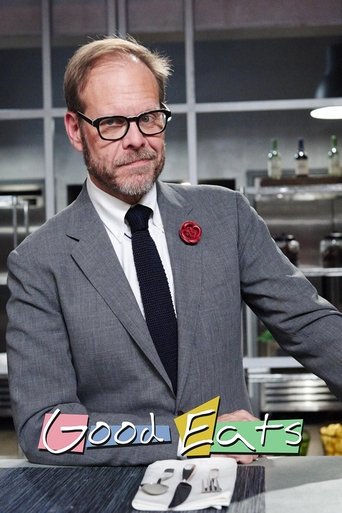
Good Eats
1999 · TV series · documentary · 23 min episodes · 16 seasons
Created by Alton Brown
Host Alton Brown explores the origins of ingredients, decodes culinary customs and presents food and equipment trends. Punctuated by unusual interludes, simple preparations and unconventional discussions, he'll bring you food in its finest and funniest form.
14 positive1 mixed6 neutralfrom 21 commenters
Where to watch
No streaming data for this title.
24 comments on Hacker News
OK, how about sharing some cooking resources worth looking into (this is more for future searches)? Here's mine:
1. On Food and Cooking: The Science and Lore of the Kitchen by Harold McGee. Not strictly a cooking book in the sense of recipes, but the most exhaustive encyclopedia / intro into the science and mechanics of cooking
2. Modernist Cuisine: The Art and Science of Cooking. The previous, but written with a "more is more" approach and an extra focus on modern techniques. More details, more pictures, (much) more volume and much pricier.
3. Serious eats Food Lab - Probably the best resource on "why/how" a given recipe / technique works that's accessible for free on the internet. I think the main author of this (J. Kenji Lopez-Alt) is also co-author of one part of the Modernist Cuisine.
4. Good Eats by Alton Brown. This used to be a TV show running for well over a decade. Alton Brown usually tries to do one recipe / technique / ingredient per episode and explain as much as he can in 30min or so. The first episodes / seasons are a bit dated (I think he goes over some of the older stuff in his later seasons), but overall probably the best TV show on cooking I ever saw.
5. America's Test Kitchen - a youtube channel. This is a bit of a mixed bag, but when it comes to a channel that I'd recomend to a beginner, I'd probably start with this. Second would probably be someone like some of the Adam Ragusea older episodes (I think he lately went into body buliding a bit too much), or some of the older stuff from "@FrenchGuyCooking" (I got to him through a video done by @ThisOldTony).
6. For recipes : personally I go for David Lebovitz. Old SF cook who moved to Paris some decades ago and at some point used to publish a lot of recipes on his website (though I have the impression he lately pivoted into more of restaurants reviews / social media, the archive is still good).
The old _Good Eats_ tv show was great for this too. You can find most of the episodes on YouTube.
Another good source is the book Ratio, which is almost like a tutorial in how to come up with your own recipes
You want Good Eats by Alton Brown! Each episode is built around an ingredient or technique and he then goes deep on that one topic and explain all the how/why/when you should use it. While the episodes do generally demonstrate how to make a dish, the dish is more of the framing used to explain the underlying techniques and concepts.
See if there are any legit culinary classes in your area. If you don't want to take a class, you could maybe get by reading the textbooks they use. It at least go to the library and check out their culinary selection.
A couple decades ago, there was a tv show called Good Eats by Alton Brown. If you can find the reruns, it has a lot of information for newbies, but it will take a long time to watch it all.
I'm not an amazing chef but I do okay when I put my mind to it. Like anything else, it takes some up front effort to learn the basics and experience to learn the rest.
There’s an episode of Good Eats where Alton Brown chucks a cordless drill onto a pepper grinder to pretty good effect.
I disagree at large, but give exception to at least the US due to how cities are built.
I am not a chef by any means or even a cook, but I learned how to cook in University due to being unbelievably poor and got tired of "low budget fast meals". Quotes because I don't think that the meals that fall into this category are at all better than their "proper" counter parts.
Prepping a quick pasta with béchamel does not take long at all, and with a common pot and pan from Ikea or even Target or Walmart and a fork and knife, you have all you need. Prepping a quick pizza by hand, some general Wok style cuisine, etc, it's all quite fast once you learn a few things about how to prepare food.
I'm sure it's cliche, but watching Good Eats with Alton Brown a few times helped me understand why certain combinations work and gave me the confidence to understand how to make different things match. In particular, watching his episodes on knife skills helped me understand how to speed up a lot of prepping (an unabashed advertisement for Shun from Alton, but let's ignore that part) [0]
When I was still in the US, long and laborious kitchen exercises were glorified; the longer and more putzy the recipe, the more most people I know fawned over the idea of the meal, but I'm here to tell you that taking the time just to understand the basics of cooking, you don't need the blogpost 2 hour narrative story for cooking, it's very basic chemistry at its best. Some meals have unavoidable time and complications, and that's fine, but you can make very tasty, very healthy meals quite fast while listening to your favorite show or some music or even just enjoying the silence of the kitchen and the sound of the cooking.
> You can't just buy a slab of chicken breast, it needs to be trimmed and put away until ready to be used. Hardest of all: planning, what to do with it, what else goes with it.
Absolutely not true IMO, but I get where you might have this if you don't have a more European style city to live in. I do not pretend to guess where you are from, but usually I heard and hear this from people I know still in the US, and it's distinctly because of how US cities are built. In Europe and in quite a few Asian countries, proper grocers are a dime a dozen and every couple hundred meters. I stock the basics (flour, salt, spices, other grains, and some slow-perishing sauces like tomato paste) and buy perishables on the way home since there's a fully stocked market no bigger than a chinese takeout shop at the base of my apartment or < 200 meters from it.
The meat and produce I get are used immediately or over the next day for another meal, and it's very nice. Half of my lunch break for work is cooking, the second half eating a freshly cooked meal.
I really feel that there is a bit of a cult around cooking that wants to overcomplicate the process because complex == classy, and I need to stress that when you're first starting, it is going to be slower because you haven't developed your technique. It's the same reason you'll probably fall a lot when first learning to ice skate or why you'll sound like a drunk playing a guitar when you first learn. The good news is that even if the end result of your first few meals is ugly, likely it still tastes pretty good.
The time is very relative -- I'm monitoring a global market so I have 10+ hour days almost every day depending on how bad certain situations get, but I made cooking part of my skillset because I didn't want to be indebted always to food delivery. It absolutely is possible even for a family without a dedicated cook, and I think the first step most people need is admitting that it's not the time sink they make it out to be. Once you get a few basics, you are some sort of wizard to most people.
[0] - https://www.youtube.com/watch?v=JPZFVjrlTo8
Thanks. Also Good Eats rocks. I recommend anyone that likes food and science watch it. Best cooking show for geeks ever. Alton and his wife do a live YT steam on Tuesday's called Quarantine Kitchen. Funny. Uncensored. Alton has a sailors mouth.
I only really learnt to cook once I stopped focusing on recipes and started to focus on ingredients and techniques.
Pick any random ingredient you enjoy and cook it using a few different techniques and a few different time/temperature combinations. Try to understand what is happening with that ingredient, why they taste different and which you prefer. You'll soon get a feel for how different combinations of time and temperature affect different ingredients and will often be able to guess how new ingredients will behave based on your experience with similar ingredients.
I personally consider Alton Browns old TV show Good Eats as a great introduction to cooking following this approach. Most episodes are dedicated to one ingredient or one technique and really breaks down the science behind everything and how different factors affect the outcome. Once you understand the basic techniques and ingredients, putting together recipes becomes a lot easier.
I find certain familiar TV shows playing at moderate volume can greatly help my own problems getting to sleep. For me it's Futurama, 30 Rock, Star Trek: TNG, and Good Eats. All things I can consistently enjoy watching over and over, with a minimal amount of high dynamic range (i.e. no shouting), and things that don't surprise or grab attention. Sleeping with a partner that has trouble getting to sleep at all with something on has made things a little more difficult.
That's step one, step two is getting to sleep at the same time every night, taking care to _not_ stay up into the early hours or sleep in, and general human maintenance. It's still not perfect, or sometimes even very good, and I'm afraid it'll always take care unless I make lifestyle choices that make me always tired.
I mostly use a mix of TV shows, youtube pages, and regular blog sites.
Food Wishes, Serious Eats, Cooking With Dog, America's Test Kitchen, Maangchi, the forums of pizzamaking.com
Bon Appetit recipes tend to be good when I make them, but they publish a lot of recipes and often times they aren't for food I actually want to make. Good Eats was nice when I was initially learning how to cook, but he sometimes goes over board, especially his weird unitasker rule. The correct rule should be to always critically evaluate bringing a new tool into kitchen, don't clutter it up with a lot of items you will rarely use, and make sure the tool is as easy as possible to keep clean.
This is going to sound like it’s not directly addressing your concerns, but stay with me: watch Alton Brown’s old Food TV series "Good Eats".
I used to think cooking was this sort of mysterious voodoo with arbitrary rules, and could not (and still cannot) memorize a recipe to save my life. Good Eats changed everything.
Alton Brown had a background in children's television, and decided to apply that approach to a cooking show.* Instead of simply saying "this meal will taste great, here's how to make it," he goes into weird Sesame Street-style digressions into the science behind things like the "Mailard Reaction" (how the browned crust on a burger or steak happens and why it's delicious) or why different oils get used for different things.
Once the science, chemistry and physics of cooking started making sense to me, I quickly became a pretty goddamned good chef (if I do say so myself). I think this will have a similar effect on your fears — once you get how it all works you won't be afraid of fucking up.
After you've covered the basics with Alton, try http://www.cookingforengineers.com and Modernist Cuisine
* In fact, he didn't even know how to cook; he had the idea, took two years of classes, then made the pitch to the networks.
As a customer, I don't care. Tone note: I don't mean that snarkily, sarcastically, or dismissively, I simply mean that, I don't care. Or if you prefer, I can't care; there's nothing I can do to fix it short of what I just did.
It really is bizarre to me how protective the entertainment industry can get of its content, in a context that I am paying for it (in fact I buy the Hulu non-commercial plan, upon which they make much more than they ever could dream of with commercials, especially given I tend to watch at most two shows per season on them, so I'm really paying for it). I assume Hulu has some sort of arrangement where payment is based on viewership. Why would a TV show not want all of its episodes from at least the last season up on Hulu, prior to its distribution in some other format?
I'll be specific. I enjoy Penn and Teller's Fool Us; not necessarily my favorite show ever (and yes, I'm aware of the at-least modest amounts of kayfabe going on) but a fine late-night relax-before-bed show. A quick search suggests that it is not currently legally available in any format, though I welcome corrections. What's the motivation for taking it off Hulu? Now they certainly aren't making any money from it.
I mean, I understand greed in the general sense. I understand the principles of differential pricing for different markets and the way the entertainment complex uses time to do that with movies and such. (i.e., it's why movies come out in theatres, then on expensive pay-per-view, then DVDs, then streaming services) What I don't understand is the motivation for taking down content that is not legally available anywhere and making it impossible to make money off of, especially in light of content not likely to be available in any other way in the future (there does not even seem to be DVD sets or anything, there does not seem to be a "downstream" for this to go in the differential pricing). A similar trajectory has been followed with Good Eats, which is only very spottily available legally. (A quick search to make sure I'm not shooting my mouth off shows that seasons 1 and 2 were available but are now $100+ to buy used, because they're out of print.)
Oh, and while this may be perhaps neither here nor there, huge, huge chunks of the show are readily available on Youtube. (Not the paid part, just normal free Youtube.)
Good Eats was on for 14 years and has 252 episodes, what more can you possibly ask for? That's a good run for any show nevermind one as labor and time intensive as Good Eats.
What makes you think his Good Eats host character is his "normal persona"? He doesn't play a caricature, just a character.
ReplayTV. I was able to record TV, and easily transfer shows to my networked computer for later consumption. I still have all the Good Eats episodes from 15 years ago.
As a former professional cook, my advice has remained consistently "Watch every damn episode of Good Eats you can get your hands on."
Alton Brown's recipes aren't always my preferred method, but he's an excellent teacher, and great at explaining the science and the "why" behind how cooking works instead of relying on pure folk wisdom like most cooking teaching.
Honestly, if you watch all 10 seasons of Good Eats you'll probably get more out of it than you would a culinary degree from all but a handful of schools.
Edit: how about this clip? http://www.foodnetwork.com/videos/choosing-tomatoes-0157352.html
Most likely season 2 episode 11 "Pantry Raid II: Seeing Red" or season 6 episode 6 "Tomato Envy". Food Network takes down most Good Eats episodes on YouTube because they sell some of them for $2 each. Here's a crummy version of Seeing Red that may be deleted soon https://www.youtube.com/watch?v=6FNWPtKtKPc and Tomato Envy https://www.youtube.com/watch?v=Gq2tifYVEdY
I think tomatoes are often added for color instead of flavor.
Unless tomatoes are in season and I’m in some sort of hipster farm-to-table restaurant, I’ll always hold the tomatoes or put them to the side, and inevitably a companion will ask why I don't like tomatoes and I wind up in an argument over whether or not tomatoes are supposed to taste like water.
It's dismaying. Do Americans think that the flavor of tomato sauce is an additive?
Alton Brown had a good layperson-friendly bit about this in Good Eats but I can't find the episode on YouTube… anyway it worths.
Boutique vinegar is hardly new, it's just not mainstream yet. Alton Brown predicted this in 2005 (Good Eats season 9 episode 8 "Good Wine Gone Bad")
> finding good shows (not crappy reality TV meets cooking) was a necessity
I just searched for the my GF's 3 favorite cooking shows, and found ~8 torrents, total, for two of them and zero for the other. Granted Good Eats, a more "nerdy" cooking show, has every single episode available for its 14 season run on the private TV torrent tracker website. My girlfriend is pretty girly and not nerdy at all, so her "style" of show is hard to find.
I was also unable to find those shows on Food Network's website - perhaps I missed them? Could you point me in the right direction? And even if they are online, getting that content to my TV is difficult - certainly harder, at least, than a torrent playing through Plex on my Mac Mini.
Good Eats episodes are focused on an ingredient and what you can do with it; Cooking for Geeks is essentially inverted, focused on concepts with recipes to illustrate and explain. This approach allows me to cover topics that don't readily fall out of traditional recipes or ingredients (ie psychology - what type of cook are you? or physiology - how does taste and smell work?).
Check out the preview on Amazon -- it's a very generous preview.
Just curious, how closely does your book resemble an episode of Good Eats?
If you can wait a month, the "Good Eats" episode on espresso is coming up for rerun on August 4th and 5th. If I recall correctly it goes into how to pick a good machine.
The episode also appears to be on Youtube for the impatient.
Just yesterday I saw an episode of Good Eats where Alton Brown talked about many different kinds of salt, something I was only vaguely aware of previously. There a number of Good Eats episodes that talk about salt in general. Anyone who is only cooking things labeled Chef Boyardee would do themselves some good to spend some time on youtube and the food network's website.
Heh, according to this link, Chef Boyardee 99% Fat Free Beef Ravioli (picked at random) has 37% of the minimum daily requirement of sodium.
http://www.thedailyplate.com/nutrition-calories/food/chef-boyardee/9925-fat-free-beef-ravioli
I'm with you, but I think the trend is in the other direction. As a lifelong book collector, my eyes were opened when I heard Cory Doctorow (an even more obsessive bibliophile) state that he was thinking of selling off most of his books -- the logic being that, in a world with digitized libraries, eBay, Amazon and ABE books, it's easier and cheaper for him to just obtain a used copy of anything he wants to reread and sell it on the used market after he's done.
I don't actually believe this enough, yet, to put it into practice, but it shocked me into thinking about it.
It is grossly inefficient for me to have to keep a physical copy of Star Wars around in my house just to prove that I bought the darned thing. It is grossly inefficient to have my own, personally recorded collection of every single Alton Brown Good Eats episode. These things are not rare: They are treasured by zillions of fans. They are unlikely to become rare in my lifetime. I have, or will soon get, all the bandwidth I need to download them on demand. The only reason I have to cart them from one apartment to the next is that our stupid copyright laws make it easy for their creators to jerk me around -- raising prices, charging me over and over again, editing the films to make them different from what I remember, taking the films off the market for ten years, inserting artificial roadblocks that make no sense in the high-bandwidth era (like physical DVDs from Netflix instead of digital downloads from Youtube HD) -- unless I buy a physical copy and make it my own.
I don't think that's going to last. Time is not on the side of that model. It's not as efficient and the people who still believe in it get older by the day.