 Hacker Cinema
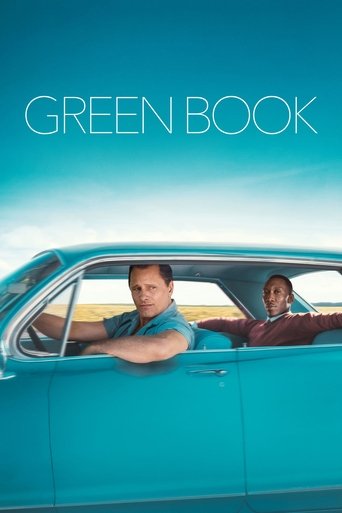
Green Book
2018 · Film · 130 min
Directed by Peter Farrelly
Tony Lip, a bouncer in 1962, is hired to drive pianist Don Shirley on a tour through the Deep South in the days when African Americans, forced to find alternate accommodations and services due to segregation laws below the Mason-Dixon Line, relied on a guide called The Negro Motorist Green Book.
1 positive3 negative7 neutralfrom 11 commenters
Where to watch
No streaming data for this title.

11 comments on Hacker News
I hear this a lot, but I observed this is no longer that simple.
Like Green Book (2018) made over US$70.7 million in China.
And one of the most popular films in 2021 was Hi, Mom (2021), made over US$785 million.
Obsession (2026) is another one that is doing amazing in China, absolutely beating high action films like Supergirl ($12 million and going vs less than $1 million)
So the sharing economy is when a company profits off the free labor of others. I mean, they could have hired couriers, but that would be more expensive.
Got it.
And no, as the history behind the 2018 movie 'Green Book' taught us, the real sharing economy, as is something other than labor exploitation, has older roots.
The Negro Motorist Green Book was a guidebook published 1936–1966 for African-Americans to have safe road trips during the Jim Crow era. Some of the information was voluntarily collected by U.S postal workers who gathered the information while on their routes.
> In a world with the Internet, cryptography, and the blockchain
BLOCKCHAIN? How old is this article? Ahh, February 14, 2016.
Well that didn't age well.
The Oscars often don't agree with critics, either. I don't think anyone had Ordinary People, Dances with Wolves, Titanic, Shakespeare in Love, Crash, Green Book, even CODA at #1 on their year-end best of list. Best Picture is usually going to favor something that is at least serious enough that the voters don't feel like children for loving it, i.e. they're never going to award a tentpole or franchise entry, sci-fi, fantasy, horror genre-type stuff will only very rarely even be considered, but they're also going to favor relatively inoffensive, unchallenging, often feel good work that isn't particularly novel or ground-breaking, which is more what critics will lean toward. They also have a tendency to reward message movies and films about filmmaking and Hollywood itself, even if no one likes them.
I do find the thesis in the ending quite weak:
> For a longer time before the gritty period, we all dedicated ourselves to the idea that anything we’d acknowledge as very good had to be both serious and artsy. People really liked Good Will Hunting (see: very serious); it was also a good movie, so it won an Oscar. Zillions of people love movies like The Princess Bride and Happy Gilmore; it’s incredibly likely both dwarf Good Will Hunting in terms of total views, but you can’t even imagine a world where either could have possibly won an Oscar.
[...]
> This is a short article by my standards, but it does have me thinking: What kind of world could we actually live in, if we were willing to treat works of art made with the goal of making us happy as if they were important? What if we were willing to make them? We’ve seen what happens in a world where all the Oscars go to movies that make you cry, or that we pretend make us think even though they generally don't
There are plenty of widely acclaimed movies that can not be considered "very serious", picking some recent Oscar winners as examples with categorizations from wikipedia:
* Parasite ("black comedy thriller")
* Green Book ("comedy-drama")
* The Shape of Water ("romantic fantasy")
* Birdman ("black comedy drama")
* CODA ("comedy-drama")
* La La Land ("comedy-drama")
* Life Of Pie ("adventure-drama")
Are all those completely feel-good movies intended to make you happy? Maybe not, but still its not like happy/humorous/feel-good is completely disregarded category even among grumpy art critics.
"Roma" was the "wrong" kind of film at the time, produced by a streaming service which was then considered the mark of the beast.
"Green Book" had a "white savior" trope which is now considered non-Narrative and shunned by people who support the Current Thing.
Roma (directed by Alfonso Cuarón and distributed by Netflix) was the first best picture nominee to not have a standard theatrical release, and there was a lot of controversy over it. Despite being the favorite that year it lost to Green Book, which is widely derided today.
In the early years of streaming the academy tried very hard to shut Netflix out of the Oscars. The company had to fight hard (including buying a theater in LA to do limited releases to satisfy their requirements) to get streaming films on equal footing. Only last year did they finally allow streaming-only releases to be considered for the awards.
There are some points I want to make about the article; firstly, the article doesn't paint listeners (including myself in that group as an owner of ~100 Japanese 70s/80s records) as orientalists. Rather, it claims that the surge in the popularity of city pop has emerged out of stereotypes and biases about Japan, the past, and past Japan. Those stereotypes, and being built into a fetish, is the orientalist element.
The Pitchfork writer doesn't say that's a problem. It's more of an article along the lines that the unexamined life is not worth living. Neither the writer (nor the academic they cite) are going to be starting a campaign to get Google to take down city pop album rips on YouTube. They're not on a campaign to get it banned. They're not going to be breaking into your house to confiscate your headphones. They're not calling me racist.
If someone had written an article about the rise in popularity of Jazz in the 50s being founded in the idea of the black entertainer to be appreciated for his amazing skill in contrast to other blacks (think along the lines of the movie Green Book for an exploration of the ideas), that might be a valid observation, and something to think about. What attracts you to jazz? Do you know what attracts you to jazz, and how do you know that? It doesn't mean you're a racist, in the same way liking porn doesn't mean you're a misogynist.
So there is no 'problem', but maybe it's something to think about and reflect on. I think the article prompted me to do that, but maybe not in the way it intended. Desires and preferences (as much as people can pass things off as 'just what I like') may be worthy of moral consideration, according to some philosophers. I'll keep listening to my records, but I'll also examine what's behind them in my mind. The article does a good job of pointing to the phenomenon of 'Cool Japan' without actually mentioning it. In particular, the last sentence.
On the other hand, it's worth considering what effects articles like these have on listeners. If they come away with the impression that it's wrong to listen to city pop or any music that isn't from "their culture", there's been a failure in communication that would seem to encourage people to become cloistered in the superiority of their own cultures, which reduces the recognition of what we have in common as humans.
It's a complicated issue. I don't think the article does a great job of addressing it.
> "For example, critics and users disagree on The Shape of Water[0] (users are right, it's very mediocre). They also disagree on Green Book[1] (users are right again, it's a great film even if it doesn't tick all the wokeness and political correctness checkboxes)."
no, the green book is awful, a particularly bad example of the feel-good movie, never once inviting the viewer to get lost in a believable world, instead inviting the viewer to question every directorial decision made. it was fake and pretentious at the same time, and completely safe around race relations.
the shape of water was not perfect, but better. not the best example of interracial relations (metaphorically), but gentle, revealing, quirky, ambient, and unpretentious.
I completely agree with this. Whenever critics' and users' assessments of a movie or a TV show diverge, it is almost universally the critics who end up being wrong (in my subjective view).
They sometimes over-rate things people in their position cannot be seen disliking because it's about Societal Importance or some such thing that has little to do with actual quality. And conversely, they sometimes ignore or under-rate things because they cannot be seen to overly praise a work that's criticised for things having little or nothing to do with actual quality.
Thing is, I don't need to be culturally influenced, have my outdated views updated to match what's currently considered mainstream, my privilege checked, etc. I just want to watch a good fucking movie and decide for myself whether it contains a message that changes my mind on a topic.
For example, critics and users disagree on The Shape of Water[0] (users are right, it's very mediocre). They also disagree on Green Book[1] (users are right again, it's a great film even if it doesn't tick all the wokeness and political correctness checkboxes).
[0] https://www.metacritic.com/movie/the-shape-of-water
[1] https://www.metacritic.com/movie/green-book
As for happy endings etc., this have always been a mainstay of Hollywood. In the Hollywood satire "The Player" from 1992 it is actually a plot point how a script without a happy ending cannot get produced. (And that movie itself have an improbable tacked-on happy-end to drive the point home.)
For fun I looked up the term "Hollywood Ending" ("a film ending of a conventional type, characterized as sentimental, simplistic, or melodramatic, and often featuring an improbably positive outcome; frequently in extended use."). The first example of this usage is from...1929.
So not exactly a recent development.
As for every movie being a "super-hero martial arts movie." - well this genre is certainly big at the moment, but by far isnt the only type of movie. If you look at the most recent Oscar awards, you will see movies like Roma, Vice, The Favourite, BlacKkKlansman, Bohemian Rhapsody, Green Book. These are mainstream Hollywood movies (almost by definition, this is what the Oscars awards) but there is still a span of genres and narrative styles. I don't see this as notably more homogenized than any other year.
And despite the hand-wringing over superheroes, I would like to point out that the "Marcel Cinematic Universe" is actually a pretty original concept in itself. Never before have such a complex shared universe and storyline unfolded over so many coordinated movies. I don't know if this is particularly worse than bygone Hollywood fads like westerns, sword-and-sandal epics, musicals etc.
But if you don't like superheroes there is still plenty of movies to choose from, since the overall number of movies released is steadily growing.
99% Invisible did a good episode about the Green Book. https://99percentinvisible.org/episode/the-green-book/