 Hacker Cinema
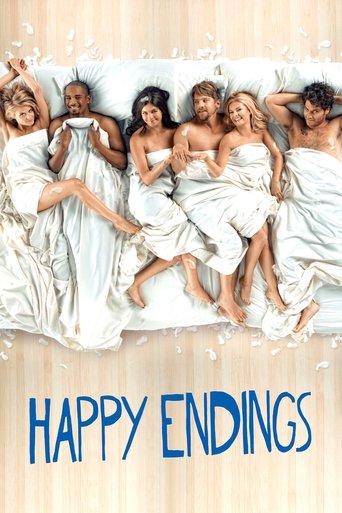
Happy Endings
2011 · TV series · 22 min episodes · 3 seasons
Created by David Caspe
A fresh and funny take on modern friendship and what one urban family will do to stay friends after the perfect couple who brought them all together break up on their wedding day. The failed wedding forces them all to question their life choices. Then there are Alex and Dave themselves, who strike a truce and must learn to live with the changes their breakup has brought.
1 neutralfrom 1 commenter
Where to watch
No streaming data for this title.





1 comment on Hacker News
“Cheers,” which ran for 11 seasons on NBC, starting in 1982, was the first great hangout show: neutralizing the depiction of class and removing the pressures of work. Life is hard enough, “Cheers” said; let’s just make TV. Ever since, television started taking it easier on us. Bill Clinton was in the White House, and the economy had improved. On “Seinfeld,” “Living Single,” “Friends,” “Ellen,” “It’s Like, You Know,” “Sex and the City,” “Girlfriends” and, much later, “Happy Endings” and “New Girl,” the commingling, childless men and women might have had jobs, but almost none had consequential careers. How many jobs did Elaine and George have on “Seinfeld”? And in how many fields? And Kramer — how was he paying to live across the hall from Jerry? Hangout shows placed friendship above family, obviating the typical economic ecosystem. Belonging to a family of friends probably means you only have to support yourself.
TV became — and still is — a medium struggling to understand “average,” “ordinary,” “normal.”
Why would you go into any of these shows expecting anything resembling reality. They are all clearly entertainment in the form of light drama and inconsequential, whitewashed sexual tension. To expect anything else is to set yourself up for failure.
Deeper shows exist - The Wire, Breaking Bad, House of Cards - but headlining TV shows are not created to address issues anymore. The shows reflect the main demographics of TV watchers, because that's what keeps them watching, and that's what generates ad revenue. So I'm not too concerned with the state of TV - it's an echo chamber for older, more conservative folk.