I was 13 or 14 and one day with nothing to watch on TV I turned on my local PBS station.
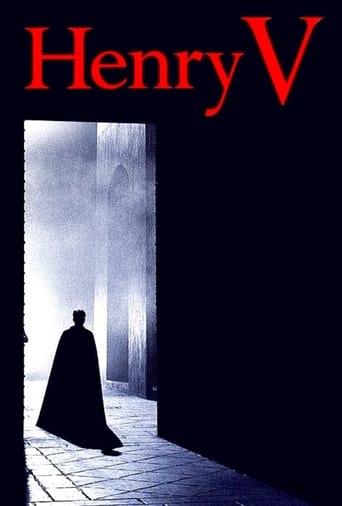
Henry V (1989) was on.
I saw some sort of medieval show and thought “knights and castles… cool”. I knew of Shakespeare but really hadn’t given it much thought. I lived in a rural area, not much of that around and I didn’t feel connected to any of that stuff.
The movie really grabbed me, I didn’t understand every word but I didn’t have to. I watched it over and over again. Shakespeare, felt real, and I thought if that did maybe a lot of the arts would?
> Branagh's Henry V and Much Ado About Nothing were my gateway.
Branagh's Henry V and Polanski's Macbeth were my gateway.
Don't miss the 1995 Richard III adaptation with Sir Ian McKellen. The 2004 film version of The Merchant of Venice is also worth seeing, if only for Al Pacino and Jeremy Irons.
I would recommend watching Kenneth Branagh's movie adaptations, particularly Henry V. You get a good feel for the power of the language, the pathos and the humor. I used to have recordings (i.e. vinyl records) of the Royal Shakespeare company reading plays, makes them much more accessible when you read along with a great actor speaking the words. I've been reading and re-reading Shakespeare all my life, the words never get old.
Absolutely you should watch it. Your comparison is apt; you're missing most of it if you're just reading the script. The sights and sounds of a good performance make it much easier to follow.
Reading the script is an advanced skill. I think we do a real disservice throwing unedited scripts at students.
As for what to watch, there are many great film versions. Branagh's Henry V and Much Ado About Nothing were my gateway. There is a stunning Titus by Julie Taymor, especially if you like horror -- it's an obscure play but Taymor makes a spectacle of it. There have been several very good Macbeth adaptations recently; I need to catch Denzel Washington's because I've heard it's great. There was also a very good Coriolanus recently (another obscure play given a very modern and relevant performance).
I would watch a film, and if you love it, read the play to find out how it works.
I don't think a plain English adaptation is very helpful. His work isn't about the story, but the language. The work is poetry, both literally and figuratively, and a plain English adaptation is like somebody telling you about their favorite song.
Better, I think, is to see a good film adaptation. Shakespeare was never intended to be read, but to be performed. There's a lot in the text that isn't apparent until you've studied it closely, but a good performance will bring it right out in the open.
These are all good, accessible versions of his plays. You don't need to be an expert to understand and enjoy them. (They're very roughly in order of my favorites, if that matters to you.)
I won't guarantee you'll like them. There's really nothing wrong with that. People get snobby about Shakespeare, and they shouldn't. It's OK to say, "Yeah, it's not for me". But under all the snobbery, there really is great text and great performances that people genuinely enjoy. If you're interested in that, these films are the places I'd start.
I randomly saw it one night on PBS. I thought I had caught it in the middle of the movie, not realizing I turned it on the moment it started. I was pretty young and had no real interest in literature, the arts, whatever. But it looked neat "hey a dude in a castle" ... and I realized ... I kinda understood it. I couldn't explain it word for word in plain English, but I got the metaphors and the story enough hand was hooked. It opened up a world to me that I didn't think was within reach.
Certainly doesn't hurt that the film is absolutely packed with great actors.
Dead Poets Society (1989 film)
Bunch of kids find inspiration at a stuffy school from a special teacher and some poetry that they might have otherwise found to be stuffy and simply passed over had they not looked at it differently.
Dan Golding's response seems pretty on-the-nose to me. Although I think he's right to cite Zimmer as someone who pioneered a certain method and style that has become prevalent in a big chunk of movie genres, I think the real culprit here (if you want to lay the blame somewhere) is just the economics of the Hollywood filmmaking system, which prizes cost-control, speed, and consistency of product above all else.
It's sad to see the composer Patrick Doyle get cited in both of those video essays for his music for Thor (which I agree, is generic and boring) because it illustrates the extent to which really talented film composers can get absorbed into this system. His scores for Henry V [1], Dead Again, and Carlito's Way all stand out as really shining example of 90s-era film scoring.
[1] Great example of his work here: https://www.youtube.com/watch?v=A-yZNMWFqvM
 Hacker Cinema
9 comments on Hacker News
Kenneth Branagh's film version of "Henry V" is excellent. Highly recommended.
I was 13 or 14 and one day with nothing to watch on TV I turned on my local PBS station.
Henry V (1989) was on.
I saw some sort of medieval show and thought “knights and castles… cool”. I knew of Shakespeare but really hadn’t given it much thought. I lived in a rural area, not much of that around and I didn’t feel connected to any of that stuff.
The movie really grabbed me, I didn’t understand every word but I didn’t have to. I watched it over and over again. Shakespeare, felt real, and I thought if that did maybe a lot of the arts would?
The world was much bigger for me after that.
I've read about half of them, seen more than a bunch live and in film, enough to annoy the kids.
Some versions I like:
* David Tenant's Much Ado about Nothing. Kenneth Branagh's is good too, and easier to find.
* Branagh's Henry V.
* I actually like Mel Gibson's Hamlet.
* Almost any Midsummer's Night Dream. It's just a fun play, even kids can enjoy it.
* The Coen Bros' Macbeth on AppleTV
* Rosencrantx and Guildenstern are Dead. Hamlet, but exits are entrances.
> Branagh's Henry V and Much Ado About Nothing were my gateway.
Branagh's Henry V and Polanski's Macbeth were my gateway.
Don't miss the 1995 Richard III adaptation with Sir Ian McKellen. The 2004 film version of The Merchant of Venice is also worth seeing, if only for Al Pacino and Jeremy Irons.
I would recommend watching Kenneth Branagh's movie adaptations, particularly Henry V. You get a good feel for the power of the language, the pathos and the humor. I used to have recordings (i.e. vinyl records) of the Royal Shakespeare company reading plays, makes them much more accessible when you read along with a great actor speaking the words. I've been reading and re-reading Shakespeare all my life, the words never get old.
Absolutely you should watch it. Your comparison is apt; you're missing most of it if you're just reading the script. The sights and sounds of a good performance make it much easier to follow.
Reading the script is an advanced skill. I think we do a real disservice throwing unedited scripts at students.
As for what to watch, there are many great film versions. Branagh's Henry V and Much Ado About Nothing were my gateway. There is a stunning Titus by Julie Taymor, especially if you like horror -- it's an obscure play but Taymor makes a spectacle of it. There have been several very good Macbeth adaptations recently; I need to catch Denzel Washington's because I've heard it's great. There was also a very good Coriolanus recently (another obscure play given a very modern and relevant performance).
I would watch a film, and if you love it, read the play to find out how it works.
I don't think a plain English adaptation is very helpful. His work isn't about the story, but the language. The work is poetry, both literally and figuratively, and a plain English adaptation is like somebody telling you about their favorite song.
Better, I think, is to see a good film adaptation. Shakespeare was never intended to be read, but to be performed. There's a lot in the text that isn't apparent until you've studied it closely, but a good performance will bring it right out in the open.
A few films that I'd suggest to get started with:
https://en.wikipedia.org/wiki/Henry_V_(1989_film) https://en.wikipedia.org/wiki/Much_Ado_About_Nothing_(1993_film) https://en.wikipedia.org/wiki/Richard_III_(1995_film) https://en.wikipedia.org/wiki/Titus_(film) https://en.wikipedia.org/wiki/Coriolanus_(film) https://en.wikipedia.org/wiki/Romeo_%2B_Juliet https://en.wikipedia.org/wiki/Hamlet_(2000_film)
These are all good, accessible versions of his plays. You don't need to be an expert to understand and enjoy them. (They're very roughly in order of my favorites, if that matters to you.)
I won't guarantee you'll like them. There's really nothing wrong with that. People get snobby about Shakespeare, and they shouldn't. It's OK to say, "Yeah, it's not for me". But under all the snobbery, there really is great text and great performances that people genuinely enjoy. If you're interested in that, these films are the places I'd start.
Henry V (1989 film)
I randomly saw it one night on PBS. I thought I had caught it in the middle of the movie, not realizing I turned it on the moment it started. I was pretty young and had no real interest in literature, the arts, whatever. But it looked neat "hey a dude in a castle" ... and I realized ... I kinda understood it. I couldn't explain it word for word in plain English, but I got the metaphors and the story enough hand was hooked. It opened up a world to me that I didn't think was within reach.
Certainly doesn't hurt that the film is absolutely packed with great actors.
Dead Poets Society (1989 film)
Bunch of kids find inspiration at a stuffy school from a special teacher and some poetry that they might have otherwise found to be stuffy and simply passed over had they not looked at it differently.
Dan Golding's response seems pretty on-the-nose to me. Although I think he's right to cite Zimmer as someone who pioneered a certain method and style that has become prevalent in a big chunk of movie genres, I think the real culprit here (if you want to lay the blame somewhere) is just the economics of the Hollywood filmmaking system, which prizes cost-control, speed, and consistency of product above all else.
It's sad to see the composer Patrick Doyle get cited in both of those video essays for his music for Thor (which I agree, is generic and boring) because it illustrates the extent to which really talented film composers can get absorbed into this system. His scores for Henry V [1], Dead Again, and Carlito's Way all stand out as really shining example of 90s-era film scoring.
[1] Great example of his work here: https://www.youtube.com/watch?v=A-yZNMWFqvM