Also today's shows always feel so overblown. Crack investigative teams operating from luxury offices that could double as a nightclub, wisecracking all day. Earplug 'comms' with unlimited range. Explosions and gunshots in every episode.
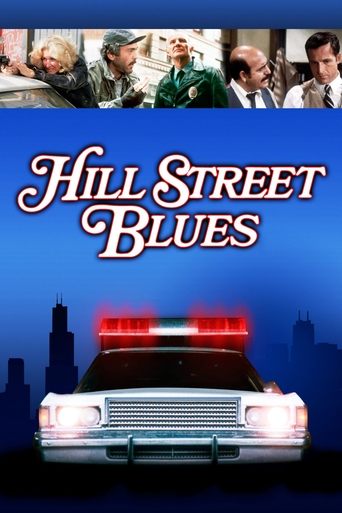
Real police work is not like this. I feel like the shows of the 70s were a lot more realistic. Columbo, Hill Street blues etc.
Even though Columbo was not really a realistic depiction of detective work, it did make it feel like work and not just competence porn.
Then in the 80s the whizzbang started with Miami Vice and its blue night skies, cops driving Ferraris etc.
The good shows these days take a step back from this. Like The Wire. But must of them are just fluff IMO.
Soap operas in the age of pre-internet appointment television dealt with this problem in an interesting way. If you missed an episode or missed the entire week, you could always buy the latest issue of Soap Opera Digest which would have a summary of the week (or month's) story arc. Once a year or so, there would be magazines which would summarize the entire story arc of the show so new viewers could catch up. On a side note, if anyone is bored at work today, look up the Wikipedia entry for a long-running soap, like Days of Our Lives, which will have a synopsis of the entire story. It's quite epic, silly, and tawdry with a decades-long, no-breaks, no-jumps storyline.
I think for prime time viewing, Hill Street Blues was the first semi-serialized drama intended for viewers outside of the soap market. It had an interesting structure with A, B, and C plots. A plot gets resolved in a single episode. B plot is a 3-4 episode arc. And C plot lasts for the season. And then there was continuity from season to season. The show was decently successful, and paved the way for what we have now. One thing I find interesting is how many older viewers at the time thought it was too fast paced, too complex, and didn't enjoy it. They were too conditioned to the episodic norms. I'm sure the show would seem slow now to modern binge watchers.
Right. The people behind it also wanted to create a "Hill Street Blues" for scifi. They also combined "Lord of the Rings", with each episode being a chapter. This explains Garabaldi's drinking problems, the head doctor getting addicted to drugs, Z'ha'dum, the Rangers, and the ancient races going beyond the galactic rim leaving the younger races to develop.
You think books, movies, and television don't face this kind of crap? Publish a book that says the wrong things about the wrong people and you are toast (especially in countries where, for example, truth is not a defense, such as Britain and Australia). Movies will do all kinds of things (notably eliminating sex scenes, especially where women are enjoying themselves) to get more permissive ratings from the MPAA. And television is completely nutty (the writers of Hill Street Blues invented an entire lexicon of curses and epithets in order to have police have vaguely plausible dialog that could get past network censors).
They're measuring the wrong thing. These kids would totally kick previous generations' collective asses at GTA and completing raid instances.
Ever watch your parents try to use MS Word or even a web browser? It's painful. Kids today may not know how to use a ruler but they can use 3DS Max. Let's see the Greatest Generation do that. Nonlinear video editing--? What's that?!? Kids today do it all the time and post to YouTube.
This month's Scientific American Mind says: "A generation ago TV programs such as I Love Lucy, Dragnet and Starsky and Hutch required virtually no concentration to follow. Beginning in 1981 with Hill Street Blues, single-episode dramas began to weave together as many as 10 threads into their plotlines. The hit drama 24 connects the lives of 20 or more characters, each with a distinct story."
The subject of the article is massive IQ gains during the 20th century. "If asked what dogs and rabbits have in common, a boy in 1900 would have said, "You use dogs to hunt rabbits." A boy in 2007 would say, "They are both mammals." It would never have occurred to someone a century ago to offer something so trivial. Who cares that dogs and rabbits are both mammals? What is important is what things are useful and under one's control." The context is working on abstractions with no concrete referents. (Although the article badly botches the proffered explanation of what a mammal is.)
 Hacker Cinema


7 comments on Hacker News
Also today's shows always feel so overblown. Crack investigative teams operating from luxury offices that could double as a nightclub, wisecracking all day. Earplug 'comms' with unlimited range. Explosions and gunshots in every episode.
Real police work is not like this. I feel like the shows of the 70s were a lot more realistic. Columbo, Hill Street blues etc.
Even though Columbo was not really a realistic depiction of detective work, it did make it feel like work and not just competence porn.
Then in the 80s the whizzbang started with Miami Vice and its blue night skies, cops driving Ferraris etc.
The good shows these days take a step back from this. Like The Wire. But must of them are just fluff IMO.
Soap operas in the age of pre-internet appointment television dealt with this problem in an interesting way. If you missed an episode or missed the entire week, you could always buy the latest issue of Soap Opera Digest which would have a summary of the week (or month's) story arc. Once a year or so, there would be magazines which would summarize the entire story arc of the show so new viewers could catch up. On a side note, if anyone is bored at work today, look up the Wikipedia entry for a long-running soap, like Days of Our Lives, which will have a synopsis of the entire story. It's quite epic, silly, and tawdry with a decades-long, no-breaks, no-jumps storyline.
I think for prime time viewing, Hill Street Blues was the first semi-serialized drama intended for viewers outside of the soap market. It had an interesting structure with A, B, and C plots. A plot gets resolved in a single episode. B plot is a 3-4 episode arc. And C plot lasts for the season. And then there was continuity from season to season. The show was decently successful, and paved the way for what we have now. One thing I find interesting is how many older viewers at the time thought it was too fast paced, too complex, and didn't enjoy it. They were too conditioned to the episodic norms. I'm sure the show would seem slow now to modern binge watchers.
"Let's be careful out there." This line is spoken by Sergeant Phil Esterhaus, played by Michael Conrad, in the TV show Hill Street Blues (1981-1987).
Why not stand outside the bars and watch, before entering?
Right. The people behind it also wanted to create a "Hill Street Blues" for scifi. They also combined "Lord of the Rings", with each episode being a chapter. This explains Garabaldi's drinking problems, the head doctor getting addicted to drugs, Z'ha'dum, the Rangers, and the ancient races going beyond the galactic rim leaving the younger races to develop.
You think books, movies, and television don't face this kind of crap? Publish a book that says the wrong things about the wrong people and you are toast (especially in countries where, for example, truth is not a defense, such as Britain and Australia). Movies will do all kinds of things (notably eliminating sex scenes, especially where women are enjoying themselves) to get more permissive ratings from the MPAA. And television is completely nutty (the writers of Hill Street Blues invented an entire lexicon of curses and epithets in order to have police have vaguely plausible dialog that could get past network censors).
> Beginning in 1981 with Hill Street Blues, single-episode dramas began to weave together as many as 10 threads into their plotlines.
I've no references to quote, but I'm pretty sure soap operas have been doing that many years earlier, perhaps even when on the radio.
It's also true of serialized novels published in magazines even before that.
They're measuring the wrong thing. These kids would totally kick previous generations' collective asses at GTA and completing raid instances.
Ever watch your parents try to use MS Word or even a web browser? It's painful. Kids today may not know how to use a ruler but they can use 3DS Max. Let's see the Greatest Generation do that. Nonlinear video editing--? What's that?!? Kids today do it all the time and post to YouTube.
This month's Scientific American Mind says: "A generation ago TV programs such as I Love Lucy, Dragnet and Starsky and Hutch required virtually no concentration to follow. Beginning in 1981 with Hill Street Blues, single-episode dramas began to weave together as many as 10 threads into their plotlines. The hit drama 24 connects the lives of 20 or more characters, each with a distinct story."
The subject of the article is massive IQ gains during the 20th century. "If asked what dogs and rabbits have in common, a boy in 1900 would have said, "You use dogs to hunt rabbits." A boy in 2007 would say, "They are both mammals." It would never have occurred to someone a century ago to offer something so trivial. Who cares that dogs and rabbits are both mammals? What is important is what things are useful and under one's control." The context is working on abstractions with no concrete referents. (Although the article badly botches the proffered explanation of what a mammal is.)