 Hacker Cinema
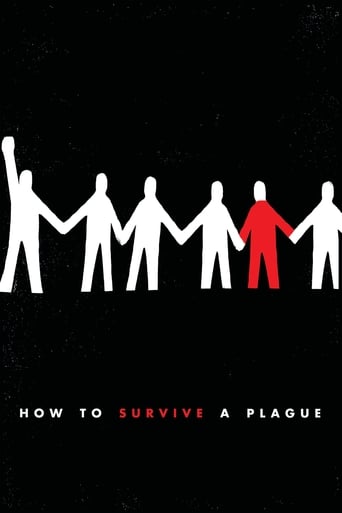
How to Survive a Plague
2012 · Film · documentary · 109 min
Directed by David France
A story of two coalitions – ACT UP and TAG (Treatment Action Group) – whose activism and innovation turned AIDS from a death sentence into a manageable condition. Despite having no scientific training, these self-made activists infiltrated the pharmaceutical industry and helped identify promising new drugs, moving them from experimental trials to patients in record time.
4 positive1 neutralfrom 5 commenters
Where to watch
No streaming data for this title.





5 comments on Hacker News
Here is the list from the thread: --- 1. A Man Named Pearl
2. Once Upon a Time in Northern Ireland
3. Microcosmos
4. Crip Camp!
5. Keep The River On Your Right
6. All The Beauty And The Bloodshed
7. Harlan County USA
8. Stay on Board: The Leo Baker Story
9. Good Night Oppy
10. We Met in Virtual Reality
11. All That Breathes
12. Still
13. Can’t Be Stopped
14. The Amazing Jonathan Documentary
15. Searching for Sugarman
16. AKA Mr Chow
17. The Pigeon Tunnel
18. Little Richard: I Am Everything
19. I Know That Voice
20. Genghis Blues
21. Kings of Pastry
22. 20 Feet From Stardom
23. Stevie
24. Anvil: the Story of Anvil
25. Searching for Sugar Man
26. King of Kong
27. The Gleaners and I
28. Touching the Void
29. Cane Toads: An Unnatural History
30. 20 Days in Mariupol
31. Minding the Gap
32. How to Survive a Plague
33. Speciesism
34. Free Solo
35. Jim Allison: Breakthrough
36. Seven Up! series
37. Bowling for Columbine
38. The Fog of War
39. Rivers and Tides
40. Capturing the Friedmans
41. Spellbound
42. King of Kong
43. Crip Camp
44. Jesus Camp
45. Jiro Dreams of Sushi
46. Flee
47. Man on Wire
48. Queen of Versailles
49. The Thin Blue Line
50. Time Indefinite
51. The Gleaners and I
52. My Life as a Turkey
53. Happy People
54. Grizzly Man
Men who have sex with men (MSM) are quite adept at changing behavior as needed. Before HIV was even identified as the cause of AIDS, it was known from the basic epi that unprotected anal intercourse was a high risk activity. There was a grassroots effort to (among other things) encourage condom use, and a dramatic shift towards using condoms. It's only with the subsequent generations of MSM who did not see their friends die (thanks to better medications starting) that condom use started waning. A similar behavior shift happened after 2012, when HIV PrEP was found to be effective.
If you're interested in this topic, there's a couple of really good documentaries about the early HIV epidemic and how gay men adapted: "how to survive a plague" and "we were here" are two of my favorites.
Both are really incredible movies, and I'd also highly recommend them. "How To Survive A Plague" is pretty great too (it even features everyone's favorite NIH official, Anthony Fauci!).
One thing worth being aware of with "And The Band Played On": it's quite old, and science advanced a lot after the book it's based on was written, so it's sometimes factually inaccurate (Gaetan Dugas didn't personally cause the pandemic, and the incubation period is longer than they thought then). It's not a work of history or a documentary, but it makes for fascinating viewing precisely because it was made so close to the events that the story it tells is not neat and polished with the benefit of decades of hindsight and narrative shaping. It's chaotic and emotional and raw and authentic and, inevitably, sometimes wrong about stuff that wasn't known then.
I think it is super important to answer yes to that question as a patient.
At the end of the day, it it your body. You are responsible for it. You may not be an expert in what all of it does in its majestic form and function, but that is why doctors, nurses, and researchers exist.
You live in it. When you are explaining stuff, be it pain or pleasure, to a doctor, that experience is mediated by the sheer fact that your doctor is not you and does not live in your body, does not receive sensory input from your body. Your doctor receives sensory input from his/her body.
Even if your doctor has extremely similar experiences, there is no guarantee that they will fully understand you and your predicaments. Most doctors in the US know what a severe sunburn looks like, and many will have had them growing up. Most also have not seen Phytophotodermatitis (aka lime disease http://www.theatlantic.com/science/archive/2016/07/burned-by-a-margarita/492149/ ), nor will have had them growing up. With the growth of artsinal cocktails and people realizing fresh citrus juice tastes better, it's occurring more frequently. Now there is an educational push,but that doesn't equal expedient treatment and lots of doctors recognizing on sight yet before it gets bad.
While Phytophotodermatitis is a trivial example, for patients with serious diseases (and not serious but not common ones too) the example holds and can be expanded. Patients banding together to change this is generally what causes major changes in healthcare policy in the US president,as well as direction in research. (The most famous example is in the late 90s/early 00 with aids via act up nyc. The documentary "how to survive a plague" covers this extremely well")
So yes, you totally should question. You totally have more power than you think. Act on it.
I recommend the movie How To Survive a Plague, which also shows the beginnings of AIDS in New York. Must have been a frightening time.
http://www.imdb.com/title/tt2124803