 Hacker Cinema
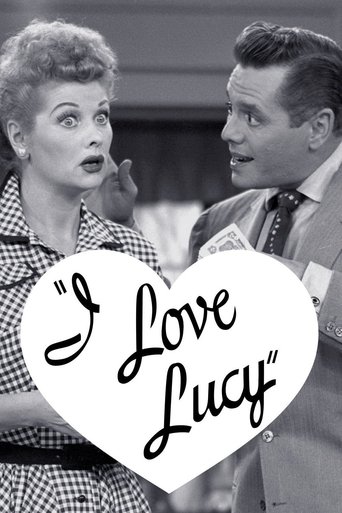
I Love Lucy
1951 · TV series · 6 seasons
Created by Bob Carroll Jr., Jess Oppenheimer, Madelyn Pugh
Cuban Bandleader Ricky Ricardo would be happy if his wife Lucy would just be a housewife. Instead she tries constantly to perform at the Tropicana where he works, and make life comically frantic in the apartment building they share with landlords Fred and Ethel Mertz, who also happen to be their best friends.
9 positive3 negative35 neutralfrom 47 commenters
Where to watch
No streaming data for this title.
56 comments on Hacker News
They used it for both and as a source of vitamin A and whatever other nutrients are in it. They used it for everything. There is an episode of I Love Lucy where a recipe for homemade baby formula is described which includes cod liver oil.
In a lot of things it was pretty good at what they used it for though, that does continue to be true.
So I love watching 50s-70s television shows: honeymooners, I love lucy, twilight zone, alfred hitchcock, Mission Impossible, Columbo. (recent MeTV lineup).
I'm a millennial. It occurred to just the other day, the language they use, they say "dough" a lot. They need dough. Where's the dough. Any criminal is always involved with gambling and gangs and they need dough! And the normal working people storylines are pinned to their lack-of-dough situations.
I remember the internet very fondly too. There's always an age of innocence but it just takes time to realize everyone just really needs and wants dough. And that's what happens.
One thing that I think is probably a large impact has been an increase in general strife. Online arguments and division often among political and ideological lines combined with trends away from any sort of national identity or cohesion.
ex: 50 years ago, everyone had seen at least an episode of "I Love Lucy" which was the most watched show in the US. With only a few networks and some very popular culture there was more cohesion. Even with political discourse it was often presented in a much less polarizing way.
I would also point the blame at a lot of what I can only summarize as excessive internalized guilt. Often over things you, personally have no impact on. As well as trends towards coddling anxiety. Where the only true way to get past anxiety is to do more of what gives you anxiety, whatever it takes to actually do that.
I'd also say that "rich" is largely subjective, and common, regular expenses have become extremely burdensome this past few years... If you look at the pricing trends in fast food, it seems to have really ramped up since around 2018-2019 and over the top during COVID... far more than inflation alone can justify, and I think is mostly plain greed. People feel squeezed out and it's hard to overcome.
> [I Love Lucy, Bewitched]
These are good examples of TV pushing the envelope on societal norms, but if you are discussing "pushing a political view", they rank far below "Trek's first interracial kiss".
> A key difference here is you are citing one episode.
That's true, but...
> These shows we are discussing are entirely centered around modern IDPol issues. It's rammed down our throats through every episode.
I have not seen the new shows. I liked reconnecting with old characters in the first few episodes of Picard S1, but didn't even finish the first season.
So I can't comment on those specifically.
But, I can comment on this:
> I know when I can no longer enjoy a show because it's creators are ripping me out of the experience and away from the fictional setting
This is the EXACT SAME COMPLAINT that the people who were upset about Star Trek in the 60s had.
And it extended a lot farther than the interracial kiss. That's just a very easy and obvious landmark example to point out.
Star Trek first aired in 1966. Less than 10 years after crowds of people were held back by the National Guard, but still managed to throw rocks at and spit on little girls because of forced integration in schools.
Star Trek had a multiracial and flamboyant cast, and was frequently communicating messaging about being non-prejudiced, when the Civil Rights Act had just passed.
Trek also frequently communicated messaging about being non-interventionist and only using violence as a last resort, while the Vietnam War was ongoing and a hot-button political issue.
These were ABSOLUTELY complained about as "woke propaganda" (though not in those terms) by the conservatives of the time.
Can you give any examples of network TV that were more political than Trek?
Lucille Ball saying the word "Pregnant" in I Love Lucy which I am sure nobody today would believe evoked shock and awe. Samantha and Darren in Bewitched having a single king sized bed in their bedroom. Until that point all married couples had multiple twin beds and were presumed to never sleep together despite somehow having children.
A key difference here is you are citing one episode. These shows we are discussing are entirely centered around modern IDPol issues. It's rammed down our throats through every episode. I will not be gas-lit. I know what I have seen and what I have experienced throughout all the generations of Star Trek and what it has devolved into. I know when I can no longer enjoy a show because it's creators are ripping me out of the experience and away from the fictional setting and I know I am not alone. I am aligned with the majority of the fans which is exactly why the show is being nuked after flushing millions down the toilet.
Consider just fast-forwarding past a scene you can't handle. Like many shows, it takes a few episodes before the actors truly understand their characters.
The feeling you're experiencing has a name: it's called "cringe". I can't watch Frasier for more than about half an episode because of it. Or I Love Lucy... same problem. But Seinfeld, which has plenty of the same humour mechanic, always seems to manage to stay just below the threshold for me.
Halt and Catch Fire is really, really good. Please trust us. Give it another shot. Skip forward a bit when you feel the need to. Skip the first episode entirely and just read a synopsis if you need to.
for every episode of the A-Team, for Saturday morning cartoons, for I Love Lucy, and for Miami Vice, I give thanks.
Edit: And Star Trek, and Cosmos
It wasn't. 80s TV shows and movies were overwhelmingly recorded on film. Primarily because it was much easier to edit film than tape.
And we are streaming a ton of them now that they've gone back and scanned the original film in 4K.
It's awesome. Heck you can watch I Love Lucy from 1951 in glorious high definition, sharper than anyone ever viewed it originally. It's basically magic.
If you want 1980's, go watch St. Elsewhere or Cheers. They have cinema detail now instead of the fuzzy TV detail you would have seen in the 80's.
This is frighteningly similar to the "I Love Lucy" episode "Sales Resistance" from 1953:
https://youtu.be/TVJNQhGpwSw?si=heoJVivgwhj6Kpj8&t=86
Time is a great filter.
Was music in the '60s and '70s better than music today? Probably not.
If you were able to time travel back to then and listen at some random time to a radio tuned to a pop station you'd hear a lot of OK songs, a smaller number of good songs and bad songs, and a few great songs. Just like if you listened to some stream of a wide selection of recent music.
Is music from the '60s and '70s that you are likely to hear today better than most recent music? Probably.
Listen to an oldies stream and it likely is to just include those songs from then that were great or good, and it will be drawing from several years.
Same thing happens with TV. Old sitcoms like "Frasier" are as good as the best being produced today. Same with even older shows like "The Dick Van Dyke Show" and "I Love Lucy". But there were a heck of a lot of other sitcoms from the same times that are almost forgotten.
With sitcoms the old sitcoms we might still see are probably more likely to be great than the old music we still hear today, because old sitcoms have an additional filter to get past. You'll probably only see them today if they had enough episodes to be worth syndication.
They typically show one episode a day and they want to be able to go several months before wrapping around. Even with having more episodes per year back then than we typically have now (~32 then, ~24 now) the show would have to last at least 3 years to get enough episodes for syndication. Many a show that was great or near great and would have become great in season 2 or 3 has been killed by its network for reasons having nothing to do with the quality of the show.
(I no longer watch anything on Fox other than sports and reality shows because of that. After "Firefly", "Futurama", "Terra Nova", and "Lucifer" I learned my lesson. I don't care how great people say a Fox show is now, I will either wait until Fox cancels it and watch it on streaming if people tell me that it got a proper series finale, or I might consider watching entire seasons before that but only if those seasons ended at points that would be good stopping points. "Terra Nova" and "Lucifer" ended on huge cliff hangers).
A variation of that joke was in the "Sales Resistance" episode of I Love Lucy from 1953 at https://www.youtube.com/watch?v=TVJNQhGpwSw .
At the end, Lucy tries to make her money back by using the same sales techniques used on her. The vacuum cleaner doesn't work because electricity is turned off because the resident hadn't paid the power bill.
I just wanted to echo the gray frustration here. I went to buy vinyl flooring (I can't afford hardwood) and the sheer amount of inexplicably "grey wood" planks was staggering. Why! Like, it's as if some alien only saw wood in an episode of I Love Lucy and wanted to replicate it.
But that hasn't been a thing since before I was alive. We've had a strong run of popular sitcoms depicting black families on all of the major TV networks since the '70s. Many times they've led the ratings.
And I watched them. Maybe you didn't?
Edit: Heck, "I Love Lucy" aired in the early 1950s and the show's entire plot was about an interracial marriage. And that show only started two years after commercial TV in most homes was even a thing. It was the very first sitcom to be a #1 rated show.
The "bad times" scenario you're depicting is largely a fiction. What was that Jennifer Lawrence quote? “I remember when I was doing 'Hunger Games,' nobody had ever put a woman in the lead of an action movie because it wouldn't work — we were told girls and boys can both identify with a male lead, but boys cannot identify with a female lead,”
In the TV Show "I Love Lucy", there's an episode called "Lucy Goes to the Hospital" which aired January 19, 1953. It depicts the father-to-be waiting in the hospital waiting room while Lucy gives birth to their son. The waiting room permits smoking and Lucy's husband smokes a cigarette nervously while waiting.
> Long tail/"short tail" paradigm was about the distribution of purchases/views/streams etc. A statistical property, not about mere quantity.
The author doesn't provide any evidence that the decades-long trend of "more options = broader distributed viewership" has broken, and the person you're replying to has shown that the "more options" trend is largely continuing. The author is cherry-picking also-not-relative-distribution numbers from a relatively small time frame and extrapolating wildly.
Let's look at the longer timeframe.
From Wikipedia for I Love Lucy:
"The episode "Lucy Goes to the Hospital", which first aired on Monday, January 19, 1953, garnered a then-record rating of 71.7, meaning that 71.7% of all households with television sets were tuned to the program, the equivalent of some 44 million viewers.[71] That record is surpassed only by Elvis Presley's first of three appearances on The Ed Sullivan Show, which aired on September 9, 1956 (82.6% share, 60.710 million viewers and a 57.1 rating ).[71] The overall rating of 67.3 for the entire 1952 season of I Love Lucy continues to be the highest average rating for any single season of a TV show.[72]"
MASH: "The series premiered in the US on September 17, 1972, and ended on February 28, 1983, with the finale, showcased as a television film, titled "Goodbye, Farewell and Amen", becoming the most-watched and highest-rated single television episode in US television history at the time, with a record-breaking 125 million viewers (60.2 rating and 77 share)"
By the time we get to something like Friends we're down to 52M live viewers for its finale, and it's only shrunk since then. Netflix doesn't give equivalent counts or US-only ones, as far as I can find, just "at least two minutes within N weeks" type stuff and similar; I believe if they had that level of cultural ubiquity, they'd be shouting it to the rooftops more explicitly.
And if they did, the linked article would be citing it. But instead, they're just speculating that all the numbers and trends we do have better measured are wrong.
If you look at ticket sales counts instead of box office for movies you'll see a similar large representation of older stuff, and that's a quantity comparison even with a smaller population to boot .
it reminds me of the phenomena of parodying 'I Love Lucy!'. Even though it hasn't seen new episodes since 1957 it is included or mentioned in some way in nearly every popular media.
The constant revitalization of the parody through new works ensures that the future will also include some mention. I think 90s aesthetic/internet-culture is a bit like that -- the projects that include those themes beget new similar projects in the future as long as they have some level of audience exposure.
"I Love Lucy" (first few seasons), "Frasier", "Seinfeld", "Friends", "How I Met Your Mother" are some of many TV shows taking place in middle-income apartments.
"The Jeffersons" live in a "Deluxe Apartment in the Sky".
Diff'rent Strokes took place in the apartment home of a multi-millionaire.
In "Green Acres" they leave a "penthouse view" apartment to live in a run-down house.
The pizza ovens at this scale are massive industrial conveyer belts: the bake time is the time it takes the conveyer to move from the start of the oven to the end of the oven. The length of the conveyer belt is influenced by the number of pizzas (and other baked goods such as pastas, wings, and baked desserts) they want to be able to bake in somewhat parallel (obviously it is something more like a queue, but there's a major overlap in baking times of consequent items). The speed of the conveyer belt is influenced by operator safety concerns and also avoiding the "Lucy and Ethel backup problem" (from the famous episode of I Love Lucy about the conveyer belt at the chocolate factory).
In many ways, at this industrial scale of oven the pizza recipes (and pasta recipes and wing types and baked desserts and everything else sent through the oven) are calibrated specifically to the bake times of the chosen oven conveyer belt length and speed rather than the other way around.
(Which isn't to suggest that such ovens don't get redesigned from time to time, but that's likely a large enough project that Tracker programmer has plenty of lead time.)
He changed architecture. This is likely a large part of it.
The I love Lucy show changed the TV industry. It is the first TV show made with archival quality footage, on some kind of reasonable schedule for the actors to have a life, invented the rerun and many of the basic techniques still used today in the industry.
The people who radically alter what was tend to be revered but those who come after and grow up with the heritage of what they fostered often take it for granted and don't get why it's special.
This isn't uncommon in TV series. How many I Love Lucy plots were recycled later on? All in the Family? I can go on, but great writing and plots are often reused later.
I was once told by an ethnically Japanese person who was born in Mexico (and when he spoke English he sounded like a Mexican national) that his hardware and software didn't match.
What Americans consider "white" is not fixed. Jews are white or not depending on the time and context. Cubans would be considered Latino or something today, and yet the most popular TV show of the 50's (I Love Lucy) featured an American woman married to a Cuban man at a time when interracial marriage would never have been shown on TV.
> Something I noticed was that being “underground” and “alternative” was considered “cool” when I was a youngster. Now, it seems all transgressive elements have been stripped from the mix and it’s all about “please like me, like my product, I’m desperate for your approval”
Not everybody considered those things cool - obviously they were specifically NOT the mainstream pop crowd, or else there was nothing to be "underground" or "alternative" against.
There's certainly still underground/alternative pop culture. More than ever before! In some ways its harder to find (e.g. your search bubble isn't going to pop it up to you if it doesn't think you want it), ironically!
But with that new bubble of being in your sub-community largely comes less need to "act out" against the rest of the crowd. This is largely good, except in cases of e.g. violent incel egging-on spiral-downward communities or your more "old fashioned" sorts of violent radicalism that continue to exist.
(Here's a trivially simple example: the author claims that a smaller and smaller group is claiming a larger and larger share of the market in TV. But then look at something like this from wikipedia's I Love Lucy page: 'The episode "Lucy Goes to the Hospital", which first aired on Monday, January 19, 1953, garnered a record 15.105 million homes reached, equivalent to 44 million viewers resulting from 71.7% share of all households with television sets at the time having been tuned in to view the program.[69] That record is surpassed only by Elvis Presley's first of three appearances on The Ed Sullivan Show, which aired on September 9, 1956 (82.6% share, 60.710 million viewers and a 57.1 rating ).[69] The overall rating of 67.3 for the entire 1952 season of I Love Lucy continues to be the highest average rating for any single season of a TV show.[70]' No show or musician commands anything close to that now. )
I think a lot of us who were 80s kids who can practically recite Star Wars got that way cause we had a very small collection of movies cause they were so expensive.
Or you had parents like mine. They used a lot of blank tapes, which held 6 hours worth of stuff. 3 movies each, that was. I think my parents saved up for it in the mid-80s.
Back then, the cable companies used to run weekends with free HBO, Showtime, Disney (which was a premium channel back then) and so on. Hours of movies. Hours of looney tunes cartoons. Hours of old TV from Nick at Night, Nickelodeon's nighttime programming for adults. (So much I love Lucy and Dick van Dyke shows). Some still had commercials, but we didn't care. It was really nice during times without cable. I thnk they finally got rid of a lot of them about 15 years ago when their final VCR broke.
https://philip.greenspun.com/humor/media-lab.html
>Generation of Bits
>Tales of shame and degradation in the Big Idea Lab
>by Hunter S. Negroponte
[...]
>The Big Lie
>Media Lab critics (there have been a few) have occasionally questioned the practical application of our work. Well, have you heard about the Holographic Television? No longer a device found only in the back of comic books, we've actually made this sucker work. An honest-to-god motion-picture hologram, produced in the Media Lab basement on a 2000 pound holography table by computers, lasers and mirrors spinning at 30,000 RPM. It's real! It works! Life Magazine even came in to photograph it in action (of course, they had to fill the room with smoke so the lasers would show up on film). Practical application? Sure, it requires a 2000 pound air-suspended rock table and a Connection Machine II to run, but hell, everyone knows the price of computing power and 2000 pound rock tables is cut in half every year. My point, however, is more mundane: we have created a demo literally from smoke and mirrors, and the Corporate World bought it. Even my good friend Penn (or ``Penn,'' as I call him) Jillette would be proud.
>In fact, I'm a few points up on Penn. You may have heard of the Interactive Narrative work that is proceeding in the lab. Folks, I'll be honest with you for a moment. I know as well as you do that it's a stinking load of horseshit. Roger Ebert said ``Six thousand years ago sitting around a campfire a storyteller could have stopped at any time and asked his audience how they wanted the story to come out. But he didn't because that would have ruined the story.'' You think Hollywood would have learned this lesson from the monster ``success'' that Clue, the Movie enjoyed several years ago. But no! I've repackaged the ``Choose your own Adventure'' novels of childhood as Digital Information SuperHighway Yadda Yadda crap, and again, they bought it! Sony right this minute is building an interactive movie theater, with buttons the audience can push to amuse themselves as the story progresses. Dance for me, Corporate America! I'm SHIT-HOT!
>Why, just the other day I listened to a member of my staff explain to potential sponsors that we had spent \$US 4,000,000 of Japanese sponsor dollars to construct a widescreen version of ``I Love Lucy'' from the original source. And HE SAID IT WITH A STRAIGHT FACE! CAN YOU FUCKING BELIEVE THAT? Boy, I bet those Nips wish they had their money back now! Earthquake? No, we can't do much to rebuild your city, but we SURE AS HELL can give you a 1.66:1 cut of Lucy to fit all those busted HDTVs of yours! HA HA HA!
[...]
> How would you explain the fact that people paid for cable and premium cable channels (e.g. HBO) in the past when free network TV has always been an option?
The issue you're failing to separate out is that you're talking about entertainment with television. Websites are largely not comparable in entertainment value, and most are not entertaining at all. People will pay a lot for entertainment. That's why blogs are worth $... today and Netflix is worth $226 billion. If people would pay so much for eg blogs (or, again, any other comparable content), there'd be a $100 billion company extracting that monthly payment for producing volumes of written content on websites. Some blog network would have actually succeeded and become a global content juggernaut.
Most of the content online is not of high quality and people will not pay for it, or they'll pay so little for it as to be a sad joke.
Which website compares to the joy and value people extracted from Friends, Seinfeld, MASH, Fresh Prince, I Love Lucy, and dozens of other prominent TV shows from the past ~50 years. Much less the even higher production shows like Sopranos or Game of Thrones. There may be a select few and they're billion dollar services like Reddit with huge volumes of low value content. Do millions of people still talk lovingly about some websites from 2006 like they do decades later about I Love Lucy? Hell no they don't, only a tiny niche group of people does that.
People go back and watch movies over and over again for decades. They listen to the same songs/bands/albums regularly for decades.
Does the average person go back and dig up long dead websites and go through them start to finish on Archive.org, like they do old TV shows they enjoyed (Quantum Leap, ALF, Golden Girls, whatever). Hell no they don't, again, only a very very tiny group of people would do such a thing.
Most online text content is not very entertaining, even in the best case scenarios, that's the difference between the concepts.
Is there lots of funny, amusing, entertaining text content on eg Reddit? You bet. And people will pay pennies for it - if at all - because it's of low value compared to high quality, higher production value entertainment. They'll pay what it's worth, a pittance.
I lament this fact often. We no longer have a shared cultural experience around media. Very occasionally something pops up that everyone seems to know about, like Squid Game or The Mandalorian. But it isn't like the old days, when anyone would talked to saw the latest episode of I Love Lucy or Friends or Seinfeld.
There are so many choices and it's so fractured that there are no "big winners" anymore. But that's also a good thing, because the big winners weren't winners because they were good, they were winners because a network executive decided they would be winners.
If we don't spread to the stars, our entire species will have made absolutely no impact for better or worse on the galaxy or Universe. None whatsoever, no matter how beautiful or horrific our existence on this planet. Unless some more proactive species picks up our 'I Love Lucy' episodes and decides to remember us. Some of us hope for there to be some meaning to our sentience, or at least put off the long night a few trillion years more if the Universe is going to go dark and there is no escape.
>Using Sesame Street, Khan Academy and YouTube... Even if it has been watching episodes of I Love Lucy that have been leaking out into space since that show was first broadcast, it may still not understand them.
Humorist Dave Barry wrote a column about this years ago:
https://web.archive.org/web/20041026225948if_/http://www.anomalies.net/ufo/ufodocs/text.documents/a/aliens1.txt
The reality is that societal problems are typically solved by individuals solving their own problems. Lucille Ball and her husband created the "I love Lucy" show because they were both entertainers and she was 40 or so and they wanted kids.
They were tired of being on the road and on location and not together. That was not conducive to having kids or raising them.
If you look up the history, that show was the "Star Wars" of its era in terms of revolutionizing an industry. It is the first TV show made with film and archival quality footage which did not involve live acting twice a day for East and West Coasts with cheap temporary footage shown for the time zones in between.
I wish I could be more help, but the reality is that I am currently behind the 8 ball on this issue myself and desperately trying to escape. Posting wisdom for free on Hacker News while everyone tells me I'm a fool for thinking my blog writing should be something that can support me and also tells me my gender is absolutely not a factor in my intractable poverty is one of my biggest beefs in my life.
I post less than I used to here mostly because I'm mostly well and it literally doesn't pay and doesn't result in the professional connections I need to develop a career because most men are hesitant to email me unless they are hoping I will sleep with them. And when I say stuff like that, no matter how nice I am about it, I tend to get kicked in the teeth by multiple people.
I'm mostly well. I'm tired of the entire world telling me I'm a loon who made up the whole thing about having a form of CF and getting better and I'm tired of thousands and thousands of people watching me starve and acting like I'm some nutcase for not liking it and for thinking it is unjust and so on.
I'm doing my best to figure out how to walk away from Hacker News and from blogging entirely and do something the world thinks it's okay for a woman to earn money from, like start a clothing line.
I'm trying to solve my own problems and helping others solve theirs for free "out of the goodness of my heart" like the world expects me to do because I'm a woman or a mom or a former homemaker or whatever is one of the really amazingly bad habits I desperately need to break somehow because, no, other people aren't going to see the light and change and treat me better.
So I just need to stop doing nice things for other people which are never going to come back to me if one can judge by nearly twelve years of being regularly kicked in the teeth so far, with absolutely no end in sight.
The vast, vast majority of content from 70 years ago doesn't have special effects at all.
And I'm sorry but that's not how scripts work. Episodic television and one-off movies have entirely different dramatic structures and aren't even remotely interchangeable. You can't just turn a movie into TV.
One of the greatest TV shows of all time, I Love Lucy, is from 70 years ago. And in terms of enjoyment, it hasn't aged at all. Nor did it require special effects. ;)
Above all, the 1950's was called the "Golden Age of Television" for a reason! [1]
[1] https://en.wikipedia.org/wiki/Golden_Age_of_Television
"The norms of consumer culture and domesticity were disseminated via new and popular forms of entertainment – not just the television, which became a fixture in middle-class American households during the 1950s, but also women’s magazines, popular psychology, and cinema. Shows promoting the values of domesticity, like Leave it to Beaver and Father Knows Best, became especially popular. These shows portrayed the primary roles of women as wives and mothers. Lucille Ball, in I Love Lucy, inevitably met with disaster whenever she pursued job opportunities or interests that took her outside of the household." [0]
What is striking about this video is not only the advancement of technology but also women actively working outside the home which was counter culture for the time even though the one woman sitting down symbolically is in a subordinate position with the man standing over her.
[0] https://www.khanacademy.org/humanities/us-history/postwarera/1950s-america/a/women-in-the-1950s
(Yeah, I know better than to mention something like this here.)
If we're talking globally though, I don't think anything has ever had (or will ever have again) the global saturation of The Simpsons. I Love Lucy and Leave it to Beaver never had international success and existed at a time when TV wasn't as globally popular. Even within the US, Leave it to Beaver never broke into the Nielsen Top 30. Meanwhile in many countries, The Simpsons got the treatment you're talking about. I grew up in Australia, where at least 7 episodes of The Simpsons have aired in primetime per week for almost 30 years, and for half that time most people only had 3 commercial channels. I just checked the TV guide, and it's running from 6:30 PM to 9 PM tonight on network TV and airing 6 episodes throughout the day on cable. If you're under 45, The Simpsons saturated popular culture during your youth, and the same is true for friends and colleagues from around the world. 40 year old Mexicans and 4 year old New Zealanders know the same show in a way that was never true for Lucy or Beaver.
The Simpsons have nothing on post WWII tv shows like I Love Lucy, Leave It To Beaver etc. When there were very few tv channels and after when some tv shows played on repeat forever anytime the networks needed something to fill a slot you’d get something close to saturation of knowledge of characters and situations. Even for wildly popular series like GoT this will never happen again. The consolidated audience isn’t there. For a brief post war moment there was accidentally a TV canon.
That was actually the entire comedic premise of an I Love Lucy episode. The gang is in Italy and wants to call back to the states so they have to wait for a long distance operator to call them back with an open line.
They, unfortunately, are on a higher floor with no elevator. So every time they have to talk on the phone they have to get 3+ flights of stairs.
"Dance for me, Corporate America! I'm SHIT-HOT!" -Hunter S. Negroponte
(Via Philip "Tenth Rule" Greenspun [1], originally published in March '95 Voo Doo Magazine [2], The MIT Journal of Humour since 1919 [3])
Generation of Bits
Tales of shame and degradation in the Big Idea Lab
by Hunter S. Negroponte
Too Many Bits
The other day I was thanking my good friend Former President Bush (or "George" as I call him) for pulling some strings to get my brother out of that Iran-Contra mess, and he asked me if I knew any hot technologies he could sink his Presidential Pension into. In my opinion, the smart money is on filters. It's getting so you can't read Usenet without seeing that "Dave Jordan" Ponzi letter followed by forty replies from dickless wannabes threatening to mail-bomb the poster's sysadmin for the "innapropriate post." Of course, I personally have my staff of Elegant British Women pre-edit my .newsrc for me (God how I envy the British), but that option is not open to the unwired masses outside the Media Lab.
One way to eliminate the blather while keeping the First Amendment intact is to create active "Filter Agents," as I like to call them, that presort my Netnews articles and eliminate the tiresome pseudo-commercial posts. Can you imagine what the net's raw content will look like when all the half-literate morons in the U.S. can publish any text that their tiny minds ooze? The very thought makes me want to refill my glass with the '56 Chateau Lafite. America's Intelligentsia will need some serious Digital Butlers guarding our Offramp on the Digital Highway's Mailing Lists (damn metaphors) when this comes to pass.
The Big Lie Media Lab critics (there have been a few) have occasionally questioned the practical application of our work. Well, have you heard about the Holographic Television? No longer a device found only in the back of comic books, we've actually made this sucker work. An honest-to-god motion-picture hologram, produced in the Media Lab basement on a 2000 pound holography table by computers, lasers and mirrors spinning at 30,000 RPM. It's real! It works! Life Magazine even came in to photograph it in action (of course, they had to fill the room with smoke so the lasers would show up on film). Practical application? Sure, it requires a 2000 pound air-suspended rock table and a Connection Machine II to run, but hell, everyone knows the price of computing power and 2000 pound rock tables is cut in half every year. My point, however, is more mundane: we have created a demo literally from smoke and mirrors, and the Corporate World bought it. Even my good friend Penn (or "Penn," as I call him) Jillette would be proud.
In fact, I'm a few points up on Penn. You may have heard of the Interactive Narrative work that is proceeding in the lab. Folks, I'll be honest with you for a moment. I know as well as you do that it's a stinking load of horseshit. Roger Ebert said "Six thousand years ago sitting around a campfire a storyteller could have stopped at any time and asked his audience how they wanted the story to come out. But he didn't because that would have ruined the story." You think Hollywood would have learned this lesson from the monster "success" that Clue, the Movie enjoyed several years ago. But no! I've repackaged the "Choose your own Adventure" novels of childhood as Digital Information SuperHighway Yadda Yadda crap, and again, they bought it! Sony right this minute is building an interactive movie theater, with buttons the audience can push to amuse themselves as the story progresses. Dance for me, Corporate America! I'm SHIT-HOT!
Why, just the other day I listened to a member of my staff explain to potential sponsors that we had spent \$US 4,000,000 of Japanese sponsor dollars to construct a widescreen version of "I Love Lucy" from the original source. And HE SAID IT WITH A STRAIGHT FACE! CAN YOU FUCKING BELIEVE THAT? Boy, I bet those Nips wish they had their money back now! Earthquake? No, we can't do much to rebuild your city, but we SURE AS HELL can give you a 1.66:1 cut of Lucy to fit all those busted HDTVs of yours! HA HA HA!
A Sucker Born
Last week I was off the coast of Greece on my yacht "Nippo-bux" (I put the "raft" in "graft," as I always say) with my close personal friend Al ("Al") Gore. He asked me "Nick--er, Hunter, how do you do it? You maintain a research staff of, in the words of Albert Meyer [an underfunded Course VI professor], `Science Fiction Charlatans,' yet you never fail to rake in monster sponsor bucks? I could fund Hillary's socialized medicine boondoggle in an instant if I had that kind of fiscal pull."
I told him that it's merely a matter of understanding our sponsor's needs. Our sponsors are represented by middle-aged middle-managers who need three things: Booze, good hotels, and hookers. Keep 'em busy with free trips and the slick dog and pony shows, provide them with pre-written notes for their upper-managment, and the money will keep rolling in.
Do I worry that one day some sponsor will wake up and say "Wait a minute--what the hell did I do last night? Did I shell out a million bucks to fund a LEGO Chair in the Media Lab? Tequila!" Over the years I've learned not to care. I could pull the cigar out of W.C. Field's mouth and sell it back to him at a profit. And he'd thank me for the deal. I'm that goddamn good.
Obligatory Plug
By the way, if you enjoyed this article, you can read it again in my upcoming book: Being Gonzo -- Life on the Digital Information SuperHighway Fast Lane. Buy one now.
[1] https://philip.greenspun.com/humor/media-lab
[2] https://web.archive.org/web/20000823222608/http://www.mit.edu:8001/activities/voodoo/is764/toc.html
[3] https://web.archive.org/web/20000928224954/http://www.mit.edu:8001/activities/voodoo/is764/negroponte.html
About now, stars over 60 light-years away are receiving our I Love Lucy episodes. I wonder what they make of [1]. Will they have a sense of humor, or will they thinks it's some kind of documentary?
[1] https://www.youtube.com/watch?v=8NPzLBSBzPI
I like reading history, so I sometimes know such details.
I love Lucy was the Star Wars of its era in terms of revolutionizing the industry technologically. It's why you see it so much in reruns: It's the very first show filmed with archival quality materials such that you can watch it over and over.
Before that, two TV shows a day were broadcast live, one for the East Coast and another three hours later for the West Coast. The two time zones in between got a low quality recording.
Lucille Ball was an actress. Her husband, Desi Arnez, was a musician. She was past 40, wanted to have children and their careers were making that impossible.
TV schedules were so grueling, it was less work to revolutionize the industry. Desi had a home office and worked evenings and weekends a lot, but it allowed them to have kids, have dinner with the kids, tuck them in bed, etc.
I love Lucy invented a lot of modern staples of TV, including filming with three cameras and the rerun. They began playing reruns to accommodate Lucy's pregnancy. As an older woman with a first-time pregnancy, she couldn't keep the schedule they set.
It turned out to be a huge benefit to the show because the show was gaining in popularity and it allowed latecomers to see the earlier episodes. It was so successful, it rapidly became a TV staple to just broadcast reruns in the off season, etc.
The show seems campy and the black and white film is boring to most people today, but it was as exciting at the time as the special effects of Star Wars. It was groundbreaking technically and in many other ways.
>The cultural, scientific, and commercial works that have been created in English in the past 100 years dwarf anything created in French or Latin by a gigantic order of magnitude.
I beg to differ. Compared to the Latin and French corpus, the body cultural works created in English is paltry and subpar. And that's the British ones, American ones, even less so. I can give you scientific and commercial if you feel any better.
>Why would we possibly switch to anything else, and lose 'access' to all that? All of the greatest movies and TV shows, the millions of scientific articles, the music, the computer code...
Yeah, pop music, movies, and TV shows. We'd lose Happy Days, I love Lucy, Breaking Bad, the Beatles, Michael Jackson, and Kanye West. OK, and Melvin and Henry James and Hemingway. Not much loss.
We would still have Racine, Rousseau, Rabelais, Rimbaud (and that's just part of the R).
Plus, all the huge variety and masterpieces of the peoples of the earth, before American commercial monoculture and its marketing power ate everything else.
FYI: "I Love Lucy" was a lifestyle business. Lucille Ball was past 40 and wanted children with her musician husband who was constantly on the road. They dreamed up the show as a means to be able to work together and have sane hours that would allow them to be parents.
The industry at the time was so grueling that it was less horrible to reinvent the industry than accept the status quo. At the time, TV was live broadcast twice a day, once for East Coast and once for West Coast. Archival quality footage did not exist. This made for grueling, horrible days for actors and crew.
They invented modern TV as we know it. They pioneered many practices that are still in use today. In technical terms, they were the Star Wars of their day and completely revolutionized TV. Star Wars gave us modern movie special effects as we know it. I Love Lucy gave us modern TV as we know it.
And Lucy got to see her husband regularly and got to start a family, which was all she really wanted out of it.
All television from the 60s and 70s had extremely long shots by today's standards.
Just for fun pick any show on any channel with modern content. Drama, comedy, even news broadcasts -- the average shot duration is only 3.5 seconds. SECONDS! Not only that, but the weird camera angles, and the infuriating "shakey cam" (handled camera being purposely jiggled) is predominant in children's programming, and used to keep our ever-decreasing focus. (It's a wonder that children today can focus long enough to ever read a single paragraph.)
Now, for comparison, watch an episode of Andy Griffith, or I Love Lucy, and marvel that one camera shot might be 3 minutes long.
I've noticed that on monitors at 120hz and 240hz, full motion video starts to look strange. Not just high resolution animated graphics renderings, but also legacy recordings of live action pre-dating HD standards.
Old NTSC and PAL recordings, and even Black and White TV shows like I Love Lucy or Leave It To Beaver, take on this interpolated, ultra-modern slick feeling of remastered image post-processing.
I can't tell what's going on, but I see it when I view certain monitors, at friends houses, in department stores and at some fast food restaurants that provide a TV in the dining room.
Re-runs of TV shows that I've watched hundreds of times on CRTs and first generation flat-screen monitors, have a certain quality and leave a distinctive impression, that a subset of recent monitors augment, contaminate and tamper with.
I can't tell what's going but I know it when I see it. I suspect that there may be some software inbetween the transcoder circuit and the final illuminated raster that attempts to reduce flicker, and provides virtual frames automatically tweened when low frame counts are encountered.
Few people agree with me, or notice a difference, but it's there, man.
It's there.
The author blames the modern sitcom's remoteness from working and lower-middle class concerns with their creators' immunity from the recent recession. In place of everyday situations, we have shows set in "soundstages and writers’ rooms," the haunts of the out-of-touch in New York and LA. So you wind up with a show with this sort of genesis:
Our creator was once a prominent writer and performer on a comedy sketch show, which aired live every Saturday night from an NBC studio in New York. It ran for 90 minutes. After their time on the show came to an end, our creator decided to pitch a sitcom based on their experiences there. The lead character is the head writer on a comedy show, similarly produced in New York. They must balance their work in the writers' room and their personal life, though this turns out to be difficult. A pilot is made, and our creator plays the lead.
Modern viewers may recognize this as 30 Rock, but it is in fact The Dick Van Dyke Show. It is based not on SNL but on a direct ancestor, Your Show of Shows. Carl Reiner's performance in the pilot may have dissuaded executives from casting him in the commissioned series (hence Dick Van Dyke), while Tina Fey remained the lead in her own version. But otherwise the parallel rings a sight near perfect.
The author stumbles over himself insisting, however, that while The Dick Van Dyke Show did not give vent to working and lower-middle class concerns, it did at least feature characters who "had careers" and were definitely of a class. As if the same were not true of shows like 30 Rock (which is at times obsessed with class difference), or of Parks and Recreation and The Office. These do not depict realistic workspaces, but why place that demand on a sitcom? And why not place the same demand on, yes, The Honeymooners, Taxi, The Mary Tyler Moore Show, I Love Lucy, The Beverly Hillbillies, Green Acres, The Andy Griffith Show, and on and on. In all cases the demands of the form—and in almost all cases the demands of overly long tenures—stretched the premises and the rare attempts at realism very thin.
I think you can make an argument that the most popular comedies available right now—whether on TV or at the movie theaters—are unflinchingly escapist. (Though, as the article notes in its discussion of an episode each of Horace and Pete and Girls, this has not gone unnoticed or unremarked by all of the shows' writers. Still, these two are not the most popular things around by any stretch.) Similarly, Fred Astaire and Ginger Rogers were seen to traipse across exclusive resorts, high-class stages, ballroom floors, and Venice, in elaborate dresses and a "top hat, white tie, and tails"—all during the Great Depression. Sometimes hard circumstances produce a public clamoring for comment; sometimes the public just wants a reprieve.
Except BTTF doesn't mention gays or trans people. If it did, you'd see a lot more of the major cultural shifts, especially surrounding trans rights and trans acceptance.
It also doesn't focus as much on television, except to the extent that people in 1955 apparently didn't know what a "rerun" was. (Did they in reality? Honestly don't know.) The other side to that is, back in 1985, if you wanted to see an old episode of I Love Lucy or Gunsmoke (which had actually gone off the air by then, I believe) you either caught the rerun of the one episode some network was broadcasting or you were SOL. I'm not sure anyone was even selling video tapes of episodes back then, even assuming you were one of the comparatively few people to have a VHS or Beta player. Your cultural library for recent-ish pop culture was about a millimeter deep, compared to now.
So, yes, 1985 is closer to 2015 than 1955 was to 1985 in some key ways. Some of that is because you can only repeal Jim Crow laws once. Some of that is because Netflix has Punky Brewster on demand. Some of that is because most people are neither gay nor trans.
Neither of these were "killer apps".
As has been noted for radio, 55% of American homes had TVs in 1954 (rising to 83% by 1958). This was an increase from 0.4% in 1948. During this time of rapid adoption, the most popular shows were primarily variety shows and eventually sitcoms (I Love Lucy).
Soap operas have been a staple of daytime television since the early 1950's, but have never even been close to the most popular. Therefore, it would be hard to call them a "killer app".
The interesting meta-point though is that an audience of 20 million viewers is a big hit [1] so a billion views is 20M people watching it 50 times or, 200M people watching it 5 times. And 2 billion views is double that.
Put in perspective that is probably in excess the number of times the most favored "I Love Lucy" show has been seen. Or put another way, you've got a music video with the same eyeball impact as the highest rated television show ever.
That says to me that either advertising on Youtube is a bargain or advertising on TV is way over priced :-)
[1] http://tvbythenumbers.zap2it.com/2014/02/10/the-walking-dead-mid-season-premiere-delivers-15-8-million-viewers/235855/
[2] http://en.wikipedia.org/wiki/I_Love_Lucy
The structure of most stories fall into one of a few categories; in fact Kurt Vonnegut's rejected Master's Thesis was based on cataloging those categories and diagramming their structures. http://www.openculture.com/2014/02/kurt-vonnegut-masters-thesis-rejected-by-u-chicago.html
Really what makes it interesting is in the telling of the story. Did you end up writing Star Wars: A New Hope or another I Love Lucy episode?
Remember that I Love Lucy episode where Lucy is working at the chocolate factory? That's what keeping up with new technology is like. And all the kids think that the problem is that one of the pieces of chocolate rolling by isn't theirs.
I'm reminded of some dialog from an old TV show. I think it was "I Love Lucy", but I'm not sure. It went something like this:
(Lucy is buying a pound of steak from the butcher shop. Note this was set in the 1950's, so food is considerably cheaper than it is now)
Butcher: that will be $0.85, please
Lucy: $0.85!? Bob's Butcher down the street sells steak for $0.55 per pound!
Butcher: then go buy your steak from Bob's.
Lucy: I would, but Bob's is out of steak.
Butcher: Lady, when I'm out of steak, I'll sell it for $0.50 per pound!
For all but less than a handful of places, Google Fiber is Bob's Butcher.
As a former ESL teacher, I think TV can be helpful but it's better to be very selective about which shows you watch. Pick shows that have a lot of dialogue in English.
Older TV shows tend to be more dialogue-centric. If you have the TV Land channel, I'd suggest: MASH, All in the Family, I Love Lucy, The Honeymooners, The Dick Van Dyke Show, &c.
Contemporary shows that would be good for this purpose might be: Modern Family, NCIS, Mad Men, Big Bang Theory, Parks and Recreation, Arrested Development, Parenthood (advanced: lots of simultaneous talking).
Directors of that time were accustomed to choosing oversaturated colors to help viewers distinguish between different elements in black & white productions. This practice continued well into the 1960s. Look at a color set photograph of "I Love Lucy" for an example of this.
3-strip Technicolor, by its own nature, tends to oversaturate colors as well.
These two facts help explain the garish colors seen in The Wizard of Oz and other 3-strip Technicolor films of the era.
With that being said, I find The Wizard of Oz (and most other 3-strip Technicolor films) to be indescribably beautiful.
I'm saying you are clearly seeing a generational and tech savvy bias to the rankings. For Avengers to be so high shows it's good movie, and it is. But the fanboyism of the comic-reading, tech savvy audience is skewing the metric way higher than it should be.
The same thing is happening with Game of Thrones. It's excellent but I've seen many, many TV dramas that are just as good if not better.
Comedy is a terrible example to criticize due to it tending to be very cross-generational. MASH, Seinfeld, and I Love Lucy are still shown on TV today. MASH and I Love Lucy on more obscure cable channels, but Seinfeld still is on in reruns for an hour before primetime TV on our CBS affiliate.
I wanted to raise a point here, on the Internets (and I'm sure this will get downvoted into oblivion, but since I am a huge movie watcher [self-assessment based on large amounts of cash spent in theatres + Netflix], I will engage in this conversation anyway).
While some movies are transcendent, they are also highly subjective to their viewers tastes. As tastes change, so does the opinion of each generation and, thus, the ratings of those movies. As each generation disappears, why shouldn't the charts change, as that would be a reflection of the fact that each generation is different from the next one?
For example, I didn't think Star Wars was a great movie, even though I am a huge Sci-Fi fan! Most people would find this contradictory, but I can't argue with my tastes: I watched all of the episodes in 2009 and I said: "meh". Now, I am aware that at the time it had revolutionary graphics and it had a great impact on the film industry (which is why I dedicated the time to watch it in the first place). I can appreciate the impact it had in 1977, but in terms of absolute value it brought to me in 2009 - I can't justify the decision to vote for it as one of the top 10 best movies.
I noticed there is a strong bias coming from people who have watched Star Wars decades ago and only remember how awesome that movie made them feel at the time. I understand, I'm the same about the first 2 Terminator movies (since I'm in my late 20s) - there will always be a special place in my heart for them, but, realistically speaking, if I'd rewatch Terminator 1 or 2 right now, I wouldn't be as impressed with them as I was back then.
Obviously, it is unfair to compare movies from the 70s and 80s with the movies of today, but these charts do exactly this when they place The Godfather on 2nd place. Now the problem is that the placement suggests that Godfather 2 will be more enjoyable _today_ than The Avengers. Well, why should that be the case? My personal experience taught me otherwise.
Another example: the parent post mentions "I Love Lucy" as "the best TV comedy of all time", according to the critics. I'm constantly in search of good comedies and I watched the trailer to assess how much enjoyment I might get out it. I have to say - the IMDB trailer shows a primitive comedy and it didn't resonate with me, even though I'm not opposed to watching old comedies (Noises Off (1992) is one of my favorite "old" comedies). So I probably won't watch it, despite the fact that it was so highly acclaimed. Which then makes me wonder: how accurate are the ratings of the "critics"? If they're all in their 40s,50s and 60s (because it takes time to build a reputation as a critic), why would my generation listen to them and expect an accurate assessment of how enjoyable an old movie would be today ?
In conclusion, I'd like to suggest that maybe some movies naturally die out (in terms of rating) as a fact of life, just as old basketball players have to make room for new players, as they simply can't compete with the young ones. Perhaps there is a similar trend with movies, where modern technology coupled with a great plot simply creates a more immersive experience than old movies can, solely with their plot. If it is so, then we shouldn't disregard these charts just because "epic movie X from 100 years ago" ended up as #XXXXX.
Thanks for reading!
P.S.: Parent post should be Zimahl's "The problem with these rankings ... "
The problem with these rankings (assuming they are from IMDB) is that they are more friendly to contemporary, Internet-age movies and TV. Anything older than about 30 years is significantly down further in the list.
As an example, I can't imagine a world where 'The Avengers' is better than 'Schindler's List', 'Godfather, Part 2', or 'Pulp Fiction' (just 3 examples).
A few stupid entries: #1721 'I Love Lucy' - easily considered by critics as the best TV comedy of all time yet barely in the top 20% of all tv and movies? I can't even find the MASH TV show, only the movie. Pretty weird considering that it's considered the 2nd best TV comedy of all time. #74 'Seinfeld' - considered the 3rd best TV comedy of all time. The internet is more friendly to this one. #15 'Game of Thrones (TV)' - fanboys strike again, or they just really like irrelevant nudity[1].
#1636 'The Constant Gardener' - it is an abomination that this is here, it's lower ranked than 'Super Troopers' (#1626), 'Iron Man 2' (#1610), and 'Soul Surfer' (#1599), just to name a few.
[1] http://gawker.com/5902076/snl-explains-the-nudity-in-game-of-thrones
I have a deadly and incurable medical condition. A big part of getting myself well involved eating at restaurants and tipping the wait staff well in preference to spending time in doctor's offices. People react to the "news" that I got well with either treating me like some hugely inspiring figure or calling me a liar and charlatan to my face. It is very clear to me I know something of value to the world and have made a real difference in the lives of some people. Yet I cannot figure out how to monetize it and I have spent some years trying to figure out how to just talk about it without flame wars breaking out.
In my experience, the big problems need "small" solutions. I got well by gradually walking away from the hard hitting drugs whose overwhelming strength hit my body just as hard as it hit my medical problems. The pursuit of the hard hitting solutions strikes me as rooted in fear and reflective of inelegant mental models.
"I love Lucy" was the "Star Wars" of its day in terms of revolutionizing an industry. I suspect it also helped combat racism in this country. Lucille Ball was originally told they would not cast her Cuban husband in the role, that no one would believe that. I think they took the show on the road to build their case that audiences would accept it and she did eventually get her way.
Did she set out to change an industry or combat racism? No. She wanted her husband on the show to try to save her marriage and finally have kids. This industry changing TV show was a lifestyle business. They did finally have kids but ultimately divorced.
Having "cured CF" (so to speak) and mostly gotten spat on by the world for trying to share such info, my hope is that I can eventually do a web comic. I think humor is a far more palatable means to share wisdom than trying to "help" people. Solving serious problems that run deep tends to be too threatening to people. Entertaining them, making them laugh and incidentally causing them to think seems to be a more powerful and effective means to really change minds.
I continue to wrestle with such questions. But I think the most elegant solutions make light of problems. I only hope I can resolve my problems well enough so I only need worry about "unimportant" problems. That would be a truly amazing accomplishment given my history (and genetic disorder).
I tried that same strategy with sitcoms for a while, but they all just turned into "I Love Lucy"
They're measuring the wrong thing. These kids would totally kick previous generations' collective asses at GTA and completing raid instances.
Ever watch your parents try to use MS Word or even a web browser? It's painful. Kids today may not know how to use a ruler but they can use 3DS Max. Let's see the Greatest Generation do that. Nonlinear video editing--? What's that?!? Kids today do it all the time and post to YouTube.
This month's Scientific American Mind says: "A generation ago TV programs such as I Love Lucy, Dragnet and Starsky and Hutch required virtually no concentration to follow. Beginning in 1981 with Hill Street Blues, single-episode dramas began to weave together as many as 10 threads into their plotlines. The hit drama 24 connects the lives of 20 or more characters, each with a distinct story."
The subject of the article is massive IQ gains during the 20th century. "If asked what dogs and rabbits have in common, a boy in 1900 would have said, "You use dogs to hunt rabbits." A boy in 2007 would say, "They are both mammals." It would never have occurred to someone a century ago to offer something so trivial. Who cares that dogs and rabbits are both mammals? What is important is what things are useful and under one's control." The context is working on abstractions with no concrete referents. (Although the article badly botches the proffered explanation of what a mammal is.)