 Hacker Cinema
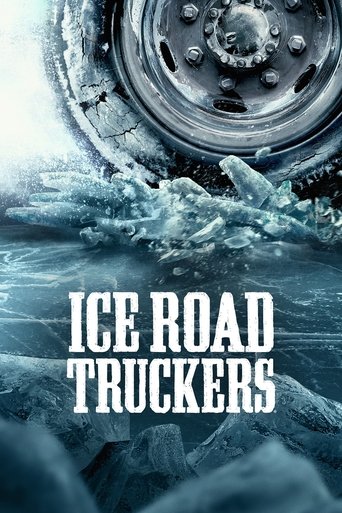
Ice Road Truckers
2007 · TV series · 43 min episodes · 12 seasons
Created by Léo Matthès
Take a trip to Yellowknife, Canada to experience one of the most dangerous careers around. In unfathomably cold conditions, truck drivers haul equipment and supplies to miners in the Canadian tundra in the dead of winter on a 350-mile highway of ice.
1 negative5 neutralfrom 6 commenters
Where to watch
No streaming data for this title.
6 comments on Hacker News
I think a lot of people don't understand how different it is to live in rural communities in general, and then to your point, how much more extreme rural Alaska is than "regular" rural areas.
I live in rural California. During the pandemic, a lot of people moved here and didn't last six months before leaving (I can relate, there's a lot I miss about living in SF!). There are so many services people expect, and they expect them to be prompt. We have the opposite of economies of scale in our small town. We have zero options for meal delivery. The nearest full size grocery is a 20-30 minute drive. Costco and Trader Joe's are a 90 minute drive. There are so few auto mechanics around that many of us drive 90 minutes for car service if we don't do it ourselves. Power outages often last 3-10 days. Large snow storms (4+ feet) typically make our roads impassable for 3-7 days. When the power goes out, internet follows 90 minutes later. There's no cell coverage inside or out, even when the power is on.
All of that is worse in almost all of Alaska. My brother worked on Alaska's North Slope for a few years - if you've ever seen the TV show Ice Road Truckers, that was his job. They'd fly him up north for a 1-2 week long shift, then fly him back to the little town he lived in for a week-long break. You have to worry about crazy things like hoping the summer doesn't get too warm, because roads will melt and collapse into what was previously permafrost. Uh oh, someone left a loading bay door in the warehouse open and now there's a polar bear in there breaking expensive stuff. Then you go home and can't go inside because a moose decided to go to sleep right in front of your door - better drive 50 miles and fuel up because you might be sleeping in your vehicle tonight and you don't want to freeze to death if your fuel runs out. These are all things my brother experienced. The pay was great, but he finally gave up and moved to Anchorage to drive a truck locally there.
There are (used to be?) a bunch of popular documentary series about these jobs, like "Ice Road Truckers" or "Deadliest Catch" or "Axe Men". Part of the appeal is that these are jobs where you can actually see the work that they're doing. Another part of the appeal is the inherent drama in these workers risking their lives. (There's a strong positive correlation between "rate of workplace accidental deaths" and "how interesting a job seems in a documentary".)
I think another issue is specialization. If you don't actually have a ton of background knowledge about software in general, and your particular software requirements in particular, the things that people that you and I worry about all day aren't really meaningful. Like, if you watch Star Trek, you don't actually know what the technobabble means (because it doesn't mean anything), and the only reason you care in the first place is because the end result is whether or not the ship blows up. Software engineering is like that except without a ship blowing up. Likewise, medical and courtroom dramas are far more interesting than the real life of a doctor or a lawyer because they spend most of their time immersed in the arcane.
Which is kind of what simulators like this help with. You're not going to understand how to drive a train or maintain a Spitfire by reading a book or anything, and nobody actually has to know how to do those things unless they do them for a living, but getting a chance to pretend to do these things in a game gives you a broader understanding and helps you understand and appreciate the people who do these jobs.
I've been noticing that as channels get more custom tailored what is available to the mass market, where tastes are less refined, has been steadily receding in quality. Outcast to Drake; MacGyver to Ice Road Truckers.
But the opposite has happened on the other end of the spectrum. Emancipator or Bonobo (or Romare or Pilotpriest or or Nicola Cruz or Nu or Pantha du Prince or Sampha) are just leagues better than what we had even ten years ago. Sure the mass market is drinking down Fast and the Furious 9 or Transformers 11 or Spiderman ∞, but the quality of the films that are targeted at the intelligentsia is head and shoulders above what we used to have. Even television has stratified.
I think the internet has something to do with it. People follow people that are smarter than them because they learn from them or they interact with smarter people more because they tend to get upvoted more, but there is a window of potential interaction. None of my family members are on HN and very few of them follow me on Twitter (out of the 130+ of them). Then you move the smart people to the smart cities and the normal, day-to-day interaction that would have happened no longer does.
Laughable, huh?
>Files we obtained, mainly through the US Freedom of Information Act, show that between 1911 and 2017, more than 800 feature films received support from the US Government’s Department of Defence (DoD), a significantly higher figure than previous estimates indicate. These included blockbuster franchises such as Transformers, Iron Man, and The Terminator.
On television, we found over 1,100 titles received Pentagon backing – 900 of them since 2005, from Flight 93 to Ice Road Truckers to Army Wives.
...
When the CIA established an entertainment liaison office in 1996, it made up for lost time, most emphatically on the Al Pacino film The Recruit and the Osama bin Laden assassination movie Zero Dark Thirty. Leaked private memos published by our colleague Tricia Jenkins in 2016, and other memos published in 2013 by the mainstream media, indicate that each of these productions was heavily influenced by government officials. Both heightened or inflated real-world threats and dampened down government malfeasance.
https://www.independent.co.uk/voices/hollywood-cia-washington-dc-films-fbi-24-intervening-close-relationship-a7918191.html
this isn't CIA-specific -- the DoD takes an extremely active part in culture-shaping. anytime you see US military hardware or personnel in a film or TV show, it has to be run by the DoD PR for review and editing to promote an 'acceptable' view of the military -- even for things as trivial as American Idol[0].
Americans by and large absorb what is within the bounds of acceptable political thought from mass media. What you don't see are the hands behind the scenes sculpting our culture.
[0] http://www.salon.com/2015/07/31/youre_watching_pentagon_propaganda_american_idol_ice_road_truckers_and_the_truth_about_your_favorite_shows/
This happens with quite a few programmes that we have imported from the US. Off the top of my head I can think of Mythbusters and Ice Road Truckers which are dubbed by a British narrator with a lot of the dramatic music removed. All in all it makes the programmes more factual.
Personally I believe this is because of the BBC and to some extent Channel 4 (a pseudo-public tv channel) keeping standards high overall. I doubt the viewing public would accept such dramatised documentaries on the BBC considering its heritage...