 Hacker Cinema
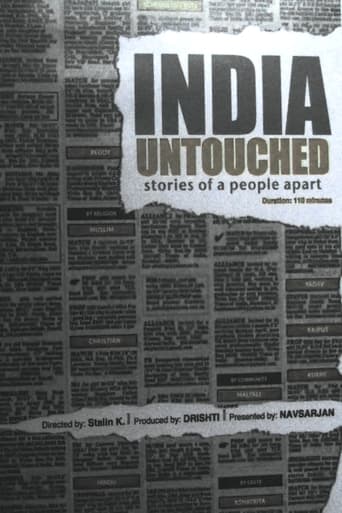
India Untouched: Stories of a People Apart
2007 · Film · documentary · 108 min
Directed by Stalin Kurup
This documentary is the most comprehensive look at the "untouchables" in India. Motivated by ancient religious edicts, no amount of governmental encouragement has been able to stem the tragic custom that separates human beings according to their birth. Those considered untouchable suffer more than isolation, they are forced to fulfill menial tasks in their communities, drink from separate containers, remove their shoes on the street as a sign of respect and perform or exhibit many other outward signs of their perceived inferiority. While the media projects a positive image of a democratic India, filmmaker Stalin Kurup spends four years traveling the country to expose the continued oppression of the Dalits, "the broken people," in a wide variety of communities, including Sikhs, Christians and Muslims.
1 positivefrom 1 commenter
Where to watch
No streaming data for this title.



1 comment on Hacker News
Yes, caste system is embedded in the culture. It is not purely economic/political in nature. It is used by politicians because it is there, socially. This form is racism exists so deep in India. You can witness this:
* http://en.wikipedia.org/wiki/Dalit
* India Untouched - http://www.imdb.com/title/tt1552060/
* India's broken people - http://www.youtube.com/watch?v=sxJr0UlcNTA
There is whole sect in India which is segregated, tortured everyday for being born as a lower caste and it does not even end with their death. They have to clean others' feces by their hands (yes even today) and this is considered a norm. Rich, higher caste still instill this in their own kids to be wary of the "dirty people". Kids born into Dalit families are reminded of this by not letting them eat with other kids, not letting them wear same clothes and being asked for their caste again and again. This system is kept alive.
This all still exists and is in abundance. Point to note is that this is not just in rural, uneducated parts of India. Honestly, the concept comes from Hinduism. As a major religion for centuries, it has a code-of-conduct by Manu to divide the society into 4 major parts. But now it is a part of every sect in practice.
It exists and it is social.