 Hacker Cinema
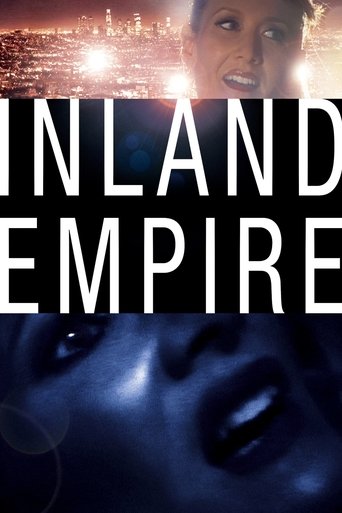
Inland Empire
2006 · Film · 180 min
Directed by David Lynch
When actress Nikki Grace gets the lead role in a cursed film, her world becomes more and more surreal, blending realities and ideas of infidelity, reincarnation, and supernatural forces.
6 positive1 negative7 neutralfrom 14 commenters
Where to watch
No streaming data for this title.
14 comments on Hacker News
When David Lynch’s “Inland Empire” first came out, my friend invited me to come with for a screening. The film had barely started when I heard a loud snore in the empty cinema: he had fallen asleep. Woke up a couple of minutes before the credits rolled. The review was published a couple of days later - it was as good and engagingly written as it could be, and if I didn’t know, I’d never have guessed he just actually slept through it all.
Thanks! Here's the full list: 2001: A Space Odyssey, 8½, Aguirre the Wrath of God, Ali: Fear Eats the Soul, All That Heaven Allows, Apocalypse Now, Ashes and Diamonds, A Woman Under the Influence, Barry Lyndon, Bicycle Thieves, Breathless, Casablanca, Céline and Julie Go Boating, Chinatown, Chinese Roulette, Citizen Kane, City Lights, City of Pirates, Contempt, Daisies, Damnation, Dishonored, Earth, Electra My Love, El Topo, Eraserhead, Eyes Wide Shut, Film Socialisme, Fitzcarraldo, Fuego en Castilla, Hiroshima Mon Amour, Holy Motors, Inauguration of the Pleasure Dome, In a Year with 13 Moons, India Song, Inland Empire, Irma Vep, Koyaanisqatsi, La Dolce Vita, La Jetée, Late Spring, L'Eau de la Seine, Le Voyage dans la Lune, Lolita, Los Olvidados, Lost Highway, Lucifer Rising, Man with a Movie Camera, Metropolis, Mirror, Mulholland Drive, Night Music, Ordet, Orpheus, Persona, Pickpocket, Playtime, Psycho, Rebecca, Rosemary's Baby, Rumble Fish, Scarface, Seven Samurai, Sherlock Jr., Singin' in the Rain, Stalker, Sunset Boulevard, Taste of Cherry, Taxi Driver, Testament of Orpheus, The 400 Blows, The Blood of a Poet, The Cabinet of Dr. Caligari, The Color of Pomegranates, The Green Ray, The Holy Mountain, The Isle, The Lady from Shanghai, The Night of the Hunter, The Passion of Joan of Arc, The Seventh Seal, The Spirit of the Beehive, The Tales of Hoffmann, The Tree of Life, The Turin Horse, Time of the Gypsies, Tokyo Story, Touch of Evil, Trans-Europ-Express, Ugetsu, Un Chien Andalou, Uncle Boonmee Who Can Recall His Past Lives, Vampyr, Videodrome, Wavelength, Werckmeister Harmonies, Wild Strawberries, Moonlight Sonata, Stellar, The Haunted House Biased toward European art cinema, experimental work, and directors who broke conventional narrative rules.
I didn’t say they shouldn’t be allowed to do it, and the only thing I said about “the theater experience” was sneering at the idea. I am talking about the film itself, and saying that these edits to the film are tasteless trash. Claiming I’m “clutching at pearls” is a bad faith insult - my point is this shit fucking sucks!
David Lynch used ML to remaster Inland Empire, which was shot on a digital camcorder and was simply too dark and blurry. This was an excellent use of the technology. Blowing up The Wizard of Oz for the sake of tech bros and tourists is a terrible use of the technology.
Inland Empire is my favorite film of his, followed by the Twin Peaks movie, but I'm not sure the movie stands on its own without the TV show.
Rest in peace to a one-of-a-kind creative genius. Strangely I just rewatched Inland Empire last night for the first time since seeing it in the theater, so this is hitting extra hard.
In addition to his incredible film/television work, I'd like to give a shout-out to his other forms of artistic expression which often got less attention. His musical output captured the same unique vibe as his films, for example his album Crazy Clown Time is almost certainly best enjoyed in a smoky room with syncopated strobe lights and patterned flooring. His mixed-media paintings and sculpture were also impressively unsettling.
> known for cult films like Mulholland Drive, Inland Empire and Wild at Heart
Really? No, really? Not Twin Peaks? Not Lost Highway? Not Eraserhead, not The Elephant Man? Not Dune?!
> Whereas most works seem to have a thesis and then explore them on different levels, Lynch seems to just throw out ideas in different scenes.
Many interpretations come to the exact opposite conclusion: that Lynch starts with a specific idea and then visits it in a different way in each scene. They may seem different, but there is an underlying theme. At least, if those interpretations are right.
Here is an example for Inland Empire:
https://www.youtube.com/watch?v=mkk9GWonTyg
Try to ignore that person's overconfidence, he does actually make a good case for his interpretation, I think, showing that the film can be seen as boiling down to one clear main message. (I don't agree with all of his points, but I do think he is on to something.)
> I would love to unpack what parts of twin peaks were Lynch’s design and what parts were not
Reading Mark Frost's books can help there, as likely Lynch's influence on them is minimal. But it is still hard to unpack, Twin Peaks was really a joint project.
I don't think many cinematographers would agree with you. We have the technology to make films at higher framerates, yet few choose to do so.
Interestingly, David Lynch shot Inland Empire at 60fps interlaced, but the film was released at 24fps.
Yes. I saw it around when it came out which was when I was just on this side of a protracted bout myself. I have watched the film over 100 times and it helped me reflect and ultimately build my way back. And:
Arrival is the greatest film about bereavement ever made. Cover to cover, it captured and studied every grueling nuance of the process.
Inland Empire is the greatest film about infidelity ever made. Probing the movie's deeper puzzles teaches watchers some key points about the topic which are at a minimum useful in avoiding said misstep IRL.
To add to your point, I recently tried to pick up some of my favorite movies from when I was younger, only to find that they were “out of print”. Some of these may not be lost to people searching around online because the directors are well known, but you’d likely have to search first.
Inland Empire - David Lynch / The Dreamers - Bernardo Bertolucci / Bring Me the Head of Alfredo Garcia - Sam Peckinpaw / La Luna - Bernardo Bertolucci / (I’m sure there are many more, these are just a few that I’ve hunt down on eBay this year)
The last two on this list, I watched because I made friends with a video rental store manager, who loved to recommend movies for me. The store itself often did not have things he thought I should watch so he would bring them from home and lone them to me personally. I really miss that sort of thing.
I do have a good used bookstore nearby though, and the last personal recommendation I received led to me reading every George Saunders book.
I wouldn't try to understand them completely, he is an artist and transcendental meditator. Try to appreciate them as painting not as a narrative and I think you'll enjoy them even more. Inland Empire is really a fan film in my opinion and should/can only really be watched which an existing knowledge of his background works.
I haven't seen Inland Empire yet. I discovered David Lynch in the last 5 years and it's taking me a lot of time to get through his movies because it takes a whole lot of processing to really understand every one of them. It creeps into your psyche and sometimes your dreams. And for me it takes time to muster up the energy to put myself through another one of those experiences.
Eraserhead was a trip, I still haven't totally figured it out. But in terms of pure cinematic enjoyment Blue Velvet would be my favorite.
Now that I hear other Lynch fans talk about Inland Empire I'm really excited to watch it.
The inability of adults to get totally absorbed into experiencing a movie (or a book) is a clear obstacle of enjoying the experience. Allowing the experience to wash over you without analyzing it while experiencing gets harder. Getting 3d or perfect reality virtual reality hardware is not going to fix that.
If you can do it as an adult, 2001 is great and Inland Empire from David Lynch is amazing. Inland Empire speaks directly to the unconsciousness and goes past of any explanation. You walk out from the theater wondering what happened. It's like you have been injected with something. The experience that lingers has no explanation.
> Lynch in a nutshell: created on drugs; best consumed on drugs.
I am not sure if Lynch draws his inspiration from drugs; I cannot rule it out, but it feels unlikely somehow. (Although it would explain Inland Empire...)
The second part is true, though. ;-)
As for the pacing, I read somewhere that the first version of the movie was about four hours long, but the studio made him cut it down to two-ish hours (or maybe they did it for him).