 Hacker Cinema
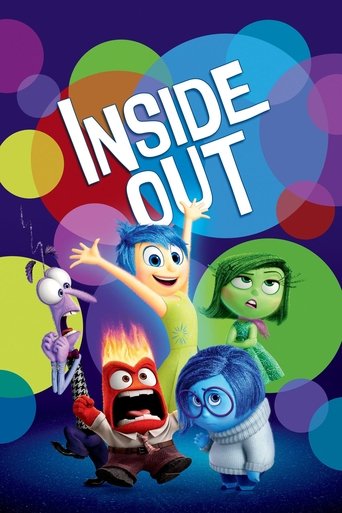
Inside Out
2015 · Film · 95 min
Part of Inside Out Collection
Directed by Pete Docter
AnimationFamilyAdventureDramaComedy
When 11-year-old Riley moves to a new city, her Emotions team up to help her through the transition. Joy, Fear, Anger, Disgust and Sadness work together, but when Joy and Sadness get lost, they must journey through unfamiliar places to get back home.
31 positive18 negative5 mixed34 neutralfrom 88 commenters
Where to watch
No streaming data for this title.
94 comments on Hacker News
The author alludes to it but the defence to this is seemingly insurmountable at the moment because we’re ostensibly operating LLMs on a single channel — their inner, subconscious voice. Right?
Interacting with an LLM is a bit like seeing the output of an Inside Out (the Disney movie) scene. Or it’s a bit like a human brain that we’re providing tool call access and introspection with some kind of advanced neuralink.
But - like the author says - _we know_ our inside voice from the outside world, because we’re embodied.
Is there something we can do here by attempting to bifurcate internal and external systems? Like a conscious and subconscious stream of information on two separate bands?
If the model somehow knew its User was not it because it was clearly an external signal, then the attack documented here would be about as effective as a Jedi mind trick without the Force.
Because they aren't trustworthy:
1)Disney-adjacent properties.
Look at the amazing spiderman 1, it was better than anything Marvel has released with Spiderman, it got trashed on for a very simple reason in my eyes, Disney wanted the rights for Spiderman and tried to force them to give them it (it worked) via giving it terrible reviews.
Opposite thing happened with Star Wars, another Disney "product", the new trilogy getting "amazing" reviews at the start was ridiculous, they were very bad movies, like terrible, the first one which was the most watchable of the three was just bad acting mixed in with nostalgia bait, didn't push the universe forward at all which the prequels get hate for but they did hugely expand what star wars was, in good ways. Even midichlorians which people gave so much hate to in episode 1, makes sense if you rewatch the OT, Darth Vader suddenly turning good is like "snapping" out of the trance state he was in, because as we know now, the "force" in star wars is not like morality in the real world, while you play a part in you getting taken "over" by a side (light/dark side), once it happens you sort of lose control, sort of like a hard drug in the real world, it takes a lot for someone who has given in to the dark side to go back to normal, which I believe makes for a better science fiction universe, the concept of only giving in enough to receive the power but not enough to become evil was even explored with mace windu with Vapaad, anyways.
Lastly, Black Adam, I watched it and the movie was objectively not beyond terrible for current day standards, it was a watchable popcorn flick and the CGI was very very good compared to Marvel movies which made the movie look cool, the main villain was uninspiring but so are most first movie villains, it's all about the setup. It received beyond terrible reviews in my opinion directed from Disney/Marvel in an attempt to fully kill competition especially during Marvel's weak point post endgame. I would have enjoyed seeing a movie of Superman vs Black Adam but it is what it is.
Lastly any anime movie competing with Disney, just look at the Oscars, how many anime movies get snubbed? I still remember being shocked at how when marnie was there did not win vs inside out... or how look back wasn't even nominated, lol.
I understand the sentiment and agree but for me there is a line and I am not sure Inside Out meets the threshold for exposing culture. The changes are too minor to me in a children’s film that it has little impact. Broccoli to peppers is not a deep enough change. Now if the film had a Chinese new year celebration in it and they switched it entirely to a western new year celebration I would think that is a pretty drastic change that does hide cultural changes.
Form TFA: "And, yes, this is probably why we have a single thread of “conscious experience”, rather than a whole collection of experiences associated with the activities of all our neurons."
That made me think of schizophrenics who can apparently have a plurality of voices in their head.
A next level down would be the Internal Family Systems model which implicates a plurality of "subpersonalities" inside us which can kind of take control one at a time. I'm not explaining that well, but IFS turned out to be my path to understanding some of my own motivations and behaviors.
Been a while since I googled it:
https://ifs-institute.com/
This is also the basis for the movie "Inside Out".
Exactly. Pixar is somewhat a victim of its own success, but in this case Inside Out 2 is just Inside Out again - none of the additions or developments are really surprising.
And that's not bad! Sometimes you really do just want more of the same - after all, many wildly successful TV shows are just the same story, told differently each episode.
Flow wildly beat expectations which already gives it a leg up, but it was "new and weird" enough that I bet more of the reviewers actually watched it vs Inside Out 2 or other big-name movies.
Even the tagline of "feature length movie with no dialogue that's actually good" is enough to get people interested.
I didn't think inside out 2 was a very good movie.
It had good ideas but didn't do very well with them (contrary to the first movie, which was great). I'm not surprised a movie which wasn't "just a sequel" managed to beat Moana and IO2.
I wholeheartedly disagree. Pixar does not have a monopoly on attention to detail. They're flush with cash and their leadership has decent taste.
There are so many creators putting in intense work, and doing it on low budgets. You can't claim these folks don't have attention to detail. Check out A24, low and mid and low budget films, or independent films and you'll see a wide assortment of highly meticulous storytellers.
Pixar, on the other hand, isn't low or mid budget:
Toy Story - $30 Million A Bug’s Life - $120 Million Toy Story 2 - $90 Million Monsters, Inc. - $115 Million Finding Nemo - $94 Million The Incredibles - $92 Million Cars - $120 Million Ratatouille - $150 Million WALL-E - $180 Million Up - $175 Million Toy Story 3 - $200 Million Cars 2 - $200 Million Brave - $185 Million Monsters University - $200 Million Inside Out - $175 Million The Good Dinosaur - $200 Million Finding Dory - $200 Million Cars 3 - $175 Million Coco - $175 Million Incredibles 2 - $200 Million Toy Story 4 - $200 Million Onward - $175 Million Soul - $150 Million Luca - Unknown but probably around $150 Million Turning Red - $175 Million Lightyear - $200 Million For that amount of money, they had better pay attention to detail.
Miyazaki is doing way more with much less.
Voices of a Distant Star was one person -- Shinkai. That's the kind of thing we'll see more and more of. Small creators reaching audiences and building studios. Gooseworx, psychicpebbles, Vivienne Medrano. That's the algorithm of tomorrow.
AI, as a tool, makes this more possible. One of the first people to do it successfully was Joel Haver, and he's just the first of many to come.
They may well be good films. I am just tired of sequels.
I am happy, for example, that Pixar created the original "Inside Out" rather than "Up 2".
And so we are in a situation where we don't know in fact what new, original film they didn't make.
Oh well. I guess that's what we can like about indie films.
Both films are quite good. They are deep, meaningful explorations of the themes presented in their respective films.
Is your issue that they reuse existing characters and locations to do so? How would using new characters and locations improve things? Inside Out 2 builds upon themes from the first film and couldn't be made without the first.
Yes, Disney dominates animation. They've done so longer than anyone on HN has been alive, because most of their animated films are extremely good.
> How often do you use the standalone noun out of context though?
The same frequency as any other noun of feeling, like happiness, sadness, hate, etc. Saying "to miss" may imply that one is feeling that emotion but doesn't have a name to it, like having the emotion but not having the word that describes it.
Even though there are some ways to describe that idea it needs an extra effort, so it's not well defined as in Portuguese. Imagine not having a word for "responsibility", "power", "partnership" or other abstract concept: you can define them through subordinate clauses but it will not define that concepts (that's why have words).
And just for fun: if Inside Out was made in Brazil I can see clearly that Saudade would be a character (and a major one, the saudade of home is what leads to the climax), but it can't exist because it wouldn't have a word for that. In the second movie we have Nostalgia, but it's a minor character which wouldn't do what happened in the first movie (thus, we can see the difference)
The movies visible in the photos in the article, and their runtimes in minutes, are:
94 The Good Dinosaur 92 Trolls 98 Wall-E 88 The Lion King 103 Moana 81 Toy Story 91 Trolls World Tour 95 Inside Out 103 Frozen II 95 A Bug's Life > We have two boys, and the eldest is permitted a 30-minute TV session in the morning and another in the evening.
So...if one of them wants to watch The Lion King or Toy Story they have to split it over at least 3 viewing sessions split over at least 2 days? And for anything else on that list they need to split it over at least 4 viewing sessions?
That seems overly restrictive. Yes, limiting kid's TV time is probably a good idea, but would it really hurt to have some flexibility so that they can finish a movie in one session? Maybe let them bank sessions, so they can say skip morning TV for 3 days, and apply that time to the 4th day's evening to get a slot for a whole movie.
As memorably dramatized in the Inside Out movies, each of us is a sort of committee, and Nate’s portrayal of different people’s attitudes toward risk can perhaps give us a better understanding of our own incoherent selves and how this incoherence can be a strength.
Linking his own professional practice to psychotherapy…
https://www.nytimes.com/2024/08/07/movies/inside-out-2-therapy-schools.html
After Cars there’s: - Ratatouille - Up - Inside Out
In your opinion, which movie has a better story than any of those?
Turning Red v Wish Dragon are both kindof Asian-oriented kids movies with pretty decent messages and "mature" topics if you watch them with an adult mindset. Those both kindof felt "cash grabby" but I didn't feel like I wanted my time back after watching them.
Luca (to me) was just so dull I barely remember the plot or message.
Encanto (v Puss in Boots Last Wish) both had a lot of "Soul" (Soul, and Inside Out being other really good animated movies), and I'd happily watch any of them again.
I'm in the camp that believes Pixar quality has fallen, and I'm not surprised at the recent losses (COVID or not).
Onward -- what a mess. The movie about walking pants. I could feel the churn of many story drafts they went through. It was a cool world and character designs, but the overall story just didn't land.
Soul -- full of emotion and beautiful, but didn't quite nail it. The pre-birth world has echoes of Inside Out, but not nearly as well-conveyed. In fact, the abstract art representations were a bit on the nose, and a rare case where I was too aware that these were ideations from the Pixar story team in the Pixar story room. Overall it had many wonderful sequences. But the main character journey was kind of odd. Joe loved music and it certainly seemed to be his source of happiness. But his lesson was that music wasn't necessarily his purpose and he should focus more on what makes him happy. ?
Luca -- adorable, but unambitious. The undersea world was so empty!
Turning Red -- ugh. What exactly was the character development? She is announced in the very first sequence as a confident individualist, and then her panda-journey teaches her to be... a confident individualist. Did no one notice this? Also, I'm bothered by the hubris of a first-time writer-director making the main character (and locale, and the time period) exactly themselves. I suppose if you need your stories to be biographical you can get away with it once, but it's poor form IMHO.
I cringed at Inside Out. Movies where they have to explain and explain and explain all the rules of a made up world are not my thing. It’s all so contrived and that creates a distance emotionally for me. I would much rather have preferred an actual movie about teenage emotions without all the exposition necessitated by the contrived world.
Weird because of those three movies I would say Inside Out was the most beautiful masterpiece they have created in the last 10 years hands down.
I respect what the author is getting at -- Pixar movies sometimes favor adult expectations instead of being kids movies and get stuck somewhere between. I can agree to an extent, I felt Soul was really guilty of this.
But the author is a victim of the same mistake. If kids like the movie it's a kids movie. I think Soul is barely for kids at all but if kids like it, it's a kids movie. Letting an adult decide what a kids movie truly is is just ignoring kids in a different way.
They also seem to think producing a handful of some of the most influential movies of all time makes Pixar not a masterpiece factory, as if their weak efforts somehow make their better efforts less valuable. And finally I won't hear Coco disrespected like that, Inside Out is overrated sure, but Coco is the same caliber of film as Ratatouille.
After 2006 they were still knocking out an extremely high rate of absolutely impressive films:
Wall-E -- if you don't love this film you are possibly dead inside. It's not only absolutely beautiful and emotionally communicative, it's a deeply clever pastiche.
Up, as observed below.
Toy Story 3 came out after Up. And it is a work of acutely well-observed cinema. A staggeringly good film that should have won the Best Picture Oscar. [0]
Brave (2012) is critically neglected, too -- that is a beautiful, subtle, yes quite elusive film, despite what the article says.
And then there are films I have not seen yet but I am told are clever, inventive and beautiful -- Coco, Inside Out, Soul.
They are by any measure still a masterpiece factory. This article is lazy, toxic and cynical.
[0] edit: when I say this, I say it in the sense that surely everyone knows now that E.T. the Extra-Terrestrial should have won Best Picture, not Gandhi. Even Richard Attenborough thought this.
With the exception of the "Inside Out" hot take, most of the movies OP calls out as bad were commonly viewed as such.
This feels like one guy's random opinions about Pixar movies with no overarching point besides "there were some bad ones in the past" which seems uncontroversial.
I'm glad someone else has the sense to see Inside Out for what it was.
But the article just seems to reaffirm the idea that Pixar isn't what it used to be, just pushing the date to when they stopped making a lot of good movies further back.
" In retrospect, it seems clear that “Inside Out” was when Pixar’s Silicon Valley brain trust began to peel off from the universe and float into the metaverse, borne aloft by a kind of totalizing cleverness. "
Aka disappeared up their own bum. Lost the un-self-conscious being-in-itself, and went from "Pixar making movies" to "people trying to make Pixar movies"
Ugh, I really hope the lesson Disney learns isn't more sequels, less original IP.
I thought it was middle of the pack for Pixar, not their worst, far from their best though.
Even worse than the quality of the movie was how they advertised it. The preview seemed so recycled - the story seemed unoriginal the characters so similar to what we've already seen before with Inside Out and Soul. We just went on a whim because its nice to have the excuse to go to the theater
> Coco and Inside Out did around $800m each, but Luca did very poorly, taking under $50m.
Coco had a domestic theatrical release and was in theaters in over 50 other countries.
Luca did not get a domestic theatrical release (except for one week in one theater). Internationally it was in theaters in 20 countries. Similar for Turning Red except it was only in theaters in 17 countries.
Luca and to a lesser extent Turning Red did reasonably well in those countries where they were actually in theaters considering that it was during a pandemic when attendance was down. If they had been released in theaters in a non-pandemic year and in all the countries Coco was in they would have probably been at least $500m movies.
Luca was the most streamed movie of 2021 (10.6x10^9 minutes of streaming) (and it was #9 in 2022 with another 5x10^9 minutes) , and Turning Red was the second most streamed movie of 2022 (11.4x10^9 minutes) (#1 was Encanto at 27.4x10^9 minutes).
BTW, Encanto did get a domestic theater release and an international theater release in almost as many countries as Coco and yet only pulled in $256m worldwide. I think that's a pretty good illustration of how much the pandemic affected box office.
I'm not convinced you're putting the blame in the right place. Looking at the last decade or so, most of the original films — Inside Out, Coco, Luca, Turning Red, etc — have ranged from "great" to "incredible". It's the sequels and spinoffs like Cars 3, Toy Story 4 and Lightyear that have fallen flat. I don't know where in the Disney org chart people start worrying about revenue, but from where I sit Pixar still has plenty of spark.
>She said that for people who have the angry little angry waspy voices in their head, the particular placement of the electrode that I had for that part of the cortex found great success. She said those people have this overactive angry cortex guy just sitting there. When you apply the electric field, it shuts him right up and those people find that their depressive symptoms are alleviated.
I was thinking of conceptualizing this little angry voice as the guy from the “Inside Out” Disney movie, whose head blows up as a volcano. Those were the sorts of angry little voices that I hear frequently as my background elevator music. I never thought of that as being related to being depressed, but I certainly sometimes have a pretty hard time with that. The experience of having that turned off was really interesting. It made me think about what my inner soundscape is daily, and afterwards I really started investigating how to manage that a little bit more deliberately.
Goudarzi: Did the inner negative voices go away immediately or after the currents were flowing for some time?
Adee: I didn’t really notice it go away initially. It wasn’t dramatic. It’s just that when I looked back, I noticed it. After, when I was sort of going about my day, I felt this very deep sense of calm. And it wasn’t only for the duration of the treatment; it was a very slow come down for about the next three days. I just wasn’t this sort of white-knuckling, anxious person—that was really dramatic.
Actually this is pretty hard to do by yourself most people don't recognize this inner talk as self-talk weighing them down, so they can't get off. It took me really some time (opening up to my early experiences in childhood and fully connecting to them from a child's perspective) to recognize this perfectly camouflaged "personality" inside of me talking down on myself.
Now, it isn't gone like described above with the stimulation (cause it's part of myself) but at least I can engage with the voice, acknowledge it and talk back, before I just felt overrun and assaulted.
I'm a huge fan of the Disney movies that came out when I was growing up (Aladdin and Beauty and the Beast are my favorites). My kids like those movies a lot too.
But I think some wonderful movies have been made in the last ten years, most notably Encanto and Turning Red. They're both massive successes, and I think they are in many ways better than those movies I grew up with.
Not to mention Frozen, Moana, Inside Out, etc. These are all wonderful movies.
(Ratatouille is also great, btw, don't get me wrong!)
Almost all of their best movies have had heavy involvement in the writing / directing role by a couple of key players and most of those individuals have either graduated to a producer role or have moved on from Pixar.
Toy Story, Monsters Inc., Up, Inside Out, and Soul were all written and/or Directed by Pete Doctor.
Finding Nemo, Finding Dory, and Wall-E were written and directed by Andrew Stanton.
There are multiple writing and directing credits on all of their films, but these two have writing and directing credits on almost all of the great original ones.
One thing I have noticed is some of the more recent Pixar movies don't feel like Pixar movies at all. They feel like Disney movies: Lot's of musical numbers, a lot more slap stick and silly, more cheap laughs. Have to wonder if Disney has been asserting too much influence on the company.
I’ve got four kids (ages 2 - 10) so I’m likely prime target demographic for Disney.
Didn’t take my kids to see any of these, haven’t streamed them.
Before 2020 we probably saw every Disney and Pixar animation movie since 2012 with our kids. Some of them multiple times - Inside Out was genius, and I still hum Moana to myself.
We had zero interest in these movies from the trailers, and once we learned they would come with great big ice cream scoops of propaganda and eye-rolling allegory it was easy to say “no thanks” and keep our money.
I don't think Disney can quite be put in the same breath. (disclaimer: shareholder, though not in any grandiose quantities) I always imagine Disney as basically 3 apparatuses:
1. A squeaky-clean princess printing machine that reliably churns out 50 billion dolla- I mean, a new Disney Princess franchise every 5-10 years. No expense is spared on making the movie a lavishly animated, voiced, scripted, and instantly treasured addition to any childhood. (Because they know every dollar there will throw off a thousand in merchandising and Disney World tickets)
2. Weird creative stuff. Pixar is in this bucket, imo. Soul and Inside Out and such were amazing, amazing movies but they're obviously not going to put merchandise on the shelves. But they still sell out theaters and help build (maintain) brand prestige.
3. An oracle-tier legal/financial arm that is essentially independent of 1 and 2 that just views itself as having a giant stack of copyrights and money and it needs to turn it into more money.
So while (imo, this is subjective obviously) I think 1 and 2 are roughly as good as they ever were (and remember that Disney almost died multiple times due to not actually being very good for decade long stretches), 3 doesn't care about that and if some tactic with DVD supply or whatever will help juice sales, they'll do it because it's their job.
Disney gets a lot of flack, and rightly so! They're a big reason why copyright in the US is so fucked up, and I do hate them for that. But at the same time, I think they honestly do contribute more to artistry and enduring culture in the West than lots of other companies with even-worse legal departments do.
My conviction is that a selective memory is a defence mechanism against being overflown with he noise of everything. For being able to work/live with, rely on the important things, construct new concepts/thought out of those managable number of selected ones instead of every piece of sand it encounters. The real important things inherently become a backbone of our self without wanting it, actively choosing or dedicating (forcing?) it to become important. The rest fade.
Of course the burden of the selective mind is the need to relearn things like me with names (among others). The certainly tens but perhaps hundreds of thousands of names I met in my life makes my brain forget all names (name of a particular person) I first meet in 10 seconds now. I just pay no attention without being aware of not paying attention, it is an automation. I need to use names several times, repeatedly to become a reliable filament of the inner network forming my consciousness and the representation of the world I live in. Those who are important and part of my life will unavoidably be imprinted and solidified in my memory, the rest without use dropping out for good. Old names fading into grey like the balls of memories in the movie Inside Out.
> Not sure if they produced anything lately though?
Recently-ish: Coco, Soul, and Inside Out are among my favorite Pixar movies and all compete with the golden-era Pixar classics in terms of being memorable and story-first.
The Disney acquisition seems to have crushed some Pixar magic. You can no longer assume every Pixar movie to be gold, but they can still turn out top-quality content.
Yup. Even if you only look within a relatively small category of films one per year can miss a bunch. For example, consider the category of animated feature length films released after 2000 in the US, and pick one per year by picking the winner of the Academy Award for Best Animated Feature.
In 2001 you'd miss Monsters, Inc. because of Shrek.
In 2002 you'd miss Lilo & Stitch because of Spirited Away.
In 2004 you'd miss Shrek 2 because of The Incredibles.
In 2005 you'd miss Howl's Moving Castle and Corpse Bride because of Wallace & Gromit: The Curse of the Were-Rabbit.
In 2008, no Kung Fu Panda because of WALL-E.
In 2009, no Coraline or Fantastic Mr. Fox because of Up.
In 2010 you'd miss How to Train Your Dragon because of Toy Story 3.
In 2011 no Kung Fu Panda 2 because of Rango.
In 2012 no Frankenweenie, ParaNorman, The Pirates! Band of Misfits, or Wreck-it Ralph because of Brave.
In 2014 no How to Train Your Dragon 2 because of Big Hero 6.
2015 no Shaun the Sheep Movie because of Inside Out.
2016 you miss Kubo and the Two Strings and Moana because of Zootopia.
2019 No How to Train Your Dragon: The Hidden World because of Toy Story 4.
2021 you'd miss Raya and the Last Dragon and Luca because of Encanto.
Most of the winners are good...but if you just put all the above mentioned films in a pool and asked most people to pick their top 14, most would have a lot of films on their list that were not among the winners of the aforementioned years.
> They're still making good ones: Frozen, Moana, Encanto. Just watch those and pretend the rest doesn't exist.
Probably the most objective way to view this is to actually look at the list of films from any given decade and see how many flops they had [1]. There's a bias at play here: the only movies we remember Disney making a decade+ ago are the hits. We don't often remember the misses.
Apparently Disney's "Renaissance" ended with Tarzan in 1999; but here are a list of movies that have come out since the end of this golden era:
- Monsters, Inc.
- Lilo and Stitch
- Treasure Planet (a personal favorite)
- Finding Nemo
- Pirates of the Caribbean
- The Incredibles
- Ratatouille
- WALL-E
- Up
- Tangled
- Brave
- Wreck-It Ralph
- Frozen
- Inside Out
- Encanto
I'm sure there's many great ones that you might love that I'm missing. But I'd say this lineup is potentially better than the list of movies spanning The Little Mermaid to Tarzan. To the author's credit, I will say there's part of me that's nostalgic for the traditional style of 2d character animation.
[1] https://en.wikipedia.org/wiki/List_of_Walt_Disney_Pictures_films
This is like saying Wall-E or Inside Out are dumb movies because they need to hook young audiences.
It's not an either or situation here. Shows can be written to target many, many groups of audiences. They can be "smart" while still appealing to the masses.
Also, it's not so much dumbed down as just terrible acting and terrible writing. Cinematics are great, but cinematics are the only thing that's great.
Inside out was good, but not great, IMO.
Counter-counterpoints:
Cars 2, Brave, Monsters University, The Good Dinosaur, Finding Dory, Cars 3, Coco, Onward, Luca, Turning Red, Lightyear.
The (not very original) point is: You can no longer count on a Pixar movie being excellent.
i'm feeling that mass production of the last year is making this lees than was before. for example i feel the best looking pixar movie is toystory 4(graphic wise, and coco graphic+art direction), current movies like red, or souls, feel cheaper being a lot less "magic feeling", and look like inside out graphics a movie from 2015(7 years), movies like encanto feel more polished and movies like the spiderverse from 2018 feels more creative and risky.
There's a very funny gag in the credits of the movie Inside Out by pixar about cats vs dogs.
https://youtu.be/6DZVnX8bEAs?t=68
(If you've never seen the movie, it's worth a watch!)
Every era is an era of horrible films. That’s Sturgeon’s law for you.
Looking at the 2010s as a whole, we got to watch some amazing films.
We got great hard sci-fi like Gravity, Arrival, Ex Machina. The coming of age genre saw entries like Ladybird, Eighth Grade and Booksmart. Animation reached new heights with films like Inside Out, Spider-Man into the Spiderverse, and Kubo and the Two Strings.
We got comedies like The Artist, Grand Budapest Hotel, Death of Stalin, and Jojo Rabbit. Dramas like Moonlight, Fences, Spotlight, Parasite, Blue Jasmine.
Even in the ever-popular comic book genre, we got Logan and Joker playing at a very different level.
But also, it was the decade of the MCU. Let’s not underestimate what Disney has achieved with that — one big overarching story spanning over twenty films, bringing much deeper character development and more serious themes than what we’d gotten used to from blockbusters.
Interesting, well... you're certainly entitled to your opinion, but the overwhelming critical and general consensus is that Inside Out is wonderful:
https://www.metacritic.com/movie/inside-out-2015/critic-reviews
And quite apart from that, I was intrigued that when my 10yo daughter went to see a therapist, she was asked if she'd seen Inside Out. Not necessarily because it's an in any way accurate depiction of the mind, but as a jumping off point for a discussion about the experiences that form our identity ("core memories") and how those can evolve over time as we get older.
The first minutes of Up stands up on its own as a masterpiece.
But Inside Out might be the only Pixar movie that I actively dislike. Any other is at worst an indifferent "meh".
Pete Docter has always been my favourite Pixar director. I feel like he doesn't get the limelight as often as the others, but his movies (Monsters Inc, Up, Inside Out, and Soul) I think go considerably deeper than the rest of the Pixar catalogue as far as offering tender and humanizing insights about people and relationships.
Do we lump Pixar films under the Disney label? Because Pixar has definitely put out some gems for “older kids” (Inside Out comes to mind). Although, to be fair, even those films tend to spell out the exact bits of wisdom they are imparting rather than letting audiences find their own treasure buried in a beautiful story.
I don't have an internal monologue, but I do have that board meeting. Kinda makes me think of that Pixar movie, Inside Out. The whole 'board' doesn't meet all the time, mostly it's very quiet and I get an impression or two, a feeling really, here and there, but when I'm excited or enthusiastic about something, engaged in the moment and I'm presented with a problem to solve, it feels like most of the time a solution just comes to me. Like the board meeting had gone over all the possible options, decided on the best course of action rejecting improbable or difficult solutions, gathered up a dossier with executive summary, schedules, workload estimates, problem analysis, risk analysis, the works, all the details I need to implement the solution to a problem and hands the dossier to me, wordlessly saying "Here's our recommendation". And a lot of the time I just know I have the solution, how to get from A to B without consciously knowing all the steps in between, but knowing all the steps have been figured out and it's in the "dossier". I just need to do it, put it in words and explain to others.
Interestingly enough, I haven't been diagnosed with ADHD, at least not yet, but after discussions with professionals, it seems probable that I may have it, to some degree anyhow
> "I feel that Pixar’s mastery of storytelling is overrated."
me too. the incredibles was pixar's high point of storytelling imho. of the first six films, i liked the toy stories the least. a bug's life, monsters, inc., finding nemo to the incredibles was like a crescendo of animation, reaching a satisfying zenith of art. cars, which came next, was ok (but unoriginal for storytelling, the characters were mostly great!), but then ratatouille through inside out were all groping for relevance while nakedly harvesting their reputation. of the last 8 movies, only coco has been worth watching so far (i haven't seen the good dinosaur or soul yet). so perhaps a quarter of their 23 films have been good enough to watch again for me; contrast that with the studio ghibli collection, nearly all of which are imminently re-watchable (spirited away is an absolute masterpiece).
Limiting my complain to recent Pixar movies: I think Coco, Soul and Inside Out are fairly obvious and not multi-layer. Definitely they talk of "difficult" subjects to kids: death, depression, regrets about ones life. They are not much fun either and the story is rather weak: often predictable, déjà-vu moments (Soul and Inside Out are strangely very similarly built with a meta-world in both), repetitive loop of slow and fast action scenes.
Japanese anime also talks about difficult subjects and IMO does it much better. Thinking of "Okko's Inn": much less predictable, some funny and tense scenes, and yet not shocking for children and quite emotional for parents (OK maybe our smallest daughter woke up and came in her parents bed the following night but she has not been traumatized for life :)
Since I am engaged in a reckless defense of Frozen in other posts: I think this movie is multi-layered. It talks of women and power, femicide, love vs friendship, sisterhood, although it is packaged in a story suitable for the smallest children as its success showed. The story is definitely not predictable from the start and has the power of myths. Of course Disney is well known for its ability to adapt old myths and tales.
As for older Pixar: The Incredibles was fun and multi-layered, Ratatouille was fun, Wall-E was great ...
I don't think The Good Dinosaur was a very good "children's movie" in the typical sense, but I'd recommend taking a second look at it if you haven't recently. I watched it again after seeing it when it first came out, and I found it to be a pretty good movie - even if it doesn't fit the typical kids movie mold.
It's ironic because The Good Dinosaur would be a good example of them taking a bet on a somewhat unique vision (a dinosaur spaghetti western?) with a more mature outlook, and then getting shit on by reviewers because it wasn't as funny or charming as Inside Out.
10 years is a lot of time, and "worth saving" is a very low barrier.
I'd classify Kubo And The Two Strings, and Inside Out as must-watch films. Spiderman: Into The Spiderverse set new boundaries for what's possible with animation.
Moana, Zootopia, Big Hero 6, Wreck-it Ralph, The Incredibles 2 and Finding Dory are all pretty good films, and definitely tick all the boxes you listed.
I'm not even looking at Anomalisa, Isle of Dogs, and other such more adult-oriented animated films.
Interesting; I feel it depends on the movie - they have a large portfolio now so some sort of averaging is inevitable.
I feel e.g. Cars franchise has limited vision. They're "allright", but not spectacular. I'm OK never seeing any of them again, even the first one.
On the other hand, I find Monsters Inc. a unique movie with a unique premise, and I can rewatch it regularly - with or without the kids 0:-). I also don't find it particularly sad. Inside out does indeed have a large dose of melancholy, but again I feel is a unique idea taken quite far without dilution.
(there are absolutely movies that are way more avant garde or quirky or surreal or even "creative" inasmuch as that can be objectively compared - but Pixar has two distinct audiences to cater to and they HAVE to be entertaining and attention-occupying to children; while inserting content that also keeps adults interested and even thoughtful - that's a specific set of constraints that e.g. "Love Death + Robots" does not have)
And if we look at their entire portfolio, the Pixar Shorts again have some absolutely brilliant, touching, "single idea executed to perfection" entries.
I really like most of the Pixar movies. I find them enjoyable both from a children and adult point of view while still touching pretty deep subject (inside out, up...)
Thank you for the link - just read it and love the review.
I loved "Inside Out", but I have to say, Brody convinced me:
"The film is on the wrong track from the beginning, when the first view of the world, through the eyes of the infant Riley, is taken by Joy, and Joy becomes, from that point on, the default leader, Riley’s emotional captain.
Given the smack on the bottom that brings Riley and all of us into the world, and the lusty howl that follows, I’d say that something altogether different is in the driver’s seat. Anyone who hears a baby scream at the slightest quiver of need or discomfort knows better than Pixar that primal forces, entirely more hirsute and imperious, are in control from the start, and those forces only slowly and grudgingly make room for the five cutesy minions of emotional negotiation. "
I read brody's review of Pixar's "Inside Out"and came away thinking I should avoid the film. He claimed it was a saccharine oversimplification of inner mental health, with all the nuance of Michael Bay (my paraphrase). https://www.newyorker.com/culture/richard-brody/the-curse-of-the-pixar-universe
Months later when I told this to a friend, they looked at me like I was crazy, because the whole point of the movie was the exact opposite!
> - Regional versions of films with anything from chunks of dialog ("I'm from X") up through entire cityscape backgrounds changed depending on the theater location. With CG, even things like character appearance (e.g. race) could be regional.
This already happens. Pixar movies for example do this, Inside Out for example used different region-specific foods that kids didn't like for that memory in the movie. Movies released in China and the US often are cut differently where in China the Chinese actor or actress is given more prominence in the plot.
A lot of it has evolved into including a single strong woman who demonstrates her skills, often in fighting, early on but doesn’t actually add much to the plot.
I’ve been pretty pleased with the last several years of children’s content though. A lot of it feels respectable of kids intellect and aware of where we’re trying to get culturally. Inside Out and Zootopia come to mind.
Frozen is an interesting one in that I felt it was mostly in line with previous Disney film tropes but it had a lot of plot points that allowed them to say, technically, it wasn’t.
Have you seen Pixar's movie "Inside Out"?
If not, this is irrelevant, but if you have, you will likely recall that the film's core narrative is about memories.
All those memories are depicted as audiovisual records of events, often (literally) colored by an emotional overlay.
I think they represented them that way because most or all of the core project team shared that experience of memory.
> Addictions can be hard to overcome for many.
I don't think this is "addiction". Its clearly operant conditioning. You aren't going to suffer physical ailments like an Alcoholic or Heroin-abuser (or heck: even a coffee-drinker) would if you "stop pushing the button"
I'm pretty sure that our concepts of "addiction" (including "willpower") are mostly pseudo-science. While psychologists are carefully studying the issues, the mass media needs to keep making movies and stories, and those stories do NOT reflect upon reality very well. Even well-researched stories, like Inside Out, or Finding Nemo (Dory's character is a very well researched example of memory loss) may end up obsolete as research moves forward. (IIRC: Inside Out was initially based on some psychology research. But the research already dramatically changed by the time Inside Out was out of production, and it was too late to change the story at that point).
The sad truth is: most of the psychology the layman knows is wrong. Its "story" psychology, created for drama and storytelling. Not "real" psychology, which actually predicts human behavior.
-----------
In any case, I believe that lootboxes are a clear, and simple, example of operant conditioning. We know how to "deprogram" operant conditioning. You either:
1. Remove the reward entirely -- Without a reward, and people will stop. It may take 10,000 cycles, but eventually all subjects stop when the reward is fully taken out of the picture. Its surprising how long subjects will continue their behavior in the absence of a reward, but it will eventually stop.
2. Introduce punishments -- Shock the user, or cause other forms of pain. If the punishment is greater than the reward, the subject will eventually stop.
As far as I know, those are the two ways to stop a conditioned behavior. Social pressure may probably serve as #2, but in my experience, it puts a lot of strain on the social relationships (ex: subject may just start lying instead of telling the truth about their behavior). In effect, using social pressure to stop #2 may only cause the subject to become more trained in the act of lying.
This is completely nonsensical.
Toy Story? Cars? Inside Out? Up? Coco?
None of these follow that template. Sure, some like a Bugs Life and Rattatouille follow this, but in quirky ways. All conventional narrative structure involves an external incident. That sets up the central conflict of the narrative.
Disney movies like Big Hero 6, Moana or Frozen are more likely to follow it, though again, there’s a lot more craft in the story and surrounding context than the base structure suggests.
What I described matches the Disney/Pixar movie Inside Out, which most people readily identify with. :-)
My dude Maarten would love the Pixar movie Inside Out
The movie Inside out taught me this lesson already
This is why every kid I know has only one Pixar film they rave about and that's Cars, objectively one of their worst films. Pixar films used to appeal to everyone now they just seem to try to appeal to people who grew up with Pixar and are now adults.
I'm not talking about the gender politics angle, I'm more just talking about they have moved from telling stories about a simple whimsical idea that captures all imaginations which follows through to emotion to maybe trying to be too clever and maybe poignant with their ideas, it's almost like they're writing to the target of an adult Pixar fan that needs validation for their interests rather than everyone.
Just feel like they've lost the joy along the way, putting a Pixar film feels like I'm going to be in for a emotional slog now rather than something enjoyable, can't imagine any child getting excited about watching Inside Out or Up (I understand this is a fan favorite for good reason, but is it any child's favorite?)
Apart from the fun plot-line, the cultural awareness, and the entertainment value -- the animation work is great (skeletons don't walk like live humans, for instance).
[spoilers]
I would not say it's our favorite Pixar movie. My two-year old was fascinated (her first movie theater experience). My eight-year old was shaken by Frozen and by Inside Out, no this movie. It felt a bit derivative from Spirited Away in theme and format, but less transporting. I think Miguel should have been a bit older so he could have a love interest and feel conflicted about returning to the land of the living; maybe Pixar is already too Disney-fied.
The 2000s were definitely Pixar's golden age. They made great films before then (e.g. Toy Story), and they've made great films since then (e.g. Inside Out), but the 2000s were an incredible run of very original stories executed impeccably.
Fortunately for 'Inside Out', the concept of memory is not the central component of the movie. Rather, it's the idea that we each have multiple competing subpersonalities inside our heads, which remains a useful model.
But I think we can agree that Alien 3 is a pretty mediocre film, while Wall-E, Up, or Inside Out are superb film making that at least I would recommend to just about anyone.
If you literally could not tell the difference, then something may have been wrong with the demo. It is true you do need the brightness turned up, since you can't get the range if you cut the top end down too far in the first place, and I've seen it said you really can only get it in a dark room because of that.
If that makes you less interested in getting HDR because you don't always watch TV in a dark room, well... yeah, it's definitely a more niche feature.
However, IMHO the more interesting thing about the HDR standards is the improved color gamut. That is quite noticeable when you get content that uses it properly, but there's precious little of it right now. However, I do occasionally commit videophile sin and turn on my TV's "fake up a guess about how the color gamut might look" mode even though my media isn't technically mastered in that, and there are some things that it does make beautiful, even if it is technically inaccurate. Inside Out in particular is jaw-dropping on my TV in Fake-o-HDR mode. (Which isn't entirely implausible, as I understand it the original movie is in an expanded gamut, but there's no Bluray that has the expanded gamut version AFAIK.)
I was completely surprised by how great home 3d is! And I don’t really like 3d in the theatres at all.
Last year I bought a 55” 1080p LG OLED and on a lark, picked up a 3d blu-ray to see how it looked. Jeez, I was totally blown away! So much better than the movie theatre “Real 3D” while using the same passive glasses. A ridiculously beautiful 3d effect that was easy on the eyes. Just amazing. I started to stockpile whats left of the 3d blu-rays being produced. Thankfully, the 3d blu-ray editions tend to have all of the 2d versions as well, so it’s not the end of the world.
Favorite 3d blu-rays: Avatar (omg, just incredible), Inside Out (hankies required). 3d animated movies are the best.
I will go over and add my name to the petition. Home 3d is great.
Stickers are more than something to sell to consumers - They can be advertisements used to target a gaming audience. Skype and Facebook have done this, offering free sticker packs for upcoming movies (e.g. Inside Out). A pack of stickers or a theme featuring characters from a game like Overwatch could potentially bring in revenue from both Blizzard and players.
I searched the thread to see if anyone had mentioned inside out. I found that quite a powerful movie, with an important message. A lot of time and money has been spent trying to prevent people from feeling any kind of negative emotions. Most recently in the form of medicating these emotions away.
There are a few issues with medication, as I see it. Should we try change a person? Are you the same person if you medicate how your brain responds to certain events? There are risks involved of course, people react differently and increased anxiety levels are often associated with some anti depressants. There is also the problem of dependence and the search for the "perfect pill" to make them feel perfectly at peace.
And finally there is the question of whether or not these negative feelings are actually a key part of who we are, and trying to lock them away, and contain them just prolongs the suffering we endure. I think sometimes you just got to embrace what you feel and go with it.
Let me stress though, I completely accept that for some people medication is absolutely vital to ensure they stay well, and for many others it can be completely life changing in a totally positive way. I just think it shouldn't be the first thing your doctor recommends when you present with depressed or anxious thoughts.
> Most other 3D movies weren't actually shot in 3D, they were just faked in post production.
In general, animated movies work very well, having watched the 3D versions of Frozen, Inside Out, and sundry others.
I feel that "Inside Out" is more of a rites of passage story, where the falling of those childhood 'infrastructures' is due to change, especially disruptive ones (just the denial of "sadness" felt a little too simplistic).
But I think with depression, there is less 'logic'; it's much harder for you to follow what the hell is going on. Kinda like a big mess of yarn that's so knotted up you really wanna grab a pair of scissors and cut them up, and throw them in the fire for good measure. It's destructive, and that's why depression is awfully dangerous. Now you might think that the process itself will lead to that blank slate - I gave a pile of cards metaphor earlier - enabling a chance to build better and even turn the experience to some sort of character enrichment. But it's not that glamorous; not everyone can hold on for that long. I do count myself extremely lucky.
But one thing the film definitely got right was the concept of support. Riley eventually got through by allowing herself to break down and tell her parents everything, acknowledging the bits that she consciously feels to be weak, pathetic et cetra, like sadness. And that's really important for someone who's depressed; you will not be able to help yourself. Contrary to your belief, you need outside support to help you battle those demons and tell you that A is A and not a+b+c-d. It might be difficult to find good support, and initially I didn't either, but I knew my mom to be fundamentally caring about me and by approaching her, we slowly went down the road to detangle the mess. I'm not gonna kid, it was rocky as we didn't have a very good relationship, but we got there eventually. And learnt a bit more about humanity.
Thank you, that was very beautifully put!
Have you seen "Inside out"? In that movie, joy and sadness are depicted as two characters cooperating whereas depression sets in when these two are absent and the infrastructure starts to shut down and crumble...
While yes, the Washington Post has become more focused on new media, its really only them and the NYTimes that have successfully transitioned (as much as one could really expect) into new media.
The websites and mobile apps for these companies are awesome, especially compared to many TV channels and other old newspapers.
Additionally, in todays day and age, its clickbait that pays the bills, but that doesn't mean that it takes away from real journalism, you just have to recognize that not ever article will be as high quality. Movie Production companies have been doing this forever, I.E. Cars 2 pays for Inside Out. Even Buzzfeed has real journalism tucked in there.
Its sad, but quality journalism both makes less money and costs more to produce, and budgets for these stories have to come from somewhere.
I'm surprised that Cars holds ~75% on Metacritic and Rotten Tomatos, while Inside Out and Toy Story and others have >95%.
I see Cars as a film that appeals to children primarily, while the others are "family" movies in the best sense.
It always seemed to me that Cars was intended to be a more child-oriented movie, but I don't know that it should suffer for that critically.
Maybe it w as hoped to be a film on the same level as those others, but I can't imagine anybody read the script and thought it would be.
You really do get incredible insight into how they work up and tear down ideas in a setting that is both art and technology. Also fun to hear about lessons learned from iconic films such as toy story, finding nemo, and inside out.
Exactly. Have you seen "Inside out" the animated movie ? I thought it depicted the need to consider emotions and how they fit in the bigger picture quite well. I would recommend it for children and adults.
So have we dialed back from "Inside Out's psych theories are monstrous corporate brainwashing lies" to "Inside Out's psych theories are mildly controversial"?
I get that you didn't like the movie, and that's okay, and it's certainly reasonable to not like Disney in general; but I don't think you have any grounds to extrapolate that to the movie's message being actively and specifically harmful.
\philosophical: Showing growth requires showing "before" and "after". Yet, if the bulk of a movie is the "before", it can be a way of celebrating that behaviour, and the brief "after" at the end is a way to slip past the censors. [In general - not saying Inside Out would be censored!] The greater screen time and scenes means "before" leaves the greater impression on viewers.
Inside Out's is a dissatisfying explantion for emotion, because each emotion-character themselves exhibited a variety of emotion (e.g. Joy was sad), implying by the conceit of the movie that they each had a set of emotions within their own head... ad infinitum. That's the problem with the homunculi theory of mind: it doesn't explain anything.
Did anger ever make a useful contribution in the movie? IIRC only a source of humour, or a problem to be worked around.
BTW The outtake-like scenes at the end included a bus driver who was all anger.
If the impression you got was "anger is bad and abstract thought is risky," then I'm not sure what movie you watched, but it definitely wasn't Inside Out.
You're mistaken about "anger" being purely a cultural/linguistic construction, and about the authenticity of Inside Out's psychological model in general: the film was inspired by (and admittedly somewhat simplifies) solid psychological research, particularly the work of Paul Ekman and Dacher Keltner, whom Pixar brought on as consultants.
>I'm not sure that Inside Out was meant to be an accurate depiction of our emotions any more than Finding Nemo is meant as an accurate portrayal of marine ecosystems, or Ratatouille of French cuisine.
And yet the first thing to come to many children's minds when shown a clown fish or French cuisine is Nemo and Ratatouille.
> I don't think that children watching the movie will really grow up believing they have all these little people in their heads.
I've met people who think the movie helped them "understand themselves better" whether or not that is actually true.
>But if we couldn't reduce that complexity into modular, independent pieces then how would we ever communicate?
Not everyone wants to speak the same language, (or even be forced to hear you).
I'm not sure that Inside Out was meant to be an accurate depiction of our emotions any more than Finding Nemo is meant as an accurate portrayal of marine ecosystems, or Ratatouille of French cuisine. While our emotions certainly are complex and misunderstood, I don't think that children watching the movie will really grow up believing they have all these little people in their heads. It's a fun concept that takes some existing cultural trope and runs with it to tell a story. Everything is more complex that the limited linguistic labels that we slice the world into. But if we couldn't reduce that complexity into modular, independent pieces then how would we ever communicate?
I'm not sure I'm able to visualize this correctly. Let's say we have an array of strings containing the top 20 movies from Rotten Tomatoes:
The Wizard of Oz The Third Man Citizen Kane All About Eve Das Cabinet des Dr. Caligari. (The Cabinet of Dr. Caligari) Modern Times A Hard Day's Night The Godfather E.T. The Extra-Terrestrial Metropolis It Happened One Night Singin' in the Rain Laura The Adventures of Robin Hood Inside Out Repulsion Boyhood North by Northwest King Kong Snow White and the Seven Dwarfs
What would this data structure look like?
Yeah, one of my favorite reasons why I like Pixar films is that their central conflicts are inspired by some deep-seated adult fear: fear of being replaced or forgotten (TS1-TS3), of children growing up and leaving (Nemo), midlife crisis (Incredibles), the fragility of newborn children (Monsters Inc), of change (Inside Out).
That said, I do think there are a lot of creative frontiers to be explored with material suitable for older audiences only. If they wanted, Pixar could make the most terrifying psychological horror known to Man, or a tragedy so heart-wrenching that everyone heads to the bars afterward.
An interesting aspect in the movie (spoiler a little) is that the premise of the move from Minnesota to SF is because the dad got a new job. They touch on it a little in the movie that it is startup related (from what I remember - not necessarily a Silicon Valley startup but a new venture of sorts) and he is spending a lot of time on it. To the point where some of the girls memories in the past include all three of them and her newer memories have events with only just mom because dad is working.
Is this a stereotype of sexism or is this more accurate to real life?
Another item in the movie is that both parents were big into ice hockey, which does sort of break the stereotype about women don't do sports because they are fragile or whatever type of BS (after watching women's world cup games I think they play tougher than men's in some way - less extent of the fake-injury crap).
Trailers are meant to tease people into wanting to see the movie. If you reviewed trailers for a bunch of movies I'm sure you will see a lot of stereotypes in play. What was it in the Inside Out trailer that set off this remark?
"princess" movies are substantially less sexist than the trailer for inside out IMHO. I guess it's just a sign of the times.
Frozen was a good movie with powerful female roles which pushed against the stereotypical princess movie. I like it. But the trailer for Inside out is just screaming "Men are dumb idiots who can't be good fathers".
I can see I'm fighting a torrent of koolaid though, so I'll leave it.
It's always fascinating to see the Pixar PR machine at work. "Guys, this July 4th weekend remember that there's a great family movie called Pixar's 'Inside Out!' Pixar made it, and it's family friendly, starring an eleven year old girl and these various situations that you can relate to. Scientists think emotions are good, but sometimes when they appear bad they're also good."
It was published July 3rd, too.
As always Fresh Air's Terry Gross on NPR did an outstanding interview with the Director several weeks ago. They go fairly deep into the trade offs of making a movie and getting the science right or at least right enough to be entertaining and still meaningful to the young audience.
"It's All In Your Head: Director Pete Docter Gets Emotional In 'Inside Out'"
http://www.npr.org/2015/06/10/413273007/its-all-in-your-head-director-pete-docter-gets-emotional-in-inside-out
Another good set of comments about Inside Out can be found in the Neurologica Blog maintained by Steven Novella, M.D. He likes the movie for some of the same reasons that I like it.
"Inside Out – A Neuroscience Metaphor"
http://theness.com/neurologicablog/index.php/inside-out-a-neuroscience-metaphor/
Thanks for this.
The essayist seemed to want a very different film. He wanted one that challenged its audience more directly with the childhood id (as he put it, presenting the audience with the "Big Fuck You"), and that had a more complex and unexplainable range of emotions on the part of both the kid and the adults. In this way, the OP claims, the film spent its time in the shallow end of the pool. (I have to agree.)
But, it was a kids movie. As an adult, I can view it as not risking much, but my 9-year-old was very anxious in several parts of the movie. It was a real emotional ride for her. On its own terms, the movie succeeded very well.
Malick's "The Tree of Life" (mentioned several times in the OP) also succeeded, but also was a flawed film, especially so for a non-believer like me. My wife cannot abide pretense and was giggling through the big bang/dinosaur sequence of TTOL.
TTOL and Inside Out are odd movies to put next to each other; one being so determinedly beautiful and almost too personal and idiosyncratic, and the other trying to enact universal emotional states for children.
Inside Out was inspired by the psychological concept of basic emotions, which boil down to joy, sadness, fear, anger, disgust, and surprise. They just conflated fear and surprise into one character.
What I think is interesting is that these emotional characters have different aspects and complexities of their own. Pay close attention to the scenes where we see Riley's parents' emotions. For her mom, Sadness is in control; for her dad, Anger is the leader. Yet they are not predominantly sad or angry people. In the movie universe, Sadness is responsible for compassion and Anger for our sense of right and wrong. If Riley's emotions seem underdeveloped in regard to these complexities, it's because... well, she's a kid.
I bet he's a real hoot at parties...
"Hi, Richard."
"Hello, how are things?"
"Great! I'm pretty happy that..."
"Oh, you're not actually happy. You've been indoctrinated to think you need to obtain an artificial mental state labeled 'happiness' by others. What you are really experiencing is resentment for others success and you are projecting your mediocrity as positive achievements."
I found Inside Out wildly entertaining. As did my children and parents. Pixar's storytelling and record of engaging multiple generations is unmatched. They are altogether tragic, dramatic, funny, personal, and universal.
I find nothing wrong with simplifying the rules of a film's universe and requiring filmgoers to suspend disbelief in order to tell a story. Why? Because good films are a catalyst for discussion. As a result, whereas the author is critical of the film itself as damaging for being simplistic, rather, it can be the very context to launch the necessary discussions with children to navigate their myriad of emotions.
Ironically, Pixar's very own Anton Ego of Ratatouille critiques the critics... "In many ways, the work of a critic is easy. We risk very little, yet enjoy a position over those who offer up their work and their selves to our judgment. We thrive on negative criticism, which is fun to write and to read. But the bitter truth we critics must face, is that in the grand scheme of things, the average piece of junk is probably more meaningful than our criticism designating it so."
Malick is the director for "The Tree of Life", another movie about a child's inner life that the author contrasts "Inside Out" to in the article.
I wouldn't say he expected any different; I think he just loathes the fact that these "kid's movies" are, as you called them, simple, or better yet, simplistic.
He thinks the movie does a disservice to kids by presenting what is, in his opinion, a distorted and sugar-coated representation of mental life and motivations.
Essentially, he thinks that a good movie would pass to viewers what Malick's Tree of Life does about the inner life of children (feelings of wonder, the need to act out for its own sake, the deception ones does for others and even oneself, etc) in a way that would appeal to kids.
(By the way, this is just what I understood from the review; I haven't seen Inside Out)
I haven't seen the movie, but what the article says resonated with the vibes I got from the trailers, so...
> The wonder of childhood is the opposite of the cozy vision of “Inside Out”
That may be a key quote. Kids movies, and Pixar movies (which often are, or used to be, for adults as much as for kids) don't need to contain simplistic world views; they need simple and layered presentation, but the world may be rich, and the characters and situations be driven by nuanced and sophisticated themes under the colourful hood. Toy Story 2, The Incredibles and Frozen, in my opinion, are shining examples.