 Hacker Cinema
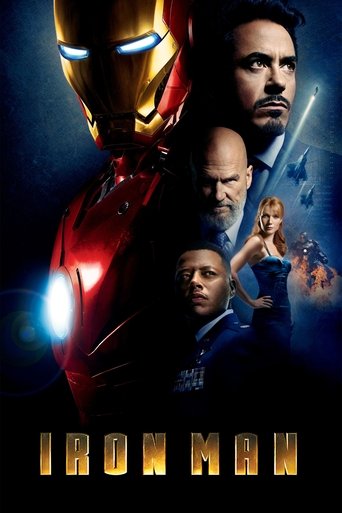
Iron Man
2008 · Film · 126 min
Part of Iron Man Collection
Directed by Jon Favreau
ActionScience FictionAdventure
After being held captive in an Afghan cave, billionaire engineer Tony Stark creates a unique weaponized suit of armor to fight evil.
44 positive12 negative5 mixed137 neutralfrom 198 commenters
Where to watch
No streaming data for this title.
213 comments on Hacker News
> Proof that the suit alone doesn't make anyone Iron Man.
I do believe that is a running theme in the Iron Man comics and movies.
Most scripts go through a process called "Development" where they are written, and rewritten so many times.
You'll be surprised to know that the first version of Iron man, starring Robert Downing Jr started with the comment from Stan lee as "I don't care for the script" and had to be completely rewritten. So doing 4-5 rewrites is quite normal.
The benefit with a system like this is, you can decide which archetype best tells your story, and also you can benchmark versions of the story to see how close / further away you are as you do your rewrites.
Film executives work with something called comps, what they believe are their comparables - in terms of similar stories and similar structures. The structure of your comp could give you some hints of where you might want to lean towards - or you can go the opposite direction too.
As someone who is building a tool, we take a conscious decision to be at best descriptive + suggestive, but never prescriptive. present the data, let the creators decide how they want to take it forward. I believe that is where originality will thrive.
I have friends who are filmmakers and they'd write me off if i had any other thoughts :)
The primary audience for these are producers and development executives on the studio side, and independent filmmakers if they want a tool to evaluate and give them insights to build on it.
https://blog.quanten.co/why-quanten-arc-does-not-tell-you-what-to-do/
> It also feels like people are automating things that don't really need to be automated at all (do you really need to be reminded to make coffee?)
I've posted about this before, I call it the Jarvis effect.
> For years we had people trying to make voice agents, like Iron Man's Jarvis, a thing. You had people super bought into the idea that if you could talk to your computer and say "Jarvis, book me a flight from New York to Hawaii" and it would just do it just like the movies, that was the future, that was sci-fi, it was awesome.
> But it turns out that voice sucks as a user interface. The only time people use voice controls is when they can't use other controls, i.e. while driving. Nobody is voluntarily booking a flight with their Alexa. There's a reason every society on the planet shifted from primarily phone calls to texting once the technology was available!
By and large the reason people love Openclaw is that it feels cool and futuristic. You have an AGENT! It's DOING THINGS! Yes it's doing things you could have easily done yourself, but you're not doing them yourself, you have an AGENT! It's all very silly, the same way that having your lights controlled by your phone is very silly, but some people like it.
That being said there a real use case for Openclaw, which is "marketing" (aka spam). A ton of people have set up Openclaw agents which exist to post on Twitter/Facebook/Discord/any open public user discussion forum (yes, HN included) to seem like a real member of a community, then start advertising something, generally crypto. So we can thank Openclaw for dead internet accelerationism.
This is definitely a valid concern. Right now, marketing companies pay television stations, streamers, film-makers etc for “integrations” and placements, so their products get used, mentioned etc. Iron man mentions he uses an oracle server and drives an audi car. The dude in “Death Stranding” chugs Monster energy all the time. It’s really not a stretch at all to imagine a future where these types of integrations are super-subtle, like the vercel one you mention, or something like:
Me: Hey chatgpt, I want to do a singular value decomposition of a matrix. What’s the best way to do that?
ChatGPT: The best way is to use Wolfram Mathematica[link to product page], which has a builtin “SingularValueDecomposition” function [link to documentation] specifically for this.
Now I don’t know whether this is “Impartial advice” (to the extent an LLM can ever offer that) or Wolfram has paid OpenAI for a placement. It’s so natural and insidious, and obviously extends into all domains.
Yeah, I flew thru Eindhoven Airport in the Netherlands a few years ago, and I couldn't believe they let me through with water.
The security used something I would describe as out of an Iron Man film, they were zooming around a translucent 3D view of my backpack. (It was on an LCD display instead of hovering midair, but I was still impressed. But the fact they let me keep the water was even more amazing, hahah.)
The Iron Man thing… MCU Tony Stark wasn't as smart as he thought he was. He should've allowed surgeons to help with his heart immediately, rather than the entire B-plot of Iron Man 2; Iron Man 3's plot could've been averted in a whole bunch of ways if he'd been less arrogant and thoughtless, and also shows him as a loner unwilling to call for assistance despite (by this point) being allied with what passes for gods in the MCU; Ultron was his own hubris punching him in the face; the justification he gives for the Sokovia Accords was a stupid response to an act of self-defence that, sure, could've and should've been handled better, but it isn't like Stark himself was great at avoiding collateral damage during emergencies in the other films; his rage-fight against Barnes in Civil War, while understandable, was wildly unprofessional and a sign he was not a suitable person to be in possession of a one-man weapon system like the Iron Man suits have been shown to be; his tech gift to Peter Parker had wildly inadequate safety measures to be gifted to someone still in school, even if they had been to space.
Basically: yes, Musk is just like Stark. Half as smart as he thinks he is, has main-character syndrome and/or narcissism.
> Cut copyright to 15-20 years by default.
This alone will kill off all chances of that ever passing.
Like, I fully agree with your proposal... but I don't think it's feasible. There are a lot of media IPs/franchises that are very, very old but still generate insane amounts of money to this day with active developments. Star Wars and Star Trek obviously, but also stuff like the MCU or Avatar is on its best way to two decades of runtime, Iron Man 1 was released in 2008, or Harry Potter which is almost 30 years old. That's dozens of billions of dollars in cumulative income, and most of that is owned by Disney.
Look what it took to finally get even the earliest Disney movies to enter the public domain, and that was stuff from before World War 2 that was so bitterly fought over.
In order to reform copyright... we first have to use anti-trust to break up the large media conglomerates. And it's not just Disney either. Warner, Sony, Comcast and Paramount also hold ridiculous amounts of IP, Amazon entered the fray as well with acquiring MGM (mostly famous for James Bond), and Lionsgate holds the rights for a bunch of smaller but still well-known IPs (Twilight, Hunger Games).
And that's just the movie stuff. Music is just as bad, although at least there thanks to radio stations being a thing, there are licensing agreements and established traditions for remixes, covers, tribute bands and other forms of IP re-use by third parties.
I greatly enjoyed the first Iron Man movie which got me to look at the really affordable black and white editions of the Kirby/Ditko/Lee age. I watched a lot of them, bookended by Guardians of the Galaxy which I also greatly enjoyed. Somehow I fell out of the Marvel habit and didn't see any more after that though there wasn't any moment where I felt that I feel out of love.
What does a hard copy of a movie cost these days? $20? That’s a month of one platform. How many times can you rewatch Iron Man in 31 days?
> It's probably got something to do with copyright. Like the way it interacts with markets makes this sort of arrangement net-harmful pretty much any time you see it.
I would say it is monopoly.
If you are a luxury brand you may sell your pen in a brand store only and limit access and will have some business.
But other companies will produce comparable pens and then your only moat is the brand identity but in all objective criteria the other pens are equal.
With intellectual work you got the monopoly. If I want the Taylor Swift song I don't want Lady Gaga, even though both may be good. If I want a Batman movie, I don't want Iron Man. These products aren't comparable in the same way. And another vendor (studio) can't produce an equal product in the same way as with the pen example.
This is pretty revisionist. In 2008 when the first Iron Man movie came out, Trump wasn’t on anyone’s radar let alone used as inspiration for anything.
The movie personality of Tony Stark was supposedly inspired by Musk's persona (at least from before he began spending most of his time in a futile attempt to woo Trump)
https://www.theguardian.com/film/2024/oct/28/robert-downey-jr-on-elon-musk-cosplaying-tony-stark-i-wish-hed-control-his-behaviour
"In 2022, Iron Man screenwriter Mark Fergus confirmed that Musk had partly inspired the screen version of the Marvel hero, as both men share tech prowess, arrogance and a short fuse. He told New York magazine that Stark was as if “Musk took the brilliance of [Steve] Jobs with the showmanship of [Donald] Trump,” adding: “He was the only one who had the fun factor and the celebrity vibe and actual business substance.”"
Edit: I'm not quite sure why Musk was brought up unprompted though, made it seem like he has something to do with this company, but it doesn't seem like that's the case?
Elon was three years old when the first Iron Man comic book came out.
EDIT: and the movies are pretty faithful to the comic books.
It is my understanding that Marvel Studios' Tony Stark was modeled after him, rather than the other way around. Additionally, he had a cameo in one of the Iron Man movies.
yeah, it's great writing -- it's a total coincidence that the Iron Man origin was conveniently re-written to implicate the middle east with arms trade, energy smuggling, and human trafficking for the movie. It's also great writing that it gets to show off the F-35 , a project that was hugely failed at the time economically, to the public as something with on-par agility to a super hero.
it's also a total coincidence that the original origin had Stark demonstrating his weapons in Vietnam, and being captured by communist war-lord Wong Chu.
It's so strange that all this great writing seems somehow connected to the current affairs of the United States at the time.
The fakey Lockheed Martin logo and typescript for Stark Industries is also a nice fuck-you, but the fans think it's endearing.
Any kind of semblance of "Oh the superhero now mistrusts authority" is there simply to make the actual propgadandized bullshit more palatable and believable, and you'll be damn sure that after the traitors are ousted in the movie it'll be good old Uncle Sam and the US whatever-corp waiting for the real super heroes when it's all through.
The DoD sure puts out some great fiction writing.
A lot of people bash the Marvel content for essentially having the depth of an arcade beat-em-up, but the character arcs of Cap and Iron Man alone through the movies is something to behold IMHO
He's the most famous rich person on the planet, he was in an Iron Man movie, the president picked him to destroy the government, the list goes on. Of course he gets press coverage. Tesla doesn't even have a PR department.
I also find current voice interfaces are terrible. I only use voice commands to set timers or play music.
That said, voice is the original social interface for humans. We learn to speak much earlier than we learn to read/write.
Better voice UIs will be built to make new workflows with AI feel natural. I'm thinking along the lines of a conversational companion, like the "Jarvis" AI in the Iron Man movies.
That doesn't exist right now, but it seems inevitable that real-time, voice-directed AI agent interfaces will be perfected in coming years. Companies, like [Eleven Labs](https://elevenlabs.io/), are already working on the building blocks.
Funny thing is that in more than one of the iron man movies the suits end up being bad robots. Even the ai iron man made shows up to ruin the day in the avengers movie. So it’s a little in the nose that they’d try to pitch it this way.
When I use an LLM for (much of anything) I always feel like that scene in the first Iron Man movie where Stark is trying to build stuff with the robot and it almost, but doesn't quite, do what he wants, and then screws something all the way up
Don't read too much into my only vague awareness (or person I responded to's unawareness) - I think I've seen one Iron Man film, or maybe only bits of it even. I'm just not into all that Marvel/DC/superhero stuff.
(And as a student I Saturday-jobbed at a cinema, so there's a certain era for which I've seen at the very least many odd scenes out of order for essentially all widely released films...)
15 years ago almost everyone would recognize the name because of the popularity of the Iron Man movies.
10 years ago Jarvis became a part of Vision in Age of Ultron and effectively no longer exists in the MCU. A variety of new AI assistants with new names were made in later movies.
None of the new ones became as recognizable, and I guess Jarvis is also falling into obscurity.
If data integrity is assured, and thus there is no change in the data to store/transfer, then that's the opposite of computationally transforming the data?
How do we see robot and AI and helping interactions in film and tv and games?
A curated list of films for consideration:
Mary Shelley's "Frankenstein" or "The Modern Prometheus" (1818), Metropolis (1927), I\, Robot (1940-1950; Three Laws of Robotics, robopsychology), Macy Conferences (1941-1960; Cybernetics), Tobor the Great (1954), Here Comes Tobor (1956), Jetsons' maid's name: Rosie (1962), Lost in Space (1965), 2001: A Space Odyssey (1968), THX 1138 (1971), Star Wars (1977), Terminator (1984), Driving Miss Daisy (1989), Edward Scissorhands (1990), Flubber (1997, 1961), Futurama (TV, 1999-), Star Wars: Phantom Menace (1999), The Iron Giant (1999), Bicentennial Man (1999), A.I. Artificial Intelligence (2001), Minority Report (2003), I\, Robot (2004), Team America: World Police (2004), Wall-E (2008), Iron Man (2008), Eagle Eye (2008), Moon (2009), Surrogates (2009), Tron: Legacy (2010), Hugo (2011), Django Unchained (2012), Her (2013), Transcendence (2014), Chappie (2015), Tomorrowland (2015), The Wild Robot (2016, 2024), Ghost in the Shell (2017),
Giant f robots: Gundam (1979), Transformers (TV: 1984-1987, 2007-), Voltron (1984-1985), MechWarrior (1989), Matrix II: Revolutions (2003), Avatar (2009, 2022, 2025), Pacific Rim (2013-), RoboCop (1987, 2014), Edge of Tomorrow (2014),
~AI vehicle: Herbie, The Love Bug (1968-), Knight Rider (TV, 1982-1986), Thunder in Paradise (TV, 1993-95), Heat Vision and Jack (1999), Transformers (2007), Bumblebee (2018)
Games: Portal (2007), LEGO Bricktales (2022), While True: learn() (2018), "NPC" Non-Player Character
Category:Films_about_artificial_intelligence : https://en.wikipedia.org/wiki/Category:Films_about_artificial_intelligence
List of artificial intelligence films: https://en.wikipedia.org/wiki/List_of_artificial_intelligence_films
Category:Films_about_robots: https://en.wikipedia.org/wiki/Category:Films_about_robots
Category:American_robot_films: https://en.wikipedia.org/wiki/Category:American_robot_films
> Reminds of the robot arm in Iron Man 1.
It's an impressive demo but perhaps you are misremembering Jarvis from Iron Man which is not only far faster but is effectively a full AGI system even at that point.
Sorry if this feels pedantic, perhaps it is. But it seems like an analogy that invites pedantry from fans of that movie.
closest thing to the arc reactor in the iron man movie...
The next Bond movie is going to be historic... Honestly I preferred it when he was considered the next Iron Man.
I dunno maybe that asteroid is coming and we need his rockets and mass distraction.
Honestly I think a lot more of it has to do with the perceived status of engineers in society - particularly teenage girls are hyper aware of social status.
15 years ago in any movie a software engineer was considered the biggest loser ever, ridiculed, and unattractive. I think if I had to choose any single thing that increased female participation in engineering the most, it was the Iron Man movies, which showed a vision of high social status in an engineer and started to break the stereotypes.
what a ridiculous comparison. Of course a superhero movie is more entertaining than a film that is explicitly designed to avoid mass appeal.
The nuance is that movies today is not where the most creative talent is directed anymore. The shift started with prestige TV taking off in the 2000s, and episodic content on streaming services surpassing film as a mass-market artform in the 2010s, with the pandemic driving the nail in the coffin.
I loved the late 2000s / early 2010s superhero movies. Spiderman, The Dark Knight, Iron Man, etc. These were great films. Today, the MCU is just eating its own tail with the most bland, repetitive crap. It's all designed to incentivize the same die hard fans to keep forking over their hard-earned cash with all the cross-film teasers and the need to watch every film to understand all the references and moving parts. I understand the business model—it's actually the same as comic books now—because people don't casually go in to see random movies anymore, they do that at home on Netflix, so they have to target the repeat viewers. It's visually impressive, and the acting is good enough to keep a relatively large subset of the population coming back, but for someone like me who wants at least a little bit of novelty or creativity in the plot or characters, it's just so become so mind-bogglingly boring.
Completely agree. But regardless of if we criticize or praise. He is gossip worthy. Going from being in a Marvel Movie as the architype of Iron Man, all the good things he has done, to recently jumping around at a rally of a madman, and kind of looking nuts himself.
It does beg comparison to the typical evil genius. He could literally be a villain from a Bond Movie, funding Specter. It's all fun and games. But just on surface, it is hard not to talk about him. He embodies too many sci-fi tropes.
On days like today, that was amazing to see. I'd like to think all the bad is overblown.
The earlier movies like Iron Man were kind of okay plot-wise. Definitely sometimes I didn't fully connect with the character's motivations but it was fine. They've really gone downhill now I feel. Whatever little plot there is feels like it's treated as an afterthought. Things just kind of... happen. It makes the characters lose identity, I think.
It's just an Iron Man(2008) movie reference. (Though it was the Big Bad saying that a problem wasn't that hard if Our Hero didn't need any resources - which doesn't exactly fit what the author seems to be saying here - I read it mostly as lightening the mood a bit regardless.)
This is the same kind of thing people always say, that a machine can’t replace a doctor’s bedside manner or a pilot’s intuition. Here is a clip from the first Iron Man, watch the first 15 seconds, word for word same kind of sentiment:
https://youtu.be/ZygApeuBZdk?si=6rRDvAncOoiO4cEo
And then technology proceeds to trounce humans and it turns out that people dont want London Cabbies to have “The Knowledge”, they’re totally happy with an Uber driver to mindlessly follow the GPS routing system which knows far more about traffic. And then a self driving car which never has any social issues and can regale you with anything you want during the drive, stay silent or play you any movie. Did you ask your parents for most subjects or ask google? People overestimate how much their special idiosynchrasies are needed by other people. They just want to get in, get out, and get what they want.
This was a year ago: https://nypost.com/2024/03/26/lifestyle/im-a-model-whos-so-hot-that-people-accuse-me-of-being-ai-its-complete-insanity/
https://medium.com/@blinx/combating-the-proliferation-of-social-media-fake-accounts-with-ai-technology-7f8bb9ece43a
https://futurism.com/ai-generated-influencers
And if you add partially AI-produced content, such as automatic clips translations b-roll and edits etc. it becomes even more content that’s AI produced.
People expect that increasing level of production value, and soon they will treat human influencers the same way they treat, say, a picasso painting vs DALL-E. The Picasso painting is just there, it can’t crank out what you want every minute. So it is a curiosity. But not where you get most of your news or whatever.
All the qualities you mentioned can be replaced by a superstimulus and most people will come to prefer it the same way birds prefer rounder fake eggs to their own eggs, and even kick their own eggs out.
As for where they will get the content? Where does news on twitter and telegram appear from? Crowdsourced news from everyone having a cellphone and then everyone discussing what they just uploaded. Citizen journalism. Just summarize a freaking forum and you have a podcast in all languages recorded in whatever voice and hottest anchors you want. And they can then also tell you anything you want to know in the “would you like to know more?” fashion of Starship Stormtroopers, if it had been a thing LOL. And sell you far better because they can give you individual attention and remember preferences of millions of people and your friends. And solve the two-sigma problem for educating students. Results will matter for parents. This next generation will grow up with AI friends and tutors, and will not want human tutors — for most subjects ! Let’s hope this next generation will still want human friends.
But again: why do you want that? The pizza example is downright stupid, in no world would anyone prefer to tell an assistant, robot or otherwise, to order them a pizza. It's such a trivial task that outsourcing it to another entity, irrespective of what kind, is just less efficient, full stop.
And, even going for their big example: why would you want to outsource the planning of an overseas trip?! Planning a trip is the FUN part for goodness sakes! Choosing your destinations and building an itinerary. The only way I could see this is if you're so drowned in money and so utterly dead inside from years of casual overseas vacations that you just don't give a shit where you go anymore, and like, fair enough but a virtual assistant is not going to solve the yawning chasm of meaninglessness in your soul. You should probably see a therapist about that.
All of these things feel like faint imitations of something like JARVIS from the Iron Man movies, and look, if it worked like that as just a disembodied voice built into my home, and my cars, and my armored battle suit and my cell phones, hell yeah I'd have that. But the only way I would accept any technology that invasive is if I was running it on my own hardware, I will never, ever, in a thousand years give over that much hardware and privileged access to another pop-up company from silicon valley.
I didn’t read their comics, but there were Xmen cartoons, plus Spider-Man, when I was a kid. Also the Justice League which of course is different but hey when you are 8 you don’t know that.
Also toys. When the Marvel Movies started up I was mostly excited for Iron Man, a character I’d never actually seen in anything, but I had a couple different colored Iron Man’s when I was a little. It turns out that they are mostly all the same guy which is sorta boring.
Other people probably were nostalgic for the movie about the silver robot from Marvel vs Capcom.
Not worried, I trust in my taste. I still haven't seen anything made by AI that moved me. I'm buying physical books written before AI was a thing, backing up music and film. Visiting concerts and museums. The information and experience in my head will become more rare and valuable compared to the AI slop that will soon permiate everything. Oh your model is trained on the billion most read online texts in the english language? cute. I'm pulling inspiration from places that aren't captured by any model.
Most of my programming job is tightly coupled with the business processes and logistics of the company I work for, AI will not replace me there.
Also I'm not convinced this is sustainable, I'm thinking this will be like GCI where the first iron man film looked phenomenal but where huge demand + the drive to make it profitable will drive down the quality to just above barely acceptable levels like the CGI in current marvel blockbusters.
I imagine a force-feedback exo-suit that turns you into a mime, but with sensation. It won’t necessarily give you a punch in the face, but could afford resistance and virtual heft to some virtual objects, and would have been an interesting scene in an Iron Man movie.
does anybody here know a lot about recommendation algorithms? The one I'm interested in seems obvious to me, but it's never implemented so maybe it doesn't work, or it serves outliers and not the mainstream so why bother. The data is there, but I don't get to mine it. (heheh "mine" it)
I don't want to know what's popular, I want to know what other people who share my past tastes are watching currently. Doesn't matter the size of my niche, why can't i find my niche, and be shown my cohort?
I just don't feel it's an impossible task to find, for example, a set of people who enjoyed Deadpool 1, Guardians of the Galaxy 1, but think the entire rest of the superhero cavalcade is utter garbage. ok, I'll allow Kickass also, and a grudging nod to Iron Man 1. (as an illustration, I just searched to look up the name of Iron Man, I could only remember Tony Stark. Top search results were "a fictional character", "played by R Downey Jr", "Marvel cinematic universe"... You see, none of those is Iron Man 1. I don't care about the horde of people who care about a supposed cinematic universe. We (in my cohort) liked the first one, and what we liked about it wasn't continued in the 2nd.
How about preferences that show I like a few early films with say George Clooney, but after that, no. Julia Roberts, same. I remember when Meryl Streep was a new actress, but now she's a red flag. I'm sure my tastes aren't shared by everybody, but I'm also sure, since I can articulate reasons, there must be others who in general share them, people who are willing to watch what's new and trendy in some way, but then not beat the dead horse. Oh, Spielberg, a few winners, but overall "nope nope nope", the way he aims at sentiment is a zero for me.
I originally had this idea back in the 80's when Consumer Reports had their monthly mail-in bingo card for what current movies you liked, then they would tabulate what was popular among their readers. That type of "best of" list is entirely missing co-variance, which I think is where I live.
The film "War of the Worlds(2005)" has effects going down to 20 Hz; to play it you will need an ATMOS AV receiver that has an LFE port to feed the signal to an amp that has LFE input. Not all amps which have an LFE input can cleanly output 20 Hz, let alone anything lower, so you would need to check the specs.
I wouldn't be surprised to discover that the original "Iron Man" movie reproduced effects at that level, but I know the "War of the Worlds" film does.
I have a book on toxic masculinity on my shelf, and it is written as a deep exploration of psychology, archetypes, etc.
The usual rhetoric I hear about toxic masculinity is very far away from the contents of that book. It is really easy to use that phrase in an aggressive way. Though, interestingly enough, Pixar’s Buzz Lightyear movie was written by someone who has thoroughly studied this. By that token, so can the contrast between Iron Man and Captain America in the MCU.
Ironically enough, some of the very problems brought up by the right can be understood in an insightful way with this lens.
I'm calling it a conspiracy not because I think you're saying there's a cabal of billionaires doing this. I get that you're trying to pull the popular claim these days about things being "systemic".
My fundamental disagreement is that I don't care about what an obviously biased guy has to say about the media, I think a superhero movie is just a superhero movie and that of course Chomsky sees propaganda in everything, it'd be like expecting a politician anywhere in the world to not try to imply that all things wrong in the world are their opponent's fault.
To bring in a lighthearted example of the impression I have, regarding the sexualized outfit worn by characters in Nier Automata, there's been tons of analysis and whining, and mocking all that and to the satisfaction of most fans of the game, the author, when asked about the decision, pretended to be giving some complex reasoning before just straight up saying that he just likes girls.
It's the same with superhero stuff, the biggest takeaway from Iron Man isn't that irl billionaires are good guys, it's that an exoskeleton that can fly and shoot lasers is really fucking cool.
I think it’s just a cheap cherry picked argument. Iron man is largely about humility. His relationship stuff is mostly not even off screen, but between films entirely.
The MCU has a fair chunk of horny characters (horniest being overt sexual chemistry, not sex scenes). The horniest off the top of my head being Garfield’s Spider-Man (more Sony, but still), She Hulk, Captain America, most of the guardians of the galaxy, etc.
Top Gun is the emblematic stupid sexual chemistry for no reason film of the 90s for me. It’s dumb. It’s forced. It’s behind the scenes shameful.
I think this is being unfair to modern movies and I say this as someone who loves old 70s-90s horror movies. They do have a very real quality to them on account of the very good practical effects, comically bad "cgi", little in the way of studio staging, and often very little in the way of soundtrack. It creates a vibe that is really hard to replicate.
But modern movie style has its pros, the dreamlike quality that once your brain adjusts to the clean unreality makes it feel far more real and lets movies push further in bending reality, the truly incredible soundtracks that amplify emotional moments and build such beautiful tension, modern cgi that puts even the best horror makeup to shame, waaaaay better audio compression and mixing making jump scares truly terrifying and action hit harder, the ability to bend or break the rules of camera focus to create movies where the whole screen is sharp to show off the set or build dramatic irony for someone paying attention.
There is a lot to love about movies in the last 15 years. People seem to have forgotten how fucking good the first two Iron Man movies were, how mind boggling the first Avatar was visually. We've been eating so well we're sick of the taste.
I know this is conventional wisdom and also is very true.
however, the funny thing is, when eventually a film maker comes along and makes a film that is both new, unique, and outlandishly successful, then suddenly its "obvious" and Hollywood starts to copy that, but it takes forever for the right person to be in the right place for that to get moved forward, so you end up with rinse wash repeat stuff for the longest time.
For example, HBO taking a risk on Game Of Thrones or the initial conception of the new Marvel movies (I'm talking about Iron Man, the first one from 2007, and so on, when it was still novel), Breaking Bad was novel when it came out too. Same with The Walking Dead (the plot elements, not so much the idea of a zombie horror)
Its so weird how this industry appears to work from the outside
Was Logan Marvel Studios, though, or Fox? (I know I could easily look this up, I'm just making conversation).
In the 00s I really liked the Marvel movies. Then came Marvel Studios to ruin everything. But even in the beginning, the first couple of films were really good: Iron Man, Captain America and Thor. But once they started to expand the "MCU" I quickly lost interest in the films. I like character driven stories that focus on the person behind the power. Batman is interesting because of Bruce Wayne, Spider-Man is interesting because of Peter Parker etc. When you start doing these big mash-ups and team stories, like Guardians of the Galaxy and Avengers, you lose focus on the individuals and it becomes lots of long, drawn-out & boring action sequences.
But if I remember correctly, Fox held the film rights to the X-Men property. So when Marvel Studios got off the ground, they did everything but X-Men. I don't know if that ever changed.
In any case, I agree. Logan was really good. And it was really good, in my opinion, because it was character-driven and not just 13 hours of drawn out, boring as hell, CGI "porn" action sequences. And I figure it was like that because it wasn't made by Marvel Studio.
I googled some of those out of curiosity, many of them had failed solo lines.
It seems Iron Man the movie with Robert Downey Jr (2008) really saved them,and restored them back to cultural relevance beyond the X-men + Spiderman.
Though the overall trend for marvel comics are tanking especially compared to Manga/Manwha.
> OP gives sober perspective of regular Joe, who didn't have VR as a wet dream since early childhood
Yes, the average Joe doesn't care about this stuff. That's why Ready Player One grossed 600 million dollars at the box office[0]. And why we've had movies like Tron since the 80's. And hypothetical tech in movies like Iron Man display AR/VR capabilities we dream about. Clearly the average Joe doesn't concern themselves with AR/VR or care about it becoming a reality. /s
[0]: https://en.m.wikipedia.org/wiki/Ready_Player_One_(film)#:~:text=Reception-,Box%20office,in%20order%20to%20break%20even.
>When I see a US-made movie where the landlord knocks on someone's door to collect rent in cash, it's rather bewildering.
You do know that not all movies represent reality, right? Iron Man, Bat Man and Spiderman do not exist, even though they're often seen in American movies.
Meanwhile in the real world of Germany, when I see the assistant at my dentist in Germany writing pacient appointments in a giant paper log-book instead of a digital calendar on a PC, it's rather bewildering.
Also bewildering, is the so called digital stuff being done through snail mail, and people paying in cash at restaurants so they can do tax fraud. Try asking them for a real receipt and not a hand written one and look at their faces.
My point is Germany is backwards in enough areas not to afford to take a high horse stance.
OP here - I'll provide some more context:
Why you built this? - I was very impressed with the AI butler Jarvis in the Iron Man movies but thought it was impossible to build it. ChatGPT suddenly makes it possible.
Did it work? - Perfectly? No. It's a Minimal Viable Product that's limited in functionality and scalability. Jarvis will help you while it can, but when it can't I'll step in and do it manually. It's sub-optimal, but the whole project is super early and I gotta do things that don't scale.
Your landing page looks crappy. - I spent most of my time working on the backend of this. I bought the domain name from GoDaddy and rolled with it for the page as well.
I hate it/It's terrible/I just want to troll. - Please enjoy. Happy April Fool's Day! But I'll still treat all your requests seriously.
There are some illegal click farms out there, basically those dodgy places designed to click on ads a lot of times, like pages, follow influencers, write reviews. I wonder if those can be repurposed to train AGI.
The Iron Man movie (2008) had him build a high tech suit in a cave to escape from terrorists. But ironically in reality, the people who were inspired to become engineers from that movie build Ultron in a similar cave.
The AI learned about copyrighted characters largely from marketing materials. So why should corpos be able to force me to watch the ad for, say, the latest Iron Man movie, but at the same time say that I'm stealing from them when I use that ad to train the AI?
The links between the CIA/DoD and Hollywood are well documented:
https://en.wikipedia.org/wiki/CIA_influence_on_public_opinion#Work_with_entertainment
They help with movies like Iron Man and Transformers by lending equipment and so forth. It isn't a bad thing.
Sadly, Hollywood is in decline and is more likely to show the US in a bad light than good at the moment.
I’ve recently thought about iron man movies, where tony stark actually designs stuffs by simply talking to jarvis. I’ve always thought « if only i could have those kind of tools available, i would too be able to design crazy stuffs ».
We didn’t think « damn, tony stark didn’t have to write a line of code, he got rendered obsolete by this damn AI ». That’s how i choose to think about AI tools for developers from now on.
Plenty of movies start out not so much with the protagonist in a zone of comfort wanting something, but being forced into something. E.g. Iron Man 1: that cave was not a zone of comfort. You might argue that this structure applies e.g. to Avengers: Endgame, if you'd call "dealing with half of sentient life obliterated due to your failure to prevent it" a place of comfort. But frankly, I think for most of the MCU, the stories are not due to a comfortable character wanting something more.
So, to answer your question: basically all movies in the most successful franchise ever diverge significantly from this formula. As does any other movie where the antagonist drives the plot significantly.
>>> I think it's the whole push to "decamp" the comic books when getting them to the big screen. It just makes them so much less interesting than source material.
>> My theory is that Iron Man demonstrated that super hero movies are a lot more profitable than comic book movies.
> What does that mean? Iron Man is a super hero from a comic book.
I'm not the OP, but I think he meant that "superhero characters" and "campy elements" are distinct characteristics, and the Iron Man movie demonstrated that dropping the latter make a film more appealing to a wider audience.
My theory is that Iron Man demonstrated that super hero movies are a lot more profitable than comic book movies.
I’d argue it’s man against nature in its rawest form. Many sci fi films try to use this as a plot point (“I know the math, punch it” in Iron man for example), but GATTACA handles it head on - the protagonist battling what’s supposedly his nature given limitations is what I would consider the main if not only quality that makes man “not natural” more so than even any artificial intelligence we may create tomorrow.
Exactly this.
We know he's competent on some level, and a BS-er on some level given his bombastic announcements.
But bombast about literally going to Mars are different than bombast about QAnon in terms of credibility and inspiration.
Trump warned Europeans about Russian encroachment but he's cried wolf so many times he has no credibility.
Elon was nothing without the koolaid - I think he's a bit of an imposter - he's 'Iron Man' because they said that in a movie, and, SpaceX was able to stick the landing which gives him insane cred. He could make a million gallons of free koolaid for his staffers.
Smoking dope on YouTube is fully on brand.
Even calling out people on 'free speech' - fair enough.
But he's crossing a lot of lines and it's going to affect his ability to put people on Mars.
I have never had any aspiration to work for him, because I think he's glib - but - I would probably enjoy a tour at either organization, because hey that'd be fun. But now - I wouldn't really want to spend time there.
The Hero->Super Villain story is starting to become a meme.
Nearly all the dudes in the Valley I used to look up to are starting to act like like are a 2-pack-a-day smoker, 3 days after going 'cold turkey': thin skinned, short sighted, angry, arrogant, crude, conspiratorial, cynical, greedy, needlessly cold.
Some of the things they say make me believe they stopped reading books (other than business books) or travelling at age 19 to focus 100% on 'the game', and it's cost them deeply in terms of personal development and perspective.
They are not making the leap to 'Wise Sage Leaders' very well.
I wonder if regular corporate personal development is a better preparation for leading large, mature organizations.
I don't agree with Tim Cook on a lot of things but he definitely seems a league ahead in terms of social maturity than some of the Alpha Dogs of the Valley. Ditto for so many others.
Like how any development related to human prosthetics or exoskeletons gets compared to Iron Man since the 2008 movie.
What they're talking about is more like helping pump out lots of Marvel movies so the masses' view of cyborg tech is less Terminator and more Iron Man, so they're more likely to accept having chips put in their brains to make them better soldiers.
The reality is that Elon hasn't changed much over the past 20 years. I was never under the impression that he was an easy person to work for.
What has changed is that in 2016 the NYT wrote articles comparing him to Iron Man[1], and in 2022 they are saying he is incompetent[2].
1. Elon Musk served as a real-life role model for Tony Stark, the superhero in the “Iron Man” movies. https://www.nytimes.com/interactive/2016/07/25/business/elon-musks-companies-spacex-telsa-solarcity.html 2. https://www.nytimes.com/2022/11/10/opinion/elon-musk-twitter-chaos.html
I mean, it wasn't a top-5 Marvel film, but it was fine. In the absence of the high points this series has given us, we wouldn't be complaining at all.
Well, I mean, SOME people would, because SOME people get upset whenever a woman gets out of what they see as her lane, but the rest of us wouldn't.
(My top 5, today: Black Panther; Ragnarok; Winter Soldier; Iron Man; Endgame. But the only ones I'd rate below a B are Thor 2, Iron Man 2 & 3, and Eternals.)
Super heroes only work if the rules of their fictional universe are believable enough that suspension of disbelief can work. Iron Man was (is?) hugely popular because it remains connected to reality enough that people can buy it.
A film about chimp being elected president can be a smash hit, if not a classic masterpiece, as can most silly ideas. That doesn't mean it has the same chance to do so as a super hero flick. My point still stands. People might watch the chimp film out of morbid curiosity, and the might find it funny, but it would be unlikely to be considered "great" or even "good". Nobody seriously buys that there would be any circumstance that a non-human would be elected president. People can buy a world where, if a super power was obtainable, that those powers would be used for good and evil. It's a fundamental type of fantasy. Nobody fantasizes about being President Chimp. Yet even children fantasize of flying, shooting fireballs, being invincible, having gigantic muscles, and any number of things you'll find super heroes doing.
Iron Man's "arc reactor" is explicitly supposed to be a fusion reactor and it blows up, taking a building with it, during the events of the first Iron Man movie.
My dad passed in the mid-2000s. We were estranged, and I found out he died about 10 years after the fact.
He left before so many things he would have geeked out about: smartphones, raspberry pi, hobbyist microcontrollers and arduino, Tron Legacy movie, Marvel movies starting with Iron Man, and loads of cool Lego.
I was building the new Lego Galaxy Explorer yesterday, and thought of him. It was bittersweet but cathartic I think. We built the original set together on a flight from London to Toronto when I was 4 years old in 1978/9 and it's about my earliest memory.
> Iron Man and Batman have taught an entire generation of moviegoers about incredibly shitty corporate behavior.
This rings true, and I would like to extend it to more general behavior. Many of these tropes are common in superhero films: unquestionably heroic good guys pitted vs irrationally evil bad guys, society is inherently corrupt and only the heroes can improve it (by personal intervention), a contrarian weakling nearly dooms everyone by disagreeing with the hero, but is ultimately shamed/killed... etc.
At the risk of sounding paranoid, they sound vaguely fascist in tone. I wonder if the last decade of movies has pushed society in that direction, or vice-versa.
Interestingly, Disney didn't have anything to do with the original Iron Man. I believe it was a Paramount picture[0]. Disney only bought Marvel at the end of 2009[1] after the second Incredible Hulk movie[2]. Otherwise, I think that I completely agree with your comment.
[0]: https://en.wikipedia.org/wiki/Iron_Man_(2008_film)
[1]: https://en.wikipedia.org/wiki/Marvel_Studios#Disney_conglomerate_subsidiary
[2]: https://en.wikipedia.org/wiki/Outline_of_the_Marvel_Cinematic_Universe#The_Infinity_Saga
If anyone cares, I actually like a lot of the vaporwave/outrun/whatever it's called now stuff when coding.
I can listen to music with lyrics when I'm writing code, but not when I'm reading. So coding calls for metal or hip-hop for me most of the time, but reading usually demands synthwave, darkwave, horrowave, retrowave, classical, etc. If I'm sitting at my electronics bench working on hardware stuff, I particularly like to do the "put on a movie that I've seen so many times that I won't get drawn into paying attention to it" thing. Lately I've been using Iron Man, Iron Man 2, Iron Man 3, Hackers, Sneakers, etc. for that.
But Malcom in the Middle was in syndication (151 episodes), so plenty of people knew his face if not his name, because reruns were airing 2x a day in virtually every US television market, and this was back before streaming so syndication was a huge way to get audience awareness. . The That 70s Show comparison is apt, and while he wasn’t Ashton level of famous from the show, he and the actress that played his wife (Jane Kaczmarek) were both better known than the actors who played the parents on That 70s Show.
Cranston was also the perfect person to cast for Breaking Bad because his character was so different from who audiences expected him to be. It worked brilliantly, the juxtaposition between the kind of zany (if put-upon and long suffering) dad then playing a dramatic role of a high school teacher turned drug-lord.
Having a cast of mostly lesser-knowns and unknowns is one thing. Having zero even recognizable names for a production that costs half a billion dollars is something else.
And Bryan Cranston was a recognizable, if not super famous, name. That’s part of why Breaking Bad worked, it subverted expectations and brought in some character actors that were at least visually familiar to audiences.
Same with the LOTR films. Liv Tyler was actually really huge at the time, having been in a series of high-profile blockbusters and also famous as a pop-culture figure thanks to her dad her music video appearances. Cate Blanchett was already famous, having been nominated for Oscars and BAFTAs. Sir Ian McKellan had been knighted for 20 years and also had nominations and awards out the ass. Sean Astin and Elijah Wood were successful child actors trying to bridge to adult roles. No one was too big of a name to cost too much or detract too much from the story, but you had enough recognizable names to get people excited about the trailer.
The Marvel films followed a similar thing. RDJ, obviously extremely famous already but Iron Man was his ultimate comeback role. ScarJo was also already a huge name (which Marvel used to their advantage for the next decade plus, b/c she was A-list and at the top of her career), and they balanced that with lesser-known names that became big stars.
I don’t think anyone is saying you need a star-studded cast. If anything, that works against you for properties like this, because people have already seen the characters in their mind or in other adaptations. But you usually need one or two recognizable faces, at least with a budget of this size. A smaller-budget show can have a cast of unknowns that hopefully then blow up into superstars, but we’re talking about a budget that eclipses even the largest film properties, where you’re not paying a lot of it towards the above the line expenses.
I think Amazon execs think the power of the LOTR brand can overcome anything else, and maybe they are right. But I don’t know if I would risk $500m of a production with zero recognizable names in front of or behind the camera. Even Stranger Things had Winona Ryder, after all.
And as far as Marvel movies go: Iron Man, Spider Man, Doctor Strange. Even Guardians of the Galaxy 2 and Thor:Ragnarok.
I feel that programming ability rises by roughly an order of magnitude every decade, as one learns more approaches to problem solving.
I've been programming over 30 years, so my daily productivity may be something like 1/1000 of what I'd be capable of if I had something like JARVIS in the Iron Man movies.
That's a total humblebrag and I'm no Tony Stark, I'm not saying that. Just that I'm concerned that if we view programmer aptitude through the lens of productivity instead of the complexity of problem that can be solved, then programmers will eventually find themselves underemployed.
For my mental health, I had to let my ego die and begin to look beyond my personal contribution (which will always pale in comparison to my dreams). I view programmers now as enabling larger groups of people to work and support their families. In a very real sense, we sacrifice our human potential on minutia so that others don't have to. Like how doctors move to small towns to help people instead of landing large salaries at major hospitals. I'm sad that people who win the internet lottery are often spared ego death, so hoard their wealth and never wake up to a greater understanding of how they could pay it forward outside of models built on the profit motive.
No the reality is many big budget films are targeted towards AS MANY PEOPLE AS possible. It doesn't make business sense to target one demographic. Business people target qualities that hit as many demographics as possible.
In short you could say that the mainstream general audience is what the big budget move is target-ted towards.
Something like the MCU which is over a decade old doesn't fit your thinking. If the first movie IRON MAN, which "targetted teens" is a decade old then most of those teens who watched END GAME that another movie that targeted the people who watched the first iron man are no longer teens. They aged out. If iron man targetted teens then end game didn't. So most likely all these super hero blockbusters are just targeting all demographics. Don't be so shallow in thinking that only teens are "dumb" enough to like super hero movies. Plenty of other demographics and "smart" people appreciate blockbuster entertainment.
End game had clear nostalgia references to people who watched the first iron man and his death only had emotional meaning to those who followed him for over a decade. Younger people in fact tend to think of the MCU as stupid, because iron man came out when they were too young to be interested. I've found people in their early 20s have this attitude and I'm guessing that's you. To me someone in their 20s is practically a teen.
Older people appreciate the MCU because their memory stretches back further. They don't see the MCU as a decade of cookie cutter copies because that decade only takes up a tiny fraction of their own cinematic life time. They see that everything that came before the MCU was different and the MCU is unique. Meanwhile young people who've seen the MCU all their lives see it as stupid because that's all they've seen their entire short lives.
> People like things, and want more of the things they like. Why shouldn't we prolong their enjoyment where we can? How does it harm us?
This is an opinion, no one is asking a ban on making more Marvel or Star Wars universe movies. If you like it, watch it.
I'm on the same opinion as the poster above, I cant watch Marvel/DC/Star Wars anymore, they bore me to death. Also they corrupt my memories from the original ones. For example I loved Iron Man, but now there are so many superhero movies that I feel aversion, boredom and some sadness that they have taken away all the magic that these movies had.
Since we're talking movies, I'll throw in a handful of movie titles that I find inspirational and /or uplifting as well:
Rocky, Rocky II, Rocky III, Rocky IV, Rocky Balboa
Vision Quest
Tin Cup
The Pursuit of Happyness
The Social Network
Rad
Hackers
Wargames
Iron Man
The Man Who Knew Infinity - based on the book of the same name, which I also recommend.
But isn’t the first iron man movie more like the old school comics than what he describes?
I took my son to see the first Iron Man movie when he was around that same age (maybe a little younger). He's 18 now, and has yet to become a burned-out, drug-addicted misanthropic serial killer. Maybe, just maybe, you're being a little unreasonably overprotective.
We can pretty much pinpoint the movie where critics lost it: Black Panther. They loved it because it was catering to the woke crowd and it was hyped as the best movie ever when in reality it was a mediocre meandering mess with CGI below the first sony spiderman movies and a storyline so filled with borderline racist cliches that i was genuinely suprised to find it was written by a black director and not the KKK.
I mean for gods sake they decide their government by a ritual fight? And one of the tribes is literally introduced by making ape noises? [1] And the villain? Suspiciously looks and talks A LOT like Malcolm X [2][3].
Somehow that racist caricature of a movie became the woke version of Iron Man and Critics ate it up.
[1] https://www.youtube.com/watch?v=frHiTbjW4AE [2] https://www.youtube.com/watch?v=PyY_tjhFNBg [3] https://de.wikipedia.org/wiki/Malcolm_X#/media/Datei:Malcolm-x.jpg
There's a little bit of gender role in there:
Male assholes (ex: Rick from Rick and Morty, Nolan's Batman, Downy's Iron Man) are fun and interesting to watch. Female assholes are much, much harder to write (Amanda Waller, Suicide Squad, seems to be the best written one in recent films?)
I guess there's explicitly "female" movies, like "Devil Wears Prada" where that kind of behavior is more acceptable (Miranda Priestly plays the role of asshole boss).
But maybe the "formula" for what audiences accept just hasn't really been figured out yet for female characters. You certainly can't just take male-oriented tropes and try to apply them to female-oriented characters.
I tend to think the iron man movie are all trash. However I don't think they follow this pattern as you say.
By the third movie he's literally having anxiety panic attacks. He's fearful that spidey, whom he brought to the big leagues, will get hurt and it'll be on his conscious. He's afraid and guilty of the collateral damage he's spawned into the world but intializing super hero culture.
Execution of those movies aside I thought his character development arc was pretty good.
I don't think gender has anything to do with it though.
> it's so important to show that with utter, relentless completeness, that they've created characters that are magical, who don't need to overcome anything, characters who matter mostly as individuals, who have no duties or responsibilities to anyone else (most certainly not to any men). They're just total kick-ass take-no-prisoners empowered women.
But what you've just described is Christopher Nolan's Batman (who loses to Bane physically early in the movie, and beats him by... physically overpowering Bane a bit later).
The modern "superhero" genre is completely devoid of modern responsibilities. This wasn't true before... in the 70s, you had Clark who had to be a responsible person (show up to his job, write articles, etc. etc.). Despite being a magical alien from a futuristic society, Clark Kent had a number of "human" scenes, interacting with his boss, showing off responsible uses of his powers (ex: the Robbery scene, he manages to protect Lois Lane and the Robber, by pretending to be weak. Catching the bullet and pretending to go unconscious from fright).
Today, Christopher Nolan's Batman (who is considered well written), leaves his company to go off on a Ninja-adventure. Leaves all the decision-making to a rival group of executives, and then magically takes back over the company despite his multi-year absence after siphoning funds to a secretive and poorly managed research-and-development corner of the company. And somehow the people who ran the company during his absence are the antagonists who need to be disposed of by the end of the 1st movie.
----------------
Don't get me wrong, Nolan's Batman is really interesting and fun to watch. But he's fun to watch BECAUSE he's an amoral asshole with crap moral lessons.
Iron-man is another movie character who has this effect as well. Assholes who magically get their way are often interesting to watch.
I wouldn't want any children following in the "lessons" of Nolan's Batman or 2008+ era Iron Man. They're awful moral characters.
Ray (Star Wars, episodes 7-9) is positively a saint in comparison.
There's so much CGI nowadays that even things you don't think are CGI, are actually CGI. Like buildings, glasses, doors, the most mundane things are done with CGI in many TV shows and movies.
Jon Favreau was a person who was very much against CGI, until he was reviewing some of the first iron man work and couldn't actually differentiate CGI from non CGI shots, he gave up on that.
There's bad cgi and good cgi, but 99% of the movies nowadays have a lot of cgi that you don't even notice, because it's good cgi :)
I think marvel has actually gotten fairly good at fights and making them interesting to watch as a function of why the hero is unique tbh.
Throwing huge punches is bad. Firing arbitrary laser blasts is even worse. Especially when the consequences of being hit seem so trivial. But it can be done well. I think Thor Ragnarok is a good example of this.
This is the first movie in which both Thor and Hulk were actually shown as extremely strong with little more than just physical blows. What’s noteworthy is that most of the fights they’re in are very easy for them, and frankly it’s much more fun to watch them stylishly stomp 100 goons and look strong rather than incomprehensibly struggle to fend off 10 nobodies. Filmmakers tend to be afraid of having a fight scene without tension.
Avengers infinity war fight v. Thanos also comes to mind as a quick little highlight reel of each of a dozen characters special contributions. It comes across as competent and unique.
Off the top of my head, black panther, iron man 1,2,3, guardians of the galaxy 1,2, Shang chi, wandavision, earlier avengers, all felt particularly bad at this.
The polar opposite of startups is large-government.
I happen to be close to some people who work at the CDC tabulating death statistics. You know what one of their greatest success stories over the past few years was?
Updating their death-reporting from once-per-year to once-per-month (albeit preliminary / unreliable statistics, but monthly reports nonetheless). They still revise the numbers up to a year out but it turns out that having this project done _BEFORE_ COVID19 hit helped a lot, since decision makers at the White House (and other parts of the country) got the statistics they needed faster.
And before you say its easy: the 50 states have 50 different death certificates. The information is standardized but the data-entry and reporting methodologies are non-standard. Plus territories (ex: Wash DC, Puerto Rico, Guam also have their own death certificates). Pushing for more standardization (ex: the rules for how to report COVID19 deaths and on what line) and pushing that training out to doctors also results in partisan bickering, as you might expect.
----------
Doing these kinds of things is a massive undertaking in general. If computers were easy, everyone would do it. A lot of it is just growing up and realizing that the Iron Man movies you watched 10 years ago are unrealistic crap, and that the daily grind to make small bits of progress are hugely important.
Other bits are to truly celebrate these accomplishments, even in the face of widespread disdain. There's a ton of people giving crap about the CDC's death statistics with regards to COVID19 (some legitimate criticisms due to the accelerated release schedule they've got behind monthly statistics). But a lot of the criticism is just partisan bickering that no one really takes seriously. Everyone basically agrees that monthly-reporting (though less accurate) is better than waiting a whole year.
Still, its hard to argue against progress or the usefulness of this "monthly death statistic reporting" project. Originally created in response to Hurricane Maria (where US Newspapers reported a different death number than the CDC), the whole project was launched just in time for COVID19 (and was online for part of the opioid epidemic as well).
EDIT: That goes to show what a "real success" is like. Its like lighting in a movie: if you do it perfectly, no one notices. If you make the slightest mistake, a ton of people online make a big stink about it. High risk, low / non-existent reward. But its hard to deny the importance of the project. This is the prototypical "easy job but not really" scenario, everyone just expect it to get done, people don't really realize how hard it is to do (50+ states with 50+ different formats. In the case of the Opioid Epidemic, there was new language being used on Death Certificates that didn't exist before, words like Fentanyl, and people just expected the CDC system to automagically detect these words, new-misspellings and collate results together despite no one actually asking for that feature, etc. etc.)
And whichever organization selects which films get to be shown in China. Some films do much, much better in China than in the US thanks to this; some examples are the Transformers films, the Warhammer film, and someone else already mentioned Pacific Rim and Iron Man.
Basically, if there's a Chinese secondary actor and / or a Chinese location and they're not the definitive bad guys, it's been tweaked for and co-developed with China.
Now I don't say that's a bad thing per se, I kinda like there being a propaganda force in blockbuster films to compete with that of the US. I would much prefer no propaganda, but at the same time I feel like high budget action blockbusters can't do without.
Also take the word 'propaganda' with a grain of salt, it's usually nothing over the top, or limited to "this country or these people are not put in a bad light"
I for one would love to see more films where the Americans aren't considered the heroes.
> and the real authors' influences and creativity would be extremely apparent in the character.
Is this true? The character of Phil Coulson is exactly this kind of character--created by the studio--and now a "mainstay" (if not a "VIP") of the MCU.
from wikipedia:
> Agent Phil Coulson was created by Mark Fergus, Hawk Ostby, Art Marcum and Matt Holloway for Iron Man, the first feature film in the MCU.
> We don’t need to rehash stale stories, but nobody is going to innovate when a ready cash cow is there for the milking.
If the original Iron Man was in the public domain, would they stop making new Marvel movies? Why, because the movies are currently driving demand for issues of Tales of Suspense #39 or Iron Man #1, and wouldn't be worth it without that?
Many of the classic Disney movies are based on stories that were in the public domain at the time of their original publication.
They keep rehashing old stories because they're lazy or are marketing to fans of the franchise, not because the original is or isn't in the public domain.
Since my divorce, I've found that I get a lot of help out of media like this for recharging my spirit to work on things. Sometimes kids' movies are the best, because they aren't at all about the 'how', but they are about the 'why'. Here's a list of a few that I find helpful:
Tomorrowland
Big Hero 6
Robots (2005)
The Martian
Sneakers
Real Genius
Wargames
Macguyver (80s show)
Cosmos
October Sky
Iron Man
The Astronaut Farmer
Flight of the Phoenix
Something Ventured
Now if I can only figure out how to get a team behind me like in those movies... :)
Great suggestions here, many that I've either never heard of or never considered - I look forward to checking them out and please keep them coming, I'm hopeful this can turn into a masterthread to keep coming back and discovering motivational media.
Should maybe have done this earlier but adding a few of the ones I've already watched.
Technical Motivation:
- Silicon Valley (TV show, 2014-2019) - The Social Network (2010) - The Imitation Game (2014) - Halt & Catch Fire (TV show, 2014-2017) - Iron Man (2008) - Primer (2004) - The Martian (2015) - Hidden Figures (2016) - Flight of the Phoenix (1965 original or 2004 remake)
"Sales" Motivation:
- The Pursuit of Happyness (2006) - Door to Door (2002) - Underrated straight-to-TV film about a man with cerebral palsy who wants to become a door-to-door salesman - Glengarry Glen Ross (1992) - Pure sales, persistence and Pacino - Salesman (1969 documentary) (As above, but instead of Pacino it's real door-to-door bible salesmen and what they go through)
Honorable Mentions:
- Mr Robot (2015-2019): probably the most thrilling and technically accurate depiction of technology and hacking ever put to a screen, but as someone else said it's also very dystopian and depressing, and not too motivational except in the brief bursts that they show Elliot setting up a hack. Either way no VisualBasic GUIs here.
- Flash of Genius (2008): about the inventor of the modern windshield wiper who had it stolen from Ford and sued them. The premise is motivational, but I personally found it more of a cautionary tale on what you can lose for your principles when you go up against the giants.
I would comment as follows.
Iron Man - sort novel for setting marvel tone but mostly banal action movie
Iron Man 2 - banal action movie
Thor - banal action movie
Captain America: The First Avenger - particularly banal action movie
Marvel's The Avengers - banal action movie
Iron Man 3 - banal action movie, sort of interesting to see protagonist suffering PTSD anxiety from being a superhero
Thor: The Dark World - banal action movie
Captain America: The Winter Soldier - first interesting take. Patriotism is not the same as government obedience. Real fight choreography approaching a soft john wick.
Guardians of the Galaxy - Early rock and roll aesthetic pretty interesting
Avengers: Age of Ultron - banal action movie, perhaps mcu lowpoint
Ant-Man - superhero heist movie, literally deconstructs larger than life superhero tropes. I think thumbs up
Captain America: Civil War - by this point doing the mcu's own thing, which is novel, but probably not interesting outside
Doctor Strange - banal action movie
Guardians of the Galaxy Vol. 2 - aesthetic still feels mostly fresh.
Spider-Man: Homecoming - super down to earth high school drama, frustrated working class villains suffering the fallout of superheroes, seems interesting to me
Thor: Ragnarok - great film, very genre savvy. Rare achievement to make godly strength brutes feel really engaging to watch. Taika Waititi is a genius.
Black Panther - pretty good. interesting aesthetic. directly addressing racial tensions.
Avengers: Infinity War & Endgame - Mostly fan service and not too surprising but honestly still novel.
Ant-Man and the Wasp - Ehhh I really don't remember
Captain Marvel - Beginning had some great hard sci fi imo. Thought the ending message of newly apotheosizied female not needing to prove herself to her evil male mentor was a solid take, whereas a classic "mano a mano" kind of showdown would be so typical of the genre
Spider-Man: Far From Home - Villain emphasizing themes of the power of deceptive media? heck yeah.
Wandavision - Really bizarre and interesting start. Unfortunately non-self-aware conclusion
Falcon and Winter Soldier - Active discussions of race and the problematic nature of superheroes being supremacists? Very good.
Loki - kind of a super cliche topic (time cops) that is also somehow really rare? eh.
honorable mentions for Logan and Deadpool for being just great; and the Amazing Spiderman for its excellent aesthetics despite terrible writing.
I've been a CGI head for a while, and IMO, Iron Man was the first movie to be reaching organic/transparent realistic fantasy level of details (geometric, texture, animation). It had weight and yet the superpower quality to moves and actions that people drew in comics or animations before.
Prior this, Transformers had a shot but it was overblown and used for extreme wow (apt for a monster-blockbuster movie).
Compare this to Star Wars prequels, which were a massive leap in tech (full blown CGI everything, planets, nature, armies) but was clearly still just a tad too cartoonish.
How about this: MCU movies begin production with the VFX work for the major action scenes. This happens before they have a script or even a director. Have you ever noticed how MCU movies feel like a completely different movie once the CGI action sequences start? It’s because they are. These are not serious works of craft: they are marketing exercises meant to keep a money tree well watered.
I was never the target audience for this stuff but I was willing to be dragged along to Iron Man and Captain America because at that time “October Movies” still existed. That is mid budget Hollywood dramas and thrillers targeted towards adults, typically with an edgier tone, released in October after the summer tent pole season has run down but before Oscar candidate season has fully started. Basically everything David Fincher directed prior to being scooped up by Netflix fell into this category. Nightcrawler, All is Lost, and Captain Philips, are other “recent” examples, but of course they’re from the first half of the 2010s because Hollywood no longer green lights projects like these in the cinematic universe era. When MCU critics talk about crowding out better films, this is the sort of thing they’re referring to.
Look I apologize for not containing my scorn, but the fact is that the typical 9 year old can understand everything there is to understand in an MCU film modulo the punchline of a couple jokes. These are thematically simple films with no point of view and nothing to say for fear of shrinking the size of the big tent. The sad thing is that films targeted at children don’t have to be dumb; Bambi for example is a shockingly grownup film that sensitively deals with the passage of time and seasons, death and grief, coming of age, the hardness of life, and the cycle of generations, all within a runtime of under 70 minutes. There’s a lot going on there for the story of a fawn who does stuff in the woods. Yet that kind of depth does not exist in the children’s cinema of our times, ie the MCU, and the popular audience doesn’t even know to ask for it anymore.
We’re a stupid people and we get served correspondingly stupid culture. Sorry to rant and be rude, but in my view the MCU’s popularity is one of the leading indicators of our cultural decline, right up there with Trumpism and social media.
Just to talk in concrete terms, Jon Favreau only directed Iron Man 1 and 2. He was executive producer on Iron Man 3, and Avengers 1-3. Plus acting credits in MCU Spider-Man films.
He deserves plenty of credit for his work on Iron Man and launching the MCU (and the MCU's film making formula). Favreau has contributed to the MCU's continued market success with the Avengers films.
In my view Favreau's contribution ends there: the MCU is far more than just the Iron Man character, and Kevin Feige seems to me to be the one who has been pushing the MCU forward and keep it relevant.
Short answer is willingness to take risks and good taste.
For risks:
1) Casting unknown or washed up actors in leading roles
2) Switching up the genre with every movie. Iron Man was a classic super hero movie, Thor was fish out of water, Captain America was a spy movie, Ant Man was a heist movie, Guardians a space comedy, etc.
3) Forcing people to watch past movies to understand new ones. Accepted wisdom before Marvel was no one would do that so you have to dumb it down.
Speaking of the 'how' (given the article is just a brief rundown of the box office numbers), Marvel made enough good movies in phase one (with Iron Man 1 & 2, Captain America, The Avengers) for people to be intrigued about the idea of multiple characters coming together to fight a common enemy. Once you have people invested, getting them to watch the next movie or the next TV show is easier with the promise of familiar faces showing up to connect events together.
Which is why their heavy investments in making high quality films out of the first film for each character is the real key.
Click into each director of the phase 1 films. They were all multi-decade successes, with their biggest films fitting well with what they’re after.
Rudy, Swingers -> Iron Man
Transporter movies -> Hulk
OG Jumanji, October Sky -> Cpt America
They made big bets up front and it’s paid dividends, and then some.
I recently played out this scenario where I run out of money and then just end myself instead of begging. I concluded that I'm extremely likely to be doing something meaningful and would rather have the survival money. So that's what I'm focused on now - working on my bucket list, moving towards meaningful activities already and figuring out how much I'd need to becoming financially independent. The Bogleheads website has proven useful.
Edit: My message for those who think that killing themselves might be a reasonable choice: There are those who wish for just that one extra day for meaningful work or to be with their loved ones. While not all may have loved ones, a person could find something meaningful to do. For those who like the Marvel movies, I think Tony Stark ended up doing rather well with the gift of life that he'd received in the first Iron Man movie. Another inspiring quote for me was from the Star Trek movie: "Your father was captain for a total of 20 minutes. In those 20 minutes, he saved 800 lives. I dare you to do better".
I was born and raised in an African country. My father had a salary of 500$ a month. I could never afford a 50$ book about resiliency engineering or about Java Concurrency when I was 17 years old, neither could my father.
The reason I love computer science and tech and excel at some parts of it, is simply because I could access any book, pirated. I have a huge will to learn, and piracy was quite literally the only means to learn. Once I worked and got on my feet, I started buying a lot of the books that marked my learning (because nostalgia and also great resources), and if and when I can, I always buys the books.
Let's not talk about movies. My town STILL has no cinema. Nearest one is 100Km away, and costs about 15$ for a ticket. So if it wasn't for piracy, I would've probably never watched Iron Man, and never dreamed of having my own Jarvis, and hence never taking up speech recognition and deep learning. Again, now that I can, I had periods where I watched 3 to 5 movies a week in the cinema, because I have the means to.
I believe people are more likely to buy books/movies when they can. But for those who can't, I believe it's almost always a net positive to society to give them access to those resources.
Movies in the 90s and early 2000's were much better than the garbage we get today.
From T2, to Jurassic Park, to the Matrix, Lord of the Rings, Pulp Fiction, Eyes Wide Shut, Fight Club, Cruel Intentions, Mean Girls, 5th Element, Independence Day, etc.. etc..
Something happened after 2007-2008, perhaps it was the shift to digital, where filmmakers started relying more and more on special effects, and less on good acting and storytelling.
The first Iron Man and Avengers were great, but then the formula got very repetitive. None of the DC movies were good, Fast and the Furious are the same story on repeat, both comedies and romantic movies became dumber/more simplistic etc.. etc..
Movies became more like a circus show of forgettable digital effects and less about a good story that teaches something or leaves an impression.
I think streaming might be part of the problem (just lots of churn of a large quantity of low quality movies), but also the box industry started revolving too much around few large franchises, and everything else became a low budget niche.
I think there were still few good movies (Interstellar, Gone Girl, Midsommar, and Parasite), but still much fewer than the previous generation (91-2007), which I think it was a golden time for the movies.
Imagine what would happen if this became a thing for TV and movies. Whenever Iron Man would pull up to the Avengers head quarters, you'd get a message "This scene is sponsored by Audi AG". Every war movie would have a "Vehicles and props kindly provided by the US Armed Forces".
And those are just the obvious ones. It would be super funny if they'd have to do it retroactively.
With regard to number 4. I always assumed everyone had this ability, it's only in the last few years I've realized this wasn't at all the case. I was discussing study techniques with an anatomy and physiology prof, they were the first to really clue me in that it wasn't typical to just 'see' the entire human structure in detail. It has it's ups and downs for sure though, not sure how people get by without it to be completely honest. The obvious perk is tinkering with mechanical items or woodworking, can essentially create an exploded part view with full manipulation/rotation of parts, extremely useful in the drafting stage. It looks fairly close to the hologram view from the 1st Iron Man movie [0], just a lot more vivid. It didn't register that it was a hologram the first time I saw the film as a kid, I just thought that was his mental image. It seems like a skill to me more than something I was born with though, biased of course, and I have gotten better at utilizing it in my day-to-day work. For one example of non-obvious utility, through a lot of practice, I am now able to read a function module, then keep the screen state of that function in the corner of my vision, almost like having a floating monitor, biggest difference is that I'm able to update the image on command to whatever I need just by thinking. The biggest issue I have with this, and why I'm still looking forward to high-res VR goggles to do the same thing, is the issue of interruption. It takes a lot of effort to build the state of 6 or 7 'screens' and it takes 1 stupid slack message to bring the tower down. The programmer interrupted comic strip [1] is something that I've passive aggressively had to print out and hang next to my desk.
[0] https://i2.wp.com/medialist.info/wp-content/uploads/2018/10/2018_10_21_medialist_hologramm_iron_man-e1540157872105.jpg?fit=927%2C534&ssl=1 [1] https://heeris.id.au/trinkets/ProgrammerInterrupted.png
AMAZON OFFERS DAY https://amzn.to/3hGIn5J
IRON MAN REAL LIFE
BACKGROUND With a rich family history in Aviation, former Oil Trader & Royal Marines Reservist, Richard Browning, founded pioneering Aeronautical Innovation company, Gravity Industries in March 2017 to launch human flight into an entirely new era.
The Gravity #JetSuit uses over 1000bhp of Jet Engine power combined with natural human balance to deliver the most intense and enthralling spectacle, often likened to the real life Ironman.
AMAZON OFFERS DAY https://amzn.to/3hGIn5J
Latest wing testing and the evolution of our aerodynamic control at speed with the #JetSuit never stops at Gravity. Here with the awesome Benjamin Kenobi chasing with his Inspire drone
A fantastic couple of days in the Lake District testing out how extreme Jet Suit mobility can support emergency paramedic response in the mountains. The Great North Air Ambulance reached out and constructed a typical rescue scenario. Calling in helicopter support for each and every case isn't possible or practical which leaves vehicle & foot approach. What if the Critical Care first responder could locate and stabilise the casualty within minutes of vehicle arrival. Well in this exercise we did it in 90 seconds vs the 25 minutes of arduous climb!
Who knows what the future holds but this is a start we are very proud of.
Catch the behind the scenes flight testing the day before, at the end of the film!
Huge thanks to the fantastic GNAAS team, Ed Wardle on ground cam, Ben Kenobi Ben@drone-filming.com on drone, Langdale Mountain Rescue Team, Stool End Farm, Cumbria Police and an amazing community that made this possible.
AMAZON OFFERS DAY https://amzn.to/3hGIn5J
Timestamps.:
00:00 iron man intro 00:05 iron man movie intro 00:35 iron man flight real life 08:20 iron man end credits
#ironman #jetpack #real #movie
The Marvel Cinematic Universe Finale (infinity wars/endgame)
I remember I saw Iron Man 1 in high school and it really felt like it was the beginning of something different. This movie wasn't like the other ones that came out each year...
Of course there were some boring ones in the 22 movie run, but overall I think the final 2 were tremendous and pretty much everyone loved them with very little disappointment.
I'm a senior ML scientist. I love my work. However, during the daily grind of shuffling data around for 13 hours, an existential crisis inevitably creeps in. I envisioned I'd be building the algorithms of consciousness - instead, I'm optimizing the concatenation of data frames in Pandas.
To overcome days like these, I've found it's best to zoom out and meditate on the awesomeness of it all - that we live in a Universe where scratching a piece of silicone bestows upon it the power of thought itself. I often rekindle my passion by rewatching the movies that impelled me to enter the field years ago: 2001 Space Odyssey, Iron Man, Her, etc.
I've now edited them all into a 4-minute "supercut", a short video I can watch whenever I'm in need of some inspiration: https://youtu.be/z6fRZd9FM7A
I hope you'll like watching it as much as I loved making it :)
It's 2020 guys. Haven't you seen that documentary Iron Man yet?
> Take away Roddenberry's vision of a better future and you've got Babylon 5, eh?
I'd wish! I find B5 to be great in a different way than Star Trek. It has one of the deepest and most interesting stories I've ever seen explored in sci-fi on the screen. I wish there was another show like this. Alas, it seems that if you take away a vision for a better future, the shows you get today are cookie-cutter action flicks. They're sometimes fun to watch, but I don't feel enriched in a way I felt after Star Trek or B5.
> (You like the Klingons? To me they seemed derivative of (LotR) Orcs but I haven't spent time to really know.)
Not initially, and not from the looks - though the series did manage to (spoiler alert) turn them into what you'd expect to see in TNG in the latter seasons.
What I liked about the Klingons in DIS is that they didn't feel like space brutes who value violence and hate the Federation for no reasons. In DIS, they had a good reason, that resonates with people today - cultural imperialism. They went to war with the Federation because they felt it's the only way to protect their cultural identity, as they perceived UFP to be a civilization that conquers in times of peace, through slowly infusing everyone with their views and values. The DIS Klingons have seen that as a threat to the survival of their species' identity. And put that way, it's a very believable as a justification for conflict.
> And don't get me started on the blurring of the "sci-fi" genre. (...)
In complete agreement (though I liked Iron Man 1; it was more serious than other MCU movies, and also scratched my tech porn itch). My additional complaint is the pressure put on inter-character drama and general "character development". As I often repeat, if I wanted to watch the deep emotional struggles of people and their relationships, I'd pick literally any other literal/movie genre. Sci-fi (and to some extent fantasy) is unique, because it can get away with extensive world building and exploring ideas that are hard to explore otherwise. It serves as a real-life holodeck simulation. And I'd prefer my sci-fi to focus on that.
The argument for piracy is always a mix between those who aren’t willing to pay for the media, and those who aren’t willing to put up with the limitations and restrictions of DRM.
Sometimes you can compromise with one side if the other is really good. Spotify is a good example, where it really is more convenient to pay $10 for every song you could ever think of.
On the other hand, there’s no similar buffet-style movie service that has more than 10% of the movies I want to watch.
It’s hard for someone to justify paying $60/month on the four streaming services (since the market is so fragmented) and still not able to watch Iron Man 2 (though 1 and 3 are there)
Immediately remind me of https://www.youtube.com/watch?v=IEfQ_9DIItI, where the scores in the movie are constantly borrowed/changed from known good version.
Also: the music in Iron Man 1 eventually became part of Game of Throne theme song: https://www.reddit.com/r/MovieDetails/comments/e81vr8/18_seconds_into_mark_ii_on_the_iron_man_2008/
So it's pretty much the story of the first Iron Man movie, but with malware instead of weapons.
> I have a theory that this obsession with superheros is part of a greater obsession with continuity. Whether it's TV shows or cinematic universes, people crave a sense of continuity in their narrative.
I have a strong suspicion this part is correct, but that most are unaware of it. Kind of a "you don't miss what you never had" situation. Not so sure about the rest.
Aside from realizing it about myself several years ago, here's some evidence:
* Up above, someone mentioned a couple of failed cinematic universes [0]: Warner/DC and Universal's Monster Universe.
* No one has mentioned a second successful one: The Conjuring Universe.
* The Conjuring Universe did one of the exact same things that the MCU did, that the failed ones did not: Separate films drawn together.
* The MCU's first films were completely standalone, just sharing things like Coulson and Fury as easter eggs, and only later drawn together into the same universe. Until Avengers, it was entirely possible for the casual moviegoer to miss this, creating a low barrier to entry - you didn't have to know the previous film, as you would a sequel. Iron Man, Thor, and Captain America could each draw in a different audience.
* The first "universe" film in the Conjuring, Annabelle, was designed to work standalone instead of as a sequel, same as the first MCU films. Like the MCU, they included callbacks that fans could catch, but nothing important that broke the movie's flow. Again, low barrier to entry for moviegoers who are used to standalone films and don't want to commit themselves to a longer series.
* On the flipside, DC and Monster both announced up front they were creating a cinematic universe, before the first movies were even out. This created a high barrier to entry for casual moviegoers - they knew up front they'd have to see further movies to get the full story.
I think that's the big key, capturing the casual moviegoers with seemingly standalone films, then holding their attention with extended continuity only after they're invested. It's really easy to go see a second movie if you'd already seen the first. Conjuring and MCU both did that well, without creating an initial commitment by announcing multiple films.
[0] https://news.ycombinator.com/item?id=21577536
Marvel must be doing something right, because their last film made over 2 Billion dollars. Marvel has found a formula that works and allows them to expand their set of characters and put them in movies of their own. They have used a diverse set of directors and actors to work on their films.
And apparently, people like them. Some don't.
Iron Man was the risk. Marvel's approach of a 15 year cycle of building and interlinking was what worked.
For Warner/DC, they tried the same thing for DC characters and could not pull it off.
Nor could Universal with the attempt to force a Monster Cinematic Universe. Their Tom Cruise Mummy movie failed.
Marvel is getting beat up here, because they are so successful. DC gets beat up, because they have not figured out how to tonally present their movies in a way that can build a franchise.
As to the size of the budgets, they are large because of the CGI that makes the characteristics of the superheros seem more real.
The first modern Superman movie's tag line was: You will believe a man can fly".
The Hope and Crosby Road Trip movies, the Abbot and Costello franchises or the Jerry Lewis Dean Martin movies were all franchises as well. Hell, Rin Tin Tin was a franchise.
We've been here before and will be there again. Studios will milk what works for them until it no longer does, and the other studios will copy the genre and try to get in on the money there.
Or they just reboot something that doesn't have a new story to tell, or has a weak cast or uninteresting story line. That is the business.
You weren't forced to go and neither was anyone else.
As for Scorcesse, he is reviled within the Academy community for some of his films.
> Is there are second example?
Captain Marvel ends with a fight, but the entire point of the movie is that the people we are taught to fear as an insidious infiltration into our society are, in fact, only trying to make a home for themselves, and lash out only when terrorized by an imperial power. The hero of that story is a soldier who realizes she has been used as a weapon against innocents, and who then sets out to make amends.
Thor is about someone with the powers of a god and the simplistic morality of a child, and his entire first movie is about learning restraint and the importance of peace.
Iron Man is about an arms dealer who realizes, quote, that he has more to offer the world than things that blow up. This isn't the best example, because he's still better known for making things blow up, but he also becomes the world leader in clean energy. Iron Man also creates a rampant AI and learns that even though he's a genius, he can't build a suit of armor around the world, especially without the world's permission.
Black Panther has some reasonably complicated things to say about imperialism and the White Man's Burden. And, I guess, the stupidity of placing the world's most advanced technology and weaponry into the hands of a man who can win a fistfight about it.
Adding on to Moore's point about superheros and clinging to childhood, the director Pedro Almodovar makes an interesting observation^[1] that the Marvel movies are neutered and almost sexless. All of the relationships shown in the films are practically chaste. The characters who display sexuality are considered immature (Tony Stark in Iron Man, Peter Quill in Guardians of the Galaxy), until they "graduate" to a relationship that immediately removes any trace of sexuality from their being.
[1]: https://www.indiewire.com/2019/04/pedro-almodovar-wants-sexier-marvel-movies-and-superhero-films-they-are-neutered-1202129903/
Would it even be a topic of discussion?
That's my point, it probably wouldn't be.
Lots of bad movies get made. The question is why is this drek the dominating force in American movies now?
The movie that kicked off the MCU train was the original Iron Man in 2008. It was actually GOOD and was still somewhat novel; and it made a shit-ton of money. That's why the all the follow ups happened, Disney's corporate lack of imagination and the audience's uninterest in holding them accountable for it, which is where Moore's and Scorsese's critiques of the audiences intersect.
Something I've noticed in recent superhero movies is the idea that:
* For all the talk about "heart", superheroes are extraordinary by some aspect the rest of us can't expect to get
* Yet supervillains are often just normal people who got too pissed off. The villains in Iron Man, Iron Man 2, Iron Man 3, Spider Man: Far From Home, Captain America: Civil War, Ant-Man, etc are just people that got ticked off.
We have to count on others to be superheroes, but we're all one bad day from becoming supervillains.
Captain America: The Winter Soldier made a strong point about the issues of surveillance and trading freedom for security, where even the good guys (SHIELD) didn't realize until too late that they were doing the work of literal nazis. There was lots of boom boom in it, but it wasn't a dumb movie.
Arguably, Iron Man 1 was quite explicit about the issues of war, terrorism, and sales of weapons; it had a quite dark undertone for a MCU movie.
It kinda is if you think about the economics of the box office. Scorsese makes this point in depth with his NYT Op-Ed. Basically studios have become preoccupied with making purely franchise tentpoles and not funding lower budget creative movies.
Now the common response to that studios are just giving the people what they want. But A. people will tend to like what you put in front of them and B. that doesn't mean studios should starve creative, new ideas. It's a sign of the times that someone like Martin Scorsese has trouble getting money, that a film with Robert De Niro, Al Pacino and Joe Pesci has to be made with Netflix.
Also, studios seem to forget that these franchises started as risks themselves. Iron Man was a huge risk. Star Wars was massively precarious. If executives hadn't taken the original risk, these franchises wouldn't be the cash cows they are.
Escapism isn't necessarily bad but it's a little noticeable how much escapism is being sold to us at the detriment to real, innovative, intelligent art.
I don't see it any differently than the rise of science fiction as a genre. Science fiction can be a platform for storytelling, but it can also be a dumb excuse to use special effects, or to fantasize about the future, or any other amount of vapid justifications. If you blow it off completely due to the few movies you've seen, you're gonna miss out on a lot of excellent storytelling. For example, if you've dismissed The Watchmen or The Dark Knight because you think Iron Man is dumb, you're missing out.
Scorsese probably has a point. Marvel films aren’t “art”, in the way he (or most auteurs) would define the term. The question left unasked here is whether that’s bad.
I had the good fortune to visit the Prado last year. It’s an amazing place. Visiting it made me a better person. But when it came time to redecorate my office this summer, it didn’t make me want to hang Old Masters paintings on my walls. I hung some pretty pictures of Athens that my daughter took on our vacation there instead.
Why? Because Old Masters paintings are terrific, they took tremendous talent and decades of training, and you can see something new in them every time you look — and that’s not what I want in a space where I have to crank out code. What I want is something that I can glance at and be removed from where I am — cranking out said code — and immediately go to my happy place, which is walking around Greece with my wife and kids. This should not take a lot of brain power. The fact that it doesn’t does not make me a philistine. It just makes me a human.
Movies are the same way. Sometimes you want to see a Scorsese film. And sometimes you want to see Iron Man kick some ass. Why? Maybe you just want to spend two hours being entertained without having to pull out the genius-level IQ, because you’ve been using that IQ all day cranking out code and you just want to give it a rest already. Or maybe you found refuge in comics as a kid, and watching the films takes you back there. None of those is the “wrong” reason to watch a film. What would be wrong would be insisting that there can be only one “real” kind of film, and that anyone who likes the other kinds is insufficiently discriminating. Just as it would be wrong to insist that everyone everywhere should take down the pictures of their kids and replace them with Goya’s black paintings.
The movie version of Tony stark/Iron Man is pretty much explicitly based on Larry Ellison because they wanted to make a super hero out of one of the least likeable people possible.
I can talk about some blockbusters. I like the Marvel's MCU movies (though each one progressively less, my favorite still being Iron Man 1). For me, they have a near-optimal composition of plot cadence, special effects, music and cliches. They're usually pretty polished. I find them good for light enjoyment, and since they also appeal to a very wide audience, it's something I'll immediately get to talk about with a lot of people, or something I can watch with my SO without worrying it'll bore her out of her mind.
It's fast food of entertainment. A composition optimized to appeal to senses, even though it's of questionable nutritional value. I think it's fine from time to time.
I'd probably recommend the initial Guardians of the Galaxy although I almost feel that's a cheat because it's not really a superhero film in the usual vein. Same with Deadpool.
Iron Man is probably as good a choice as any for a standalone Marvel film.
One problem is that the template for a modern big budget action film, which includes all the superhero films, weighs things down with so many explosions and special effects and just non-stop action sequences that they're all a bit exhausting and tend to overwhelm any humor or character interactions on the screen.
> I've sat out of the whole superhero franchise for, what, over a decade or so now?
I just tried to figure out whether I'd recommend any of the Marvel films on their own raw merit to someone without interest in the whole series and... no? Maybe Guardians of the Galaxy 2 if you like sci-fi. Solid theme, better writing than most, fairly good humor. Maybe the first Iron Man since it stands alone pretty well and it's not too hard to just stop there, satisfied, having basically seen what about half the rest of the movies do (god, there are what, 22 or 23 now?), entirely. Interesting perspective to think about them from.
If you have any interest in Marvel superheroes whatsoever I'd recommend Into the Spiderverse as the best single movie they've put out. It's animated, not part of their live-action "universe".
But yeah, none of it's Hitchcock or Renoir, at all. Or even upper-tier Spielberg. Well, maybe Into the Spiderverse hits almost that level, at least.
[EDIT] I don't mean to be too harsh to them, overall they're an incredible achievement in consistency, with only a couple being truly terrible (my attempt to give Thor 2 a second chance was... not successful, only made it about 30 minutes) which is pretty nuts, even for by-the-numbers filmmaking. At least four of the five Avengers entries are maybe the most flawlessly-executed high fan service in the history of ever (2 was a bit of a misstep—pulled their punches, I think, though even it's just shy of belonging with the others). But yeah, "would you recommend any of these to a film fan, not a blockbuster movies fan, who doesn't want to sit through 50 hours to see the whole thing?". That's a toughy. Maybe those couple, that's about it.
> One factor is that a capitalist business mindset is badly corrosive to an artistic temperament.
Not sure I agree. In fairly recent memory I can think of a number of artistic successes that were huge risks. It’s easy to forget that the first “Pirates of the Caribbean” movie scared the shit out of Sony, and with good reason. It had a blockbuster budget and starred a contentious, commercially unproven actor doing an incredibly risky performance. To this day I suspect that Johnny Depp fully expected the movie to tank, and would have been quite happy if that had happened.
Marvel’s investment in “Iron Man” wasn’t too far off that mark either. Its star had only recently been in the throes of drug problems so severe that at once point he wandered into a neighbor’s house and feel asleep naked in their bed. IIRD correctly the director’s biggest movie up to that time was “Swingers”.
To me there were a couple of watershed moments in hip-hop that could have destroyed the careers of the people who finally said “yes”. Rap before “Straight out of Compton” was pretty much just supercharged melodic R&B with talking. Whoever signed Eminem was taking a serious risk as being guilty of the next Vanilla Ice.
The XBox wasn’t greeted with any sense of inevitability. Microsoft had to deal with game developers in ways it had never worked with companies before. Its relationship to hardware was spotty (though I loved just about everything they tried). It was not at all clear that an accomplished systems/app company had any expertise at all in the Byzantine politics, personalities, and economics of the game world.
Input: "Elon Musk to Star in Next Iron Man Movie'
>> As an aside, here are some other movies in this directory.
* The Iron Man and Aliens ( http://www.imdb.com/title/tt010248/ )
* The Mars One ( http://www.imdb.com/title/tt0638888/?ref_=tt_1 )
* The Mars Orbiter ( http://www.imdb.com/title/tt009608/ )
>> So Musk got a job at Apple and then worked on it at Apple for a week before he was told the movie went live.
>> This movie is really about this as an advertisement for the movie. Just so you guys know, this guy is making a better movie by talking about the movie not about the movie but just the movie, and how he has a lot of different experiences.
> I guess I should have simply said gesture UI.
I would think that it’s hard to do those without the gorilla arm problem, since I haven’t seen any without it. If you have, please elaborate.
> Of course, I'd like eye-tracking and voice UI too.
Sure, those are no problem for the arms. But, IIRC, people whose job it is to talk all day have been shown to have a higher rate of vocal cord cancer. But, sure, that’s a different problem.
> How about Iron Man's Jarvis?
The movies (of which your linked clip is a representative sample) essentially show a Minority Report-style interface with a holographic display instead of a large flat display. Nothing about the gestures themselves changes, so from what I can tell, it, too, would have the gorilla arm problem if it were to be used for any length of time.
> Would you have had a silly little rant over that too?
I really don’t think anything I wrote deserved that jab.
I love how Hollywood gives us futuristic UIs from movies like Iron Man, the Matrix, etc. And then you have Google. They predict a future that looks like...to use another Hollywood reference, The Truman Show.
> Didn't they model the movie Tony Stark after him?
Iron Man the character was created in 1963.
Elon Musk was born in 1971.
The actor of Iron Man (Robert Downey Jr) did say in 2011 he was inspired in part by Elon Musk when developing his character, but that was 7 years ago now and certainly predates some of Elon Musk's more notorious antics.
We all certainly cross the line and should be forgiven for it, but the standards are different when you're a public leader.
But they won’t find Musk when watching Iron Man or Avengers.
To find him in film they have to watch the Greatest Showman.
Laughable, huh?
>Files we obtained, mainly through the US Freedom of Information Act, show that between 1911 and 2017, more than 800 feature films received support from the US Government’s Department of Defence (DoD), a significantly higher figure than previous estimates indicate. These included blockbuster franchises such as Transformers, Iron Man, and The Terminator.
On television, we found over 1,100 titles received Pentagon backing – 900 of them since 2005, from Flight 93 to Ice Road Truckers to Army Wives.
...
When the CIA established an entertainment liaison office in 1996, it made up for lost time, most emphatically on the Al Pacino film The Recruit and the Osama bin Laden assassination movie Zero Dark Thirty. Leaked private memos published by our colleague Tricia Jenkins in 2016, and other memos published in 2013 by the mainstream media, indicate that each of these productions was heavily influenced by government officials. Both heightened or inflated real-world threats and dampened down government malfeasance.
https://www.independent.co.uk/voices/hollywood-cia-washington-dc-films-fbi-24-intervening-close-relationship-a7918191.html
I was thinking more the first Iron Man movie
I made a sensor board that has light, motion, temperature and humidity sensors and IR LEDs and put one in every room. I put Sonoffs on the lights and various other devices and wrote a small managing program to coordinate the lot, so lights turn on when you walk into a dark room and turn off if there's no motion or if you turn on another light. The IR LEDs also control the TV/AC/etc.
I've also added various other things to it like Wifi presence notification, so it sends me a notification if a guest arrives, and hooked it up to Kodi and an Amazon Echo so I can say things like "play Iron Man" and it will turn on the TV, put on the movie and turn off the lights.
Not super useful stuff, but it was fun.
RISE visual effects studios | Midlevel/Senior Pipeline Developer | Python, QT, SQLAlchemy | Berlin, Stuttgart, Munich - Germany
RISE was founded 10 years ago on the idea of an artist driven visual effects company, creating the highest possible standard for cinema and television. To date we have contributed visual effects to some of the most successful movie franchises including Avengers, Captain America, Iron Man, Guardians of the Galaxy and Harry Potter. And we are moving forward ...
For the pipeline developer position, your responsibilities will include developing, maintaining and troubleshooting VFX pipeline tools to assist the production team. Your focus will be on improving existing features and extend the feature set of our inhouse database frontend for managing projects, shots and tasks into scheduling and reporting. You will work closely with the Head of Pipeline and other tools developers to bring our VFX management system to the next level and also integrate it with standard software packages.
Your skillset should include:
Very good knowledge of Python and QT
Good UI/UX design sense for none technical users
Experience using databases, preferably with SQLAlchemy
Expert problem-solving and troubleshooting skills
Experience with Houdini, Maya and Nuke a plus
Communication & Time management skills
This is an ONSITE position. You will be free to choose between Berlin, Stuttgart and Munich as were we may set up your desk. We are mainly looking for EU citizens. If you are the perfect candidate, we will assist you with the blue card VISA process.
Please apply through jobs@risefx.com
Paul Bettany (Jarvis from Iron man) claimed he did not watch the iron Man movies either. [0]
[0]: https://www.cinemablend.com/new/Paul-Bettany-Says-He-Never-Seen-Any-Iron-Man-Films-33623.html
To be fair to the film, much of soft sci-fi does this. Iron Man happening to create an arc reactor in a cave coming to mind.
Did you see the iron Man trilogy?
What you said is how I felt about those movies.. each time they produced material that could encourage the next generation
I've been meaning to do a long form on the subject
iM1: science as sexy then "in a cave, with a box of scraps"
iM2: discover a new element
iM3: hack hardware, hack the genome
I've always liked Prozd's 30-second videos on the subject of MCU.
* https://www.youtube.com/watch?v=0zPEtyAsM94 * https://www.youtube.com/watch?v=UaNWFHLy2NI
Iron Man was definitely fresh and new when it came out. But a lot of MCU movies have been more of the same. A lot of villains are simply evil counter-parts to the hero (the exceptions are basically Thor / Loki... Guardians of the Galaxy, and Spiderman).
I still enjoy MCU movies, and have watched most of them. But the formula is becoming stale and old for sure.
> J.A.R.V.I.S (re-imagined as AI for Iron Man movies)
Apologies for the ignorance, but what was he in the comics?
J.A.R.V.I.S (re-imagined as AI for Iron Man movies) is the only one I can think of, and Alfred App for OSX in a similar role (no voice, but name of digital "assistant").
The 2008 Iron Man film's Tony Stark was influenced by Elon Musk.
> But superheros are touched by the gods: they are blessed or cursed with magical powers, and then we read about their adventures. That's what makes them super. Their stories are human stories filtered through literally superhuman powers, in almost exactly the way that the myths of the old gods were. Some superheroes are the old gods!
There's a gross difference between Gilgamesh (2/3rds god, 1/3rd man from his mother) and Superman.
Gilgamesh was a god-king who set of on adventure. He took what was his (aka: everything) and came back as a king.
In contrast, Superman was born into an adopted farm family and lived ~15 years without any superpowers. He's never seeked political power (and often when he does, its to his detriment. Like the time he got rid of all the nukes through the UN and then Doomsday attacked)
Even Bruce Wayne had to go through the period as a "normal joe" through the recent 'Dark Knight' movies. He gives up on his wealth and becomes a ninja... essentially. When he comes back to wealth-and-power, he's in better control over his own emotions and his fortune.
Green Lanterns are literally just normal dudes. Hal Jordan and John Stewart get rings from space aliens... but their connection to Earth and "normal people" is what make them exceptional Green Lanterns.
All of the popular American Superheroes are basically competing with each other to be more of the "average joe" than each other. Capt. America, Spiderman. Even Thor loses his powers and is forced to wander the Earth until he learns humility (aka: from being a normal person)
The only popular character I can think of as "Greek-god classic" is basically Wonder Woman. Everyone else is relatively unpopular (Aquaman, Nemor, Martian Manslayer) or even an underclass! (Mutants may have superpowers, but they are treated as a "lesser class" of people in virtually every X-men storyline).
Only in America would superheroes would the "underclass" get blessed with superpowers. Just saying.
Iron Man and Wonder Woman are the only exceptions I can think of. Iron Man is basically a counterbalance to the rest of the market however... being the rich asshole.
This is an interesting point. As an outsider to all of it, I'm curious if the open source work Pixar started and Disney has continued in standardizing various asset pipelines is helping, or at least might eventually help the landscape here.
Again as a relatively pure outsider, it is interesting to watch the internal competition between Disney Feature Animation's renderer [Hyperion] and Pixar's RenderMan, and similarly have been curious about how much of that externally visible open source standardizing work on at least the pipelines leading to the renderers contributes and/or constrains the friendly seeming internal rivalry. Similarly with Disney now owning ILM, if ILM has or has not been building on top of some of the same production pipeline standards...
Historically, a lot of the benefit to the Hollywood studio system was that a lot of the parts were standardized and interchangeable between studios. While a lot of studios did experiment with innovations in camera technology, very few studios had to reinvent the camera from scratch.
Given how many special effects houses work on a blockbuster level film these days, I would imagine that the efficiencies in shared asset pipelines between corporate boundaries would eventually win out. It seems silly (at least as an industry outsider) that every company working on, for one example, an Iron Man film would have a different set of models/textures/shaders for Iron Man. (I get that on the one hand it's a bit like stunt work in that you don't need your A-list actor in every stunt or B-roll shot, but on the other hand, digital "actors" don't get fatigued or injured and can be in multiple places at once, they don't need body doubles/stunt actors...)
It was #2 for the year and wildly profitable. So, no I am not doubting there where plenty of people who loved the movie. The movie was above average and that's the problem. Hollywood depends on movies like The Sorcerer's Stone, The Fellowship of the Ring, A New Hope, Bourne Identity, even Iron Man to drive future revenue.
Movies that build off of that success make money, but they don't prime the pump.
I want Jarvis, literally the AI in the Iron Man movie. I want him to converse banter and operate my computers / servers with whatever I need, and do it FAST. Siri and Google are doing good things, but I want something I can host myself so its quick, responsive and feels like i'm talking to a real person.
Iron man is a jerk. He is the embodiment of all that is wrong with our economy. But that is why the Marvel movies work. That's what I like about them. The characters are human enough for me to actually care. Superman? He is too flat for me to have any opinion.
For all the bluster, the MCU is full of metaphor and leveled humor. My favorite is the 1-minute WWII skit in Avengers (The old jewish man about to be killed by the german, saved by the soldier who then needs the scientist to force a surrender ... that's the american story of WWII.) It isn't historically accurate, but it's fun. You don't see stuff like that in the DC movies. They have no metaphor, no depth. That requires writers and crews who both care about the work and aren't afraid for their jobs.
To throw things in a greek setting, Marvel is traditionally comedy and DC is tragedy. Iron Man is a drunken, womanizing asshole. Robert Downey Jr was is brilliant because he's still likeable. Sure, he's rich, but his life is a mess. You can look down on him. He's a fun guy, you want him to make it, but he's still kind of a scumbag. Christopher Nolan's Batman is the opposite. Sure, he's rich, but he's facing some big demons. There's a note of sadness, because in spite of his advantages, he faces some terrible challenges. You feel for the guy, because he suffers so much. Marvel is relatable, at least i'm handling my life better than that guy. DC is aspirational, i wish i was strong enough to handle what they handle. This is a sweeping generalization, but i think it's generally true.
I've seen most of the movies the author called out, and i enjoyed them. I can't say i enjoyed them enough to see in a theater, but they're fun. I think of them as Saturday afternoon matinee movies. I like movies. I don't mind flaws, but those popcorn movies are something i'll wait to watch on a Tuesday night with a couple of beers.
I think warner's big problem is they're spending 100+ million dollars to produce something that's in the 20-60 million range. I'll watch them, independent of production value, because i like movies. But i'm going to get the $2.99 SD itunes version, i'm not going to spend the 12 bucks to see that in the theater. (i did see suicide squad opening night, but the ticket was free)
I hope they figure it out. WB made some great stuff, and some fun stuff. They're just not quite calibrated right. If you're going to blow 100M+ on a movie, you really need the details right. Calling back to Suicide squad, it was fun. I really enjoyed it, and i'd be happy to pay 3-5 dollars on a weeknight to watch it. If i had to pay $12 for the ticket, and another $10 for the popcorn and soda (how can you not get popcorn and soda?!? it completes the experience!) I'd be annoyed.
> The length of time a copyright can be held on any IP has been continuously lengthened over the past 20 years, making sequels a more tenable venture for movie studios.
Strictly speaking, it was lengthened once, 18 years ago, with the https://en.wikipedia.org/wiki/Copyright_Term_Extension_Act
I don't know if copyright law is really all the important. The Mickey Mouse Protection Act extended corporate ownership from 75 to 95 years, but no one is making an Iron Man movie or not based on what they think revenue for it will be in 2091, much less 2111. Economics alone means that the NPV of 2091 revenue will be ~$0.
I find much more compelling the argument that it's an attempt to de-risk an increasingly capital-intensive and high variance business.
Dear MRAs, please try to lift the entire debate to a 20th century understanding, you are making me look bad.
To give a short primer,
Patriarchy: A social structure, which in modern discourse is largely influenced by work of Zetkin and Luxenburg around the WWI and leans on an analogy to Marxist classes. As such, it is notably not a conspiracy theory. The claim that there is no conspiracy is as uncontroversial as it is a straw man.
Gender: Social roles usually assumed to be correlated with biological sex. Note, if you want to claim gender does not exist, then you have to explain why Black Widow does wear high heels in the latest Marvel movie, while Iron Man does not. (Notably in the article the author confuses gender and sex, they are not synonym. One is about biology, one is about society.)
Toxic masculinity: To give an example, more men die in battle because the role of a warrior is clearly gendered as male. (That is, it is more acceptable for a man to become a soldier than for a women.) So there are aspects of expectations of man that are not helping. Another example is, more men die in car accidents because a man is expected to drive more aggressively than a woman. I have yet to see an interesting argument about toxic masculinity, that was not more eloquently argued by feminists in the 70ies. So stop whining about an unfortunate word choice. (See what I did there?)
> do you think them advertising exclusiveness is something people care about?
I absolutely do. Lucasfilm, Disney, Pixar, and Marvel are probably top of the list for studios with actual (and powerful) brand recognition. (By contrast, most movie goers probably couldn't tell you which specific movies Miramax or Universal or whatever make).
People see this and it translates as "if I want to stream The Avengers or Frozen or Star Wars or Iron Man or [etc], I better get Netflix". It's hard to think of a set of movies with better brand recognition.
If you don't like clicking onto facebook links either, here's the full post:
"My personal challenge for 2016 is to build a simple AI -- like Jarvis from Iron Man -- to help run my home and help me with work.
I'm planning on writing up some thoughts every month on what I've built and what I'm learning. I'm still early in coding, so I'll start this month with a summary of the state of the AI field.
Artificial intelligence may seem like something out of science fiction, but most of us already use tools and services every day that rely on AI. When you do a voice search on your phone, put a check into an ATM, or use a fitness tracker to count your steps, you're using basic forms of pattern recognition and artificial intelligence. More sophisticated AI systems can already diagnose diseases, drive cars and search the skies for planets better than people. This is why AI is such an exciting field -- it opens up so many new possibilities for enhancing humanity's capabilities.
So what can AI do and what are its limits? What things is AI good at and what is AI bad at? Simply put, today's AI is good at recognizing patterns and bad at what we would call "common sense".
The primary method used to train AI systems is called supervised learning. This is like when you show a picture book to a child and tell them the names of everything they see. If you show an AI thousands of pictures of dogs, you can train it to start recognizing dogs.
You can teach AIs to do a lot of things this way. For example, we can teach an AI to recognize all of your friends' faces by showing it thousands of photos, and then it can suggest tags for the photos you upload on Facebook. You can teach an AI to recognize speech by having it listen to thousands of hours of speeches throughout history while also showing it transcriptions of what was said. You can teach an AI to diagnose melanoma by showing it thousands of photos of tumors. You can even teach an AI how to drive a car and automatically brake by showing it thousands of examples of people and obstacles it might encounter on the road.
Diagnosing cancer, driving cars, transcribing speech, playing games and tagging photos may sound like very different tasks, but they're all examples of teaching an AI to recognize patterns by showing them many examples.
Many different problems can be reduced to pattern recognition tasks that sophisticated AIs can then solve. This year, I'll teach my simple AI to recognize patterns. I'll train it to recognize my voice so I can control my home through speaking. I'll train it to recognize my face so it can open the door when I'm approaching, and so on.
But there are lots of limitations of this approach. For one, to teach a person something new, you typically don't need to tell them about it thousands of times. So the state of the art in AI is still much slower than how we learn.
But more importantly, pattern recognition is very different from common sense -- and nobody knows how to teach an AI that yet.
Without common sense, AI systems can't use knowledge they've learned in one area and easily apply it to another situation. This means they can't effectively react to new problems or situations they haven't seen before, which is so much of we all do everyday and what we call intelligence.
Our best guess at how to teach an AI common sense is through a method called unsupervised learning. My example of supervised learning above was showing a picture book to a child and telling them the names of everything they see. Unsupervised learning would be giving them a book and letting them figure out what to do with it. They could pick it up and by touching it learn to turn the pages. Or they could let go of it and realize it falls to the ground.
Unsupervised learning is learning how the world works by observing and trying things out rather than being told what to do. This is how most animals learn. It's key to building systems with human-like common sense because it doesn't require a person to teach it everything they know. It gives the machine the ability to anticipate what may happen in the future and predict the effect of an action. It could help us build machines that can hold conversations or plan complex sequences of actions -- necessary components for any authentic Jarvis.
Unsupervised learning is a long term focus of our AI research team at Facebook, and it remains an important challenge for the whole AI research community.
Since no one understands how general unsupervised learning actually works, we're quite a ways off from building the general AIs you see in movies. Some people claim this is just a matter of getting more computing power -- and that as Moore's law continues and computing becomes cheaper we'll naturally have AIs that surpass human intelligence. This is incorrect. We fundamentally do not understand how general learning works. This is an unsolved problem -- maybe the most important problem of this century or even millennium. Until we solve this problem, throwing all the machine power in the world at it cannot create an AI that can do everything a person can.
We should not be afraid of AI. Instead, we should hope for the amazing amount of good it will do in the world. It will saves lives by diagnosing diseases and driving us around more safely. It will enable breakthroughs by helping us find new planets and understand Earth's climate. It will help in areas we haven't even thought of today.
Jarvis is still a long way off, and we’re not going to solve most of these engineering challenges in the next year. But I'm glad to be joining the effort and doing what I can to push the field of AI forward."
When v1 got posted (about a year ago?) one of Anand's (the creator) roommates chimed in on HN, saying that they had watched Iron Man together and that Anand had been taking notes on the UI/UX the whole time which he incorporated into his design. I imagine you'd be able to find more movie inspiration in the design if you look closely.
Likely no. There is a dearth of 'literature' in terms of books and the like right now, it does seem. But everything is 'exploding' in the arts right now. Banksy is not a painter, but his work hangs in museums and is collected. Breaking Bad is not a play to read, but it is a strong work nonetheless. Iron Man is a movie, but Tony Stark is a character we all can reference just like John Galt.
I think the post-post-modern era will not be so easy to define. There will be common works, but nothing as ubiquitous as 1984 or Romeo and Juliet. Things are changing too fast these days, and it is unlikely to stop, we are splintering and that is not a bad thing maybe.
It's an interesting game to play, trying to make sense of something someone made up for the purposes of fictional entertainment. However, it does remind me of this exchange:
Leonard Hofstadter: 210, and you throw in the Iron Man helmet.
Stuart: Are you crazy? That helmet's signed by Robert Downey Jr.
Leonard Hofstadter: So?
Stuart: Okay, if you're gonna question the importance of an actor's signature on a plastic helmet from a movie based on a comic book, then all of our lives have no meaning!
Maybe out lives have no meaning ...
I don't know if there is an engineer who is able to invent a new form of energy and a complete weapon while captured by the taliban, so no I do not think there is an exact analogue.
However, the film makers have claimed to use Elon Musk as inspiration for Tony Stark in the new Iron Man movies (http://www.telegraph.co.uk/technology/news/10544247/Meet-tech-billionaire-and-real-life-Iron-Man-Elon-Musk.html)
You're objections are all fine, but post hoc as they are additional qualifiers that seem driven more by personal preferences than anything which can be used as a more objective criterion. You believe that I should be able to "connect the dots" in the same way that you do, but when there are so few dots, it's easy for one person to see Ursa Major, another a dipper, and a third a plow.
My entire point is that your data points are too vague and have multiple reasonable interpretations, and that it's possible to make it more rigorous.
You did not specify what "mythologize" means. I interpreted it mean "the subject of a biopic" produced by a movie studio for the big screen. You give a dictionary definition, but that doesn't define what it means to 'mythologize' someone in a movie, or determine if some group is excessively or under-mythologized. Is a biopic about Plato mythologizing Plato? Which groups do or don't need mythologization? Are British biopics over or under represented?
You believe that a movie about the Nobel Peace Prize winner Joseph Rotblat is likely about to "pass judgement on all the other guys who didn't leave the Manhattan Project" and not about the events that lead to his getting the Peace Prize. I have just watched the film, and it does not do what you pessimistically assumed.
You believe that a movie about research which is usually interpreted as a caution against the implicit acceptance of authoritarian roles, is actually about research about the "the horrible things this white guy did to people".
(You write about Milgram's 'inhumane experiments'. While he worked to understand why humans might do things that are inhumane, the people being "shocked" were actors. It was emotionally stressful, certainly, though as http://www.ncbi.nlm.nih.gov/pmc/articles/PMC4346260/ comments, "Milgram invoked post-experimental survey data and psychiatrists’ reports to demonstrate that most participants were glad to have participated and that none had been harmed". It adds careful qualifiers to that interpretation. What part of his experiments do you consider to be 'inhumane'?)
And you don't like moves that are well-regarded by those in the social justice movement. Nor, if I understand your objection to "A Dangerous Method", is a film acceptable if it has a female actor on the movie poster, even though your original criteria asked about "the regular white guy scientists .. we've mythologized", and not movies which only mythologize regular white male scientists. This feels very might like raising the goal posts.
Again, this is acceptable. You get to define your own coding criteria, so long as it's transparent enough that others can have a hope of reproducing it.
It does mean that "Dr. Strangelove" (1964), which is about white men bringing nuclear destruction to the world, where one of the main characters is handicapped, and is well-loved by the anti-war crowd, is an example of movie that you think puts straight white males in a bad light. "A Clockwork Orange", "Brazil", and "1984" all portray white men in oppressive positions of power. As reactions to authoritarianism is the topic of Milgram's work, these also seem to fall into your pattern.
Again, perfectly acceptable. Once you define your criteria, it can be applied more rigorously against a longer period of time, to see if there's a trend.
Of course, it ends up with strange problems, where "Wrath of Khan", which has the Indian character Khan Noonien Singh (played by the Mexican actor Ricardo Montalbán) on the movie poster, so doesn't count as a white, straight, male movie. Ghostbusters II (1989) has a black man on the movie poster. Tony Stark in the "Iron Man" films has a chest injury which requires him to wear a regulator for his heart, so is handicapped. "Star Wars" (1977) also had a woman on the movie poster.
As "Dr. Strangelove" and these examples show, this "pattern" you've identified, of sometimes having non-white, non-male, non-straight, or handicapped actors, has been around for a long time. It's not clear that it's a new thing, and seems to match the secular trend since the 1960s of letting people besides white, straight men have the positions of power in US politics, science, and other fields.
You said "I was hoping you would notice from context I was referencing male scientists who were publicly disgraced as people, not as fraudulent scientists.", in regards to "publicly disgraced in the past year (offhand I can think of 3)".
I believe you are limiting the topic to people who have not been disgraced for scientific reasons but because of other events in their lives. That is, despite that some of the disgraced people I mentioned committed no crime, their social ostracism isn't the right kind of social ostracism for you. I presume the only criteria you accept is that the person must be criticized for racist, sexist, or similar reasons?
With that qualifier in mind, I assume you mean Watson, Taylor, and Hunt. Do note that Watson has been disgraced "as a person" for years for his racist and sexist views.
For example, in http://www.independent.co.uk/news/science/fury-at-dna-pioneers-theory-africans-are-less-intelligent-than-westerners-394898.html from 2007 titled "Fury at DNA pioneer's theory: Africans are less intelligent than Westerners" and subtitled "Celebrated scientist attacked for race comments: "All our social policies are based on the fact that their intelligence is the same as ours - whereas all the testing says not really". This caused people to, for example, cancel his visit (http://news.bbc.co.uk/2/hi/uk_news/england/london/7050020.stm) and "Because of the public controversy, on 18 October 2007, the Board of Trustees at Cold Spring Harbor Laboratory suspended Watson's administrative responsibilities." Indeed, the reason why he sold his Nobel Prize last year was to make money, because he had been ostracized for years, and wanted the money.
Thus, only two of those have happened this year, and not the three you suggested. Or are you thinking of someone else? If so, who?
Other similarly personally disgraced scientists include Kary Mullis, Nobel Prize winner and well known HIV/AIDS denialist, climate change denialist, and believer in astrology; and William Shockley, a Nobel Prize winner also known for his racist views and support for eugenics.
Of course there have been few women who have won the Nobel Prize, so with only 4 examples of male Nobel Prize winners ostracized for their views, we would not expect there to be a female winner similarly ostracized. Thus, lack of such a counter-examples is completely expected from the statistics.
Since you include astronauts as a field of science, it's easy to point to Lisa Nowak, who has been personally disgraced for her attempt at kidnapping Colleen Shipman, who pleaded guilty to charges of felony burglary of a car and misdemeanor battery, and who was discharged from the Navy in under other than honorable conditions. However, part of that was quite clearly illegal, so may not constitute the right kind of disgrace "as a person" that you are looking for.
But these are events that hit the big time news. What do you know about scientists who aren't Nobel Prize winners, and who aren't on world-wide TV?
That's why a more rigorous search is needed. Retraction Watch and Science magazine both use the phrase "disgraced" in reference to scientists, and have a more complete coverage of what goes on in science. Do note that those science oriented sites don't use "disgraced" to refer to the racism and sexism of Watson, et al., so the term "disgraced" is itself rather ill-defined.
For example, in http://news.sciencemag.org/people-events/2013/10/special-report-can-nsf-put-right-spin-rotators-part-2 a co-worker says of Anja Strømme “She feels abused and disgraced, and it should have never happened”; do we accept that this is a case of being disgraced? If not, what constitutes a sufficient level of disgrace?
Or, if many male scientists thought it was disgraceful that a woman like Lise Meitner should work in physics, and snubbed her socially and in her career, is that really disgraceful? Or do you require that someone be successful and famous first, before being disgraced?
If your definition is so strict that only a few people over the decades meet the definition, the it's hardly a useful definition, is it? Who else can you think of that have been disgraced? You make it sound like something that's happened more than a dozen times, so it shouldn't be hard to come up with more examples, no? Based on those numbers, how many women do you think should have been disgraced by this time?
>Wait, seriously how? Who? How many of them?
Too many, all arounds us. You wouldn't catch many 20 and 30 years old dead in something like Comic-Con 30 years ago.
>Charlie Chaplin. Laurel and Hardy. Buster Keaton. John Wayne.
Not sure how Chaplin, Keaton and John Wayne are in any way a counter-argument about films being "challenging, emotional journeys".
Something like "The Searchers" is an order of magnitude more poignant and challenging than Iron Man or Avengers. As for Chaplin, there's a reason he is taught in film school, and that is not because he was merely popular and funny.
>Die Hard. Lethal Weapon. Airplane.
Only his point wasn't that there weren't slapstick or action movies back in the day, mostly for mindless fun. Just that those kind of movies (and even more naive "action" movies) are prevalent today with the 20-40 demographic, something which wasn't the case in decades past.
This doesn't come off as particularly convincing. Is the argument that Fast and Furious movies are "challenging, emotional journeys" while Iron Man isn't?
What I do find a bit concerning is the avalanche of super hero movies. While I've been raised on a diet of French and US comics, and like a good braindead super hero movie (or even less braindead, like Watchmen), monocultures are not a good thing. More variety would be nice. But thinking they are more silly than generic Hollywood blockbusters is a weird complaint.
My family was always a bit mystified with my preoccupation with comic books when I was younger. I always gravitated toward the Marvel characters back then. It's incredibly gratifying to see how popular the movies, based on my childhood heroes (Iron Man, the Avengers), have become. Of course the X Men and Spiderman franchises have done well, it's good to see the other parts do well. I do not have much hope for the Fantastic Four reboot, however.
This is a great write-up and a wonderful precedent for netflix to set. That being said, I feel the post is mostly promises, as Netflix is in the middle of another year-long 'content desert'. I cant remember the last time I got excited about The Matrix or Iron Man coming back into the queue.
My process is to check http://instantwatcher.com/ and then go to netflix. The thing is I've been disappointed by whats at the top of the charts for so long, I've considered dropping netflix. The top 50 is uninteresting sounding documentaries, low budget horror, and everything else that rounds out the discount DVD bin at the grocery store. Netflix excells at one thing - Television.
I get that its likely not Netflix's fault. The cut for movie studios each month from an $8 subscription cant be very much. I feel Amazon's pay-to-play model is more realistic, though less consumer friendly. I remember the deal announced last year of netflix getting first run Disney flicks (starting in 2015 I think?) and thats exiting, but the daily reality of netflix besides TV is the entertainment equivalent of hot, soupy gruel.
The movie buff in me enjoys the fact that a lot of this can be summed up with 2 quotes from Iron Man 1.
"Tony Stark: Well, Ms. Brown. It's an imperfect world, but it's the only one we got. I guarantee you the day weapons are no longer needed to keep the peace, I'll start making bricks and beams for baby hospitals."
and
"Tony Stark: They say that the best weapon is the one you never have to fire. I respectfully disagree. I prefer the weapon you only have to fire once. That's how Dad did it, that's how America does it, and it's worked out pretty well so far."
The R&D costs far exceed the actual production costs and on a side note it is interesting and pleasing that lots of this R&D eventually makes its way into consumer products likewise how technology from racing (esp. Formula 1) makes its way into consumer vehicles as well.
That being said, another way to win a war against a technologically superior foe is just as the article suggests, being willing and able to win the battle of attrition. Example: U.S. Sherman tanks vs. German Panzers and Tigers. However, it is our unwillingness to sacrifice lives that has led to these R&D breakthroughs so one could argue that we have in fact won by finding ways not to lose. Although, just like what the article states, if we lose a war because we're not willing to win the war through attrition then the war didn't serve any real purpose at all.
Well the Congressional Cinema Club could put on some special showings and ask for sponsorship
- Car Manufacturers Lobby: Bullit
- Anti Car Lobby: Duel
- Trans-Atlantic Airlines Lobby : Titanic
- Construction Lobby: Bridge over the River Kwai
- Elon Musk : Iron Man 1 or 3 (but not 2)
- The Hamptons Tourist Board: The wicker man
- The Banjo Players association of America: Deliverance
- Tesla Car Showrooms: Death of a salesman
- Climate Change Deniers Lobby: Some Like It Hot
- Liberal Atheists for a kinder America: Any Harry Potter
A prominent example of benevolent A.I. in recent popular media is JARVIS from the Iron Man movies.
I think much of the explanation is that benevolent A.I. makes for a (often boring) character, whereas hostile A.I. creates conflict.
Try to actually think about it. What movies fit that formula?
Iron man - no, an arrogant man built his own powers Thor - no, an entitled boy temporarily had to cope with the absence of his powers to earn them back The Hulk - no, he is not a great wizard, he is trying to cure himself Captain America - you could make an argument for it, but no, he auditioned for his powers Batman - no Guardians of the Galaxy - no Spider-man - OK, especially in "The Amazing Spider-man" they played the destiny card Superman - sort-of, but he grew up with his powers Green Lantern - yes Daredevil - sort-of, but his wizards power is "not actually blind" X-men - sort of, but their powers are a civil rights race analogy
Most comic book movies do not fit the boy-who-thinks-he-has-nothing-is-actually-a-great-wizard formula and those that do tend to be less successful.
Los Angeles, Local Only.
Slated is an online marketplace for film financing and dealmaking — connecting a global network of investors, filmmakers and industry professionals.
For filmmakers, Slated is a platform to promote viable films to an engaged audience. For investors and the industry, Slated provides access to qualified filmmakers and leading organizations to facilitate targeted introductions and help discover viable projects.
Backed by prominent angel investors in the entertainment and finance communities, Slated has built a passionate management team with experience from major studios, technology, and financing companies.
Members include some of the world's most prolific filmmakers and actors from films such as: Pulp Fiction, Good Will Hunting, Iron Man, The Kids Are All Right, An Inconvenient Truth, and The Descendants.
Gotta have...
.Python
.Django or similar Python web stack
.Linux command line tools, i.e., bash and everything else
Nice to have - not all, but some...
.Django Rest Framework endpoint design and dev
.App performance optimization (used newrelic.com? awesome!)
.RabbitMQ and Celery backend task design
.Python Fabric deploy scripting
Apply through StackOverflow: (Mention HN if you see this posting first. ) http://careers.stackoverflow.com/jobs/65775/python-django-developer-slated
I'm predicting an entire X-men reboot done more in the style of the Avengers movies. To date, the effects, casting and story for the X-men movies, while fine for the time, have been a big downgrade from the entire Avengers line-up.
> hype and fan expectations make Avengers 2 an inevitable let-down
I'm hoping it isn't. The second Captain America movie was a huge upgrade over the first IMHO, and I thought Thor 2 was at least as good as the first one. The Iron Man movies have been relatively good as well (sure they're going down a bit, but they're at least entertaining).
If the 80s were the action star decade, the 2010s are the Marvel movie decade.
Watch the first Iron Man movie. Branch out from there if you enjoyed it.
Eh, I'm pretty apathetic to superheros have a dislike (possibly disdain) for comic books. I still enjoyed those of those movies that I have seen. (I liked the first Iron Man the most; and thought that The Avengers was quite good but nevertheless incredibly overrated).
> Are they worth it for someone not into comics at all and a slightly dislike for superheroes.
Iron Man is okay standalone, in the same way the first Spiderman movie was okay. Everything else is a skip.
Disney bought them after the first Iron Man movie.
Anand, you have SERIOUSLY outdone yourself on this one. I continue to aspire to attain frontend design chops as good as yours.
I remember watching Iron Man with this guy in his apartment in LA while trying to convince him to move to SF. He took meticulous sketches and notes on the UI used in the film. I look at this, especially the initial circular ui, and see the culmination of those notes with amazing use of frontend technologies and near perfect 3rd party integrations.
Well done, man. You are an inspiration to me.
If you picture Elon Musk as Tony Stark from the Iron Man movies then that quote fits a little better. (Supposedly Robert Downey Jr even modeled his character after Musk).
The design is absolutely incredible. I started using TicTrac [1] a little while ago, but it's not great. I hate that I have to set up and arrange everything myself. I really want to just wire up my accounts, and let a professional designer show me the information in a beautiful way. Other dashboards like Geckoboard [2] and TicTrac only let you dump a bunch of boxes on a page. The sports page on AprilZero is an amazing example of a cohesive design, where everything is laid out in a far more useful way.
For the last month, I've been tracking what I eat with MyFitnessPal, and have been tracking my weight every morning with a Withings wifi scale. It's extremely powerful when the data is collected effortlessly, and for the first time in my life, I'm on track to really change some unhealthy habits. Entering food in MFP is still a PITA, but I've managed to keep it up so far.
It's been one of my dream projects to design a personal dashboard like this, especially in the style of the Iron Man movies. This website has exceeded everything I imagined. I hope it becomes open source one day, and that I can contribute a ton of new integrations and sections. Or if not, please let me pay to use this service!
[1]: https://tictrac.com
[2]: https://www.geckoboard.com
No, irony^Wawesomeness is Elon Musk being inspired by Iron Man as a kid then him growing up to be a real life Tony Stark, which inspired the movie version.
Isn't the irony here that Elon Musk inspired the Tony Stark in the movies? http://www.mnn.com/lifestyle/arts-culture/stories/tesla-ceo-elon-musk-inspired-tony-stark-of-iron-man-fame
This this this. I was homeschooled up until high school, so my childhood was just a long swath of time to get really into obscure things. I could map out ages 3-15 as phases of things I was obsessed with (Batman, Pokemon, Magic Tricks, acting, Harry Potter, making things out of duct tape, film making, making websites, and coding), and every step of the way - no matter how obscure or ridiculous the future prospects were - my parents would feed the passion.
When I have kids, I'll definitely try to make science and engineering seem cool (by sneaking movies that glorify building things and scientific discovery, like the Iron Man series and Cosmos), but I'll focus on getting really into whatever my future progeny happen to stumble on themselves.
Iron Man (2008) shows that Iron Man boots with the Mozilla JavaScript documentation. It seems to favor RegExp. Maybe that was shoddy movie research, maybe we should be glad that Iron Man does not run on W3Schools tutorials, maybe Jeff Atwood is right when he said: any application that can be written in JavaScript, will eventually be written in JavaScript.
I've refrained from illegal torrenting and the like.
However, Netflix' streaming content in the U.S. has been getting steadily worse, from my perspective, over the past couple of years.
Numerous films and distributors that used to be on there, are gone. "Owners" creating their own channels or shopping around for "better" deals, I guess.
New additions seem to consist largely of TV series -- a few big names, and a bunch of lower-tier stuff -- and B movies as well as an increasingly poor selection of foreign films (including a lot of Korean stuff, amongst others). Sure, they picked up "Iron Man" and a couple of other big names, but these are really outliers. Most of what they are adding and maintaining is "meh", at best.
I'm not willing to sign up for a gazillion different, fragmented services. So, from my perspective, "legal" streaming is already beginning to -- or well on its way to -- failing.
My bandwidth hungry neighbors and increasingly crappy and overpriced ISP aside, the technology actually works pretty well, these days.
It is, once again, the business side that is failing.
Finally, with respect to this, and to O'Reilly Safari and a few other things, I've come to the opinion that temporary, fee-based access to a online library is a bad financial decision. I wish I'd taken the fees I've paid, and just purchased titles. DVD disks and e-books or real books.
And while I'm not a "file sharer", I have no problem with the idea of stripping the DRM from said purchases, for my own use. I'll be damned I'm going to let e.g. a dispute between Amazon and some publisher or some problem with my account result in the compulsory "unpurchasing" of a title, or my entire library, that they've "sold" to me.
I haven't done it yet -- most of my ebooks are DRM-free through O'Reilly -- but they are pushing me in that direction.
I feel for this guy - people can't understand that what he wants is "Life his way" and not to be a martyr to society burning his happiness to solve up equations. The greater good and so forth.
But there is a fundamental angle that I find odd about people's perception of intelligence. People expect intelligence to be always found alongside ambition.
When I watched "Limitless", it did hit me in an odd way. If I suddenly could out-think 99% of humanity, I wouldn't be running for president or becoming a stock trader profiting off the market. Actually, I don't know because I'm not that intelligent - but is that kind of ambition pasted over by Hollywood on top of intelligence?
In comparison, everything from Thor, Dark Knight, Iron Man and even the new Wall Street movie was about clean power - hell, even Inception has got the guy with the windmills. That I felt like was an ambition that could occur with genius (i.e "First thing you do, is find the biggest problem on your planet and beat it").
But government official or company executive?
That feels odd.
"Iron Man originally used to be about fighting communism, now it is about fighting terrorism"
Uh? Let's look at the villains in the recent movies:
Iron Man 1: Terrorists, later revealed to be puppets of a corrupt American military contractor.
Iron Man 2: A Russian scientist with a personal grudge, later teams up with a corrupt American military contractor.
Iron Man 3: Terrorists, turn out to have been entirely made up by a corrupt American military contractor.
In every movie the real villain is a representative of the military-industrial complex. In two of the three, cutting-edge American military technology is publicly and embarrassingly subverted and used against American citizens. In the related Avengers movie, American military authorities order a nuclear attack on New York City.
There is a lot of American propoganda in American movies (oh God, Battleship), but Iron Man is a pretty poor example.
Both of those sites that you cited are terrible, filled with conspiracy theories and shrill rhetoric. Unfortunately more and more people on HN seem to be citing them.
Anyway:
> Do you recall any big American movie in the last decade (or even more) that painted America's military in a non-positive light?
The Bourne series. Though that was about the CIA.
Safe House, also CIA.
Avatar, as someone else mentioned, analogously painted the US military in a bad light.
Full Metal Jacket certainly shows some of the more brutish and shameful sides of the US military.
> I do remember The Hurt Locker, and a whole list of other movies, Iron Man and Captain America
So are you upset that these movies didn't pause to lecture the audience about the horrors of American imperialism? Are you upset that they don't serve your particular political agenda?
> To me, truly the most amazing thing about this is that pretty much no-one knows about this!
The people who don't know don't care. This information is readily available. And even some of the people who do know don't care (like me).
I was made aware of how much propaganda there is in Western movies by a comment here on HN:
"The major exception here is the Department of Defense, which has an ‘open’ but barely publicized relationship with Tinsel Town, whereby, in exchange for advice, men and invaluable equipment, such as aircraft carriers and helicopters, the Pentagon routinely demands flattering script alterations."
http://www.globalresearch.ca/lights-camera-covert-action-the-deep-politics-of-hollywood/11921
http://original.antiwar.com/sean-a-mcelwee/2013/04/28/propaganda-and-censorship-the-hollywood-industrial-complex/
Do you recall any big American movie in the last decade (or even more) that painted America's military in a non-positive light? I don't. I do remember Zero Dark Thirty (if you watch carefully you'll see how they basically say that torture works great in getting prisoners to hand over information), I do remember The Hurt Locker, and a whole list of other movies, Iron Man and Captain America being the latest examples (Iron Man originally used to be about fighting communism, now it is about fighting terrorism).
Hollywood output is a very valuable export to the world in this way of framing America's image in the world, and I'm betting America is becoming even more aware of this and will put even more resources to this effort in coming time.
To me, truly the most amazing thing about this is that pretty much no-one knows about this! Tell someone that there's a lot of American propaganda in Western movies and they'll take you for a conspiracy nut.
I agree that tinkering is good, but this seem more like hype than tinkering. This demo (rotating stuff with gestures) has been done over and over, and hyped up each time as the future, like in the movies, and doing it one more time is not engineering and is not problem-solving. Real experimentation is one thing, but more glitzy demos that aren't actually usable is the last thing "virtual reality" type interfaces need: that's been what has sunk the field over and over for 30 years and gotten it a negative reputation.
Particularly the part about how it's from the Iron Man movie is silly, because it's not like this is some futuristic interface that previously only existed in films. It's been done, in real life, a number of times. The hard problem is making it usable, not just demoing its mere existence yet again.
What actual strong female characters have in common is the fact that they're not showing a huge amount of feminine traits. Take Zoey in FF for instance, if you disregard the female body she is not really female, in a good way. She is a loyal soldier, she is a loving spouse, and she is a good fighter, yet she's not really feminine. You know she's a woman and the writers chose to leave it at that, focus on what's actually important and not the "omg I can't believe she's a woman with a gun".
This is true for beloved male leads in movies as well, in the case of Sherlock Holmes we're not constantly reminded he's a man. The same goes for say, Iron Man. These are people who are introduced to a series of problems they have to solve, and in one way or another they get shit done with all the flare, despair and glory needed to make a good film.
Anti-racism is the new racism, anti-sexism is the new sexism, etc. When people stop focussing on trivialities, deeper thoughts can come to life.
http://www.hollywoodreporter.com/news/steven-spielberg-predicts-implosion-film-567604
From the article: "...half dozen or so $250 million movies flop at the box office and alter the industry forever. What comes next -- or even before then -- will be price variances at movie theaters, where "you're gonna have to pay $25 for the next Iron Man, you're probably only going to have to pay $7 to see Lincoln."
There won't be an "enough is enough" pushback in the U.S. because the kind of privacy we're discussing is not valued by the public. The average response to hearing news like this is something like: "Unbelievable. Typical rotten politicians, I tell ya. So anyway, are we still on for seeing the new Iron Man movie this weekend?"
The segment of the population that feels strongly about these issues is small and ineffective. In fact, that's how it works with many negative government decisions. How many of your non-developer friends would participate in an uproar about software patent policy? I wonder how many other niches are facing similar situations.
So a lot of his crimes are pretty far in the past now (20 years in some cases).
So I'm thinking that "never forgive, never forget" is the motto here? Rehabilitation is not possible? I think you are forgetting that many "praiseworthy" individuals in history have dark pasts. Whitewashing your past to present the most favorable version of yourself has a long and honorable tradition. Recent examples would be Bill Gates and Steve Jobs. Older would be people like Rockafeller, JP Morgan and basically anyone having anything to do with the railroads.
Personally though, I am attracted to people like Kim and Jobs not because of their "good image" but because they have a dark side.
To use a super-hero analogy... I find Iron Man a much more compelling hero than superman. Why is this? Superman is basically the perfect person, he has few real moral dilemmas, nor does he have any lengthly struggles. Superman never has depression, dark thoughts, a dark legacy to overcome, and so on.
Compared to the way Iron Man is portrayed in the recent movies, Iron Man/Stark is very human, has tons of flaws, but still manages to do good all in all. Stark has a dark legacy, both in his family and personally. He suffers from depression, anxiety, obsessive behavior, grandiose and offensive behavior. The interesting part comes from the struggle between the dark and the light.
Only by embracing the light and dark sides of ourselves, can we truly grow past the dark parts and do good out there. Given the way our brains work, its practically a given that we are going to screw up in our younger years.
Embrace your humanity.
The Iron Man movies might be one example, glorifying a tech genius who was able to turn his tech skills around from evil to good. This may be more of a throwback from the comic super hero's origins though, rather than being an indicator of our modern imaginations.
>>>Indeed, the kind of content that is protected by DRM is mostly entertainment, and not very much culture.
Did you ever go see a Batman movie? A Superman movie? Iron Man? The Avengers movie? Those weren't considered "culture" as recently as the 1970s. Stop.
Maybe they could link to a phone/tablet or a pebble style watch, alternatively I remember seeing Microsoft have done some cool by projecting a touch interface onto skin. Perhaps the user could do gestures which are picked up by the front camera but it may make everyone look like they're being attacked by invisible bees all the time.
Google Glasses remind me a bit of the time I tried to work out how Tony Stark actually controls all of the functions of his Iron Man armour, and what sort of (realistic) system might come close to what's shown in the movies. I didn't get very far.
To me, Glasses are an awesome concept that begins to fall apart as soon as I think about them - I think they'll either need to pull a major and completely surprising leap forward in how we interact with tech, or at some stage we'll need a keyboard to use them effectively.
It could be Jarvis the Developer AI Assistant aka DAIA™ of Tony Stark's creation in the recent Iron Man movies. Voice activated commands, holographic interfaces that responds to gestures, audio-visual programming instead of text, etc.
Really? I thought the first Iron Man movie was a great depiction of iterating on a product design.
I guess it isn't quite as much an engineer's movie as Apollo 13 or October Sky, but I definitely view it as one.
A lot of the Iron Man franchise focuses on Stark as an action hero, with the engineering bit existing solely as a plot device. (In the movies, compare how much screen time he spends designing/building against how much screen time he spends beating up bad guys.)
Iron Man doesn't really even try to capture the way real engineers work.
It should have Iron Man. Maybe also A Beautiful Mind.
Closer to home, if we're doing documentaries, Revolution OS maybe ought to be there.
There's that scene in Iron Man, in the desert, in which Tony Stark's first attempt at a suit runs out of power and crashes into the sand after a fall from a decent altitude. The first time I saw that, I thought, "They just killed the hero in the first 10 minutes of the movie!" My mind raced, trying to figure out how they were going to make this work. That was way too many g's. He was surely very dead. Was he not actually in the suit? Was the story going to focus on a protege of some sort? Was there a clone or twin or something?
When he walked away from the wreck, I was disappointed. But I knew then with certainty what sort of physics engine we were using.
Thousands overall maybe, but the number of mass market films is in the hundreds.
I, personally, have a familiar definition of "mass market film". I grew up in a small town with about nine total screens, usually one movie per screen and one screen per movie. Figure they turn over 4 screens per week for new releases. That's 208 movies per year. You'd need 3-4 more doublings to get it over 1000, so it's pretty clear that "hundreds" is the better order of magnitude.
I picked a year at random: 2008. The following movies were all released in 2008: The Dark Knight, Wall-E, Iron Man, Slumdog Millionaire, The Curious Case of Benjamin Button, In Bruges, Kung Fu Panda, Gran Torino, Indiana Jones and the Crystal Skull, and Quantum of Solace. Your average moviegoer will easily remember more than "one or two" of those (though not necessarily the same ones).
So the proportion goes from two in a thousand to maybe five in 250, or from 1 in 500 to 1 in 50.
Imagine a scenario like the movie Iron Man:
Drug cartel kidnaps Sebastian Thrun and forces him to build an autonomous flying drug mule.
The Tony Stark character, billionaire-industrialist-brilliant-engineer superhero, has existed in the comics since 1963, 8 years before Musk was born. So, the claims of Musk as a model for Stark are best taken with a grain of salt.
Most likely, the Iron Man movie team -- including Jon Favreau and Robert Downey Jr. -- just finds it helpful to reference Musk as a modern Stark-archetype. (Starketype?) The original Stark drew from Howard Hughes, but Hughes isn't as familiar to the movie's modern audience. And, our other modern billionaires, like Gates and Jobs, don't quite have the same rockets-and-motion pedigree as did Hughes and now Musk.
I think one major reason is that his companies have a 'strict no-assholes policy.' [Clip http://www.oninnovation.com/videos/detail.aspx?video=1256&title=Hiring%20The%20Right%20People]
I have seen a few of his talks and he makes it look really easy.
It's probably well known already, but in case you missed it, Iron Man's character in the movies is based off of him to some degree.
I have one of those TVs that does a good job at extrapolating frames (Samsung 7000 led) and when you turn that functionality on, it does make everything look more 'fake'.
It makes movies feel more like theater than cinema. When I first got the TV, I really noticed the makeup and excessive hairspray on men a lot. Also, the props in sci-fi movies looked like they were foam or plastic (since that is what they actually are). Iron Man's costume, for example, looked very plasticy. I don't know why that is. Our brain must be filling up the missing frames of 24fps such that everything looks more real.
It only took a week or two to get used to it and now I mostly don't notice it anymore and actually prefer the crisper looking images. It's especially great for documentaries such as Planet Earth where everything is more life like.
I know some people have difficulty getting used to it because the guy who sold me the TV told me he was getting some returns with complains of things looking fake on the TV.
Heard of it? The first Iron Man movie was based on it.
Those were just reference images for the lookdev and environment mapping (at least in Iron Man) or set background plates in the compositor - feature films are generally recorded at 2K (2048x1556) or (these days moving to) 4K (4096x3112), DSLRs aren't capable of that resolution for movies.
The original Iron Man no, of course not. But I think it was Jon Favreau (the guy who directed the new movies) that said he used Elon Musk as an influence for building the character in the movies:
http://www.mnn.com/lifestyle/arts-culture/stories/tesla-ceo-elon-musk-inspired-tony-stark-of-iron-man-fame
Hollywood is not what made exoskeletons familiar. Things like the Iron Man comic series accomplished that long before Hollywood thought about it. It has also appeared in countless games, such as the Halo series.
But if you want to give extra credit to Hollywood, you should look at earlier popular movies that used exoskeletons. Such as the defenders of Zion in the sequels to The Matrix, or Starship Troopers.
> By now, with films like Iron Man, its sequel, and Avatar, Hollywood has made us thoroughly familiar with the idea of the robotic exoskeleton.
I'm sorry, what? If you don't know what you're talking about, just don't talk about it. It's that simple. You lose credibility all around for every mistake you make.
I would say the appeal of Iron Man in that sense is the montage effect. I love montage sequences in movies, and movies that use them right are totally energizing. There's nothing like seeing the trip from obscurity to success without coffee breaks, writers block, tooth-brushing etc.
Elon Musk (Zip2, Paypal, SpaceX, Solarcity, Tesla Motors); engineer/entrepreneur, and inspiration for the film Iron Man's version of Tony Stark.
Although they say Iron Man was patterned off of Elon Musk, the first person that came to mind when watching the movie was Branson.
One thing they left out is that Elon has a cameo in the new Iron Man movie. :)
This should be interesting. Imagine the cross over possibilities - Mickey Mouse Clubhouse + X-Men for example: "It's the Mickey Mouse X-Men lair, come inside there's Mutants inside!" and "I think we need a Mousektool! Everyone say "OH XAVIER!!"".
I really hope they don't change the way the films have been going - Iron Man was a perfect example of what's possible. Then again, I hope they nuke the Spider Man franchise from orbit - it's the only way to be sure.
Regarding Iron Man: It is hard for me to suspend my disbelief when movies feature world-shatteringly advanced artificial intelligence and yet pay no attention whatsoever to the obvious implications of such technology. Forget the silly flying suit!
The Prestige (competing magicians inventing new tricks, cameo by Nikola Tesla):
http://www.metacritic.com/film/titles/prestige
Iron Man (fun movie where the main character is hacker/inventor):
http://www.metacritic.com/film/titles/ironman
There Will Be Blood (not a hacker movie per se, but still kind of startup-relevant, it's about creation of the oil empire from scratch):
http://www.metacritic.com/film/titles/therewillbeblood
Odyssey 5 (TV series about a group of astronauts sent back in time to prevent destruction of Earth, AI plays a significant role):
http://www.imdb.com/title/tt0318236/
Few Japanese cyberpunk animated classics:
Ghost in the Shell 1 & 2:
http://www.imdb.com/title/tt0113568/
http://www.imdb.com/title/tt0347246/
Akira:
http://www.imdb.com/title/tt0094625/
Bonus: if you liked Primer, you may like also Timecrimes (even though it's not a hacker movie):
http://www.metacritic.com/film/titles/timecrimes
Strangely enough, I'd say Iron Man. A lot of people I've talked to about the movie were more into Tony Stark's smart home tech than they were into the suit. I distinctly remember one female friend of mine who despises tech talk, asking me all about whether it would be possible to engineer those self-dimming window displays.
Maybe it's not as realistically grounded as others, but it definitely shows people why we do what we do: we like building cool stuff.
Check out the cars from Ironman: http://coolspotters.com/movies/iron-man/and/sports-cars/lotus-elise#medium-1714
The Iron Man film is astounding; better than expected. It is bursting with comedy. The visual style of the film is similar to The Dark Knight. The gadgetry is amazing. For example, you'll love Tony Stark's multi-monitor desktop. And I've never seen Gwyneth Paltrow looking better. I'm expecting a sequel.
snip:
Update 2: Just for the record, we began the whole process by calling the group sales phone number on the official Iron Man movie site, and worked directly with Paramount on the screening.