 Hacker Cinema
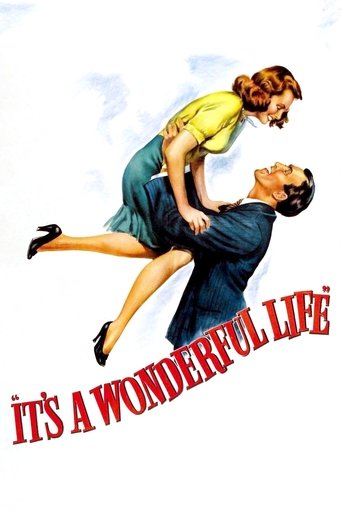
It's a Wonderful Life
1946 · Film · 131 min
Directed by Frank Capra
George Bailey has spent his entire life giving to the people of Bedford Falls. All that prevents rich skinflint Mr. Potter from taking over the entire town is George's modest building and loan company. But on Christmas Eve the business's $8,000 is lost and George's troubles begin.
15 positive2 negative42 neutralfrom 59 commenters
Where to watch
No streaming data for this title.
64 comments on Hacker News
This happens more than you might expect.
There are several films which became popular staples on television after copyright expired, wasn't renewed, or was improperly registered in the first place (prior to automatic copyright assignment enacted in 1976). It's a Wonderful Life is the canonical example, though there is a long list of other public domain films in the US: <https://en.wikipedia.org/wiki/List_of_films_in_the_public_domain_in_the_United_States>.
A Wonderful Life fell back into copyright, at least partially, when the musical score was bought by Republic Pictures in 1993.
<https://library.law.uconn.edu/2022/12/08/its-a-wonderful-life-how-a-copyright-glitch-created-a-christmas-cult-classic/>
Ted Turner started the Turner Broadcasting System by buying up small local stations with loose licencing arrangement allowing them unlimited reruns of old films and television shows. Shifting to cable distribution for his "superstation" eventually grew into CNN.
(Mentioned in an HN comment about a month ago: <https://news.ycombinator.com/item?id=48038175>.)
I strongly suspect that the popularity of Shakespeare, which grew rapidly through the 19th century, had to do with the demand for popular entertainment combined with the prohibitive cost of contemporary works for many performing companies.
The rise of radio and need to fill airtime likely lead to the popularity of classical music, out of copyright and hence readily available for broadcast, at a time when broadcast rights were at best poorly defined and restricted, if at all. (The concept first appeared in law in 1928, wasn't standardised until 1961, and wasn't globally adopted under the Berne Convention until the 1970s/1980s, or later.)
<https://thelaw.institute/copyright-and-related-rights/evolution-broadcast-definition-copyright-law/>
<https://en.wikipedia.org/wiki/Berne_Convention#Adoption_and_implementation>
> The western allergy towards Marxism is one of the most detrimental cultural positions the working class has EVER faced.
And it's no surprise they took these positions, considering the FBI originally deemed the likes of "It's a Wonderful Life" as communist propaganda and claimed it "made bankers look bad."
https://www.newswise.com/articles/ruining-your-holidaywhy-the-fbi-thought-its-a-wonderful-life-was-a-subversive-film
> "What's interesting in the FBI critique is that the Baileys were also bankers," said Noakes. " and what is really going on is a struggle between the big-city banker (Potter) and the small banker (the Baileys). Capra was clearly on the side of small capitalism and the FBI was on the side of big capitalism. The FBI misinterpreted this classic struggle as communist propaganda. I would argue that 'It's a Wonderfil Life' is a poignant movie about the transition in the U.S. between small and big capitalism, with Jimmy Stewart personifying the last hope for a small town. It's a lot like the battle between Home Depot and the mom and pop hardware store."
It really depends on the movies you're watching and how you watch them. I've watched "It Follows" like 4 times in the past year to show it to different people. I would watch The Shining every year at Halloween, and It's a Wonderful Life at Christmas. On the other hand, sometimes you just want to throw on one of your comforting favorite movies in the background.
There's also a media preservation angle - you can imagine the monopoly media companies of the next decade not wanting to stream "My Own Private Idaho" or "Female Trouble".
It's a Wonderful Life the movie is in the public domain: https://blogs.loc.gov/copyright/2017/12/its-a-wonderful-life/ the book which it was based on isn't nor its soundtrack as you mention.
IANAL but could someone produce a public domain version of this movie with a public domain soundtrack?
> what happens if you have a work where e.g. the music and the script were written by different people?
This happens ALL THE TIME. 2001 A Space Odyssey, Heavy Metal (1981-Blue Oyster Cult), Rocky (1976) airing on TV without Eye of the Tiger, It's a Wonderful Life was public domain but distributors needed to pay for the soundtrack. TV shows like Married with Children and Dave airing in syndication with different opening theme songs. etc.
All over archive.org you'll find tons of classic films but with the soundtracks stripped out.
"Best movie" lists tend to have films with both critical acclaim and audience appeal.
It got critical praise but was a flop at the theater. The home video market redeemed it (haha) with audiences. From the article:
"Despite its disappointing box-office returns, in what was then considered a risky move, Warner Home Video shipped 320,000 rental video copies throughout the United States in 1995. It went on to become the top rented film of that year. Positive recommendations, repeat customer viewings, and being well received by both male and female audiences were considered key to the film's rental success."
All 3 movies (It's a Wonderful Life, Groundhog Day, and The Shawshank Redemption) had critical praise upon their initial release. Groundhog Day was even a solid hit. But no one could've predicted what they became later.
The Shawshank Redemption has a similar story. Didn't do well when released. Its video release fared a little better, maybe because people could re-watch it at home. Then Turner picked up TV distribution rights cheaply and showed it again and again.
Now, just like It's a Wonderful Life, it's considered one of the best movies ever made.
https://en.wikipedia.org/wiki/The_Shawshank_Redemption#Critical_reassessment
Groundhog Day is like this too. Although it was a "modest" box office success its critical reputation grew massively as the years went by. To the point that again it's consistently on best-ever movie lists.
"[12 years later] Ebert raised his original score for the film from three stars to a full four stars [saying] that he had underestimated the film"
https://en.wikipedia.org/wiki/Groundhog_Day_(film)#Post-release
It's befitting that watching Groundhog Day again and again makes you like the movie more.
Btw I mentioned It's a Wonderful Life's copyright situation in my original post.
I wonder if this explains the popularity of It's a Wonderful Life. The story is well-known at this point. It was a box-office flop when first released, and fell out of copyright because the studio couldn't be bothered to renew it. As a result it played repeatedly on TV around Christmastime every year. The repeated exposure to this film, presumably also associating it with other pleasant holiday memories for audiences, transformed its reputation. To the point that it's now considered one of the best films of all time.
https://en.wikipedia.org/wiki/It%27s_a_Wonderful_Life#Reception
The case of It's a Wonderful Life has shown that specific parts of a movie can be in the public domain while other parts aren't, even down to the music within a public domain scene.
For the dreaded special editions of Star Wars, only Jabba's stupid face or the specific shot of the Death Star exploding with that ugly-looking ring would have a copyright of 1997. The original scenes cleaned and restored would still have a copyright of 1977.
The Best Years of Our Lives is a genuine classic. Complex narrative, brilliant cinematography and performances. It is a much more difficult film than It's A Wonderful Life, and absolutely worth watching.
There are compelling reasons to own physical media: video & audio bitrates are about 10-20x better than online streaming. Many movies are not available on streaming when you'd like to watch them. And in many cases, like with It's a Wonderful Life, streaming services have been butchering classic movies.
Why spend hours sorting through Netflix' low quality catalog when you can watch a movie you love whenever you want?
With that context in mind, I'll try to answer your questions:
> what or how would such a company form in the first place?
With private equity firms buying up land and businesses for rent-seeking, the main leverage for workers is their participation. So rather than creating new companies in already saturated markets, workers could organize and unionize to create uncertainty and manipulate a company's valuation before its sale. Basically bring its projected value low enough that it's no longer appealing to the buyer. Or even bring it into a range where workers can afford to buy it and make it a cooperative.
Of course that can backfire if the lower valuation makes it more attractive to vulture capitalists. In that case, it might make more sense for workers to leave and use their expertise to form a new cooperative that the old company can't compete with. This might work best in sectors like tech where experience and connections can matter more than equipment.
I've faced this lack of capital for entrepreneurs my whole life. And feel that there's perhaps half the capital available for Millenials and Gen Z as there was for my generation Gen X, who had perhaps half as much available as the Baby Boomers, due to ever-widening wealth inequality. So there's a huge opportunity here to create a means for workers to use their potential to borrow capital.
Since banks, venture capital firms and even HN have largely removed themselves from small business funding, if someone created something like the Building and Loan from the movie It's a Wonderful Life on a broad scale, they would find a huge untapped market.
> The initial capital would essentially be from the workers themselves. Then, what about the newly hired workers - do they have to pay to get in? or do they get a share of the equity once they're hired?
If we go by the Overthrowing Our Tech Overlords article in my parent comment, then the ownership equation might consider tenure (like for bonuses), not just quantity of funds invested. With relative value decided by democratic vote with one vote (voting share) per worker. Basically time becomes currency instead of just productivity, credentials, job title, etc, to honor the dignity of each individual.
With no tenure, new hires would have what amounts to a loan against their eventual share of the cooperative. But keep in mind that since the cooperative is the means of production, then once it's paid off, it produces income rather than requiring funds from investors. Most likely, employees would have to work for a time before participating in profit sharing, rather than having to come up with funds for their buyin. There are existing models for this:
https://www.wincofoods.com/employee-owned
https://www.publix.org/retirement-and-stock/profit-plan
https://www.nceo.org/research/employee-ownership-100
Unions do sometimes create barriers to entry by controlling how job openings are filled, which can affect unemployment, and cooperatives could be viewed as fully-unionized businesses. They can be gamed just like any other zero-sum game. So cooperatives would need to be mindful of this and be proactive in creating policies that aren't exclusionary. But since private companies aren't any better at this, it can be regarded as an open problem, and best solved through a democratic process.
> What about the initial workers who have paid capital - do they get it back if they choose to leave? or do they now own equity, regardless of being an employee there?
Judging by the WinCo and Publix models above, it sounds like employees are compensated in company stock instead of just money. So they can sell their stock when they leave the company and retire:
https://strixus.com/entry/how-winco-foods-turns-its-employees-into-millionaires-17844
Twenty percent of what each WinCo employee makes goes into an ownership account, so they own part of the company. In six years, it is theirs to keep whenever they leave or retire. One employee said "knowing it's there and it's continuously growing is a huge contributing factor to me staying here to further my career."
At that rate of 18% compounded, by the rule of 72, it only takes about 72/18 = 4 years for the stock's value to double.
Workers in a cooperative might be compensated perhaps $20/hr, with $16/hr as pay and $4/hr as stock. I just ran the math for each year's compound gains:
year wage stock gain18% total 1 16 4 0.72 4.72 2 16 4 1.57 10.29 3 16 4 2.57 16.86 4 16 4 3.76 24.62 5 16 4 5.15 33.77 6 16 4 6.80 44.57 7 16 4 8.74 57.31 8 16 4 11.04 72.34 9 16 4 13.74 90.09 10 16 4 16.94 111.02 Employees earn more in compound gains on stock by about year 10 than in hourly compensation!
Looks like WinCo made about $7.2 billion for 20,000 employees in 2024, or $360,000 per employee:
https://www.zippia.com/winco-careers-1115631/revenue/
So it appears that more of their proceeds go to paying into stock than wages.
Note that this is comparable to how company pensions worked in years past, before financialization used bankruptcy to break up companies and avoid paying those "entitlements".
Contrast this with a typical private company job, where workers produce about 3-4 times their hourly compensation. So a private company that charges $50/hr might pay workers $20/hr. That other $30/hr goes to overhead, then owners and investors who enjoy perhaps a 10% return on stock markets.
Could workers save some of their money for the stock market, and/or set some aside in a 401(k)? Sure. Do they do that in practice, especially for middle-class, blue collar jobs lately? Perhaps not.
I think this fits with our notions of how much partners and the board are paid in private companies vs workers who never receive compound returns. It's why CEOs get millions of dollars in bonuses while workers rarely see raises that beat inflation. It brings up questions around why we structure companies the way that we do, and whether executives are really worth what they are compensated.
Keep in mind that none of this even considers the compound returns available through automation. We could ask questions like: is manual labor even necessary anymore, when we could all make more from compound gains, as capitalists suggest?
The key is that the owner class has capital while the worker class doesn't, so workers are currently unable to effectively capitalize on the returns of economic growth.
-
My personal opinion is that I don't think it's safe for retirements to be tied to employment at one company over a long period, because the company can fail. I also don't think that it's safe for workers to have to use their wages to invest for retirement individually, because without diligent regulation on capitalists, wages eventually stagnate and we see the late-stage capitalism of today with small or missing retirements.
So I'd vote for employee ownership so that workers can participate in economic gains that quickly exceed hourly wages, as well as give them a vote in company policies, while keeping the option to cash out at any time.
As usual, this got way too long, sorry. I couldn't stop until I went down the rabbit hole.
Or more recently, the run on SVB last year where everyone started panicking that the bank was no longer able to hold its deposits, just because it announced that it had taken action to generate something like $40 billion in liquidity. And then the next day alone, customers withdrew $42 billion.
All of this was much worse during the Great Depression, before we had FDIC insurance guaranteeing deposits up to a certain threshold. If you've ever seen It's a Wonderful Life, it depicts a bank run during that era as George Bailey is about to go off on his honeymoon. (I remember my 6th grade history teacher describing this as we watched that movie around the holiday season.)
https://en.wikipedia.org/wiki/Collapse_of_Silicon_Valley_Bank
Just my opinion: being in a group where everyone is on their phone feels alienating, and often causes me to whip out my own phone just to shield myself from the awkwardness. Of course there is nothing wrong with looking at your phone and recording something. But when everyone is doing it enmass like that, how can it not change the group dynamic in some way?
Just imagine the end of a movie like "It's a Wonderful life" or some other movie that ends with a group celebration. Now change the ending by imagining everyone whipping out their phones to record the event. You know what I mean?
I don't know. Maybe people who grow up with this are more comfortable with it. Maybe it is a generational thing.
So many what if's in life. What if I'm successful, what if I'm a failure? Will my partner still love me? What if I'm ugly, what if my health problems are too much? What if what if... What if I divorce and lose everything? So what? You could have lost everything a thousand other ways too. A car crash, a violent attack, a random event or calculated one.
Too much success can easily lead to failure, too much failure could actually lead to success if you learn.. Life is about up's and down's, I've lost so much over and over through bad circumstances (complicated deaths, parents with problems, etc) I find it mind boggling how much control people actually think they have in life. Sometimes you just get bad hands but that can be good sometimes as it can give you perspectives that others may miss out on. Empathy is something often hard earned.
So many people think if they just play life safe they will always be safe, and yeah I guess maybe. But for me, I see life has a best hope situation in general. Get lucky and good stuff might happen to you, Do your best to get lucky. I'm so used to instability in life, I personally find it amazing to realize how many people are in a blessed position to make/have friends, health, wealth and education, a happy family and such. And I'm sure so many would see my life as stable lol.
I think the best thing is to be thankful for everything you get because it might not last but is something worse because it doesn't last or is it better? A hot piece of bread is much better then one always cold because it's so short lived and a simple pleasure. Like life itself is short lived but I've been thankful for those things I've learned.
Even if bad stuff happens it's not the end of the world, because you are still alive. Though I know plenty wish that weren't alive, some being successful at getting their wish. It's understandable, a lot of life is painful and disappointing. I'm not married or anything but I can tell you from my own experience money is a tool sometimes you will have it, sometimes you won't but you can make do, health is a blessing sometimes you will have it, but when you don't you wish so much you did, friends are such a joy when you have them but they too might not last forever, family can be the same. When it comes to love, it's really a question of sacrifice. If you love someone sacrifice is much much easier. But I think it's hard for people to truly love. It's often painful and sometimes the rewards don't seem there. How much is their life really worth? But would you really leave people worse off? I think the movie A Wonderful Life is a good example of this. I think knowing people from other cultures and countries also makes you realize how wildly different life can be for people too.
I do plan to get married one day and I personally believe sharing everything is important because loss is to be expected so enjoy it while you can. Though I know many would find me a fool but everyone is a fool in their own way. I don't think of marriage as winning the lottery ticket but then again I think you are quite lucky to marry in the first place because quite a lot of people may never see the opportunity ever come up. Even though my parents marriage went up in flames and they both lost everything in it, I think I've learned a lot of what not to do lol. I don't blame marriage for their self destruction only their own expectations of what to expect out of life.
It was their attempts at control that caused such a spiral.
> A generation before that people watched "It's a Wonderful Life" (1946) for much the same reason.
Some of us still watch it!
Of course the vast majority of old movies are long forgotten (and no great loss), just as the vast majority of what we're producing today will be. But there are a minority of classics that endure. Just as there's still a market for Shakespeare, Dickens, and Mozart, despite all the plays, books and music that have been written since.
Peter Parker for one. > Hey guys, you ever see that really old movie, The Empire Strikes Back
As a kid I watched many films from my parent's generation. Mary Poppins (1964) or Great Escape (1963) come to mind as being staples every christmas -- Great Escape on boxing day especially
A generation before that people watched "It's a Wonderful Life" (1946) for much the same reason.
I've subjected my kids to a few old films from well before they were born, but they were films from my youth -- Bill and Ted, Back to the Future, Men in Black, Muppet Christmas Carol etc. And yes they've seen Star Wars, which was from before I was born (just), but that's an ongoing franchise.
I don't see them watching films from the 1960s like I did though, and I doubt they'll make their kids sit through films from the 90s.
From the podcast: "The herd mentality caused us to all run for the door..." -- There was an N-way Prisoner's Dilemma that just played out in the Silicon Valley startup networks.
And the startup networks in aggregate -- Failed! There was a reference made to the movie, "It's a Wonderful Life." The Silicon Valley startup scene failed like a mob, where the Building and Loan crowd succeeded as a community.
Maybe that kind of thing only exists in the movies? Well, not quite. But it is rare.
More info: https://www.bbc.co.uk/programmes/articles/2TYK2NfhJ6pmDqW8rfT4LCf/its-a-wonderful-life-from-festive-flop-to-christmas-classic
But that is not the same thing as updating the copyright year on a copyright notice, and you know it.
A film like "It's a Wonderful Life" is a finished work that never changes, unlike software or web sites. In every film, the copyright notice in the credits will remain forever the same. It can't be changed without editing the film ex post facto a la Steven Spielberg or George Lucas. Even if the copyright of "It's a Wonderful Life" had been renewed, the copyright notice in the credits would not have changed.
Since you said "all of legal history", yes, there are loads of cases. Prior to 1976, in the US, maintaining copyright required doing several steps such that if you failed to do any one of those steps, you lost copyright for good. Failing to renew copyright registration is one of those, and one classic film (It's a Wonderful Life) is public domain because its owner did precisely that.
Post-1976, screwing up copyright formalities means relatively little in copyright (the biggest thing is you lose the ability to sue for statutory damages if you don't register copyright). Eventually, there's going to be legal confusion over what year protections run out, but that isn't going to be relevant for software until quite late this century thanks to the current 95-year copyright regimes.
I can enjoy Casablanca, It's a Wonderful Life, Terminator and Raiders.
You're not well versed in cinema history of you think Raiders was the first successful mass market action adventure. It just happened to be a really good one.
Save you 5-10 min of reading:
The movie is "It's A Wonderful Life", and it became classic because they didn't renew the copyright and the movie entered public domain at which point everyone started playing it all the time, INCLUDING christmas, because it was free to do.
That was a long goddamn article to make that single point. Sheesh.
The first one seems like confusing word choices to me. They allow you to buy 2x as much stock as you are putting money down (2:1 leverage when you buy stock). After you do so, you have 10 shares that you own to 10 shares that you control by don't own (and therefore are 1:1 levered).
The second one is only confusing because you're trying to find a cause and effect between 2 events that simply happened to happen at the same time. Though in practice the events may have an underlying common cause and so do show up more often than you'd expect.
A concrete scenario is a community bank in a place where a major employer just did a layoff. The value of the mortgages is now impaired because some people won't be able to pay them back. The laid off people also need most of the money in their checking accounts because they have no job. The bank now has a challenge - its cash reserves don't meet anticipated needs, and it can't sell the mortgages to get more cash.
The troubled bank has a good chance of surviving unless the third leg of the trifecta shows up - word gets out about the bank's trouble. Now everyone scared of losing their checking accounts all show up to withdraw money at the same time. The bank doesn't have the cash for this "run on the bank", and goes bankrupt.
This scenario was historically common. People accepted it until there was an event during the Great Depression where enough banks went under at the same time that people got scared about what were otherwise healthy banks. Even though their assets were good, they couldn't pay out all accounts at once, and began going under en masse. FDR took fairly drastic actions to fix this (bank holiday, confiscating gold, etc) and then put in the FDIC to stop it from ever happening again.
There is a well-known portrayal of this run on the banks in the movie, It's A Wonderful Life.
> But the point of the movie was that his luck on the game show was good karma for the decisions he made at the major points of his life. (Contrast with his brother.)
Sure, but perhaps very unsatisfying to a Western audience where one wants stronger connections between decisions and consequences.
Consider "It's a Wonderful Life": Although the struggles and misfortunes were not that great, it's also a movie where the protagonist consciously made decisions that led to a poor life, and in the end benefited significantly because of those decisions (and not just materially). The connection between his decisions and the outcome is much stronger.
Still, that was only a small part of why I didn't like the movie much - it merely added insult to a greater injury - that of not developing the various arcs that appeared. Imagine watching Forrest Gump where each of his life adventures was significantly reduced. The story would still be the same, but a lot less satisfying.
>So any "bank run" where all depositors (creditors) want their funds back will break the bank, because it will be unable to do the same thing for the loans that it has.
cf. this informative documentary[0].
[0] https://en.wikipedia.org/wiki/It's_a_Wonderful_Life
But still, she'll never "pay back" what was expended on saving her life.
You don't know that. Let me suggest the movie It's a wonderful life in place of trying to debate this with you.
But I appreciate you trying to say something meaningful. Please don't interpret this as combative.
Even for Christmas movies, A Christmas Story managed to take that title from It's a Wonderful Life in my circles. Those TBS all-day repeats are great for something to have on in a chaotic house where nobody is sitting still long enough to just watch through a movie.
Say what you will about the Hays Code, but I would hardly consider Gone With the Wind, The Great Dictator, Casablanca, It's a Wonderful Life, Sunset Boulevard, The Ten Commandments, The Bridge on the River Kwai, Ben-Hur, Spartacus, Psycho, West Side Story, Lawrence of Arabia, To Kill a Mockingbird, Paths of Glory, It's a Mad, Mad, Mad, Mad World, Mary Poppins, The Sound of Music, or, you know, Citizen Kane to be especially "crappy" movies.
Behold, "a noble cause":
"On May 26, 1947, the Federal Bureau of Investigation issued a memo stating, 'With regard to the picture It's a Wonderful Life, [redacted] stated in substance that the film represented rather obvious attempts to discredit bankers by casting Lionel Barrymore as a 'scrooge-type' so that he would be the most hated man in the picture. This, according to these sources, is a common trick used by Communists. [In] addition, [redacted] stated that, in his opinion, this picture deliberately maligned the upper class, attempting to show the people who had money were mean and despicable characters.' Film historian Andrew Sarris observed as 'curious' that 'the censors never noticed that the villainous Mr. Potter gets away with robbery without being caught or punished in any way'."
https://en.wikipedia.org/wiki/It%27s_a_Wonderful_Life
I don't understand why the major streaming services don't have the good Christmas movies. They all have these new "made for TV" quality awful movies they push really hard.
It's A Wonderful Life
A Christmas Carol
Rudolph The Red Nosed Reindeer (old animated version)
How the Grinch Stole Christmas (old animated version)
National Lampoon's Christmas Vacation
Home Alone
Miracle On 34th Street
Elf
White Christmas
There's tons of GREAT Christmas movies. On any given Christmas season Netflix might have 1-2 of the greats. Same for Amazon Prime.
I'm confused because it seems like an easy win for these streaming services. Is licensing them really so expensive?
How many movies does your avg movie goer know or can name movies from the 40s? Maybe, maybe half a dozen (it's a wonderful life, casablanca, citizen kane, Disney Fantasia and Pinocchio, and his girl Friday. I'm pretty sure your average person can name an order of magnitude more video games from pong to mario to sonic to modern day AAA games. And over time, some will have staying power, like I hope Breath of the Wild will.
My kids have no concept of linear TV. My 9 year old came back and told me that a friend had a broken TV as when they turned it on, the program was already half way through.
Their 'channels' are netflix, amazon and disney. When I had the choice and they were pre-school then sure, we watched things like Alphablocks on iplayer. I can force them to watch Attenborough or Blue Peter, and they enjoy it, just not enough to want to watch them over things on disney. There's so much competition of things to do.
I do watch BBC (iplayer obviously) occasionally, but the material I'm interested in isn't as accessible as it is on disney/apple/prime/netflix/youtube.
We watched Eurovision and Euro2020 (England games) this year. Aside from that the only BBC output we watched was Roadkill about a year ago, and the one Doctor Who episode which had John Barrowman in. I would watch have I got news for you, but whenever I remember to watch it, it's not on.
This itself might not say a lot, and I still have a TV license despite the limited direct value I get (listen to a lot of BBC radio, and the news website), but what's interesting is I actually work for the BBC. If my household barely watches it, where does the future lie.
Linear TVs days are numbered, but the underlying cultural links that prime time TV provided in the 60s through 90s has already gone. 1 in 4 people in the UK used to watch the same shitty sitcoms in the 80s because there was very little choice.
It's not just BBC or the UK that has this cultural difference. "It's a wonderful life" is an American classic. It is because it was shown on every channel every christmas year after year, generation after generation, and kids watched it, because it was that or reading a book.
I think Star Trek was right with its outlandish prediction from 1988. TV as a form of entertainment won't survive much past 2040 (I think linear TV will still be going in 10 years time, but probably not 30).
> Banks go insolvent if they lend too much money out,
Banks don't go insolvent because they lend "too much" money out. They go insolvent because the collateral on those loans is less valuable than they estimated. E.g. the assets are lower than the liabilities. That is the only possible way that any business can go insolvent.
So when you take a loan on a house, the house is the asset the money lent is the liability. Housing prices drop enough, people walk away from the loan, the bank goes insolvent. That is true if it has a big balance sheet or a small balance sheet as these numbers just scale out.
> and then all customers demand their money back at once.
That is applicable to the era portrayed in the Mary Poppins movie, but not in a modern banking system. Even in the early twentieth century "bank runs" was something people would talk about when what was really going on was asset deterioration and breakdowns in the capital market.
But Hollywood preferred the more intuitive story and also the story in which the survival of the bank was in the hands of common people's choices rather than in the hands of the capital markets, where it truly lives. Thus you get It's a wonderful life where a stirring speech to not withdraw money can actually effect the P&L margin of a bank rather than the less exciting story of whether the bank's cost of funding exceeds its cost of borrowing.
Today banks borrow at a low rate and lend at a higher rate.
This includes borrowing whatever cash they need to meet outflows. In fact some banks don't even accept deposits at all, they just borrow from capital markets and don't even deal with depositors. Most big banks are depository institutions and tap both depositors and short term funding markets.
All that matters is that the interest received from inflows is less than the interest paid on borrowing to satisfy outflows. It is all about making money on that spread. When banks can no longer make money on the spread, they go insolvent even if no one makes a withdrawal. If banks are making money on the spread, then withdrawals are not a concern to the bank.
It's a popular fantasy. See "Replay" by Ken Grimwood. Or all those endless movies where someone gets to do high school over again, like "Peggy Sue Got Married". Or even "Groundhog Day". "A Christmas Carol". "It's a Wonderful Life". And on and on.
In the USA, two movies are always shown during the holidays. "It's a Wonderful Life" [0] is a Frank Capra classic showing good triumphing over evil. "The Godfather" [1] appeals to America's fascination with crime, revenge, and the mafia. But America's real fascination is with American football. Football games are played and shown nonstop, every day. When they are not playing, there are endless shows that "analyze" them. The "Rose Bowl Parade" [2] is typically shown on New Year's day and features a colorful parade of floats all decorated in flowers. The parade kicks off the "bowl" season.
[0] https://www.imdb.com/title/tt0038650/ [1] https://www.imdb.com/title/tt0068646/ [2] https://tournamentofroses.com/
How did It's a Wonderful Life fall into the public domain when so many other movies of that era haven't? I often wonder how many other buried gems we're missing out on.
"It's a wonderful life" was released under 1909 rules. It came out in 1946, so was copyrighted until 1974. The owners (RKO) didn't renew the copyright, as it was a failed film, it was well before home video, so why bother I guess.
Thus in 1974 is became public domain, and all the networks could play it as many times as they wanted with no cost, and did so - making it a very popular film in the American cultural zeitgeist.
In 1993 this was all undone though, and now only the owner (which is NBC) is allowed to show the classic film, because it was based on a story that is copyrighted (and NBC acquired the copyright)
Copyright length are ridiculous. Any implication (we need copyright otherwise people won't create) that Philip Van Doren Stern wrote his story in 1943 because he felt he could capitalize on the rights of a derivative film in the cable tv and streaming era is laughable.
In addition to “Woman in the Dunes”, I'd also nominate “The Gospel According to Saint Matthew”. And, in fact, “It's a Wonderful Life” for those who haven't seen it (it's a much more grown up and dark film than you may have been led to believe).
Recently, cops have been getting in trouble for shooting suspects as they run "away" from the police.
I don't see this as commonplace at all. Generally, deadly force is authorized only in response to an imminent threat to oneself or others. Shooting someone fleeing would be justifiable only if that person was considered likely to harm others during that flight.
TV/film was always ludicrously loose on use of deadly force by police. Even Bert the cop shot at an unarmed, fleeing George Bailey in "It's a Wonderful Life"!
How about this scene from It's a Wonderful Life. Is this movie still popular at Christmas time ?
https://youtu.be/6SLDMMGzkyI?t=61
But regarding torture, in the 70's Christian/Roman era themed movie were commonly shown on TV. As a child I concluded that every man eventually gets tortured. While we were watching a particularly brutal scene I asked my dad if he was ever tortured and didn't believe him when he said "no". But if TV weren't enough, we had a crucifix in every room and I found the normalization and ubiquity of depictions of torture depressing and confusing, leaving me convinced I was born on the wrong planet.
Christmas Story 24 hours on TBS. Though there are plenty of other Christmas staples such as the stop motion Frosty and Rudolph films, It's a Wonderful Life, and Charlie Browns Christmas.
You think an ordinary person's expectation is that It's A Wonderful Life is public domain? I think the opposite thing is true, and that most Americans generally assume that any major motion picture or television show is copyrighted no matter when it was produced.
That's a timely question with the holidays coming up. A lot of people will be wanting to watch movies from the 1940's and 50's. Many of them don't realize those works are still under copyright.
It's not just hypothetical. In our family we subscribe to 3 or 4 streaming services, but last year we still had to pay $5 to watch It's a Wonderful Life (1946), a movie that was literally in the public domain for 20 years. A Charlie Brown Christmas (1965) wasn't available at any price, except with ads that stretched its 25-minute runtime to nearly an hour. We pirated that one. I don't think most people would think there was anything wrong with that.
I've noticed a trend in older folk where they get halfway into a sentence knowing they don't know the name of what they are referencing only to ask those around them for help identifying the reference on the way to making some other point, e.g., "That's like that time in It's a Wonderful Life where _______, gosh, I can't think of his name. What was the guy that was in that movie? Oh yeah, James Stewart. That's like the time in It's a Wonderful Life where yada yada yada"
I'm hopeful that voice recognition assistants will help the burden during Christmas visits :D
Shawshank Redemption joins Office Space, Fight Club, and It's A Wonderful Life in the ranks of films saved by being shown on TV (whether via cable, DVD, or obsessive rebroadcasts over the holiday season before It's A Wonderful Life got snatched out of the public domain) after having bombed in theaters. They eventually found an audience even if the vagaries of the theater world kept them from making much in box office sensu stricto.
> was the first ever, and so far only, movie that has brought me to tears
What about "Life is Beautiful" and/or "It's a Wonderful Life"?
I don't think a citation is necessary. Just the roads in this country represent enormous wealth, and they're all owned by the government. Throw in the national parks, the national forests, all the government owned land (the government owns most of Alaska). Next, all the military bases and hardware, airplanes, ships, support structure. The infrastructure, NASA, buildings, waterways, riparian rights, and, let's not forget, all the money the government collects and spends every year.
Here's even more: http://business.time.com/2013/02/05/the-federal-governments-128-trillion-stockpile-the-answer-to-our-debt-problems/
As for how banks work, pretty much any book on how the banking business works will tell you that. Or you could watch that old movie "It's a Wonderful Life" where they give an accurate description at the end how banks work. And frankly, it's just common sense. Why would banks offer free checking? They're not charities. They need the money so they can turn around and loan it out. It's fundamentally how banking works.
I've never heard of a Scrooge McDuck cash vault outside of a comic book. Have you? (There is Fort Knox, but that's the feds, and it's not cash.)
https://money.howstuffworks.com/personal-finance/banking/bank4.htm
[part 2 to go with the above]
Look into "Positive Psychology" about building on our strengths -- like you are doing with your writing.
See the movie "It's a Wonderful Life" -- which, at the very least, can make us wonder if there is any chance we could make things even just a tiny bit better for ourselves and/or a few people around us by engaging with life?
There is an insightful comment by "Brian" on Hugh Howey's website under "Our Silos Leak" I saw just last week where he talks about how figuring out why you feel so badly doesn't usually help that much and may even just deepen the traumas. It is focusing on what you want, what makes you happy (within realistic limits) and taking steps toward that which get you to a better place. The comedy "Cold Comfort Farm" has an interesting angle on that.
The main essay on "Silos" is also good in talking about how it is reasonable to minimize our interactions with vexatious people (of any political persuasion) and we can still have occasions to experience new ideas and reflect on them in a less knee-jerk way. And those vexatious interactions can also include (and probably do) much or all of television, "news", and social media.
Search also on "On the Trail of the Orchid Child" for a Scientific American Article on how whether some people's genes can either be a great benefit or a great detriment depending on their environment.
We all have inclinations, habits, preferences, and reactions that can be strengths or weaknesses depending on the situation. Stony Brook itself is like a small city -- it has many different social environments that can be better or worse for different people.
Finding the right niche(s) from all the possibilities that works for you can be a bit of trial and error. But finding the best matches of groups to be part of (including from family, neighbors, clubs, classes, volunteerism, jobs, online, etc.) is essential. All of the above is much easier said than done, and it is more feasible to be healthy when part of a group of others also striving towards health. For example, if you try to eat well and you are surrounded by people eating junk food who are always offering that junk to you and denying its health cost, that just is so much harder than if you are part of a community all trying to eat healthier and supporting each other on that journey with all its ups and downs.
"Bluezones" is another positive touchstone to see how happy people live for a long time -- and a lot of it is just about getting the basics right like in the Philip Hickey quote above.
And then when things get going well (or even before), watch out for "Supernormal Stimuli", "The Pleasure Trap", and "The Acceleration of Addictiveness" (see two books and an essay by those names).
One nurse who was critical of one of Dr. Andrew Weil's books on Amazon pointed out that much ill health is caused by poverty (and I might add, ignorance, which good journalism can help dispel). Like in "A Christmas Carol", "This boy is Ignorance. This girl is Want. Beware them both, and all of their degree, but most of all beware this boy, for on his brow I see that written which is Doom, unless the writing be erased." It is hard to eat well, say, when you can't afford fresh vegetables or don't have the time or place for preparing them -- and also if you just don't know why eating healthier is so important or how to do it.
Long term, social and technical changes like from a basic income, improved subsistence by personal robotics for gardening and preparing healthy food (e.g. Farmbot or Moley Robotics), better organizational planning and governmental accountability, and more gift giving of knowledge via the internet, may help alleviate some of the worst causes of day-to-day pain and worry in the modern age. So, those can be positive changes to work for -- and working towards such things can provide some hope and bring us together with other hopeful and caring people. And underlying all of that is a cultural change and a "global mindshift" towards abundance thinking and favoring cooperation over competition (see Alfie Kohn) which journalism can help with.
And, when all else fails even when we seem to be doing everything we can, consider: "Dark Nights of the Soul: A Guide to Finding Your Way Through Life's Ordeals" by Thomas Moore for finding meaning and even personal growth in the darkness.
Good luck!
There's a good explanation in the movie "It's A Wonderful Life" about what happens to the money deposited in a bank, and where it goes.
There's a lesson in this piece in community, and how the rich and fortunate should treat those they deal with, just perhaps as in the movie It's a Wonderful Life:
'My dad gave himself over to that place. He kept a shoe-repair place in business for nearly thirty years by breaking policy, by being patient with the billing, by cajoling, by any means necessary, because he respected the man who ran it, a guy I knew only as Clarence. He fought to keep the supermarket open for the urban customer base who had nowhere else to go for groceries without getting on a bus. I believe he provided small loans to start-up businesses. I know he waited out their rent checks. He kept things running as landlord, even at some cost. He did it for the betterment of the city.
In his residential spaces, he was loathe to raise the rent even after many years. Especially after many years. He dropped off cases of beer and huge boxes of Italian cookies to make his tenants feel appreciated. He gave rent abatements when people got cancer. He gave graduation presents, anniversary presents, sent handwritten notes and newspaper clippings to his tenants and their families. While I'm sure some people hated the landlord in him, I believe my dad treated his tenants with honor as long as they did the same for the space he provided (and didn't run up the house account at Wilson Hardware). I know this because people stopped me—on the floor of the mall, in the street, at the reception after my father's death—to testify to it. I came to see that my father was known by many, if not all, as a kind steward of place. This is as much as any landlord can hope to be.'
Wow, someone doesn't like movies very much. "But the dismaying fact remains that the majority of art-house cinema treats science fiction as a means to acquire a veneer of philosophical gravitas, while freeing the auteur from the burden of writing a story that makes the slightest bit of sense."
Science Fiction aside, you could say much the same thing about "Groundhog Day," "It's a Wonderful Life," and "Pan's Labyrinth." Any movie with a bit of "magical thinking" and "what if..." That's the whole point of huge swaths of movies from every category of cinema! Even romance and drama -- with seemingly solid footing in reality draws on the implausible to make things interesting. You really think a successful Richard Gere would fall head over heels in love with a prostitute (even one who looks like Julia Roberts)?
If you want "science" why are you looking in "science fiction"?
>...they know is that they have everything that's important in life - family, friends, community.
Well, there also seems to be a certain population of humans where "family, friends, community" does not bring contentment and fulfillment.
Think of a married man with children who often has thoughts of driving alone into the sunset and never turning back. It's only societal norms that keeps him from acting out his plans. When he was younger, his parents and friends had convinced him he'd be happy once he "settled down" but now he feels he's been sold a lie. Now what? Is he defective? If society forced him to watch "It's a Wonderful Life" ten times would he finally have a George Bailey (Jimmy Stewart) moment shown at the end of the movie[1]? Would he slap his forehead exclaiming, "yes I was so stupid. I should just be content with my family!" ?
Maybe there are some people who can't have that Hollywood ending. Instead, they live in a perpetual "Death of a Salesman" loop.
Maybe some folks must pursue a purpose and chase a dream and if they don't, "family and community" mean nothing to them.
>I was the ambitious one, the one that strayed far from home, chasing the dream, getting caught up in the consumerism.
But there's also ambition without the "consumerism".
In any case, let's say we have 2 types of people that don't know what "true happiness" is:
1) the person who chased life in the big city, got the Harvard MBA, the prestigious partnership at XYZ Law Firm, the whole brass ring. He realized it was all a waste and it was family relationships that he neglected that was really important.
2) the person who settled into family life and realized he's not really cut out for domestic living. Since society doesn't allow him to return his wife & children for a refund, he feels "trapped" in his boring existence. He lost his chances at "making something of himself".
It looks like the article we're discussing, and Hollywood movies, and most of the HN comments here are biased to scenario #1. It's like scenario #2 is a taboo subject.
Are we smart enough to self-reflect and know which type we fall into so we don't turn into 40-something zombies living with regrets?
[1]https://youtu.be/-0h50v7UNJc?t=2m9s
"Why is not every book, t-shirt or smartphone is just great?"
Different people have different ideas of what "great" means. Not everyone thinks the Harry Potter series are great books, while many do. We see that in movies where a movie does poorly at the box office while the critics.
The definition of greatness changes over time, so "It's a Wonderful Life", now considered one of the most critically acclaimed films ever made, had only mediocre revenue when it came out.
Greatness is sometimes situational, so "Dan Brown ... is the undisputed king of airplane books — the not-too-heavy, not-too-long potboilers perfect for a long layover." If you don't fly, then perhaps there's no time when Brown's works might appeal.
Travel has its own category of "good enough." Visiting Germany once I bought a book from the limited English selection not because it was great, but because it was something to read on the long train ride.
A lot of people watch sports, but surely it can't be that all sports games are great, so greatness can't be the only reason for keeping someone's interest.
Since it's hard to predict greatness, people will test out ideas to see if there's a response. Sometimes this can lead to feedback and improvements. Sometimes this testing is through writing clubs. Sometimes (as with smartphone apps) this is with the market itself.
I know nothing of your family, deduce nothing about them and have nothing to say about them.
However younger people often have little or no idea what happened before them. Perhaps among the aunts and uncles of a family, an older brother or sister sacrificed for years working at a dead-end job in order to put a younger brother through college. Then as things work, the younger brother moves across the country has some success, and the older brother is working in a dead-end job. This was the story in "It's A Wonderful Life" 60 years ago and the story wasn't new then.
Then they have kids - the better-off ones go to a private prep school, the ones of the guy who sacrificed go to public schools. The children don't even know everything about how one brother sacrificed his potentiality and even to some extent his children's potentiality for the other brother. Some kids go to Ivy League schools, have great financial success, and develop a conceited attitude. The sacrificer's kids might not even be able to go to college.
If you look at the Forbes 400 richest list with tech CEO's, we see Bill Gates, who was born with a million dollar trust fund, Larry Page, whose father was a professor, Mark Zuckerberg, who went to Phillips Exeter Academy etc. These are are all white, male people born on third base, or at least second base. You look at Silicon Valley CEO's and you see people whose success was shaped to a large extent before they were born. Why have they succeeded whereas some black kid, whose family moved from Mississippi to Oakland in 1947, did not? Or maybe some Ohlone's whose families "owned" large tracts of lands in the Bay Area before whites came and stole it?
It's a self-serving narrative that people succeed solely due to initiative, hard work, flexibility etc. Are white males from upper middle class families the only people who possess these traits? Of course for the self-serving narrative to be tautological, there will always be murmurs among those people that that is so. Of course once in a while a white woman from an upper class familiy will slip through, or someone from a wealthy Brahmin immigrant family, but that should go without saying.
If one brother sacrifices in a family so that another can have success, the successful person will often have a wife and kids with a vain attitude that they're better than the sacrificer and his family. The repayment for the sacrifice is contempt that they're now better than the sacrificer, and that the poorer family has some innate flaws, are uncouth and so forth. If they feel some resentment toward that, they go on HN and whine how their family resents them driving around in a flashy sports car. The only real excuse the golden child has is he has no knowledge of what went on in the years before he was born.
I know a few (computer-interested) people who went to expensive private prep schools as their families are rich. They really live in a complete bubble. In the documentary "Born Rich", one of the rich kids talks about how much of a bubble his parents live in when he introduced his normal, middle class friend to them and they ask him "where did you summer last year?" This is certainly the case, these people have no idea how the average American worker lives. It's kind of like Mitt Romney, whose father was a CEO and who went to the exclusive Cranbrook prep school blathering on how 47% of Americans are dependents who see themselves as victims. Americans were smart enough to throw him to the curb. These people who are born to the manor, and who live off the wealth they expropriate from the workers who create that wealth, are ever increasingly disconnected from the real world and reality. Why shouldn't they hold themselves in ever high regard? Louis XVI and Marie Antoinette did in the years before they wer
I am the co-founder of www.propser.com and the Panopticon was central to our early thinking about P2P lending.
The original idea was simply that if everyone could see everyone's lending activity it would yield improved loan default rates across the board thus leading to lower lending rates.
The thinking was somewhat more optimistic than an unattended prison and reflected a personal belief that, as the saying goes, sunshine is the best disinfectant. Meaning, it's harder to publicly default on people that you know than it is to default on a multi-national corporation.
The other touchstone was "It's a wonderful life" -- specifically the scenes in the movie around banking. In fact we originally wanted to name the company "Bedford Falls".
FWIW.
Avatar and TDK historic points in film. AKA Dancing with Smurfs, and The Movie With More Plot Holes Than The Titanic. Hum, I beg to disagree.
Overall, I got a good laugh from the list. Seriously, this list should be called "things white US kids (of my age, granted) like". Rather than a history of cinema, it belongs more in the "comedy generated by computer" genre. Exhibit one: City Lights isn't there. Exhibit two: Modern Times isn't there. No Le Voyage dans la Lune, no Man With Camera, no Great Train Robbery, Rashomon isn't cool enough to make the list, Vertigo is too weird, and Battleship Potemkin is, like, too commie, you know. The final straws would be Independence Day and It's a Wonderful Life making the list.
I mean, On the Waterfront looks like it's very good (I haven't seen it), but, but, it was released in the same year than motherfucking Seven Samurai!
The Shining
Dead Poets Society
It's a Wonderful Life
TPB AFK: The Pirate Bay Away from Keyboard
Memento
(M) Eternal Sunshine of the Spotless Mind
And what about you? What are you favourite movies?
And yet it was unsuccessful on initial release, both critically and commercially.
(And while the same can be said of several films now considered classics, such films were generally unconventional (at least for their time) in a way that It's a Wonderful Life really isn't)
Hey, dude, I will probably make money from a webcomic at some point. People like it when I am cute and funny. No one wants my "cure"* for cystic fibrosis. So I will likely pay the bills by making people laugh, then sereptitiously slip the health thingy under the door while folks aren't looking.
Chill. Life is more convoluted than you seem to think. For example, fiction is how humankind dreams up the future. We collectively write about things like traveling to the moon long before we do them. There are no small problems. Go watch the movie "It's a wonderful life", examine your bellybutton more privately for a bit, get laid or drunk or loose. Come back fresh.
Happy New Year.
* Not a cure, a means to be healthy in spite of the defect. Quibbling detail which everyone misses.
It's A Wonderful Life entered the public domain and was taken back from us. The rights holder forgot to apply for an extension. After it lapsed they argued that done they held the rights to the story it was based on, the rights to derive from that story, the score, etc., they should have the film too.
I can not, with humor, get across how dumb that sounds to me. So I'll state it plainly. That's amazingly stupid. And it worked.
As a kid, I was a big fan of "The Little Drummer Boy". http://www.imdb.com/title/tt0063230/
"It's a Wonderful Life" is another great classic: http://en.wikipedia.org/wiki/It%27s_a_Wonderful_Life
Apart from those already mentioned by others, some challenging classics:
Zorba the Greek Ikiru (Living), by Akira Kurosawa Babette's Feast La Strada La double vie de Véronique Lawrence of Arabia It's a Wonderful Life Jakob the Liar Citizen Kane Deliverance Dogville
Worth noting that none of these are "feel-good" american movies. They're "kick you in the balls and get you busy living" movies. I much prefer those to simple feel-good movies. If you want feel-good, just go watch some reruns of Friends (I'm not saying that like it's a bad thing; I do it quite often; but those are not the best inspirational movies by a long shot).
So many times! With really great movies, they get better every time I watch them. It's A Wonderful Life, The Third Man, Casablanca, and The Godfather, to name a few. Of course I want to see them again. They may not change, but I see new things and understand them more completely every time I watch them. Like all great art, good movies deserve multiple viewings. I love rereading good books for the same reason. I can't imagine only looking at a statue like the Laocoön just once, why would I feel different about a film?
Even if you didn't care about learning business through film, I would recommend these. Most are classics and highly enjoyable. I left out the great ones already mentioned.
Risky Business - going from idea to execution in a very short time
High Fidelity - small business, vertical expansion, labor relations
There Will Be Blood - "I have a competition in me."
Office Space - process reengineering, efficiency, employee motivation
It's A Wonderful Life - customer service, community building, ethics
The Man In The Gray Flannel Suit - work life balance
The Player - handling office and industry politics
Enron: The Smartest Guys In The Room - ethics (and the catastrophe that befalls those without them)