 Hacker Cinema
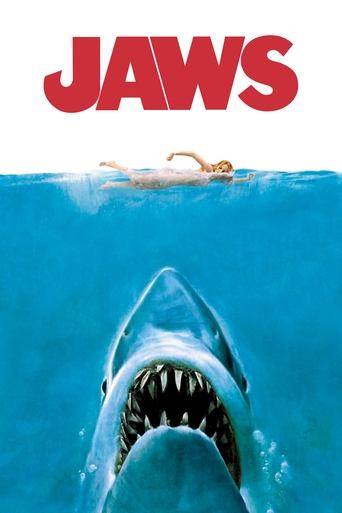
Jaws
1975 · Film · 124 min
Part of Jaws Collection
Directed by Steven Spielberg
When the seaside community of Amity finds itself under attack by a dangerous great white shark, the town's chief of police, a young marine biologist, and a grizzled shark hunter embark on a desperate quest to kill the beast before it strikes again.
22 positive7 negative73 neutralfrom 102 commenters
Where to watch
No streaming data for this title.
110 comments on Hacker News
'Children of Men' is probably the best contemporary example of this - appalling book that informed a piece of cinema that's basically beyond reproach.
The archetype in blockbuster cinema has to be Spielberg's 'Jaws'. I'd also give 'Barry Lyndon' a huge commendation.
Those who contend that 'Starship Troopers' is a better adaptation than the book simply don't understand Heinlein or his aims. A fantastic movie and a darkly cynical piece of social commentary on jingoistic nationalism and 'bootcamp' movies as seen through the lense of a highschool ensemble. The book, however, represents a weightier piece of analysis in its own right and provides some fascinating insights into fascism, civil and civic duty, and the role of the individual in the machine.
I could also go into a long and varied debate about Michael Crichton and Stephen King properties which span both sides of this fence, but that's for another post I feel!
Oh man, the Golden Age of science fiction movies, just two years after 2001: A Space Odyssey and five years before the start of the Blockbuster era[0] with Jaws (1975) and Star Wars (1977).
I feel like Science Fiction back then was purely understood as psychological concepts and ambiguous desires, mostly questioning the very essence of reality and our human minds. There were intelligences and ambitions in us that felt alien, but weren't extraterrestrial in kind. I always thought of it as if Science Fiction tried to turn any progress from the Age of Enlightenment inside out.
A great gem is also World on a Wire (1973)[1], which takes the concept of a machine controlled intelligence and questioned whether we're living in a simulation and are already influenced by a virtual world.
My favorite quote from Colossus: The Forbin Project, after Dr. Forbin is held hostage by Colossus:
Colossus: How many nights a week do you require sex? Dr. Forbin: Every night. Colossus: Not want. Require... Dr. Forbin: [looks sheepish] Four times.
[0]: https://en.wikipedia.org/wiki/Blockbuster_(entertainment)#Blockbuster_era
[1]: https://en.wikipedia.org/wiki/World_on_a_Wire
Every time there’s an article about the “good ol’ days of Hollywood” I like to trot out this comic strip- looks like last time I posted it was five years ago:
https://web.archive.org/web/20201112024059/https://www.gocomics.com/foxtrot/2001/08/28
Hollywood has been a franchise and licensed IP sequel/remake/reboot farm since the ‘80s, since Star Wars and Jaws blockbusters killed off the experimental period of New Hollywood. And even before that it was Cecil B. DeMille bombastic productions and westerns and musicals everywhere. The movie industry has always been characterized by crowd pleasers.
> I've seen many discussions stating patent hoarding has gone too far, and also that copyright for companies have gone way too far (even so much that Amazon can remove items from your purchase library if they lose their license to it).
The main arguments against the current patent system are these:
1) The patent office issues obvious or excessively broad patents when it shouldn't and then you can end up being sued for "copying" something you've never even heard of.
2) Patents are allowed on interfaces between systems and then used to leverage a dominant market position in one market into control over another market, which ought to be an antitrust violation but isn't enforced as one.
The main arguments against the current copyright system are these:
1) The copyright terms are too long. In the Back To The Future movies they went 30 years forward from 1985 to 2015 and Hollywood was still making sequels to Jaws. "The future" is now more than 10 years in the past and not only are none of the Back To The Future movies in the public domain yet, neither is the first Jaws from 1970, nor even the movies that predate Jaws by 30 years. It's ridiculous.
2) Many of the copyright enforcement mechanisms are draconian or susceptible to abuse. DMCA 1201 is used to constrain the market for playback devices and is used by the likes of Google and Apple to suppress competition for mobile app distribution and by John Deere to lock farmers out of their tractors. DMCA 512 makes it easy and essentially consequence-free to issue fraudulent takedowns and gives platforms the incentive to execute them with little or no validation, leading to widespread abuse. The statutory damages amounts in the Copyright Act are unreasonably high, especially for non-commercial use, and can result in absurd damages calculations vastly exceeding any plausible estimate of actual damages.
LLMs don't solve any of that. Making it easier to copy recent works that would still be under copyright even with reasonable copyright terms is not something we needed help with. If you wanted to copy something still under copyright, that was never that hard, and doing that when you don't know about it or want it is actively unhelpful.
I hate that so much. When blind people are trying to start JAWS (the screen reader) by typing "jaws" into the start menu and pressing Enter, it will sometimes pull up a Bing page on Jaws the movie instead. And the blind person is just sitting there waiting for the screen reader to start. I tell people to use the run dialog for that reason. Sucks but that's what you have to do in the age of inshittisoft.
I'd recommend you watch Jaws again, or at least some clips of it, just to see how cheesy it feels now. It's lost its teeth imo
Jaws is the only movie (within reason I guess) that I don't let my 13 year old watch.
We live by the sea with one of the world's best marine reserves right off shore. There are plenty of fish including sharks living right off the beach and you need nothing more than a mask and snorkel to get right in amongst them.
When I watched Jaws as a kid when it first came out, it scared me shitless and I still carry some of that trauma whenever I am snorkeling over a deep canyon where the blue just goes on forever and you can't see the bottom.
I just don't want my child to miss out on that because of the ability of Hollywood to scare us.
I have seen tons of great movies made after 2010, but must admit I’m having trouble thinking of any blockbuster-type movies that stand up to the best of the 70s, 80s, and 90s.
Does Fury Road count? I dunno. The closest I can get aside from that are a couple Tarantino movies. Jurassic Park, the first Mission Impossible movie, Aliens, Jaws, hell even Independence Day. Nothing’s quite up there. Lots that are a kind of janky B-movie sort of good, but nothing as solid as those. Almost all are marred by lots of CG that might look ok at the time but seem dodgy and very distracting within 5 years max, for one thing (to be fair, Jurassic Park suffers from that in a couple scenes, too)
I think some of it may be that everything is too big now and they all have too many options they can, relatively, easily take. When special effects became easy every movie turned into an action movie. Special effects are everywhere creating scenes that don't actually help tell the story or develop a character. It just seems like there aren't hard choices being made to force a movie to be its core best self. Every scene should matter. Of course we can't go back though. I don't think many people would pay to see the something like Jaws again.
It happens. The Jaws movies brought a lot of shark panic to public consciousness despite how utterly rare shark attacks are. The China Syndrome's effect on the nuclear industry given it's timing with Three Mile island.
Probably more that I'm not aware of but it's common enough phenomenon.
Love to see an image of "Jaws" the movie beneath labelled "Buy Hokkaido Shark Repellant instead - Cheap & Effective!"
Isn't that similar to "what would Jaws be like as a movie is the shark worked"? It's not always a good thing. Spielberg has said he believes he would have made a worse movie and included more of the shark if it wasn't so finicky. Similar to today's bloat software that doesn't do any kind of refactoring because storage/memory is cheap. If there was that much storage, they would have figured out how to do unnecessary things that were not mission critical.
Sometimes, strict limitations are not a bad thing. It can be a weed out course level of filtering (since classes just started up again)
Jaws is an iconic horror film partly because the mechanical shark kept breaking, forcing them to do more with atmosphere and less with animatronics.
"Nurses should be at the very top of our social hierarchy but we live in a world where it’s just the opposite," she says. "This film is a love letter to the profession."
I moved furniture for 3 years in the early 2000s to support my shareware business. Something like 500 moves, sometimes 9+ hours per day, occasionally 6 days per week. It made me who I am today, but also broke me in countless ways.
I witnessed single mothers giving us $20 tips each (around $40 today) while wealthy people didn't even offer us water. I saw the best and worst of the human condition, sexist pay policies, how workers are exploited by not being provided a schedule for the next few days so they have to call in each morning, how truck fuel costs more than workers' pay, how Right to Work states allow businesses to throw employees away on a whim, how tax brackets at the bottom create the impression that any additional pay gets skimmed by the man, among a great many other injustices, and how all of those conspire to keep the working class down so that a handful of individuals can become fabulously wealthy.
With every improvement in tech, I see the gulf widening. We can talk about how poor people now have cell phones and flatscreen TVs, while conveniently ignoring how people with a net worth over $10 million who couldn't spend that money in a lifetime are now buying politicians to shred the social safety net, among other dubious endeavors.
I say with complete confidence that the arrival of AGI will bring about ultimate wealth inequality. I foresee a world where 10 billion people work performatively to survive long after robots can do the work better, while less than 1 million people live like gods, free even of senescence. Assuming that we stay on this timeline and don't shift to a more equitable one.
I went into computers in the late 1980s to eventually build an android like Data. I didn't know that Turing test-passing AI would arrive 20 years early, or that I would spend the first quarter of the 21st century hustling to make rent due to unfortunate geopolitical realities driven by unmitigated greed and regulatory capture.
Now I'm not so sure that I even want to stay in tech anymore. It has been anything but kind to me. Every time I level up, so does the world, and expectations upon me just grow for the same pay. My people-pleasing has cost me my health on a number of fronts. I know that someday, I'll have to choose computers or my life.
After all of that, one might think that I'm all doom and gloom. But I'm not. I've come to treasure my time at the warehouse as a teaching tool after a great deal of shadow work. I admire my foreman for being the provider that I can only hope to be someday. I look in awe upon the borderline homeless vets, deadbeat dads and ex-cons who showed me what it is to give without expectation of reward. I see them in all of us, even the people I disagree with, and that gives me hope that maybe we can come together and avoid the iceberg that's about to sink this ship.
I'm reminded of this scene from Jaws which always stuck with me:
https://www.youtube.com/watch?v=-xQQIqAiTYA
And I just watched Mountainhead, here's the trailer:
https://www.youtube.com/watch?v=27cN2_k0JF0
I see a world divided into two camps: one that does much for little, and one that does little for much.
It makes me wonder where we all sit in relation to this. What kind of impact we could have on the future, and how that might help everyone to self-actualize.
I don't pretend to have the answers. Some of my best years happened when things were at their worst, and vice versa.
But I do know that everything is upside-down right now, and always has been, since the dawn of civilization. I feel that tech won't really be tech until it addresses and undoes that injustice.
That's why I write this malarky when I should be working. For all the other working people who don't have time to say what needs to be said.
tldr; the famous art from the Jaws movie poster was originally a book cover. When first published it lacked the required attribution of the time to get enforceable copyright.
IIRC, there are some films in public domain for having "failed" to do this as well.
Jaws. The Shawshank Redemption. Alien. The first Jurassic Park. My Cousin Vinney.
I would say that there is not a single scene that can be removed from these movies without negatively impacting the story/theme/narrative.
Some say that Star Wars IV and V fit this definition but I would say there is some eyecandy fluff that could be cut.
This post deserves more attention, I think. It's occurred to me as well.
Over the holidays, my father gave my children a book that he had written. It was a photo essay that was 50 pages, and it was titled 'Sharks'. It's an unpublished labor of love that he spent about 500 hours on.
It's a true story centered on Captain Frank Mundus, who operated the Cricket II. He was a renowned shark fisherman and would take people out to fish for enormous sharks. He did this for 40 or 50 years.
An author by the name of Peter Benchley wrote a novel that was heavily inspired by many of Frank's traits, his mannerisms, his approach to shark fishing, the kind of boat he had, the kind of charters he ran. The novel was titled 'Jaws' and received little attention when it was first released. A while after, a director by the name of Steven Spielberg took notice of it and turned it into a multi-million dollar blockbuster movie.
My father was a lawyer that Frank Mundus consulted with and asked, is there any way that he could get a payout for being the inspiration for this character?
My family read the book over the holidays, and it was clearly my father's position that Steven Spielberg and Peter Benchley were maybe the sharks that the title of the book was talking about. The idea that they could make $100 million based on the work and life of this captain and give him literally nothing in return, not even attribution, seemed wrong to him.
I was the lone detractor in the room. My take is that Captain Frank Mundus was just living his life. He was doing what he did to make money chartering fishing trips for sharks. He would have done this regardless of whether or not a writer had come along or a movie had come along. What Peter Benchley and Steven Spielberg did is they found value in his work that he didn't know existed and that he wasn't capable of extracting. I think this is generally true of artists. They wander the world and they create art that gives the viewer a new insight into the experiences the artist had. If artists had to give money back to every real-life inspiration, I think the whole system wouldn't work.
I see parallels with the current attitudes toward AI. I think writers are a lot like Captain Mundus. They're living their life, they're writing their stories, or doing their research and publishing, and having people read their works. And copyright is helping them do all this.
AI companies have come along and found value in their work that they didn't know existed and they were never capable of extracting. And that's OK: that's what innovation is, taking the work that others have done and building on it to create something new.
I'm not unequivocally in favor of all applications of AI, but I do think there are tons of places that can be super helpful and we should allow it to be helpful. One example: I'm drafting this on my phone using Futo keyboard entirely with my voice. Extremely useful, but no doubt trained on copyrighted content.
It wasn't a sudden change, it's been a gradual tendency towards them. James Bond was already 19 films by the turn of the century (or 20 if you include the other Casino Royale), King Kong and Star Trek both got to 6, Batman 8, Star Wars had just had the 4th, Friday the 13th had reached 9 films.
Even BttF itself was three films, and in the second one was parodying the tendency towards sequels with the holographic Jaws 19.
The third act is pretty much Jaws after the breakdown of the animatronic shark. There are actual pre-production stills showing aliens [1], but this was found unsatisfactory and the film drifted towards a much more abstract direction. Probably, it's the much better film, because of this. (Personally, I can't think of any solution showing the events in real life that isn't cheesy or even kitschy. It may have been The Abyss of 1960s cinema. As-is, the notion that the first two realistic acts of the film are driving towards an enigmatic, kind of open end, was certainly important for its reception and its long-term relevance.)
[1] Compare https://touringinstability.wordpress.com/2013/10/18/the-aliens-that-almost-appeared-in-kubricks-2001/
Apples and peaches. Jaws the movie is another section, the movie section. Jaws and JAWS are both in the software section. There's the potential for conflicted naming. Sorry to be emotionless here, but at least you could respect the fact that there is a popular software with the same name, without making jokes about it.
I know about Jaws as a screen reader, but I don't think it is much of a conflict. WebAssembly is a niche within a niche (like a tool in a WebAssembly ecosystem within a programming ecosystem), so it will probably never grow to a popularity where it's higher in search results making life of people using screen readers worse. But even now, when you enter Jaws into google now, the whole first page is about Jaws, the movie. So if anyone wants to find either of the projects by name they have to specify it more anyway, just like you often have to do with other projects (for example I always search for "phoenix elixir" instead of just Phoenix). My take is that with the amount of tools and programs there is no way to use simple names and not have a conflict here or there.
Even worse, JAWS is a well-known movie with a 49 year history. I strongly believe the screen reader and the WASM compiler both knew this at the time, quite damning.
Sega released another electromechanical stand-up, "Killer Shark," at about the same, and apparently using the same technology. Its cameo in Spielberg's Jaws fascinated me as much as anything else in that movie when I was a kid. There's a great write-up, including video of gameplay, here:
https://www.remindmagazine.com/article/15694/jaws-arcade-video-game-killer-shark-atari-sega-electromechanical/
Surprised he used the Jaws example when the clearest case of what he is talking about is what I refer to as the Tragedy of George Lucas.
The first star wars trilogy, but especially the first movie, was extremely budget constrained to the point where Lucas had to exchange his own salary for merchandising rights (an accidentally brilliant move), and they did the best with what they had. decades later, he decides that now he has the budget to make them the way he really wanted to, he goes and makes major changes with CGI and destroys the original copies, which can only really be found in unaltered digital form on underground sites.
Then the prequels come and it's very obvious he had unlimited budget and creative control, and the result just simply was not even close to good, or at the very least not even close to the magic of the original trilogy. Giving creators unlimited control seems to have great capacity to end very poorly.
Interesting take on Star Wars, because I think it should rather be used as a counterexample: Star Wars was made during the starting era of the "Blockbuster"-movie[0]. Just after movies like Jaws (1975) were a huge success at the box office two years earlier, studios were willing to throw money at directors to counteract any creative constraints.
Far better examples would have been The Blairwitch Project (1999) or Following (1998).
[0]: https://en.wikipedia.org/wiki/Blockbuster_(entertainment)#Blockbuster_era
I actually think if someone has a deep understanding of a classic, they have a good idea who would enjoy it and who wouldn't. For just about everything else, we accept that different people have different tastes, and just because something can be great to one group of people doesn't mean that it's going to be great for another. I can guess which people I know would like a movie like Jaws, and which wouldn't.
If you really understand a piece of media, understand what the author is trying to accomplish, what choices are being made narratively and stylistically, what narrative tradition the author is consciously or unconsciously following, etc., then you should have a pretty good idea of who this work would appeal to and who it wouldn't appeal to.
If someone comes away from a classic with the mindset "everyone should like this if they're smart enough/presented with it in the right way", it suggests they have a very shallow understanding of the classic.
I saw a comedy video recently in which the comic suggested that a man using an umbrella in Newcastle was enough to provoke comedic insults from passers by.
If the film Jaws was set in North-East England:
https://youtu.be/PLNA_57a9qE
We started to get a lot of the classic movies in the 70s (Taxi Driver, Godfather, Star Wars, Halloween, Blazing Saddles, Rocky, Alien, Clockwork Orange, Exorcist, Jaws, Apocalypse Now just to name a few) and the 80s went absolutely wild and - particularly - far more broad. The kids films from the 80s didn't really exist before then (outside of Disney).
In the 50s/60s there were less (but still some of per personal faves) and the dominant genres (Westerns particularly) have been out of fashion for at least 40 years now.
Popular entertainment has been breezy and shallow since before the emergence of mass media; it's not a new trend.
Indiana Jones was specifically inspired by the 1930s serials that Lucas grew up with, such as Buck Rogers and Zorro, which were always about set pieces strung together with minimal depth of character development.
If there's a trend, it's that there is a distinct drop in "adult" films — meaning smart dramas for adults, not necessarily arthouse films — that started around the 2000s. Maybe the Indy movies were portends of this (some might say Jaws and Star Wars), but it's been a slow trajectory, and one that seems to have even accelerated by the pandemic and the emergence of streaming.
This is a great suggestion.
And I think a fun twist is to try books where the movies are better as well.
Some examples:
• The Godfather
• Jaws
• The Wizard of Oz
Yeah well so did many other great movies for me: Jaws, Godfather, Star Wars, Alien, Its A Wonderful Life, numerous Disney animated features, etc etc but there's many of those that are timeless. But I do imagine as the quantity of content increases it becomes harder for timeless features to break through. Probably doesn't help that the streaming services tend to split the cultural catalog in a way that video stores never had to suffer from.
The movie doesn’t assume or require any understanding of nuclear physics, which may explain why so many non-physicists enjoy it.
One doesn’t need to understand marine biology to watch Jaws, or Roman history to enjoy Gladiator.
You can understand the plot without the first sequence, but remove it and you lose more than just 10 minutes of run time. Even changing a single shot can alter how an audience engages with a movie farther into its runtime.
One example I remember is from Jaws. Spielberg explained that changing the editing of an earlier scare (when they explore the abandoned boat) made the audience much less shocked at the first reveal of the shark later on. The change was literally the timing of a couple of shots; less than a second at most.
The first 10 minutes of Up colours the entire rest of the film.
For any significant market, I doubt we will have movies or shows go to a full 3D experience. These are storytelling, not interactive experiences.
You aren't going to be able to pause and get up and see what is inside the briefcase in a 3D Pulp Fiction remake. You won't be able to watch Jaws entirely from the point of view of the shark. What is being shown in the shot is the story being told.
People can and do make fully interactive experiences where you could do that. I would argue once you let the audience all walk around on the stage and asking if they can go back to the previous scene in the middle of the performance, you're no longer putting on a play. You're doing something entirely new.
Good call-out on Jaws. I, for one, also thought Alien to be a bit sluggish in just telling the story - and I was a teen when I saw it! In other words, I was used to movies of the time. It was a typical horror movie device at the time - go slow to build suspense. No. What builds suspense is Ripley racing to the escape pod with, presumably, the alien hot on her trail. What doesn't build suspense is jump scares brought on by a cat. I found that annoying - even at the time of release 44 years ago.
Jaws, OTOH, FANTASTIC movie! I saw that in a HUGE screen theater that had a balcony. The scene where the head suddenly appeared in the hull sent popcorn raining down in the main auditorium! One of my most memorable movie experiences! That reminds me, I saw a lot of great movies in that theater!
> Alien still holds up in almost every way.
I very reluctantly disagree. I'm in my mid-30s (born 1988), and I watched Alien for the first time about a year ago. I have to say on the whole, I didn't like it. I think it's a victim of being just on the cusp of being "too old" for modern tastes. Like much other media of its era & older, it's paced too slowly. Too many long panning cuts, too much staring at a wall, too much space between dialog, too little action. I ended up staring at my phone for the 2nd half of the movie, wishing it would be over already.
There are some other films of a similar timeframe that do hold up. I thought Jaws, released 4 years before Alien, was paced absolutely excellently, and I'd call it one of my favorite films. But Alien feels more like older media in its pacing, and it suffers for it today. I absolutely do not deny it is an excellent film "for its time." Obviously the special effects, acting, set design, and music are all wonderful and hold up on their own, and it's undeniably a very important film historically & culturally. But much like Citizen Kane or original Trek, I think it's just a bit too slow for a general audience in the 2020s. The sequels feel better today.
Netflix does those worse than a 3rd party “recommend me similar movies” or even just IMDb lists.
I guess if you think it recommending you “MegaShark vs. Giant Octopus Cat”… because you liked Jaws is helpful? I think personally it is not.
Hahaha, I expected the criticism of my comment to be that too much of what I was counting as good is "high brow", in fact. Too artsy-fartsy. Leaning too much toward "The Green Knight" and not enough toward "Jaws".
[EDIT] Here, lemme just list the 2022 movies that I think were worth a watch if you're at all into the kind of thing they were doing:
Black Panther: Wakanda Forever Glass Onion Top Gun: Maverick Bullet Train All Quiet on the Western Front Guillermo del Toro's Pinocchio Crimes of the Future Death on the Nile Everything Everywhere All at Once White Noise Nope Prey The Sadness You Won't Be Alone Dual The Northman The Unbearable Weight of Massive Talent (arguably just a less-exciting RRR, but hey, it makes up for it by also being shorter and non-horror comedy *is* a bit weak lately, so it gets in) Watcher Dashcam (one of the most interesting movies I've seen in a long time—you may hate it, but you'll feel *something*, damnit!) The Banshees of Inisherin
This is just ones I've seen (I usually manage, like, 1/2 of the films in a year that I want to watch, at best) and excluding a few that did in fact suck or that I didn't think quite merited inclusion (e.g. The Menu) or that are good for what they are but are pretty narrow in appeal (Violent Night). Like, I hear Cyrano is great, Emily the Criminal, Bodies Bodies Bodies, The Whale, and a bunch of others, but haven't made it to them yet (and, inevitably, I'll end up never watching some of them).
"Quite a few of those are sequels, remakes, or adaptations! White Noise was a book! Death on the Nile! One of those is a marvel movie!" yeah, I know—good luck finding an era in Hollywood when a ton of the films, and even a ton of the good films, weren't such. I reject that as, specifically, a complaint about this moment in cinema (it has more merit as a criticism of cinema in general)
If you thought Gantz:O was good, this show isn’t for you.
What makes a movie like Jaws or Alien good is you don’t really see the monster very much. A zombie show ought not to be judged by zombie volume.
that's because props >> vfx
props cost much more, so you have to focus on everything else, because you cannot rely on tons of CGI to fill the gaps
jaws is still a terrifying movie about a killer fish, meg is already a joke.
I think you're absolutely correct. The show was campy, and in time, would have become grating and fallen apart.
Star Wars, once lauded, has been milked dry. There are a few good works, but by and large they're beating a dead horse.
The same thing is happening to Marvel. People checked out after Endgame.
Game of Thrones was so near to perfection. It had an unusually large cast of a hundred characters and an expansive world to draw down. But even if the new show is good, the magic is gone.
The mystery of Stranger Things after season one ended. We're getting a rehash with common character tropes you can find anywhere.
The allure of Westworld softened after season one attempted to open up to bigger themes, but actually cut down on the possibility space.
The third Godfather. Dexter. Every single Jurassic Park but the first. Jaws. On and on.
Chiefly, it's simply a function of multiplied probabilities to continue with a success streak. Eventually the odds do not pay off in your favor.
But I think another contributing factor is that our brains begin to fit the shape of the setting, the motifs, the character arcs, the narrative world - and we just aren't surprised or pleased any longer. Few people would ask for twenty seasons of a show. Or ten movies in a given franchise. Our brains learn the shape of the landscape and grow bored.
Seems to be caused by the author's somewhat arbitrary selection of films from those recent years. Many are neither Best Picture winners, nor Oscar bait, nor even top grossing movies. Using Rotten Tomatoes' Top Movies seems to be a choice fraught with issues; what does most popular even mean for them, based on the user-submitted audience scores for that site? Why RT and not IMDB? Why not just use top grossing for everything?
Yes, the MCU-ification of everything is not great, but if one was to complain about popcorn blockbusters, that's a trend that's existed since Jaws/Star Wars, and there were far worse fare from the '80s-'00s.
>here are really only five possible movie plot lines. Boy meets girl. And then... There are at most five ongoing narratives in U.S. political history. Outsiders take power, to redress grievances. And then … There may not be even five master narratives in world religions. People suffer. But then …
7 plots, there are 7 media stories.
Jaws, overcoming the boogyman/shark.
Cinderella, good personality poor becomes rich and deserves it.
LOTR, you need to bring widget somewhere wierd to save the world.
Hobbit, you adventure to strange lands and come back.
Annie Hall, comedic character has to overcome adversity to get happy ending
Sweeny Todd, flawed main character who fails, then ultimately learns to overcome their flaw and become good and happy.
Groundhog day, time travel forces bad main character to become better.
All these are aligned in the news as discovered by the author. Realistically just following 'hate inc' by matt taibi. Which really the article/author and matt just comes from Hunter Thompson. https://en.wikipedia.org/wiki/Gonzo_journalism
You can imagine, over and over in the election system the characters of democracy play out exactly this way. Once you realize this, it forces you to personally answer the obvious question. Are they doing it intentionally or is this all fake like these fictional movies?
And people's brains continue to change.
When I was in my mid-20's, I rented Jaws and couldn't believe how boring it was. Twenty years later I gave it another go when I saw it on some streaming service and I absolutely loved it.
On one hand, people love short videos but at the same time many of them will settle in for a multi-hour podcast or binge-watch six hours of some streaming series on a slack weekend.
> Jaws has made almost everyone afraid of sharks. Yet, in the last century, there have been only 1,000 recorded deadly shark attacks.
Ghosts and zombies have claimed even fewer lives. Meanwhile, no horror movies are about cancer or heart disease.
How there hasn't been a horror movie about mosquitoes is beyond me.
Jaws has made almost everyone afraid of sharks. Yet, in the last century, there have been only 1,000 recorded deadly shark attacks. Mosquitoes kill between 1,500 and 2,000 people every day. Source: https://www.weforum.org/agenda/2019/08/chart-of-the-day-mosquitoes-kill-more-people-every-day-than-sharks-do-in-a-century/
On a more scientific note, it is my firm belief that the benefits of exterminating all species of mosquitoes on the globe far outweigh the consequences on the food chain. If I had Bill Gates money, this is one of the projects I would work on.
The top grossing films of the 1970s? The original Star Wars, Jaws, The Exorcist, Alien, The Godfather? Rocky 2 and Jaws 2 are also on the list so it's not like there weren't any sequels at all, but that group of films really _wasn't_ dominated by remakes and franchise films:
https://www.imdb.com/list/ls026560159/
By comparison, entries for the 2010s include MCU franchise films, Star Wars Sequels, Jurassic World (a sequel), The Lion King (Remake), etc:
https://www.imdb.com/list/ls026040906/
Going year-by-year doesn't really change things very much: https://en.wikipedia.org/wiki/List_of_highest-grossing_films#High-grossing_films_by_year
It wasn't the first horror film my children saw (they watched Jaws, Alien, and Stranger Things) but the most terrifying and traumatic experience they've seen was the shipwreck scene in the Black Stallion. If you want to frighten children, murder what they love while they watch: their parents and animals.
Coincidence both Bambi and the Black Stallion were written during or in the immediate aftermath of world wars?
I don't know about in sync but I think there might have been more common ground in the past. Movies like The Godfather, Jaws, Goodfellas, Pulp Fiction or Shawshank Redemption sometimes feature highly on both critics and the public's favourite movie lists. I doubt many serious film critics are going to be putting any of the Marvel movies in their top 10 of all time yet there are large numbers of people out there who would.
>But don't let the word Chernobyl freak you out too much
After the TV show with its absolutely cartoonish depiction of the risks of nuclear energy I have no hope that's happening any time soon. It was genuinely baffling to me how a show, that was about as accurate on the threats of nuclear energy as Jaws was for sharks, got so much praise heaped on it.
The "dolly zoom" is a very effective way to convey this imo.
https://filmschoolrejects.com/wp-content/uploads/2021/01/Jaws-dolly-zoom.gif
https://filmschoolrejects.com/wp-content/uploads/2021/01/Fellowship-of-the-Ring-dolly-zoom.gif
https://screenqueens.files.wordpress.com/2017/08/polt.gif
https://screen-queens.com/2017/08/24/how-the-dolly-zoom-changed-cinema/
There's also some rather neat series that play with perspective. Don't have any at hand but google:
https://photography.tutsplus.com/tutorials/exploring-how-focal-length-affects-images--photo-6508
https://static.wixstatic.com/media/7d67c8_1d09b657f6a04e6fb83ecbc1ea8b4c3b.jpg
The way I've always explained it to people as a photographer: your position with regard to the subject determines the perspective, which is the relationship between objects in the composition. Your choice of focal length determines what field of view/image area of that perspective that you want to capture.
And yes, to agree with a parent comment, this is something that zoom lenses have rotted the brains of many photographers on. People stand wherever is convenient and then zoom to fit the subjects, rather than thinking first about how they want the elements to be placed within the image. You should move to where the elements have the proper relationship, then figure out your field of view from there.
To use the Jaws example: if you want the tent in the frame, you need to be close and go wide. If you want to exclude the tent from the frame, you go farther away and zoom in. As a photographer, you need to make that decision about your composition first, and then choose the position that gives you that, and then select your field of view last.
It's hugely beneficial imo to work with a 3-lens kit or something similar (eg 28mm, 50mm, 105mm) for at least a little while, to really force you to think about what you want from a particular exposure/composition.
A useful implication of this: you get the exact same perspective from taking a picture with a wide angle lens and cropping it to your desired composition, as if you had taken the same photo with a long lens and not cropped it at all. You just get less resolution - so it's obviously desirable to use a longer lens if you have one - but the perspective is the same either way. Similarly - if your lens isn't wide enough, you can stitch together multiple exposures and it will be the same as if you had used a wider lens. Perspective is completely independent of focal length of the lens, it's purely a property that emerges from the relative positions of the subject and photographer. All the lens is doing is picking a "crop".
(to get really really tangential: this is one of the problems I have with "photojournalism" as a field of photography and photojournalism contests in particular, because it completely forbids things like cropping as somehow tampering with the essence of an image. But cropping is a natural part of composition, you do it with your lens even if you are not doing it in photoshop. The photographer (if they're good) chose to exclude the mother idly smoking a cig as she waits for the bus and compose the screaming baby in the carriage instead. Pretending like there is a "platonic truth" to an image because it "wasn't edited" despite being deliberately constructed by a photographer with an agenda (towards drama and impact, if nothing else) and editorial and artistic license is a microcosm of the way modern media feigns complete neutrality and unbiasedness by "just reporting facts" while completely ignoring the agendas of those who choose what facts are reported and the framing used. Anyway, those "photojournalism contests" should really be called "straight-out-of-camera" contests, and even then there is still processing happening. There is no platonic "right" way to process a RAW into a JPG, even if it's the camera doing it itself. But "straight-out-of-camera awards wouldn't be something that sounds important enough to give a bunch of money and adulation over :])
I agree that swapping out enough details will eventually avoid copyright infringement, but its possible to swap out low-level specifics and still be so obviously a structural and topical "copy" that someone can get into trouble.
For instance, movies that were too similar to predecessors have been found to be infringing.
Example: Universal/Jaws vs. Great White.
https://screenrant.com/jaws-movie-universal-canceled-italian-rip-off-great-white/
I'm surprised there was no mention of Spielberg's challenges in making Jaws (longer story here - https://www.mentalfloss.com/article/31105/how-steven-spielbergs-malfunctioning-sharks-transformed-movie-business). For those not familiar with the story, in the 70s, they couldn't make a "realistic" mechanical shark for the film which Spielberg had been relying on. The shark didn't work most of the time, it looked weird, so he couldn't show it. Which meant he used the lack of being able to see the shark as a tool which improved the movie.
There is currently an over-reliance of CGI, it's a cheap trick that the industry is getting used to. They'll eventually learn to use it properly AND the quality of the CGI will improve. These two factors together give me hope that movies will become good again.
Of course, getting excellent writers creating new unique content and getting that content produced instead of more Marvel/DC/rehashes is a bigger issue I think.
When I watch a film, I don't want the film to make me aware I am watching a film. Good filmmakers can encourage my belief sometimes even as I am analyzing the film's construction and intentionally maintaining my disbelief. I can appreciate quality special effects, but no matter how technically, film-theoretically, or visually good those effects may be, if they don't serve the greater film they are a part of, they aren't good special effects.
Modern UI feels like painting the shark in Jaws hot pink in order to make sure everyone sees the great special effects. Yeah, the shark is still cool, but you've made the film much more difficult to enjoy.
Movies can and do shape public opinion. So did the Jaws with respect to sharks [1]
[1] https://daily.jstor.org/sharks-before-and-after-jaws/
The late Blake Snyder wrote a couple of books ("Save The Cat!", recommended) on screenwriting with the hypothesis that there are only ten basic story paradigms, and Alien is the classic "Monster In The House" example, along with Jaws.
In short, a MITH movie has our heroes trapped in a space due to a sin not of their making, there's a monster, and at least one character who is a wounded half-man harbinger of doom.
Once you know the ten categories, movies become pretty predictable after the first reel or so, so maybe you don't want to learn them.
In moderation, maybe. I can make a good case that the greatest movies of all time were made in the 70s because of that freedom. Jaws, space odyssey, clockwork orange, alien etc
If I search for "Simpsons" in the TV app on my Apple TV 4K, the first option is "The Simpsons" TV show. I press that, I can then scroll through 32 seasons of the Simpsons and choose which episode I want to watch for $3.
If I search for "Sesame Street" in the TV app, the first option is "Sesame Street" TV show, which then leads to the HBO Max app from where I can watch all of the episodes.
If I search for the "The Office", the first option is the US series, which I can purchase for $3 each episode, and the second option is the UK series, which then leads me to HBO Max.
If I search for "Jaws", the first option is the first Jaws movie from 1975, which then opens up in HBO Max. Note that Apple does not ask me to purchase the Jaws movie, and instead offers to play it in HBO Max, since apparently HBO Max is currently streaming it.
According to IMDB, the top Bollywood Hindi movie of 2019 are these: https://www.imdb.com/list/ls025693373/
If I search for the top 3, I come up with nothing. The 4th, "Gully Boy" returns with an option to play on Amazon Prime.
Overall, I think as someone who was looking to watch something in the Hollywood/American universe, life is easier than it has ever been. There is probably room for improvement, especially in international titles, but I'm sure that is in the works.
That was a great read. I, as well, grew up being scared of sharks, due to watching Jaws, as a kid.
But when diving here in the Andaman sea and gulf of Thailand it's such a fantastic experience to see shark. The black-tipped reef sharks I saw in the gulf of Thailand behave more like cats than the predators you see in movies like Jaws. If you are breathing to loudly they will scurry away.
Interestingly enough, the shark nursery, where I went diving was less than a kilometer away from Maya bay, also known as "The Beach". Maya Bay is closed now, but used to attract millions of tourists each year, that were snorkeling there.
Now the reef sharks have apparently returned to Maya bay.
I think sharks are distinctly at the intersection of humans and nature on the one hand they are these fearful predators and on the other one they are beautifully efficient.
Just like masses being overscared with sharks because of Jaws, its probably because another but much less popular movie “The Depth [1977]” with Nick Noltie where in a final scene Noltie wins underwater battle because he knows where huge Murena lives and put a villain head in there. Then we see that Murena litterally sicking him into her hole with a force that break his mask and break him in half. Definitely one of the most memorable scenes of the movie and definitely what made me start my doving adventure (now cerified with CMAS and PAID up to deep dive / rescue diver). Definitiely movie worth rewatching.
>>> You know how Darth Vader's theme plays when he enters the scene?
Before Vader's theme, was Williams' Oscar-winning Jaws. Two notes. Unforgettable dread every time you venture into the ocean. Not to mention the birth of the Hollywood summer blockbuster phenomenon ;)
https://csosoundsandstories.org/two-notes-that-changed-the-film-world-john-williams-theme-for-jaws/
I think Jaws holds up very well, too. It is a wonderful transitional film between classic and new Hollywood shot tempo and visual style.
Consider the angle formed by the left side of the picture, the camera/viewer, and the right side of the picture. The higher the zoom (or the crop), the smaller this angle is. It's called field of view (FOV).
You've seen this in horror movies when they pull the camera back while zooming in (or out). The protagonist fills the same amount of the screen while their face distorts and the angle spanned by the background narrows (or expands). The fireplace in the background that originally was a small part of the background now spans the whole background. Or the crowd. https://filmschoolrejects.com/wp-content/uploads/2021/01/Jaws-dolly-zoom.gif That's the kind of distortion under discussion.
You're right that zooming and cropping are the same, but that doesn't actually refute the point, because both affect FOV the same way, and FOV differences are the topic under discussion.
I think that unfortunately, when it comes to the public perception, that the movie Terminator did to robotics and AI what Jaws did to the Great White shark. This seems to have permeated western culture in a way that makes it very difficult to have much serious and honest discussion about the technology and I suspect is actively holding the field back. My perception is that in other countries, like Japan for example, they have a very different perspective on what these technologies can do for them and they seem to be much more embracing of it, rather than scared of it.
Both here and anywhere else the Boston Dynamics robots are shown off, half of the comments always come back to the "scary robots" that will take your jobs and murder your family. I wish we could hit a big reset button on how the public at large perceives robots because I personally think that there is a lot of benefit to be harvested here, for the true benefit of mankind.
You do eat though, right? You may not surf with sharks but I wager you eat every day. Do you slice hotdogs into tiny pieces or do you chomp into them like a normal person, apathetic to the small risk of choking?
You can split hairs if you like, but I think if you're honest about it you'll find that many activities in your daily routine have greater than three in a million odds of killing you. That really is my point, that the average human tolerance for danger is much higher than a few in a million. People who fear things with odds that low are being irrational.
Shark attacks is actually a great example of media induced hysteria. Even if you swim in the ocean every day and therefore have orders of magnitude more risk, that elevated level of risk is still small. Fear of sharks was largely induced by the sensational horror movie Jaws and is occasionally reinforced by profit-motivated newspapers signal-boosting rare attacks; it's not a rational reaction to the actual level of risk involved. 20% of Australians supporting senseless shark culls seems very comparable to the antivaxxerism. The other 80% have a more appropriate attitude towards risk.
Quint, the old shark hunter from the movie Jaws was said to have survived the USS Indianapolis (the character not the actor)
Wait till you hear how Boris Johnson feels about said mayor!
https://www.theguardian.com/film/2020/mar/13/boris-johnson-coronavirus-hero-mayor-larry-vaughn-jaws.
Interesting. I bought two games there this past Christmas. They had them- Scrabble, which I went there to get, and some board game based on the movie Jaws that I had never heard of. So I impulse-bought a board game there, and I'm not a board-game guy.
> He's the guy that built the shark for 'Jaws' while an undergraduate.
Fascinating. That thing famously never worked well, and the movie was better for it.
Another example is Jaws: the mechanical shark didn't work very well, so Spielberg had to rely on the human characters and dialogue, a fin above the water, shark-eye-view shots, and John Williams' classic score. Based on what little we saw of the actual prop, the result elevated the film above what might have easily been a laughable B-movie.
Maybe in some circles, but in general, they fared less better due to the film.
"Jaws: ever since this movie came out, shark-killing contests are run all over the world. On average, between 20 and 100 million sharks are murdered every year."
http://screenprism.com/insights/article/did-jaws-demonize-sharks
Kinda depends upon the film, Bambi sure pulled in much empathy for deers, yet Jaws didn't exactly make sharks all cuddly for so many.
I have no idea why this made the front page of HN. Happy to see a piece here about such an amazing lady, but I have mixed feelings about the framing of much of the article. I'm trying to make my peace with it because this was written in 1970.
She was editor-in-chief of Cosmopolitan for 32 years and published multiple books in an era where being a successful woman with a serious career was really challenging.
Her husband David Brown is a name few people seem to readily recognize. He co-produced the movie Jaws, which was groundbreaking in 1975.
She's really a fascinating lady and I wish this article gave a more respectful treatment of her significant accomplishments.
https://en.m.wikipedia.org/wiki/Helen_Gurley_Brown
During the "golden age" of Hollywood in the 30s-40s, the studios would crank out one movie per week. Stars would often appear in 3 movies per year. Today, stars shoot a film every 3 years or so. E.g. take a look here:
https://en.wikipedia.org/wiki/List_of_RKO_Pictures_films#1940
In 1940, RKO released 55 films, of which they produced 39. That's basically a film per week. And these were feature films.
For the individual stars, take a look at Humphrey Bogart, who starred in 3 films in 1941: The Maltese Falcon, The Wagons Roll at Night, High Sierra. I don't think there was a year in the 40s up to the mod 50s when Bogart didn't star in at least 2 releases per year. In 1951 he was in The African Queen, Sirocco, and The Enforcer.
Today, take a major studio, say Paramount Pictures. It released 11 films in all of 2018.
What happened was JAWS created the 'blockbuster' phenomena, in which the studios made huge money on a small number of very expensive films with huge marketing budgets compared to previous eras. That totally changed the dynamic. It also made actor pay shoot up.
But it has nothing to do with the cost of the prints -- just strategy of whether you want to make a small number of films with tons of marketing spend like in the post JAWS era or a large number of cheaper to produce films with small marketing budgets like the pre-JAWS era.
In many ways, what is happening with TV and Netflix is akin to a return to the studio model but for episodes, where Netflix seems to be able to crank out a large number of relatively cheap but decent quality episodes, and this of course corresponds to lower actor pay per episode.
A selection:
Sapiens (Yuval Noah Harari, 2014 [English]) - A bit late to the party on this one. Mostly enjoyed it, especially the early ancient history stuff, but I felt it got a bit contrived in the middle - like the author was forcing it. Overall a good read though.
How to Invent Everything (Ryan North, 2018) - First book I've pre-ordered in a long time. A look at the history of civilization and technology through a comedic lens. Pretty funny and enjoyable.
The Rise of Theodore Roosevelt (Edmund Morris, 1979) - Randomly happened across this book while browsing a used bookstore for some stuff to read on a summer vacation. Loved it. It's big, but reads pretty quick for a biography. I've been a fan of TR since I first really learned about him in High School and I would recommend this for anyone interested in TR/The West/Americana.
Jaws (Peter Benchley, 1974) - Quite a bit darker than the movie.
Sharp Objects (Gillian Flynn, 2006) - I enjoyed Gone Girl (book and film) so I wanted to read this before the HBO series. To be honest...not my cup of tea. It was okay.
The Art of Racing in the Rain (Garth Stein, 2008) - Made me cry on an airplane. Thankfully my coworkers were on a different flight.
Merzbow frequently utilizes fetish and BDSM imagery / concepts and from the article perspective (although about death metal, it is similarly seen as "extreme music") I find that part of the article's conclusions interesting, in that for some there may be an endorphin release postulated sounds similar to what might be happening in the BDSM concept known as "sub space" (or occurring in other ways for other people, for example, "runner's high" is from what I understand a similar endorphin release).
As far as the top level comment goes though... maybe I'm misinterpreting the comment because this is summary level material, but yeah, that's an odd assertion to me. Death metal is a niche genre in a style of music that has some significant semi-mainstream elements (metal as a whole). Death metal is similar to other sort-of-tangentially related concepts like say horror media (there is a nice semi-mainstream side and also a lot of fringe horror movie / media styles that have fewer but sometimes more dedicated fans). Many horror movies for instance are flat out iconic at this point (ranging from the original Universal monsters to some of the films of Hitchcock to certain films like, say, Halloween, Jaws, or the Shining). On rare occasions, they are both quite popular and they even win an Academy Award (eg The Silence of the Lambs).
In music, the main thing I will say is that there are metal bands with often violent lyrics and imagery that are more popular (Slayer comes to mind), and non-metal bands with violent imagery that also are popular. Certainly if that violent imagery is slightly modified to a bit more theatrical, the band might even become mainstream (I'm thinking Alice Cooper as an example). The "sonic assault" of death metal in some ways wasn't new -- hardcore punk was an influence for the speed (although hardcore punk is quite a bit less technical) and there's certainly a couple relatively well known bands there in that genre that dabbled in (usually more theatrical but still macabre) horror. (The Damned and The Misfits are two fairly big names in the genre, not "mainstream" but big enough that some people will know of them, and there's plenty of other lesser known "horror punks" around...).
So to me that statement ("why are people interested in xyz that seems to induce a negative emotion when in everyday life we tend to avoid situations that will induce a negative emotion") is weird in this context, because this is not a niche question whatsoever overall. The answer to the above question is probably not best answered by looking at the psychology of an obscure genre and more best answered to ask why (in the Silence of the Lambs example) a movie that pushes "negative emotions" of this sort is (at present) #23 on IMDB's top movies of all time.
https://arxiv.org/pdf/physics/9905030.pdf
"On the Gravitational Field of a Mass Point according to Einstein’s Theory" by K. Schwarzschild, January 13th, 1916 (English translation)
Black holes are fiction. The whole mess started with people misunderstanding Schwarzschild's paper. Yes, there's a singularity in the math, but you can avoid it by changing the origin. This is one of those cases where conventional "science" has been gummed up by human foibles. (And the concept is so damned romantic and compelling. And that movie! It was like the opposite of "Jaws" for sharks.)
If you can't read the paper don't bother arguing with me. If you can, show me where the math says "black holes". I'm pretty sure it says "translate the origin and ignore the singularity".
I don't know if Spielberg has examples like Lucus but at least for "Jaws" Speilberg acknowledges that if the tech had worked "Jaws" would likely just be a b-horror movie. The fact that the shark submarine didn't work forced them to film and edit the movie to not show the shark much which made it much better.
Wish Lucas would take that attitude as mostly the updates make his movies more cheesy imo
The category you land in is "Hot" which represents items that are new and popular. They generally end up being movies/tv series that are soon to be released.
If watch enough or click "Browse", you can start watching things based on what VOD you have (Netflix, Hulu, etc), what genre you're interested in, general rating, and more.
We thought that new-comers to the site would be more interested in seeing a trailer for Venom, Avengers, or Deadpool than seeing a trailer for Jaws or Scarface.
You can definitely browse the VOD, newly added, genres, etc to find something for right now at home... but you can also learn what's coming out, what's out now, and what was recently released (soon to be on DVD).
> The streaming giant have some highly-anticipated new releases coming out in April, including Jaws, Knocked Up and The Blues Brothers .
I guess 40-year-old movies are considered "new releases"
So this what the serious movie reviewers do in such cases:
They ignore it. Sometimes it's fun to take down a bad movies, such as the usual big warmongering patriotic Hollywood blockbusters or the latest fascist superhero fad or genocidal fanfare. Sometimes it's necessary education. But mostly you ignore it.
Those blockbuster movies only live by the advance hype and star power. After the first weekend and the first serious reviews are in, they usually go down very fast, that's why they take the Spielberg/Jaws route, starting in >3000 theaters, best worldwide, and leave them after the first or 2nd week.
If it's really bad, no advance screenings to the previews are allowed for certain movies when they don’t expect the reviews to be very positive. Although studios often give the flimsy excuse that a particular movie was intended only to please the fans, rather than snooty critics, most of the time this is a strong indication that a movie is a piece of crap. They just want to give themselves a chance to make money on the opening weekend before word gets out about how bad it really is. Disney is one of the worst offenders in the business, besides the Weinsteins, Relativity and New Line Cinema.
This is also the best sign to check if it's worthwhile. When there's only marketing hype or official press clippings but no serious review, the movie is mostly crap. No one writes about it.
Consider selling the company.
There are a million other ideas to work on, and once you've sold a company, you're investable.
Ironically, you can't raise anything now - but you'll be able to raise on your next project.
You'll have a nice little bank account to get whatever going, and that'll make you considerably more confident as well.
There's not reason to be sentimental about your project. 99% chance 'it's just a project'.
Think of yourself as a 'Movie Producer' or 'Director' or whatever. You made Jaws. Next you can make Alien. And then whatever.
Unless your project is deeply close to your heart, or you are doing something you really and truly find personal and existential meaning in - and you have a high degree of certainty of competitive advantage for whatever reason (high barrier to entry, massive growth etc.) then consider selling.
FYI that you're having trouble raising is at least some kind of 'flag' that you might not have a strong competitive position, but don't read hugely into 'not being able to raise' - most companies (and many good ones) can't.
I've also found that to be true with movies. When I first watched Jaws 15 years ago, I thought it was boring and slow. I recently watched it again and loved every minute of it. The dialog, characters, and building tension was fantastic. I almost felt like I could smell the beach and the boats.
That's reasonable, but again this is the #2 grossing film for the year in the US. #1, #4, #5, #7 where PG kids movies. #3, #8, #9, and #10 where comic book movies in a long string of comic book movies.
So, yes revenue was down, but the movies where also very derivative. The top grossing films adjusted for inflation are Gone with the Wind, Avatar, the first Star Wars, Titanic, The Sound of Music, E.T. the Extra-Terrestrial, The Ten Commandments, Doctor Zhivago, Jaws, Snow White and the Seven Dwarfs.
The Force Awakens might make #10 on that list while being the only franchise movie to do so. But, no movie from 2016 is even close.
...just survivor bias at work. Nobody remembers the terrible summer blockbusters from years past.
But people remember Jaws, Terminator, and Aliens.
At some point somebody is going to make The Searchers of robots beating everyone up
It's about time we got something like that: https://xkcd.com/311/
There was that 1st person movie, which actually was kinda cool, but it made me nauseous.
This article is fantastic, and really brings together the thoughts I've heard expressed about this in a way that is mostly accessible. I think it's a bit dramatic though. It seems like people in every era look back and say "Why don't we create things with the same care things were created with in the past?" The existence of the question implies that what is being made now is somehow worse than what has been made in the past.
While it's possible this is true, I think it's more likely that this is just survivor bias at work. Nobody remembers the terrible summer blockbusters from years past. This years robots destroying cities were the Westerns and Noir of years past. Everybody remembers Casablanca, and The Good, The Bad, and The Ugly, and these titanic movies overshadow the Noir and the Westerns that they were deconstructing. At some point somebody is going to make The Searchers of robots beating everyone up, and another genre will step in to the role of mass-market crap.
I think the actual argument in the case of the "BRAAM"[1] sound is that Inception is a genre defining movie, on the level of Jaws or Il Brutti. It's become a shorthand for Earth-shattering collisions, in the same way Sergio Leone's soundtracks are synonymous with the west, and the Jaws theme is synonymous with being stalked. You already hear people imitating it to give additional context to stories.
[1] Sidenote, because it bothers me: The sound seems much closer to "BWAAAAA" than "BRAAAAM". This is not important, but it bothers me.
And of these 31 remaining almost half are missing in the Swedish Netflix:
5. Back to the Future 6. Gladiator 7. Sunset Boulevard 8. Cinema Paradiso 9. Django Unchained 12. Reservoir Dogs 13. Braveheart 17. Amadeus 21. Trainspotting 24. There Will Be Blood 25. Spotlight 26. The Princess Bride 27. Zootopia 29. Jaws 31. Pirates of the Caribbean: The Curse of the Black Pearl
And yet Netflix want the same monthly cost for less of a service. Why?
In movies this technique is known as a contrazoom or dolly zoom, most famously used in Jaws [1], but most effectively used in Goodfellas [2] where it's done incredibly slowly to give a terrible feeling of claustrophobia. One of my favourite shots of all time.
[1] https://www.youtube.com/watch?v=sDWcQnaMMlM [2] https://www.youtube.com/watch?v=udgF6hNoCRE
I'm trying to visualise the first one, but the only thing which comes to mind is Jaws from the old James Bond films.
http://vignette1.wikia.nocookie.net/jamesbond/images/8/86/Jaws_-_Profile_(2).jpg
Having grown up in the 80s, I caught a ton of the pop culture nods in the series. I was the exact same age as these kids during the time the show was taking place.
I like how you broke it down by age group vs movies/tropes, something I hadn't considered.
To add to your list, the adults' situations were mirroring much from Jaws (the iconic typewriter scene, the Chief's plodding hunt for the thing), Poltergeist (the mom talking to the room, addressing her child as "Baby"), and Close Encounters of the Third Kind (the mom's obsessive behavior w/ the lights).
Though I'm not a huge fan, I thought Winona Rider's performance was incredible. She had that perfect balance of almost-over-the-top motherly worry about her son, yet cognizant and brave enough to not quite hit the level of crazy hysterics.
I really hope there's a 2nd season.
My favorite movies, but for no particuliar reason:
Platoon
Wall street
Three days of the condor
Chinatown
Sunset Boulevard
The Stranger(actually all of Orson Wells movies)
Any Andy Griffith episode
Bicycle thieves 1948
Niagara
Double indemnity (actually most billy wilder films)
The Misfits (last film for Marilyn and Rhett Butler--forgot his name.)
Giant
Rebal without a cause
Leaving Las Vegas
Blow out (all three)
Saturday night fever
Yes, even Urban Cowboy
One flew over the cocos nest
Deliverance
Hanna and her sisters
East of Eden
Dr. Strange love
Back to the future
Jaws
In cold blood(with Robert Blake)
In cold blood (with Eric Roberts, and forget his name)
The asphalt jungle 1948?
All about eve
The hot rock
Little Haus Big Halsey (Redford said it was his worst movie. Yes, it's masagonistic. Yes, he plays a jerk. But the movie captures the 70's I recall as a kid. The filming is great. His side kick in the movie did a great job playing a sweet, innocent, country teen.)
A lot of foreign films I have yet to see.
I do suffer from PTSD and I find trigger warnings deeply unhelpful. If anything, they raise my blood pressure and short circuit the process of reading context for potential stressors, which is IMHO very necessary for managing and eventually recovering from stress.
I see three problems with trigger warnings. One is that some people have developed a habit of writing 'trigger warning for blah' at the beginning of something and then just going on to vent or throw the literary equivalent of a pity party, which readers are implicitly forbidden to criticize in any way. Another is that the worthy purpose of warning others about the potential for offence can easily degenerate into social engineering in the hands of an unscrupulous person. One form of this is to demand special treatment, while another form is to deliberately trigger anxiety in others while evading responsibility for it by pointing to existence of the trigger warning.
The biggest problem by far though is that anything could be triggering to someone - like a perverse version of rule 34, if it exists there is a traumatic version of it. This is the entire basis of the horror movie genre: you take something that looks innocuous and make it into something scary by juxtaposing it with something awful, in order to create suspenseful dread the next time you see the innocuous thing. This is why creature features aren't really horror movies; while it's horrific to depict someone eaten by a shark or a giant bear or whatever, you already know those things are dangerous and if they show up you are in trouble. So while you might feel scared watching Jaws, you knew from the outset that you were (vicariously) going into a hazardous situation, and conversely that you can avoid scary encounters with hungry sharks by not swimming in the ocean or visiting aquariums. But if I show you a movie where, I dunno, playing certain chords on an old piano can summon an evil spirit* and the movie is convincingly scary, then you'll get a little shudder every time you see a piano lurking in the corner of the room.
* this seems like a pretty stupid premise, but in medieval times certain dissonant note combinations were avoided in western church music because the harmonic instability was considered too evil-sounding. A modern parallel is to sing a well-known children's song in a minor key, which invariably sounds creepy.
Back when I was in the band (in high school), my conductor loved playing Hans Zimmer and John Williams and we played them pretty much every year, and in marching band we mostly did halftime shows based on popular movies or musicals. I don't see much difference between performing the soundtrack of Jurassic Park or Jaws and performing music from Zelda.
I personally know at least one person performing in orchestras professionally who grew up with video games and would be excited to play music from her favorite games.
Well, one can make it up as one goes along, and indeed there's a whole strand of criticism built around the idea of revisionism, where we reconsider literary works in the light of chances that have occurred since they were written to gain new perspectives on meaning and interpretation - a trivial example would be reading older poems that include the word 'gay' (as in carefree) reinterpreted in the modern context where it implies homosexuality. Everyone knows that that secondary meaning was not and could not have been in the author's mind when the poem was composed, but the facts that we can't 'un-know' the modern meaning of 'gay,' and that it is possible for such revisionist reinterpretations to be meaningful or even moving despite the demonstrable absence of authorial intent to create such meaning tells us something important about the nature of the reading process, and thus of the thinking process that underlies it.
That said, symbolism generally is constructed deliberately. When I write fiction it's almost impossible for me to start at the beginning and proceed to the end - I start out with fragmentary ideas of momentary images, snatches of conversation and so on, and traverse them in sort of random fashion until the outline of a sequence emerges which suggests a plot. Various symbols will suggest themselves along the way, and one or two may 'click' by encapsulating or paralleling the story structure particularly well. Once I've identified one of those then it acts like structural reinforcement, so I'll go back and add it or emphasize it in various parts of the story where it seemed to fit well.
The symbol(s) you pick in turn become a source of new ideas for solving other plot/structure problems. So suppose I have a story about some lonely woman and I realize this person likes flowers (I didn't decide this, I just kept picturing her eating dinner alone but always with a vase of flowers on the table so I'll roll with it), and then it hits me that flowers have a short life and wilt and die so that's a good metaphor for my character's situation if she doesn't find love. This isn't a full story yet, though - why is this person lonely? Dunno, don't have any ideas...well I'll think about flowers a bit....vases...you need to water the...do you pick them or buy them...will they attract insects....oh wait, flowers use insects to pollinate, what if my character was stung by a bee and unconsciously displaced a fear of sex onto the incident? Now I have a story because I have a person in conflict with herself, impelled to seek love by the fact of time's passage but afraid of the emotional or physical risks that entails. Hmm, not only does my lead like flowers, but has become obsessed with them - she owns a chain of florists or she's a master flower arranger that supplies flowers for all the best weddings, and has put all the energy that normally goes into a romantic relationship into floral activities instead. Then she meets someone who's perfect, but maybe hates cut flowers, which is a problem because my florist is obsessed with having everything just so and needs to learn to accept other people as they are naturally...well now I have a whole little world here with numerous interconnected symbols and some obvious characters and situations that I can develop, and the name of the flower store and the story is 'Perfect Bouquet,' and it seems like it's going to be a romantic comedy.
Exploring and exaggerating the semantic associations of the initial floral symbol has provided me with a basic plot and a handful of obvious scenes that I can begin writing immediately. Most books on writing say things like imagine your characters, find out everything about them and flesh them out in detail, then put them together and see what they do...' I guess that works for some people but I think it's total crap. I don't know any florists or much about flowers, apart from a summer working for a commercial flower supplier when I was young (which was basically a warehouse job). But taking a generic person, an emotion, and finding some symbol that can embody that were enough to get the ball rolling.
You can do this in reverse too. Sticking with the romantic comedy genre, take You've Got Mail. Meg Ryan is a proto-hipster who owns a tiny local bookstore, Tom Hanks is the ruthless CEO of a bookstore chain that wants to put her out of business, and of course they have to fall in love (via the internet, which ironically has since put a large bookstore chain out of business - see my point above about revisionist readings, because it's interesting to ask whether Nora Ephron even contemplated that possibility when she wrote the film). Now the story structure is pretty generic - it's sort of Beauty and the Beast set in a bookstore, and BatB is in turn a metaphor for mating strategies. But why bookstores? Couldn't Meg Ryan have been a plucky neighborhood grocer being squeezed by the opening of a new Walmart store, or a feisty buggy whip maker fending off an encroaching automobile salesman. But that she sells books rather than vegetables or equine accessories suggests she's primarily contemplative and maybe sensual, as opposed to nurturing or dynamic, that she's a collector/curator rather than a consumer or maker, and so on and so on.
The process of exploring these semantic associations isn't a scientific one, and you're absolutely right that it can degenerate into horse shit that ends up telling us more about the critic's inner life than the work that is supposedly under scrutiny, but the inquiry is itself informative. Why is Jaws about a giant shark rather than a giant alligator or bear? It wouldn't be hard to imagine a story about a village near a swamp or a forest that was menaced by the appropriate animal and have the plot unfold quite similarly - creature features are among the oldest kinds of stories and thus among the most formulaic, but we don't mind because they're so relatable, as long as the personality of the Creature is developed sufficiently well. Symbols work like icebergs; the large part that is submerged (below the level of consciousness)serves as a foundation for the relatively small visible part: the authorial design is to present the reader with something whose significance is easy to underestimate but which will become clear during the development of the story.
Deer kill more people than sharks, but one is more fearsome. Jaws and The China Syndrome have served the same purpose. It wouldn't hurt for some folks to start making some pro-nuclear movies.
Check out Jamie Benning's filmumentaries on this film[1] and the original Star Wars trilogy and Jaws. Great fan produced pieces with making of info and interviews with cast and crew. Throw him a tip if you enjoy them too :)
[1] https://vimeo.com/36011979
There was a fundamental change in Hollywood in the late 60 early 70s, when a new generation of filmmakers came up through indie cinema and the studios. Those filmmakers changed the technique, style, and values of the studio system pretty dramatically. Many of those changes persist until today.
Also in the mid 70s, you had the rise of the modern high-concept blockbuster, with films such as JAWS and STAR WARS. Not to mention the advent of the modern superhero movie with SUPERMAN. Those changes have definitely held on until today, and shape not just the content, but also the form of much of modern movies.
There really was a qualitative change in movies around 1970, so it's not unusual if someone can relate more to movies from that point onward.
See:
https://en.wikipedia.org/wiki/New_Hollywood
and
https://en.wikipedia.org/wiki/High-concept
And yet, directors like Cameron, Nolan, Spielberg and their peers clearly don't think they are lying, or doing harm, or insulting the public or civilization or the dedicated professionals they depend upon. I doubt the thought even crosses their minds.
It's like they're...idiots!
Really, I don't think this criticism is well-founded. I'll give him Cameron, but most of Nolan's characters are self-consciously transgressive of society that seek some sort of re-integration with it, while Spielberg has numerous positive depictions of institutions or their representatives, from the benign scientists if Close Encounters to Sheriff Brody in Jaws (I picked two older movies but think they are good collective and individual examples).
Certainly the idiot plot is widespread, and I am as sick as Brin of people who have just discovered the imperfection of the world running around yelling 'wake up sheeple!' but he rather undermines his argument with shallow jabs such as this.
Did I allude to exceptions? In literature, you could look to the novels of Iain Banks, which depict our descendants having rollicking, dangerous adventures despite living in a near-utopia thanks to the hard work and genius of their ancestors. (You're welcome, kids.) Vernor Vinge, in Rainbows End, portrays near-future citizenship becoming tech-empowered art in a society that's getting better all the time... yet, drama is not killed.
Er...in most of Banks' Culture novels (which made up only about half his output, but which are obviously what Brin has in mind here), the mass of people are dissolute or self-absorbed to the point of naivete, with the protagonists usually being cynics of some sort who have found themselves blackmailed by one or other of the Culture's hyper-utilitarian espionage outfits, who (of course) never do things by the Kantian book that the general public subscribes to, insofar as they ever think about ethics when they briefly lurch out of a hedonistic haze. It's been a while since I read Rainbow's End (although I have read it a couple of times) but I seem to remember major plot elements including Bad Guy Administrators whose approach to library preservation is to feed all the books into a giant combination shredder/scanner/captcha processor, who are inadvertently thwarted by competing MMORPG players who are engaged in a virtual battle on the same university campus as the bibliocidal authorities while a 1337 hax0r5 save the world in the background. I'm having real trouble seeing how these examples are supposed to support his point; to my mind they epitomize the trope of 'burdensome knowledge borne by a few.'
There are some great ideas in this piece and as an occasional screenwriter I think these are quite Important Ideas, but it needs to back into the oven for a while.
Wired has a good write-up, too:
http://www.wired.com/2014/08/largest-robot-swarm-ever/
The quote at the end, about needing a larger table to handle a bigger swarm, made me think of the movie Jaws: "We're going to need a bigger boat."
I won't watch very many new movies even at home. If the product's good enough, then that's the experience.
According to Martin Scorcese's movie-about-movies (Personal Journey), theaters used to be on-network with the studios. They would stagger releases to test audience acceptance. Then there was U.S. V. Paramount coupled with television. That led to the "Jaws" style hype and time-coherent releases.
Still, looking at parking lots at theaters, they appear full.
Well, we are only 2 years out from flying hovercars, auto-sizing clothes, the abolition of lawyers, reliable weather forcasts, and hoverboards.
I'd also put my money in Universal, they have 15 Jaws movies to release in 2 years. That's gotta make some bank.
> more like an "Oh hey, this was done by John Williams" than something that best fits the film
Really? I would be tempted to argue the opposite. The theme for Jaws, for example, is instantly recognizable and well known precisely because it fit the movie so well. Star Wars is near-impossible to separate from its music - from the main theme, to the imperial march - and his use of choral music in Phantom Menace had a big impact in the years that followed, much the way the "Inception sound" has been showing up all over the place in the last few years.
And citing the bigger action-adventure movies doesn't really make a good point. Williams has done a wide variety of music for movies, all of which is very good (Hook, Schindler's List, ET, etc.)
I do think music has changed over time in how it's used in film, and that Zimmer has a more "modern" style, where the soundtrack ties more closely to the emotional ups and downs than Williams does. (Nothing wrong with that, I like them both.)
The “we’re X for Y” is awesome because it is a simple, powerful positioning. That's also why it can be misunderstood so easily.
The same model is used in pitching screenplays and movies. Alien, famously, was pitched as "Jaws in space". It works because it sticks, but doesn't define the field (the plot etc) too much. Similarly, startups using the “we’re X for Y” are giving themselves a quick mental positioning in the mind of the listener, but without carving an exact niche. It is easier to work up or broaden from defining the idea ('the beachhead') that way.
The way to misunderstand it is think that they mean to do exactly that. "What, they're taking a giant shark onto a spaceship?"
I have two general ideas. Steal them. I don't have time to implement.
1) Find innovative ways to reduce production costs. Production is expensive. Unimaginably so. This can be things like: a) Redesign physical set equipment. Ex: Set lights are expensive; a single light can cost tens of thousands of dollars. Design a new light that takes advantage of modern LEDs or something, or that can be deconstructed to serve multiple lighting functions (beyond what exists today). b) Design automation to replace physical support crew on the set. Payroll is an enormous cost. Ex: Invent a tracking system that would make the boom mic not require a person to physically move it around to follow the actors. Yes, mechanization would eliminate jobs - such is the nature of creative destruction. c) Innovation in use of set design and photography to make things look much more expensive than they are. A shining example of this was how Orson Welles shot Citizen Kane. Another example is what Spielberg did with the nonfunctional shark in Jaws. For those two, you're probably going to have to check out a book to learn how they did it. And more recently the impressive-looking but cheap sets and photography in Underworld (2003). These directors did unbelievably good things with constraints. Find a way to systemize this. To study what could be made cheaper, look at films that cost way too much, and see how each shot could've been cut down to bare bones - the absolute minimum dollar amount required to make the exact same look and effect.
The most choking example of waste I've ever personally witnessed was on the set of Van Helsing (2004) in Prague. The entirety of Old Town Square was cleared, about a hundred security held people out around the perimeter, and giant cranes and lights lit a scene of Hugh Jackman leaping in the air. What was the end product that appeared in the movie, you ask? A two-second shot of Jackman leaping in the air above some cobblestone. The whole thing could've been accomplished on a 10' by 10' mockup of cobblestone in a studio, or a cobblestone street somewhere cheaper to rent the entirety of than the Old Town Square of Prague.
2) As mentioned elsewhere in this thread, marketing costs are gargantuan. You have to get eyeballs on your enjoyable entertainment. I watch independent film. The difficulty of going into a little-known film, even one that's received some good notice, is that I generally don't know a thing about it. People enjoy trailers. Create trailers. Once production is complete, making a trailer for it is essentially free - it requires the software you used to edit the film and your own time and effort. Run strings of trailers for unknown films on IFC. Run a 30-minute block of 30 to 45 second teasers with links to the film's site, where you have the 2 1/2 minute trailer and more information. Get eyeballs on productions. Right now getting eyeballs on productions is forbiddingly expensive. Revolutionize it. Cheapen it.
I don't think innovating other entertainment will kill Hollywood any faster. You have to innovate the film industry itself. Every human culture throughout history has enjoyed watching performers enact a story, of some kind or another. Moving pictures of performers enact a story isn't going anywhere in popularity. There's a reason it's such a profitable industry. Technology has advanced to the state it's in today where moving pictures of performers enacting stories are easily viewed the world over, but I don't think you should think about changing the type of entertainment so much as the mechanics of the medium.
Would you replace copyright with "terms of use" or something in a contract with the performer?
I see the value of copyright (or other intellectual property protection, such as the "terms of use" I mentioned above) in this case, for two reasons.
First, the value for the creative doesn't scale. Suppose a conductor commissioned some music to be written for six summer evening performances. How should the music writer value the work to be written? The negotiations would probably consider how much revenue the performances will generate, and result in a (presumably) fair compensation for the writer.
But suppose the conductor, after the piece has been written, uses the it for eight performances? Or switches to a much larger venue that generates much more revenue? If you don't allow for a way for the writer to be fairly compensated you run the risk of not being able to attract good writers to the field. We could argue that geniuses and top talent would still be there, but it would be difficult for merely talented to make a living (or for the unknown to start out).
The second reason I see is to protect the reputation of the writer. John Williams is a brilliant composer who has written some of the best and most-recognizable movie themes. He wrote, for instance, the theme for the movie "Jaws."
Suppose someone took his music and used it as a soundtrack for a movie that he found very distasteful (a porno, or a movie advocating the rise of the Aryan Nation, for example). He would then be associated with these other ideas, even against his will. You could argue that his ability to use music to conjure emotions could be used to rally people for causes with which he vehemently disagrees. Copyright can help protect against that (but can't completely stop it, of course).
Why bring chat roulette into it?
Because it's been a phenomenally successful concept that millions already understand conceptually. And because it highlights their USP -- live, instant matching of language partners -- when their competitors who use vanilla video chat services require you to schedule online conferences.
'The something-of-something-else' pattern is incredibly useful as a means of introducing new services and ideas. (My favourite is from Ronald Shusett and Dan O'Bannon, who famously pitched the film 'Alien' as 'Jaws in space'.) Sure -- you might take on the negative elements of the service you're comparing yourselves with as well as the positive ones, but as long as you have answers for those questions (e.g. "Good question. Our community is self-policing, and we review and ban users who misbehave."), then I see little harm in it.
My 2 favorites are the Reddit Jaws and the Reddit Karate Kid shirt. The jaws one says, "If you watch Jaws backwards, it's a movie about a shark that keeps throwing up people until they open a beach." The karate one says, "If you watch The Karate Kid backwards it's about this karate champ who slowly becomes a pussy and ends up moving back to Jersey." hahah these shirts are great. And like jorde8 my shipping was surprisingly fast!
My Mom is a horror movie lover, and I saws JAWS when I was 5. Different kids can deal with different things.
Although, I had some issues with our vacation to the Oregon beach that summer.
Taking the top movies in adjusted domestic gross, dividing by their non-adjusted domestic gross, and then multiplying that ratio by their worldwide gross, you get:
1. Gone with the Wind - $3.04 billion 2. Titanic - $2.34 billion 3. A New Hope - $2.24 billion 4. E.T. - $1.93 billion 5. The Sound of Music - $1.92 billion 6. Jaws - $1.73 billion
As of this post, Avatar is 2.05 billion and climbing. Will it be the most watched movie of all time worldwide (in theaters), or will Gone with the Wind retain its dominance? *Data taken from boxofficemojo.com.
In the 20th century, classical music went a lot of interesting ways. A lot of the really innovative composers were focusing on dissonance and atonality — Bartók, Stostakovich, Varèse, Stravinsky. With that, there starts to be a challenge to find music that grasps you instantly. I tend to find that once I figure out something about a composer, his works start making sense to be, but before then it frequently sounds like noise.
When I think about modern composed music, my utterly-amateur mind goes in three directions — jazz, minimalism, and scores. There's a lot of interesting music being made for movies — do the scores of Jaws and Indiana Jones or Sweeney Todd and Phantom of the Opera count as classical music? Certainly musically there are certain things in common. Jazz, meanwhile, is an absolute paradise of talented musicians and musical experimentation. Charles Mingus comes to mind, as does John Zorn as a more modern composer.
The only movement I'm really aware of in modern classical music that has a distinct classical taste is that of minimalism. Philip Glass is an obvious first name, but then Steve Reich, Terry Riley, and La Monte Young were all composers whose music emphasized certain kinds of repetition. But when you begin listening to them, you realize how diverse each one is and how it's almost silly to group them together. Riley's music tends toward electronica and unpredictability, Glass eschews the term altogether, and Young's music tends towards categories like "drone", at which point you're talking a genre that includes a lot of rock music, also. Then you look at how Riley influenced bands like the Who (who named a song after him) and how La Monte Young worked with John Cale of the Velvet Underground, and it starts looking like that branch of classical music got submerged in avante garde rock.
But that's all the perspective of somebody who admittedly knows less than he wants to. If the classical music scene is different than that, it's done a damn good job of hiding it: I've found no other category of music that might help me understand what's going on today (and I'd appreciate the helping hand of any user who knows more).