 Hacker Cinema
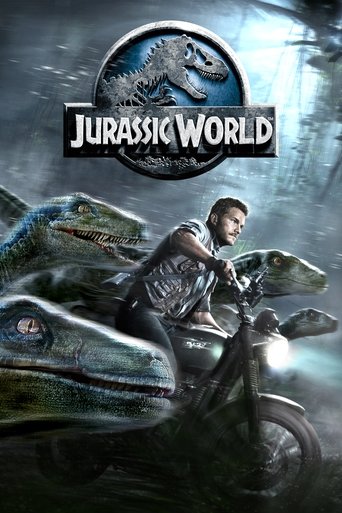
Jurassic World
2015 · Film · 124 min
Part of Jurassic Park Collection
Directed by Colin Trevorrow
AdventureScience FictionThriller
Twenty-two years after the events of Jurassic Park, Isla Nublar now features a fully functioning dinosaur theme park, Jurassic World, as originally envisioned by John Hammond.
3 positive17 negative28 neutralfrom 48 commenters
Where to watch
No streaming data for this title.
50 comments on Hacker News
You know that, and I know that, but for someone who started working more recently the difference between CORBA and punch cards might be a little blurry because they're both so far back they've never seen either. It's like kids asking how the dinosaurs in LEGO Jurassic world were animated, because they don't move like real toys, and noting how much easier the 1993 live action Jurassic Park filming was because back then they could just film real dinosaurs. Feels weird, but makes sense from their perspective.
I think whether or not it's worth it really depends on the kind and quality of movie.
When I went to see Project Hail Mary, I enjoyed the full theater, when I went to watch the new Jurassic World movie in an empty theater I was bored out of my mind, on the other hand I've seen many anime movies in empty theaters where I absolutely loved having a quiet theater entirely to myself.
You make a fair point about cultural conversation being important. I think that conversation is happening, but the focal point shifts from one generation of creatives to the next. It's an important part of cultural dialogue, not just reaching the same targets as previous works, but finding new targets, new mediums and methods of expression.
We saw the shift toward a more fractured landscape happen in music long before movies. If you grew up hearing the Beatles on mainstream radio, listening today might feel like a cultural low point. And that feeling isn't baseless. But treating the Top 40 as the whole of music ends up missing the new developments happening outside that narrow slice.
We're seeing similar shifts in film. The Blair Witch Project and Once Upon a Time in Mexico heralded the age of accessible digital filmmaking, leading to an indie boom that's still rippling out. Everything, Everywhere, All At Once showed that ambitious, effects-heavy filmmaking is no longer tethered to the traditional studio system. Those are the high profile bellwethers -- indie bands that sneak in a radio hit -- but I think they reflect the wider landscape of passionate creatives better than, say, the new Jurassic World.
So yes, blockbusters aren't what they used to be. But judging the health of the entire medium by looking at those is like judging transportation by looking at horse-drawn carriages after the arrival of cars. It focuses on what's leaving instead of what's emerging.
I have a simpler answer- the bad ones make money. All of the Jurassic World movies have topped $1B. Rebirth has been out 5 days and is already at $300M, twice its budget.
While movies are art, they are primarily an entertainment product, especially when they cost $65-200M to make. Jurassic World is selling really well, so they aren’t going to change the product to produce “better” art.
It is interesting that Jurassic Park are the only (non animated) dinosaur movies to get much traction while JW is taking in so much money. But it’s got to be tough to come up with a dinosaur movie concept that doesn’t sound like a JP knockoff and doesn’t confuse viewers.
Maybe Marvel will make a Savage Lands movie. But I don’t think this what the author wants.
I watched it with my then-girlfriend when the first Jurassic World came out. She wanted to see that but had never seen the originals as she was ten years younger than me. Naturally, I made sure we watched the first three films first. She agreed the first film is by far the best, and that Jurassic World is a four-cup tea bag imitation at best.
I don't think it's the sort of film that will be heralded as a timeless classic 200 years from now, but it's exciting and generally just good fun.
The other thing that differentiates Spielberg's original work from all that's followed is the way it explored the details. From the sourcing of the amber, to the need to have paleontologists, botanists, and lawyers check Hammond's work, to the inclement weather, to the social interactions and workplace frustrations of the staff -- it all felt like much more of a living, breathing park than any of the renderings since. Like someone took out a sheet of paper and said, "If someone actually built this thing, what problems would they have to deal with?"
The newer movies -- even Spielberg's own sequel -- don't capture that. They start with some park or island miraculously up and running, no explanation needed. They hand us predetermined good and bad guys whose motivations seem less complex, more contrived. Jurassic World didn't give me the sense that anyone struggled and triumphed in creating the park. It was just hand-waved into existence, in a way that cheapens the ensuing drama.
Great read about two worlds coliding. Also interesting to consider the level of artistry and care, ncessitated by exteme limitations, that went into the very short sequences in Jurassic Park and how alive those dinosaurs feel... versus the more technologically unbound filmmaking for Jurassic World movies, which to me offer nothing exciting to look at.
I remember after seeing Jurassic World in theaters a friend (who hadn't seen it yet) asked me if it was good, and I said something like "even though you know everything is going to go wrong, it's still entertaining seeing all of the set up before it happens", and they were upset at me for "spoiling" that the dinosaurs eventually break loose. I was taken aback because I thought it was pretty well understood that seeing dinosaurs wreck a bunch of stuff was basically the whole point of the franchise, and the movie would be boring otherwise.
In a way, I'm almost envious of the ability to experience a story without being distracted the "meta" knowledge that what happens at every step is a deliberate choice by the writer. I'd probably be a lot more into movies if I could somehow believe that events in them unfolded organically like in reality rather than sometimes being forced for plot convenience.
The main lesson of Jurassic Park is that the park designers are morons, incompetent to an actionable degree, over and over. Despite what Hollywood thinks, containing large animals is actually very easy. You "just" did a sheer trench around them. The larger the animal, the more afraid of heights it has to be.
Take a look carefully next time you are in a zoo. No active electric fences, lots of very dangerous animals, all contained. Dinosaurs would be almost no different.
It's a clear case of "but then the movie wouldn't happen".
As a bonus round, note the strange absence of guns as a final fallback and the blitheringly idiotic reasons deployed that they don't exist, can't be used, or don't work somehow. Granted, you need more than a .22 in case of emergency but this has been a solved problem for over a century.
The first movie I still enjoy even so. I don't let this interfere with my enjoyment of a cinematic classic, and rich eccentrics hiring the totally wrong people who overconfidently do everything wrong I can track with. The sequels, especially the ones with more parks, I have a much harder time with. Jurassic World really should have worked just fine, at least up until the volcano hit. And I don't mean worked fine as-is, as it is also disastrously misdesigned. I mean, a real, correctly designed park is certainly not "easy", but well within reach for a modern corporation even remotely concerned about liability.
Forget the books for a moment. The film is a brainless action film.
Most of the criticisms I made are film criticisms that could be levied against any bad or middling movie.
- The film is a vacuum for intricacy and coherence.
- The characters are one-dimensional, unchanging, and don't matter.
- The stakes might be huge, but they carry no emotional weight. Like most superhero films these days.
These are deficiencies in storytelling.
If we contrast Lynch's Dune with Villeneuve's, we might find similar analogies in contrasting "Jurassic Park" versus "Jurassic World", Peter Jackson's "Lord of the Rings" versus Peter Jackson's "The Hobbit", or "Independence Day" versus whatever the hell "Independence Day 2" was.
Each of these latter films promised more, but they turned out to be empty and soulless. More box checking than composition, more visual spectacle than substance. The same is true of Villeneuve's Dune as a film.
I don't need a film adaptation to be faithful. I just need it to be a good movie. I'd be totally fine if the film made a wild departure from its source material, so long as it used that liberty to deliver something impressive. That would honestly mean more to me than a fully "by the books" rendition.
Villeneuve's Dune was just lazy.
They refer to it as a mosasaur[1] in the movie, take it up with them?
1. https://en.wikipedia.org/wiki/Jurassic_World#Plot (or watch)
> Jurassic World movie fans may be familiar with mosasaur.
Jurassic World fans and parents of 3 year old boys
The article specifically states it’s not a mammal. It has been classified as a mosasaur.
Jurassic World movie fans may be familiar with mosasaur.
Chris Pratt's "short" career has more or less been Parks and Rec -> Guardians of the Galaxy -> Jurassic Park. I thought he was pretty great for the first two but the scale of jurassic world being generic trash has managed to completely undermine any interest I had in him. I'm not clear where he stands on public opinion.
I also think Office Jim being Jack Ryan is strange. But I don't think people care about the amazon shows. His news thing and production of a Quiet Place was interesting. People fucking love Office Jim if they could put him in something that was not action man.
I find it kind of hilarious to highlight keanu reeves as an actor with range, as someone who loves reeves movies good or bad. Or tom cruise for that matter. The titles that made most of the "big actors" big were not things showing range. It's shit like top gun. Actors showing range are not doing big movies because big movies mostly don't ask for range.
Young actors don't tend to have that much star power either. That comes after a career. I feel like I can't agree on your entire framework here. But I guess if we had to target actors under... 35 that people want to see I would say it's probably shifted a fair bit to women. Perhaps Margot Robbie. Anya Taylor Joy. Jenna Ortega. Emma Stone.
off picks for men: Michael B. Jordan largely for the Black community. Harry Styles perhaps.
The funding landscape for movies is radically different, that’s for sure.
We’ve somehow squeezed everything out of the middle. What’s left is the blockbusters at the top (Avatar, Marvel, Star Wars, Jurassic World), the low-budget indie movies at the bottom (within reach for funding by individuals, rather than studios) and in the middle, as far as I can tell, there’s just A24.
A24 is doing really well, but I think we’re missing the pipelines and economic incentives that brought us a bunch of our favorite movies from the 2000s and earlier.
The raptors that are CG in most of the shots that aren’t just their heads? Like the entire sequence where they chase the kids…
you’re also comparing things without considering how the process created them.
Avatar wouldn’t look any more real with practical work. It’s just not possible to make robotics today that can have that level of articulation and micro expression. the reason it doesn’t look “real” is because the film makers didn’t want it to look real. It’s meant to be fantastical.
You claim most CG is bad in films but I’d argue that you, like many others, glomp onto the bad CG and ignore all the fantastic CG that you don’t notice.
How many people do you think noticed that the entire environment they’re in isn’t real in these shots? https://youtu.be/V5mS7BHmZJI
Often what people consider “bad CG” is overly apparent CG. This can be down to three things:
1. Budget. Both money and time.
2. Deliberate Aesthetic choices
3. Directors often put CG more in your face than practicals
Practicals wouldn’t make a difference there because they’d fall prey to the exact same issues which is why they’re often replaced in post anyway.
Aesthetics are a big one. The visual style between the original Jurassic Park trilogy and the Jurassic World trilogy is different. The new trilogy is significantly more fantastical in style and lighting. This is why you can’t just randomly compare shots between different films. They’re created by different teams with different goals. You need to compare against the raptors etc in the same film or where similar choices were made.
When people say “I wish this was done with practicals”, what I think they mean is “I wish this was better” but ignore the why.
> The most memorable shots in that film are CG.
I know it used CGI in some shots, but I disagree that these were the most memorable. Close-ups of the T-Rex, the creeping raptors in the kitchen, the sick Triceratops, the expanding neck frill of the Dilophosaurus, etc. These were the most tense and impressive shots IMO, and all were practical (even though they were historically innacurate). CGI was used mostly for wide shots that needed to show movement, which wasn't practical or sometimes even possible with animatronics.
> I also contest your assertion that the results are more impressive than todays CGI. That’s some rose tinted nostalgia, but there’s no way to replicate some of the advanced motion and realism like the latest Planet of the Apes or Avatar with animatronics.
I don't disagree that nostalgia is a big part of it, and the fact that back then these were truly ground-breaking shots we hadn't seen before. Each film did things slightly differently, and VFX weren't as accessible as today. Still, there's something raw and, well, real about an actual physical entity that actors interact with. The lighting and physical properties are always correct, and assuming the makeup and robotics are state of the art, it really can trick our brains into believing these are real objects much more than CGI could.
For example, take the sick Triceratops scene[1], and compare it to 2015's Jurassic World[2]. Sure, the CGI versions are more life-like, but they look completely fake. The lighting and shading is off, the interactions with the real world is limited and unrealistic, etc. In contrast, the scene from 1993 still looks impressive today, even though the movement is limited, and it arguably looks a bit stiff. State of the art CGI today is much better, though[3], but still slightly off in a few places.
This can possibly be blamed on "bad" CGI, but I'd argue most usage in movies falls into this category. Even the creatures in this new Avatar, while incredibly detailed and life-like, look artificial, and like they don't belong in the world around them (which is, ironically, also CG). It looks like an animated, instead of a traditionally shot, film. Which doesn't mean it can't be enjoyable, it's just a different experience. For me, it crucially lacks the awe-inspiring moments that films with practical effects often have. I realize that most of these shots couldn't be possible with practical effects anyway, but I appreciate when directors make an effort in using mostly practical effects, instead of defaulting to doing everything with CGI.
As another example, consider All Quiet on The Western Front[4]. According to the VFX lead:
> The overall VFX mantra was to allow the footage from principal photography to serve as the primary material for compositing, as opposed to creating CG elements in VFX to augment the scenes. “I believe that adds to the visceral, immersive quality of the film,” Frank Petzold explains. “So in other words when, say, there was an explosion scene, we did not entirely rely on CG models.” Rather, the team used photographic elements as the primary foundation, implementing CG simulations to augment principal photography. The effect was naturalistic, and the integration aimed to be seamless.
I think this is the right approach to take, and the film is much more immersive and enjoyable because of it.
[1]: https://www.youtube.com/watch?v=tYm7xeg27Rw
[2]: https://www.youtube.com/watch?v=2CJL7rKJI18
[3]: https://www.youtube.com/watch?v=le0iiWwdeeE
[4]: https://www.youtube.com/watch?v=hf8EYbVxtCY
[5]: https://www.fxguide.com/quicktakes/all-quiet-on-the-western-front-vfx/
For me a big part of it is due the slow pace. Today's slow movies are filmed in a way that make them feel more fast paced than action movies from the 80s/90s
Watch Jurassic park and Jurassic world back to back, or The mummy vs the remake with Tom Cruise, too many cameras, too many view points, too many cuts
That is really interesting. In my town, to see Jurassic World tomorrow (Wed) at 20:30 in the UK is £13 per adult. This includes a mostly empty cinema, a terrible seat, 10-20 minutes of adverts for viewing start time and £6 for a large pepsi max.
So minus the pepsi, it is $31.09USD for 2 adults.
Even if I reached out to my admittedly few dozen facebook family from 16-90 year old and said I sorted all them out for $1 a film. No one would go. I mean maybe 1-2 people would go but even then I'd be mind blown.
Those 40 and up only account for 30% of ticket sales [1], despite being nearly 50% of the population. This is a figure I find rather shocking given that these ages include those with children and those with an abundance of time in retirement.
Another factor may be the skyrocketing costs of movie tickets. This source [2] shows that tickets went from $4.35 in 1996 to $9.16 in 2021, which exceeds the rate of inflation. Additionally, I'm not aware of any tickets to be had for $9. Tickets are exorbitantly expensive these days [3].
[1] https://www.mekkographics.com/american-moviegoers-by-age-and-ethnicity/
[2] https://247wallst.com/media/2021/03/29/this-is-the-price-of-a-movie-ticket-in-the-past-25-years/
[3] The price for one ticket to Jurassic World tonight at a theater near to me is $18.84. This is in "2D" on a standard screen.
Except there is a sustainable market, just make it available on amazon, apple, etc.
I just finished watching the first Jurassic World with the kids, if cost £3.50 on apple. I have a feeling I may have a dvd or bluray of it somewhere in a box as I've seen it before, and it wasn't at the Cinema, but it wasn't worth the half hour trying to find it.
Discovery Season 1-3 was on netflix, Picard and Lower decks on Amazon Prime. Discovery Season 4 came out on amazon and apple at something like £2 or £3 an episode.
That's how you make money. It doesn't cost a lot to put your program on platforms like Amazon or Apple (Presumably it's a simple "x% of the price in commission").
The top grossing films of the 1970s? The original Star Wars, Jaws, The Exorcist, Alien, The Godfather? Rocky 2 and Jaws 2 are also on the list so it's not like there weren't any sequels at all, but that group of films really _wasn't_ dominated by remakes and franchise films:
https://www.imdb.com/list/ls026560159/
By comparison, entries for the 2010s include MCU franchise films, Star Wars Sequels, Jurassic World (a sequel), The Lion King (Remake), etc:
https://www.imdb.com/list/ls026040906/
Going year-by-year doesn't really change things very much: https://en.wikipedia.org/wiki/List_of_highest-grossing_films#High-grossing_films_by_year
> But Dune is barely out for a few months - it's a blockbuster, for sure, with enormous production budget, lots of public interest, etc. But so was Jurassic World, the Star Wars sequels or the Hobbit trilogy. Whether Dune will become an all-time classic like Laurence of Arabia remains to be seen.
Those movies have worse visuals than Dune imo.
> For example, when he discusses the latest Dune with Lawrence of Arabia - both acclaimed movies.
But Dune is barely out for a few months - it's a blockbuster, for sure, with enormous production budget, lots of public interest, etc. But so was Jurassic World, the Star Wars sequels or the Hobbit trilogy. Whether Dune will become an all-time classic like Laurence of Arabia remains to be seen.
Maybe a fairer comparison would be something like Lord of the Rings vs Dragonheart or Conan the Barbarian or whatever else iconic fantasy movie there was before the CGI era?
Or for Scifi, maybe the old Star Trek movies vs Avatar? (Blue cat people, not the other Avatar)
Or Star Trek TOS vs Deep Space Nine vs Discovery.
I think the author is absolutely right that the standard for "good story" in games is incredibly low. Games are an immature medium that got catapulted into the mainstream on its other strengths (as challenge/sport/attractive gizmo) and not as art.
Unfortunately most of the current audience for games (particularly the vocal part) are people that were attracted by these aspects. I was definitely attracted by the technical feat/ingenious gizmo aspect. If you look at the way games have traditionally been reviewed, you can see that this aspect is incredibly important. These people tend to get upset at articles like this and overreact by claiming that the art aspects of their favourite games are better than they actually are.
That said, there are still the green shoots of an incredible artistic medium here and there. I am always on the lookout for things, however crude/I'm-14-and-this-is-deep they are, if they could only have been done in games.
Uncharted is a decent action adventure, probably as good as something like Jurassic World, but it could have been done in film.
Something like Journey, Her Story, Brothers etc, have aspects that could only have been done in games. They make (fairly crude) artistic points, in an intrinsically interactive way.
The term is "soft reboot" [1].
It's a common tactic used very widely. See Jurassic World (Jurassic Park), Star Wars: The Force Awakens (SW: A New Hope), X-Men First Class (X-Men 1/2/3), the new Jumanji films etc etc.
[1] https://tvtropes.org/pmwiki/pmwiki.php/Main/SoftReboot
I sat down to watch Jurassic Park with my son just after he turned three. My wife thought that showed questionable judgement on my part but he absolutely loved it and instantly became thoroughly obsessed with dinosaurs. He’s almost 4 now and shows no sign of slowing down.
That doesn’t dispose of the question of my judgement - there’s some violence in that film so that’s not a universal recommendation.
Parenting is a total mystery.
EDIT: Just to say - kids go absolutely bananas for any of the scenes in either Jurassic World movie that feature a Mosasaurus.
Jurassic World absolutely wins for best UI dashboards in a movie, ever. (Jurassic World Evolution, the video game, does a nice job of emulating them, too.)
Yeah. I thought I seen something before that Hollywood had some exemption, so movies could have paid placement without disclosing it. Like I think the Emoji movie could be an example, never watched it but remember seeing posts saying it was nothing but a big advertising. The first Jurassic World had a bunch of product placement too, people didn't like. Maybe it's mentioned in the credits somewhere though? I liked the movie and kinda felt the brands added realism. Like real brands sponsor stuff at Disney, so makes sense for a fictional theme park around dinosaurs but I know some feel it takes away from the movie.
Then there's another show about entertainment and news, and the woman on their sometimes gets dresses provided to wear. I noticed that's mentioned in a text overlay at the very end... However guides for YouTubers say you should mention say it on audio too, don't just put in the text description or on the screen as text.
Then Apple gives TV shows and movies free iPhone's and Macbooks for promotion... I seen it mentioned in the end screen but don't remember ever hearing a voice over saying products provided by Apple, but if you are a YouTuber you are supposed to mention you got a free Macbook every time you mention it according to one guide. So seems unequal and some confusion out there too. I know some tech channels, rving, camping, etc will accept free products to review, but if you use or mention them in any future videos or blog posts, people might of not seen your first post where you reviewed and disclosed you got it for free to review... So I guess you have to repeat a bunch of legal jargon in every video then.
I doubt many people get free Apple products as vloggers, but one of the examples was if you got a free knife as a hunting channel, you should disclose it in future mentions. So that's a more realistic example probably, but wouldn't surprise me if someone even forgets who sent them a knife if they collect them after the initial review. Then recently the FTC set more rules for videos targeted at kids on YouTube, and some lawyer mentioned he spoke with the FTC and some of these people don't even own phones or really understand what YouTube even is. Also not sure if I remember if the Price is Right mentioning products they are giving away, I think they just show the car yet as far as I know GM or KIA is giving it to them for free for the product placement, I bet if a YouTuber gave away cars they'd have to disclose it much more. I guess the old media probably can afford more people in DC than the independent vloggers can.
Then if you got paid to go to a conference, and wanted to live tweet about it, you have to mention it in every single Tweet some how from my understanding. Not sure how you'd do it with the space limit. Maybe when I read these things, I'm taking it more literally than most do. I bet a lot of businesses are out of compliance with many things if you look for it. I was reading up on PCI recently for credit card processing, and I helped a lady once years ago with her shopping site and if I remember right she just gave people a generic admin login shared between people, but I guess that's a major no no as everyone should have their own separate account. Then some web hosts market their servers as being PCI compliance too, but wonder if it's really true. Just seems like a lot out there, but I do remember hearing once that the average citizen commits 3 felonies a day.
I think it'd be fun to be a travel vlogger some day, so I think my personal policy would be not to accept free stuff to review, but I know some companies just send people stuff in general if they post a PO Box without asking, so wonder if they feel pressured to review items... but I think the whole idea of fans sending you random stuff is creepy, there's some vloggers who do mail vlogs and people send them candy and stuff... Mommy and daddy says not to take candy from strangers, yet you let random people from around the world mail you candy... I rather just use things I paid for myself, and if I liked it enough mention it on my own. Don't want to feel obligated to some brand.
I do think the general idea of the FTC is good though, don't want companies lying and scamming people. There's probably selective enforcement too, for like the most outrages cases.
The thing is, most people don't actually need 4K.
In fact, I believe most modern films—including big-budget blockbusters—are still being mastered in 2K (with UHD Blu-Ray discs being upscaled from the 2K masters). My question to anyone for whom spending $300 on an NLE is a big deal: does your project really need more image resolution than titles like Jurassic World and The Hunger Games? Keep in mind that, in addition to spending the $300 on software, your image processing and storage requirements have now quadrupled.
For a close look at the impact of image resolution on cinema viewing, I highly recommend Steve Yedlin's excellent Resolution Demo [0].
[0] http://www.yedlin.net/ResDemo/index.html
Sounds like Netflix needs to produce Blockbuster films, or buy Universal Corp(the maker of Jurassic World, the only non-disney top film of the last 5 years). Universal's market cap is only 1.28B, about 10% of the amount Netflix spent on content last year.
A large number (possibly all, but I didn't check) of those companies are global. Here are a few examples of how revenue breaks down for some (randomly chosen big) movies from some of the firms on the list.
AT&T owns Warner Bros, and makes things like Harry Potter. Picking one of the movies, I see that the US box office is only about 1/4 of the worldwide gross. [0]. Not to mention that AT&T is itself a global firm for upwards of a century.
Disney owns Marvel, which made Avengers Infinity War. A whopping 2/3 of that revenue came from outside the US [1].
Comcast owns Universal, which made Jurassic World. That movie had 61% of its revenue from outside the US [2].
CBS owns Paramount, which made Titanic. More than 2/3 of that revenue came from outside the US [3]. Of course, that was a massive movie - what about something like Shrek the 3rd? Interestingly, roughly 60% of that revenue came from outside the use as well [4]. Take a look at What Women Want, almost 20 years ago, and 1/2 of that revenue came from overseas [5].
Netflix is in over 190 countries, with more than 70 million subscribers outside the US. This is even more impressive when you realize that Netflix was US-only as recently as 2010 [6].
Obviously I could go on, but I think I made my point - US media companies dominate the globe for movies. I could also nitpick and note that they left off video games entirely, even though they are bigger than some of the companies on this list. But no matter how I slice it, it is not a local market, and hasn't been for years. Hence my strong disagreement with your position.
[0] - https://www.boxofficemojo.com/movies/?id=harrypotter72.htm
[1] - https://www.boxofficemojo.com/movies/?id=marvel0518.htm
[2] - https://www.boxofficemojo.com/movies/?id=jurassicpark4.htm
[3] - https://www.boxofficemojo.com/movies/?id=titanic.htm
[4] - https://www.boxofficemojo.com/movies/?id=shrek3.htm
[5] - https://www.boxofficemojo.com/movies/?id=whatwomenwant.htm
[6] - https://hbr.org/2018/10/how-netflix-expanded-to-190-countries-in-7-years
I love Lego, my kids love Lego, they have all my old Lego and it really bums me out how quickly Lego sets go out of production. One of my sons really wants a set from the first Jurassic World movie, but it's been discontinued and is only available for several hundred pounds on eBay (or 100-200 if you settle for parting it out on Bricklink) and so he's not going to ever get it.
I get that they can't keep making the sets forever, it wouldn't scale, but it's still annoying and drives this feeling of needing to buy any Lego set you might ever want, because you'll never get it later without wasting loads of money on scalpers/hoarders.
That is true. It's like the Jurassic World movie that just came out. The dinosaurs are in danger of dying because the island is about to explode. Some characters are trying to figure out a way to save the dinosaurs, but, to paraphrase the original Jurassic Park, they're so preoccupied with how to do it they're not even stopping to think whether they should.
It's also very likely that the issues with this fall into the category of a "wicked problem".
Personally, I think one of the main problems with current use of CGI (specifically in non-animated movies) is color treatment. Comparisons between the original non-altered version of Jurassic Park (JP) against Jurassic World (JW) shows my point. There is an increased tendency to change hue and saturation of color in post-production, in order to transmit ideas or set moods on the film itself, but this makes CGI look faker than what it is and the brain is able to identify it.
EDIT: I prefer the look of JP over JW, not because I think it has better CGI, but because colors look more closer to reality.
Many of the works that have received the most cultural success have been science fiction.
Of the five top grossing films, Avatar and Jurassic World are very clearly science fiction, Star Wars and The Avengers are arguably science fiction. It's only Titanic that couldn't be claimed to be science fiction.
The situation is probably similar for TV Series too.
The status problems of science fiction are arguably related to its extreme popularity.
I went to the IMAX at the zoo in MN and watched Jurassic World in 3D. It was amazing, and actually made me want to see more movies like that. It was much nicer than the standard IMAX.
They had a preview for The Walk and that preview showed the true depth of 3D.
>>Now, any biologists worth their salt would cringe at many scenes [in Jurassic World].
Jurassic World is science-fiction, which makes it a hell of a lot easier for subject matter experts in the audience to suspend their disbelief when it comes to the technical parts. Furthermore, said technical parts take up maybe a few minutes of the film at most, keeping the need for the suspension of disbelief to a minimum.
Mr. Robot, on the other hand, is drama, and the main character is a hacker who hangs out with other hackers. In order for it to be viable as a show, it needs to be technically accurate.
When hackers hack in Mr. Robot, they talk about it in ways that actual hackers talk about hacking.
Mr Robot exists as it does because there are now enough people familiar with computers and the relevant concepts to constitute an audience, rather than due to any sudden insight on the part of screenwriters (of which I am one). We know, and have always known, that there's a distinct hacker subculture with its own linguistic tropes, ethos, etc. etc. and that there's been a big gap between reality and how it's portrayed in movies.
We also know (or learn the hard way) that there's a big gap between including enough detail for verisimilitude that will satisfy people who are competent in a particular field, and what the general public wants to watch - which is why you'll continue to see shallow or outright stupid portrayals of hacking in the entertainment industry's output. Why? Primarily [1] because the mass of people are just not interested in any given field that requires nerd-level commitment to understand. The larger the budget required for the film, the larger and more general the audience has to be, and the more accuracy and authenticity will be sacrificed in favor of spectacle and symbolism, which is the most reliable method for getting people to fork over their money in the first place.
Take a recent example from a different context - Jurassic World. The 'plot': capitalists and scientists employ DNA technology to produce a bigger, smarter, more aggressive dinosaur than has ever existed in nature; said dinosaur escapes from confinement and menaces everyone in the vicinity, especially the attractive hero, anti-heroine, and small children that are introduced early in the story. It's basically Frankenstein only with dinosaurs. Spoiler alert, the attractive proxy for the family unit survives and the bad dinosaur is defeated, though not before killing off the most ethically deficient characters by eating them like ham sandwiches.
Now, any biologists worth their salt would cringe at many scenes (if they watch such nonsense at all). Any genetic scientists had to suffer through yet another scene of an annoying smartass mumbling a few meaningless phrases about 'advanced gene splicing' while screens in the background display animations of double helixes and molecules. I think they might have mentioned CRISPR, I'm not sure and have no intention of watching it again to check.
Would Jurassic World have been better if it was more like Primer or Mr Robot, with in-depth discussions of structural factors and real-world constraints, and a hard-science approach that admitted of 1 (one) speculative assumption, from which the rest of the plot flowed organically? Sure,,,if you wanted to make Gattaca - Herpetology Edition. But though gattaca is one of my all-time favorite sci-fi films, neither it nor Primer will ever appeal to a mass audience and so films like that will never have the most recognizable actors or the most astonishing visual spectacles or the same sort of short-term existential anxieties that would result from having to run or your life from a creature the size of an apartment building.
People go to Big Movies to allay their quotidian existential anxieties (about which they often feel helpless) by seeing them safely reflected [2] in contexts that are outside normal human experience. How far outside is primarily inversely proportional to the budget and corresponding box-office performance requirements, while being secondarily proportional to the depth of the underlying existential anxiety.
Hacking in films has simply been a proxy for magic, in line with Clarke's observation that any sufficiently advanced technology is indistinguishable from magic. Magic serves an important dramatic function as the source of the unknowable solution to the Intractable Problem with which the story's characters are presented.Thus, magic and its various proxies (specialist bodies of knowledge, from hacking to legal procedure to medical knowledge) is not a black hole which encapsulates the ignorance of the writer (although many inferior or lazy writers abuse it for that purpose) but a singularity which offers the possibility of escape from the otherwise-inexorable logic of the story world; it symbolizes the hope of a future discoverable solution to an otherwise insoluble problem.
A few examples from popular films may illuminate this. In Star Wars the insoluble problem is a spaceship that can blow up an entire planet. The magical device is The Force, a limited but still useful psychokinetic ability. In the Alien films the insoluble problem is an ambulatory disease; the magic device is an artificially intelligent android that can approach the alien closely enough to observe a weakness of some kind (but which has to be temporarily decommissioned first, like Dumbo losing the magic feather). In the Terminator films, the insoluble problem is nuclear conflagration as the crystallization of war in general; the magical device is industrial capitalism's promise of reducing economic inequality (represented by the vast technological superiority of the Terminators themselves).
To wrap up, Mr Robot hasn't killed the Hollywood hacker at all; it has just crushed his dreams and forced him into getting a day job, which is the function that television shows perform relative to movies. You'll still see hackers in movies, but strictly as lip service to a real and increasingly less aspirational employment demographic. This might seem like an odd conclusion to draw, but it's worth bearing in mind that that serial television dramas are general occupational comedies (I'm using the term 'comedy' in the technical sense of everything basically going back to normal at the end of the episode, even if the subject matter isn't funny at all). Consider cop shows; they follow a nice steady formula with an initial outrage, a bit of detective work, an uncomfortable moral confrontation, a setback, and finally a little bit of legal procedure. On the other hand if you watch a movie about cops, they almost invariably take place at the beginnings or ends of the lead characters' careers, and the Best Person in the movie almost invariably has to die.
1. there are other reasons but I don't want to turn this into an essay on screenwriting.
2. A few films address this dichotomy as their subject matter, albeit indirectly. All films have a political dimension insofar as the choice of subject matter and its portrayal reflect some aspect of their originating policy which the creators aim to praise or criticize, but relatively few dramatize the critical process itself; invariably, the subtext of such films is that critical awareness forces us to choose sides in an ongoing moral conflict; or put another way, moral agency comes at the price of other kinds. Generally in these films the lead has to either die or give up the old life completely in an anti-hero pattern.
Just checking a few random movies.
Movies I checked that have this disclaimer:
- Despicable Me 2
- Django Unchained
- Inception
- Jurassic World
- James Bond: Spectre
- Avatar (extended cut)
- Spaceballs
Movies I checked that don't have this disclaimer:
- Tangled
It's usually among the very last lines of the end credits, among the statements about dedication to the environment, distance from the tobacco industry, lack of animal abuse etc. If you're not watching the end credits you will never notice it.
There's a quote from the TV show Archer that I think reveals an aspect of the reptilian appeal that was missing in the article:
"Gee, I don't know, Cyril. Maybe deep down I'm afraid of any apex predator that lived through the K-T extinction. Physically unchanged for a hundred million years, because it's the perfect killing machine. A half ton of cold-blooded fury, the bite force of 20,000 Newtons, and stomach acid so strong it can dissolve bones and hoofs."
The sense of fear that Archer has is also expressed in our pop cultural fascination with all things Dinosaur (Jurassic World/Park, etc.).
To be able to keep a miniature dinosaur as a pet seems like a great thing.
Wildly overrated movie. I tried rewatching it on a plane a couple weeks ago, and it really doesn't stand up to repeat viewings. Apparently there is a novelization that patches up all the many, many plot points that were unexplained or made no sense in the movie script, but the movie is really just another lazy JJ Abrams production. Then you notice how, like Jurassic World, nearly every scene is a blatant callback to something from the original film.
Unfortunately, you could package two hours of film of an actual gold-plated turd, and it would make a billion dollars if it had the Star Wars name on it.
Judging from the product placement in the new Jurassic World movie they are much closer with Samsung.
Hollywood wants to make films that people want to watch. They might be able to trick people into going to the cinema before the reviews come out, if necessary. But that won't save it in home entertainment, which is where most of the money is.
They're pretty good at it, too. This year, Furious 7 and Jurassic World have been two of the top-grossing films ever. That's not because people were tricked into seeing them, and didn't know what they were in for. It's because people enjoyed watching those films.
Most of the critic (and user) reviews are what I think of as "easy mode" ones. They don't really teach you anything about the film, just say whether they liked it or not, using the most colorful language they can possibly muster. The FF quote seems like a typical example.
Alternatively there are some that really dig deep into the meaning and execution of the film and analyze it in ways I would never think of, not having a PhD in literature or having been to film school or anything. An example I like a bit is Film Crit Hulk[1], which range from simply explaining why the film's execution didn't match its themes (Jurassic World) to borderline philosophical treatises on the meaning of film (Birdman). (Imo, obviously.)
For getting a quick rating to see what soared/bombed, stuff like RT and IMDB serves its purpose, but I wish published reviews would do more of the deep dives into film analysis, rather than just letting some random journalist vent their opinion for pageviews.
[1] http://birthmoviesdeath.com/author/film.crit.hulk
A coffee or chips is a consumable, as soon as I use them they're gone and nobody else gets to consume them. They don't compare.
A trip to the cinema, without paying for unnecessary and expensive food and drink, only costs about 6x-10x more for something that costs considerably more to produce than a song. Jurassic World cost $150,000,000 to create and I got to watch it for $9. Skipping the cinema altogether, I can buy it on disc for about the same price at a later date and watch it as many times as I want.
A song has a tiny fixed cost per unit sold. Personally I think that my compensation to the artist (not their total compensation) for their effort in creating a song is pretty fairly priced at about $1 given their investment and costs. If they made something amazing, maybe a few million other people will also chip in and they'll be rich.
Honestly, I'm also not convinced money has any impact on the quality of music either. Amazing musicians often do well for themselves but lots of the big names in music put forth formulaic crap and pandering lyrics too. We get bargain-barrel quality despite those musician being well compensated, while some of the best performances I've witnessed are local artists still working a day job to survive and playing gigs on the side because they genuinely enjoy doing it (knowing full well their chosen genre to perform will never be a million dollar mainstream hit-maker).
http://www.theregister.co.uk/2015/07/23/movie_studio_finds_pirated_jurassic_world_on_localhost
The lawyer sending these automated DMCA searches tagged their own computer, implying they were pirating the movie.
That's hilarious if it's true.
Yeah I love Will Smith too, even in Hancock :)
Let's face it : Will Smith played in a lot of top movies in this decade. Could you name another one ? :)
In France we have a Will Smith example too, His name is Omar Sy (saw in the last Jurassic World).
For one Will Smith, you have here in USA Tyler Perry, Kevin Hart, Chris Tucker, Chris Rock, Spike Lee (sorry for all the women I forgot here). These guys are awesome too. We want them everywhere in the world.
Just recently I rewatched the first 3 Jurassic Park movies and found they aged really well. You never have the feeling that there's to much CGI because they striked an awesome balance between CGI, animatronics and sceneography (especially the first movie, but the other two are still above average imho). On the other hand, many of my friends agree that The Hobbit already looked bad when it came out.
The only weird thing about Jurassic Park 2 was the overuse of the T-Rex head. But the rest never feels "Hollywoodky".
Seeing the changes and the trailer, I have little hope for Jurassic World to be a movie where you can immerse deeply and forget that you're watching a movie.
On one hand, the scaly dinosaurs many of us grew up with were a lie. On the other hand, big dumb lizards frankly aren't very interesting.
Feathers on most dinosaurs will take some getting used to, but I think they have the potential to be a lot more interesting. Pop culture has a lot of catching up to do. Even the upcoming Jurassic World movie is planning to show velociraptors with no feathers.
I really hope my daughter will be as interested in dinosaurs at a young age as I was, but if just wish I could show her more accurate dinosaurs.