 Hacker Cinema
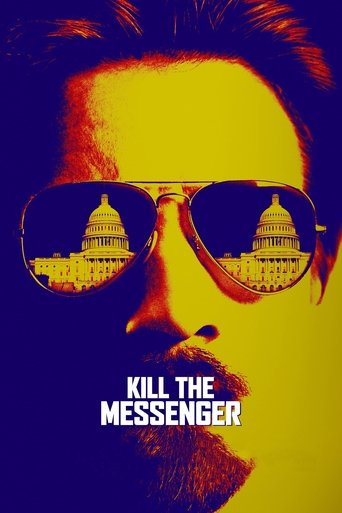
Kill the Messenger
2014 · Film · 112 min
Directed by Michael Cuesta
CrimeDramaMysteryThrillerHistory
A reporter becomes the target of a vicious smear campaign that drives him to the point of suicide after he exposes the CIA's role in arming Contra rebels in Nicaragua and importing cocaine into California. Based on the true story of journalist Gary Webb.
1 positive1 mixed5 neutralfrom 7 commenters
Where to watch
No streaming data for this title.
7 comments on Hacker News
it was meant in jest because the CIA directly participated in the drug trade as uncovered by investigative journalist Gary Webb (who died from two gunshot wounds to the head...).
"Michael Cuesta’s movie 'Kill the Messenger' tells the story of Gary Webb, whose August 1996 investigative series “Dark Alliance,” published in the San Jose Mercury News, uncovered ties between the Central Intelligence Agency and massive drug peddling by the right-wing, mercenary Nicaraguan Contras. Webb’s three-part series established that in the 1980s the CIA-backed Contras smuggled cocaine into the US that was widely distributed as crack. The drug profits were then funneled by the CIA to the Contras in their war against the left-nationalist Sandinista government in Nicaragua.
source: https://www.wsws.org/en/articles/2014/10/17/kill-o17.html
> because of being told by the governments and in schools, that the CIA and co only fight terrorist and evil empires.
That's not their image in the US at all and that's not how formal education about the CIA works in schools in the US. The opposite is closer to the truth.
You're maybe aware of the common American conspiracy theory that JFK was murdered by the CIA? As retribution for the Bay of Pigs, among other things.
Every other Hollywood movie in which they make an appearance has portrayed the CIA as up to no good for decades now, especially when it comes to topics like the war on drugs and terrorism. They're frequently portrayed as duplicitous and incompetent. That's because that's how the culture views them at this point. They do not have a good reputation with the American public.
See: American Made (2017), Kill the Messenger (2014), Syriana (2005), The Siege (1998), The Jason Bourne movies, among many others
Appreciate your thoughts as well! Without getting into the weeds too much on it, I would draw a contrast between a few perspectives:
a.) "The intelligence community are the good guys and mostly do the right thing, minus one or two foibles here and there." In this category you've got your Marvel movies, your James Bonds, your Tom Clancys, etc
b.) "The IC is fighting the good fight, but sometimes has to do morally questionable things to get it done." This is stuff like Zero Dark Thirty and encompasses most of what you might call "serious" cinema that depicts the CIA.
c.) "The IC is deeply morally flawed, serving the interests of an elite few at the expense of the vast majority both at home & abroad, and often undertakes actions where this must be clear to anyone involved who has a conscience." This is very rare. There are a few paranoid conspiracy films from the 70s, there's American Made, there's Kill the Messenger, there's JFK, but I'm already struggling to come up with more names.
Intelligence work is so compartmentalized that I believe it's possible for the vast majority of those who work in it to believe they are fighting a good (or at least neutral) fight without allowing for too much cognitive dissonance at all. I don't think this is true of, say, the FBI agents who buried the allegations against the Epstein & Franklin pedophile rings, or the CIA agents who ran drugs into Mena airport to supply funds to child murdering contras in Nicaragua. These are the characters which tend to be assiduously avoided in Western media.
There's a bit of censorship that goes on behind the scenes, i'll let you google for specific examples.
Highly recommend watching 'kill the messenger'. Fun movie to watch and it will give you a sense of what i am talking about.
But it didn't reach a broader audience. Nobody reads books (2006), that's why they made a movie "Kill The Messenger" (2014).
But the movie had a horrible US release despite its huge starpower, was successful only internationally and won some prices on US festivals. It opened on 427 screens (medium), had good reviews and stayed 2 weeks big, but gathered only 2.5M USD. That's a horrible number with that many screens and a 5M budget. An explanation would be the complete lack of advertising by the producers Focus Pictures. It was buried. There was a private petition to re-release the movie after several weeks of silence, which gained huge momentum, and was quite a controversy.
- https://en.wikipedia.org/wiki/Kill_the_Messenger_(2014_film)#Controversy_over_film_distribution
- http://www.boxofficemojo.com/movies/?id=killthemessenger.htm
- http://www.imdb.com/title/tt1216491/business?ref_=ttrel_sa_3
I'll again volunteer to write the un-fun comment here.
The subtext of this Intercept piece isn't the abuses CIA or the drug war. It will seem like it is, if you aren't already familiar with the Webb story, but that's not really what it's about. It's about the Intercept, and the kinds of people who support the Intercept, and their perspective on the state of journalism and their distaste for the journalistic establishment.
The basic Webb story is that he published a bombshell piece for the San Jose Mercury News, establishing a link between the CIA and the crack epidemic of the 1990s, and then had his career destroyed in retaliation.
The full Webb story is more complex than that; in fact, it's complicated enough that it's taught in journalism ethics courses.
Webb's "Dark Alliance" story was important, but Webb prosecuted the story overzealously. The major news outlets of the time --- including the New York Times, the Washington Post, and the LA Times --- unanimously tore the piece to shreds. Many of the reporters involved had already been on the national drug smuggling beat and noticed factual problems with the piece. All the newspapers involved --- including Webb's own paper, which conceded faults in the story and eventually disavowed it --- noticed that the piece simply failed to present evidence for its most important claim.
In the alternate telling of the Webb story, his career fell apart because he became enraptured with the fundamental truth he perceived in the story he was telling (the CIA introduced crack cocaine to black America) and stopped doing the nuts and bolts job of journalism.
The Intercept sees this as heroic. The piece we're reading is from 2014 because it's in support of a hagiographic movie about Webb. Other journalists don't see it that way. The Washington Post originally had Walter Pincus write the takedown of "Dark Alliance", but Pincus is himself a highly problematic figure in American journalism. But this piece by Jeff Leen at WaPo in 2014 doesn't have Pincus's baggage, and goes into detail about the intersection of Webb's reporting and Leen's own from the same time period:
https://www.washingtonpost.com/opinions/gary-webb-was-no-journalism-hero-despite-what-kill-the-messenger-says/2014/10/17/026b7560-53c9-11e4-809b-8cc0a295c773_story.html?utm_term=.a4abae46fc2b
I'll add: pretty much nobody on the left (where I too reside!) likes Leen's piece. But their criticisms of it are essentially the same as The Intercept's: there's a deep truth to Webb's story --- surely the CIA must have had some hand in the crack epidemic, we feel it in our bones! --- and it's immoral for reporters like Leen to expect Webb to put professionalism ahead of the truth.
Whether or not you believe the CIA of the 1980s could have been involved in the US drug trade (and I would put very few things past the CIA of the 2000s, let alone the 1980s), the question of how reporting should work and what the standards of professionalism are is a vital one. A huge fraction of us believe in fundamental truths that transcend reportable fact, of the power of first principles reasoning and of a web of credibility extending from sources to journalists to our favored analysts. I find this world view terrifying, but I understand why other people have it.
But it's worth reflecting on a little?
Even if it was a legit suicide, there's a reason the movie is called "Kill the Messenger". It's shameful how much other journalists focused on him rather than what he was reporting, and even worse since he was right.