I remember the teacher talking up Romeo and Juliet and being fairly unimpressed. But when I read King Lear, I was electrified- that scene with the king ranging around in the field while the fool says smart things is really good IMHO. I saw the Scottish Play put on by my high school theater and it was also great.
Over time I've come to appreciate his fragments: "But soft! what light through yonder window breaks? Tis the east, and Juliet is the sun..."
It came as a big surprise after reading and parsing out whole plays that other kids in my class were just reading some short guide and talking like they understood it.
THe best movie version of the Tempest is Forbidden Planet, which can also just be viewed purely as science fiction.
The interesting point underlying this rather silly discussion:
The genre of "tragedy" is nearly forgotten today, while having been extremely popular throughout history.
In most modern fiction we have a hero which is supposed to be virtuous and sympathetic ("likable"). If they have flaws they will either be insignificant and endearing, or the hero will overcome these flaws through the arc of the story. The villain is the antagonist in the story, and is a bad guy, but is eventually defeated by the hero through the strengths of the personal qualities of the hero. The hero is often a "nobody" in the beginning but achieves some respect and status at the end, while the bad guy gets justly punished for his evil deeds.
A tragedy is a completely different genre. In a tragedy we have a great person which is brought down by destiny and their own flaws. The protagonist of a tragedy is not supposed to an ideal of virtue. The author of the article seem surprised that Hamlet is not idealized but rather acts both stupidly and unfairly. But look at the other tragedy protagonists - Richard II, Richard III, Macbeth, Othello, King Lear, Romeo and Juliet. They are all severely flawed and make disastrous mistakes. We are supposed to empathize with these characters, not sympathize.
On the other hand the they are not getting "justly punished" either. Richard III is clearly an evil man, but Othello is the manipulated victim. Romeo and Juliet is not doomed through their own actions but through the destiny of their families which they are not able to escape. And poor Ofelia. A tragedy is not moralistic in the way that everyone get their just desert - destiny can be completely unfair.
So how could anyone designate Hamlet as the "worst villain" compared to someone like Macbeth or Richard III? Probably because the writer thinks Macbeth and Richard III are supposed to be "bad guys" but Hamlet is supposed to be a "good guy", and his flaws therefore are less acceptable. E.g if a bad guy is sexist, we consider it consistent with his badness, but if a good guy is sexist we consider it as if the author condones sexism, which is more problematic. But this is reading Hamlet if it was a Hollywood movie, not a tragedy.
So why have tragedy gone out of fashion to the extend that a person writing about Shakespeare does not understand the genre? Probably because in modern society we believe in meritocracy and the pursuit of happiness. We are supposed to take control over our own destiny, and so cannot believe that we have flaws which cannot be overcome, or in an unfair destiny which we have no say over.
Thanks, and good to hear from someone else who appreciates Kurosawa.
It's hard to believe the similarities between Ran and King Lear are coincidence. It's not just the plot but many elements of the story, too. Also, Kurosawa based other films on Shakespeare plays.
Wikipedia, FWIW, says he started with a Japanese story and incorporated King Lear "after he had started pre-planning".
Every subset of piracy is by definition piracy. But if you mean what kinds of things I think shouldn't count as piracy even though they are illegal in the U.S., here are some examples:
1. Posting a link to a web page that contains a link to a torrent that contains directions for downloading a song that was copied without permission.
2. Breaking the DRM on an e-book, song, or video stream so that I can enjoy it on another device that I own. I bought the song, goddammit. I should be able to listen to it whenever and wherever I want.
3. Copying a book, song, film, or game whose original author has been dead for 20 years, provided that no publisher, record company, or film distributor has obtained from the author the right to print or distribute the work commercially. In other words, the work is out of print.
4. Copying a work whose copyright owner appears to have no intention to license his work in your country anytime soon. This is less of a concern in the U.S., but a huge concern in the rest of the world. You can't lose any profit here if you have no intention to make a profit here, can you?
5. Creating a derivative work (e.g. YouTube remix) that cannot reasonably be expected to eliminate a person's desire to purchase the original work. Nobody who sees a YouTube remix of 90 seconds of excerpts from Inception and thinks it's cool will then think, "Hey, that's enough Inception for me. No need to go see the actual movie."
The whole point of copyright is to encourage creative endeavors by allowing creators to have a monopoly over the distribution of their works for a limited time. Therefore, any behavior that does not hurt the creator's actual (not hypothetical) profits should be permitted by default. So if the causal link between my action and loss of profit is really sketchy (#1, #5), or if I have already paid the creator (#2), or if the creator clearly cannot expect to derive any monetary benefits from my consumption of his work (#3, #4), the whole rationale for copyright protection falls apart.
Just the other day, I read somewhere that Shakespeare wrote King Lear (one of his best works) about a decade after seeing, and even possibly acting in, a similar play staged by a group that would later become his major competition. Some of Shakespeare's other plays were also based on stories that were published only a few years previously. Any law that would have made it illegal for Shakespeare to adapt these works into his masterpieces, I think, has absolutely no reason to exist at any time or place.
 Hacker Cinema
5 comments on Hacker News
I remember the teacher talking up Romeo and Juliet and being fairly unimpressed. But when I read King Lear, I was electrified- that scene with the king ranging around in the field while the fool says smart things is really good IMHO. I saw the Scottish Play put on by my high school theater and it was also great.
Over time I've come to appreciate his fragments: "But soft! what light through yonder window breaks? Tis the east, and Juliet is the sun..."
It came as a big surprise after reading and parsing out whole plays that other kids in my class were just reading some short guide and talking like they understood it.
THe best movie version of the Tempest is Forbidden Planet, which can also just be viewed purely as science fiction.
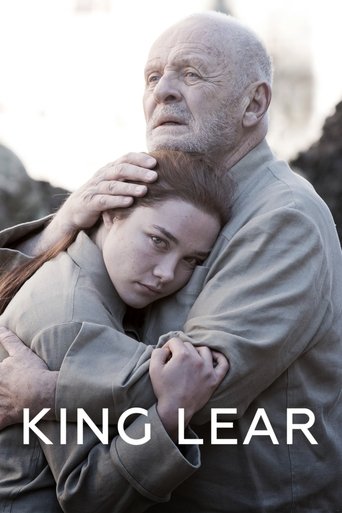
The recent BBC/Amazon adaptation of King Lear featuring Anthony Hopkins and Emma Thompson was pretty good. Worth watching for sure.
The interesting point underlying this rather silly discussion:
The genre of "tragedy" is nearly forgotten today, while having been extremely popular throughout history.
In most modern fiction we have a hero which is supposed to be virtuous and sympathetic ("likable"). If they have flaws they will either be insignificant and endearing, or the hero will overcome these flaws through the arc of the story. The villain is the antagonist in the story, and is a bad guy, but is eventually defeated by the hero through the strengths of the personal qualities of the hero. The hero is often a "nobody" in the beginning but achieves some respect and status at the end, while the bad guy gets justly punished for his evil deeds.
A tragedy is a completely different genre. In a tragedy we have a great person which is brought down by destiny and their own flaws. The protagonist of a tragedy is not supposed to an ideal of virtue. The author of the article seem surprised that Hamlet is not idealized but rather acts both stupidly and unfairly. But look at the other tragedy protagonists - Richard II, Richard III, Macbeth, Othello, King Lear, Romeo and Juliet. They are all severely flawed and make disastrous mistakes. We are supposed to empathize with these characters, not sympathize.
On the other hand the they are not getting "justly punished" either. Richard III is clearly an evil man, but Othello is the manipulated victim. Romeo and Juliet is not doomed through their own actions but through the destiny of their families which they are not able to escape. And poor Ofelia. A tragedy is not moralistic in the way that everyone get their just desert - destiny can be completely unfair.
So how could anyone designate Hamlet as the "worst villain" compared to someone like Macbeth or Richard III? Probably because the writer thinks Macbeth and Richard III are supposed to be "bad guys" but Hamlet is supposed to be a "good guy", and his flaws therefore are less acceptable. E.g if a bad guy is sexist, we consider it consistent with his badness, but if a good guy is sexist we consider it as if the author condones sexism, which is more problematic. But this is reading Hamlet if it was a Hollywood movie, not a tragedy.
So why have tragedy gone out of fashion to the extend that a person writing about Shakespeare does not understand the genre? Probably because in modern society we believe in meritocracy and the pursuit of happiness. We are supposed to take control over our own destiny, and so cannot believe that we have flaws which cannot be overcome, or in an unfair destiny which we have no say over.
Thanks, and good to hear from someone else who appreciates Kurosawa.
It's hard to believe the similarities between Ran and King Lear are coincidence. It's not just the plot but many elements of the story, too. Also, Kurosawa based other films on Shakespeare plays.
Wikipedia, FWIW, says he started with a Japanese story and incorporated King Lear "after he had started pre-planning".
Every subset of piracy is by definition piracy. But if you mean what kinds of things I think shouldn't count as piracy even though they are illegal in the U.S., here are some examples:
1. Posting a link to a web page that contains a link to a torrent that contains directions for downloading a song that was copied without permission.
2. Breaking the DRM on an e-book, song, or video stream so that I can enjoy it on another device that I own. I bought the song, goddammit. I should be able to listen to it whenever and wherever I want.
3. Copying a book, song, film, or game whose original author has been dead for 20 years, provided that no publisher, record company, or film distributor has obtained from the author the right to print or distribute the work commercially. In other words, the work is out of print.
4. Copying a work whose copyright owner appears to have no intention to license his work in your country anytime soon. This is less of a concern in the U.S., but a huge concern in the rest of the world. You can't lose any profit here if you have no intention to make a profit here, can you?
5. Creating a derivative work (e.g. YouTube remix) that cannot reasonably be expected to eliminate a person's desire to purchase the original work. Nobody who sees a YouTube remix of 90 seconds of excerpts from Inception and thinks it's cool will then think, "Hey, that's enough Inception for me. No need to go see the actual movie."
The whole point of copyright is to encourage creative endeavors by allowing creators to have a monopoly over the distribution of their works for a limited time. Therefore, any behavior that does not hurt the creator's actual (not hypothetical) profits should be permitted by default. So if the causal link between my action and loss of profit is really sketchy (#1, #5), or if I have already paid the creator (#2), or if the creator clearly cannot expect to derive any monetary benefits from my consumption of his work (#3, #4), the whole rationale for copyright protection falls apart.
Just the other day, I read somewhere that Shakespeare wrote King Lear (one of his best works) about a decade after seeing, and even possibly acting in, a similar play staged by a group that would later become his major competition. Some of Shakespeare's other plays were also based on stories that were published only a few years previously. Any law that would have made it illegal for Shakespeare to adapt these works into his masterpieces, I think, has absolutely no reason to exist at any time or place.