 Hacker Cinema
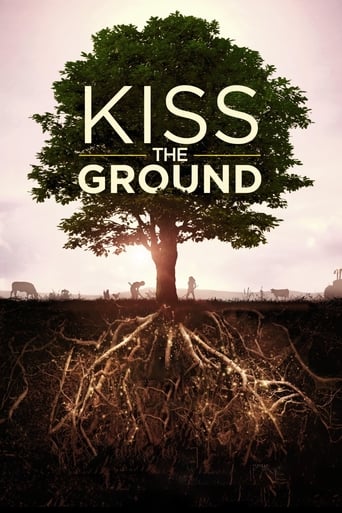
Kiss the Ground
2020 · Film · documentary · 85 min
Directed by Rebecca Harrell Tickell, Josh Tickell
Sheds light on an alternative approach to farming called “regenerative agriculture” that could balance our climate, replenish our vast water supplies, and feed the world.
7 positive1 negative2 neutralfrom 10 commenters
Where to watch
No streaming data for this title.




14 comments on Hacker News
I've seen suggestions that livestock can actually be a key component to carbon sequestration, if done correctly. I think it was mentioned in the documentary Kiss the Ground, narrated by Woody Harrelson, but I may be wrong. I believe the gist was that no-till farming and managed grazing helps to save the topsoil, sequester more carbon dioxide, and make something like cattle farming effectively carbon-negative (ie, they're actually helping to mitigate climate change). I'd recommend watching if you haven't, it shows some compelling examples such as a farmer who's the only one in his area farming this way, and he's also the only one who's having successful harvests while being environmentally conscious.
Also, farmed livestock don't automatically exist in a "living hell". Factory farms, yeah, but a properly-managed ranch should have happy, healthy animals.
Good documentary about this issue on Netflix: Kiss the Ground (2020)
https://www.netflix.com/title/81321999
It has some striking pictures of two farm fields side by side.
One supports diverse plant life and produces nutrient-rich food. The plant roots prevent erosion, and retain water. The soil is rich and black. It's "regenerative".
The other has brown, dry, dead soil. It's tilled and irrigated and sprayed with chemicals. It grows a single crop, a monoculture.
Multiply that by a hundred years and thousands of consolidating mega farms all over the world, and you have a huge amount of erosion
---
This problem has been well understood for decades (and by other civilizations for centuries), but is repressed / conveniently ignored by a wealthy, government-subsidized food industry
Here's a 2012 documentary about a 1994 project in China to restore degraded / desertified land, and it shows how poor entire states become when the soil is poor (which I suppose is not unlike the American midwest!)
https://www.youtube.com/watch?v=bjLV_aVRUmQ
https://rethink.earth/turning-desert-to-fertile-farmland-on-the-loess-plateau/
Chinese land has supported agriculture way longer than American land, and they have way more people, so they have these problems sooner
The US is going to get there
This reminds me of a documentary I recently watched. I don't have the domain knowledge to judge the practicality of its suggestions, but I found it interesting. Perhaps someone else here can offer some insight?
Kiss The Ground (2020)
https://www.netflix.com/title/81321999
https://www.imdb.com/title/tt8618654/
Based on the title, I assume this web site is related:
https://kisstheground.com/
I really liked this documentary!
Kiss the Ground (2020) https://www.netflix.com/title/81321999
Some striking pictures of two fields next to each other, and really inspiring grit by intelligent farmers
Great topic! I will be reading part 1 as well. I just watched "Kiss the Ground" on Netflix, a 2020 documentary about regenerative agriculture.
https://www.netflix.com/title/81321999
Lots of smart people interviewed there. The side-by-sides of the industrial farm and regenerative farm were striking.
And the demo of the egg might convince a few people.
During the pandemic I tried to get about 50% of my calories from the farmer's market, and I'm hoping to keep that up after moving.
Anyone care to comment on the Netflix documentary "Kiss the Ground" ?
This myth is pedalled strongly in the recent documentary Kiss the Ground (on Netflix) with Woody Harrelson. It seems that this is Big Ag’s latest attempt to explain why meat eating can be good. It is the only documentary you’ll see about climate change that makes you feel “this is probably going to be OK” which I don’t think is the right sentiment.
We have solutions to this for most (maybe all) contexts, at least as far as agriculture is concerned, in regenerative agriculture[0]. It requires a paradigm shift from the dominant type of agriculture taking place in the US and many other parts of the world, but it is not only better for soils and ecosystems – it's probably much better for our health as consumers, potentially more profitable for farmers, and can have an enormous positive impact in reigning in climate change.
It can seem too good to be true, but consider that when we mess with one aspect of nature by say, growing mono-culture crops rather than poly-cultures, we end up needing to intervene in many other aspects of ecosystems. The choice to annually till fields and grow acres upon acres of single crops year after year means we also need to recreate (poorly) natural systems of fertility (fertilizers), competition defense (herbicides), pest defense (pesticides), and disease defense (fungicides).
This model has other negative externalities as well, such as soil erosion, poor natural water infiltration and holding capacity, leaching of fertilizers and *-icides into surrounding areas and bodies of water which interrupt natural processes and are detrimental to life and health elsewhere, poor carbon sequestration, etc, etc.
The core principles of regenerative agriculture are to mimic nature and take advantage of natural processes rather than fighting them at every step, and to avoid intervening whenever possible. In the same way that the fastest and most maintainable line of code is the one you don't have to write, the cheapest and most effective agricultural practice is the one you don't need to do.
For those interested in a deep dive with a farmer from North Dakota who is very successfully putting these ideas into practice, see Gabe Brown[1] (who I first heard about here on HN, and for which I'm very grateful). If you're interested in agriculture, farming or even just gardening, I highly recommend watching the whole video. For a higher level and more accessible take, check out the documentary Kiss the Ground[2].
I've been trying to put these ideas into practice in my own ~100sq ft of growing space in NYC and, while it's still early in the growing season and hard to distinguish variables year-to-year, my garden is looking dramatically better this year[3] than at the same time in years past. Some of it for sure is a better sense of timing on my part and early warm weather here, but there are a lot of promising signs and I'm looking forward to seeing the state of things towards the end of the season when last year I had lost most of my tomato plants to pest pressures.
[0] https://en.wikipedia.org/wiki/Regenerative_agriculture
[1] https://www.youtube.com/watch?v=ExXwGkJ1oGI
[2] https://kisstheground.com/
[3] https://imgur.com/a/ybquJIX
Edit: The article specifically mentions regenerative agriculture, but says "pesticide companies know that these practices are often accompanied by increased pesticide use." I think it's a misnomer to call something regenerative agriculture when pesticide use is even higher than in conventional agriculture.
Regarding nitrogen fixation I recommend watching "Kiss the Ground Film Trailer (2020)" documentary ...
I saw that Netflix documentary "Kiss the Ground" which kind of claimed the same.
I hope it's true, I didn't do much further research on it, but it gives me some hope that we can fight climate change and be more robust against crop failure at the same time.
Indigo | Sr Engineer, EM, Sr PM | Full-time | REMOTE PREFERRED | https://www.indigoag.com/join-us
===========
We're fighting climate change by building better apps for farmers and the agricultural economy. Our farmers are able to produce better quality crops with fewer resources and less land. if you haven't watched the new Netflix documentary Kiss the Ground you should check it out because it goes over regenerative agriculture really well and describes loosely the kinds of things we try to promote through our software.
If you want a mission you can tell your grandchildren about to literally save the world from climate change then this is your calling.
Our stack is JavaScript (React, Apollo, Node) and Python (Flask).
We're a Unicorn company:
https://www.builtinboston.com/2017/09/26/agtech-startup-indigo-boston-tech-unicorn
We work on the most under-hyped sector in startups:
https://stateofstartups2019.firstround.com/
CNBC named us the Most Disruptive Company in the world, beating out Flexport, Airbnb, and other companies you know. We're in the top 5 2 years in a row:
https://www.cnbc.com/2020/06/16/indigo-agriculture-disruptor-50.html
And our big climate goal is to use regenerative agriculture to sequester 1 TRILLION tons of carbon from the atmosphere:
https://www.indigoag.com/the-terraton-initiative
Sr Software Engineer: https://boards.greenhouse.io/indigo/jobs/2789228
Sr Engineering Manager: https://boards.greenhouse.io/indigo/jobs/2796742
Sr Product Manager: https://boards.greenhouse.io/indigo/jobs/2288941
Indigo | Sr Engineer, EM, Sr PM | Full-time | REMOTE PREFERRED | https://www.indigoag.com/join-us
===========
We're fighting climate change by building better apps for farmers and the agricultural economy. Our farmers are able to produce better quality crops with fewer resources and less land. if you haven't watched the new Netflix documentary Kiss the Ground you should check it out because it goes over regenerative agriculture really well and describes loosely the kinds of things we try to promote through our software.
If you want a mission you can tell your grandchildren about to literally save the world from climate change then this is your calling.
Our stack is JavaScript (React, Apollo, Node) and Python (Flask).
We're a Unicorn company:
https://www.builtinboston.com/2017/09/26/agtech-startup-indigo-boston-tech-unicorn
We work on the most under-hyped sector in startups:
https://stateofstartups2019.firstround.com/
CNBC named us the Most Disruptive Company in the world, beating out Flexport, Airbnb, and other companies you know. We're in the top 5 2 years in a row:
https://www.cnbc.com/2020/06/16/indigo-agriculture-disruptor-50.html
And our big climate goal is to use regenerative agriculture to sequester 1 TRILLION tons of carbon from the atmosphere:
https://www.indigoag.com/the-terraton-initiative
OPENINGS: https://boards.greenhouse.io/indigo/jobs/2300473 | https://boards.greenhouse.io/indigo/jobs/2317536 | https://boards.greenhouse.io/indigo/jobs/2288941
Two documentaries - Kiss the Ground and Biggest Little Farm are probably a good jumping point.