 Hacker Cinema
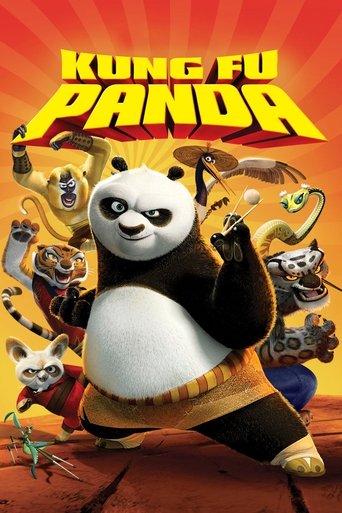
Kung Fu Panda
2008 · Film · 90 min
Part of Kung Fu Panda Collection
Directed by Mark Osborne, John Stevenson
Chosen by prophecy but doubted by all, Po is an unlikely choice for the mystical title of the Dragon Warrior—a clumsy panda thrust into the world of kung fu as a deadly enemy threatens the Valley of Peace. Under reluctant guidance by Master Shifu and the Furious Five, Po must embrace who he is to unlock the power that no scroll can teach.
12 positive3 mixed21 neutralfrom 36 commenters
Where to watch
No streaming data for this title.
40 comments on Hacker News
I heard that game is great! This discussion reminds me of this video: https://www.youtube.com/watch?v=tCCRuUlJ_nA
It basically asks "Why can't China make a movie like this?" Kung Fu Panda was a love letter to Chinese culture, and it connected with people worldwide.
I think it comes down to government censorship. Art is expression and unapproved expression is seen as a threat to a dictatorship.
It makes me sad to think of all the Chinese art we have missed out on because of the insecurity of a government.
Yup. Even if you only look within a relatively small category of films one per year can miss a bunch. For example, consider the category of animated feature length films released after 2000 in the US, and pick one per year by picking the winner of the Academy Award for Best Animated Feature.
In 2001 you'd miss Monsters, Inc. because of Shrek.
In 2002 you'd miss Lilo & Stitch because of Spirited Away.
In 2004 you'd miss Shrek 2 because of The Incredibles.
In 2005 you'd miss Howl's Moving Castle and Corpse Bride because of Wallace & Gromit: The Curse of the Were-Rabbit.
In 2008, no Kung Fu Panda because of WALL-E.
In 2009, no Coraline or Fantastic Mr. Fox because of Up.
In 2010 you'd miss How to Train Your Dragon because of Toy Story 3.
In 2011 no Kung Fu Panda 2 because of Rango.
In 2012 no Frankenweenie, ParaNorman, The Pirates! Band of Misfits, or Wreck-it Ralph because of Brave.
In 2014 no How to Train Your Dragon 2 because of Big Hero 6.
2015 no Shaun the Sheep Movie because of Inside Out.
2016 you miss Kubo and the Two Strings and Moana because of Zootopia.
2019 No How to Train Your Dragon: The Hidden World because of Toy Story 4.
2021 you'd miss Raya and the Last Dragon and Luca because of Encanto.
Most of the winners are good...but if you just put all the above mentioned films in a pool and asked most people to pick their top 14, most would have a lot of films on their list that were not among the winners of the aforementioned years.
> The article explains why kung fu panda is a great movie by starting with a quote highlighting the pandas desire to break away from expectations to pursue his passion. By the end of the article, there’s a quote about illusion of control. It’s contradictory
I think the "desire to break away from expectations" and the "illusion of control" are not contradictory because they represent different struggles. The former is a struggle within, the latter is a struggle against the world. Understanding for yourself what you want to accept from the larger society, the expectations, is an inner struggle. Understanding that you have little control over that society, over life itself, is an outward struggle that doesn't have to consume you if you let go of the illusion of control.
The first one is about choosing what to focus on, the second one is about choosing to be at peace with that which you cannot control. These two work in tandem and are not contradictory.
Description of working on Kung Fu Panda from Dan Harmon (Community, Rick and Morty):
> My hats off to anyone that can write a Dreamworks Animation film. They have a unique process.
> First they storyboard the entire film. That is the first step. Not kidding. No writers, no script, just a story, and an entire film drawn on pieces of paper.
> Then Katzenberg watches an animatic of the boards and says, surprisingly, "this needs a lot of work. You have a month."
> Then they hire their first writer. And spend that month changing as much of the storyboards as they can, which is about 20 to 30 percent. If the 30 percent change isn't the right kind of change, people get fired. Maybe the director, maybe the writer, maybe both…
> I came in about four writers into the process. It's kind of hard to write a "better" scene than the last writer when the rules are that you can only change 30 percent of each scene or completely change 30 percent of the scenes, per Katzenberg screening. So, for instance, in this scene, the panda comes up a flight of stairs carrying a bucket of water, slips on a banana peel, says something to two geese and does an air guitar. The good news? There can be anything in the bucket. Your mission: make the movie better.
https://www.avclub.com/hilarious-things-to-put-in-kung-fu-pandas-bucket-1798214269
> I cannot understand why movie that attempts to reflect as much Chinese culture as possible (excluding decorating everything with Dragons, which is a secret Chinese symbol and not used for decorations - even in the biggest Chinese movies you won't find too many Dragons) added this insult.
Kung Fu Panda is a movie made by Westerners, for Westerners, about the cultural zeitgeist of Asian martial arts films and their common tropes as interpreted by Westerners, for whom the distinction between Japanese and Chinese martial disciplines isn't really relevant. Dreamworks didn't add "ninja stars" as a sly insult to Chinese culture, they added "ninja stars" because "ninja stars" are a common element in the films being parodied.
I mean, it isn't a documentary about Chinese history, it's a comedy with talking cartoon animals. Get over yourself, sheesh.
"The Kung Fu Panda movies focus on moving away from the tradition of Confucianism and moving towards the Daoism ideas of doing what feels natural."
I haven't watched the movies, but it seems Panda-Daoism happens to conform to Hollywood's western individualist thought and therefore predictably "wins". I'd love to watch or read something that lets the Confucianist be the deeper truth, for a change. Do you happen to know of anything?
I suspect there are is quite a bit of wisdom in there worth exploring, and wouldn't mind to be confronted with a stronger dose of "different" once in a while.
I am half Chinese and a martial artist (northern shaolin kung fu). I'm also a huge fan of philosophy as expressed via animation or science fiction.
When I saw Kung Fu Panda in the theater, I was impressed with how a mainstream American animated film captured the subtle aspects of my culture. KhoomeiK gets into the details below (I would add Buddhism to Daoism and Confucianism, but that's minor), but the general stoicism expressed by the characters (except Po) is the environment I knew as a child.
Of course Mulan had come out before this, but Mulan was more focused on the narrative and themes around the protagonist. KFP has an ensemble cast beginning-to-end, which allowed for a broader exploration of the philosophy. Each time two characters interact, you get some additional debate that paints a broader picture, leading to the amazing quotes in this article.
At the time, there were even articles about how surprisingly successful it was in China despite being made in the US about Chinese philosophy [1]. You could argue this kicked off what has now become a much larger Chinese film industry.
I'll add from a strictly technical standpoint, the subtle animations for the martial arts are superbly correct. The different animals (Tiger, Crane, etc) are explicit Kung Fu styles. The stances, forms, weapons and training they show are really exact. There's a scene where Shifu corrects young Tai Lung's stance with a stick. The stance is real down to the feet placement in the animation (bow and arrow stance), and in traditional training they do correct you with sticks.
I'll end with one last anecdote: In KFP 2, there's a scene where Tigress says she learned punching "hard style" by hitting an ironwood tree for 20 years. It's written as a joke, but I actually had a Kung Fu instructor who trained that way in real life. Now you train on progressively harder surfaces for punching over a period of 7 years or more, but when he started in the 80's you apparently did it on trees.
[1] https://www.washingtonpost.com/wp-dyn/content/article/2008/07/11/AR2008071103281_pf.html?utm_source=reddit.com
I find that western culture emphasizes the importance of agency at the expense of community. Kung fu panda, and most animated movies are good examples of where we see agency exalted as a desirable trait, and acts of rebellion are portrayed as “brave.” While rebellion is a necessary part of growing up, it is merely a manifestation of becoming comfortable with one’s agency in the world and nothing more.
The article explains why kung fu panda is a great movie by starting with a quote highlighting the pandas desire to break away from expectations to pursue his passion. By the end of the article, there’s a quote about illusion of control. It’s contradictory, and ultimately I think we’re ingrained to favor sentiments of agency and discount any notion of loss-of-control which is a shame.
Societies are created by individual pursuits towards “happiness.” I submit that societies crumble because of the same forces. By prioritizing individualistic endeavors, and cherishing agency, we fail to account for the need to compromise, and collaborate to fulfill societal duties (whatever those may be in any given time)
First, I want to say I really like Kung Fu Panda... now.
In particular, I really like the 2D intro (I wish the whole movie was drawn in that style, which reminds me of the awesome Samurai Jack), and also Tai Lung's escape is a masterpiece of foreboding and action. This is a credible villain that everyone fears, and he quickly demonstrates why.
That said, back when it was released I was training in kung fu and some of the message of "the untrained newcomer is better than the devoted pupils" felt irritating to me. They've been training hard for years, they are pretty good, but the movie effectively tell them: you're not the chosen ones, let's pick someone who's never trained instead.
This is a frequent Hollywood trope that I always find annoying, The Newcomer (usually a child) Who Trumps All Experts. I understand why it exists: the novice newcomer serves as the point of view of the audience. But it's still annoying.
I totally missed out the Kung Fu Panda "event" when it was released and I just watched it with my son some weeks ago, choosing it randomly on Netflix, remembering myself that i heard it was good. I was just expecting some good Dreamworks blockbuster.
Well, I was mind blown. The first movie is a masterpiece, the trilogy is really solid. It's pretty deep, entertaining, fun, and beautiful and it carries a lot of interesting messages. I loved it.
The climactic wisdom in Kung Fu Panda is a trope from Dumbo [movie about elephant, 1941].
An object believed to be magic, giving abilities to the possessor, turns out to be just a prop. It's all in you, you just have to believe in yourself.
Sure, but Pixar / Disney make their movies in a way that the kids have what to giggle at and adults are given some food for thought (or emotions). I find that formula to have worked with crushing success in Kung Fu Panda parts 1 and 2 in particular. Also Megamind.
Great article! Kung Fu Panda remains in my memory even so many years after I've watched it because of its memorable quotes, but also because of the tragic and relatable motivation of its villain (Tai Lung). I've always found the exchange between Tai Lung and Shifu towards the end of the film to be profoundly sad, partly because of the great vocal performance by Ian McShane:
> Who filled my head with dreams? Who drove me to train until my bones cracked? Who denied me my destiny? [...] All I ever did, I did to make you proud. Tell me how proud you are, Shifu! Tell me!
> I have always been proud of you. From the first moment, I've been proud of you. And it was my pride that blinded me. I loved you too much to see what you were becoming, what I was turning you into. I'm sorry.
There's also brief moment where Tai Lung's facial expression changes to hint that he took the apology to heart. I'm not used to seeing that amount of depth in kids' films!
Fun fact: this movie sparked a huge cultural debate in China because of how accurate to Chinese culture it was. The center of the debate was the perception that Westerners were better at making a movie with accurate Chinese cultural elements than the Chinese themselves.
https://www.reuters.com/article/us-china-film-panda/kung-fu-panda-prompts-soul-searching-in-china-idUSPEK34047220080705
Good animated movies / cartoons can be more deep and existential than live-action, much like how a Picasso painting can more deeply reveal the secrets of shapes than many photographs.
I don't think Kung Fu Panda is particularly deep, but probably is deeper than a lot of other Hollywood films. I'd say the deeper animated films I've seen are Secret of Kells (largely an adventure story, but very in depth with regards to dark-age Irish history/legends/mythology).
There are a lot of in-depth Anime movies, hard to pick anything in particular that stands out. Tokyo Godfathers, and Wolf Children, probably affected me emotionally the most (despite being mostly mundane situations). I think a lot of the more sci-fi / dream / supernatural stuff loses points due to technobabble (Ghost in a Shell, Evangelion, Paprika), but these are also deeper movies than typical.
Tokyo Godfathers / Wolf children manage to be deep about a relatively mundane subject. Homeless people for Tokyo Godfathers, and Wolf Children is basically a simple "raising a young girl / young boy" story, with the wolf-myth just largely representing the uncertainty that all mothers face when raising kids for the first time. Despite being about mundane subjects with only the barest of myth/sci-fi/fantasy in it, these movies seem to discuss the human condition better than many other films (even contrasted to other anime films, like Evangeleon)
I love Kung Fu Panda! It secretly became my favorite movie. Secretly, because it wasn't until years after I'd seen it that I realized how much I liked it compared to... every other movie.
I think this argument is overstretching into a political argument. The live action Mulan movie is consider a flop in China. The Chinese audience hate it. It is more successful in Singapore and Saudi Arabia. Disney remove one of main major male character to be aligned with the MeeToo movement. For the Animation version the Chinese complained for their foreign looking character and it is too different from myth. China love Kung Fu panda. The find kung fu panda show a sincere love to Chinese culture without over trying too be a chinese.
It's also way easier to have "good colors" (in a color theoretical sense) this way, and achieve a coherent and consistent look throughout the movie. It's thus one of the best ways to keep budget down, as it will hide a lot of issues you'd have while filming, while generally requiring less work. I believe it to be an important factor since full 3D movies have excellent color comps --see for instance Nathan Fowkes' works. (as an side, in the opposite direction, I remember Kung-fu Panda having pretty good colours, yet I found it a bit tiring to watch.)
> Jeff Katzenberg, the co-founder, has been 'making content and selling to kids' for 40 years to the tune of literally Billions. Star Trek films, The Little Mermaid, The Lion King, Shrek, How to Train your Dragon etc. etc. - just huge, monster titles.
My argument against this point is simple: few of those were original content conceived by Katzenberg/DreamWorks/Disney. They were existing stories (most already successful as books). The only things I can see in his filmography that are possibly original and hugely successful are Star Trek: The Motion Picture, Kung Fu Panda, and Madagascar, Road to El Dorado, and _maybe_ Chicken Run.
Jeferry Katzenberg is way way overrated.
I believed the shtick about him being behind Disney's animation success. I held Dreamworks Animation, admittedly the buyout was a fair price, but he got paid a ton of money for fairly mixed performance. Shrek, Kung Fu Panda definitely decent franchises but he piled the profit from these films into a ton of shit that didn't work (and his own pocket, somehow he is a billionaire).
But yeah, this had failure written all over it. I think the concept is basically fine...you don't know until you try it. But pouring a billion dollars into this was fucking lunacy (and the fact that Katzenberg invested too, shows that he is genuinely just not very good at his job). Like you prove the concept with far lower levels of capital...the issue was that the product was dogshit, not that you needed a billion dollars to make it work.
That's great! I'll be sharing that site with my homestay family, who have kids aged 6 and 9. On Monday this week I asked the older one to read a Wikipedia list of Disney films and Dreamworks Animation movies and here's the list she made, which you can compare with the ones on your site:
Alice in Wonderland; Toy Story 3; Incredibles; Pinocchio; Lion King; The Tale of Despereaux; Winnie the Pooh; Maleficent; Cinderella; Frozen; Frozen II; Moana; The Santa Clause; Coco; Pirates of the Caribbean; The Princess and the Frog; Brave 2012; Beauty and the Beast; Born in China; The Boss Baby; Abominable; Trolls World Tour; Gift of the Night Fury; Shrek (all); The Grinch; Book of Dragons; Kung Fu Panda; Puss in Boots; Dawn of the Dragon Racers; Marooned ; Prince of Egypt; Peter Rabbit; Aladdin 1992; Aladdin 2019; Shark Tale; Wallace and Gromit; Chicken Run; Bee Movie; Turbo 2013; Home 2015; Captain Underpants; Tangled 2010; Harry Potter; Despicable Me; Despicable Me 2; Minions; The Secret Life of Pets; The Little Ghost; Waking Sleeping Beauty; Cleopatra in Space; My Neighbour Totoro
Somewhat agree. They can dominate simple things with shear quantity alone. “Big data” is truly big in China. Quality, however, is still suspect. For example, from 10 years ago: https://m.chron.com/news/nation-world/article/Chinese-ask-Why-didn-t-we-make-Kung-Fu-Panda-1596753.php
Chinese movies have gotten slightly better, like this year in 2019 having some blockbusters - but not international blockbusters.
Another data point on the quality front is the struggle of China being able to produce reliable jet engines. (Google it, recent news)
A moderately successful sequel to a highly successful original could underperform that original, but still outperform the average original.
If "Kung Fu Panda 1" makes $273 million and "Kung Fu Panda 2" makes $187 million that's lower - but higher than "Pokemon: The First Movie" which only made $153 million.
It's not about culture but about traditional versus modernity. There are lots of philosophers who wrote about this. To give some examples:
- Ken Wilber's Integral philosophy attempts to bridge "soul and sensibility". It includes a discourse on modernity and how it breaks with tradition, how post-modernity is not the answer. He pulls in work from other philosophers, one idea being that modernity breaks the Great Chain of Being.
- Christopher Alexander, the architect who developed (with collaborators) the idea of pattern languages (which later directly influenced the schools of object-oriented patterns and human-interaction UX design) originally developed the pattern language that ends up incorporating traditional modes of design. That is, by creating a pattern language where it is impossible to create a bad, incoherent design, and is simple enough for end-users to use, you end up with design that is always contextually appropriate and sensitive to local community values while adhering to global principles discovered through modernity.
He then went on to develop the ideas around "centers", and "centers of centers". (With "centers of centers" having a parallel with Wilber's Integral philosophy, or Koestler's work on holoarchy).
This is no longer about the "Western" world or "Western values". China, for example, is going through a transition which struggles with modernity vs. traditional. My favorite example is the discussion by the Chinese elites about the film Kung Fu Panda.
DreamWorks Animation uses RHEL exclusively for production. That means all your favorite movies such as Kung Fu Panda, Madagascar, Shrek, How to Train Your Dragon were all made on Linux
Ninja edit to add high end software that runs on Linux that were used - Autodesk Maya, SideFX Houdini, Foundry {Mari,Nuke}, Pixologic ZBrush. This is in addition to the proprietary packages such as Premo (Animation) and Torch (Lighting)
First link is to the movie kung fu panda: http://www.trainer.ly/videos/31/kung-fu?activityId=33
Probably not that educational...
It's a really good exercise to hit Random Pages 10 times.
I tried it and mostly got vanity pages for people who did something, but didn't seem too important.
One I got is about the mayor from 1995 to 2001 of a Texas town of 75,000 people. I suppose it has some value to the people who lived in that town or need to research about it... but I can sympathize with the problem of trying to decide what is useful and what is not.
Another one is an article on the Tigress character in Kung-Fu Panda. I mean, sure, it was information, but the extent of its vitality to human knowledge and literature?
Another one is a 7th round hockey player from Canada...
I mean, should Wikipedia really keep track of all athletes, all mayors, and all characters in all movies?
I think it's a better idea to keep track of more permanent stuff and let fans of these athletes, mayors and cartoon characters make websites about them.
Wow that movie has a trailer that looks really good! So it's very obviously an almost direct copy of Kung Fu Panda, but they did put a lot of work in it. You can see it lacks some polish here and there, but on the whole I'm surprised at the quality of the graphics and animation.
I've been confused by Netflix's business strategy for a while. I'm not much of a business guy, so maybe I'm just missing something.
I've made do for movies with the channels that came along for the ride when I subscribed to the minimal cable TV package that got me the nerd channels (Science, Discovery, Nat Geo, History, and so on). I've got quite a backlog of movies I'm waiting for.
Recently, I caught a movie (How to Train Your Dragon) on TV that I liked so much that I simply had to go buy a copy on Blu Ray. This also necessitated buying a Blu Ray player. I picked a Blu Ray player that also plays streaming content from the internet and supports pretty much everything other than iTunes.
I then started researching the streaming services (both subscription and rental), seeing how well they covered the movies I'd seen in the last couple of months on TV (HTTYD, Star Trek, Kung Fu Panda, District 9, Watchmen, Shrek Forever After, Happy Feet, Tangled, Bolt, Despicable Me, Monsters vs. Aliens, Fargo, Fantastic Mr. Fox), as well as how well they covered movies still on my backlog, plus assorted movies I'd like to rewatch.
Here's what I found. Neither Amazon nor Netflix subscription streaming provided good coverage of the movies I'd recently seen, the movies on my backlog, or the movies I want to rewatch.
The streaming rental services were a bit better, but still missing a lot.
Netflix's disc subscription service, on the other hand, covered pretty much everything.
So here is where I get confused. Netflix seems to think their future is in their streaming subscription service. This seems to me to be a pretty risky basket to put all their eggs into, because it seems to me that Amazon will have an easier time fixing their weaknesses compared to Netflix than Netflix will have fixing their weaknesses compared to Amazon.
Amazon's weakness compared to Netflix is that Netflix apparently has more content (that's what people tell me, although for the movies I'm interested in they seem about the same). To fix that, Amazon just needs to make some licensing deals. They don't have to build out a lot of new infrastructure or enter a new line of business or anything like that. It's a "write a check" problem for them.
Netflix's weakness compared to Amazon is that Amazon subscription streaming is part of Amazon Prime--and there are good reasons to have Prime besides the streaming. I got it for the shipping savings, and I'm also enjoying the Kindle lending library. (Brick and mortar retailers, like Barnes and Noble, and Best Buy, seem to be doing their best to drive people to Amazon, and so I see Amazon Prime becoming more and more common--but this is best left for another rant).
This makes the question for a lot of people "Netflix in addition to Prime?" rather than "Netflix or Prime?". That's a much harder case for Netflix to make. As I said, for the movies I've checked there are very few on Netflix that are not on Prime--it would cost me less to simply rent those movies. As Amazon closes the gap on content, "Prime plus rental" will become a better choice than "Prime plus Netflix" for more and more people.
It seems to me that Netflix's best weapon against Amazon is their disc subscription service. It provides the most content (both recent and older). It provides the highest quality content. It provides extras (commentary, deleted scenes, and all the other nifty things that come on disc besides just the movie).
Yet Netflix treats their disc service almost as if it is an embarassment. There's no link on their main page for it. It only seems to be mentioned in their FAQ, where they imply that it is an add-on service to the streaming service, and give no link to details.
Thousands overall maybe, but the number of mass market films is in the hundreds.
I, personally, have a familiar definition of "mass market film". I grew up in a small town with about nine total screens, usually one movie per screen and one screen per movie. Figure they turn over 4 screens per week for new releases. That's 208 movies per year. You'd need 3-4 more doublings to get it over 1000, so it's pretty clear that "hundreds" is the better order of magnitude.
I picked a year at random: 2008. The following movies were all released in 2008: The Dark Knight, Wall-E, Iron Man, Slumdog Millionaire, The Curious Case of Benjamin Button, In Bruges, Kung Fu Panda, Gran Torino, Indiana Jones and the Crystal Skull, and Quantum of Solace. Your average moviegoer will easily remember more than "one or two" of those (though not necessarily the same ones).
So the proportion goes from two in a thousand to maybe five in 250, or from 1 in 500 to 1 in 50.
A new trying-to-be-hip library just opened up in my city. They do a pretty good job of it too. The theme seems to be "How well can we copy Barnes and Noble?" Not only does it include a small coffee shop, but they have a dedicated children's section that looks a lot like Barnes and Noble's (the whole fairy-tail etc. style with elaborate decorations). They even had an opening night where they had the local hit-music radio station came and hosted dance party, complete with neon lights, glow sticks and pounding music (no old lady saying "SHHH" that night).
They rent out conference rooms and have a large auditorium with a theater-sized movie screen. The last time I was there they were showing Kung-Fu Panda which attracted a decent crowd. It's one library that has changed with the times.
Cars and Cars 2 suffer from some of the same problems that Shrek 2 & 3 suffered from: creating a self-consistent universe based on adult puns based on characters of modern society.Unless it is done with restraint and real skill it soon behinds to feel insincere and contrived (see Sharks Tail, Chicken Run).
Toy Story & Shrek did something far cleverer. Shrek especially is smart, sophisticated humour for smart, sophisticated kids. The references are all from children's literature and culture. Kids know the references and are able to understand the clever puns.
Shreks 2&3 are dumb adult humour forced into the Shrek world. Many of the puns are above children's heads and are not sophisticated enough for the adult audience. Adding plot-lines about lawyers, unions etc just confuse small kids and leave adults slightly cringing.
Pixar and Dreamworks are at their best when they choose their target audience and focus on it. Toy Story & Nemo are for smart young kids; Ratatouille & The Incredibles are for smart older kids. Then enough is added for the rest of the family: everyone gets a clever joke every few minutes; the stories are understandable by all. Wall-E and Up are very adult in the big story (but full of great fun in the small story) I thought they were wonderful but I do understand your point (although they are I no way 'awful'—even if you are 5).
I'm not convinced that Pixar have mad a bad film yet. Cars grows on me the more I see it (and believe me if you have kids you end up seeing these films any times). Nemo (by far the funniest film Pixar have made) still makes me laugh despite having seen it 20+ times.
{I'm told that Cars 2 is relentless: too fast and too complicated for young kids, but as I haven't seen it I can't judge. The fact that I haven't seen it says something: I normally see every Pixar film the week it comes out.}
The problem that Pixar has had is that we have had to judge Pixar by Pixar standards as until recently no-one was making anything as good. This has now changed. Wonderfully for us Pixar now has serious competition. Dreamworks has made a number of films that are as good as Pixar's. Some of them are as good as Pixar's best: How to Train Your Dragon, Megamind, Kung Fu Panda. Walt Disney Animation Studios is back on form with Tangled (Monsters v Aliens wasn't bad either).
How to Train Your Dragon & Tangled are thankfully free of transfer-modern-society-into-cartoon-world puns. Instead you are given a detailed, self-consistent world that complements the story (rather than being the story). This is a very good thing—something I hope that Pixar will move back towards (although I don't hold out much hope for Monsters Inc 2).
"There is no secret ingredient" - Po from Kung Fu Panda. http://www.imdb.com/title/tt0441773/quotes
I was in China teaching English when the movie "Kung-Fu Panda" came out. I was surprised at the comments. Most people said something like "I liked the movie but it was unrealistic how easily Panda became a Kung-Fu master." I can't see people in North America coming to the same conclusion.
I think people in the "East" tend to know better than people in the "West" at just how much effort is required to become a master at something.
Actually, I thought I had added additional information about technical proficiency in that same post but I got it mixed up with something else I argued some weeks ago on here.
The only way to accurately compare the two would be on a technical proficiency and currently, Dreamworks edges out Pixar in that department, but by such a small margin that it's almost negligible.
If we were to do a year by year comparison, UP and Monsters Vs Aliens were very similar (although some of the lighting in UP was fantastic, Jeremy Birn does some great stuff, I've read his book, fascinating stuff)
Last year though, Kung Fu Panda was simply astounding from a complexity issue. Fur + Cloth and having cloth interact with that fur, especially when you're considering the fact that the character rigs have to do very complex manouvers to perform the kung fu moves... that's simply astounding.
Even moreso when you consider that when the cloth was interacting with fur, it would flatten it when it would move over, with the fur springing back up afterwards (eg, master shifu) - Cloth + Fur are typically the hardest things to do in 3D, so having both work, plus on the scale that some of the scenes did (the revealing of the dragon warrior + the crowd) shows just how amazing the film was.
There's a bit of the whole Dreamworks vs Pixar thing.
Ok here we go...
Pixar consistently produces a form of the art that is simply higher than Dreamworks can even approach.
The thing about that is, that the two studios produce films for completely different markets. Dreamworks focusses directly on producing films for children (with a few outliers) and Pixar focusses on producing films for everyone (with a few outliers)
Pixar's process is more story focussed than other studios, A typical Pixar film usually has a 4 year production cycle in which the first two of those are spent primarily on writing and rewriting the story to get the "feel" right. Even then, they have no problem with changing the story at the 11th hour.
Case in point - WALL-E's ending was originally very different with WALL-E originally saving EVE from the trash compactors (essentially larger versions of WALL-E for irony). After the film was complete and was screened in Portland, Andrew Stanton changed the ending to what it is today. The story flows better.
Compare that to something Dreamworks. Dreamworks focusses on making films which are more technically proficient and aimed at children (Kung Fu Panda was astounding from a technical standpoint and dominated the "Annies" last year, which is the animation industries version of the Emmys).
Dreamworks are more focussed on the business side, rather than the entertainment side of the process.
That's also why Dreamworks films are typically heavily backed by merchandising and advertising blitzes, because of this focus.
So it's difficult to compare the two, it would be like saying a Michael Bay film is comparable to a Tarantino film. The fact is, they have different markets and so approach the filmmaking process in different ways.
Nobody in their right mind would try and compare the two film styles.
Lastly, before you try and judge Dreamworks' animation pedigree, Jeffrey Katzenberg co-founded the studio and he was responsible for the classic Disney franchsies between 88 and 94 like The Lion King, The Little Mermaid, Aladdin and Beauty and the Beast (which I might add is the ONLY animation film EVER to be nominated for best film at the Oscars).
I think that the biggest difference between the two companies is that Dreamworks doesn't attempt to make lovable characters. Shrek in the original movie is an exception. They make identifiable characters, but rarely are their characters deep and human. Froo and I argued Kung Fu Panda versus Wall-E on IRC, if I recall correctly, and while I'm not nearly as knowledgeable about the animation world as he is, it's pretty hard to say that Jack Black in KFP is a more relatable character than Wall-E. Pixar makes people that you really feel like you know. Dreamworks is willing to make caricatures and as a result, their movies feel shallower from a story point of view. Even if Pixar follows a formula, it's a complex formula with deep permutations so that Mr. Incredible and Woody and Nemo's father and Wall-E are all very different people, even if the one recurring thread is that they all feel real to us.
This is actually the one problem I had with Annie Hall, which I saw recently for the first time: Woody Allen has a brilliant style, but the characters he made all seemed like caricatures, and so despite being a genius movie, I didn't love it. (I thought of this because back when I was a kid and there were two camps of children, the Ants kids and the Bug's Life kids, I was an Ants kid, thought Woody Allen in that was terrific, and thought the movie was stylistically and conceptually beyond Bug's Life, but going back to them I realize that Bug's Life, for all that, still has the more realistic characters, the ones that feel real, and so Ants's clever and detailed world falls apart at that one big seam.)
I still disagree with this :)
Well, I guess my argument is really based off watching all of the films from all studios with the directors commentaries turned on and taking notes of what they emphasise and then looking at all of the information in aggregate. There will always be cases where there are outliers.
I'm working on a version of a 3D animation startup of my own to apply with to YC later this year so I take notice of these kinds of things (and actually have many pages of handwritten notes when studying animation in detail as a hobby).
Anyway, that's neither here nor there
If you want to watch some good Dreamworks Animations, I would recommend the Madagascar's (very reminiscent of the traditional cartoon style, squash and stretch is prevalent in these films), Kung Fu Panda (visually stunning) and Monsters vs Aliens (just plain funny)
I think that can be said about most stories with a non-tragic hero.
Except that it's relatively unique to the animation field.
The thing is, Pixar's process is more story focussed than other studios, A typical Pixar film usually has a 4 year production cycle in which the first two of those are spent primarily on writing and rewriting the story to get the "feel" right. Even then, they have no problem with changing the story at the 11th hour.
Case in point - WALL-E's ending was originally very different with WALL-E originally saving EVE from the trash compactors (essentially larger versions of WALL-E for irony). After the film was complete and was screened in Portland, Andrew Stanton changed the ending to what it is today. The story flows better.
Compare that to something like Dreamworks or Blue Sky Studios. Dreamworks focusses on making films which are more technically proficient and aimed at children (Kung Fu Panda was astounding from a technical standpoint) and something like Horton Hears a Who or Ice Age are heavily stylised films.
Dreamworks are more focussed on the business side, rather than the entertainment side of the process.
I first saw Toy Story as a child. Looking back on it as an adult, I remembered that I had a pretty good grasp on the plot and characters as a kid, so I was assuming it had been a simplistic film. When I watched it again, I saw lots of things I didn't notice as a kid.
That's Lasseter's influence as one of the Pixar co-founders. This style has permeated throughout the whole studio. Creativity comes first at Pixar. Ironically, he was actually fired from Disney in the 80's for trying to introduce 3D to their production pipeline and Disney ended up buying Pixar for billions...
They've built up a pretty solid momentum now, and it would take a series of bombs (like Disney after the mid-90s) to shake it.
Funnily enough that's a result of Katzenberg leaving Disney after a disagreement with Michael Eisner (then CEO of Disney) and he ended up co-founding Dreamworks.
(Though I'm kind of on the fence about Cars.)
Yeah, each of the studios has those little outliers. Monsters vs Aliens has very many adult jokes in it that children just wont get. If you haven't yet seen it, go see it.
For example: This is a quote from one of the US Military Advisors says to the President in a secret strategic meeting to deal with a giant alien robot.
"We need our top scientific minds on this project... Get India on the phone!"
I absolutely laughed my ass off at that joke and I'm sure most people didn't "get it".
I was always told I was smart too ... and compared to my sister -- look at how hard she works! (I found out as an adult that she was always compared to me -- look at your brother, he is really smart! Now isn't that screwed up?). I was also exposed to enough kung-fu movies as a kid. You never see the "this guy has kung-fu because he is talented/lucky/athletic", and you always see "this guy has kung-fu because he perservered in his training". "Kung-fu" doesn't mean "generic martial arts", the way it is used in America. It means "skill accumulated over time". Even though there are American cultural overlays on top of the movies, Kung-fu Panda and Forbidden Kingdom, this "kung-fu" cultural value shines through. In each, the main characters has no kung, has no fu, and ends up with some.
My habit of procastination comes directly from "being smart". I've been able to do well on tests because during the test, I get this intense focus to do well within a time limit. Doing things at the last minute gave me the same kind of rush. If I did well, it validated that part of the ego. I was even aware of it, felt a bit silly, and went ahead and did it anyways.
I did find some ways to retrain this. I still procastinate, but I've been managing to get coding done -- I'm applying to YC Winter '09 with a prototype I've got up live two weeks ago. Here are some of the things I've tried:
(1) The most difficult part was taking action after making a decision. This is probably the biggest block ... you can think that you need to retrain your mind, or to get a "growth mindset", and your mind has been trained to think that as long as you think it, everything is OK. It isn't. As lame as it sounds, some of Anthony Robbin's "Personal Power" tapes work well. You start by doing some little things that you've been putting off, anything from taking out the garbage to even downloading the tools you need to get started on writing a prototype. The key is taking the action as soon as you instantiate the decision. The more you do that, the more your mind gets used to it.
(2) "Invest in loss". This is something that a martial arts teacher (Cheng-man Ching) said often. As it applies to fixed mind-set vs. growth mind-set, it means assuming that you already suck going into something. Over the past four or five years, my friends and I invite people out to our training group. We see a lot of newbies. No matter how physically talented you are, without training, you suck. There is no beginner's luck. Having some experience, I can feel when people get agitated by their suckage. They don't want to play anymore because it violates their image of themselves.
It takes some work, but it is doable -- you can learn to be comfortable with the uncomfortable feeling that you are not very skilled. It doesn't require you to go to some sort of martial arts bootcamp, it does require you to get your body moving ... which comes back to the first thing about taking action after making a decision.
(3) There are times when I get stuck during coding. Sometimes I need to refactor something, but I really don't want to do it. Sometimes I come across a choice between two architectural decisions. My habit is to stare at the screen trying to figure out the best way to proceed forward. I've noticed that it easily leads to distractions.
One of the key thing that appears in all forms of martial arts and fighting systems is the idea of slipping off the line of attack. Mentally, when I come up against a challenge, it feels like an obstacle in front of me. I want to go forward, but this annoying issue keeps coming up. I stop being able to see the vision -- that sense of awesomeness of the overall idea -- and trying to beat my way through it is painful. Even with the idea of "try harder", it is painful. What you want to do is slip off to the side, like dodging in side-scroller while continuing to go forward.
One way particular to my own martial arts training is to walk around in a circle while thinking of the problem domain, and then changing direction and going the opposite way. It is weird, but it always makes me feel confident enough to keep working, albeit from a different direction.
(4) Meditation. A simple practice of breathing and awareness. There's not much to it, but it clears the mind of baggage so you can move forward.
(5) Josh Waitzkin's book, Art of Learning has a lot more tips.