 Hacker Cinema
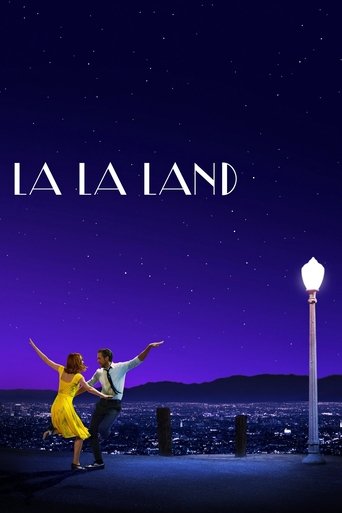
La La Land
2016 · Film · 129 min
Directed by Damien Chazelle
Mia, an aspiring actress, serves lattes to movie stars in between auditions and Sebastian, a jazz musician, scrapes by playing cocktail party gigs in dingy bars, but as success mounts they are faced with decisions that begin to fray the fragile fabric of their love affair, and the dreams they worked so hard to maintain in each other threaten to rip them apart.
4 positive1 negative2 mixed18 neutralfrom 25 commenters
Where to watch
No streaming data for this title.
26 comments on Hacker News
Selective memory. Plenty of movies do not require conflict before romance. La La Land, Being Again, Silver Linings Playbook, About Time, ... plenty of others.
> Communication failures like these make for good storytelling ...
No, they make for horrible story telling and make the movies feel fake and the conflicts contrived. It's bad lazy writing. Bad because it's fake. Lazy because the writer should have come up with an actually valid conflict.
I'm not saying I agree with the examples though. I didn't feel Good Will Hunting nor La-La Land were examples of this personally.
A California bias is not the same as being woke. 6 time Oscar award winner and 14 time Oscar Nominee film La La Land wasn't especially woke, but it was damn near manufactured in a lab to appeal to the exact sort of sensibilities that are held by Academy members.
The focus on careerism and social climbing, the nostalgia for an era of media since gone by, the melancholic reality of how damn near impossible it is to succeed as an actor or musician, these aren't woke ideas, but they do reflect the general sentimentality of the people in the greater LA area.
I don;t think so — it's just that if you have 100-ish years to choose from, this doesn't seem like a very even spread. To be sure, I would feather off anything too early — the silent era seems only interesting to film historians that want to see where the modern ideas of film began (example: "Battleship Potemkin" (1925)).
But at the same time, Hollywood does seem to have fallen into the trap of mediocrity for some time now — probably since the 1980's to be honest (having only gotten worse over the ensuing decades). "La La Land" was popular in large part because it was something of a throwback to 1930's Hollywood. Tarantino's success seems to stem from his mining of gritty 1970's Hollywood.
So why not go back and watch "Gold Diggers of 1937" for the "La La Land" stuff, or "Straw Dogs" (1971) to see what Tarantino is making homage to.
That list has Avatar and La La Land on it. It’s definitely not elitist!
There’s some real gems on lists like this but some of the older stuff would definitely be a slog for most people and would probably need to be put into context to make sense.
Recently I’ve engaged in a practice of just hitting play on any old movie on Prime with at least an actor or director or even studio I’ve heard of. Essentially any film from the 40s to the 00s that had a budget and was remembered enough to make it to Prime. It’s been quite rewarding, all sorts of hidden gems out there even from the 70s through 90s. Even the mediocre stuff from then is often more nuanced and creative than a lot what you get today.
> To me it is the same thing as the La La Land fiasco.
You mean the movie? What was the fiasco? I haven’t seen the movie but hear good things.
It's more complicated than that, though. If they did in fact use pirated content to train their models, that's almost certainly illegal. It's still not well understood whether they used illegal sources or not, and that should be determined in court.
Inference is where things get more muddled. If I download a pirated copy of La La Land, that's illegal. However, if I watch it and then explain the plot of the movie to you in detail, that's fair use. It remains an open question whether or not inference via an LLM represents fair use or not.
FWIW, it's not specific to her. https://en.wikipedia.org/wiki/La_La_Land_(disambiguation) lists it as a nickname for LA, https://en.wiktionary.org/wiki/La-La_Land#English gives a 1958 citation in TV guide, and it's the reason the 2016 movie "La La Land" got its name.
I tried to watch Tick Tick Boom for example, but it didn't resonate with me.
Additionally to the songs, La La Land has really great cinematography and I also liked that story arc. It's more movie with songs than songs in a movie.
Rename it to StretchGPT - below was for Superbad
La La Land: The rainbow emoji and cocktail emoji represent the colorful and musical theme of the movie, and the police officer emoji represents the main character's job as a jazz pianist who falls in love with an aspiring actress in Los Angeles.
We had that in the 1980s as well.
No-one remembers "The Brother from Another Planet" (1984) ... but everyone remembers "E.T." (1982). Similarly, the Marvel stuff will mostly shrink together into obscurity, while actual good movies (My money is on "La La Land" as the chick-flick musical and the "John Wick" Franchise as the action cornerstone, "Parasite" for the connoisseurs) will be remembered.
I can remember rolling my eyes at a writer using a mechanical typewriter decades after word processors had taken over. Did they thaw out of a glacier?
At the same time I love physical media. As a math professor I defend a widespread preference for blackboards over soul-sucking whiteboards, imagining that musicians will still play grand pianos in a century, and they'll still snicker over Ryan Gosling playing a toy piano under the spotlight in that classic movie "La La Land".
I've hoarded Hagoromo chalk; I'm the one with the chalk attaché case in [1]. I've always carried multiple grades of drawing paper, and I've worked through many hundreds of artist grade felt tip pens, scanning all my math notes for thirty years.
Then, pandemic. Just as World War 2 accelerated women in the workplace, the pandemic has accelerated the uptake of digital tools for visual presentation. To teach over Zoom, we needed to embrace drawing on a tablet. I understand that the pandemic radically accelerated similar trends in architecture.
The algorithmic possibilities of drawing on a tablet are truly addictive; returning to paper feels like returning to a mechanical typewriter. For my purposes, Concepts offers the most involving algorithmic experience; I wrote [2] to support my note taking and diagrams for papers. However, Notability offers the least friction. I can have the same psychological relationship to taking notes on my tablet as I had with phyical paper, with the benefits of algorithmic reuse. (Pushing the envelope exposes how inconsistently Notability handles implicit layers, but one learns to draw around this.)
In a few decades, after all living mathematicians have drawn on tablets since birth, math will be far more visual, conveying ideas with far more immediacy. Math communication is now still largely constrained by its resemblance to typeset prose. Ever leave a startup because reading your coworkers' code put you in "Just kill me now!" territory? I did. Mathematicians write the equivalent of bad code, rarely actually machine-checked, to formalize their ideas. Other mathematicians try to decipher this code, to reverse-engineer the ideas. We declare people who can actually do this as having a gift for mathematics. As I learn to teach combinatorics more visually, my classes swell with students who share my frustration.
I've come to realize this summer that I pretty much despise mathematics. I can't wait for the visual revolution. This revolution didn't take hold on physical paper; one needs a digital accelerant.
[1] https://www.youtube.com/watch?v=PhNUjg9X4g8 [2] https://github.com/Syzygies/concepts-artboards
I do find the thesis in the ending quite weak:
> For a longer time before the gritty period, we all dedicated ourselves to the idea that anything we’d acknowledge as very good had to be both serious and artsy. People really liked Good Will Hunting (see: very serious); it was also a good movie, so it won an Oscar. Zillions of people love movies like The Princess Bride and Happy Gilmore; it’s incredibly likely both dwarf Good Will Hunting in terms of total views, but you can’t even imagine a world where either could have possibly won an Oscar.
[...]
> This is a short article by my standards, but it does have me thinking: What kind of world could we actually live in, if we were willing to treat works of art made with the goal of making us happy as if they were important? What if we were willing to make them? We’ve seen what happens in a world where all the Oscars go to movies that make you cry, or that we pretend make us think even though they generally don't
There are plenty of widely acclaimed movies that can not be considered "very serious", picking some recent Oscar winners as examples with categorizations from wikipedia:
* Parasite ("black comedy thriller")
* Green Book ("comedy-drama")
* The Shape of Water ("romantic fantasy")
* Birdman ("black comedy drama")
* CODA ("comedy-drama")
* La La Land ("comedy-drama")
* Life Of Pie ("adventure-drama")
Are all those completely feel-good movies intended to make you happy? Maybe not, but still its not like happy/humorous/feel-good is completely disregarded category even among grumpy art critics.
> […] or you have designated Oscar-type fare, which as of late means something extremely depressing that says how bad humans are.
In the 2020/2021 season, the nominations included The Father about a man suffering dementia (from his perspective) and Sound of Metal about a drummer going deaf.
* https://en.wikipedia.org/wiki/93rd_Academy_Awards
For 2019, we had the best picture nominations include Ford v Ferrari, Little Women, and 1917:
* https://en.wikipedia.org/wiki/92nd_Academy_Awards
Previous to that, Bohemian Rhapsody:
* https://en.wikipedia.org/wiki/91st_Academy_Awards
Going back one more year, Dunkirk and Lady Bird:
* https://en.wikipedia.org/wiki/90th_Academy_Awards
Lastly for this discussion, Arrival, Hacksaw Ridge, Hidden Figures, and La La Land:
* https://en.wikipedia.org/wiki/89th_Academy_Awards
I think these are good counter-examples to your claim that only two types of movies being made.
The last Transformers movie was literally targeted at audiences in China. So maybe it's just market forces...
If you indicated that you want to see more minorities cast - then you have the option of going to see Moonlight, over La-la-land.
Why would the interactivity be limited to kids? I think the name is a pun on "La La Land", a musical film.
You even have movies promoting this lifestyle... La La Land anyone?
> I see this in the art scene. It's like the art-piece isn't enough for people. They want an artist's statement. A philosophy. Who made it, why did they make it, where did they make it. Tell me the 20-chapter story of your heroic struggle from ugliness to beauty...
This is also becoming more common in the film scene. The Revenant is a recent and big example of the phenomenon. People liked to talk about the grueling filming process, how all the artists involved broke their backs to make this movie, and I think it seriously altered how the movie was perceived, changing a perfectly fine movie to something somehow transcendent.
Another, smaller, example is Ryan Gosling in La La Land. Some people made it a point that he learned to play the piano for the bits on screen.
It's as if the off-screen authenticity alters the on-screen authenticity. (Whether this is true or not is up for debate, and has been since method acting's inception, if not before.)
This has turned into a discussion about First Man rather than the article, so I may as well contribute:
I think Damien Chazelle intended to frame the movie as a war movie, even toeing towards a parallel between the Apollo missions and the Vietnam War. The idea that we actively gambled with these men's lives, somehow collectively desensitized ourselves to human loss, that we are all boys pretending to have protocol- obvious parallels to war, in that a bureaucratic borg overlooks human lives in a competition the borg itself created.
But the thing is- its pretty hard to not lean into the inherent heroism of landing on the moon, especially since the studio clearly gave Chazelle a blank check to recreate the moon landing as immaculately as possible.
So its a little hard to parse the final message. The movie is the inverse of Apollo 13, pessimistic where 13 is optimistic, even though First Man is about the successful one. To some extent, Mission Control are the villains in this movie.
It isn't not going be a loved movie, like his last two (Whiplash and La La Land.) The characters are constantly aware of their mortal peril, which in turn makes them coarse and hard to like. But its such an interesting take on the Moon missions.
> Think about the films people will remember from the last decade: you won't find any Netflix films among them.
Films, maybe not. But House of Cards, Orange is the New Black, Stranger Things, Black Mirror and The Crown have just as much cultural significance as Hollywood movies. And if we expand to HBO, then we can call in Game of Thrones, which has had far more cultural impact than La La Land. This is related to a cousin comment of mine: films are no longer the most important cultural medium. Long-form shows with high production values are.
It's also worth noting that Icarus, which won the Academy Award for Best Documentary Feature, is from Netflix.
agree with you on alot of this, but:
> you won't find any Netflix films among them. But the cultural significance of films like La La Land, Star Wars, even the the Fast and the Furious franchise will outlive us all.
You also won't find the 'popular excitement' that is late-night tv guest appearances, supermarket checkout magazines, radio spots, entertainment news, social media 'influencers', and so on, reminding us of the 'significance' of the netflix produced items either..
when hollywood itself is determining what is culturally significant, and neflix is basically a 'rogue studio', this is hardly surprising..
also much less working class/rural/elderly people aren't plugged in to netflix, so you don't have the same level of 'total' market penetration either..
My experience is definitely different from normal because I live in Tinseltown a few blocks from one of the theaters where they hold movie premieres and from an Alamo Drafthouse, but I could never see Netflix replacing Hollywood.
The business models are fundamentally different. All Netflix cares about is eyeballs and giving customers the barest reason to continue subscribing. This means that they focus on quantity over quality, as evidenced by their last 3 years of films: each worse than the one released the week before it, with extremely rare exceptions like Beasts of No Nation and Mudbound. (It's curious that their films are so horrifically bad when their TV series are generally watchable, though Lost In Space and the recent seasons of OitNB and HoC suggest that the malaise affecting their film department has spread to the show department.)
Hollywood, for all the moaning about sequilitis and mass-market crap, at least makes crap that's good enough to draw people out of their homes, drive a few miles, and plop down a few dozen dollars for seats and maybe food. There's a strong incentive to maintain at least a minimum baseline of quality and a stronger incentive to make a commercially viable movie.
Think about the films people will remember from the last decade: you won't find any Netflix films among them. But the cultural significance of films like La La Land, Star Wars, even the the Fast and the Furious franchise will outlive us all.
Modern color treatment in film totally drives me crazy, independent of what it does to CGI.
It seems like every film coming out of Hollywood these days is processed exactly the same way:
* Crank down the low end so half the frame is solid inky black.
* Pick one or two key colors, and jack up their saturation.
* Desaturate everything else.
In other words, make the entire movie look like an over-dramatic poster for it. Throw any sense of naturalism or unique look out the door. Once you notice it, you see it everywhere. Here's the top live action movies of 2016:
Rogue One
Cyan and olive: http://www.ramascreen.com/wp-content/uploads/2016/04/Rogue-One-A-Star-Wars-Story15.jpg
Captain America: Civil War
Yellow and red: http://cdn3-www.superherohype.com/assets/uploads/gallery/civil-war-trailer-2-screenshots/cwttss03.jpg
Why they felt the need to make Cap's lip rosy red is beyond me. Even better is this shot:
http://www.theglobaldispatch.com/wp-content/uploads/2015/11/Captain-America-Civil-War-cast-photo-Renner-Johansson-Evans-Sebastian-Stan.jpg
This is a daylight shot. Look at how the characters are all squinting. Look at the big white fluffly clouds that should be diffusing the light and softening shadows. And yet, magically, all of the shadows are jet black and almost all of the color is gone.
The Jungle Book
Green and red (to draw attention to Mowgli):
https://www.moviedeskback.com/wp-content/uploads/2016/02/The_Jungle_Book_HD_Screencaps-23.png
Deadpool
Another daylight shot with nonsensical shading:
http://turntherightcorner.com/wp-content/uploads/2015/12/Deadpool-Movie-Screenshot-Brianna-Hildebrand-Negasonic-Teenage-Warhead-Texting.jpg
The light is clearly diffuse, if you look at the shadows on the ground, and yet there is this deep black everywhere. Deadpool took the look further by only picking one color (red, Deadpool's outfit color) for the entire film.
Lest you think this is just an issue with superhero movies, let's ignore those and look at the other top non-superhero movies of 2016:
Fantastic Beasts and Where to Find Them
More of the same:
http://harrypotterfanzone.com/wp-content/2016/09/fantastic-beasts-trailer-screenshot75.png
It also suffers strongly from the "It's a period movie so we're going to sepia tone everything so hard it looks like you're watching the movie through an aquarium full of pee" effect.
Hidden Figures
https://www.themarysue.com/wp-content/uploads/2016/11/hiddenfigures.jpg
More of the period movie sepia along with an improbably jacked up complementary cyan.
Star Trek Beyond
If the past is warm, the future must be cool:
http://www.ramascreen.com/wp-content/uploads/2015/12/Star-Trek-Beyond2.jpg
Blacks, grays and neon cyan, just like Rogue One. Look how unnatural his skin tone is! They wanted to jack up yellow to complement their primary blue so much that the poor dude has jaundice:
http://cdn.wegotthiscovered.com/wp-content/uploads/2016/05/star-trek-beyond-trailer-cover.jpg
La La Land
I'll give this one some credit for varying it up a bit. Also, dramatic spotlit stage lighting is a logical part of the movie's look. But it's still prey to the same cliched look in places:
http://henrymollman.com/content/images/2017/01/Screenshot-from-2017-01-18-22-36-49-1.png
Ghostbusters
Ectoplasm green and spooky violet were the key colors for the whole film. Secondary colors tend to come across as magical or eerie to viewers since they're different from the safe and familiary primary colors. Of course, jacking up magenta doesn't do flattering things to skin:
http://www.ramascreen.com/wp-content/uploads/2016/03/Ghostbusters2.jpg
Also, what color is Melissa McCarthy's coat? Is it actually black? Who fucking knows.
Central Intelligence
The traditional comedy look is brightly-lit and saturated, so Central Intelligence didn't fare quite as poorly as the above. Whenever they had a chance to dim the lights, though, they revert to the same cliched look as well:
https://i2.wp.com/doblu.com/wp-content/uploads/2016/09/centralintelligence2944.jpg
The Legend of Tarzan
http://images3.static-bluray.com/reviews/14209_5.jpg
Jesus, we get it, colorist. They're in the wet jungle. We don't need to be physically assaulted with the colors blue and green to figure that out.
...You get the idea.
Go back and watch a movie from before 2000 and you'll quickly realize how much more pleasant to look at most of them where, and how much more variety there was in look. Compare Alien to The Graduate. But it seems like ever since the rise of digital coloring and superhero movies, Hollywood has decided every single fucking movie needs to look like a comic book page, whether it needs it or not.
One recent movie I really liked that bucked this trend was Her. It was heavily colorized, but in a way that stood out. In shots like these, even though there's a strong color cast and a lot of dark, there's still always some color and detail in the shadows:
https://i1.wp.com/turntherightcorner.com/wp-content/uploads/2013/12/Her-Movie-2013-Screenshot-Theodore-Apartment.jpg
https://3kpnuxym9k04c8ilz2quku1czd-wpengine.netdna-ssl.com/wp-content/uploads/2014/02/her-screenshot-14.jpg
In every possible instance, anything but La La Land.
I tip my hat to the genius of Damien Chazelle. Not for La La Land, it's a horrible movie, but for his decision and ability to make it now. Apparently, he wanted to make La La Land for some time and using his Whiplash leverage now was probably his best chance to get it made. He proved that everyone who told him, "No," was right, but kudos to him for getting it done.
Been with my wife 26 years. One kid. We are High school sweethearts. Just had "date night" again last night where we had dinner/wine and watched the magical movie La La Land after. Just about a perfect night.
I chose that despite having three good friends texting me all day to go out for drinks. Two of them are divorced and newly single. The third has been a bonafied "will never marry" womanizer his whole life who I sometimes would envy a once in a while in our 20/30's when he'd get an 8 or 9, but now it is really getting old and sort of pathetic in our mid 40's.
One thing that sticks out to me from something the womanizer friend of mine told me like 7 years ago. I tried to boost him up one night after breaking up with one of his 2 month fling (a pretty hot waitress) by saying he gets hot girls all the time so cheer up. He told me something along the lines of "yeah hot girl here, next month I'll have another but you get to crawl into a warm bed tonight with someone who loves you and you the same. I'll never have that".
There's over a century of international cinema available to enjoy; no need to get hung up on the latest releases. While I see current movies and even really enjoy them sometimes (I loved Whiplash, La La Land looks fun, and I always enjoy films by Koreeda), I mainly watch films from the 1930s to the late 1960s. There are so many great works that I'll never be able to watch them all, just as with books. If Ingmar Bergman isn't your thing, maybe Gene Kelly is, or Hitchcock, or Kurosawa, or Fellini, or Argento.