 Hacker Cinema
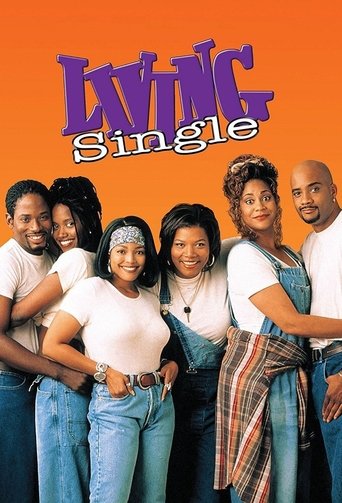
Living Single
1993 · TV series · 30 min episodes · 5 seasons
Created by Yvette Lee Bowser
Living Single is an American television sitcom that aired for five seasons on the Fox network from August 22, 1993, to January 1, 1998. The show centered on the lives of six friends who share personal and professional experiences while living in a Brooklyn brownstone. Throughout its run, Living Single became one of the most popular African-American sitcoms of its era, ranking among the top five in African-American ratings in all five seasons. The series was produced by Yvette Lee Bowser's company, Sister Lee, in association with Warner Bros. Television. In contrast to the popularity of NBC's "Must See TV" on Thursday nights in the 1990s, many African American and Latino viewers flocked to Fox's Thursday night line-up of Martin, Living Single, and New York Undercover. In fact, these were the three highest-rated series among black households for the 1996–1997 season.
2 neutralfrom 2 commenters
Where to watch
No streaming data for this title.



2 comments on Hacker News
Some people look for any excuse to be outraged. But I think people are more curious than outraged. I don't have any opinion about the existence this company but it did make me think. For example:
> When I grew up in the 90s, it seemed like black people had a relatively high number of TV shows to choose from like "Martin", "Living Single," and "The Fresh Prince of Bel-Air". It felt good. I felt represented. Unfortunately, it turns out the 90s were an aberration
I also grew up watching shows like these, and being a white person watching a black family didn't feel strange or incongruous at all.
Something I've already wondered is, what if that aspect of the 90s wasn't an aberration, but a feature from a time when there were fewer channels and diversity was concentrated in the fewer places everyone watched, due to how content was structured?
And is it unfortunate that relegating "black" content to its own service gives it a "niche" status that it doesn't deserve? Am I missing out on good content because signing up for any new streaming service is a high bar and something I don't do?
Will the bigger streaming services drop the content offered by this one, so that the largest audiences lose the opportunity to see this content?
Was having fewer channels actually in a way anti-monoculture?
“Cheers,” which ran for 11 seasons on NBC, starting in 1982, was the first great hangout show: neutralizing the depiction of class and removing the pressures of work. Life is hard enough, “Cheers” said; let’s just make TV. Ever since, television started taking it easier on us. Bill Clinton was in the White House, and the economy had improved. On “Seinfeld,” “Living Single,” “Friends,” “Ellen,” “It’s Like, You Know,” “Sex and the City,” “Girlfriends” and, much later, “Happy Endings” and “New Girl,” the commingling, childless men and women might have had jobs, but almost none had consequential careers. How many jobs did Elaine and George have on “Seinfeld”? And in how many fields? And Kramer — how was he paying to live across the hall from Jerry? Hangout shows placed friendship above family, obviating the typical economic ecosystem. Belonging to a family of friends probably means you only have to support yourself.
TV became — and still is — a medium struggling to understand “average,” “ordinary,” “normal.”
Why would you go into any of these shows expecting anything resembling reality. They are all clearly entertainment in the form of light drama and inconsequential, whitewashed sexual tension. To expect anything else is to set yourself up for failure.
Deeper shows exist - The Wire, Breaking Bad, House of Cards - but headlining TV shows are not created to address issues anymore. The shows reflect the main demographics of TV watchers, because that's what keeps them watching, and that's what generates ad revenue. So I'm not too concerned with the state of TV - it's an echo chamber for older, more conservative folk.