 Hacker Cinema
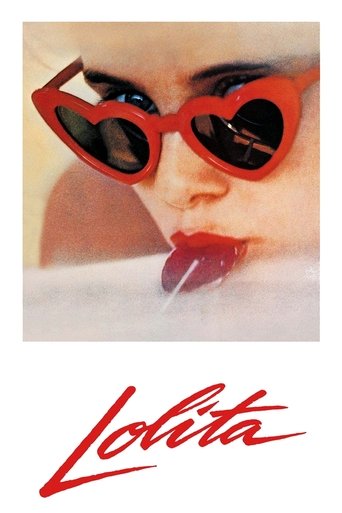
Lolita
1962 · Film · 154 min
Directed by Stanley Kubrick
Humbert Humbert is a middle-aged British novelist who is both appalled by and attracted to the vulgarity of American culture. When he comes to stay at the boarding house run by Charlotte Haze, he soon becomes obsessed with Lolita, the woman's teenaged daughter.
6 positive6 negative2 mixed26 neutralfrom 40 commenters
Where to watch
No streaming data for this title.
44 comments on Hacker News
Thanks! Here's the full list: 2001: A Space Odyssey, 8½, Aguirre the Wrath of God, Ali: Fear Eats the Soul, All That Heaven Allows, Apocalypse Now, Ashes and Diamonds, A Woman Under the Influence, Barry Lyndon, Bicycle Thieves, Breathless, Casablanca, Céline and Julie Go Boating, Chinatown, Chinese Roulette, Citizen Kane, City Lights, City of Pirates, Contempt, Daisies, Damnation, Dishonored, Earth, Electra My Love, El Topo, Eraserhead, Eyes Wide Shut, Film Socialisme, Fitzcarraldo, Fuego en Castilla, Hiroshima Mon Amour, Holy Motors, Inauguration of the Pleasure Dome, In a Year with 13 Moons, India Song, Inland Empire, Irma Vep, Koyaanisqatsi, La Dolce Vita, La Jetée, Late Spring, L'Eau de la Seine, Le Voyage dans la Lune, Lolita, Los Olvidados, Lost Highway, Lucifer Rising, Man with a Movie Camera, Metropolis, Mirror, Mulholland Drive, Night Music, Ordet, Orpheus, Persona, Pickpocket, Playtime, Psycho, Rebecca, Rosemary's Baby, Rumble Fish, Scarface, Seven Samurai, Sherlock Jr., Singin' in the Rain, Stalker, Sunset Boulevard, Taste of Cherry, Taxi Driver, Testament of Orpheus, The 400 Blows, The Blood of a Poet, The Cabinet of Dr. Caligari, The Color of Pomegranates, The Green Ray, The Holy Mountain, The Isle, The Lady from Shanghai, The Night of the Hunter, The Passion of Joan of Arc, The Seventh Seal, The Spirit of the Beehive, The Tales of Hoffmann, The Tree of Life, The Turin Horse, Time of the Gypsies, Tokyo Story, Touch of Evil, Trans-Europ-Express, Ugetsu, Un Chien Andalou, Uncle Boonmee Who Can Recall His Past Lives, Vampyr, Videodrome, Wavelength, Werckmeister Harmonies, Wild Strawberries, Moonlight Sonata, Stellar, The Haunted House Biased toward European art cinema, experimental work, and directors who broke conventional narrative rules.
The only thing that George got wrong was failing to realize that he is not an engineer, but an inventor. I am saying this as a fan of his work. He is something that I would dare to call a techno artist. He is the Kasparov of sw engineering, not Karpov. His ideas are like lightning. A powerful strike that shakes the earth (or Earth? maybe). But his agenda and his goals interfered with his God given power. Ironically, you can hear him saying on a podcast with Friedman (dont' remember which episode) that one should not have a lofty goal, but then you have him talking all about such goals. The Saviour persona takes over (not saying he doesn't have that in him), but this does not suit him. It should be instinct, rather than intellect that guides him (which is the case with every artist). Think of the reason he got into hacking. From what I understand it was one summer, now long time ago, him being bored. That's it. Boredom mixed with curiosity and innate talent. What got Kubrick into making films? Him seeing how bad the films he saw were. Him thinking he can do better. And he did. A perfect example of motivation that was purely technical in nature. Problem solving skills that needed an outlet. That doesn't mean it is the only reason to get into films, far from it. In words of Kubrick himself: “Some directors are primarily interested in working with actors, others are more interested in visual composition or camera movement. I don’t think there is one correct emphasis.” We all know to which group Kubrick gravitated to (the latter of course, just like his idol Max Ophüls). My point? There was something specific that got him stared and not just: "I wanna make films". Take a look at what got him started filming 2001. It was not a book by Clarke, but this:
https://en.wikipedia.org/wiki/Universe_(1960_film)
More precisely it were the special effects he saw from a Canadian documentary in the link above. Barry Lyndon? NASA lenses. Could you say the same for Scorsese? I don't think so. He would never. Ever. Do it for those reasons. Moving on. When N.Tesla invented induction motor did he do so for the improvement of the infrastructure and improving the lives of others? No. He did it because he wanted to improve DC motor. Or namely, the fact that he did not like the sparks that came from the brushes and that were caused by electrical arcing on commutator segments. Did he care to perfect his invention? No. Mikhail Dolivo-Dobrovolsky did. N.Tesla could not care less about the materials used or the number of phases that would make the motor perform at it's best (even though he was invested in the production phase initially). Why? Because his mission was complete. He gave the idea. He built a working model. Then he moved on. Just like Kubrick, his energy came from a desire to solve a problem. No shame in moving on. Imagine Kubrick calling it quits after Lolita. Or N.Tesla devoting his energies on perfecting the induction engine. Or Elon Musk working on electric cars and not caring about space travel. Etc... Not good. Because there are people in this world made specifically for that role. That would be the Torvald's of the world (L Torvalds: "I am not a visionary. I'm an engineer. I'm happy with the people who are wandering around looking at the stars but I am looking at the ground and I want to fix the pothole before I fall in"). The Karpov's. The Marcan's. The George R.R Martin's... Not Nikola's, not Elon's or Steven King's. Not George's. And just because visionaries look at the stars does not mean they have a lofty goal. Or that they are entitled. Visionary is the wiring of the brain. Those blessed with it should not go against it. I could be wrong. I am not that technical. I am that educated. I have not achieved much in life. English is not my first language.
I think this is an important point - it's very easy to find oneself slipping into the protagonists' viewpoints, in a lot of media the protagonist is 'good', we see the story unfold from their viewpoint, then sympathise and empathise with them, even when they make mistakes, their motivations were pure, and what’s unfolding isn’t due to problems with them exactly.
But in shows like this, in quite a lot of sitcoms with more cringey aspects, the protagonist is not necessarily a good person and they are often undone by their own pettiness, selfishness etc. Certainly in UK comedy anyway. Look at Fawlty Towers, The Office... Blackadder to a certain extent.
So when the article says this -
> It’s natural when experiencing any story to identify and sympathize with the protagonist.
Yes and no - this is something that creators can play with and may make deliberately jarring. See 'Lolita' for an extreme example. The article even brings up Walter White, saying - "we are drawn to root for the primary subject of the story". If you're still rooting for Walter by the end of Breaking Bad... were we watching the same show?
Fury Road could be seen as a reverse adaptation sequel of "Lolita" though.
The end of Lolita (old guy on a road, frustrated, goes off path) fits with the Furiosa taking a detour.
The roles are reversed. The young girl leaves in triumph (opposed to: the old guy leaves in frustration) and the old guy goes after her (opposed to: the young girl doesn't care about him leaving).
It could be just the skeleton of the story though.
Water is unobtanium of their scenic universe. In that movie perspective, it's related to healthy reproduction (healthy babies!), most likely cultural and not genetic.
As any work of art, it is subject to many interpretations. Not everything is a cue. But some cues exist in fact. Contrary to the meme swarm, you can't turn those ideas so quickly into what you want, otherwise it fails to connect to a sense of cultural continuity.
I recommend you to read the book, I think that the film doesn't (can't?) do it justice. The book being written from the point of view of the narrator is crucial: the reader is put in the mind of a pedophile (we are told that he is in jail). I also suggest imagining the girl as a child, before puberty at the start of the story.
The case study of Lolita is interesting because there are two competing readings. The fact that the character is often associated to seduction and jailbait in popular culture is arguably symptomatic of a culture of blaming the victims of this kind of crimes. Obviously not all men are perverts but I sometimes wonder if those of us who aren't don't underestimate the number of those who are.
2001 Lolita Barry Lyndon The Shining Spartacus
these "mid" films would be among the top 10 ever easily
but according to him "tough" guy Eastwood can surpass it
Kubrick’s results were all over the map. He made maybe three great films:
Dr. Strangelove
Full Metal Jacket
A Clockwork Orange
A bunch of not bad films:
2001
Lolita
Barry Lyndon
The Shining
Spartacus
One real turd of a film:
Eyes Wide Shut
And a bunch of forgettable filler:
All the other films he made.
Compare this to the Anti-Kubrick, Clint Eastwood, who made:
Unforgiven
Mystic River
Million Dollar Baby
Letters From Iwo Jima
Gran Torino
And a bunch of okay films:
Pretty much everything else
And it’s pretty obvious that you don’t need to be an abusive taskmaster like Kubrick to make great art.
> "There are good things in Lolita. But in too many respects it squanders, impoverishes and conventionalises its source material, draining it of its complexity, nymphetry and eroticism."
I think anyone who has read Nabokov's novel would agree that Lolita really isn't a great adaptation of the book. I think it is by far Kubrick's weakest film. There is a deep cynic darkness to the book that the movie misses completely. In later interviews, Kubrick always tried to downplay this and only admitted that the movie lacked eroticism:
> "If I could do the film over again, I would have stressed the erotic component of their relationship with the same weight Nabokov did," the director admitted. "But that is the only major area where I believe the film is susceptible to valid criticism."
I sometimes wonder how a Lolita movie by Francis Ford Coppola would've turned out (maybe with Gene Hackman).
I was thinking the same, but it’s easy to do so when it’s not your life’s work— especially something that took so much time and dedication. The quote about the Lolita film was pretty damning, and imagine the shame of accepting that you had botched the adaptation of such a prolofic novel.
Very original dialogue. Lolita existed before this dialogue so I think we should think about a piece of art (the movie) more than the moral implications in our society and/or in the 70s.
For real stuff we can read about Carrie Fischer and Harrison Ford relationship [1]
[1] https://www.theguardian.com/culture/2016/nov/20/carrie-fisher-harrison-ford-affair-star-wars-memoir-interview-simon-hattenstone
You can look at it two ways. Either you see it as a reflection of Lucas' own values or desires. Or you see it as part of an artistic process, aiming to evoke emotions in the audience. In the first case, it is creepy. But to give example of the second case, this is the entire premise of a film like Lolita.
Different how? Like Lolita (1962) ? All the President's Men (1976)? Miss Saigon (1989, a play I admit, but a controversial one): https://en.wikipedia.org/wiki/Miss_Saigon_controversy
??
I don't even know what decade you're referring to. Movies, plays, and other forms of entertainment always had politics. Some of them (like Lolita) explicitly tried to court controversy.
Or do you mean like Disney movies, like how Peter Pan (1953 Disney cartoon) has great, "non political" songs like "What makes the red man red" ??
Like, you can't escape politics. Even when you're trying to be politically neutral (like a Disney cartoon aimed at children in the 1950s), these sorts of political issues just come up... because our base assumptions of life are in fact political.
Whether we court politics on purpose (Dr. Strangelove, Lolita), or accidentally (Peter Pan 1953, "What Makes the Red Man Red?"), these sorts of things have been going on since the dawn of movies and cartoons.
Lemme leave things off with this 1940s comic by Dr. Seuss: https://library.ucsd.edu/dc/object/bb3618599q/_2.jpg
Kubrick is one of those men who looked at Lolita and saw a romance, when it is plainly and clearly a story of appalling abuse and rape. Watching a movie adaptation will not tell you anything at all about the book, because the movies are made by men who did not understand the book in any way.
I read an annotated version of Lolita. I suspect I would not have made it all the way through an unannotated version. The annotations were astonishing to me. Pointing out literary references that were either unknown to me, or that I knew but did not, on my own, connect. I missed a key plot element (being followed), that was illuminated by the annotation. I've also read erotica and a small amount of porn. IMHO, Lolita doesn't come close to being porn. It's just go too much going on _beyond_ the sexuality.
The issue of being drawn to a 12 year old is .... complex. When Shakespeare wrote Romeo and Juliet, 13 was the age of consent, and Juliet was 13. Evolutionarily, once a woman is ovulating, I assert it's 'natural' to be attracted to her, regardless of how young she is or the age difference. BUT in a modern world, the power differential between an adult male and a 12 year old, or 14 year old (Sue Lyons was 14 when she played Lolita in the Stanley Kubrick film) is too large to condone. The potential for psychological damage to the younger person is vast. So we've made it illegal. But my sense is that it has become tarred with too broad a brush. "Unthinkable that any moral person could have these desires" seems to be the theme in much of the book-banning crowd.
And, as others have pointed out, it was rape, which is despicable, and does not 'glorify' the sexuality, but it's done in a complex (literary) way that makes it possible to miss the rape element. !!!
I've only seen the Kubrick adaptation but it was very heavily implied that the narrator is impotent. He's shown to be a character to be laughed at, nervous in his behavior, and quite hapless in romantic overtures.
Contrast that with the movie Pretty Baby where the main character becomes obsessed with a 12 year old prostitute and then sleeps with her. I find that movie to be more bordering on the obscene than Lolita.
There are many answers to why Lolita was well received by many people. (It's worth noting that it was certainly not universally well received--many, many people share your opinion of it.)
One is that many of the people who like it seem not to have read it; or if they have read it, they did not understand it. Many men have described it as "a love story" or otherwise indicated that they feel the book approves of pedophilia. Two movies have been made based on the book, and both portray Dolores Haze (the girl the narrator calls "Lolita") as a seductress rather than as a victim. A substantial portion of the fan base of the book are, rather distressingly, men who appear to be quite enamored of the notion of having sex with children.
Another is that Nabokov was a clever writer who excelled at writing books which reward close reading. Lolita is the story of Dolores Haze, but the narrator is a man who has no interest in her other than as than the victim of his sexual attentions. He drones on at great length about trivialities, while completely skipping over vital information. He is deliberately constructing an exculpatory narrative, which opens fascinating questions about how we can find any truth when everything we read is lies. Sifting through his self-serving prose to find glimpses of the actual Dolores Haze is challenging, and--to me at least--interesting.
It's not an easy book, in many senses. The narrator is a monster. The bulk of the story is obscured behind lies and misdirection. There is no catharsis, no happy ending.
Contrary to the opinion of many people who have not read the book, and some who have, Nabokov was extremely well aware that "Humbert Humbert", the narrator, is a monster. Humbert is a pedophile who abducts a 12-year-old girl and rapes her repeatedly over the course of years. Dolores Haze is a victim, not a seductress, and is in no way responsible for or desirous of her abuse. Humbert is not a reliable narrator, and nothing he says can be trusted.
Nabokov himself was a victim of childhood sexual abuse. He knew what he was writing about. There's one scene that is almost certainly directly based on his own personal experience.
I'd have difficulty saying that I enjoyed Lolita, but it's a rewarding book, and I'm glad to have read it.
In my teens I spent a whole paycheck on the Stanley Kubrick DVD box set. In hindsight this was dumb but then again all of the films are amazing.
The set: Stanley Kubrick Collection (Lolita / Dr. Strangelove / 2001: A Space Odyssey / A Clockwork Orange / Barry Lyndon / The Shining / Full Metal Jacket) https://www.amazon.com/dp/6305440093/ref=cm_sw_r_apan_i_4XQ999X4XZC1T0K6HY3N?_encoding=UTF8&psc=1
Inflation is a slur for wages. They're just based on that. The computer and the car are bullshit things to get leaf workers to take pay cuts and pitiful raises. And the basket doesn't actually expand the percentage alloted to a need when that need becomes more expensive, talking food medicine (commonly and wrongly called healthcare) housing and education. It's a stupid point system, OK every point system is stupid in some way, by design, point systems are for when you don't want to respect the problem you're trying to solve and want people to cooperate--but not with a high degree of integrity, the guy designing the point system took the task on almost always with the aim of making some cozy little loopholes for himself--that's when you get a point system. They're stupid because people enjoy stupid point systems, they find them gratifying and entertaining, they're like a board game in fact. But inflation is just not only a stupid point system, it's just fucking cruel too, it's all set up to harm leaf workers. It pretends there's another layer to a simple fact: that when a man is anointed a billionaire, he doesn't measure anything in dollars anymore, he measures it in how low he can get people to go in massive numbers. That's why productivity went up but wages stagnated, and actually Americans are taking education super seriously, high schoolers study like fuck to get into elite colleges, and of course productivity is a McDonald's marketing term for education, you can't get people to make more wealth without making them smarter, meaning educate them. And productivity makes it sound like the MBA should get the credit, the money and the glory, for niggling people in the most cowardly ways.
One example: so McDonalds got sued for the hot coffee right? Well in order to make the stigmatization of the scalded sweet old lady who pissed them off for refusing to let them fuck her life up in exchange for a mouthful of ash (they offered her $800 for expensive and permanently painful genital skin grafts), in order to make her look like a complete bitch per the PR team's mission statements, like to make the MBAs happy, there was a media blackout on people getting burned in the shower.
It happens in Lolita, the little girl flushes the toilet while the pederast (played by Jack Nicholson) is in the shower, and the cold water is diverted into the toilet temporarily, scalding Jack Nicholson and making him scream. A classic prank. He didn't scream because he was a pervert, in fact he screamed because we've all been there and when a shower is too hot that's no joke you gotta react right away! You can't look at the clock to know when you've been in hot water too long anymore than you need to calculate the a car's distance speed and acceleration to know if you're going to get hit, dude don't think, FUCK FUCK FUCK react! Or like when cooking with boiling water, you gotta time it to the tenth of a second like it's a Jujutsu choke hold, you gotta pull your fingers out of that scald, that motherfucking harmful scald, last second if you don't want to end up with blisters on your fingers for ten days. Oh so you do in fact remember blisters on your fingers from getting scalded? Getting brainwashed is perfectly understandable, but getting spine-washed? And you realize you never hear that word scalded, not even on the SAT in fact, the media blackout reaches even the standardized tests, media said "burned" specifically because they found that triggered focus group's incredulity, water doesn't burn, fire burns, and water puts out fire, McDonalds' is the victim.
But it does scald, so they take that word out of the vocabulary. And that's where the Sapir-Whorf hypothesis comes in, "when there's absolutely no choice" meaning whenever the torturer, Jorge, feels like it, him and his fellow torturers reach into your brain to black shit out.[1] Being super literal here. Blacking shit out with blackouts (amnestic drugs, aka roofies, but clinical-grade, not the date-rape variety because with these the rapist doesn't even bother with a date), the term "blackouts" were blacked out when I was blacked out, I had to flashback on the concept of flashbacks, one memory I recovered a decade later was that "amnesia is never retrograde like in Hollywood" according to wikipedia, proving the opposite, amnesia is exactly as pornographic as in Hollywood, like in Memento, that movie was blacked out too. Clockwork Orange, blacked out, in layers, a friend called Sam Genecin witnessed me lashing on personality conditioning part, this was last year, and the blackout was 2009. No recall of Total Recall, itself about memory manipulation. They lobotomized everything related to "lobotomy" including a magic card called "Lobotomy" which I couldn't recall like I normally would, and other lobotomies were also blacked out.
If you read my comments I talk about how that concept censored in my own nervous system according to its own logic, and was finally flashed on, and instantly proving itself true, so it's a law now. I have a unique memory that never forgets definitions, I was the best student in Chile in my year by some definitions (best SATs, best college results) up until the lobotomy, I only forgot definitions due to lobotomy, and not permanently, so when I flash on a concept I haven't thought of since then, I get a special sensation, and I can write down the date and time to the minute. Then I can say exactly how long after the amnestic torture began that concept was censored (for another example, Christianity was also completely censored), so just reply with how much you want to bet on it being true, I dare you to make me a bet, make it worth my while. At any rate, it's the Sapir-Whorf law.
So in order to get people to forget what their spine thinks about hot water, media blackout. No jokes like that anymore, Simpson characters never got burned in the shower after 93, (I think there was one in the 89-92 period because in my memories Homer is drawn the old way and screams like the early voice actors, never again), no scalding anywhere, ever. Showers became these heavenly places, like really soothing and perfect, nothing bad ever happened in there, in prisons nothing bad could happen in a shower except the obligatory rape but rape notwithstanding they always had better showers in every goddamn prison on television than every five-star hotel I've ever gone to. And people always singing in the shower, in prison too. They gave showers a lot of extra airtime with no jokes, for decades. And nobody ever waiting for the temperature of the shower to adjust before getting in, nobody ever gets into a shower, only out of one. And media absolutely had the incestuousness to carry this out in the 90s and today it very much still does. There's tons of media blackouts. All to make a wonderful righteous old woman with the gall to sue a MacDonald's, with perfect moral authority, for a meaningless amount MacDonald's always lied about in its love of being a bitchvictim (they always said one million dollars instead of the amount she sued for and received, $600,000, without fail), to make that American saint look like a total greedy bitch for retaliating against a company she should have recognized as having the right to spite her. They spited her. And she died of shame.
[1] Although in fairness, out of the desire my torturer does not share, of being accurate and fair in my accusations, "scald" was...I think forgotten for other reasons, it's just a really rare word...or was it blacked out? Gotta check my notes, I thought it wasn't when I started writing this footnote but now who knows.
A few more great books that beget great films:
* The Silence of the Lambs * The Shining * Shawshank Redemption (novella but I'll allow it) * Brokeback Mountain (same) * No Country for Old Men * Little Women (there are a few versions to choose from but I would choose the 1994 adaptation myself, thought he 2019 version was very good) * Requiem For a Dream * Lolita * Roots (mini-series but I think we should allow it)
That's what I can think of off the top of my head.
Those are all pre-modern people before the invention of vaccines and antibiotics and who had terrible health and suffered by now preventable childhood diseases. Their 35 is not our 35. Shakespeare, I believe, wrote about joint pain, aging, and losing his memory and mind at 35, which is not typical of a modern 35 year old. Substance abuse and artistry go hand in hand and a lot of these artists were addicts and drunks who badly damaged their brains. Many of them had mercury poisoning from medical treatments of their day and other edge cases not common today.
Not to mention these people were elite global competitors, so if they felt less sharp at 35, that means they were merely just the top 1% instead of being the top .1%. They still were amazing thinkers and producers after 35.
Just off the top of my head, Stanley Kubrick's career peaked with his decade plus long Lolita, Strangelove, 2001, and Clockwork Orange period in the 1960-70s, which was around his 30-40s. Then nearly 20 years after Lolita, well into his 50's he made The Shining, which is considered an important American film, perhaps not as groundbreaking as the others, but something miles ahead of his younger competitors. So even as these people supposedly age out of their peak years, these super high performers are still amazing. The Oscar winner that year? Kramer vs Kramer, a largely forgotten piece of art and "safe pick" that played to social issues of the time. The best screenplay? Breaking Away, a completely forgotten movie. The Shining is still a beloved classic, cultural icon, horror master-class, an iconic actor's defining role, and a movie studied in film school religiously today and for the foreseeable future.
Then almost a decade later in 1987 at age 59, he directed Full Metal Jacket, a lesser work, but considered one of the best anti-war films, arguably stealing or matching the crown from beloved critic favorites like Apocalypse Now and The Deer Hunter, long after the 60s and 70s fad of anti-war movies faded away and Vietnam a now faded memory and during the right-wing, pro-military, pro-interventionist foreign policy Reagan administration. This was a bold and provocative move you'd associate with a younger director trying to get attention and not a man close to retirement. So even "old" Kubrick was competing on a world class level and doing interesting and challenging things.
A genre horror film from a famous director who hasn't delivered a great film in a decade? An anti-war film in the late 80s on the tail of Top Gun? Both of these genres were fads once and decidedly uncool at the time of their release. This on paper sounds almost foolish, but in practice, an artist of his calibre pulled off something very special in both cases.
For modern people, career peaks are mid-30s. The "wisdom" of two hundred old plus composers and poets is a nice toilet read but isn't scientific at all. Science has its own ideas about aging:
The journals Psychological Science, Science Direct, and Harvard claims various mental peaks come later in life. New vocabulary peaks at 67, learning new information at 50, concentrating at 43, learning new faces 32, etc.
https://nextluxury.com/mens-lifestyle-advice/what-age-do-men-peak/
So yes 35 is not only a good age, its the start of a peak, and a 35 year old modern worker has still another two decades of high performance waiting for them.
Kubrik made the film Lolita based on the screenplay Nabokov wrote in adaption from his novel.
The narrative frame and structure for the screenplay is quite different than the novel, but more suitable for a visual medium. I'll leave it to you to decide if it is a great movie, but the proposition that slavishly transliterating a novel into a movie is usually a bad idea seems reasonable to me.
I'm of two minds when it comes to this issue. I quite liked Fight Club precisely because in my younger years it was 'macho porn', but it left me with some thoughts that later on bloomed into understanding that the film is really criticising all of that.
I've had similar experiences with other works. Starship Troopers isn't quite the fascist power-fantasy that it appears to be on first sight. American Psycho can sorta be seen as a power fantasy, initially, but it's really about a pathetic guy struggling in his environment. And so on.
I don't feel it would do the world a service to criticize these (initially) ambiguous works because they're not spelling out the message they contain. And so while I often liked Ebert's reviews, I felt he was judging Fight Club in precisely the superficial way that doesn't do it justice. I imagine he might review 'Lolita' as a work glorifying adults loving prepubescent girls, when clearly the book isn't really doing anything quite like that.
Err, I suppose the counterpoint in my 'two minds' perspective is that I do get that there are cases where it does feel like the 'criticism' is a flimsy excuse to revel in its opposite. I don't think that applies to Fight Club, but it's an edge case. Better examples would be shows like Breaking Bad. I enjoyed that show a ton, but I could not find a proper excuse to watch it other than 'crime porn'. Any 'message' it tried to convey was clear from the first season. We all kept watching because we loved to see how bad Walter White could get.
No, he was not [great - ] he was typical of a pop culture humorist
You're presenting "great" and "pop cultural humorist" as mutually exclusive terms.
It feels fundamentally incorrect to compare him to writers producing conspicuously deeper and denser stuff.
If you judge him by standards and goals to which he never aspired then I'd agree he comes up awfully short.
Reminds me of the old days when people derided the Beatles and other rock and roll acts because they didn't meet the standards of classical music. Or when people derided e.g. Shigeru Miyamoto because video games didn't measure up to the narrative achievements seen in the best movies.
It's true: The Godfather and Super Mario Brothers are both things that appear on your television screen. Just like Hitchiker's Guide To The Galaxy and Lolita and Finnegan's Wake are all books. Not sure they're trying to be the same thing, though.
Fuck all that mass-media social programming propaganda. Murder and violence are "okay," while sex and sexuality are "bad."
I'll walk around naked, look at women, and hookup whenever I damn well please. Sex is awesome, bodies are beautiful, and no shame is necessary for either.
Films that cannot be made in modern America:
- Laura, les ombres de l'été (1979)
- Lolita (either)
- Pretty Baby (1978)
- Caligula (1979)
- Rocky Horror Picture Show
- Monty Python and The Holy Grail
- Nymphomaniac I or II
Partially, there is great sanitization of Western films to be accepted by foreign censors.
Lolita wasn't a documentary or a biography. 12 year olds aren't "highly intelligent sociopaths".
I can only assume this is a #MeToo reference as he was the male lead in Lolita - c.f. https://www.theguardian.com/film/2018/feb/16/times-finally-up-for-hollywoods-lolita-complex
I've been striking out with my fiction lately with one dud after another. Thanks for these excellent suggestions. I'm ready to dive back in.
Three books that I haven't seen listed, but were impactful on my life:
Vladimir Nabokov, Lolita -- Incredible writing, maybe the best ever. And english was Nabokov's second language. Don't miss this just because of the creepy subject matter or because you saw one of the movies. This is an incredible read and one of the English languages greatest books.
Cormac McCarthy, All the Pretty Horses -- I initially put off reading this by McCarthy's singular use of punctuation and his long, spare sentences. But I picked up the audiobook from Books on Tape (pre Audible) and fell into it. When read by a talented narrator its like poetry (and I mean that in a good way). When I finished it I immediatly rewound the tapes and listened to it again.
Rudy Rucker, White Light -- I read this 38 years ago and still think of it often. Think Alice in Wonderland written by William Burroughs and Kurt Godel. Giant cockroaches, absolute infinite, the devil harvesting souls, Albert Einstein, the Banach–Tarski paradox: its a wild ride. Hard to find but available on Kindle.
Ok, so I misjudged the post I answered to as equating "harassment" = "sexual harassment" (which there is no real indication for except for the "I'll kill myself"-episode which many also would not consider sexual harassment and which really depends on the circumstance 40a back...)? Also I'd really like to know how a bad joke ("if he's hitting on you, say you are a vi user") is indication of abusive/inappropriate behavior without producing a single real case of such?
Somehow the definition of harassment used by a wide variety of people seems to be "I don't like his opinion" if I judge from the linked twitter post... If it goes forward this way I could picture people rallying in front of libraries and burning a lot of books. Would someone please enlighten me how "Lolita" is any less worse than RMS-ramblings?
That then also explains paragraph 3, since when you "step up" claiming you got harassed and it turns out you just disagree with the offendees opinion/behavior at large, you are harassed again by people disagreeing with you... This is kind of brain-dead but apparently a certain kind of reality happening on this planet called "earth"...
This is my absolute favourite film of all time. For those who enjoy it, I highly recommend 'Lolita' - IMHO it is underwetched and underappreciated. Peter Sellers is absolutely fantastic.
>because of cultural significance and whatnot.
No, because Miss Saigon is a fictional piece of work, as is Lolita. Committing a crime in a piece of fiction is obviously not equivalent to actual child pornography, just like showing an action movie isn't equivalent to footage of actual violent crime.
There is no blurry line here. Child abuse and child pornography are clearly defined terms. Justifying child abuse in a novel might be morally offensive, but is not a crime, abusing an actual child however, and publishing footage of it, is.
You'd be surprised.
The exact line gets blurry with various media. Kim, the female protagonist in the Broadway Musical "Miss Saigon" is a 17-year old whore. There's implied sex, as well as multiple stripper-dances throughout the musical to hammer in the sexual issues that Kim faces.
Something like Miss Saigon is allowed and not CP (despite being below the age of 18) because of cultural significance and whatnot.
There are clear cut cases of CP of course. But when musicals / movies / various media toy with the idea of 16-year-old or 17-year-old girls who are exploring their sexuality... where do you draw the line? What should get censored?
https://en.wikipedia.org/wiki/Lolita
Lolita the novel + movie also gets brought up a lot. As it is explicitly a story about a middle-age man exploring sexuality / erotic elements with an underage girl. It toes the line and never becomes sexually explicit, but its clear from the context what the novel is pushing.
Most authors complained about it yes. Burgess accused Kubrick of not having understood a single word of "Clockwork Orange". Nabokov was the most gracious when he said that while Lolita was a very good movie, he didn't recognize his original work at all :)
I think it's a very difficult exercise to adapt a novel. Should you literally put on the screen what is written in the book ? What's the point ? You're not creating much. On the other hand, if you deviate from the original work, fans start attacking you for "betraying" the spirit of the book.
Kubrick was fairly known for heavily adapting the novels he used for inspiration. There are huge differences between the novel "Lolita" and Kubrick's adaptation. Same with "Shining" or "Clockwork Orange".
TBH, I'm really happy we didn't get a version with voice-overs and all. Hard to imagine a concept of "documentary" would have been better than what we ended up with.
It is about someone who is sleazy. I don't really understand the modern trend that if story that is about (or includes) a character that is sexist/racist/etc, that then makes the story or it's creator sexist/racist/etc. It's quite absurd.
Lolita is about a pedophile, does that make Vladimir Nabokov a pedophile? Othello's Iago was incredibly racist, does that make Shakespeare racist?
That's not to say this game is on the same level as Shakespeare, but the point applies to any number of movies that include contentious character motivations.
> A single search can now land you on a government list of accused pedophiles.
The other day I used Google to find info about a movie called "How to Make Money Selling Drugs"[1]. As I typed the words, I thought to myself "I hope that doesn't get me on a government list." I can't imagine having to think twice before Googling "Lolita"[2].
[1]: http://www.imdb.com/title/tt1276962/reference [2]: http://www.imdb.com/title/tt0056193/reference
Great story. Makes me wonder how Nabokov, a literary critic himself and also pseudonym user ("Vladimir Sirin") to hide from critics[1], would feel about Metacritic and Rotten Tomatoes. Many content creators regard critics with disdain, until it comes to valuing their own time!
And Nabokov is at least partially right[2] about not needing context if the literature is good. You can pick up Lolita, open to any page and begin reading and I guarantee a smile will flash across your face within three pages.
~~~
[1] Nabokov: "Occasionally I used the little silk mask of an additional pen name in order to deceive this or that captious critic—with most gratifying results ("At last a great writer!" cried my favorite Zoilus in 1939)."
[2] There are huge bodies of work that, if you have context, you will get a LOT more out of, especially older works. Just as TV shows like Family Guy are a series of culturally-dependent in-jokes, so was a lot of the humor in Shakespeare, Chaucer, etc. And reading Li Bai and Du Fu's poetry is not the same unless you know the details of the An Lushan Rebellion they lived through, which had one of the highest death tolls (5.5%–15.3% of entire world population) of any event in history.
No, certainly not. However, in Germany "child porn" was extended to encompass any (fictional) written narrative [1] as well as paintings or renderings - including manga - or any video involving adult actors that look like minors. So there's a case to be made that not all material that might seem interesting to a child porn consumer produces victims. I'm not an expert in that field, but constantly extending the covered topics is certainly not helpful.
[1] Kubricks Lolita could be illegal in germany now http://www.imdb.com/title/tt0056193/
Very good implementation.
But please change the title to "500 best movies according to IMDB & RottenTomatoes".
I mean, look here: http://5000best.com/movies/Stanley_Kubrick
Clockwork Orange is 46th, 2001 is 211st, and Lolita (Kubrick's version), 1018th. Best movie that poor, not-so-much-talented Kubrick has apparently made is Strangelove, which is 32nd "best movie ever made".
It's very informative to know what IMDB thinks (for one thing, you know what movies to skip), but basing our "best movies" list on what they think is not all right.
Some time ago, thanks to a tip on HN, I was listening to a interview with Stanley Kubrick recorded in the 1960's in New York. He's a genius in the opinion of many, myself included, so I was happy for the tip. This is what makes HN worth reading.
In the interview, one of the films that was mentioned a few times was Lolita (1962). This is one Kubrick film I have never seen. So I did a little research on it.
It's based on a novel from 1955 by Vladmir Nabokov. It just so happens this is one of best-selling novels of all-time, in the "50-100 million copies sold" bracket, according to Wikipedia.
http://en.wikipedia.org/wiki/List_of_best-selling_books.html
It's also listed as one of the best novels of all-time on the Random House web site. Top 5 I think. I believe it was also selected as on of the best books of all-time in a survey of a book club in Norway, if my memory is correct. But don't take my word as fact. Check these sources yourself; they are linked from Wikipedia.
http://www.randomhouse.com/modernlibrary/100bestnovels.html
What is the subject of the book? That's left for the curious reader to discover. You might be surprised. I certainly was.
Remember, this book was published in 1955.
Also, though I might not thnk highly of the "messenger", the message in this thread about the "market" for videos of murder was thought-provoking. There was a terrible film about five years ago about this subject, starring Diane Lane. The film is centered around the Hollywood's version of the internet, so it's a little painful to watch. But the whole premise of the film was the most disturbing. Why was this film even made? And why the heck does Diane Lane want to star in it?
Then there's the recent story of a young person who worked as an independent contractor reviewing uploaded content for Google (Picasa, YouTube, etc.). From the sort of things he was exposed to, he ended up needing psychological treatment.
No one should have to watch this stuff. But even more important, no one should _want_ to watch this stuff. The question is: Why do people want to watch violence and murder?
Maybe we should as Arnold whatever his name is, the Terminator.
Hypocrisy abounds.
Some people, myself included, object to banning "kiddie-fiddler fiction", no matter how disgusting it is. The law should not make judgments of literary quality, and literary quality is the only grounds for treating Lolita differently from some (but perhaps not all) of the amateur stuff.
Besides, no actual child was abused in the production of these works, unlike with films and pictures with actual underage models; and potential harm to future children is a rather shaky basis to justify flushing the First Amendment down the drain. That's the argument that ACLU's Nadine Strossen used two decades ago against censorship of (non-child) pornography. I see no reason why the same argument won't apply to child pornographic literature.
But private websites are a different matter, and there's nothing wrong with a moderator who chooses whether or not to discriminate on the basis of perceived literary quality on his or her own site. Many forums ban discussions about religion and politics altogether, but that doesn't infringe anybody's Constitutional rights.
There's been a lot of discussion about this over time. Take Vladimir Nabokov's Lolita, for example. It's frankly some of the best prose I have ever read, ever.
The book is written from the perspective of a pedofile lusting after a young girl. Stanley Kubrik's film of the movie in 1962 won an academy award. There was an immense ammount of controversy surround the movie and the book, and they still are. Art or obscenity? We'll be having this discussion for years to come.
Don't look at the effort. Look at the final result. Lolita took all of four months to write, and it's terrific. That's less time than it took Ed Wood to make any of his movies, all of which bombed.
Oh, no. Many of us read Navokov's Lolita! (or watched the movie.) We should go to jail.
Don't fall into hysteria. And try to avoid stupid people who are well into it. Same with terror and drugs. Meanwhile bankers walk away with gigantic bonuses, right below your noses.
Also there are tough economic blocks to Cuba and Iran while the US-friendly governments of places like Thailand don't get any trouble at all. I haven't been there but the tales of relatives and what I read are revolting. That's not taking some pictures, that's wholesale slavery, rape, prostitution, and even murder. Why doesn't US media make a reality show on busting US-ians going there for sex vacations?
[Disclaimer: I actually got bored with the pseudo-romance drama of Lolita and dropped it after not that many pages. Overrated as hell. But now I know that.]
It's possible. My English teacher in junior year absolutely was. I went in the first day, tried to pick a snarky fight with him over James Joyce, and then stayed after class to talk to him about Ulysses and Nabakov's Lolita. (Ulysses is one of my favorite novels.) By the end of the week, he'd recommended two bands to me that I fell in love with; before winter, he lent me his copy of 69 Love Songs, which profoundly affected how I looked at music.
Later, he was the reason I befriended a kid I'd been at odds with for years, an arrogant film buff. When we started to have extended discussions covering literature, cinema, and music, I started looking for some of the films they were mentioning, and in doing so became close friends with the film kid. It led to one of the best summers of my life, driving around the state in his Wrangler to get a copy of Spaced.
(Meanwhile, the class we met in was a half-year course filled with a ton of kids with short attention spans, and he managed to get us to read something like 7-8 books and a ton of short stories, and crammed us with 5 excellent films in between.)
How you isolate people like that and identify them, I don't know. They exist, though.
(Game program? What do you mean?)