It's funny that this series seems as if it is being confused as a documentary. It was a dramatic telling of a story. Creative licensing was in full effect. The first item in the "Series VS tapes: point by point" is a very common use of that creative licensing. Trying to follow multiple people in a work like this gets tiring and a bit boring. The details are kept, but it's easier to follow when those multiple people are written as one character. It's why the term "littleuns" was used in Lord of The Flies as the individuals were not important to the story, just the fact they were there and needed to be considered allowed the story to not get bogged down.
The series was also told completely in ~8 hours of content, yet this event clearly took longer than 8 hours to play out. Why no critique on that?
Sidney Lumet's film "Network" (1976) explores the idea of "hyperreality" in an accessible way, where people model their lives in reaction to relationships shown on television.
>"I think this is odd, at least if over done, as if the constructed media representation is somehow evidence of anything true"
Constructed media representations, like clips of movies, can still be quite useful for introducing an idea where the evidence will be presented later on. For example, some research psychologists use clips from Ratatouille to introduce concepts about memory.
However, I agree that it's unfortunate that people sometimes do uncritically use fictional depictions as evidence of arguments for human nature. For example, Lord of the Flies depicted a highly pessimistic view of how shipwrecked boys would behave over time, and people have formed a cynical worldview from the story. A real-life case of shipwrecked boys in 1965, however, ended with cooperation: https://www.theguardian.com/books/2020/may/09/the-real-lord-of-the-flies-what-happened-when-six-boys-were-shipwrecked-for-15-months
> This is high school level analysis. These are straightforward reasons.
Yes. The hang up here seemed to be at exactly that level, though. At the very least it's useful to keep those things in mind and look out for them. That does not mean it's where things end. I took the original post to suggest that even this is too much, which is simply incorrect unless one wishes to be stuck at about a 6th grade reading level forever. There are bad teachers who don't even convey the basics well, and analyses may sometimes go pretty far into fairy-land at higher levels, but considering why pig-killing features so much in Lord of the Flies is something worth thinking about for a good reader, beyond "the characters were hungry". But yes, of course that's not exactly an advanced analysis, death of the author, et c. But it is table stakes for even beginning to appreciate literature or understand how stories (even blockbuster film scripts!) are typically assembled. Some amount of purpose plays a role in at least some decisions in practically all stories, and understanding how that works will make a person a better reader and writer. But I agree with you, it's not the end of that journey, nor is it advanced, and I don't think I wrote that it was.
> This I think is just not true. This is true in simple literature, in adventure books and in streamline writing production.
Short of experiments in randomly-assembled literature, it is true. It does not mean every single little detail has a grand purpose, but it does mean that the words on the page were placed there by a person, who could have instead put different words there, or nothing at all. Some things may still be arbitrary, but their inclusion was not—you don't get an arbitrarily-chosen type of flower without both choosing to include a flower and choosing to name what kind of flower it is.
Details may be chosen simply because the author likes the image they paint, or just has a preference (which are still reasons!) Others details may be dictated by the needs of the narrative ("why did this take two days, and not one or three? Because it needed to to fit some other piece of machinery in the narrative, no special meaning beyond that") or simple fidelity to reality in cases where there's no reason to strain suspension of disbelief. Of course all that's true—but it's also true that an author can do anything with a blank page, and instead of all the other things they could have done, did what you see before you.
As a man I can confidently say we do just fine and the system teats us very well thank you very much. Rather than stopping the "penalization" of boys, we need to stop making excuses for and accepting their (our) poor social behavior. Lord of the Flies is basically a middle school boys documentary IMHO.
Alternatively, if you really feel like this is a problem, then recognize and speak up about the negative impacts that this behavior has on everyone else in the system, particularly girls.
I speak from the perspective of the head coach for multiple elite "travel teams" for both girls and boys in the middle school age range, as the father of many daughters, and as a former boy.
>> Someone who ignores our system of justice would be expelled. It happens.
I hope they don't read Lord of the Flies. I'm not sure that I would want a group of teens, especially peers, to judge me on anything. Didn't Trek TOS also cover this in the episode on the planet without adults?
You're correct that we build upon the previous efforts of others, but I don't think that's a counterpoint to what I've said. For one thing, copyright doesn't prevent you from building upon previous intellectual and material gains made by civilization; it just prevents you from, for example, making a movie of Lord of the Flies without permission from the owner of the copyright.
Separately:
There's a legitimate discourse to be had about how long copyright protection should last. But I disagree totally with people who claim that it should be nonexistant.
 Hacker Cinema

7 comments on Hacker News
It's funny that this series seems as if it is being confused as a documentary. It was a dramatic telling of a story. Creative licensing was in full effect. The first item in the "Series VS tapes: point by point" is a very common use of that creative licensing. Trying to follow multiple people in a work like this gets tiring and a bit boring. The details are kept, but it's easier to follow when those multiple people are written as one character. It's why the term "littleuns" was used in Lord of The Flies as the individuals were not important to the story, just the fact they were there and needed to be considered allowed the story to not get bogged down.
The series was also told completely in ~8 hours of content, yet this event clearly took longer than 8 hours to play out. Why no critique on that?
Sidney Lumet's film "Network" (1976) explores the idea of "hyperreality" in an accessible way, where people model their lives in reaction to relationships shown on television.
>"I think this is odd, at least if over done, as if the constructed media representation is somehow evidence of anything true"
Constructed media representations, like clips of movies, can still be quite useful for introducing an idea where the evidence will be presented later on. For example, some research psychologists use clips from Ratatouille to introduce concepts about memory.
However, I agree that it's unfortunate that people sometimes do uncritically use fictional depictions as evidence of arguments for human nature. For example, Lord of the Flies depicted a highly pessimistic view of how shipwrecked boys would behave over time, and people have formed a cynical worldview from the story. A real-life case of shipwrecked boys in 1965, however, ended with cooperation: https://www.theguardian.com/books/2020/may/09/the-real-lord-of-the-flies-what-happened-when-six-boys-were-shipwrecked-for-15-months
> This is high school level analysis. These are straightforward reasons.
Yes. The hang up here seemed to be at exactly that level, though. At the very least it's useful to keep those things in mind and look out for them. That does not mean it's where things end. I took the original post to suggest that even this is too much, which is simply incorrect unless one wishes to be stuck at about a 6th grade reading level forever. There are bad teachers who don't even convey the basics well, and analyses may sometimes go pretty far into fairy-land at higher levels, but considering why pig-killing features so much in Lord of the Flies is something worth thinking about for a good reader, beyond "the characters were hungry". But yes, of course that's not exactly an advanced analysis, death of the author, et c. But it is table stakes for even beginning to appreciate literature or understand how stories (even blockbuster film scripts!) are typically assembled. Some amount of purpose plays a role in at least some decisions in practically all stories, and understanding how that works will make a person a better reader and writer. But I agree with you, it's not the end of that journey, nor is it advanced, and I don't think I wrote that it was.
> This I think is just not true. This is true in simple literature, in adventure books and in streamline writing production.
Short of experiments in randomly-assembled literature, it is true. It does not mean every single little detail has a grand purpose, but it does mean that the words on the page were placed there by a person, who could have instead put different words there, or nothing at all. Some things may still be arbitrary, but their inclusion was not—you don't get an arbitrarily-chosen type of flower without both choosing to include a flower and choosing to name what kind of flower it is.
Details may be chosen simply because the author likes the image they paint, or just has a preference (which are still reasons!) Others details may be dictated by the needs of the narrative ("why did this take two days, and not one or three? Because it needed to to fit some other piece of machinery in the narrative, no special meaning beyond that") or simple fidelity to reality in cases where there's no reason to strain suspension of disbelief. Of course all that's true—but it's also true that an author can do anything with a blank page, and instead of all the other things they could have done, did what you see before you.
As a man I can confidently say we do just fine and the system teats us very well thank you very much. Rather than stopping the "penalization" of boys, we need to stop making excuses for and accepting their (our) poor social behavior. Lord of the Flies is basically a middle school boys documentary IMHO.
Alternatively, if you really feel like this is a problem, then recognize and speak up about the negative impacts that this behavior has on everyone else in the system, particularly girls.
I speak from the perspective of the head coach for multiple elite "travel teams" for both girls and boys in the middle school age range, as the father of many daughters, and as a former boy.
>> Someone who ignores our system of justice would be expelled. It happens.
I hope they don't read Lord of the Flies. I'm not sure that I would want a group of teens, especially peers, to judge me on anything. Didn't Trek TOS also cover this in the episode on the planet without adults?
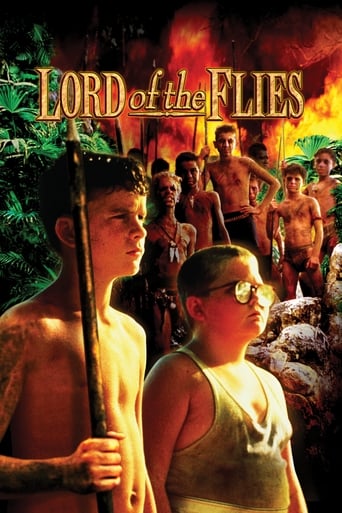
I haven't any. But Lord of the Flies is nice as food for thought. Also there's a film based on the book.
You're correct that we build upon the previous efforts of others, but I don't think that's a counterpoint to what I've said. For one thing, copyright doesn't prevent you from building upon previous intellectual and material gains made by civilization; it just prevents you from, for example, making a movie of Lord of the Flies without permission from the owner of the copyright.
Separately:
There's a legitimate discourse to be had about how long copyright protection should last. But I disagree totally with people who claim that it should be nonexistant.