 Hacker Cinema
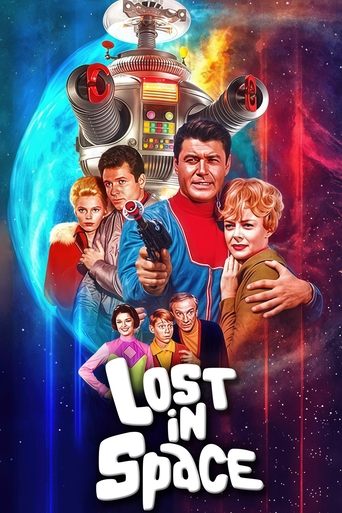
Lost in Space
1965 · TV series · 60 min episodes · 3 seasons
Created by Irwin Allen
The space family Robinson is sent on a five-year mission to find a new planet to colonise. The voyage is sabotaged time and again by an inept stowaway, Dr. Zachary Smith. The family's spaceship, Jupiter II, also carries a friendly robot who endures an endless stream of abuse from Dr. Smith, but is a trusted companion of young Will Robinson
1 positive5 neutralfrom 6 commenters
Where to watch
No streaming data for this title.
Videos commenters linked
From YouTube links in the comments below. Most are clips and trailers; “Full” means the uploader says so.



7 comments on Hacker News
The media plays-up the troubles with return vehicles, but let's face it: ISS is a habitation, with regular resupply missions, and carefully-planned resources in reserve, where a design goal is having astronauts and non-astronauts living and working there for extended periods.
Nobody was running short of air, electricity or food, that I heard of. It was not turning into "Lord of the Flies" up there. [If it did, would we hear about it?]
KTLA has been flailing its arms and crying "Danger Bill Bobinson!" since going on-air, and that's what keeps viewers tuning in to see whether Dr. Zeke Smits will appear in the "film at 11". [Lost in Space aired on CBS, but you get the picture]
During an early Space Shuttle launch, my mother pointed out to me when the commentator described "entrails" behind the ascending vehicle, and she explained that they're called "contrails" and if we actually spotted entrails in the sky, then something had indeed gone horribly wrong, especially considering the resolution of TV cameras in 1977...
During the undocking, NASA commentators noted that several other astronauts have logged continuous outer-space hours longer than Crew-9 members. The drama and suspense are nevertheless exciting, but "stranded" is hyperbole, when their sweet ride was simply "in the shop" for longer than expected.
If you ask me, the much more interesting aspect is the international composition of each crew and all the equipment/vehicles, which helps to ensure that agencies are collaborating together in peaceful endeavors and exercising diplomacy through research and education.
Robby is prolific!
https://www.imdb.com/name/nm1119475/
For example:
Star Wars: Phantom Menace
Gremlins
Mork and Mindy
Columbo
Lost In Space (not Robot)
The Addams Family
The Twilight Zone
I remember watching lost in space reruns years ago as a kid.
I re-watched an episode recently as an adult and it was hiliarious.
mrs robinson was doing laundry, and put all the clothes in a washing machine and closed the lid. Then she immediately opened the lid and pulled everything out, it was already neatly folded and in a bag.
(and curiously the machine was sitting outside the spaceship)
EDIT: "How to do laundry in space"
https://www.youtube.com/watch?v=z4bdaN6MRT8
lol
I had a sudden flashback remembering a "Lost In Space" episode on TV as a kid: haunted by the giant alien plants that threaten the Robinson family. I suppose the writer was rehashing "Invasion Of The Body Snatchers".
I remember seeing a small exhibit of slide rules including some cylindrical ones at MIT in the early 70's. It was in a few display cases in one of the older buildings (I think it was building 1, but it could have been building 5--they are connected.) We all had slide rules back then, mine was a bright yellow model made by Pickett and made of aluminum--it never operated as smoothly as the ones made of bamboo by K&E
I bought my slide rule in 7th or 8th grade with money I made from my paper route around 1964; I still have it and it functions just as well as when it was new.
I mentioned that we all had them, this was because there was really no alternative. Slide rules could perform all sorts of calculations, multiplication, division, exponentials, trig functions, all to an accuracy of around 3 significant digits. Computers existed, but terminals (with few exceptions) did not. Any calculation with a real computer required getting to the comp center and punching cards (any mistake on their funny keyboards meant throwing the card away and starting over). After that one would have to submit the deck to an operator behind a glass window. In ten minutes to an hour you would get the first result of running your program produced on fan fold paper, usually with green and white tinted background on the paper. The printing was done with a line-printer, often in upper case only. Naturally, the first few attempts ended up with syntax errors and it was easy to waste a lot of time on simple calculations so the 3 significant digits of an ordinary slide rule started to look good enough.
Of course, we all also had (right next to our collegiate desktop Websters dictionary) a copy of the CRC Standard Mathematical Tables. This book, hundreds of pages long, had tables of logarithms and trig functions accurately to 5 digits which could solve these problems to 5 or 6 digits accuracy with careful interpolation techniques (which were taught in high school back then).
A year or two after I bought my slide rule I saw an early black and white episode of Lost in Space, a 60's TV show about a family lost on a remote planet. On the program the character Will Robinson was using a handheld calculator. It was pure science fiction device about the size of large 6cm thick hardback book. It contained a keyboard of perhaps 16 keys and a large, say 5cm, high display. I thought that it was so incredible, like the space suits and robots that appeared in the show. I wished that there was someway in the distant future that I would ever have such an amazing device!
Hand-held calculators might have been carried on many NASA missions, but not the early ones. The first missions started in 1961 and hand-held HP calculators weren't invented until more than ten years later. By that time we had already been to the moon 6 or 7 times.
The first actual hand-held calculator I every saw was a Bowman Brain (simple 4 function calculator) it was for sale in 1971 at the MIT COOP (the bookstore). I only knew one person that bought one; the rest of us continued carrying around our slide rules (they came in handy leather holsters with belt loops.) The HP that came out about a year later was a real scientific calculator.
Years before that, sometime between 1965 and 1968, on an episode of Lost in Space (a TV program with a family of early space explorers lost in outer space) the son, Will Robinson, was carrying around a large device about 3 inches thick and a foot tall that looked like a calculator. I thought the idea quite marvelous and went to bed thinking about it and how much better it would be than my slide rule for playing around with calculations. (I was a weird kid.)
"It's interesting that you posit that the ultimate endgame is "corporate-friendly content". I was curious why you think that content is heading that way?"
Every company I've seen eventually goes this way. When a corporation becomes large enough, they start answering to special interest groups on the left/right and self-censoring content as to not tarnish the reputation of investors or lose valuable market share.
"If anything, I'd argue that globalizing Netflix combined with stronger control over their own original content enables Netflix to move towards an endgame where lots of niche audiences are served (rather than only mass markets). At CES, Ted Sarandos (VP of Content) mentioned that traditional TV had to hit home runs all the time, while Netflix can score with singles, double, etc. Why would Netflix jeopardize this advantage and hop in the time machine to become an outdated TV company?"
I hope you're right. So far, they are copying the cable company strategy: license older content to get the viewers and then eventually create your own content to make more money. It's a pretty good business strategy, if you can pull it off.
When the Syfy (I actually hate this name) channel first came out, it was all old episodes of Quantum leap, Star Trek, and lost in space. They slowly built their own content over the years and now pretty much only have original content.
It's also tends to happen with monopolies (if this ever happens to Netflix). Right now, they are taking tons of chances and it's hit/miss (which means some fantastic content for customers).
When you are on top, your strategy changes to what has worked. You don't want to lose market share, which means taking less chances. You aren't desperately trying to gain market share, you are now holding onto it. So, we might still see cool content, but it won't be as groundbreaking or as often.
I feel like this eventually gets watered down enough, and big money/advertisers get involved, and the cycle repeats.
I was an avid XM radio fan from the beginning. Many of the shock-jocks were allowed to say and do pretty much anything. After the big merger, it's now a shell of what it once was (the same strategy as the radio industry. If you compare the jocks of the 90s and today, it's a much different landscape).
I absolutely love the explosion of podcasts in the last couple of years. It has given people the complete freedom of speech and has pretty much replaced what I loved about satellite radio.
It reminds me why a free Internet is so important.