 Hacker Cinema
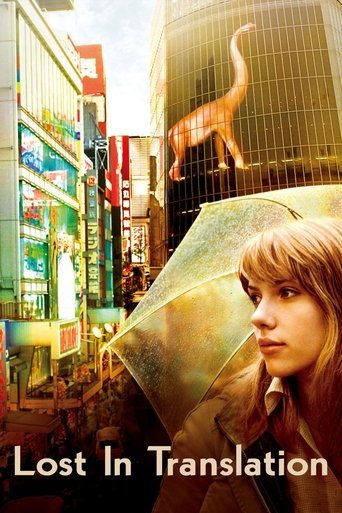
Lost in Translation
2003 · Film · 102 min
Directed by Sofia Coppola
Two lost souls visiting Tokyo -- the young, neglected wife of a photographer and a washed-up movie star shooting a TV commercial -- find an odd solace and pensive freedom to be real in each other's company, away from their lives in America.
11 positive9 negative1 mixed21 neutralfrom 42 commenters
Where to watch
No streaming data for this title.
48 comments on Hacker News
"""I have an idea for a movie club, where two movies with a tenuously connected theme are watched (separately) and then discussed. If you've seen the movies "XXX", and "YYY", tell me what is similar about them, what's different, what are some possible "connected themes" and who tackled the topic better?"""
...time passes...
"""Now that you understand the idea behind these pairings, recommend five more pairings, but don't give any hints as to their connections, just five bullet points with "A vs B" movie titles. Bonus points if there is at least a 10-year gap between them, and they are both not box-office blockbusters (but make sure they are slightly more popular or recognizable movies, not exclusively low-distribution non-critically-acclaimed indie movies)."""
* Children of Men vs Snowpiercer * Lost in Translation vs Frances Ha * No Country for Old Men vs Hell or High Water * The Prestige vs The Illusionist * Drive vs Nightcrawler
...I know guidance is "don't just post AI output", but this is specifically a human-to-human discussion around novel(?) ways to interact with AI/LLM's. I've found they're _really_ good at conceptual-venn-diagrams.
There's a book "Algorithms to Live By" (ie: look for matching socks via BFS/DFS or whatever). Asking the AI: "you know a bunch of algorithms, what are the top three that should have been in the book?" => "what are the weakest that could have been removed?"
Recently during performance reviews, we had to write our self-assessment and had guidance from on high like: "make sure you talk about people skills, technical skills, customer impact, etc." ...so yada yada: "I'm so amazing, I'm so great" => "Dear AI, I've been given this guidance `...`, please compare my handcrafted storytelling against the guidance `...` and tell me where I have missed covering a requirement" => "...now please give help w.r.t. simplifying or cleaning up the section on $INCREDIBLE_TECHNICAL_ACHIEVEMENT b/c I was focusing on describing my personal impact, but need help making it more digestible for others".
The combination of instant, tailored feedback and the fact that they've read the whole internet, "watched" every movie (read the script, read critics reviews, reddit, forum discussions, etc), read most published books, and that they're 80%+ plumbers, doctors, lawyers, car mechanics, etc. make them an unstoppable research assistant, especially when crossing connections that would normally be "expensive" to do so.
Example: ask a [doctor+lawyer+plumber] about the health and legal impacts of lead solder in pipes or whatever. Instead of needing to schedule 3 people's times, wait for them, pay them, etc, you can get instant "free" feedback, educate yourself, and then have a more solid foundation to branch out from there. Such incredibly useful tools!
"I'm fairly confident anthropic and grok have agi internally." - see sofia coppola is a fantastic director but we don't want to be characters in her movie "lost in translation", speaking of which: define AGI? It's a bold claim to say any company has it internally, and frankly given my definition of AGI if anyone has it they will definetly not be selling grok imagine for 99.5$ (autumn sale!), i can assure you that. AGI basically means: i don't care about sales, can i or should i go to Mars now since i can do it without a doubt? You'd be tormented by these kinds of questions even without ASI. I define ASI as something far more dangerous than a very powerful tool, an agent we cannot understand which will affect greatly the life of anyone/mostly anyone be it positively or negatively.
Don't forget that "Her" and "Lost In Translation" are companion films directed by a divorced couple and each film is a take on the respective director's view of how the relationship went and what happened.
Sort of a difficult stance to defend as a harbinger of the future of A.I. when the direction of the film is ultimately just a hit-piece on an ex-wife ¯\_(ツ)_/¯.
Westerners in Japan has been a thing for decades:
> Anyone who has seen Sofia Coppola’s Lost in Translation must wonder for at least a second if there is truth in Bill Murray’s character of a famous American actor in Japan to film a commercial. Well, there definitely is. Huge American and European stars have been hawking products in Japanese commercials for decades.
* https://www.cinemablend.com/movies/western-entertainers-who-have-made-japanese-commercials
* https://www.goretro.com/2015/08/sake-to-me-western-celebs-in-bizarre.html
* https://en.wikipedia.org/wiki/Big_in_Japan_(phrase)
>That’s why she was the voice actor for the AI voice in Her.
She was used in Her because she has a dry/monotone/lifeless form of diction that at the time seemed like a decent stand-in for an non-human AI.
IMDB is riddled with complaints about his vocal-style/diction/dead-pan on every one of her movies. Ghost World, Ghost in the Shell, Lost in Translation, Comic-Book-Movie-1-100 -- take a line from one movie and dub it across the character of another and most people would be fooled, that's impressive given the breadth of quality/style/age across the movies.
When she was first on the scene I thought it was bad acting, but then it continued -- now I tend to think that it's an effort to cultivate a character personality similar to Steven Wright or Tom Waits; the fact that she's now litigating towards protection of her character and likeness reinforces that fact for me.
It's unique to her though , that's for sure.
I loved In the Mood for Love but absolutely detested Lost in Translation. I don't see any parallels, either in mood or cinematography. I think Coppola is name-checking the earlier film to claim cred, as has been the story of her whole career, based as it is on the original 'cred' gifted to her by way of her surname.
> This is a really magical feeling. Being connected to people who you like, where you just feel welcome and don't have the feeling to be on your guard all the time.
This. Maybe a bit weird but often for me these connections has been with total strangers while traveling when I was younger. Sometimes it would be with another tourist and sometimes with a local. It's surprising how deep it can get quickly.
I think this is why I love the movie "Lost in Translation", I think it perfectly captures this emotion. But I think if you haven't had that kind of experience with strangers the movie is probably lost on you.
That was sarcasm. If you didn’t get, it’s a counterpoint to you about something something non-communal people. I’m quite familiar with issei-nisei-sansei. I’m not qualified to speak about your experience. When I first came to Japan I instantly loved it in so many ways and I visit yearly to take random walks.
If you’ve ever seen the movie “Lost In Translation”, you might find a pachinko parlor scene or two in there. It’s the shallowest of all movies and won an Oscar and I came to realize this is how many people caricature and fantasize Japan. My reaction was the same as this reviewer: https://stanforddaily.com/2021/05/19/the-egregious-racism-against-asians-in-lost-in-translation/
Bestest movie together with Lost in Translation
Don't say "No one".
Usually the sound of action movies is too strong for me in theaters and I hate the experience ; I also never got the argument about special effects being better there. I can see them as well detailed on my computer screen, unless you're going to one of those ultra rare 8k laser room.
However, I genuinely really enjoyed seeing Michael Moore and Woody Allen movies in theater. I also loved seeing Lost in Translation on a big screen (and it's opening!, but you could argue that scene was going for the cinematic experience :p)
My viewing is pretty broad, I’ve seen these movies except Magnolia. What you are describing is the placing of a movie in a cultural context. This is criticism, not learning on an individual level. For example, take Mulan. I can generate a feminist counter-critique that the new Mulan is in fact better because women are born with special qualities men don’t have, and often are superior when given equal opportunities. This isn’t a lesson the movie teaches however, it’s academic bloviating.
I mean I think actual existentialist philosophers would laugh if you tried to tell them that Lost in Translation is an existentialist movie. Also I think you mean ennui not anomie.
Movies (non-documentary) can moot and champion whole ideologies, psychologies, and philosophies, for example Fight Club (nihilism), Logan's Run (progressivism, anti-establishmentism), Lost in Translation (existentialism, contemporary anomie), Magnolia (existentialism, fugue) etc. I suggest you broaden your viewing.
Juxtapose this with a movie like Lost in Translation, where as much of the progression comes from just observing characters and actions as comes from dialogue and interaction. That movie was a modern masterpiece and spits in the face of most Hollywood junk.
Studio Ghibli's movies have been extremely popular in the US. Midnight Diner has a dedicated following on Netflix. Lost in Translation was set in Tokyo. Pacific Rim is quite clearly a Japanese cultural artifact, even if it wasn't filmed there. Giant-robot-movie is practically a genre.
Japan's influence on world cinema is bigger than just "movies made in Japan".
My favorite line from the movie Lost in Translation:
"The more you know who you are, and what you want, the less you let things upset you."
There's nothing wrong with admiring and respecting and feeling inspired by what others have accomplished, but I've found it has very little to do with my own personal feeling of self-worth.
Like the author, I thought Lost in Translation was okay when I first watched it in my late teens. I watched it again when I was living in Japan and it brought me to tears, particularly that scene where she's calls up her relative from her hotel room. I think the original Neon Genesis Evangelion is a masterpiece and hits differently as an adult compared to when I first watched it when I was the same age as the teenage protagonists.
Anything worth watching is worth watching again, and again, and again. I may be behind the times and have to silently take the back seat whenever discussions move towards the latest episode of Breaking Thrones 99, but I'd rather consume media when it's been divorced from the hype.
"The best thing, though, in that museum was that everything always stayed right where it was. Nobody’d move. . . . Nobody’d be different. The only thing that would be different would be you." - The Catcher in the Rye.
I drunkenly and blindly bought the Criterion Blu-ray for just a little south of a Benjamin and it was totally worth it, and the price for the originals began climbing after the release of the revised version included in the box set. It's my favorite from WKW's oeuvre; it has the same feeling as Lost in Translation which is another one of my favorite films.
As I grow older, I realize that my interests have shifted from big explosion-a-minute blockbusters towards simple movies of people doing, essentially, nothing.
I think I've probably watched 1000+ movies. I've tapered off as I got older (I'm in my 40s now) but at least one movie every 5 days seems like a low bar I would regularly hit.
What the author says is true, I tend to see common patterns and can often predict who's a secret villain by the first act or have a general idea of how the movie will end. At the same time, these clues are what make a movie compelling and provide subtle clues where the movie is going, so shouldn't be discounted as "tropes" or cheap. George RR Martin talks about ignoring fans who have correctly predicted what will later be revealed at the end, saying that instead of retconning or changing course, it's best to keep on and not be influenced by the (correct) predictions. The groundwork is laid and the foreshadowing gives active readers an excuse to engage with the material.
I can also say that many movies overuse tropes (time travel in sci-fi for example) but often, even with movies that are mediocre or bad, there's a gem of an idea. Sometimes it's a premise, sometimes is a character interaction, what have you, but that's what, in my opinion, people who get into this state should be looking for. It's a version of "strongmaning" an argument, but instead applying it to the movie you're watching.
Also, sometimes the pleasure is in seeing how the movie plays out, even if you know the ending beforehand. I've seen quite a few movies multiple times and often enjoy them more on subsequent viewings.
I'm pretty skeptical of the author touching on "Godfather", "Eyes Wide Shut" and "The Hangover" as it sounds like their taste is pretty immature. They touch on this with the mention of "Lost in Translation" being unrelatable but delving deeper, it might be that they like those movies for other more superficial reasons that might not be so predominant later on in their life. I'm also pretty critical of "not being surprised anymore". This means that they're either so cynical and jaded or they're not looking hard enough for movies. It's rare but surprises do happen and the lack of surprise on the author's part points, in my opinion, to an unjustified superiority complex.
A final point: The author touches on it but then abandons it. TV is the new media. TV has the ability to delve much deeper into plot arcs and character development. We're living in a golden age of television where there are some shows that rival and surpass the best movies out there in terms breadth, scope and depth. There will always be a place for movies but I think at this point it's the difference between a short story and a novel. There's only so much you can pack in a two hour limit (or 6 hours if you're part of a trilogy) whereas the 12-24+ hour limit for TV allows you the space to explore in more depth.
[0] https://www.youtube.com/watch?v=CKnXmNHubfs
I could not disagree more with the author. I think their argument should be debated on the merits, but it bears mentioning that the author is still in their twenties, and has only seen ~74 movies a year since 2010. That's ... not a lot of movies, by cinema snob standards (or even by prolific Netflix viewer standards).
1. One simply does not run out of great movies to watch after 700 movies, even if all 700 have been great. You have to be way, way more in to movies than that for that to happen. When your go-to examples of great movies are Eyes Wide Shut and Pulp Fiction (two great movies to be sure, but they have over 300k ratings each on IMDb), the problem is obvious: your selections are too mainstream. You can definitely run out of blockbusters that are also great movies very quickly. This author didn't name a single movie I haven't seen, and I'm nowhere close to having seen enough to join the cinema snob club.
2. "Every couple of days I curl up on the couch at 10pm, scroll through Amazon Prime video..." Yes. This is the problem. Their source for movies is an aggregator that makes money primarily through getting you to stay subscribed while reducing the cost of content acquisition as much as possible. Most of what's on Amazon prime is trash, low budget attempts at blockbusters, with a handful of rotating blockbuster films to grab your attention on the front page. Meanwhile, The Criterion Collection has released over a thousand films on DVD and Blu-ray. Get your media from better sources!
Note that I'm not blaming the author for this specifically. The media landscape sucks right now. Everything is fragmented and if you only have access to one or two sources it's easy to see how you could get the idea that prestige TV is where all the serious work goes nowadays.
3. "Most Stories are the Same. Kurt Vonnegut once said that there are only six types of story." Doesn't this claim go precisely against the claim made earlier in the article that the books you read just get better and better as you read more?
4. I can't agree that David Lynch is a hack. I'd say this goes beyond a question of taste into a factually incorrect account of a director who is obviously very capable and knows what he's trying to do. Some movies are going to require more work to appreciate than others. Ironically, the essay itself complains about movies being too accessible! Likewise, Lost in Translation is not unrelatable simply because the main character is older than you are.
5. The idea that we can't make good comedies any more is laughable culture-war nonsense. The idea that adult comedy must utilize irreverence is silly, to begin with. The Favourite (2018), Druk (2020), Amélie, The Lobster, Turist (2014), etc etc are all good comedies that aren't unduly irreverent. It's also strange to see Superbad and The Hangover given as examples of comedy done right in an article about a supposed dearth of good movies.
Even if you want out-and-out comedies (instead of my suggested serious movies with comedic tones), there were plenty of those last decade too. I liked The Nice Guys, I Don't Feel at Home in This World Anymore, Scott Pilgrim vs. the World, Knives Out, Don't Worry, He Won't Get Far on Foot, and so on. Several of these are rather irreverent, I'd say. I guess if you're looking for more Hangover, they made Part III in 2013, less than a decade ago, and Jackass 4 is coming out later this year! I don't see what there is to complain about. (In the vein of low-brow comedy, there are some movies like Psycho Goreman and Mandy that are much more interesting than a lot of mainstream fare.)
6. Burnout is a thing. Maybe trying to write a review for every single movie you see can lead to enjoying them less, if you're not the kind of person who's wired to do that.
This is not unexpected. The UK banned gym commercials for daring to suggest that one may be improving the body in order to be "beach ready" (i.e. show off sexiness). No no no, it is not allowed to say that you try to look better for other people.
As for movies, of course we want to look at beautiful people.
I'll just leave that hanging there for a few seconds. It really should be that simple.
So movies need to show the beautiful people, but they can't "objectify" them. But that's not the same thing. A movie will catch shit for one when they've done the other, though.
Which of Lost in Translation and Batman (1989) caught heat for objectifying women? Which one had a 2D damsel in distress, and which showed off more body?
So you make movies with beautiful people (because that's what people want, all else being equal), but you only put the sexiness "on display", and don't acknowledge it in any way what so ever. Because acknowledging that there such a thing as sexy, or sexual attraction, is harassment.
If you acknowledge it, it has to be made a joke, and as nonsexual as possible. E.g. it's only the men who get to compliment Captain America's ass. It can't be sexual, because the men who said it have an established history of not-gays (a female partner).
But again, back to the beautiful sexy people. Should we be surprised that actors have been wearing wigs (or wig-like fillers) since the days of black&white? Should we be surprised that people want to look at post-hairplug Elon Musk instead of pre-hairplug?
"Fetishize" the body? Wat? It's a fetish to be attracted to "beautiful people" now?
Another problem is that movies with high average rating can also be really generic. A lot of my favorites are controversial, you either love them or hate them: Lost in Translation, The Lighthouse, even Frances Ha to some extent.
By sorting on average you miss the most unique.
Yup. This is the difference between high art cinema and entertainment films. I think a lot of people see films that are generally seen as art (such as Wes Anderson films, Lost in Translation, Spike Jonze's Her) as 'pretentious' because they don't see cinema as something that can be taken seriously and are looking for something else out of films. To them, seeing a film ask something of them is bizarre and uncomfortable, like being asked by a performer to come up on stage.
The Aviator - I don't know why I was so obsessed with this guy eg. Howard Hughes his tragic/surreal life having so much money and descent into madness. The passage of time makes me sad as well, you see the peak/height of the day...
The Master - this is emotional the churning water scenes in particular with the music great sound track
Her - mostly I enjoy the intro, I don't know maybe it's a part of being alone a lot up to where he meets the OS for the first time, something like this is interesting
Lost in Translation - somehow I found this movie and the social aspect is nice
Iron Man movies - for motivation
Blade Runner - I was obsessed with this movie in high school 10 years ago quoting it ha "I've seen things..."
2001 Space Odyssey - probably my most favorite humbling scene the bone becoming a space craft [1] it's just so emotional "exiting the system". It felt freeing briefly to think you can leave everything that exists and go to nothing, it was an idea of escape for me at the time. It makes me want to strive for that, but it's not a 1-man job and it takes a while eg. probably not in our life time... the whole 4 years to nearest star at light speed thing. And what is there anyway.
Jobs - probably get hate for this but there was something profound the idea of the chips becoming state/data on a screen.
Social Network - sorry to be basic but I used to watch that to get pumped trying to come up with something big(lol). It's funny when I first watched that movie I was not into software/web dev and later on I understood more and more of the basic stuff he was doing to make the girl comparison app and also mentioning Apache to host the initial The Facebook like "Ooh I know what that is".
[1] https://www.youtube.com/watch?v=0ZoSYsNADtY
The older I get, the more I appreciate these kinds of movies. Lost in Translation and Chugking Express are some of my favorites, but I’d be hard-pressed to sell their plots to anyone elevator-pitch style.
I have no opinion about Mulholland Drive (it's been literally 15 years since I saw it), but this reminds a bit of a friend who keeps telling me "Lost in Translation" is a bad movie because it's story is not very compelling. In that case, I think it's completely missing the point, since the story is really about the least that makes me like Lost in Translation so much.
I realize I'm arguing against a straw-man here. The point is: A movie is not just its story.
> In Japan, I never forget that a great conversationalist is one who listens.
This is true everywhere, and not exceptionally more true in Japan than anywhere else. Perhaps Japanese are raised in a way that they have more good listeners.
> A couple that got married in Nagasaki soon after the bomb was dropped on the city, Susan Southard reports, would mention the transfiguring event once, and then never again.
I think this refers to a specific couple from this book? (https://www.amazon.com/Nagasaki-Life-After-Nuclear-War/dp/0143109421) It's a stretch to say that this is indicative of a general attitude toward silence.
> “If you think, ‘I breathe,’ ” said Shunryu Suzuki, the Zen teacher, “the ‘I’ is extra.”
Zen is just about as reflective of Japan in general as the Amish are of the US.
> Perhaps the most celebrated poem in Japan is Basho’s gasp of delight at seeing the island of Matsushima.
The author overstates its high-brow-ness. It's just fun to quote. There are a lot of haiku that are primarily funny.
====
I can go on, but it's more of the same. All these observations are isolated from various contexts and loosely tied together into a theme of Japanese silence. It's fun and doing something like this helps organize things into something readable, but for the theme to reflect something innately Japanese and more than an ad-hoc organization of prima facie similar thoughts would require a proper argument.
====
> One sign that Sofia Coppola’s Lost in Translation is a Japanese movie is the fact that the audience never hears its last, and presumably most important, sentence.
Surely this is satire?
====
> A Beginner’s Guide to Japan by Pico Iyer is now available from Knopf. Featured with permission of the publisher, Knopf. Copyright © 2019 by Pico Iyer.
Presumably this article consists of excerpts from the book. In terms of literary form, it's very fun, reminding of epigrams and Marcus Aurelius's Meditations. But the person who picks up this book based on its title expecting some nuanced reflection on Japan would find the author's dogmatic ignorance most discernible in it, and nothing remotely hinting at the wisdom behind Meditations. Note that I find that Meditations suffers similarly; the observations do not exhibit blinding ignorance as some do here, but they are terribly lacking in context for many to be more universally useful than just "notes to oneself".
"The more you know who you are, the less you let things upset you" from Lost in Translation movie, said by Bill Murray.
> I notice in Ebert's reviews an appreciation of films as mere entertainment in cases where is what they intend to be, and an appreciation of films as art if that is what they aspire to. In fact, one of my annoyances at his (often excellent) reviews is that he seemed to apply consciously lowered standards when he thought that a film wasn't aiming too high, which led to him recommending films that were close to mediocre, because they hit the mark they were aiming for. There is a certain integrity in this, of course.
I think he did a great job voicing his own standard, which I think makes a lot of sense, in his review of Shaolin Soccer (https://www.rogerebert.com/reviews/shaolin-soccer-2004):
> "Shaolin Soccer" is like a poster boy for my theory of the star rating system. Every month or so, I get an anguished letter from a reader wanting to know how I could possibly have been so ignorant as to award three stars to, say, "HIDALGO" while dismissing, say, "Dogville" with two stars. This disparity between my approval of kitsch and my rejection of angst reveals me, of course, as a superficial moron who will do anything to suck up to my readers.
> What these correspondents do not grasp is that to suck up to my demanding readers, I would do better to praise "Dogville." It takes more nerve to praise pop entertainment; it's easy and safe to deliver pious praise of turgid deep thinking. It's true, I loved "Anaconda" and did not think "The United States of Leland" worked, but does that mean I drool at the keyboard and prefer man-eating snakes to suburban despair?
> Not at all. What it means is that the star rating system is relative, not absolute. When you ask a friend if "Hellboy" is any good, you're not asking if it's any good compared to "Mystic River," you're asking if it's any good compared to "The Punisher." And my answer would be, on a scale of one to four, if "Superman" (1978) is four, then "Hellboy" is three and "The Punisher" is two. In the same way, if "American Beauty" gets four stars, then "Leland" clocks in at about two.
> And that is why "Shaolin Soccer," a goofy Hong Kong action comedy, gets three stars. It is piffle, yes, but superior piffle. If you are even considering going to see a movie where the players zoom 50 feet into the air and rotate freely in violation of everything Newton held sacred, then you do not want to know if I thought it was as good as "Lost in Translation."
I don't have a lot of experience here, but I'd recommend watching the movie Lost in Translation. It taught me how it was ok to be uncertain about life, and gave me a lot of comfort.
I wasn't too affected by the previous seasons and haven't watched Season 3 yet (except episode 00 pre-netflix with Mr Mad Men), but if you're up for it and really want to feel emotionally exhausted after a motion picture, I can recommend Denis Villeneuve's Incendies (http://www.imdb.com/title/tt1255953/). If Lost in Translation leaves you disillusioned, then Incendies will be a punch to the stomach you feel for another day. It's one of those rare movies you appreciate and regret watching at the same time. A longer running movie with similar themes (I mean mini series) is the UK production The Honourable Woman, but it doesn't leave you as emotionally affected, so I wouldn't recommend it as a must watch.
You should learn to read better, what I said was "he had modest success post SNL with those movies and a long string of flops" and the "those movies" are referred to are Ghohsbusters, Caddyshack et al, the ones he did right after SNL. There is 10 year period of flops between "Ground Hog Day" and "Lost in Translation." I also stated that. Notice you didn't mention a single movie from that 10 year period? Exactly.
There was nothing smug about either of my replies. There is also nothing ignorant about replies and I'm well aware of his career arc. I'm not even sure what point is but it sounds like you might be upset because I called you out on your presumptuous comment. Grow up.
My youth? I am old enough that I saw both Ghostbusters and Caddyshack as a kid in the theater when they were new movies. As such your comment or attempt at snark is quite laughable. I've been an avid Bill Murray fan for I guess most of my life now. He was not a legend back then, he had modest success post SNL with those movies and a long string of flops and was actually considered "washed up" for quite some time. So no, the whole "living legend" thing started around the time that Sophia Coppola cast him in "Lost in Translation" and introduced him to a new generation of kids. This phenomenon is particularly amusing to Murray fans in my age group.
Your lack of facts is showing.
Living legend is a meaningless oxymoron. He's a successful actor, full stop. He has made lots of movies, some good some complete crap. What "legitimate problem" does he have? Shallow "meme culture" has built him up just as they have done with Betty White, Chuck Norris and bacon. He seems to be a individual who cherishes his privacy and shuns celebrity culture and for this mainstream media brands him "an enigma." This "living legend" BS is also a very recent phenomenon, there was a good 10 to 12 year period between say "Groundhog Day" and "Lost in Translation"that nobody talked about him at all.
I'm appalled that for someone out there, Freddy Got Fingered is the funniest movie they've ever seen. Likewise, that Lost In Translation is the most boring.
I find the same thing. For example, the funniest movie I've ever seen is "Freddy Got Fingered". This is currently rated 11% on Rotten Tomatoes. And the most boring movie I've seen is "Lost In Translation", which is rated 95% there. In both cases I watched them because I liked the lead actor's previous work, and that's had a better success rate than trusting reviews.
I'm not sure there's a reasonable way past the "Napoleon Dynamite Problem". They mentioned, in the article, other movies where it's difficult to predict if someone would like them or not.
The list was “I Heart Huckabees,” “Lost in Translation,” “Fahrenheit 9/11,” “The Life Aquatic With Steve Zissou,” “Kill Bill: Volume 1” and “Sideways.”
Personally, the common thread I see across those is that the viewer would be more likely to enjoy the movie if they had the right context.
Kill Bill, for example, is far easier to enjoy if you've seen (not necessarily liked...but have seen) cheesy old Kung Fu / Karate movies.
Napoleon Dynamite is easier to appreciate if you were socially awkward yourself in high school. There's also some humor in there that's more relevant if you were a kid in the 80's, as well as some humor that might make more sense if you lived somewhere rural, or even more specifically, rural Idaho/Utah/Wisconsin.
All that to say that Netflix may not have enough data at their disposal to know if you have the right context to enjoy movies that almost require it.
I love the UI and the results! I'd just say that I have two concerns; while the click-to-add nature of the genre list is great, I don't think it's immediately intuitive. Perhaps I'm just part of the old "if you click a link it takes you to a page" demographic, but clicking to add or subtract -- while in my opinion the right mechanic here -- isn't immediately obvious. Making it more clear how this works could save you some traffic by avoiding requests from people who don't immediately understand how the UI works.
The second thing is that, on browsing movies "from Japan," I immediately get Band of Brothers, Kill Bill, Lost in Translation, The Last Samurai, and the latest American reboot of Godzilla. If it's intended to show movies set in a particular country, that's potentially a really cool gimmick, but as it is it seems inaccurate.
Love the site, though! Great work!
I started a PhD, but that wasn’t a hard choice for me: everyone (male) in my family’s recorded history (that’s up to the Reformation) has had at least one, I graduated in Statistics meaning half the job was done -- and I had an interest in applied science, meaning financing was doable, and I would go though it protected by the guarantee that I wasn’t eyeing for that one single position every one of the fifteen candidate was hoping to get.
It was great in amazing ways, and hard as hell: Great because I could spend a week reading someone’s detailed complete work (yay!) and literally say: There is one footnote in that paper that no-one read that I think is bullsh-t; the only copy of the book referenced in in another country, and they won’t send a scan; can I go there and check? I talked to Nobel laureates, and got my ideas crushed beyond recognition… That was fun.
The bad part was… I was fairly fragile psychologically before (six of my close friends committed suicide in the years prior, I had a couple of severe depression episodes prior) That was rough -- like a sea can be rough. A PhD is not an intellectual challenge: doing something no one has done before means that even if you are dumb as a bell, you are going to move the needle forward. Actually most PhDs that I’ve seen were basically applying an existing method to a very similar problem, or marginally improving it. A PhD is a crash test of your personal fortitude. You will cry, and feel lonely, and consider destroying it all (be it suicide, drugs or moving to Peru and herd goats); you will do that again, and I haven’t seen anyone defend unless they were tired of that, not anything related to their research.
I didn’t finish it (weird circumstances in the definition of Economics and a topic that evolved a lot, turning an intellectual curiosity into something so controversial that the last e-mail I received about getting relevant data read: ”Do not try that. You will end in jail.”) but what I’ve learnt is priceless. It was a daily riot, but one that no-one could really ever understand. Finding an emotional connexion was… wild every time. Conferences are a very out-of-body experience because you meet people with the same sex-life as yours (none, because your significant other both works too much, like you, lives too far, like you, and has emotions you don't relate to either). Also, they kind of get what you do, which is almost weird, and almost dirty, but not well enough for you to actually admire their comments, but then you make your own comments, and you realise how out of touch you both are with each other, and… it’s an odd connection. Think Lost in Translation, or actually most Wes Anderson’s movies.
Actually making a PhD is fairly simple. The needed contents are fairly simple -- it’s pretty much asking: is this true, finding a way to check it; making two related side-checks… and you are done. But reaching that can be surprisingly complicated, and therapeutic, and a shockingly bumpy ride.
My experience was a bit les typical because I’ve helped several dozen people go through it: being a one of the few statistician in the lab (and dating a medical student) meant I helped colleagues (and her friends). Plus I know how to use LaTeX quite well; it’s the software to type the damn thing; because Microsoft Word forfeits years before you are done. Yeah, because research is pretty much a parallel computing experience. I’ve been embedded in most PhD projects I’ve came across: people freak out a lot. They don’t know how to ask for help, and the impostor syndrome reaches somatic levels.
I’ve learnt to admire unconditionally some of the young assistants (the person helping you: imagine cynic seniors squared), their boundless dedication, their talent, their ability to repeatedly, mercilessly, shamelessly unravel, and destroy and rebuild someone by asking “And… So what?” only twice.
I’ve witnessed what ‘very senior academic’ means: politely listening; a pause of respectful and thoughtful silence when you are done; one question, one genuine, simple, almost-too-obvious-once-you-hear-it question. And three years of your life just exploded. Not sure if you are from a generation that spent their childhood watching the anime ‘Ken the Survivor’, but the guy Ken does karate, and he barely touches someone on seven spots, and nothing happens, but then they explode? Same thing, but with just one touch.
- “I’m not sure if I understand the role of repeated interactions in your model.” Hesitation… Boom. Three papers, four years of sweat… all to be entirely re-done.
- “Is your proposed scheme corruption-proof?” Kapooch.
It’s glorious, and necessary, and less painful if you apply large doses of alcohol to survive the blow.
There are things you can only learn with a PhD. I usually classify understanding and tuition in a simple way (self-education isn’t formalised, so it's hard to fit but most examples match, time-wise):
* vocational studies tell you how to apply one set of tool;
* Master’s tell you how to choose the proper tool;
* PhD lets you invent your own tools.
I works for medicine, Arts and a couple of other areas.
It does make being told what to do suck a lot, lot more, though.
"I think you're exactly right. Look at 3d television: they aren't selling. People don't want to wear glasses just to watch a movie."
For me, 3D does nothing to get more immersed into the story. Frankly most of the 3D movies suck. Weak plots sprinkled with in your face 3D effects. Booooring.
It is about the plot and the acting. The content, not the form. Look at Hitchcocks movies. Would adding 3D do anything for them? Look at Jim Jarmushs movies or at "Lost in translation", would adding 3D do anything for those? Would adding VR do anything for those? I don't think so.
In the end it is about content. Second life and "there" was all the hype around 2005 but the hype wore off. Maybe it is time for 3rd life with the OR and the myo armband now. I think it depends on whether there is something in there that makes it worth while to come back after the initial "whoa this is awesome, wow" effect wears off.
For my own part, I'd love to see a VR based construction application like Sketchup where you are IN the model and build something with gestures. I'm pretty sure that would fly with the maker possy.
You're misinterpreting it, I think. Bill Murray has always struck me as slightly damaged – in a good way, more authentic seeming. This sense of frayed vulnerability has grown more beautiful and poignant as he has aged, especially evident in films like "Lost in Translation".
I think that is what the title refers to. There are different ways to be graceful. Bill Murray doesn't have the affable, everyman grace of Tom Hanks or the smooth, charismatic grace of George Clooney. Murray's grace feels a bit worn out by life, a bit rough around the edges.
You're obviously entitled to your opinion, but I'm okay with the title, under this interpretation.
> You’re Not Even Trying Anymore
That's not true, Hollywood is trying -- they're trying to make the stockholders happy. Sequels of movies that did well in the box office, predictable plot outlines that have been proven to appeal to moviegoers, dozens of nearly identical films based on what has worked in the past -- this is good business.
Remember, film-making is not primarily an art form, it's a business. The highest-paid, most respected producers and directors are those who stay within budget and create commercially successful films.
Want to change things? Stop paying to see typical Hollywood films. Go to small art theaters, or rent or buy small, well-reviewed independent films that won't be displayed at your local multiplex. Don't patronize mass-market theaters, instead acquire and see the sort of films only seen on college campuses and art houses.
Example -- do you want to see Scarlett Johansson in "The Avengers" or in "Lost in Translation"? "Lost in Translation", a small-budget project written and directed by Sofia Coppola (Francis Ford Coppola's daughter), is an absolutely terrific film, well worth your time. "The Avengers" is pure eye candy, and a pretty good film as major action-film productions go, but it just can't compare to "Lost in Translation".
My point? You have choices. Vote with your feet.
Crowd-sourced recommendations are inherently flawed. People just aren't the same. My favorite movie of all time is There Will Be Blood and no matter how smart an application may be, it will never connect the dots to realize that my second-favorite movie of all time is Lost In Translation. People are strange and recommendations are an educated guess at best.
One thought I haven't seen mentioned is the emotional aspect of several of these movies. In my opinion, Lost in Translation was bad, but I made it through it, I heart huckabees & Sideways were so terrible I stopped watching in the middle. All three movies were good in the sense that I could get drawn into the stories, but the characters/storyline just made me want to scream "Get over it you freaking cry-baby".
They weren't bad in the way that a normal bad movie is bad. They were bad in the way that it took talented writing, acting & directing to make characters and situations that were so pathetic and annoying that it was unwatchable to a guy like me.
I can easily see how someone else (who presumably could relate to the emotions of the characters) would really like the films.
I draw a slightly different conclusion than the author.
>I noticed they were all similar in some way to “Napoleon Dynamite” — culturally or politically polarizing and hard to classify, including “I Heart Huckabees,” “Lost in Translation,” “Fahrenheit 9/11,” “The Life Aquatic With Steve Zissou,” “Kill Bill: Volume 1” and “Sideways.”
To me, what all these movies share in common is that they are so original that they are less accessible to the first-time viewer (or, in the case of Farenheit 9/11, completely tied to one's political leanings).
For example, I walked out of Napolean Dynamite and was bored to tears with Lost in Translation. The second time I watched those movies, I laughed my butt off at Napolean Dynamite and I found Lost in Translation to be one of the deepest movies I'd ever seen. Just the thought of Lost in Translation now gives me a yearning heartache. If I used Netflix to rate these movies after my first viewings, I probably would have given them 1 or 2 stars. Now I give them both 5 stars.
(As an aside, I highly recommend all of the above mentioned movies. I'd love to see an expanded list, so if anyone has one, please share. Going by my theory, I bet The Big Lebowski is in there. :)
there were some films too close to call but I wanted to see the result.. eg "lost in translation" vs "adaptation"
also would be good to have a filter eg "only show most controversial" or "only show scifi"
I loved kill bill, but left the cinema when seeing lost in translation because it was so terrible.
So it is more complicated than that...
That's hilarious. The list of movies that are hard to classify reads like a list of my favorites...
[Like] “Napoleon Dynamite” — culturally or politically polarizing and hard to classify, including “I Heart Huckabees,” “Lost in Translation,” “Fahrenheit 9/11,” “The Life Aquatic With Steve Zissou,” “Kill Bill: Volume 1” and “Sideways.”
Yes, one of America's biggest exports is their pop culture. The whole Baywatch being the most watched TV show of all time. The fact that washed-up American C-list celebrities can have a second life in Asian markets (alluded to in Lost in Translation).
It's hard to prove that Chinese culture places a greater value on education than Americans. And you can argue that Chinese education is slanted towards perfection of memorization (tangent: is that why they can copy anything?) But consider that the elite Politburo is ruled by engineers - how many people on Bush's cabinet have engineering pedigree?
"For the first time ever, all the members of China's elite Politburo Standing Committee, the highest tier within the Communist Party, are card-carrying engineers."
http://www.spectrum.ieee.org/print/1231 http://en.wikipedia.org/wiki/Politburo_of_the_Communist_Party_of_China