 Hacker Cinema
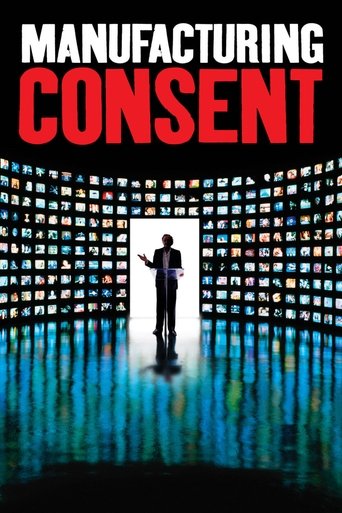
Manufacturing Consent: Noam Chomsky and the Media
1992 · Film · documentary · 167 min
Directed by Mark Achbar, Peter Wintonick
A film about the noted American linguist/political dissident and his warning about corporate media's role in modern propaganda.
27 positive1 negative1 mixed5 neutralfrom 34 commenters
Where to watch
No streaming data for this title.
38 comments on Hacker News
Personally I do consider them a negative because they are not really realistic and grounded when giving reviews.
It's a different story if it's a person that's used a device that they bought for a year. But these tech youtubers, they are extremely dependent on a good relationship with the brands because what brings them money is doing the "reviews" on day 1 (if not before) and they can only do that if they have a good standing with the brands. Meaning they will can only talk the product in a way that they know the brand is going to be okay with, mentioning obvious flaws that are easy to disregard ("it's not the best value for the money" is a classic).
This is bad because this type of journalism is constantly moving the window of what's acceptable. Channels that are truly critical (for example gamersnexus) don't get any support from brands. Channels like that are rare, of course, they do exist.
So, to reiterate my point, these channels are not informing: they're selling. There's a really good documentary with Noam Chomsky called "manufacturing consent" that really gives a good overview of this topic. Well, it's about politics, but the same applies for marketing.
Everyone knows that the companies have to comply, so a company trying to convince the public that they can choose to not comply, is just telling a lie. I don't understand why Anthropic tries damage control here. Why not just admit that all the data given to them, is also used for war-purposes? We currently see the build-up of a much larger warfare. These things are inter-connected. Even more so when some of it is done for politics (e. g. re-election or simple election "boosters"; reminds me of the old movie Manufacturing Consent or the follow-up "brother" Wag the dog).
> It was always difficult to get normal people to understand why the tech billionaires are so bad
This is mostly because normal people are not THINKING usually. It requires some event or insight when they begin to question what they see.
There are many ways to go about it, but my own personal favourite one, even though cheesy, is to tell them to watch the old B movie "They Live". Now, the movie is not really grand, has many plot holes, but Roddy made it fun (the kick ass scene with regards to bubblegem); and using glasses to see the thruth is such a powerful meme. People can then begin to question who owns the mass media. Then perhaps they may watch other movies such as Manufacturing consent (is a bit old now and thus dated, and people may find it boring, but I loved Noam's analysis back when his health was in prime condition). It is mostly in the USA where people think the superrich are god-sent. In other parts of the world this worshipping is way less. Or often does not exist; you won't find much love for the average superrich in Denmark or Sweden for instance.
Noam Chomsky's "Manufacturing Consent" is great place for anyone wanting to learn more about the various biases that influence what gets covered in the media, and how it is discussed. It's a book, but there's also a great documentary of the same name that's half about Noam Chomsky's life, and half the ideas discussed in the book.
It's from the late 80s, but it is still relevant (and it also helps it feel a little above the current political hot-topics of today.
They already have the press (plus TV, radio, film, social media censorship) to do exactly that. AI's would be cheaper, but how to get that into people, other than TV, radio and print? Chomsky would have a field day.
https://en.wikipedia.org/wiki/Manufacturing_Consent
Both sides of established power uphold the capitalist status quo. While they'll fight over culture war nonsense, they agree more often than not. As it stands, the USA cannot build things like a universal healthcare system or significantly reduce military spending, because the most powerful people in the USA benefit from the status quo (and those in Congress listen to those powerful people more than the rest of us, giving them more power).
So, sure, Congress and media outlets have a left and right, but they largely serve as boundaries as to what is considered the "acceptable" range of ideas.
Noam Chomsky explores the idea well in Manufacturing Consent (both in the book and in the documentary).
Noam Chomsky - Manufacturing Consent: https://www.youtube.com/watch?v=tTBWfkE7BXU
Full documentary: https://www.youtube.com/watch?v=Li2m3rvsO0I
I haven't read the book Manufacturing Consent, but I did see the documentary, and that was really good.
cf Noam Chomsky: Manufacturing Consent (https://en.wikipedia.org/wiki/Manufacturing_Consent_(film))
> The Times has a long history.
Some of it is featured in Manufacturing Consent: Noam Chomsky and the Media (1992)
"The film presents and illustrates Chomsky and Herman's propaganda model thesis that corporate media, as profit-driven institutions, tend to serve and further the agendas and interests of dominant, elite groups in the society. A centerpiece of the film is a long examination of the history of The New York Times' coverage of the Indonesian occupation of East Timor, which Chomsky says exemplifies the media's unwillingness to criticize an ally of the elite."
https://en.wikipedia.org/wiki/Manufacturing_Consent_(film)
Manufacturing Consent (there's a documentary form of it too) changed my entire outlook on media. Highly recommend.
Short vid based on it: https://www.youtube.com/watch?v=34LGPIXvU5M
Don't trust the news. Watch documentaries about mainstream news (Manufacturing Consent is my personal fav) and you will see that reality is not what they are peddling--it is influence.
Manufacturing Consent (and the accompanying documentary) were fairly groundbreaking at the time, but also obviously comes from an Ivory Tower. Chomsky seems to really believe the public would have adopted some of his platforms if they hadn't been drowned in distraction. You're not going to get the average American to care about the plight of the East Timorese until American soldiers are dying there....Vietnam demonstrated that.
In the early 90s though, the documentary played to packed houses of college students who suddenly claimed to have a longstanding concern for East Timor...then East Timor became unfashionable and they went back to not giving a hoot. If anything, Chomsky "manufactured" his own "consent", for a time.
"Manufacturing Consent: Noam Chomsky and the Media"
https://www.imdb.com/title/tt0104810/
Noam Chomsky in Manufacturing Consent (1992 film)
Certainly does.
Here is where I overlap with you. I've watched the documentary version of manufacturing consent but not read the book. (Don't tell anyone.) I watched The Century of the Self and Hypernormalisation plus a couple of others by Curtis. McLuhan is on my radar but I've never done a deep dive though of course I'm aware of him. I've read The Master Switch by Wu but not Attention Merchants, this man obviously is someone to keep an eye on.
So that leaves McChesney and Toffler. They are now on my radar, thank you. Under general media scholars you mention: H.L. Mencken, I.F. Stone, and perhaps Walter Lippmann and John Dewey. I thought Mencken a critic, Dewey a pragmatist–Rorty rates Dewey very highly, Lippmann I seem to recall to coming across…, Stone, don't think so. Interesting list.
And if I may be so bold. Have you considered The Revolt of the Masses by Ortega y Gasset? A prescient work. Somewhat more obscure is The Reality of the Mass Media by Niklas Luhmann, Curtis mentions nearly every cyberneticist and cybernetic theorist bar Luhmann, probably for good reason come to think of it. New media theorists: Walter Benjamin obviously for his The Work of Art in the Age of Mechanical Reproduction (but maybe others?), The Language of New Media by Lev Manovich, and finally anything by Wendy Hui Kyong Chun (Wendy Chun).
I gather that media-philosophie is an actual research programme in German-land whereas here we'd call it media studies or communication studies or new media studies and it's looked down upon to the same extent as cultural studies programmes are or courses on semiotics. I'd like to see media-philosophy (what you use to communicate your message) become an actual branch of philosophy like aesthetics/rhetoric (how you communicate your message).
It's been stimulating, ciao!
But... from the article you just cited:
> In 1993, Chomsky acknowledged the massive scale of the Cambodian genocide in the documentary film Manufacturing Consent. He said, "I mean the great act of genocide in the modern period is Pol Pot, 1975 through 1978 - that atrocity - I think it would be hard to find any example of a comparable outrage and outpouring of fury."
>Chomsky and Herman have continued to argue that their analysis of the situation in Cambodia was reasonable based on the information available to them at the time, and a legitimate critique of the disparities in reporting atrocities committed by communist regimes relative to the atrocities committed by the U.S. and its allies. Nonetheless, in 1993, Chomsky acknowledged the massive scale of the Cambodian genocide in the documentary film Manufacturing Consent. He said, "I mean the great act of genocide in the modern period is Pol Pot, 1975 through 1978 - that atrocity - I think it would be hard to find any example of a comparable outrage and outpouring of fury."[8]
> could you give an example of a statement he made about Cambodia which was not true? If you are unable to do that, it is just mud-throwing
Mud-throwing? I am just siting a wikipedia article, please care to follow the link. Even Chomsky sort of acknowledged that he was wrong on the subject, but you still can't do that.
"Cambodia scholar Bruce Sharp criticized Chomsky and Herman's Nation article, as well as their subsequent work After the Cataclysm (1979), saying that while Chomsky and Herman added disclaimers about knowing the truth of the matter, and about the nature of the regimes in Indochina, they nevertheless expressed a set of views by their comments and their use of various sources. For instance, Chomsky portrayed Porter and Hildebrand's book as "a carefully documented study of the destructive American impact on Cambodia and the success of the Cambodian revolutionaries in overcoming it, giving a very favorable picture of their programs and policies, based on a wide range of sources." Sharp, however, found that 33 out of 50 citations in one chapter of Porter and Hildebrand's book derived from the Khmer Rouge government and six from China, the Khmer Rouge's principal supporter.[8]
Veteran Cambodia correspondent Nate Thayer said of Chomsky and Herman's Nation article that they "denied the credibility of information leaking out of Cambodia of a bloodbath underway and viciously attacked the authors of reportage suggesting many were suffering under the Khmer Rouge."[18]
Journalist Andrew Anthony in the London Observer, said later that the Porter and Hildebrand's book "cravenly rehashed the Khmer Rouge's most outlandish lies to produce a picture of a kind of radical bucolic idyll."[19] Chomsky, he said, questioned "refugee testimony" believing that "their stories were exaggerations or fabrications, designed for a western media involved in a 'vast and unprecedented propaganda campaign' against the Khmer Rouge government, 'including systematic distortion of the truth.'"
Beachler cited reports that Chomsky's attempts to counter charges of Khmer Rouge atrocities also consisted of writing letters to editors and publications. He said: "Examining materials in the Documentation Center of Cambodia archives, American commentator Peter Maguire found that Chomsky wrote to publishers such as Robert Silver of the New York Review of Books to urge discounting atrocity stories. Maguire reports that some of these letters were as long as twenty pages, and that they were even sharper in tone than Chomsky’s published words."[20] Journalist Fred Barnes also mentioned that Chomsky had written "a letter or two" to the New York Review of Books. Barnes discussed the Khmer Rouge with Chomsky and "the thrust of what he [Chomsky] said was that there was no evidence of mass murder" in Cambodia. Chomsky, according to Barnes, believed that "tales of holocaust in Cambodia were so much propaganda."[21]
Journalist Christopher Hitchens defended Chomsky and Herman. They "were engaged in the admittedly touchy business of distinguishing evidence from interpretations."[22] Chomsky and Herman have continued to argue that their analysis of the situation in Cambodia was reasonable based on the information available to them at the time, and a legitimate critique of the disparities in reporting atrocities committed by communist regimes relative to the atrocities committed by the U.S. and its allies. Nonetheless, in 1993, Chomsky acknowledged the massive scale of the Cambodian genocide in the documentary film Manufacturing Consent. He said, "I mean the great act of genocide in the modern period is Pol Pot, 1975 through 1978 - that atrocity - I think it would be hard to find any example of a comparable outrage and outpouring of fury."[8]
Right. Watching the Noam Chomsky documentary, Manufacturing Consent, on YouTube really opened my eyes to this phenomena. Based on what I have observed recently, I think the decision was made some time ago on this, and we're being told what to think.
One of my favorite cases happened on NBC on the election night.
After crying and being distraught for an hour or two, a glimmer of hope arose - after-hours and international stock market was down. And suddenly their demeanor changed, there was a chance again of a tiny victory. They were predicting disaster with the same certainty as they predicted Hillary winning. There was talk of everyone's accounts being wiped out, a lot of "we told you" and so on.
And of course next day stocks went right up and nothing happened.
I just liked it because right after talking how they mispredicted the election so badly, they turned around and predicted something else, which again was quickly shown to be false.
So I do recommend watching the popular news channels, they are a pretty good source of entertainment. Read Manufacturing Consent by Herman and Chomsky and it becomes even funnier.
About controlling people in a democracy, there's a great documentary, "Manufacturing consent" featuring Noam Chomsky.
See [https://en.m.wikipedia.org/wiki/Manufacturing_Consent:_Noam_Chomsky_and_the_Media](https://en.m.wikipedia.org/wiki/Manufacturing_Consent:_Noam_Chomsky_and_the_Media)
Seems to be available full-length on YouTube: [http://youtu.be/YHa6NflkW3Y](http://youtu.be/YHa6NflkW3Y)
This fascinatingly illustrates a concept that Chomsky emphasizes, but is rarely so glaringly obvious:
In the US the government does not need to crack down on free expression the way the government in China or Singapore does, because American corporations happily apply censorship without any legal requirement to do so.
This is why some stories are essentially missing from our newspapers and news broadcasts, etc.
I highly recommend the documentary "Manufacturing Consent" which features a lot of Chomsky's ideas on this kind of thing.
Good list. Chomsky's Manufacturing Consent has a good presentation on this stuff. Just gotta filter out... maybe do a whole edit for others... all his philosophical stuff to leave just the tactics and evidence of media manipulation. Those are the real gold of the movie.
https://www.youtube.com/watch?v=YHa6NflkW3Y
Chomsky's oeuvre on politics, in general. There isn't one single book that states a thesis, it's about a perspective. So perhaps start with The Chomsky Reader. An easier-to-digest intro is the documentary Manufacturing Consent. The twist is that a lot of the things you think of as "bugs" in the political and economic systems of the Western democracies are "features" from the perspective of powerful elites. But the meta-lesson is that big questions can be answered. If you get past the mythology in your culture, and read primary sources, you can really figure this stuff out. Chomsky can go off the deep end at times (and his fanclub does so a lot), but his documentation is meticulous. Well worth reading.
For very different perspectives on programming, check out Structure and Interpretation of Computer Programming (read it a decade ago and I use techniques from there every day.)
The Gift by Lewis Hyde. Although directed at artists, it is highly relevant to creative programmers and the phenomenon of open source. He is able to articulate things which are very hard to talk about, like the intersection of economics and artistry, and how the gifting ethos is necessary for any culture to thrive. If you think ESR had the last word on how open source works, you need to read this.
Another book of interest by Hyde is Trickster Makes This World, wherein you learn the hacker archetype - the giver of technology; the player of tricks - has been around since prehistory. It's not a coincidence that those two aspects are always seen together.
Ah, I had forgotten about Manufacturing Consent. That is an excellent documentary as well. I have the book but I haven't yet read it.
Agreed - Century of Self is fantastic.
Along the same lines as Noam Chomsky's "Manufacturing Consent". The book is great, and there's a documentary from 92: https://www.youtube.com/watch?v=dzufDdQ6uKg
I recently watched his movie "manufacturing consent" and was surprisingly disappointed. It seemed kind of disjoint with no solid message and unfortunately it was boring to watch to boot.
I really think corporate control of media, and media bias, and how it affects our society is a really important topic that needs its own easy to digest documentary, like black fish, or an inconvenient truth. Something that will popularize the issue, and explain the problems to people who normally wouldn't be interested.
Manufacturing Consent was a life-changing event for me, so good luck. But suggesting the film will resemble "fog of war" seems odd since that was a confession by someone complicit in the tragedy under discussion. Frankly, i'd be happier with a sequel to Manufacturing Consent.
People who disagree with this comment and say it's false would do well to read this book http://www.imdb.com/title/tt0104810/ Manufacturing Consent, by Noam Chomsky. It is very well researched, carefully documented. At least look at the information and think about it. The people don't have nearly as much control as it seems.
"It is the mark of an educated mind to be able to entertain a thought without accepting it." - Aristotle
This echoes a lot of things that Noam Chomsky talked about in Manufacturing Consent (both documentary film and book originally published in 1988) esp. the idea that one of the ways the status quo is sustained in a democratic society is to encourage vigorous debate but only within a narrow scope of acceptable opinions.
The link to the torrent for Manufacturing Consent at the end of his piece no longer works, but the full film is up on YouTube: http://www.youtube.com/watch?v=3AnB8MuQ6DU
I love Manufacturing Consent (the documentary) and it inspired me to read some of Chomsky's books on politics and see him live. It didn't change my life though.
In general, I think the fundamental problem with Chomsky's compelling and very well buttressed description of The Way Things Work [in the US(1)] is that it really doesn't offer much hope. (This actually comes up towards the end of the movie, and his answer -- essentially that people are smarter than we think -- is pretty thin.)
In the end, the great mass of Americans are too busy with their day to day lives to parse out what's going on with their government and the corporate state. US democracy has essentially been reduced to a sporting event. As long as those in power don't drive the voting population into absolute misery (and it's hard to figure out just how much misery that is) they're happy enough with business as usual.
(1) I'm not saying that Chomsky's observations apply uniquely to the US or that other democracies are great, but many of Chomsky's observations are rather specific to the US, either because of peculiarities of the US political system or the US's undeniably unique position in world affairs.
If you judge Chomsky by his fans, it is easy to dismiss him as a conspiracy theorist. That's not what he's doing.
He's presenting another view of the world where, even in a free and democratic society, the media has institutional, structural weaknesses that cause it to serve power. To amplify certain messages, and attenuate others.
It's an attempt to explain how a free society could have committed such atrocities as the Vietnam War, and later, gotten suckered into the Iraq War.
I have seen the debate about this shift in my lifetime. In the early 90s, when the Manufacturing Consent movie came out, I was in a journalism program and even interviewed the makers of that film. Many of the other students in my classes found the film bewildering. They quite honestly believed the media were just serving the people in the great engine of democracy.
Nowadays everyone is aware of how badly the media is failing the public. There are satirists who make this point on a literally Daily basis.
Of course, the general public's cynicism is often unsophisticated, and manifests itself as accusations of intentional bias. But there is more and more awareness of how the structure of the media itself affects what gets covered - perhaps because the Internet offers a counterexample.
This is the same government that thinks that people at the New York Times should be indicted for espionage.
... at the same time as they feed the New York Times the leaks and favored access it needs to adequately serve its propaganda function, http://www.nytimes.com/2012/06/01/world/middleeast/obama-ordered-wave-of-cyberattacks-against-iran.html?pagewanted=all being one recent example.
Chomsky likens the NYT to a court stenographer, which I think is such a delicious phrase. Fun documentary version of one of his most famous books: http://www.hulu.com/watch/118171/manufacturing-consent
I encourage you to see the documentary "Manufacturing Consent: Noam Chomsky and the Media".
The whole thing is on Google Video: http://video.google.com/videoplay?docid=-5631882395226827730#
(Better yet, read Chomsky's book on which the documentary is based, "Manufacturing Consent: The Political Economy of the Mass Media".)
check out the documentary on chomsky "manufacturing consent". this is partly addressed there.
all these things are toys and distractions. it's up to you to choose what to follow: the false prophets or the real ones. the issues that actually matter or the ones that actually don't.
the main thing i have found is that it all feels impossible/insurmountable in the beginning. but as with anything else, it gets much easier over time as long as the work and effort is there. e.g. "programming is too hard". but in reality EVERYTHING is "too hard". nothing is easy. nothing is black and white. etc.
To help develop your argument, try:
Edward Bernays: Propaganda or the movie "version": Century of the Self (both on archive.org, btw Adam Curtis is about as underrated as Robert Fisk -- no means by accident)
Manufacturing Consent (same spirit movie as in the thread)
Understanding Power (basically they simplify and reiterate stuff backed up in this book)
And and if you are still reading this, have fun reading Dictators, by Jacques Bainville.