 Hacker Cinema
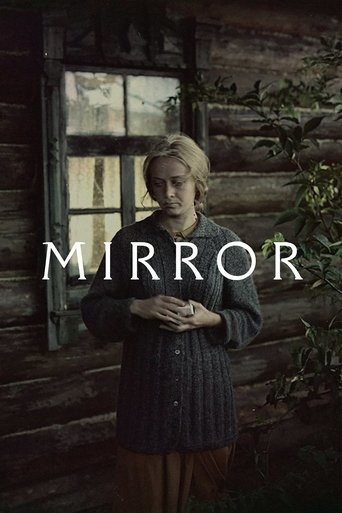
Mirror
Зеркало
1975 · Film · 107 min
Directed by Andrei Tarkovsky
A dying man in his forties recalls his childhood, his mother, the war and personal moments that tell of and juxtapose pivotal moments in Soviet history with daily life.
13 positive1 negative1 mixed3 neutralfrom 18 commenters
Where to watch
No streaming data for this title.
24 comments on Hacker News
Thanks! Here's the full list: 2001: A Space Odyssey, 8½, Aguirre the Wrath of God, Ali: Fear Eats the Soul, All That Heaven Allows, Apocalypse Now, Ashes and Diamonds, A Woman Under the Influence, Barry Lyndon, Bicycle Thieves, Breathless, Casablanca, Céline and Julie Go Boating, Chinatown, Chinese Roulette, Citizen Kane, City Lights, City of Pirates, Contempt, Daisies, Damnation, Dishonored, Earth, Electra My Love, El Topo, Eraserhead, Eyes Wide Shut, Film Socialisme, Fitzcarraldo, Fuego en Castilla, Hiroshima Mon Amour, Holy Motors, Inauguration of the Pleasure Dome, In a Year with 13 Moons, India Song, Inland Empire, Irma Vep, Koyaanisqatsi, La Dolce Vita, La Jetée, Late Spring, L'Eau de la Seine, Le Voyage dans la Lune, Lolita, Los Olvidados, Lost Highway, Lucifer Rising, Man with a Movie Camera, Metropolis, Mirror, Mulholland Drive, Night Music, Ordet, Orpheus, Persona, Pickpocket, Playtime, Psycho, Rebecca, Rosemary's Baby, Rumble Fish, Scarface, Seven Samurai, Sherlock Jr., Singin' in the Rain, Stalker, Sunset Boulevard, Taste of Cherry, Taxi Driver, Testament of Orpheus, The 400 Blows, The Blood of a Poet, The Cabinet of Dr. Caligari, The Color of Pomegranates, The Green Ray, The Holy Mountain, The Isle, The Lady from Shanghai, The Night of the Hunter, The Passion of Joan of Arc, The Seventh Seal, The Spirit of the Beehive, The Tales of Hoffmann, The Tree of Life, The Turin Horse, Time of the Gypsies, Tokyo Story, Touch of Evil, Trans-Europ-Express, Ugetsu, Un Chien Andalou, Uncle Boonmee Who Can Recall His Past Lives, Vampyr, Videodrome, Wavelength, Werckmeister Harmonies, Wild Strawberries, Moonlight Sonata, Stellar, The Haunted House Biased toward European art cinema, experimental work, and directors who broke conventional narrative rules.
If you haven't seen it, A Hidden Life has the most Tarkovsky feel to it for me. It felt very inspired by Mirror, specifically. I say that as a person who loves both films, too.
I can't believe the author of the article so blithely dismissed To The Wonder, Knight of Cups, and The New World. The New World is probably my favorite of all Malick's films so far.
Like the first line says, he is probably the least known famous director. That is, he is not an activist and not flashy, doesn't make a lot of movies, and the general public simply doesn't know about him. But all the other movie directors and famous actors know him and kind of idolize him.
When Thin Red Line came out in 1998 he hadn't done a movie since 1978 (Days of Heaven) and yet he snagged all the famous actors to play in it: Sean Penn, Jim Caviezel (though he wasn't as famous then), George Clooney, Jared Leto, Nick Nolte, John Travolta and others. It's like they were tripping over themselves to be in his film.
But I can't fault the general public for not knowing him either. His movies are more "artsy" so he is like like an American version of Andrey Tarkovsky -- you have to really be in the mood for his movies, like watching Stalker or Mirror by Tarkovsky.
This reminds me of the wide range of reactions sparked by Andrei Tarkovsky’s Mirror, his most avant-garde film. On one hand, you can put that film on before a gathering of fairly open-minded cinephile friends, and even they might reject it as artsy-fartsy or unintelligible. On the other hand, a number of ordinary proletariat people in the USSR wrote to Tarkovsky to say how his film touched them deeply and felt directly relatable to their own lives.
My personal recommendation for a Tarkovsky's first is his diploma film The Steamroller and the Violin (1960, 46 min, co-written with Andrei Konchalovsky). It was surprisingly watchable [for me] and I wish I had watched it first myself before I was exposed to the Mirror when I was 16.
[0] https://en.wikipedia.org/wiki/The_Steamroller_and_the_Violin
The Mirror is one of my favourite films but I always fall asleep 2-3 times while watching it!
I find it so relaxing that I’ve just learnt to enjoy the whole experience and enjoy the dozing as part of the experience of watching the film.
The best way to watch these movies would be by pirating them from the RuTracker, as that way you will be sure that you are not contributing any views or advertisement money to the Mosfilm, with a bonus of much higher bitrates.
Here are the links:
Solaris — https://rutracker.org/forum/viewtopic.php?t=6191155
Stalker — https://rutracker.org/forum/viewtopic.php?t=6182463
Ivan's Childhood — https://rutracker.org/forum/viewtopic.php?t=6194960
The Mirror — https://rutracker.org/forum/viewtopic.php?t=6194964
Andrei Rublev — https://rutracker.org/forum/viewtopic.php?t=6194948
The Passion According to Andrei — https://rutracker.org/forum/viewtopic.php?t=5820633
Battleship Potemkin by Sergei Eisenstein is in public domain, and so you can legally watch any other upload on YouTube instead of Mosfilm's, for example https://www.youtube.com/watch?v=HsQcljysO-8
It's one of his most accessible movie, and usually resonates with tech people for obvious reasons. His best movies imo are Mirror, Ivan's Childhood, Andrei Rublev, Stalker and then Solaris, Nostalgia and Sacrifice.
Now Solaris book by Lem is far superior to Tarkovsky's rendition.
IMHO, if you’ll be watching your first Tarkovsky film start with Stalker, which is how my girlfriend (now wife of 27 years), introduced me to him many years ago. I was very much a Fellini person, and the Bergman-Tarkovsky school seemed cryptic (at best) at the time. When finished, ask yourself (1) if you would have gone into the room and (2) what the dreamlike sequences with Stalker’s son meant.
Second one should be Solaris, if you’re into SciFi or The Mirror if you’re not of if you’d like a challenge. I think The Mirror is the better movie, the woman (stand in for T’s mom) looking at the wheat field (T had these specifically planted for the film!) haunts me to this day.
I personally couldn’t relate to The Sacrifice, perhaps his most personal film. His earlier films (Ivan and Rublev) I could not watch at all.
To be a genius artist like him in the Soviet Union meant privileges unheard for art film directors in Europe (let alone US), eg see the wheat field thing above. It also meant you’re at the mercy of the “masses”. I had read an article once that included a comment for The Mirror from a regular filmgoer, saying after 30mins it caused such a headache! The funding was based on such feedback and the movie was labeled as elitist (it is) which greatly impacted his career. It’s infuriating to think T lost time due to such petty interference (OTOH, I could only finish the film on my third try, falling asleep in first two attempts! So she had a point)
I'm a huge fan of Tarkovsky. Stalker and Mirror are two of my all-time favorite films, and The Sacrifice is great too, but Solaris was a huge letdown.
The very first impression I have of Stalker [seen on a projector] is being stunningly beautiful. Very few films [including all of Tarkovsky's, with maybe the best being Mirror] manage to create this sense of stunning beauty so that's something that needs to be mentioned.
Other than this, the film simply hypnotized and drew me in. I wasn't analyzing or thinking about the story, rather observing and experiencing, which allowed the magic to unfold. There are scenes that freeze time, the only words that maybe do justice to them are "bewitchingly intense". His philosophical magnum opus [1], Mirror, is even more powerful.
Tarkovsky was not only an artist extraordinaire but a supreme genius, the kind of person that appears once every few centuries. His films are full of something that you certainly won't find in any movie today [especially American], which is called "soul", and a full appreciation of him and his work entails opening up that part of yourself and allowing it to engage with Tarkovsky's as expressed in his output.
[1] I use "philosophy" here to mean meditations on the human condition that are understood / made real through praxis, i.e. its original definition.
> Watching it [The Mirror] is like attending a séance of the twentieth-century Russian soul.
Very well put. I would agree. The Mirror is my favorite Tarkovsky film. I wouldn't even call it a film, it's more more like a poem in movie form.
The article talks mostly about lighter-hearted movies, but I'd still want to recommend my favorite examples of "burdensome beauty" (as they put it) by Tarkovsky:
"Зеркало" (The Mirror): https://www.youtube.com/watch?v=CYZhXm02kN0
"Сталкер" (Stalker): https://www.youtube.com/watch?v=TGRDYpCmMcM
"Андрей Рублев" (Andrei Rublev): https://www.youtube.com/watch?v=x6kqlveBhVY
And, if you're into Slavic cinema in general, I'd also recommend "Life is a Miracle" by Emir Kusturica: https://www.imdb.com/title/tt0322420/ -- he's not a Russian director, but he is fantastic.
I guess you somehow missed the film "Mirror" (1975). It's my favorite of his works. It is only 1h47m, has a female main character, and I don't feel like it's trying to teach morals. Oh, and it has stunning visuals and cinematography. The fire scene, the interiors, the colors... Now I have to re-watch.
The Color of Pomegranades is a film that stuck deeply in my mind. Another russian was director is Tarkovsly and his The Mirror is also deeply abstraact and very visual.
Any art form that was created by the Soviet artists will be considered propaganda since it was state sanctioned. And they were pretty vocal and straightforward about that, art was to educate the people. In US, art many times is just away to make money. But I actually prefer the propaganda art. My favorite propaganda movies are by Tarkovsky - Mirror and Stalker....
I watched both movies. Tarkovsky's version is my favorite but I grew up with Soviet cinema so maybe that's why (though one can argue his films are so outside the norm with Soviet cinema that it wouldn't matter).
One of the keys to Tarkovsky's movies is that he is concerned with human relationships primarily. Romantic relationships, parents and children, etc. Even when he directed "sci-Fi" movies, they were never about rockets, aliens, shooting, explosions.
This quote from the movie, illustrates that well I think:
---
We don't want to conquer space at all. We want to expand Earth endlessly. We don't want other worlds; we want a mirror. We seek contact and will never achieve it. We are in the foolish position of a man striving for a goal he fears and doesn't want. Man needs man!
---
I remember watching this movie and being disappointed because I expected more sci-fi stuff. Same thing with Stalker, his other sci-fi film. Only after seeing The Mirror (my favorite of his films) started liking his other movies.
I like the movie, and in general most Tarkovsky's movies, (favorite is The Mirror). But I think many expecting a traditional Sci-Fi movie like 2001: A Space Odyssey, or Aliens, might be disappointed.
It is more about humans and what it means to be human than about aliens or special effects.
To summarize the idea of the movie, this quote from Dr. Snaut probably is probably appropriate:
---
I must tell you that we really have no desire to conquer any cosmos. We want to extend the Earth up to its borders. We don't know what to do with other worlds. We don't need other worlds. We need a mirror. We struggle to make contact, but we'll never achieve it. We are in a ridiculous predicament of man pursuing a goal that he fears and that he really does not need. Man needs man!
---
It is also interesting that Stanisław Lem never quite liked this version. It was mostly Tarkovsky's own re-interpretation, which I think is great, but it was not true to the book.
If you liked "Roadside Picnic" you should really watch Tarkovsky's "Stalker" (though the film is much more mystical and less science-fictional than the book).
If you like Lem, I would heartily recommend "Cyberiad".
Unfortunately, Tarkovsky's adaptation of Lem's "Solaris" was pretty awful, especially compared to the likes of "Stalker" and other great Tarkovsky films like "Mirror" and "The Sacrifice".
Curiously, despite Stapledon's enormous influence, to my knowledge none of his books have ever been made in to major motion pictures.
More concretely, if you live in/near NYC, follow http://screenslate.com - we get a wealth of repertory film screenings all the time. I've managed to see Andrei Rublev, The Mirror, Nostalgia (twice!), and Stalker all in 35mm over the past couple years.
Watching a Tarkovsky movie is a very interesting experience. People that never did are in for a treat. All you need are good subtitles.
One might say that a movie is a movie, a sequence of images, and it can't be that much different.
Yet, there is that feeling, that unmistakable sensory discovery that you make, when watching a movie like Stalker, or Mirror. You will find yourself in an unusual, novel, state of mind, and will witness your thoughts wandering on new territory.
I have, as many others here, difficulty putting these things into words. But that is for the better, as you should see for yourself.
Give The Mirror a try. It is highly autobiographical so it is probably not his most well known or well liked film but its cinematic techniques are some of the best. Poetry in motion is how I can best describe it as well.
"Sculpting in time" is also the title of Tarkovsky's book which I haven't read, but I now have a new impetus to do so.
Interesting about colour - perhaps a "less is more" thing. The end of Andrei Rublev is breathtaking, for instance.
I saw Mirror three times at the cinema, and there are not many flicks I can say that about.
Fight Club : A bit over the top, but works for me.
Cidade de Deus (City of God) : Overcoming adversity, based on real life story.
Le fabuleux destin d'Amelie Poulain (Amelie) : Beautiful movie about seeing the world in a different way. Love is worth fighting for. Don't be afraid to be eccentric.
Das Leben der Anderen (The Lives Of Others) : Even the harshest repressive regimes cannot re-educate and brainwash all the humanity out of people.
Das Boot : How I feel when I need to finish a project while the management throws "depth charges" (feature requests ;-) ) at me.
Hotel Rwanda : People are capable of both extreme violence and extreme kindness.
Zerkalo (The Mirror) by Tarkovksy : Nostalgia. Reminds me to keep connected to my parents and family. Eventually they'll be gone, with only dreams and memory fragments of them left.