 Hacker Cinema
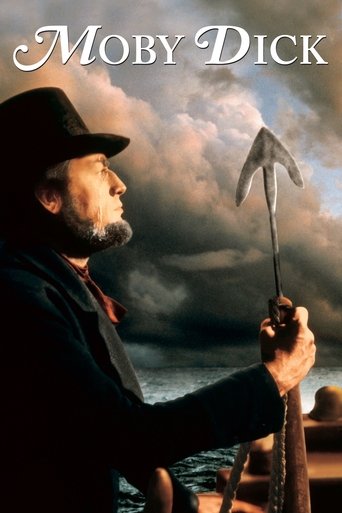
Moby Dick
1956 · Film · 115 min
Directed by John Huston
In 1841, young Ishmael signs up for service aboard the Pequod, a whaler sailing out of New Bedford. The ship is under the command of Captain Ahab, a strict disciplinarian who exhorts his men to find Moby Dick, the great white whale. Ahab lost his leg to that creature and is desperate for revenge. As the crew soon learns, he will stop at nothing to gain satisfaction.
2 negative16 neutralfrom 18 commenters
Where to watch
No streaming data for this title.
19 comments on Hacker News
I used to spend a lot of time imagining myself as the captain of a Federation starship :) but I did also read a lot of books.
But also, the availability of YouTube changes the utility of descriptive writing. Moby Dick can have pages of text about whales or whatever, but now I can spend hours watching whale videos on YouTube. The importance of the interior life of the characters is more, or of diffusive world building stories with too much intricacy for a movie or video presentation.
Being easily bored is the same thing as having a poor attention span. Of course they have no issue spending time on the things they love. If they struggle to focus on something, they probably will find themselves unable to enjoy it very much. I don't think any of the film students who spend the whole movie on their phones go home afterward to read Moby Dick.
These are Hollywood blockbusters, not art films. You can keep a baby entertained for hours with CoComelon, but that doesn't mean they could get through Moby Dick.
Before its 1919 "Melville revival", very few people would have been able to read Moby Dick, because gatekeepers would not have subsidized its availability. Moby Dick was a failure due to many chance events, such as reviews based on an unfinished version that did not include among other things the epilogue that explained Ishmael.
What would make the novel as an art form dead or alive? Do you believe that the novels of the late-nineteenth century that enjoyed the most late-nineteenth readers are the same novels that influenced later writers the most, or the novels that had the most impact on people's thoughts 170 years later?
Since it sounds like you are not be a regular reader, my point may make more sense in the context of film. Go back 50 years, compare which movies earned the most, which were mentioned the most in the press of the time, and which ones won Academy Awards. Then if you think that says anything, compare that to which movies are considered important now, and you'll find that in fact none of those three metrics is more reliable than the others.
I'd argue otherwise. With electronic self-publishing, you are completely free to experiment, and have an audience potentially all over the (English-speaking) world.
But it's not going to make you world-famous, save for unique exceptional cases. It will likely will not directly bring you wealth from sales, or actually any considerable money. Ah, and the printed book is a gimmick that only a part of your audience would still appreciate; literature and paper are much like music and vinyl.
You can still become truly world-famous and well-off if your book becomes a basis of a movie, or ideally several; see e.g. Harry Potter or The Song of Fire and Ice. Granted, they not a completely realistic, but neither is Moby-Dick, or Hundred Years of Solitude, or, say, Don Quixote, which basically started the whole "novel" thing.
Are you reading by opening up to page 1 and reading through to the end? Don't do that. I know, I know, spoilers, but unless you're reading mysteries, it's not a big deal. The best fiction isn't just the ending. Everyone knows Captain Ahab dies at the end of Moby Dick, but that doesn't spoil anything.
So, read the first chapter. Read the beginning and end of the rest of the chapters – a few paragraphs, a page, something. Read the last chapter.
Analyze the story: make a list of characters and their relationships to each other. If there are people related to each other, make a family tree. Consider the locations: map them out, especially if they reference real world locations. Get a feel for how the story moves through the world. Tolkien's books are famous for including the family trees of his characters, timelines, and world maps. Do that.
Try reading a novel that's been made into a good film. Follow along reading and comparing the film adaptation to the novel. Something like C. S. Forester's book The African Queen and the 1951 film directed by John Huston.
Pick a novel that riffs on subjects you're already into. Sylvia Plath's The Bell Jar involves psychology as a major plot element, as do One Flew Over the Cuckoo's Nest and Requiem for a Dream. All three have been adapted into excellent films.
But, but, but how will you claim you read Moby Dick in under 55 minutes?
If one considers "reading" glancing at every 30th word for a blink of the eye, it seems a completely wasted effort if one doesn't stop to smell the roses and build a vision in their mind's eye by reading thoughtfully (no pun intended).
It's like the people who are always so busy yet have no time, and miss most details and skip enjoying the simple minutia that give sometimes authentic and believable depth to character, plot, and prose development. It's why most movies are bad: it's not the acting, but the script either lacks character development by not building the character as someone good to love or a dastardly villain, and real by specific foibles, idiosyncrasies and habits unrelated to the central plot. A spy movie where the main character flies a kite on the weekend without being on a stakeout, but then shares it with the kids and gives it to them as they're having so much fun.
Movies, books, and readers mission focused to skip to the end are as boring as people who make love like it's a race or a perfunctory ritual.
> ... a Texas Mennonite, who begs the soldiers not to march on to Mexico, saying ominously: “The wrath of God lies sleeping. […] Hell ain’t half full. Hear me. Ye carry war of a madman’s making onto a foreign land. Ye’ll wake more than the dogs.”
The "disordered Mennonite" further tells the irregulars "If ye cross yon river ye'll not cross it back".
This prophecy is delivered in a barroom at the border, one of three auguries of doom delivered by various elders the Kid happens upon. With these McCarthy repeatedly points the reader back to a long heritage of epic tragedy: Moby Dick, Macbeth, and The Iliad.
Any other obsessive re-reader out there care to recall the other two such episodes?
I found most books are just garbage. Take Moby-Dick for example, interesting story that could be compressed to two pages, but it is 400 pages of boring stuff, that goes on and on. And it can not be criticized as it is "fundamental corner stone of American literature"!
Watching documentary about original story, and a few pieces about 19 century whale hunting, is much better use of time!
That's one of the ongoing theories as to why Moby Dick was so long ... not merely to accentuate the 99.99% bordedom of whaling (with the 0.01% of "excitement"), but because he'd get paid better if it were longer
Having read the "Great Illustrated Classics" edition of Moby Dick as a kid, and watched the Gregory Peck film, I can confidently assert I NEVER want to read the whole thing.
Even those "condensed" versions had enormous swaths of nothing in them!
Books are also dangerous. Because the amount of effort you have to invest in a book is quite large people tend to develop biases around a book.
It's a strange phenomena. The more effort someone invests in something the higher their bias towards it. Much is the same for books.
I know of no human who has read every detail of the books war and peace or Moby dick with their own free will and came out saying that the plot was total crap. It's literally because the energy placed into finishing the book is so high that the bias is even higher.
Movie adaptations of said books will likely have terrible plots even when the plots are literally identical to the books. The only thing missing from the movies is your bias.
Note that this does not mean I am saying books are bad. They do offer things that online articles fail to offer. Just wanted to note that almost no one mentioned the dark side of investing so much time into books.
Indeed. I'll continue to enjoy George Pal's 'Time Machine' film, despite the fact that I haven't seen any store-window mannikins for a couple of decades.
A great story is great despite its setting, not because of it. 'Moby Dick' will continue to be powerful despite the expiry of whale-hunting; 'Sherlock' still spellbinding despite the extinction of persian slippers, pleasant landladies and street-cabs. Quite sure there'll never be an AI character quite as interesting.
They're all right, somehow.
A film teacher of mine used to always quote Northrop Frye as saying "The category judgement precedes the value judgement." As in: it's a great thriller, but a terrible romance. Moby Dick is hard to classify, and (by this logic) harder to judge. Those approaching it as a novel had every reason to call it a failure. Melville was pushing himself. In jazz I've heard this called "going out." It's something you earn.
His lesser-known works like "Bartleby the Scrivener" and "Benito Cereno" are much more coherent and approachable (they stick to a familiar category), but still have much of that slow, mysterious otherworldly quality and are well worth reading (in my humble opinion).
https://en.wikisource.org/wiki/Benito_Cereno
I don't think Moby Dick suffers from bad rhetoric, etc - although some of these reviews may do.
Language has become Hollywoodised over the last few decades. We've lost the ability to express colour and imagination through language - not just through plot or predictable genre tropes.
Modern fiction is more like a journalistic description of a movie or TV show, and less like an independent medium that sculpts language into story structures for its own sake.
(The post goes on in exploring the technical and commercial side of each medium. I think the title is unsuitable to the article but, as it was what stuck with me, it's what I'm going to address)
I think this is a non-question. Let me rephrase the question: "If I want to tell a story, what is the best medium to use in 2015 and beyond?".
My answer is "Whatever you want" followed by a more serious "None".
Because the choice of medium impacts in HOW the story is told. Having, for example, the Moby Dick story as a book is completely different from having it as a movie. Or as a game.
Of course the story may change slightly or have a different impact depending of the medium. Some stories work better in some media than others. Think of the story as data, and the medium as the format in which the medium is conveyed.
In a semi-related note, I want note that the big _connoisseurs_ of a medium start to focum more on how the medium is used than it's content (i.e. story stops being important, what's important is how it is told)
Some of the listed titles, since the site seems to be under heavy load:
Books:
* Winston Churchill, A History of the English-Speaking Peoples, Volume I and Volume II
* Philip K. Dick, Minority Report
* Ian Fleming, Diamonds are Forever
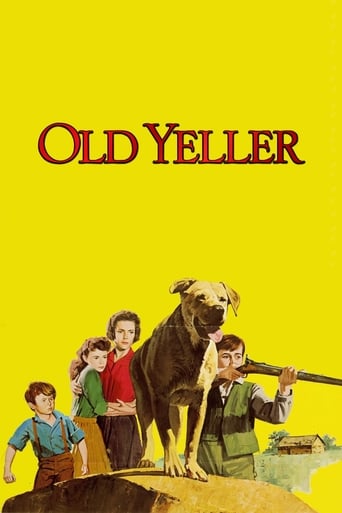
* Fred Gibson, Old Yeller
* Billie Holiday, Lady Sings the Blues
* Alan Lerner, My Fair Lady
* Eugene O’Neill, Long Day’s Journey into Night
* John Osborne, Look Back in Anger
* Dodie Smith, 101 Dalmatians
-
Movie titles:
* Around the World in 80 Days
* The Best Things in Life are Free
* Forbidden Planet
* Godzilla, King of the Monsters!
* It Conquered the World
* The King and I
* The Man Who Knew Too Much (1956 remake by Alfred Hitchcock of his 1934 British film)
* Moby Dick
* The Searchers (1956 film version with John Wayne from Alan Le May’s 1954 novel)
* The Ten Commandments (1956 version by Cecil B. DeMille, who also directed a similar film in 1923)
"At first I thought this was an awful list, but then I filtered it by date up to 1995 and I felt that the list made a lot more sense. Is this an issue that it takes 15 to 20 years to get settle on what is truly worthy? Or is it an issue with the dawning of the Internet Age?"
I remember seeing the same thing on IMDB years back, where contemporary movies will appear very high on the list and disappear.
If you read the reviews (and I think IMDB lets you filter by demographics, or used to) you'll see that it's mostly young kids and idiots voting summer blockbusters as "10/10 OMG best movie evar!".
Not sure if there is a solution as it's always been the same way, there's always some hot new art, book, technology, etc. that's "GROUNDBREAKING" "CLASSIC" "AMAZING" that fades away quickly and the items that stick around for posterity aren't necessarily the ones that you'd predict (eg. Moby Dick and The Great Gatsby were initially flops on publication).
I don't remember much about Moby Dick.
a. "Call me Ishmael" = The First Three Words b. Queequeg's Coffin = The Last Bit. c. there was a chapter called Cetology. d. Ambergris is (I think) Whale Sperm, e. At some point in the novel, I'm PRETTY sure someone puts on a whale penis and runs around. They're huge, whale penii, like 6 feet, easy.
That's about it, and I'm sure Herman Melville (I guess I remember that too) would be a little irked, but...
...if I had an idea, tomorrow, to write a book about an old guy chasing after a whale, I'd stop myself.
My point is, that one of the -other- benefits of having a breadth of knowledge, is that it helps prevent unintentional derivativeness and mimicry.
------
Also, this author also assumes that the only worthwhile knowledge is that which can be recalled consciously at will.
Personally, I find that knowledge is a lot like any artist's artistic vocabulary. You consume and consume and consume, and then at some point you start creating, and what you end up making is the conscious and unconscious combination of all of the things you've seen/heard/read before.
The guitarist doesn't realize it's his love of The Beatles and Dr. Dre that's creating that work, but it is.
Those are just two things off of the top of my head. And by that, I mean these are two ideas that are undoubtedly the distillation of ideas I've heard/read elsewhere. Like maybe "On Writing" by Stephen King.
(The Above Idea about the distillation of ideas is likely the distillation of a speech from a great movie, which I'm sure I can find...)
"You come into a bar, you read some obscure passage, and then pretend you, you..pawn it off as your own..as your own idea just to impress some girls..?" - Good Will Hunting (1997)
And by "girls" he means "Hacker News."
(Try not to make that substitution too liberally however, or you'll be sorely disappointed when you walk into the "Live Hacker News! Hacker News Hacker News!" bar.)
Novels once rated the same consideration by critics.
"Once upon a time there were good American novels and bad ones, but none was thought of as a work of art."
http://press.princeton.edu/titles/7197.html
Moby Dick, written in 1851, wasn't widely regarded as a work of art until after World War I.
To counter Ebert's summary: Why are the self-appointed guardians of the ramparts of canonized art always so jealous in protecting it from being invaded by newcomers? This story has been repeated over and over again with portrait paintings, Impressionism, architecture, novels, cinema, and everything in between. It's an old and tired plot, and one he should certainly be familiar enough with to disdain.