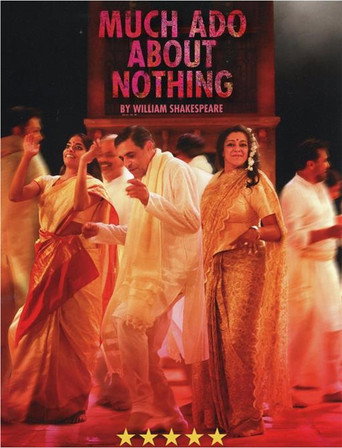
Iqbal Khan's vibrant and colourful production transposed Shakespeare's vivacious and sometimes unsettling comedy of love and deceit to an Indian setting.
He explains why himself: Birdman opened in the United States on October 17. It is not, financially, a consequential movie; it was released by Fox Searchlight, the prestige, indie-ish subdivision of 20th Century Fox; it has made decent money (nearly $21 million domestic) for the kind of film it is; it will win a bunch of awards over the next three months and lose a bunch of others. It is a good movie, but the type of good movie it is has nothing to do with what the movie industry is about.
Typically a film like this loses some money at the box office once all the costs are taken into account (even though Birdman got a lot of great advance PR on the late night TV circuit and so on); the theatrical release is essentially a giant advertisement for the DVD/rental/streaming/broadcast windows.
What can you do? The market for franchises or blockbuster films (most of which either have franchise potential or big ancillary tie-in potential, like Titanic) is huge because that's what most people like - an amazing, larger-than-life spectacle. Same reason Shakespeare built so many stories around exotic locations and courtly intrigue, same reason Dickens leveraged class distinctions to ratchet up the drama between his characters. I find these complaints a bit odd considering that many of the big franchises originate in the comics world, which was the dungeon of literary publishing for decades. these franchises are successful not just because of spectacular elements but because of the highly refined storytelling skills of the creative teams. To a large extent they're building meta-narratives of multiple interconnected stories that draw on a common fictional world and are designed to reinforce each other, for both economic and aesthetic reasons - a modern panthetistic mythos that lays out a different worldview from the singular ideological perspective that was a cultural staple of the past (while also containing its own ideology, of course).
Incidentally, it's off that the piece doesn't address how Josh Whedon went from directing The Avengers in 2011 to shooting a modern adaptation of Shakespeare's Much Ado about Nothing in his own house/backyard, featuring several of the same actors (eg Clark Gregg, who plays Agent Colson in the Marvel superhero 'world').
Today we have a different model: The modern studio chief loves business, success, replication, and reliability, and nobody expects him to offer even the most cursory nod to anything that smacks of ideals that relate to content;
That's because the modern 'studio' is just the crown jewel in a business conglomerate, and development now happens within production companies. It's been going this way ever since Uncle Sam busted the studios' vertical market and forbade them from owning theaters or signing stars to highly restrictive contracts. There's a good albeit somewhat tendentious history of the motion picture business here: http://www.law.nyu.edu/sites/default/files/ECM_PRO_060965.pdf
fairy godmothership of independent producer Megan Ellison. The grace of billionaires is not a great business model on which to hang the hopes of an art form
Megan wants to make money as much as any other producer and just has a different strategy for doing so (and I don't mean that as a criticism). Look, the film industry is a bit like the restaurant industry: you have a few megacorporations at the top, like McDonalds, Burger King, Starbucks - everyone knows their food is of low overall quality but it remains popular. Then you have other fast food providers that do the same sort of thing but slightly better in some ways and worse in others, for a slightly smaller audience. Then you have some specialty fast food outlets like Chipotle that make pretty nice food for more money and are very successful but an order of magnitude smaller than megacorporations. Then you have smaller chains (often family owned or closely held), then a wide variety of regular restaurants, and scrappy disruptive food trucks on the outside. It's your typical power-law distribution.
If you're running some sort of artisinal restaurant, you're in competition with McDonalds insofar as they also sell food and dollars spent there are not winding up in your register. But in another sense you're not, because you don't want to make your living selling $5 meals off plastic trays, you want a more intimate relationship with your customers, you like having little boozy gourmet parties with the wait staff after the customers have left, and you like starting work at 11am instead of 5am.
MARK HARRIS is the author of Pictures at a Revolution: Five Movies and the Birth of the New Hollywood and Five Came Back: A Story of Hollywood and the Second World War.
Gee, sounds like Mr Harris is trying to put together a little franchise of his own. If you're planning to write pop film criticism you'd probably do well to pick some other number of films to analyze besides five.
How would you know, though? I personally found it Good Fun, but some other films such as The Dark Knight mentioned above are masterpeices, comic origin or not.
Incidentally, Joss Whedon's latest film (which he made in his spare time between shooting and editin g The Avengers) is a fantastic rendition of Shakespeare's Much Ado about nothing, and stars some of the same actors.
 Hacker Cinema

2 comments on Hacker News
He explains why himself: Birdman opened in the United States on October 17. It is not, financially, a consequential movie; it was released by Fox Searchlight, the prestige, indie-ish subdivision of 20th Century Fox; it has made decent money (nearly $21 million domestic) for the kind of film it is; it will win a bunch of awards over the next three months and lose a bunch of others. It is a good movie, but the type of good movie it is has nothing to do with what the movie industry is about.
Typically a film like this loses some money at the box office once all the costs are taken into account (even though Birdman got a lot of great advance PR on the late night TV circuit and so on); the theatrical release is essentially a giant advertisement for the DVD/rental/streaming/broadcast windows.
What can you do? The market for franchises or blockbuster films (most of which either have franchise potential or big ancillary tie-in potential, like Titanic) is huge because that's what most people like - an amazing, larger-than-life spectacle. Same reason Shakespeare built so many stories around exotic locations and courtly intrigue, same reason Dickens leveraged class distinctions to ratchet up the drama between his characters. I find these complaints a bit odd considering that many of the big franchises originate in the comics world, which was the dungeon of literary publishing for decades. these franchises are successful not just because of spectacular elements but because of the highly refined storytelling skills of the creative teams. To a large extent they're building meta-narratives of multiple interconnected stories that draw on a common fictional world and are designed to reinforce each other, for both economic and aesthetic reasons - a modern panthetistic mythos that lays out a different worldview from the singular ideological perspective that was a cultural staple of the past (while also containing its own ideology, of course).
Incidentally, it's off that the piece doesn't address how Josh Whedon went from directing The Avengers in 2011 to shooting a modern adaptation of Shakespeare's Much Ado about Nothing in his own house/backyard, featuring several of the same actors (eg Clark Gregg, who plays Agent Colson in the Marvel superhero 'world').
Today we have a different model: The modern studio chief loves business, success, replication, and reliability, and nobody expects him to offer even the most cursory nod to anything that smacks of ideals that relate to content;
That's because the modern 'studio' is just the crown jewel in a business conglomerate, and development now happens within production companies. It's been going this way ever since Uncle Sam busted the studios' vertical market and forbade them from owning theaters or signing stars to highly restrictive contracts. There's a good albeit somewhat tendentious history of the motion picture business here: http://www.law.nyu.edu/sites/default/files/ECM_PRO_060965.pdf
fairy godmothership of independent producer Megan Ellison. The grace of billionaires is not a great business model on which to hang the hopes of an art form
Megan wants to make money as much as any other producer and just has a different strategy for doing so (and I don't mean that as a criticism). Look, the film industry is a bit like the restaurant industry: you have a few megacorporations at the top, like McDonalds, Burger King, Starbucks - everyone knows their food is of low overall quality but it remains popular. Then you have other fast food providers that do the same sort of thing but slightly better in some ways and worse in others, for a slightly smaller audience. Then you have some specialty fast food outlets like Chipotle that make pretty nice food for more money and are very successful but an order of magnitude smaller than megacorporations. Then you have smaller chains (often family owned or closely held), then a wide variety of regular restaurants, and scrappy disruptive food trucks on the outside. It's your typical power-law distribution.
If you're running some sort of artisinal restaurant, you're in competition with McDonalds insofar as they also sell food and dollars spent there are not winding up in your register. But in another sense you're not, because you don't want to make your living selling $5 meals off plastic trays, you want a more intimate relationship with your customers, you like having little boozy gourmet parties with the wait staff after the customers have left, and you like starting work at 11am instead of 5am.
MARK HARRIS is the author of Pictures at a Revolution: Five Movies and the Birth of the New Hollywood and Five Came Back: A Story of Hollywood and the Second World War.
Gee, sounds like Mr Harris is trying to put together a little franchise of his own. If you're planning to write pop film criticism you'd probably do well to pick some other number of films to analyze besides five.
How would you know, though? I personally found it Good Fun, but some other films such as The Dark Knight mentioned above are masterpeices, comic origin or not.
Incidentally, Joss Whedon's latest film (which he made in his spare time between shooting and editin g The Avengers) is a fantastic rendition of Shakespeare's Much Ado about nothing, and stars some of the same actors.