 Hacker Cinema
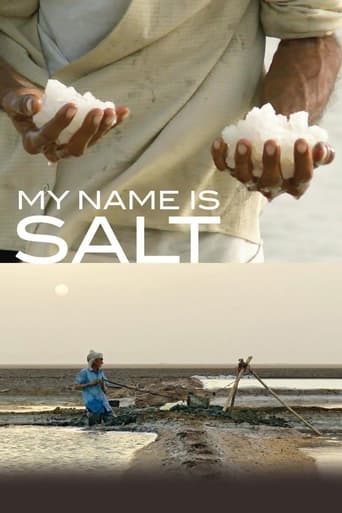
My Name Is Salt
2013 · Film · documentary · 92 min
Directed by Farida Pacha
Year after year, just after the monsoon season has finished, thousands of families travel to a bleak desert in Gujerat, India, where they will stay for an endless eight months and extract salt from the earth, using the same painstaking, manual techniques as generations before them. Director Farida Pacha spent a season with one of these families, observing the very particular rhythms of their lives.
2 positivefrom 2 commenters
Where to watch
No streaming data for this title.




2 comments on Hacker News
Digging the pan, hardening it (so it's relatively impermeable to sea water), and then repeatedly evaporating the water until you have a brine rich enough in salt to precipitate, and then massing that salt slush so it can completely dry, and then smashing it into a usable form.
You can look at salt pans on Google Maps. Here is one I have been to:
https://goo.gl/maps/uN968Stn6kPHnH6E7
Obviously today this is done with gigantic machines, and the cost/kg is incredibly low to the point that locals do not pay for salt, but back before the advent of Caterpillar, I imagine harvesting salt this way was very labor intensive.
There is a documentary on Amazon called My Name is Salt about the salt harvest in India. It is quite good.
In my experience, I have recognized cycles of trauma. My mom grew up in poverty with food insecurity and her dad was an abusive alcoholic- so much that when he passed away it was like good riddance. He was so abusive my grandmother refused to remarry.
I didn't grow up with food insecurity but I remember that a $1 ice cream sandwich or slice of pizza was a luxury until I got my first job.
My first relationship was with an abusive person. He tried to control what I eat, separate me from my friends and family, and almost destroyed me. It was only when a friend recommended me a book Why Does He Do That? that I recognized in horror that not only was he abusive, I saw the same red flags in another relationship, my parents...
Environment is so important, sometimes I see this cycle in others. I'm afraid when you come from an abusive environment sometimes you don't know any better. You don't know how you should or deserve to be treated.
I saw a documentary about two young girls that were the first in their families to graduate high school and go to college in one of the poorest neighborhoods in the USA [1]. It was a feel good documentary and then I looked up the students on Facebook. One student was now a teen mom and the other had dropped out of college and was working at McDonald's. She was publicly crying for help on her Facebook personal page on why her life was so miserable. I understand that feeling to feel cursed just for being alive.
I believe she may have been bullied by her wealthier classmates... Separated from her support network, bullied, and struggling to learn as well as go to school, I feel like her odds were heavily stacked against her to begin with. (And that's what Shanti Bhavan discovered too. You can't help them go to college and leave them hanging, you have to support them through college).
However, I've also seen incredible stories of strength from some of the poorest places on earth. Shanti Bhavan [2], Barefoot College [3], and SECMOL [4] have done and are doing incredible work!
My uneducated belief is that what all three of those places have in common is their deep love and unwavering belief for their students whether they are children or an illiterate grandmother training to be a solar engineer- as well as arming them with skills to work and provide for their families (probably the major key- that's how they gain their confidence).
Maybe that's one way to tackle poverty as a mental health issue. Help traumatized communities that might be in a cycle of trauma to break abusive mindsets. Teach needed skills, confidence, and financial literacy, so they can believe that they can be more than a teen mom or like my mom, locked in an abusive marriage or relationship from financial dependence.
I sincerely hope that poor American children today are not being treated worse than children from families who live with less than $1/day. In that sense, I believe instead of tackling poverty as neurological/biological, we should also investigate the environmental and behavioral.
As another movement says, violent communities don't need more police officers but mental health counselors.
As for anyone who says that the poor are lazy, please read about the salt farmers of India in Gujarat [5]. Watch My Name is Salt [6] to see how they farm salt for 8 months for almost nothing. You will never be able to call the poor lazy after seeing that.
[1] Oyler documentary: https://www.amazon.com/gp/video/detail/B06ZY7Z66X
[2] Daughters of Destiny Netflix documentary: http://www.shantibhavanchildren.org/netflix/
[3] Bunker Roy, founder of Barefoot College TED talk: https://www.ted.com/talks/bunker_roy
[4] Sonam Wangchuk, founder of SECMOL TED talk: https://youtu.be/t5-Dea7rpRg
[4] Jungwa, The Broken Balance is a documentary by a SECMOL grad on how climate change is affecting his home in Ladakh, India: https://vimeo.com/ondemand/jungwathebrokenbalance
[5] https://www.aljazeera.com/indepth/inpictures/2016/08/salt-farmers-india-rann-kutch-marshes-160823114732598.html
[6] https://www.amazon.com/My-Name-Salt-Farida-Pacha/dp/B01MDK9N8E
More resources on poverty:
Evicted: Poverty and Profit in the American City