 Hacker Cinema
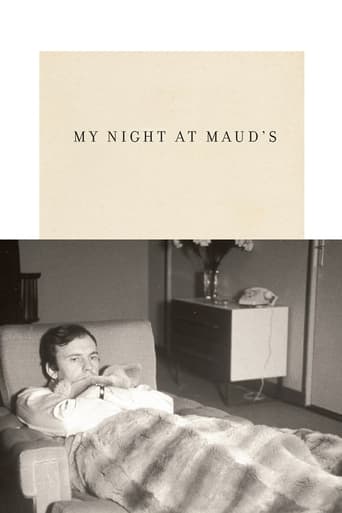
My Night at Maud's
Ma nuit chez Maud
1969 · Film · 110 min
Part of Six Moral Tales
Directed by Éric Rohmer
Devout Roman Catholic Jean-Louis subscribes to an austere moral code influenced by the philosophy of 17th-century physicist Blaise Pascal. When he spots a pretty girl at church, he promises to one day marry her. But then an old friend introduces him to alluring divorcee Maud. After a conversation about love and credo, the chaste Jean-Louis spends the night at Maud's, conflicted about his desires.
2 positivefrom 2 commenters
Where to watch
No streaming data for this title.
2 comments on Hacker News
Let me offer you some not Canal+ French films I've enjoyed: Breathless; Hiroshima Mon Amour; Diva; My Life as a Zucchini; Jeanne Dielman, 23, Quai du Commerce 1080 Bruxelles; The Rules of the Game; Last Year at Marienbad; La Collectionneuse; The Green Ray; One Sings, the Other Doesn’t; The Kid with a Bike; The 400 Blows; My Night at Maud's; The Wages of Fear.
His conservatism transcends such considerations, though as Brody mentions, could certainly be tied to a certain occidental mystique - which he later obliquely denied.
Paradoxically the films of his which deal most explicitly with sexual mores (Claire's Knee, La Collectionneuse) are those that carry the most regressive lessons: consider them in the context of the free love ideology of the 60s and 70s.
And then of course there is the masterpiece of fidélité, My Night at Maud's.
For me though, more than anything else Rohmer is remembered as the chronicler of bourgeois ennui - certainly there is a political dimension here but it is ambivalent. And even then he always depicted his protagonists with care and love, never as caricutures (The Green Ray is emblematic, few other filmmakers could depict the protagonist as anything but pathetic, not Rohmer though).
For those interested- an earlier review by Brody of a Rohmer film (Summer's Tale) with these words that convey what Brody possibly regards as the root of Rohmer's conservatism: "what emerges is the ironic truth, the confidence that from self-denial, from refusal, from negation, from evasion, from self-effacement, from withdrawal, and from an active self-marginalization, a positive image will ultimately emerge."https://www.newyorker.com/culture/richard-brody/eric-rohmers-tribute-to-his-younger-self"