 Hacker Cinema
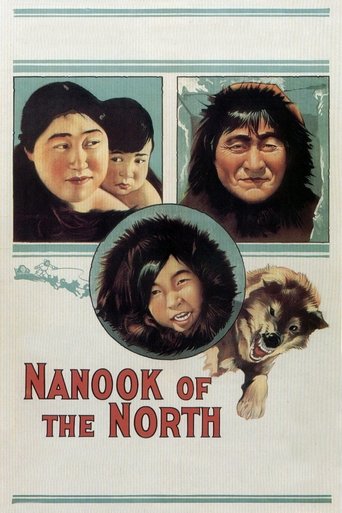
Nanook of the North
1922 · Film · documentary · 79 min
Directed by Robert Flaherty
This pioneering documentary film depicts the lives of the indigenous Inuit people of Canada's northern Quebec region. Although the production contains some fictional elements, it vividly shows how its resourceful subjects survive in such a harsh climate, revealing how they construct their igloo homes and find food by hunting and fishing. The film also captures the beautiful, if unforgiving, frozen landscape of the Great White North, far removed from conventional civilization.
1 positive1 negative1 neutralfrom 3 commenters
Where to watch
No streaming data for this title.




3 comments on Hacker News
The funny thing is, Daisey was not the first time narrative journalism – aka documentary media – has waltzed down the path to fiction. Famously, we have the film Nanook of the North and the book Wisconsin Death Trip, case studies I covered when I was in journalism program, before TAL. Today, we might call these works docudrama, but the blurring of the line between drama and journalism remains.
I've been picking from a different list (the huge meta-list project from They Shoot Pictures Don't They, which I think does factor in the 1001-films book as one of a whole bunch of things they feed to their Algorithm) but yeah, a lot of the pre-1930 films were a real slog, at least in part. I only bounced off a very few but I was pretty damn bored for long stretches of some others, I think justifiably so.
Big misses for me were anything horror (Nosferatu, The Cabinet of Dr. Caligari—hell, maybe I just don't like German Expressionism?).
Surprise hits were some of the more arthouse films. A Propos de Nice and Man with a Movie Camera were two I loved and are both definitely not conventionally-entertaining. They don't even feature narratives, in any normal sense (but they kinda do?). I also dug some of the Big Damn Movies like Intolerance and Gance's Napoléon—but that wasn't universal, because I found Birth of a Nation unwatchable (I gave it like 90 minutes then bounced—I'd enjoyed none of it, and not just because of the terrible message). Nanook of the North was another surprise hit for me—OK, it's kinda faked or whatever, but they fucking hunted a walrus, for-real, using traditional methods. That they were doing it when they did might have been "fake" because they didn't really do it anymore, but they did it, for-actual-real, which was just nuts to watch, among other things that were "fake" but more-real than a lot of what you might be able to see today.
Fundamentally a documentary is trying to sell a narrative using documentary cinematic style.
Now sometimes this is mostly benign or even "good." Such as detailing an event in a in-depth matter-of-fact style. Works such as the early Planet Earth series are simply trying to capture and show the wonder of life around the planet! And maybe hopefully encourage you to try and protect them as a secondary upshot. As time has gone on, they've produced works are that much more blatant with their "save the environment" messaging.
However, most of the most popular ones have a significant editorial bias. Heck, one of the first landmark pieces, Nanook of the North, was almost completely fabricated! Often quite easy to spot as well. Some are very up front about their bias, such as Michael Moore's work. Some less so, such as the editorial narrative in features like Forks over Knives or Blackfish. And some it's quite subtle. The recent Making of a Murderer comes to mind where certain facts weren't presented and it's framed in a very sympathetic light towards the defendants. Sure they have a lot of true facts within them. And often you learn quite a bit! But they are often presented in a particular fashion or certain points are talked up while others are ignored or not presented.
It's an unfortunate thing, but even the most innocuous of documentaries have some small bias. And it's up to the user to try and understand how much is narrative editorializing and how much is "truth." It's all part of making the documentary feel more true and tap into our need for a strong narrative arc via romanticizing the story we see unfold.