 Hacker Cinema
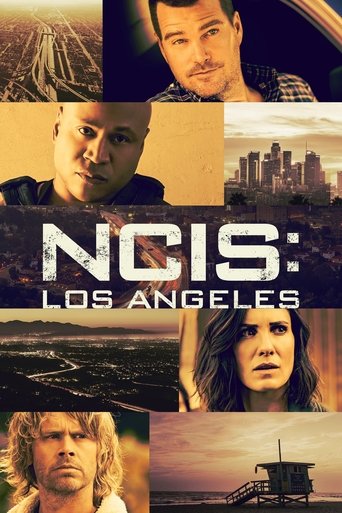
NCIS: Los Angeles
2009 · TV series · 45 min episodes · 14 seasons
Created by Shane Brennan
ActionAdventureDramaCrimeMystery
The exploits of the Los Angeles–based Office of Special Projects (OSP), an elite division of the Naval Criminal Investigative Service that specializes in undercover assignments.
1 negative2 neutralfrom 3 commenters
Where to watch
No streaming data for this title.


3 comments on Hacker News
This Wiki seems to have all the details; here's Jax specifically:
https://mortalkombat.fandom.com/wiki/John_Parrish
Also, ChatGPT (sorry, but I was curious) says:
One example is Cary-Hiroyuki Tagawa, who played Shang Tsung in the 1995 Mortal Kombat movie and its 1997 sequel, Mortal Kombat: Annihilation. Tagawa has had a long and varied career in film, television, and stage, appearing in a number of popular movies and TV shows such as The Phantom, Pearl Harbor, and Hawaii Five-O.
Another actor who appeared in the Mortal Kombat movies and has had a successful career is Robin Shou, who played Liu Kang in both films. Shou has appeared in a number of action movies and TV shows over the years, including Street Fighter: The Legend of Chun-Li, DOA: Dead or Alive, and NCIS: Los Angeles.
Other actors who appeared in the Mortal Kombat movies and have gone on to have successful careers include Bridgette Wilson (Sonya Blade), Talisa Soto (Kitana), and Linden Ashby (Johnny Cage).
I think lots of people here have made excellent points about the UK etc., so I would like to add something else, which is the representation of gun usage in the media. Let's compare a show like Flashpoint with, say, NCIS Los Angeles.
A Canadian series, Flashpoint shows you in its very first episode a SWAT situation (that's what the show is about) in which one team member acts as a sniper and kills a man who is holding somebody hostage. The first thing you see is that, as the sniper emerges from the building he was positioned on, his gun is taken away and he is led away by internal investigation to be interviewed. In the same episode, a proper investigation is launched, all team members are questioned and a judge ultimately has to decide whether the killing was warranted or not. The usual approach in all of the episodes is a gradual escalation from negotiation to non-lethal to lethal methods, highlighting specifically that the least amount of violence possible is always to be preferred.
In NCIS Los Angeles, between the four main investigators, they probably shoot on average one or two people per episode, and nothing ever seems to come of it. Not just do the characters not seem to mind or care, but nobody else seems to be concerned either. If an investigation ever happens, it happens as a plot device or conspiracy, not as a routine investigation of law enforcement conduct or the lawfulness of a police killing.
Of course, all of these events are fictional, but they nevertheless show a very different approach to gun usage as well as general escalation/deescalation strategies employed. Furthermore, they have an impact on how people conceive of law enforcement, setting expectations but also showing examples. Is every show like NCIS Los Angeles? Certainly not, and not every Canadian show is like Flashpoint, either. However, I do think that these shows emblemise very different understandings of law enforcement and what is appropriate conduct as well as what constitutes reasonable violence.
Games, especially MMO's and Social Gaming exploit their addictiveness to keep people paying them.
Certain TV shows exploit similar addictiveness. CSI, CSI: Miami, CSI: New York, NCIS, NCIS: Los Angeles, Law & Order, Law & Order: SVU, Law & Order: Criminal Intent, Law & Order: Trial by Jury . . . all still supplying ~24 new episodes a year during prime time slots. To put it roughly, 9 days worth of programming that is essentially identical. Then there's the more unique (to some degree) procedurals (IE NUMB3RS, Castle, etc. Incidentally, the only procedurals I like, I can't stand the CSI crap as my mind is violently raped by unscience almost every other episode I watch) that appear.
I personally did stop watching TV for a prolonged period, but for no elitist reason as I love TV . . . perhaps too much. However, I'm satisfied watching only the show, so I'm more a DVD person.
Movies, again, strike at this addictiveness with the 'unnecessary sequels' market. It's one thing when a movie plans multiple parts, a la the Borne trilogy. However, then there are the Bond series that maybe only hit a good movie every 3rd or 4th produced, but still take in millions. Then there are the totally unnecessary sequels that appear because the studios dangled hundreds of millions of dollars off an ACME sized mousetrap to bag a producer.
Books similarly can get into this trouble of unnecessary sequels. I believe Agatha Christie inadvertently suffered this problem as her publishers forbid her from killing off Poirot, it took her 40 years for the novel that killed him off to be published.
Ironically, the most addictive TV shows and books appear to be detective dramas. This is easily illustrated by the fact that Mystery/Crime novels is the biggest market in literature, and by the fact there are over 9 procedurals routinely running during prime time slots, year after year for almost a decade.