 Hacker Cinema
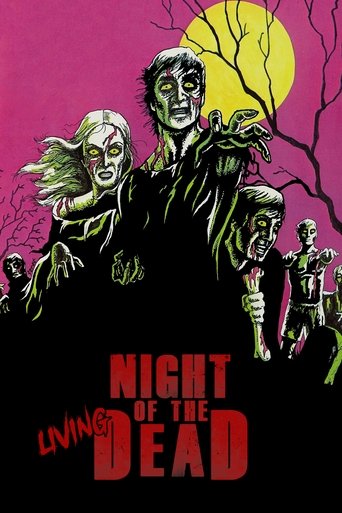
Night of the Living Dead
1968 · Film · 96 min
Part of Living Dead Collection
Directed by George A. Romero
A ragtag group barricade themselves in an old Pennsylvania farmhouse to remain safe from a horde of flesh-eating ghouls ravaging the Northeast.
12 positive23 neutralfrom 35 commenters
Where to watch
No streaming data for this title.
37 comments on Hacker News
There are public domain movies in the collection, notably Night of the Living Dead and Carnival of Souls.
It's your age, movies have always been propaganda or had an agenda. Even horror such as Night of the Living Dead, or even Star Wars.
While I don't know if license and copyright are the same thing, the film Night of the Living Dead was famously accidentally added to the public domain due to a forgotten copyright notice.
> Female/LGBTQ characters are inserted into places where it doesn't make sense to fill quotas
Every case of "ruined by woke" I have seen ultimately just boils down to bad writing, with people blaming "woke" for it when, well, it's just shitty writing. If you ignore the woke stuff and look more broadly usually the whole thing is at best mediocre.
Also sci-fi, fantasy, and horror have always been "woke." Star Trek was one of the first popular shows to prominently feature black characters in important roles and has always lampooned racism and other kinds of bigotry. Night of The Living Dead is pretty easy to see as a racism allegory, or at least it contains one as a sub-plot. Star Wars had an evil empire that was transparently a mix of Nazis and arrogant condescending colonialists. Alien was one of the first huge films I can recall to have a super competent female action hero with skills like engineering who didn't need any help from a man. The Expanse depicts a society that's so post-gender-mattering you don't even notice it, it's just the way it is (probably a good example of good writing in this regard). Etc.
All older films do not sit dormant for decades, and then are suddenly rediscovered. That's not remotely so. Some are a cult classic when produced, thus no one is ever "taking a chance on it", because it's always been a profitable endevour to pump out on late night TV, or on a VHS, DVD, Bluray, or digital version.
It feels like so much history and reality is missing in this idea of an 'ancient film'.
There were so many films like this, yet under copyright, available on late night TV back in the day. Before most had cable, before most even had VHS machines, you'd turn on TV at night on a Saturday, or at 2am on a Tuesday, and see endless old movies.
Once VHS came out, you could get virtually anything older because the film -> VHS transfer process was cheap, and people wanted content. You'd pay a buck to rent old junk at the store, and the campier the better.
Put another way, it became a cult classic when it was released, and then was always available. Endless copyrighted works were in the same category.
There is no 'chance' taken, for it was always seen as chance-worthy.
But beyond this:
* This film is the first part of a trilogy, Night, Dawn, Day of the Living Dead. Anyone watching any of these films, wanted to see the whole set
* Even if under copyright, as others have stressed, this one is on the list. What list? A list you do clearly not share, which is fine, but horror fan films do.
EDIT:
I'm going to give a little more context here.
In this timescope, there was a show called "I Dream of Jeannie"... https://en.wikipedia.org/wiki/I_Dream_of_Jeannie
In this show, Barbra Eden wears a 60's envisioned harem costume. There is one important aspect of this costume, and that is that her belly button is covered.
Why?
Because it was illegal.
There is a whole deep dive here, but the point is that Night of the Living Dead was an extremely gory and violent film in its day, immensely groundbreaking, and people desperately wanted to see it.
It didn't become a cult classic because it was easier to distribute. It became one because of what it was.
That's the point I think.
NOTE: This does not invalidate the concept that some films can follow your path, it's just that this one didn't.
> Night of the Living Dead changed what horror films could be.
And this would indeed merit the film a historical footnote. But it would be virtually unavailable, and nobody in a position to make it available would take the chance on an ancient black-and-white film. And it would therefore in all likelihood languish in obscurity.
> This error occurred after the film's title was changed from its original moniker Night of the Flesh Eaters. Prints with that title contained the copyright notice, but when new prints were created using the title Night of the Living Dead, the copyright notice was forgotten.
This begs the question: if the original movie was copyrighted, how does releasing the same movie with a different title make the new re-release considered a new (not-yet-copyrighted) work? I thought the copyright protection of the original would extend to the renamed version, since they're 99.99% the same. Theoretically, does changing even one frame necessitate a new copyright?
The movie invented the zombie genre as we know it today, was made by George Romero, which is a credential in an of itself, and Duane Jones' performance as Ben would stand out today almost as much as it did back then. These points, along with the film being poignant and entertaining as hell would ensure that generation after generation would would keep coming back. Remember, lots of films are out of copyright. Not a lot of such films made as much money or have the staying power as Night of the Living Dead.
On top of this, genre films in general, and horror specifically, if anything, have rabid fans that go out of their way to watch movies because of their genre, regardless of accessibility or buzz. Again, George Romero's involvement alone would make sure that even a passing fan of horror (or budding cinephiles) would seek it out.
I share your perspective; my guess is if it was copyrighted it probably would have had the same status. My guess is it would have been distributed relatively cheaply with the same outcome.
However, I also think it's reasonable to posit it might not have attained the same status had it not gone out of copyright. Easy access can really affect awareness and buzz around films, especially in certain genres like horror.
Horror films were already shifting in tone by 1968. Psycho was a 1960 release, for example, and The Birds was released in 1963. Carnival of Souls has a similar aesthetic as Night of the Living Dead and was released in 1962.
> If it was only an old black-and-white movie, still subject to copyright, today the movie would be a historical footnote at best.
That's a very ungenerous take. The film is very good and was revolutionary for it's time. Check out other horror films from the same era and the tone is completely different. Night of the Living Dead changed what horror films could be.
And there's plenty of old black and white movies still in copyright that are highly regarded as classics so I don't know what that has to do with anything.
> Night of the Living Dead's copyright snafu ended up costing him untold amounts of money in both the short and long term.
This has strong vibes of “If only Linus Torvalds had charged for Linux, he would have been a rich man today.”. It does not work that way.
> Somewhat ironically though, it's Night of the Living Dead's freely available nature that helped it become the revered classic it is today, as easy access and constant TV airings ensured that more and more people saw the film.
It’s not “ironic”, it’s completely expected. If it was only an old black-and-white movie, still subject to copyright, today the movie would be a historical footnote at best.
I think prestige is hard to gauge from availability channels, and ebbs and flows. Sometimes visibility even increases interest and regard, if it's a sort of forgotten film.
Night of the Living Dead has been freely available for some time for example and is still considered a classic of horror. I'm not sure it hurt Criterion when they released a version of it. People are paying for the restoration and extras.
Once you go full media, well ... I think that's way more troublesome in terms of local bandwidth and trying to find public domain music and film.
Although showing Night of the Living Dead in a coffeehouse does have some kind of amusement value.
Still, only works if you own it and have local control.
From what I’ve read and heard, this was actually a major success for George Romero. Night of the Living Dead had made its money back (and more) by the time anyone noticed it was public domain. Once people realized, NotLD got a level of publicity that it would have never gotten if it were copyrighted, which ended up being way more beneficial to Romero. Any theater could show it whenever they didn’t know what else to play and so the movies lifespan extendedly dramatically. Because of all the publicity, NotLD travelled across seas to Europe, and the Europeans reevaluated it as valuable social commentary on race relations in America. If you listen to interviews with Romero on the subject, he was convinced that the public domain is what actually launched his career.
Surprised the article didn’t mention what for me (as a horror fan) was the most famous example of the public domain immediately benefiting the culture. Due to repeated edits requested by a demanding distributor, the final cut of Night of the Living Dead was released without a copyright notice. In 1968, unfortunately, this meant the work automatically went into the public domain. The film’s subsequent unexpected success of course led to zombies becoming a pop culture phenomenon, but perhaps at George Romero’s expense.
It's kind of interesting to read about contemporary reactions to Night of the Living Dead, which included "it's obviously a commentary on the Vietnam War" and "a critique of American capitalism". The closest anyone got to racial issues was the observation that at the end, the (black) main character is killed by a (white) posse led by a sheriff -- which seemed to some people to be an obvious commentary on the Civil Rights Movement and the recent assassinations of Martin Luther King, Jr., and Malcom X.
The modern (21st C) vogue for zombie apocalypse movies pretty clearly stems from two sources: Japanese video games in the 1990s; and a pair of British films in the early 2000s: Resident Evil (based on one of the aforementioned Japanese video games) and 28 Days Later. (It's a bit hard to argue that both the Japanese and the British were acting out some deep-seated fear of a black slave uprising.)
It's possible that he's speaking less about "Night of the Living Dead (1968)" as an early zombie film, and more about "White Zombie (1932)" as an influence on later films, as it earlier and more clearly on topic: Set on a sugar cane plantation on Haiti, with voodoo, etc.
If you're intent on imagining a subtext to Night of the Living Dead a movie which never mentions zombies and features the (undead) neighbours harrass a black man who is ultimately shot dead by a sheriff’s deputy then you might also want to recall it was conceived in the aftermath of the Detroit and Newark riots and released to audiences who had just seen National Guardsmen shoot antiwar protesters to death at Kent State University.
https://www.criterion.com/current/posts/5390-night-of-the-living-dead-mere-anarchy-is-loosed
Shuffling drug addicts is one influence I have no recollection of Romero ever mentioning.
Same. 29. I think it's just that we grew up with the internet, and although we haven't 'seen it all,' we've picked the low-hanging fruit.
When I was a kid, the first time I walked into a video store, it blew my mind. I spent every weekend for years binge-watching 3, 4, 5 rented movies. Now, I haven't actually watched a movie in years. I think that although there are new movies coming out, the patterns are fundamentally the same and so movies have gotten boring. After you've seen Apocalypse Now, Evil Dead, and Blade Runner, the Wire, Caddyshack, Oldboy, No Country, Night of the Living Dead, Y Tu Mama Tambien, and on-and-on-and-on, you've seen damn near most of the plot variations that can conceivably be constructed. So, new stuff just looks the same as the old stuff and it's not so exciting.
Same with the internet. I discovered 90% of what I still think is cool by the time I was 13. I picked the low-hanging fruit. So, now I'm at the point where I go deep on things. It's not sexy, but it is pretty rewarding. Used to think Magic-1 was awesome, well now Ben Eater's 8-bit-kit is half-assembled on a table in my living room. Used to think rock climbing was cool, but now I have to put in weekend after weekend at JTree moving over granite. Used to think Fravia was cool, well now it's time to construct my own web-crawlers. Used to think metalcasting and the Lindsay Catalog was fascinating, but now it's time to build actual internal combustion engines from scratch. Used to listen to the old Defcon DVDs on a pre-iPod mp3 player, but the time came to actually work through Erickson's AOE.
I think it's a natural evolution of life. When you're young you make a shallow pass and find what really resonates with you. When you get older, you spend more time digging down deep into those things and it's not as exciting as it once was, but there is a satisfaction from getting good at those things.
An alternate approach is to try viewing the internet through the lens of cannabis. I've had many nights in life where smoking some pot and watching YouTube has segued into a late-night coding session implementing something fun in Python that's been kicking around in the back of my head for a while. Pot has a way of helping you see things you've seen a million times in a completely new light. Some people love it, some people hate it. YMMV.
Most people seem to hit this point in life and just have kids to keep stuff interesting when things start to get boring. They take up a lot of time, teach you a lot of stuff, and suck up a ton of time.
Assuming good faith in this comment...
The concept of zombies comes from Haitian folklore based on a West African word. The popular concept of zombies comes from the movie Night of the Living Dead, which was a commentary on the Vietnam War. Most portrayals of zombies where there is a political or social message tend to focus on consumerism, blind faith in the government, and other "sheep"-like behaviors. I haven't seen any popular media where zombies in any way reflected an uprising of marginalized minorities.
> this narrative got appropriated and transplanted to America, in film, TV, and fiction. Where it hybridized with white settler fear of a slave uprising. The survivors/protagonists of the zombie plague are the viewpoint the audience is intended to empathize with, but their response to the shambling horde is as brutal and violent as any plantation owner's reaction to their slaves rising
I think it's a pretty fair to say the modern zombie story starts with Night of the Living Dead, and this viewpoint couldn't possibly be any further from how Romero handles themes of race, class, and authority.
I mean, maybe it's because I don't watch Walking Dead, but I've never seen a zombie film where I thought I was supposed to empathize with the protagonists. Except maybe Shaun of the Dead!
Most zombie fiction is premised on a contagious pathogen or a botched scientific response to such a pathogen (28 Days Later, The Last of Us, I am Legend, Shaun of the Dead etc.) Some use accidental exposure to radiation or extraterrestrial contamination, with unclear mechanisms (Night of the Living Dead)
Zombie movies outside of the contagious pathogen paradigm are more uncommon. Some zombie movies, particularly the older ones predating Night of the Living Dead, are premised on religious supernatural voodoo stuff (White Zombie [1932!]). In others, the condition is not strictly contagious, but exposure to a chemical substance causes a reversal of death (Re-Animator, and Return of the Living Dead (my personal favorite and the origin of zombies who desire 'Braaaaiiiiiins')) In only a few, the creature[s] are created by a mad scientist deliberately trying to reverse death using something other than a contagious pathogen (Frankenstein (should that count?), and Re-Animator.)
Mad scientist in an academic setting attempting to reverse death and accidentally creating an outbreak of non-contagious zombies is a pretty narrow list of zombie movies. Re-Animator is the only one that comes to mind. Anyway, a zombie outbreak obviously isn't going to happen, but if the public becomes generally aware of this research, now might be a good time for Hollywood to reboot Re-Animator. Gods know they hate making original movies these days. I'm aware that a zombie movie fan complaining about a lack of originality may seem ironic.
The "zombie army" in Lord of the Rings was in the book Return of the King, published in 1955. The first big, modern zombie movie was Night of the Living Dead in 1968. So I don't think you can blame them for being unoriginal. Also I'd say they were more ghost than zombie, in both book and movie: https://www.youtube.com/watch?v=vYEvmnTghPk
(As for GoT, how many movies have had dragons?)
It wasn’t always this way. Films like Rosemary’s Baby, Night of the Living Dead, and pretty much the entire Hitchcock collection were some of the most iconic films of their times.
In my opinion, the popularity of the late 70s to 80s slasher films (Friday the 13th, Nightmare on Elm St, Texas Chainsaw Massacre to name a few), combined with studios’ ever-shrinking tolerance for risk, resulted in a particularly bland few decades of mainstream horror, with the well-known Saw franchise and, to a lesser extent, the somewhat satirical Final Destination series as typical examples of the era. Personally, I’m partial to the Evil Dead films, Army of Darkness most of all. Groovy.
Horror can be excellent when done well, and pathetic when done poorly. It is easy to go for cheap scares and bloody massacre scenes. There is a lot to dislike about modern horror films that can turn off audiences looking for more than jump scares and blood splatter. If I hadn’t dated a girl in college who was super into the horror genre, I would have never gotten into it.
Horror is best when it floods you with an emotional high that lasts long after the initial shock. For a most masterful example, try playing Silent Hill 2, if you dare.
Great analysis.
My only complaint: "Zombie movies started off as societal critique about the dangers of consumerism"
The meaning of "Night of the Living Dead" (the film that defines where zombie movies started out, critically), is a much-debated topic, but "excessive consumerism" doesn't get much notice until at least a sequel or two later (forgive my memory), with the one that takes place in a mall.
The first/original was much less specific, much more philosophical, which makes it by far the most interesting (to humble 'ole me).
To add to that, in some zombie stories, such as The Walking Dead, everyone turns into a zombie when they die, even if they haven't been bitten. I don't know if it's ever explained in the graphic novels, but in the TV show it's glossed over, with the character Rick Grimes saying something like "whatever it is, it's in all of us now". I forget if Romero's films share the same conceit. But in The Night of the Living Dead, the dead are actually coming to life, raising from graves.
As Jordan Peele said about his Get Out, "This is the only woke horror movie of all time, save for Night of the Living Dead. ... I felt like race has not been dealt with in my favorite genre which is horror. Every other human horror has its sort of classic horror movie to go along with it. So I kind of wanted to fill the gap in that piece of the genre of conversation." (http://www.npr.org/2017/02/19/515813914/in-get-out-jordan-peele-tackles-the-human-horror-of-racial-fear)
There is a weirdly slow car crash scene in Night Of The Living Dead - this was written into the script since someone borrowed the car and drove a dent into it, and they needed to explain the new dent in the movie...
When I was about 10, I saw Night of the Living Dead and it fully cemented my love of horror movies. I had watched Tales of the Crypt, Are You Afraid of the Dark, Twilight Zone, and similar, but NOTLD was incredible. Terrifying, creepy, realistic... it gave me nightmares and shook me to my core.
Most people who aren't into the genre think that horror is all Jason-style slasher flicks. Horror is so much more than that. If you want to try something that I recommend, The Void was just released on Netflix, which is genuinely scary in a non-slasher way (although it has a lot of that too).
RIP George A. Romero
I suspect it might be theoretically possible for ancient computer games, of the SpaceWars or Adventure eras, to have lapsed into the public domain by omitting copyright notices or lapsing registrations.
This was possible before a change in copyright law in the US in 1988 when copyright became more or less automatic. The cutoff date was January 1st 1978, which does exclude most modern video games, and people didn't much care about copyright in video games, or software generally, prior to that date.
There are a few films made relatively recently - Night of the Living Dead being a prominent example - which are public domain through oversights in the handling of the film's copyright. Whether there are actually any video games that went public domain by this route is left as an exercise for the reader...
In the I Am Legend novella (a big contributor to modern zombie), the infected are more like vampires and retain their intelligence. The book is notable for the primary theme it introduces, the otherness of the zombies (in earlier depictions they are largely undead plot devices)
Romero's Night of the Living Dead also plays with the otherness theme, but the dead are numb and more ghoulish than vampiric.
28 Days Later finally has something I would agree is rabies inspired. It probably contributed to the frantic behavior of zombies in several recent movies.
Try looking at the prelinger archive, which is now hosted on archive.org. Pay attention to the copyright situation, though -- which differs heavily between countries.
There are a lot of notable films that are in the public domain in the united states because of some changes to copyright law in the US that occurred in the late 50s and early 60s -- Night of the Living Dead, the original Jim Henson version of Cube, Fritz Lang's Metropolis. But, those films are not necessarily out of copyright elsewhere (and some countries, such as Germany, have no concept of a public domain -- all works belong to the estate of their creators in perpetuity).
You don't necessarily need across-the-ocean bandwidth to facilitate NZ file sharing. Just adapt the "college dorm has a massive fileserver with pirated movies, so that movies only need to be downloaded from the internet at large once" model.
I blow part of my monthly 'real across-the-ocean internet' limit downloading Night of the Living Dead from archive.org, then provide access to it for other New Zealanders using the hypothetical local mesh network.
Zombie-proof depends on which zombies you're talking about. Faced with the shuffling Night of the Living Dead zombies from George Romero's movies, perhaps a suspended tent would keep you safe enough. Against the running, climbing zombies from 28 Days Later though, I'd be much less inclined to feel secure.
Ahhh, finally, a question on HN I can answer!
Firstly, I'm a huge fan of the zombie apocalypse.
-So, why do I like it?
I love the genre because, by far and large, because it creates a reality that works very counter-intuitively. Sure, zombies are a threat, but bigger picture, they're just a background concern compared to the threat that other people present, and that's where the meat of good zombie apocalypse media resides: human interaction.
The scenario allows for an accelerated skewing of human interaction that extends not to just distrust of strangers, but absolute loyalty to anyone that's proven their trust. Anyone showing slight signs of mental instability is now a huge threat to your livelihood, and anyone not pulling their weight may have be killed or left for dead (which is effectively killing them yourself.) What, in our world, are the slightest of concerns, become large factors in a zombie infested world.
-Favorite zombie media? Night of the Living Dead (which is public domain and free at http://www.archive.org/details/night_of_the_living_dead http://www.archive.org/details/night_of_the_living_dead_dvd And Romero's others (Dawn, Day, Land, just not Diary.) Shaughn of the Dead, Zombi II (Shark v Zombie; how can you go wrong there? Otherwise blah) 28 Days Later (Yeah, yeah, whatever. Listen to the commentary. They know it's a zombie flick.) and the UK show Dead Set was worth watching too.
Most other zombie flicks just aren't that good.
The comic The Walking Dead is without a doubt some of the best zombie media out there (I collect it in TPBs, and need to grab the latest.)
Max Brooks' books World War Z (interview-like retelling of the Zombie War with veterans,) and Zombie Survival Guide (Almost like a 'for Dummies' book) are must-reads.
And the game Urban Dead http://www.urbandead.com is pretty fun initially as well, but didn't have a ood 'end-game' when I was playing. Now it all looks relatively safe: http://wiki.urbandead.com/index.php/Suburb (map)
-As for anything else I'd add...
Just that gore isn't necessarily required, but if you ARE going to do it, well, make it worthwhile. ;)
And feel free to email if you think of any follow-up questions for zombie fans.!
I remember watching Night of the Living Dead several years ago with friend when we were both into cheesy old films. We were expecting something along the lines of The Giant Gilla Monster or Attack of the Killer Shrews and were surprised to find that it was actually a very good, very gripping movie. It's no surprise that it sparked the genera.
I'm an enormous fan of Simon Pegg as a writer. He wrote an incredible article in defense of zombies and convinced me a lot. (His article was actually about how the slow model of zombie is the only worthwhile kind.) And Edgar Wright is a brilliant director: Shaun of the Dead is a very scary movie at the same time as it's incredibly hilarious.
That said, I'd love to compare it to Night of the Living Dead. I'm just scared that it'll be a letdown.