 Hacker Cinema
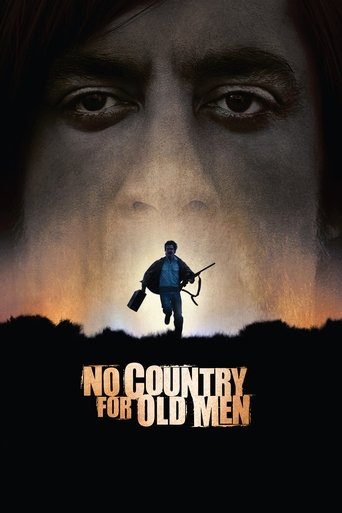
No Country for Old Men
2007 · Film · 122 min
Directed by Joel Coen, Ethan Coen
Llewelyn Moss stumbles upon dead bodies, $2 million and a hoard of heroin in a Texas desert, but methodical killer Anton Chigurh comes looking for it, with local sheriff Ed Tom Bell hot on his trail. The roles of prey and predator blur as the violent pursuit of money and justice collide.
32 positive2 negative29 neutralfrom 63 commenters
Where to watch
No streaming data for this title.
68 comments on Hacker News
"""I have an idea for a movie club, where two movies with a tenuously connected theme are watched (separately) and then discussed. If you've seen the movies "XXX", and "YYY", tell me what is similar about them, what's different, what are some possible "connected themes" and who tackled the topic better?"""
...time passes...
"""Now that you understand the idea behind these pairings, recommend five more pairings, but don't give any hints as to their connections, just five bullet points with "A vs B" movie titles. Bonus points if there is at least a 10-year gap between them, and they are both not box-office blockbusters (but make sure they are slightly more popular or recognizable movies, not exclusively low-distribution non-critically-acclaimed indie movies)."""
* Children of Men vs Snowpiercer * Lost in Translation vs Frances Ha * No Country for Old Men vs Hell or High Water * The Prestige vs The Illusionist * Drive vs Nightcrawler
...I know guidance is "don't just post AI output", but this is specifically a human-to-human discussion around novel(?) ways to interact with AI/LLM's. I've found they're _really_ good at conceptual-venn-diagrams.
There's a book "Algorithms to Live By" (ie: look for matching socks via BFS/DFS or whatever). Asking the AI: "you know a bunch of algorithms, what are the top three that should have been in the book?" => "what are the weakest that could have been removed?"
Recently during performance reviews, we had to write our self-assessment and had guidance from on high like: "make sure you talk about people skills, technical skills, customer impact, etc." ...so yada yada: "I'm so amazing, I'm so great" => "Dear AI, I've been given this guidance `...`, please compare my handcrafted storytelling against the guidance `...` and tell me where I have missed covering a requirement" => "...now please give help w.r.t. simplifying or cleaning up the section on $INCREDIBLE_TECHNICAL_ACHIEVEMENT b/c I was focusing on describing my personal impact, but need help making it more digestible for others".
The combination of instant, tailored feedback and the fact that they've read the whole internet, "watched" every movie (read the script, read critics reviews, reddit, forum discussions, etc), read most published books, and that they're 80%+ plumbers, doctors, lawyers, car mechanics, etc. make them an unstoppable research assistant, especially when crossing connections that would normally be "expensive" to do so.
Example: ask a [doctor+lawyer+plumber] about the health and legal impacts of lead solder in pipes or whatever. Instead of needing to schedule 3 people's times, wait for them, pay them, etc, you can get instant "free" feedback, educate yourself, and then have a more solid foundation to branch out from there. Such incredibly useful tools!
His book Suttree is effectively biographical, down to his impoverished 1950s Knoxville streetslang.
I haven't read anything else, but the film No Country for Old Men is incredible storytelling (and I only started Suttree after a /hn/article from a few months ago described the polymathic dismantling of his impressive library).
His short article The Kekulé Problem sheds serious insights (to me, at least) on whether or not LLMs can, alone with language, ever become truly conscious (are words, alone, enough?). Not the main point of the article (rather: about lucid thinking/states leading to wordless solutions presenting themselves to "discoverers," dreaming).
Quote: "THE 2007 Coen brothers film No Country For Old Men, could easily be remade and updated as Countries For Old White Men when applied to the political situation for the radical left in Britain, France and the US."
The 90s films mentioned in this post are works of art and the actors and creators were artists. Compensation sustains the art, but it’s not the primary purpose.
Netflix is a business. The content on Netflix is largely designed or purchased with a primary goal of engaging paying users.
We can find plenty of films that are works of art after the 90s. One Battle After Another is a recent one that comes to mind. Parasite, No Country for Old Men, Arrival, Moonlight, Tree of Life, Midsommar, Mandy…
When I was listening to some of the samples on the page you linked (pronunciation of “when”), it really seemed to me like the difference they were highlighting was how much the “h” was pronounced. Even knowing what I was listening for, it was very like my brain was just refusing to recognize the vowel sound distinction. So I think you must be right about it being a matter of basic brain chemistry.
In the example of the reverse pen/pin merger (HMS Pinafore) on that page, I couldn’t hear “penafore” to save my life. Fascinating stuff.
I used to think of the movie “Fargo” and think “haha comical upper midwestern accents.” And then at some point I realized that the characters in “No Country for Old Men” probably must sound similarly ridiculous to anyone whose grandparents and great grandparents didn’t all speak with a deep, rural West Texas accent - which mine did, so watching the movie it just seemed completely natural for the place and time at a deeply subconscious level.
This movie was great. If you liked thoughtful almost-action movies No Country for Old Men or even something like The Fugitive, you’ll enjoy this. There are cinematic set pieces as beautiful as anything I’ve seen in years (the rooftop sequence!) the acting is stellar throughout, and the finale gives an original take on one of the most common film plot devices of all time.
The film’s politics are very progressive/liberal so I can imagine that deterring some viewers but PTA adds a lot of nuance and subversion throughout that make it more of an examination of radicalism than a straight trumpeting of it. As mentioned in another comment the radical characters often disagree and are shown taking very different strategies that then produce very different outcomes.
I think Blood Meridian is his best book by far. The first time I read it, when I got to the end, I didn't even get up from my chair, just went right back to the beginning and started reading it again.
I also like the border trilogy: All the Pretty Horses, The Crossing, and Cities of the Plain. Sort of surprisingly, never actually read No Country for Old Men although I've seen the movie three or four times.
I think The Road is overrated.
I don't see how this helps to illustrate anything, it's not like it's a top film prior to the execution by a director.
If Wes made No Country for Old Men it would be another movie, just like if Martin Scorcese would have done it...
No, you don't need to see the film but it was a way of me trying to put across how much his style really sucks out of the films.
I see No Country For Old Men as one of the top films of the last 20 years, what with its pacing and the atmosphere they create. It's not an original story, based on a book, so therefore any director could have been brought on board.
You might say I am comparing apples to oranges but it was just a way to illustrate what I think the problem is.
> If Wes made No Country For Old Men in this style it would suck.
I genuinely don't understand what this means, No Country for Old Men is a Coen Brothers movie.
Do I need to see "The Phoenician Scheme" to understand this reference...?
Haven't read the article but saw the film.
If Wes made No Country For Old Men in this style it would suck.
The films look incredible but the monotone delivery and lack of soundtrack remove any drama and intrigue.
I say this as someone that loved Rushmore, Tenenbaums, Life Aquatic
Some of the scariest horror movies are the ones where the monster isn't shown. Often once the monster is shown, it is less terrifying.
In a general sense, uncertainty causes anxiety. Once you know the properties of the monster you are dealing with you can start planning on how to address it.
Some people have blind and ignorant confidence. A feeling they can take on literally anything, no matter how powerful. Sometimes they are right, sometimes they are wrong.
I'm reminded by the scene in No Country For Old Men where the good guy bad-ass meets the antagonist and immediately dies. I have little faith in blind confidence.
edit: I'll also add that human adaptability (which is probably the trait most confidence in humans would rest) has shown itself capable of saving us from many previous civilization changing events. However, this change with AI is happening much, much faster than any before it. So part of the anxiety is whether or not our species reaction time is enough to avoid the cliff we are accelerating towards.
This sounds a lot like the psychopath Anton Chigurh in the movie No Country for Old Men. His view of the world is he is the arbiter of people's destiny, which often involves them being murdered.
> Again, tell me how exactly your amazing magical AI director will know which wardrobe to chose, which camera angles to setup, which typography to use, which sound effects to make just from the script you hand in?
I think you're still assuming I always want to choose those things. That's why we're talking past each other. A good movie making model would choose for me unless I give explicit directions. Today we don't see long-range coherence in the results of movie (or game engine) models, but the range is increasing, and I'm willing to bet we will see movie-length coherence in the next decade or so.
By the way, I also bet that if I pasted exactly the No Country for Old Men script scene description from up this thread into Midjourney today it would produce at least some compelling images with decent choices of wardrobe, lighting, set dressing, camera angle, exposure, etc etc. That's what these models do, because they're extrapolating and interpolating between the billion images they've seen that contained these human choices.
AFAIK Midjourney produces single images, so the relevant scope of consistency is inside the single image only. Not between images. A movie model needs coherence across ~160,000 images, which is beyond the state of the art today but I don't see why it's impossible or unreasonable in the long run.
> A general prompt will give you a general result that is usually very far from what you actually have in mind.
Which is only a problem if I have something in mind. Alternatively I can give no guidance, or loose guidance, make half a dozen variations, pick the one I like best. Maybe iterate a couple of times into that variation tree. Just like the image generators do.
> AI/LLMs are very good at filling in all those little details so humans can cherry pick the parts that they like.
Where did you find AI/ML that are good at filling in actual required and consistent details.
I beg of you to watch Annie Atkins' presentation I linked: https://www.youtube.com/watch?v=SzGvEYSzHf4 and tell me how much intervention would AI/ML need to create all that, and be consistent throughout the movie?
> once these models can generate coherent scenes, people can start using them to explore the creative space and figure out what they like.
Define "coherent scene" and "explore". A scene must be both coherent and consistent, and conform to the overall style of the movie and...
Even such a simple thing as shot/reverse shot requires about a million various details and can be shot in a million different ways. Here's an exploration of just shot/reverse shot: https://www.youtube.com/watch?v=5UE3jz_O_EM
All those are coherent scenes, but the coherence comes from a million decisions: from lighting, camera position, lens choice, wardrobe, what surrounds the characters, what's happening in the background, makeup... There's no coherence without all these choices made beforehand.
Around 4:00 mark: "Think about how well you know this woman just from her clothes, and workspace". Now watch that scene. And then read its description in the script https://imsdb.com/scripts/No-Country-for-Old-Men.html:
--- start quote ---
Chigurh enters. Old plywood paneling, gunmetal desk, litter of papers. A window air-conditioner works hard. A fifty-year-old woman with a cast-iron hairdo sits behind the desk. --- end quote ---
And right after that there's a section on the rhythm of editing. Another piece in the puzzle of coherence in a scene.
> Then once I've got enough good generated images collected out of the tons of garbage, I fine tune a model and create a workflow that more consistently gives me those styles.
So, literally what I wrote here: https://news.ycombinator.com/item?id=42375280 :)
My favorite "title drop" in a song is in How Soon is Now by the Smiths. After an instrumental break, Morrissey sings, "You say it's gonna happen now? What exactly do you mean..." You can almost hear the next line should be "How soon is now" but there's a pause and then he sings, "See I've already waited too long..." The title captures the mood of the song but is never actually said. It feels intentionally left out.
On the movie front, No Country for Old Men does something similar.
In Star Trek, one thing that I always found weird as a kid is they didn't have TVs. Even if the holodeck is a much better experience, I imagine sometimes you would want to watch a movie and not be in the movie. Did the future not have works like No Country for Old Men or comedies like Monty Python, or even just stuff like live sports and the news?
Nowadays we know why the crew of the enterprise all go to live performances of Shakespeare and practice musical instruments and painting themselves: electronic mediums are so full of AI slop there is nothing worth see, only endless deluges of sludge.
> My problem with your reasoning is that it relies on a literal interpretation of the words spoken in the book.
What? Now you are just desperately grasping at straws.
> The father says that "there are no other kids his age", yes, but remember...most of the book is told through the father's eyes.
And? So what? The kid also says so, not that it matters.
> There is no information technology anymore...
That's right. Before the internet and IT, nobody saw any children. This comment is the dumbest thing I've read in a long while.
> all he knows is that he has not seen any kids and that he hasn't heard of any kids. He is an unreliable narrator.
The kid also said so. And I don't think you know what "unreliable narrator" is. There has to be clues within the story to imply that he is unreliable ( psychologically, memorywise, etc ). Not that he doesn't have access to a smartphone.
> Have you ever picked up a six year old? They weigh practically nothing.
Yes. Not only that, I was six year old once. Long before I was 6 years old, my parents stopped carrying me around. And you are being intentionally sneaky here. Who said anything about picking up a 6 year old. I said carry a 6 year old how many miles they had to go.
> Perhaps if he gets off to the idea of betrayal, or if he really does think that having a kid follow him for 10 miles would be easier convincing him would be easier, but I have a hard time believing that.
Yes. It's easier to believe that in a starving world, a random kind couple is willing to take in someone else's child to feed. Something his own father struggled immensely to do. That is easier to believe.
It's obvious what happened. It's why you ignored every one of my points except the absolutely nonsense about "no more information technology..."
Let me guess, you are the type of person who watched the movie No Country for Old Men and believe that chigurh didn't kill the wife. Or that the girl in the red dress in schindler's list wasn't dead but playing dead because she was saved by some magical good nazis. At this point I hope you at pretending to be trolling to save yourself some embarrassment.
I'm so dumb. I forgot that before information technology, kids were invisible. Thank you.
Interestingly Josh Brolin in No Country for Old Men looks alot like Cormac McCarthy around the same age. [1][2][3]
Coen brothers still make movies with real people and brought this world to life in an authentic way.
[Anton vs the "We can't give out no information" lady](https://www.youtube.com/watch?v=_WLA81q9ok0) I love Coen movies with regular people like this. The lady is hilarious and it is one of the only people that Anton didn't take out.
[1] https://en.wikipedia.org/wiki/Cormac_McCarthy#/media/File:Cormac_McCarthy_(Child_of_God_author_portrait_-_high-res).jpg
[2] https://www.slashfilm.com/img/gallery/how-quentin-tarantino-helped-josh-brolin-land-his-no-country-for-old-men-role/l-intro-1643733740.jpg
[3] https://twitter.com/mdbell79/status/1263644096385564673
Damn. I immediately got chill bumps reading this. I'm not one to fawn over so-called celebrity deaths, but here, we have lost a philosopher and a thinker who also told great stories. It feels like ideas and perspectives will be lost forever, referring to the ones he never wrote down or spoke about.
I have always been in love with McCarthy's deep philosophy in his writing. I like the following two examples, not for any particular relevance of their content but just for the deepness that they get at.
One is one of the final scenes in the No Country for Old Men film adaptation by the Coen brothers, and the dialogue is in the book as well. Sheriff Bell visits his cousin Ellis about feeling overmatched by the violence he's seen: https://www.youtube.com/watch?v=xdOPJKocMWg
> "What you got ain't nothing new. This country's hard on people. You can't stop what's comin'. It ain't all waiting on you. That's vanity."
The other is one of the final scenes in The Counselor, which is, as far as I know, McCarthy's only screenplay, at least that was actually filmed and released. The Counselor is on the phone begging for some way to get his wife back from the cartel, the Jefe of which explains the impossibility of the request regarding situation he has created: https://www.youtube.com/watch?v=EIn7y4ejIFM
> "It is not for me to tell you what you should have done or not done. The world in which you seek to undo the mistakes that you made is different from the world where the mistakes were made. You are now at the crossing. And you want to choose, but there is no choosing there. There's only accepting. The choosing was done a long time ago. I don't mean to offend you, but reflective men often find themselves at a place removed from the realities of life. In any case, we should all prepare a place where we can accommodate all the tragedies that sooner or later will come to our lives. But this is an economy few people care to practice. ... You continue to deny the reality of the world you're in. You are at that crossing. At the understanding that life is not going to take you back. You are the world you have created. And when you cease to exist, this world that you have created will also cease to exist."
This is pure brutality in the form of prose and dialogue.
There are several doomsday movies that predate The Road, were better at the time, and hold up far better today, IMO. Children of Men (2005) would be my top suggestion. The rare movie I've gone back and watched multiple times. You know why it's good? Because the central premise didn't come true (humanity is infertile), but we live in that dystopia now anyway. It's like Black Mirror but for the police state. It didn't go into hyperbole like The Road or The Day After Tomorrow. It was a realistic, slow-motion apocalypse. Going out with a whimper instead of a bang.
However, Children of Men is admittedly not as bleak as The Road, so not a fair comparison. If you really want a film that produces bottomless despair in the viewer, I recommend Threads (1984) instead. It was produced by the BBC on a shoestring budget, and yet it's still a better film. I can't say I recommend it, but if you do watch it, the ending is on par with Requiem for a Dream for being memorable and filled with doom and horror.
The Road just wasn't very good IMO. No Country for Old Men, on the other hand? Same writer, different genre, but excellent.
The movie does away with the ambiguity at the end of the book, in an effort to have a vaguely "happy ending."
The best adaption of McCarthy's work to the screen is No Country For Old Men. The Coen brothers seem to "get" McCarthy better than others.
I only started reading his books within the last year, but McCarthy quickly became one of my favorite authors. Suttree in particular I think is quite wonderful. I also immensely enjoyed the Passenger and have been thinking about it for months. Allow me to quote some of the late critic Roger Ebert's remarks about him, which had an influence on me to pick up a McCarthy book:
At first when I could not speak, I could not read easily, because sedation had undermined my attention span. I was depressed. I could turn on the TV, but why? My wife brought a wonderful DVD player to my hospital room, but I could not make myself watch movies. My life was stale and profitless. I would spend hours in a murky stupor. Knowing I had always been reading a book, my concerned wife began reading to me: Jane Austen, Charles Dickens.
Curiously, my love of reading finally returned after I picked up Cormac McCarthy's Suttree, a book I had already read not long before my first surgery. Now I read it two more times. I was not "reading the same book." I was reentering the same experience, the same occult and visionary prose, the life of Suttree so urgently evoked. As rarely before, a book became tactile to me. When Suttree on his houseboat pulled a cord and brought up a bottle of orange soda pop from the cool river, I savored it. I could no longer taste. I tasted it more sharply than any soda I've ever really had. When Suttree stopped at the bus station for a grilled cheese, I ate it, and the pickle, and drank the black coffee. I began to live through this desperate man's sad life. https://www.rogerebert.com/roger-ebert/i-think-im-musing-my-mind
McCarthy, the heir of Faulkner, who mines the Southwest and Mexico for the way they can break your heart before they kill you. McCarthy is best known for his Border Trilogy, about men, horses, pain and loyalty; All the Pretty Horses was directed by Billy Bob Thornton. McCarthy's best book is said to be Blood Meridian, which Harold Bloom said he hated so much for its violence he threw it across the room twice, and then read it, declared it a masterpiece, and wrote the introduction for the Modern Library edition. My own favorite is Suttree, with its closely-woven mosaic of unusual and unknown words and its heartbreaking story. It's about a man fallen from grace who lives in a houseboat, catches catfish for a living, has hallucinatory alcoholic adventures and episodes of sentiment, pity and loyalty. https://www.rogerebert.com/roger-ebert/coen-country
As McCarthy does with the Judge, the hairless exterminator in his "Blood Meridian", and as in his "Suttree," especially in the scene where [...], the movie demonstrates how pitiful ordinary human feelings are in the face of implacable injustice. https://www.rogerebert.com/reviews/no-country-for-old-men-2007
No Country for Old Men is both worth watching and reading, it's a rare example where both the movie and the book are near perfect.
I'm not saying superhero movies are directly attributable, just that their decline might be a moment for a shakeup. I'm not particularly convinced it will happen because I think streaming and prestige TV have also had a strong effect on what the movie industry does and doesn't do.
In terms of the kind of movies I'm thinking of, looking back through past best picture winners I'm thinking of things like A Beautiful Mind, No Country for Old Men, American Beauty. But also "frat pack" type comedies like Knocked Up, Dodgeball etc etc, they were their own mini industry for a time!
Obviously it's difficult to say which of those would be affected today (effectively asking which movies do we not know about that haven't been made today) but the mid-budget decline is a well documented thing.
I haven't read All the Pretty Horse but No Country for Old Men is in my top 5 favorite books of all time. The movie is great but couldn't really do the book justice. The opening monologue from Sherriff Bell (Tommy Lee Jones's character) is just one of many in the book, with Bell telling stories about his past as a lawman and soldier and the sorts of people he encountered at the start of each chapter. His monologues provide a context to everything that's happening in the story, making it clear that it's about the nature of evil and what men can (and can't) do about it.
Writing isn’t there for Marvel sure. But to me the achievement is reliably producing B grade movies. Entertaining, worth a chuckle, easy on the eyes. None deserve an Oscar, but none (or few) are really very bad. Even if that were easy to do with one movie, and I’ve watched a lot of real garbage, doing it with a string of 20 interconnected films? Culminating in Endgame? That required the steady hand of a few really solid people. It was the first of its kind by an absolute mile, a totally new achievement in cinema. Spielberg and his ilk have been obsessing over all the CGI and sleeping on the real achievements.
For reference my favorite movies would be No Country For Old Men, There Will Be Blood, Fury Road. I like The Wire, Breaking Bad, True Detective season one. But I think Marvel is a different sort of thing altogether. The sheer reliability of it is unrivaled. Which is why I say that’s what Rings of Power lacks for me. The writing doesn’t have to be groundbreaking. Just keep the thing competent despite all the cooks in the kitchen. Many pieces of media seem to fail at this.
Lately I will say the formula has worn thin. I consider their run to be from Iron Man to Endgame.
ESL here. Not so much for TikTok videos but I turn on subtitles when movie dialog is in some English dialect that is different from the standard North American one. I could not figure out 40% of what is happening in “No country for old men”. British period dramas are sometimes hard too.
There are many facets to the discussion of course, but many examples of movies and shows that were exceptional based on lower budgets. When comparing the budget of an entire season of The Boys to almost any single Marvel film though, the wasted money on individual Marvel Films is far more apparent.
Movies like Desperado, Way of the Gun, No Country for Old Men, Fall (by Eric Shaeffer) and many others are far more enjoyable to me than big budget blockbusters, but others may disagree... Those had far lower budgets than many ensemble cast/empty script superhero movies, but preferences are always subjective, so it's not really something I'd really want to argue with anyone about.
You’re right, of course.
That said, “ No Country for Old Men” and “Hell or High Water” are significantly better movies than “Taken” and “The Equalizer”.
> While “old-man action” movies like Taken and The Equalizer could be considered descendants of The Fugitive, they lack its character development. Those thrillers that are character driven—say, No Country for Old Men or Hell or High Water—are less popcorn, more art.
iow, don't discuss because the goalposts will be moved aggressively.
Yes. The typical modern blockbuster constantly hits you over the head with its messages of "family" or "finding yourself" or "overcoming obstacles" of whatever like you're still in grade school. Compare that to something like No Country for Old Men - a movie with a much more nuanced set of ideas. Or even to older blockbusters like Die Hard which are more consistently focused on the action and keep the moralizing to a minimum.
A few more great books that beget great films:
* The Silence of the Lambs * The Shining * Shawshank Redemption (novella but I'll allow it) * Brokeback Mountain (same) * No Country for Old Men * Little Women (there are a few versions to choose from but I would choose the 1994 adaptation myself, thought he 2019 version was very good) * Requiem For a Dream * Lolita * Roots (mini-series but I think we should allow it)
That's what I can think of off the top of my head.
Side note but I am so excited for his new books later this year. It's been so long since he wrote a new book, and statistically these are almost certain to be his final novels given his age (88).
I found the prose of Blood Meridian and The Road absolutely extraordinary, so I'm eager for more of it. I haven't read his other past novels yet, don't ask why. Maybe because I saw the movie of No Country For Old Men, and I wasn't sure if the horses trilogy would interest me.
> "did we allow passionate, talented people to do work they are now proud of?".
That's what independent movie studios used to do like Miramax, It gave us Pulp Fiction, There Will Be Blood, No country for old men, and dozens of gems. Even Miramax failed in their quest.
Anyway, Netflix has produced solid movies regardless of what you think, well rated by critics and public. Not all or most of them, but no way worse than competitors studios.
It's fear, that's part of it, and they know how to rattle them by say talking about Social Security payments getting cut. But they also instigate powerless anger, and a good bit of hatred, too. With the anger, it's about framing it as an inescapable injustice, rather than something you could make a dent in by eg going to jury duty, voting every single time (even blank) because it's so easy, even making a financial contribution to a politician you think very highly of (and with the campaigns I contributed to, pocket change basically, but I'm really happy I did, those politicians truly came through for the common good over their whole career since the contribution).
But CNN doesn't want to talk about actions you can take to fix problems they tell you you have, because if you do you will be carrying out actions and doing verbs instead of watching television. It's basically an attention thing, advertising only works if people are paying attention, and different shows get it in different ways.
Comedians get attention by telling jokes.
Action movies get attention by (generalizing) showing a single hero or heroine take down a conspiracy of over 50 people. I'd estimate 90% of action movies involve a struggle against a conspiracy. The exception that proves the rule is No Country for Old Men, because the bad guy was a lone wolf, but I can't think of any others. In fiction it allows for plots where it makes sense for a single star to be in fight scenes against "henchmen", which is of course a conspirator, especially in fights where he's outnumbered. This gives more drama and sense of risk, over and over again. And I sense that people really find the struggle against conspiracies gratifying to watch, there's some really profound identification there.
And news channels get attention by rankling you. And it also involves conspiracies, without actually using that word because it's super taboo. When Biden went into office the news channels had problems coming up with enough "content" because they could no longer put negative coverage, and fake news, and lies, and occasionally some little nuggets of truth too, about Donald Trump around the clock. He was keeping them in business, very good for their bottom line. There's an element of hatred here, too, they absolutely desire that. They want you to refuse to cooperate, and always oppose, the bad guys of the movie that is CNN, which is really the basic biological function of hatred.
The bigger picture is, what is CNN selling? Well, they barely have any formal ads. I believe their ads in Chile are for that Emirates airline, and occasionally they have a "technology" feature which is pitching some electronics. So what are they selling? I think the viewer's votes. They have ways of measuring how many brain stems they have hooked up to their Matrix, they can give credible estimates of how much they can swing an election. Eyeballing it, I'd say CNN can swing a presidential election by .1%, which is a huge amount.
Well is fairly normal to see someone being shot in a movie. That is a realistic way to die. An unrealistic way to die to me is someone saying the Avada Kedavra curse in Harry Potter. Even action movies for kids are relatively realistic in the way someone dies. Just to put things in perspective, think about the amount of blood you see in movies versus the amount of semen seen in movies. But let's skip movies for kids. Let's talk about adult movies: No Country for Old Men Rated R 17+: the villain strangles a policeman from behind. That scene is as realistic as they come. It haunts my dreams.
> You can use violence to protect people.
You can also avoid a fight by de-escalating or just walk-away which is the best option in real life but is barely portraited in movies.
> No Country for Old Men, again IMO, rides that line a little close. Sure the Bardem character checks his boots at the end but there were some other major gaps that I don't think were set up. It was well acted and produced but expectations were not managed so it still goes into my meh pile.
Really? This is one of my favorite movies. What did you find overly ambiguous? If anything I felt the closing dialog and monologue were sort of on the nose about the theme of the movie, but I don't mind that.
It's a matter of setting up expectations and balancing that with good story telling.
Ambiguity, elision, out-of-order story telling, etc. are all part of art but it's a delicate balance. There's a contract that artists set up with the audience that will allow them to use these techniques. Primer is one of those where I'm OK with my confusion because the story was interesting without all the answers, and it was setup pretty early on that this wasn't an A to B story. On the other hand, the fade-to-black ending of The Sopranos was, in my opinion, a total violation of that contract. Nowhere did they setup that kind of ambiguity. Yes, it's a series vs. a movie but my point still stands.
No Country for Old Men, again IMO, rides that line a little close. Sure the Bardem character checks his boots at the end but there were some other major gaps that I don't think were set up. It was well acted and produced but expectations were not managed so it still goes into my meh pile.
When it works the it's a lot of fun figuring things out. I'll have to give The Big Sleep a try.
Edit: At the other end of the spectrum, expository lumps are no fun either.
Since you mentioned movie, my favourite one is No Country for Old Men :-). If that movie doesn't put the fear of a bag full of cash, I don't know what will!
He was for a bit with a Oprah book of the month (the road) and no country for old men getting made into a movie
I remember in the last handful of decades some great mystery/thriller movies with sophisticated characters where they were using Texan and Louisianan accents (think No Country for Old Men). That, to me, is what made it all the more interesting, although these weren't full on accents by comparison to how people from these places can really speak like.
Fitting, since Chigurh views most people as no more than cattle - just going with the flow, no guiding principles - while he rigidly adheres to a chosen set of values to the death. The Partially Examined Life podcast did a great episode on this book: https://partiallyexaminedlife.com/product/ep-63-existentialist-heroes-in-cormac-mccarthys-no-country-for-old-men/
I encourage anyone who believes social media has divided our society like never before to read a small amount of history of the Vietnam war era. Here's a taste: in 1970, the national guard murdered four unarmed students at Kent State. A poll showed 58% of Americans blamed the students, who were widely smeared.
Maybe the real rot of social media is how it erases in peoples' minds the idea that anything could have happened without social media. Here's a quote from the end of No Country for Old Men, because why not it's a great book & film:
What you got ain’t nothing new. This country is hard on people. You can’t stop what’s comin’. Ain’t all waitin’ on you. That’s vanity.
I turned it off after 40 minutes. I appreciate movies that use slower-pacing to build tension (No Country for Old Men comes to mind) but every scene in The Blackcoat's Daughter is glacial to the point of being parody while still not accomplishing much in the way of characterization or plot development.
Maybe one day I'll revisit it, because I see it recommended all the time.
I believe there is a reference to this law in the movie “No Country for Old Men”.
The movie was set in 1980. In the famous coin toss scene Anton Chigurh explicitly states that the date on the quarter is 1958 and that it had been traveling for 22 years. That means it was a silver coin. The US Coin Act of 1965 changed the make up of coins from 90% silver to cladded nickel and zinc. The old silver coins very quickly disappeared from circulation. Any remaining ones were snatched up especially when the price of silver skyrocketed when the Hunt Brothers in Texas tried to corner the silver market in 1980, right in the time period when the movie was set.
So basically Chigurh had no business having a 1958 silver quarter in his pocket.
I think Cormac McCarthy was implicitly showing Chigurh was a dispassionate force of evil driving out the good.
I don't buy this article's premise (that there is too much recycled, unoriginal content).
You could make this same argument for all forms of art (music, TV, theater). They can all be explained the same way: the barrier for entry has decreased.
Anyone can upload music to Soundcloud or a video to Youtube. Now there are whole albums/TV series/movies being produced on these content networks as a result of a kind of indie discovery that never existed before. This is wonderful!
The benefit of all of that discovery is the same drawback: that anyone (good or bad) can enter the market. That means in order to capture the "average" audience you have to water down and dilute what is popular to appease everyone. Most pop music is unmemorable. Most pop movies are unmemorable. BUT, they are good enough to capture a wide enough audience to convince them to pay for it.
That doesn't mean there isn't great film to be found. Or music. It just requires a bit more discovery than your local pop Top 40 radio station or whatever they're peddling in the box office.
There have been so many great films in the last 20 years with original stories. Here's a bunch that I just rattled off the top of my head without much thought:
Boyhood, Interstellar, Inception, Spirited Away, Eternal Sunshine of a Spotless Mind, Wall-E, The Intouchables (now called The Upside), Pan's Labyrinth, No Country for Old Men, There Will Be Blood, Amelie, Slumdog Millionaire
this article’s reputability is immediately damaged by the statement that intolerable cruelty is a bad film. just because it is a romantic comedy, a romcom, people immediately dismiss its brilliance. intolerable cruelty is hilarious and very much in the center of what the coen brothers do best. there is some fantastic dialogue and the on screen compatibility between the actors is fantastic.
“freddie...it’s a negotiation.”
reading further, i don’t think this person knows anything about the coens. o brother, where art thou is not really an adaptation of as much as it is inspired by homer. no country for old men is almost a direct copy of cormac mccarthy’s book. irreverent is a strange way to describe that film’s handling of the book’s story. and in talking about “true adaptations”, the author fails to mention true grit, which is even more of a direct translation to film of its source material.
> From the perspective of the prey, it is uniquely horrifying. You outrun your predator. But every time you stop to catch your breath, before you’ve had a chance to cool down, they reappear, in the distance, on the horizon.
Reminds me of the film "No Country for Old Men". One of the most thrilling movies I've ever seen.
I had the experience. When I see the movie first, it is alright, but when I have read the novel first, the movie is usually disappointing.
(So far, I have had one exception: No Country For Old Men - I think the movie captures the book just perfectly.)
Or maybe, just maybe, it could have been about some actual forgotten country where only name of a city or something survived?
Obviously you can use whatever title you want and be as poetic as you like, but at least in my mind I was going to a very different place than "mathematician".
As for your examples, they don't really fit, since we have way more context about them. If you are going to see a movie with a title "No country for old men", you can be pretty sure that the title wont be literal (unless it's an comedy movie, in which case it might be). As for the quote, most people get that "past" is past and not some place and certainly they are not going to start looking for "yesterday" like you suggest, that's just stupid of you to even suggest. Anyone who is aware that "yesterday" is part of "past" already knows what you are talking about. However most people do not know who or even what Grothendieck, to me it doesn't even seem like a name of a person, but that's just me.
EDIT: You can downvote me all you want, but unless you can come up with coherent response, please think twice why you are downvoting.
I haven't seen Inherent Vice, but I totally agree about No Country for Old Men. One of the differences there might be that both of those movies were made by very accomplished directors, Paul Thomas Anderson and the Coen brothers respectively. They might have the confidence to put their own interpretation of the story into their movie that lesser known directors dont feel comfortable doing.
> Honestly, i hate it when book SciFi gets put into movie shape. Its rarely looks like i imagined it.
Well, that problem is hardly specific to SciFi. If you read a book first, then watch the movie adaptation, the result is nearly always disappointing.
In fact, the only counter-examples I can think of right now are Inherent Vice and No Country For Old Men.
From everything I've read, the film version of No Country for Old Men was pretty faithful to the book, so I think I have a pretty good idea of what to expect from the latter. No thanks.
"I'll be the lone dissenter that will come out and say that The Road was an absolutely horrible movie. I found it so drawn-out, boring, interminably long."
No Country for Old Men was the movie that convinced me that Cormack McCarthy wrote overhyped garbage. I didn't even bother watching The Road, as I expected it would be just more of the same.
Hugo and Nebula award winner Ancillary Justice is pretty good, though perhaps not great. Before that I reread No Country for Old Men, Cormac McCarthy is definitely great and I enjoyed it far more this time than when I read it nine years ago. Right now I am rereading Dune for the first time in at least twenty and possibly thirty years partially because Ancillary Justice reminded me of it, partially because it might be something I recommend trying to my son and partially because being able to read previously read books in new ways is turning out to be a pleasure of getting older. Anyway, Dune is great in ways that Dino Delaurentis and subsequent film makers had made me forget.
Langston Hughes' Weary Blues is amazing, but I'm no expert on poetry.
mainstream: American beauty, Pulp fiction, No country for old men, American History X, Saving Private Ryan, Taken, The pianist
classics: Lawrence of Arabia, The Shawshank Redemption, 2001: A Space Odyssey, Terminator I & II
hipster: Knife in the water (Polanski), Come and See (Idi i smotri - best war movie I've seen), Haute Tension (french horror movie), Requiem for a Dream, Trainspotting, City of God, Blue Is the Warmest Color, Goodbye Lenin, The cube
OTOH, if you're TOTALLY into a four-hour MacGyver movie, you may be interested in this book by Raymond Malewitz where he breaks down a recurring theme of "object misuse" in contemporary literature that he calls "Rugged Consumerism." The book looks at things like Apollo 13, MacGuyver, Fight Club, the Whole Earth Catalog, Sam Shepard, etc.
http://www.sup.org/books/title/?id=22814
Here's an article just about No Country for Old Men:
http://muse.jhu.edu/journals/cli/summary/v050/50.4.malewitz.html
...as for the technology used, it's kind of like the 1970's-era transponder from the movie No Country For Old Men (except GPS instead).
Great, provocative thinkpiece.
I'd add that considering the number of expensive flops this summer, the audiences' responsiveness to the massive CGI-spectacles and remakes of recent years might be beginning to wane. To make film No Country for Old Men again might require not 'beating' the man but replacing spectacle with heartfelt passion. Pay more attention to why gay-rights are unstoppable.
The thing is, if you're not doing some sort of incredibly bloated production, you don't need 10,000 people to make a movie. Most movies are NOT Lord of the Rings.
For instance, one of the best critically received movies of the last decade was probably No Country For Old Men. Budget? $25 million. Made back well over triple that at the US box office alone.
The King's Speech? $15 million, made over $135 million
Argo? $44 million, and that had lots of expensive location shoots in the middle east
The Hurt Locker? $15 million
Slumdog Millionaire? $15 million
Crash? $6.5 million
Million Dollar Baby? $30 million
All movies that did very well at the box office, and were made for $25 million or less (with one exception). They also all won the Best Picture oscar. So there is PLENTY of evidence that you can make a great movie without getting anywhere near a 9-figure price tag.
Of course, for "indie" films, you can go well under that. "Clerks" cost about as much a new car. The original Texas Chainsaw Massacre was barely over $100k....the first Saw movie was made for just over $1m and grossed 100 times that.
I like youtube quite a bit, but if someone told me I could either: a) have unlimited youtube forever or b) re-experience my first viewing of a favorite film (say, No Country for Old Men), I would always choose b.
This is likely my own personal bias, but great youtube is great entertainment. Great cinema is magic.
"So what have they done lately?"
Not even counting foreign films, here are some darn good productions from the past five years:
Midnight in Paris, Hugo, Drive, Warrior, Black Swan, Inception, Inglourious Basterds, Up, Whatever Works, The Limits of Control, The Dark Knight, WALL-E, Gran Torino, The Wrestler, No Country for Old Men, There Will Be Blood, Into the Wild, Ratatouille, The Departed, and The Prestige.
The device used in "No Country for Old Men" is called a Bolt Gun:
http://en.wikipedia.org/wiki/Captive_bolt_pistol
It is routinely used to stun/kill various livestock in slaughterhouses... In this case it was a pneumatic bolt gun and probably something that they made from scratch for the film...
The device used on the rats seems similar to the weaponized air tank in the horror/drama film "No Country For Old Men".
An older movie by the same authors--"Fargo"--was based on facts and was even better than "No Country for Old Men."
Best movie of '07 according to the Academy was No Country For Old Men, a story of a man who goes about flipping coins and killing people with an air gun.
Yes, morbid stories make for good movies. Even true ones.
How are these two movies more notable than any others? If any are worth highlighting, I'd probably pick No Country for Old Men, since it picked up four awards.