 Hacker Cinema
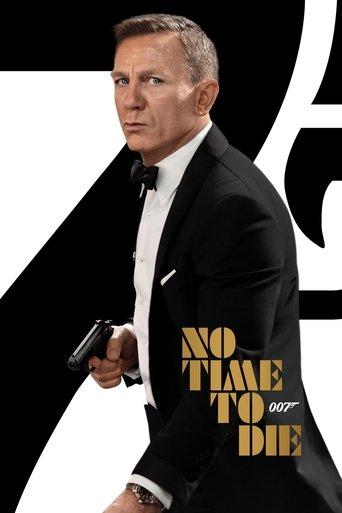
No Time to Die
2021 · Film · 163 min
Part of James Bond Collection
Directed by Cary Joji Fukunaga
Bond has left active service and is enjoying a tranquil life in Jamaica. His peace is short-lived when his old friend Felix Leiter from the CIA turns up asking for help. The mission to rescue a kidnapped scientist turns out to be far more treacherous than expected, leading Bond onto the trail of a mysterious villain armed with dangerous new technology.
2 positive2 negative9 neutralfrom 13 commenters
Where to watch
No streaming data for this title.
16 comments on Hacker News
Fun side project I whipped up (thanks Claude), for those who want something a little more tactile there's a great coffee table book by Taschen https://www.taschen.com/en/books/film/44895/the-james-bond-archives-no-time-to-die-edition/
The Daniel Craig Bond movies were a pretty significant reinvention, much welcomed and generally pretty good, with the highs much higher than the lows were low. I don't think it's fair or accurate at all to say that Casino Royale, Skyfall, or even No Time To Die were of a piece with the 60s movies in tone or style.
Depends, wokespotting is a complex sport, and I only trust professionals to do it.
I tried myself, but failed. At first I thought it meant the movie was either feminist, antiracist and/or Marxist, but it then became clear it was actually an union of unpopular and one of the three criteria (see no time to die, or guardian 3 that are suddenly not woke). So from this, Star Trek, despite being the most Marxist utopia ever, isn't woke, since it's popular.
But Barbie is quite popular and still woke. But Alien is not despite featuring the biggest Mary Sue. Like I said, to complex for me, I leave wokespotting to professionals.
If there is a disagreement between the director and the studio, they will negotiate with each other about which changes to make. But the director is never cut completely out of the process.
There are a lot of directors who would disagree with you on that...
Disney is notorious for this; off the top of my head, Ant Man, Rogue One, Solo, and Brave changed directors because of disagreements with the studio in post-production. With the Marvels, it is widely known that the director did not have final cut of the film. Bryan Singer and Steven Soderbergh have been replaced on movies due to disagreements with studios after filming had started (and in both cases, the films at issue went on to be multiple-Oscar nominees). Cary Joji Fukunaga was replaced on It due to disagreements with the studio (but retained writing credit) right before filming started; and he replaced Danny Boyle on No Time to Die after Boyle was let go due to disagreements with the studio.
If the studio tries to take creative control completely away from the director, the director can petition the DGA to have his or her name removed from the film.
The director always is consulted during the edit, and in most cases works very closely with the editor. The studio may or may not insist on changes later, but there is just no universe where the editor makes changes alone with no input from the director at all. The DGA would have a fit if that happened.
This is just incorrect. Indeed, what you suggest is at odds with over a 100 years of film history...
The DGA does not have a fit over stuff like this because a director is not entitled to "complete creative control" or to "final cut" unless they negotiate for it, get themselves hired as editor on the film they direct (which would also involve them being a producer), or work with a studio that embraces the auteur school of filmmaking (in which the released film represents the director's vision of the film).
It's one thing to support the auteur school since it usually results in better films (counterpoint: most Netflix films), but it is objectively not the way most films are made.
The two co-writers on No Time to Die that you keep praising were the people responsible for such trash as Johnny English, Die Another Day and The World is Not Enough, which says pretty much all you need to know about their screenwriting "skills" and their contribution to Bond history.
For all of the Craig Bond films, other writers had to be brought into to make their scripts filmable (Oscar winners Paul Haggis for Casino Royale and QoS and John Logan for Skyfall and Spectre, Emmy winners PWB and Fukunaga for NTTD).
They didn't bring her in to salvage the script at all. They brought her in to do polishes of dialogue and to give them some ideas about how things could go and they'd take what they wanted. What about this reads salvaging?
The WGA has strict rules about screenwriting credits. If she got screenwriting credit for a major blockbuster, she didn't just "polish" a little bit of the script, she wrote significant portions of the script that made it into production. And given their historical backgrounds, it's clear that she and Fukunaga were responsible for the serious elements of the film, since that's not a capability that Purvis and Wade have demonstrated in any of their prior films.)
except its about lesbian/bisexual bait so it wins awards. in my opinion because they were looking to add female writing credits
And suddenly your agenda becomes clear...Most people aren't so open about being misogynists.
>2 critically acclaimed TV shows
I tried to watch them.
My opinion is that they were critically acclaimed because the subject matter was popular or outrageous not necessarily because they were good. There aren't any sympathetic characters in fleabag - its a tale of a mentally unstable desperate neurotic woman as she goes from revolting situation to revolting situation through bad decisions she's mostly at fault for. It isn't funny. If you giggle when unlikable people talk about anal sex this may be for you.
Killing eve was a tv show that embodies "mid" in every way, except its about lesbian/bisexual bait so it wins awards.
>Solo, Indiana Jones 5,
Solo was a bad movie and the first star wars film to actually lose money, and indiana jones 5 hasn't been released yet so I'm withholding judgement.
>Taking into account the number of episodes she wrote for both of these series, she actually has more writing credits than her 3 credited NTTD co-writers.
Writing 1000 episodes of those shows isn't comparable to a single good bond film. This is why quantity and quality are not the same.
>A story credit is given to a writer that participated in writing the treatment for the film (i.e., the outline), in situations where a treatment is drafted before the script itself is written. A story credit is a lesser credit in Hollywood.
Ya, the other writers have writing credits, and story credits, and 20 years of history writing bond movies.
>Where there is overlap between the story by and screenplay by credits, it means that the original writers' first draft(s) weren't filmable and another writer had to be brought into salvage the script.
https://www.indiewire.com/features/general/heres-how-phoebe-waller-bridge-polished-the-no-time-to-die-script-1202213218/
>“[I was asked to do] dialogue polishes and to offer things really,” she said. “It’s about just offering different alternatives.”
>She went on to say “they did give me some scenes and then be like, can you write some alternatives for this or have another idea about where it could go in the middle or how it would end. And then I would just give them options and various scenes and then they would take what they want. But there was a lot people writing — the director [Cary Fukunaga] was a writer on it as well. And there’d been a few writers before.”
They didn't bring her in to salvage the script at all. They brought her in to do polishes of dialogue and to give them some ideas about how things could go and they'd take what they wanted. What about this reads salvaging?
She got the invited because one of the film's producers, Barbara Brocolli, invited her to contribute. in my opinion because they were looking to add female writing credits to the movie as the academy awards had suddenly introduced diversity requirements to be considered for awards and all the writers up to that point were men.
phoebe waller bridge has a single credit of interest for writing
This says more about your tastes than your understanding of Hollywood.
Ms. Waller-Bridge wrote 2 critically acclaimed TV shows which were hits for their respective distributors: Fleabag (an Amazon Video launch series), and Killing Eve (BBC). She also wrote several smaller series for the BBC, and co-wrote No Time to Die, and provided uncredited rewrites for Solo, Indiana Jones 5, and is currently working on another TV show for Amazon.
For her work on both Fleabag and Killing Eve, she was nominated for outstanding writing by her peers (and won for Killing Eve). Taking into account the number of episodes she wrote for both of these series, she actually has more writing credits than her 3 credited NTTD co-writers.
doesn't have a story credit unlike the other three writers
A story credit is given to a writer that participated in writing the treatment for the film (i.e., the outline), in situations where a treatment is drafted before the script itself is written. A story credit is a lesser credit in Hollywood. Where there is overlap between the story by and screenplay by credits, it means that the original writers' first draft(s) weren't filmable and another writer had to be brought into salvage the script. Some writers will re-write enough things to get sole credit for the final script; others, like PWB, will make just the changes necessary to get it across the finish while still letting the original screenwriters get credited for their contributions.
phoebe waller bridge has a single credit of interest for writing, which is "no time to die", where she is one of 4 writers and doesn't have a story credit unlike the other three writers. The other writers include Neil Purvis and Robert Wade (who both have 20 years of bond film writing credits each).
She won awards for Killing Eve which is a show that is "mid" in every way.
Sometimes people get large paydays for reasons other than talented writing. If Phoebe Waller-Bridge is getting large paydays for writing its not because of her comprehensive work history and achievements.
No one does it like him though, or rather his team.
I thought his work on no time to die was pretty boring, but the work he did with Pfister on 2049 and on Dune are almost genre defining, I feel.
His ability to integrate the score into the sound design of the movie is something I don't think anyone can do. Maybe no one else has the budget for it.
I think Dune is probably his best work, it's the perfect blend of atmosphere, evocations of a strange new world, but also thematic and structural rigour that has let down previous adaptations.
I definitely get tired of him sometimes, but equally I never feel like I need more deliberate choices from his work. When I listened to Giacchino's mostly fairly good score to The Batman, I felt myself thinking "This motif's entropy is too low", I very very rarely feel that in Zimmer's more modern work.
That being said I think Zimmer gets more credit than he deserves because I think more than many other names he is the director of the music. There's genius in sitting back, too, but I doubt he composed all the trills and melodies in the dune soundtrack.
>Even the talented people—you could take Dune, made by Denis Villeneuve, an extremely talented, gifted artist, and you could take No Time to Die, directed by…Gary?”
Cary Fukunaga.
Cary Fukunaga—extremely gifted, talented, beautiful artists, and you could take both those movies, and you and I could go and pull the same sequence out of both of them and put them together. The same sequence where the cars all crash into each other. They all have that stuff in it, and they almost have to have it, if they're going to justify their budget. And that's the good films, and the talented filmmakers.
It is interesting but when I watch Denis Villeneuve last films I really ignore all this genre thing because I'm so at awe of his execution. Similarly, when I first watched Tarkovsky's Solaris I quickly lost track of the plot but was drawn to the uniquely crafted cinematography and hypnotized by the deliberate manipulation of pace; at the end I was watching a movie by itself instead of contrasting it with my reading experience beforehand. The same could be said about the seamless implementation of Conrad's "Heart of Darkness" into the Vietnam setting of "Apocalypse Now"
[Arrival has imho a very noticeable weak plot, it is only when you read the short story "Story of your Life" that it fits nicely in. Nevertheless once you ignore that apparent flaw, it is a wonderful shot movie.]
The "marvelisation" has gone so absurd that here you are in 2019 after dozens of franchises watching "Joker" (in parallel with another Joker version at the backdrop of Ledgers last peformance) which subversively utilized the marketing ploy into tricking the audience watching a deeply disburting indie-film about the chasms of our society depicted in a masterfully balanced unstable character drawing by an actor using nearly his whole skill set.
Cervantes as a prisoner of his time quite successfully played with the readers expectations of "chivalry romance" (a popular franchise back then) to express himself artistically in a new way we now call a "novel". You laugh and cry at the same time when reading through the book, a comedy, tragedy, persiflage, psychoanlysis, slap-stick ... it really is a mess. Embrassing the mess is not something you can persuade "rational thinking" types in the movie industry making the decisions, so you trick 'em. Unfortunately nowadays you have to do a lot of lip-service. I don't know about Chloé Zhao but "The Rider" and "Nomadland" were great movies, I wonder what "Eternals" meant to her aside the recognition of entrusting her with a 200$ million budget.
2020/21 has had quite a few movies that ended with the hero dying or negatively impacted. They follow the “hero’s journey trope” and then subvert. I guess they match the pandemic mood. I’m not sure if I was just made more aware of this due to COVID, or there really just has been a glut of them.
The two most recent off the top of my head:
* Don’t look up
* James Bond No Time to Die
> For every Spider-Man: No Way Home, Venom: Let There Be Carnage, No Time to Die, Dune, or Fast & Furious 9 that brings in big bucks, there’s a Space Jam: A New Legacy, The Suicide Squad, Tenet, or Raya and the Last Dragon that fails to turn a single penny of profit in theaters.
Tenet made plenty of money in worldwide box office sales, not counting DVD/Blu-Ray or streaming: https://www.the-numbers.com/movie/Tenet-(2020) "worldwide box office is 1.8 times production budget"
Raya (budget $100m) also made money in theaters alone (worldwide box office $116m) despite being released in March 2021. Phew, I was going to be sad for a moment that Raya was some kind of failure, as if being included in a list that contained the new Space Jam movie wasn't bad enough.
Whoever wrote this article doesn't seem to know what they are talking about.
What I continue to find shocking is just how many people commenting on this post are lining up to accept another authoritarian measure for a very small amount of additional comfort of mind.
Having just watched "No Time to Die," Rami Malek's character has a classic vilian diatribe in which he says:
The thing that no one wants to admit is that most people want things to happen to them. We tell each other lies about the fight for free will and independence, but we don't really want that. We want to be told how to live and then die when we're not looking.
It strikes me that perhaps storywriters keep adding lines like this to movies, books, etc because it's actually true for a significant amount of people. And that's really saddening.
There's a 40% chance Mr. Bond here would have died before his latest film "No Time To Die", if he had a 2% chance of death in each movie ;)
This explicitly did not happen with No Time to Die. https://www.msn.com/en-us/movies/news/james-bond-film-no-time-to-die-explored-dollar600-million-sale-to-streaming-services/ar-BB1amnFw
Similar offline versus online privacy thing for music recognition.
My Pixel is sat here charging. Billie Eilish is singing in the background, by the time she sings "I should have known..." it has recognised the music and passively displayed "No Time To Die by Billie Eilish" on the lock screen.
Google's team were building an ML model for music recognition and they realised oh - the smallest model fits on a phone. We don't need to spin this up as a cloud service we can just deliver it to the phones of people who want it as a feature. "Now your phone can tell you what that music is".
Of course down the road this awareness of context allows even cleverer agent interaction. "Which Bond was that?" you ask as Adele sings "Skyfall". "In the movie Skyfall, James Bond was played by Daniel Craig".