 Hacker Cinema
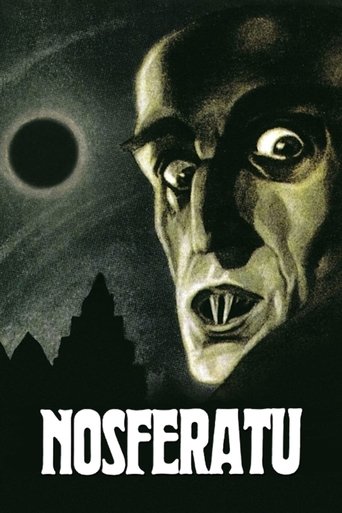
Nosferatu
Nosferatu, eine Symphonie des Grauens
1922 · Film · 94 min
Directed by F. W. Murnau
The mysterious Count Orlok summons a happily married real estate agent to his castle, located up in the Transylvanian mountains, to finalise a terrifying deal.
8 positive1 negative12 neutralfrom 21 commenters
Where to watch
No streaming data for this title.
23 comments on Hacker News
I absolutely love the idea!
As a movie geek I'm personally offended when someone says "oh, it's from 2017, it's an old movie!", or "I don't want to see anything from 90s, yuck" - and that's pretty common.
Of course, "Nosferatu, eine Symphonie des Grauens" is not for everyone, but I firmly believe that you can watch the new Dune and Lawrence of Arabia back to back and have similarly enjoyable time.
Fallout 1 and 2 are miles ahead of Fallout 3 (mostly due to uncanny valley phenomenon). Sure, the medium has changed a lot and modern consumers are used to more streamlined experience - my favorite example is the endless stream of Baldurs Gate "modern reimplementations" or rehashes, like Pilars of Eterniety that were too close to the original source, and then, suddenly, someone came up with Divinity, basically a Baldurs clone but with modern UI and QoL improvements.
But consoles are different.
This can truly be a window for the next generation to look back in the past.
> If the only way to preserve something is to pirate it, then the ethical and legal action is to let it disappear. You do not have the right to choose what happens with movies, music, etc., only the rightful owner can do that.
I disagree.
Every copy of Nosferatu was ordered to be destroyed. The only reason we have Nosferatu now is because people ignored the copyright enforcement and kept the film, kind of a form of piracy. Maybe you think that would be a better world, but I do not.
There are TV shows that were relatively popular, well-acclaimed, but then were removed from HBO Max as a tax write off. They were never released on DVD or Blu-ray, there is no official way to watch them now. If there wasn't piracy, these shows would be lost media. Again, you're free to think that, but I think that's wrong.
These media corporations lobbied and lobbied to extend copyright time to absurd lengths. Forgive me for not crying for them.
Nobody's mentioned Lon Chaney yet! Of his movies, definitely watch "The Unknown" (1927), "The Phantom of the Opera" (1925), and "The Hunchback of Notre Dame" (1923). I recommend watching in that order, for reasons that are my own. :) I also remember "West of Zanzibar" (1928) as being good: Wikipedia tells me it's not strictly a "silent" film because it has a synchronized sound track... but if we're counting "Shaun the Sheep", then we can count "West of Zanzibar" too. Finally, "He Who Gets Slapped" (1924) is a real trip.
I'll also recommend "Nosferatu" (1922). And "Metropolis" (1927) — but note that "Metropolis" is, or has been, kind of a "semi-lost" film: they're still turning up bits and pieces of it from time to time. I saw what-was-then-called "Metropolis" in the 2000s, and then again in 2024, and I felt that it had radically changed for the better and more-comprehensible. After checking Wikipedia: presumably the first version I saw was the 2001 release (124 minutes) and the second was the 2010 release (148 minutes). But also note that I was 15 or 20 years older, which might have helped.
If (and, presumably, only if) you have read Dante's Inferno, then you might enjoy the film adaptation "L'Inferno" (1911). Wikipedia calls it "the first full-length Italian feature film." The full 62-minute film is available on Wikipedia [1]. Unlike all of the above films, I do not recommend "L'Inferno" as a popcorn movie, but I found it really impressive as a sort of "living tableau" shot-for-shot reenactment of Gustave Doré's famous illustrations.
[1] - https://en.wikipedia.org/wiki/File:Dante%27s_Inferno_(1911).webm
> This is pretty standard history. Modernism dominated most art forms at the time.
Not sure what “standard history” you are relying on, but gothic horror was a major influence on movies (and other popular media like comics). Modernism is a somewat nebolous term, but German expressionism seem to be generally categorized as modernism, even when the movies are clearly gothic horror (eg Nosferatu is heavily based on Dracula, they just couldn’t secure the rights to the novel, so changed the name).
Not really. If I write a series of stories about Herlock Solmes and his friend Dr. Wohn Jatson and everything maps up one-to-one with the Sherlock stories, it's pretty clear I copied them even if I changed the names. Or to give a real example, consider the famous silent movie "Nosferatu". While it was theoretically about a vampire named Count Orlock being visited at his castle by a lawyer named Thomas Hutter and how Orlock ends up moving to Hutter's city and attacking his family, it is pretty obviously the story of Count Dracula and Jonathan Harker, and the widow of Dracula's author sued the makers over it.
A similar action was taken with the 1922 film Nosferatu, but prints of the film survived.
I would wager that the current work will also avoid destruction.
"Even with several details altered, Stoker's heirs sued over the adaptation, and a court ruling ordered all copies of the film to be destroyed. However, several prints of Nosferatu survived, and the film came to be regarded as an influential masterpiece of cinema and the horror genre."
https://en.wikipedia.org/wiki/Nosferatu
My daughter made me watch Nosferatu (1922) on a hundred year anniversary of the movie. Very interesting use of shadows.
You're right - movies do not function as a reflection of reality. The Gold Rush is no more a documentary than Nosferatu.
But you can say the same about Michelangelo's David. An artist's output - and preserving it, is about preserving the culture, not a snapshot in time. "What did the produce, and why?" are compelling questions to ask.
Stoker's widow won a lawsuit and all of the copies of Nosferatu were destroyed. Well, all but one. Every copy today has that source, that accidental source, as its ancestor.
"Bothering to preserve" is a terribly blunt filter. Luck (good: a crazed archivist; bad: a nitrate fire) is too fickle to select for the best.
It isn't just the films themselves: often, we have no sense of a given actor's career. We know that they had a huge impact at the time, but we have only secondhand evidence of it.
I've been picking from a different list (the huge meta-list project from They Shoot Pictures Don't They, which I think does factor in the 1001-films book as one of a whole bunch of things they feed to their Algorithm) but yeah, a lot of the pre-1930 films were a real slog, at least in part. I only bounced off a very few but I was pretty damn bored for long stretches of some others, I think justifiably so.
Big misses for me were anything horror (Nosferatu, The Cabinet of Dr. Caligari—hell, maybe I just don't like German Expressionism?).
Surprise hits were some of the more arthouse films. A Propos de Nice and Man with a Movie Camera were two I loved and are both definitely not conventionally-entertaining. They don't even feature narratives, in any normal sense (but they kinda do?). I also dug some of the Big Damn Movies like Intolerance and Gance's Napoléon—but that wasn't universal, because I found Birth of a Nation unwatchable (I gave it like 90 minutes then bounced—I'd enjoyed none of it, and not just because of the terrible message). Nanook of the North was another surprise hit for me—OK, it's kinda faked or whatever, but they fucking hunted a walrus, for-real, using traditional methods. That they were doing it when they did might have been "fake" because they didn't really do it anymore, but they did it, for-actual-real, which was just nuts to watch, among other things that were "fake" but more-real than a lot of what you might be able to see today.
> Jan 1, 2023 will also be a fine day for film in the public domain, with Metropolis, The Jazz Singer, and Laurel and Hardy's Battle of the Century entering the commons. Also notable: Wings, winner of the first-ever best picture Academy Award; The Lodger, Hitchcock's first thriller; and FW "Nosferatu" Mirnau's Sunrise.
Metropolis is so influential that I'd call it a must-watch for... well, basically any fan of popular media of any kind. Film, literature, graphic arts, video games, music(!). Its influence is everywhere.
Sunrise is one hell of a roller-coaster of a movie. As with anything in the silent era (especially the non-comedy films) it's a bit of an acquired taste but it's among the earliest films that I didn't just find interesting or funny, but that really got me on the edge of my seat, several times. It's got some real "yell at the screen" moments :-) I enjoyed it way more than the director's more-iconic Nosferatu. Though, for my money, it's no M or The Passion of Joan of Arc, as silent film dramas go. Still, really good, and I think a lot of critics hold it in far higher regard than I do.
Haven't seen the rest.
> On the literary front, we have Virginia Woolf's To The Lighthouse, AA Milne's Now We Are Six, Hemingway's Men Without Women, Faulkner's Mosquitoes, Christie's The Big Four, Wharton's Twilight Sleep, Hesse's Steppenwolf (in German), Kafka's Amerika (in German), and Proust's Le Temps retrouvé (in French).
Damn, what a powerhouse year in literature. And look at that, my favorite novel (To the Lighthouse) is about to be public domain!
The Holmes news is awesome, too. Bunch of copyright troll dicks have been making doing anything with Holmes risky for years. Great that everyone can more-easily ignore them.
I agree with some other commenters; this is a lot of cherry picking. You could just as easily compare Nosferatu (1922) with Blade (1998) with Twilight (2008) and ask why culture gets happier and less serious as time goes on, “aren’t we all becoming like Brave New World???” Comparing Adam West’s Batman with today’s Batman is just lazy. They’re apples and oranges at this point: different genres, different climates (today the more “fun” stuff is Marvel), different film technology. And if we want to get into it, it’s not “depression” that’s trendy; it’s realism. 60’s Batman dealt with all the same “dark” themes as current Batman: mafia, crime, trauma and grief, etc. But the visual portrayal was different because it was a “comic book” before comic books adaptations were commonplace blockbusters. That doesn’t mean all of 1960s cinema is somehow a comic book movie. Hello: Psycho (1960), Dr. Strangelove (1964), The Good, The Bad, and the Ugly (1966).
There are, in fact, digitally restored versions that look better than unrestored versions ;)
Nosferatu is not so old that it's some kind of sacred artifact to me. It's a movie, it's meant to be enjoyed first. And the original music really does nothing for me. It isn't about technical quality either. There are high quality versions that don't "work" any better for me.
Alamo Drafthouse is showing this film (new score composed by Bob Lanzetti) in theatres (and on demand) in collaboration with GroundUp Music.
https://drafthouse.com/nyc/event/the-press-room-presents-nosferatu-sylva-by-snarky-puppy-metropole-orkest-double-feature
I believe Zach Brock will be featured on violin, but don't quote me on that.
Nosferatu is quite good, but I prefer it with an analog synth soundtrack. The original soundtrack is very generic and not particularly dramatic, actually, I would say pretty low quality and boring.
I can't find my favorite right now, but IMO several analog synth soundtracks and one I found with organs are good soundtracks for Nosferatu (all easy to find on YouTube). They create an ethereal atmosphere that fits the movie well.
A couple years ago I got into the idea of vampires and did a watch-through of some of the best Dracula movies. There are a staggering number of them, truly, there are "top 10 best Dracula movies" lists. Some of them really are phenomenal. Like The Batman out right now, there truly are so many different ways to approach a story.
I watched the 5 or so I chose chronologically based on release date and so Nosferatu was first, it's actually pretty good for what it is and I can recommend for anyone interested - just keep in mind film standards for the time when setting expectations.
With your expectations firmly set to "silent film era," Nosferatu is very entertaining and goes by remarkably quick. What helps is there's so much to look at in nearly every frame, you're rarely bored visually.
The other good silent horror film I'd pair it with is Haxan: Witchcraft Through The Ages.
"she inspired a generation of film makers and artists that reality is not one that needs to be reproduced exactly as it is filmed or photographed"
I'm not sure what you mean by that, but there were plenty of films before the 1943 Meshes of the Afternoon which showed reality in fantastic, even dreamlike ways.
From the 1902 A Trip to the Moon to the 1920's The Cabinet of Dr Caligari to 1922's Nosferatu to 1927's Metropolis, and other German Expressionist films, to name just a few.
For me the new thing that Meshes of the Afternoon brought to the cinema was an explicit interest in dream symbolism.. though even that may not be that new, if you count Bunel's 1930 film L'Age d'Or and other films of the surrealist era.
Deren has often been described as being in the surrealist tradition, and I think that's accurate in as much as she was interested in artistic use of dreams and dream symbolism, and the borderline between dream and waking life.
It was ordered that all copies of the film "Nosferatu" be destroyed, because it allegedly infringed copyright. Shortly after the alleged copyright had expired a copy was found in a safe. It seems that someone had failed to fully implement the court order: a punishable crime, no doubt, if it was done deliberately, but perhaps it was just incompetence.
Nosferatu is the first that comes to mind that can illustrate the differences.
It was considered to be in the public domain by 1930 in most countries, but thanks to Florence Stoker who attempted to hunt down and eradicate the film at every turn, it becomes public domain in the US probably in 2041. It could be even later, depending on a few small things.
> If it's redone (properly, shot for shot, in the right spirit) with updated effects and sound...
In a way, it already has with the 1984 sequel "2010: The year we make contact". That was a fairly mediocre film which simply didn't capture any of the wonder of 2001.
2001 is what it is. Simultaneously an auteur film, a vision of the future from the past, and fine science fiction.
Not everyone's cup of tea, but truly great films even from the distant past (like Nosferatu) can be appreciated today-- in spite of poor special-effects. On the other hand, re-makes (or sequels) are a mixed bag. The Blade runner remake/sequel was stunning but just doesn't have the gritty magic of the original. Similarly with Solaris or even The Terminator for that matter.
The problem with Netflix, to me, is that relying on it means that I restrict myself to their very limited selection.
The only place I know where I can reliably find copies of high-quality cinema is a private torrent tracker... and some public libraries, but I don't own a DVD unit (and don't want one).
Sure, there might be some legal way to gain semi-convenient access to the library of cinematic culture, but I don't know about it. It's kind of tragic.
Like, people seriously claim Netflix as some sort of alternative to pirate copying... and I go into the Swedish Netflix and search for "Bergman" and get one result: Casablanca.
iTunes's selection is wider, but still, I search for "Tarkovsky" and there's zilch. "Ozu", nothing. "Renoir", nah. Oh, they do have one Murnau, the newly restored Nosferatu. No Eisenstein, Dreyer, or Godard. And so on.
Of course it's all because of copyright restrictions and maybe a lack of projected profits from these art films. That's exactly the point. Pirate copying is a way for people to share this material without being restricted by such tedious limitations.
Harvard University, for example, dates to the Ming Dynasty.
I do not disagree that there are no traces of old culture. However, go to any random city in, say Europe, the middle east, or Asia. Chances are high that you will easily find artifacts from the roman age until now. Most of the US is new, in many cities you'll have to work hard to find something older than one hundred or two hundred years old. This is not a criticism, but many people appreciate cities and artifacts that are old ;).
Also, with respect to culture in the other sense, the difference is huge. US city centers tend to be boring (with notable exceptions such as New York), since much of the activity is in the outskirts, and are only reachable by car. Compare this to many other countries, where city centres are cramped with pubs, small theaters, etc, and people tend to hang around until the early morning. I liked some cities int this respect (e.g. Portland), but in comparison it's still a bit dull.
The United States also has new culture such as ragtime, jazz (various genres), blues, soul, rhythm and blues, rock and roll, and hip-hop music that compare favorably in the aggregate to traditional music from anywhere in the world,
It's just marketed a whole lot better. E.g. I am into jazz mostly, and American musicians are the most well-known. But Europe had (and still has) a lively avant-garde scene, which was at least as progressive is the scene in the US. In Africa, mostly isolated and in parallel, what resembles modern jazz developed (e.g. check out the excellent Ethipiques series). One good example is Getatchew Mekurya from Ethiopia, who developed his own weird flavor of jazz, that sprung directly from traditional ethiopian music. Anyway, I digress. The rest of the world had thriving and progressive music scenes, but often failed to package is for mass consumption.
broadcast media and motion pictures that were largely invented here
Are you kidding? Ever heard of Nosferatu, Battleship Potempkin, Le voyage dans la lune?
but now enjoyed around the world
Hollywood movies are often looked down upon as superficial, but 'ok if you want something easy'.
and this cool thing called the Internet that links all of us together on Hacker News.
True, ARPAnet was invented in the US, but the 'interface' that we all use was invented by a Brit in Geneva ;). Sure, it had its precursors, but the point is, that in contrast to popular belief, the US did not bring us to modernism. It's a collective contribution.