 Hacker Cinema
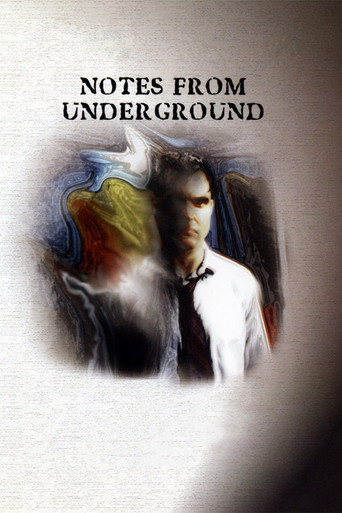
Notes from Underground
1995 · Film · 88 min
Directed by Gary Walkow
Adapted from Dostoevsky's novella, Henry Czerny plays the narrator, Underground Man. Filled with self-hatred, he keeps a video diary where he discusses his own shortcomings and what he thinks is wrong in contemporary society. His bitterness spills over at a dinner party attended by his old college friends, an occasion which sends him running to a nearby brothel, where he meets Liza (Lee), a young prostitute.
1 neutralfrom 1 commenter
Where to watch
No streaming data for this title.



1 comment on Hacker News
Crime and Punishment is a wonderful deep dive into the mind of a really messed up person. If you like the film Taxi Driver, it is sort of similar, but with a lot more direct philosophical underpinnings. Raskolnikov has a whole philosophical framework on why he's allowed to murder the pawn shop owner* and he spends time explaining and discussing it.
The motif of the nihilistic, disaffected young man is something Fyodor gets a lot of mileage out of, but he's the master of that genre. Notes From Underground is similar, but a lot shorter. It's one of the few Dostoevsky novels I haven't read, so I can't say much more than that. Its opening is his most famous line: "I am a sick man. I am a spiteful man. I am an unpleasant man. I think my liver is diseased."
To go against the grain of most recommendations, I'll say that "Notes from a Dead House" (the name differs depending on translation) is a good place to start too. It's essentially his prison memoirs, slightly fictionalized to avoid censors. There are a lot of little details that stood out and affected me deeply. e.g: He recalls a small dog that was often abused by the other prisoners, and was so timid that it would "sink to the ground on all fours and start trembling all over" when he petted it. The book has so many small, human details that really show the personal history that influenced his later books. He has an eye for those details that most people would gloss over.
The thing to keep in mind is that, across Dostoyevsky's novels, there are a lot of scenes where people stand around discussing philosophy. It's great and engaging if you're into it, but it will kill your enjoyment if it's not your thing. The Brothers Karamazov and Demons are books to avoid for your first attempt; they include a lot of that. Fyodor is really preachy in general, but this increases over time in his career, so his earlier books are more plot-focused. And he's all about symbolism, like the hypothetical author in the famous "curtains are blue" meme.
Finally, don't worry too much about translation. Pevear and Volokhonsky are always the most recommended, but that is more due to current trends in translation than their objective superiority. That's not to say they're bad, but any modern translation is going to be fine. Constance Garnett is the only one who's not so great, but I had a fine experience with her translation of C&P as my first Dostoyesvky novel, so it's hardly unreadable.
*not a spoiler, this happens in the opening