 Hacker Cinema
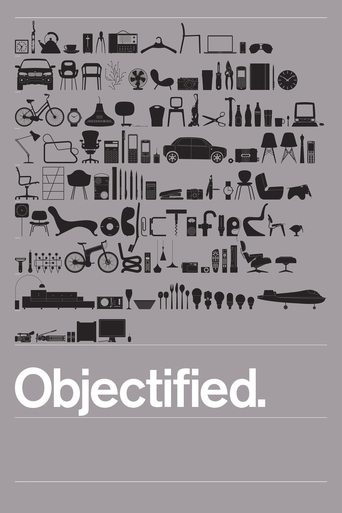
Objectified
2009 · Film · documentary · 75 min
Part of Design Trilogy
Directed by Gary Hustwit
A feature-length documentary about our complex relationship with manufactured objects and, by extension, the people who design them.
33 positive1 negative1 mixed15 neutralfrom 50 commenters
Where to watch
No streaming data for this title.
55 comments on Hacker News
The trilogy of design-related documentaries by Gary Hustwit! https://en.wikipedia.org/wiki/Design_Trilogy
1. Objectified (on the design of objects)
2. Helvetica (on the design of typefaces)
3. Urbanized (on the design of cities and urban spaces)
This reminds me of something Bill Moggridge said in the industrial design documentary Objectified:
> I like the concept of wearing in rather than wearing out. You’d like to create something where the emotional relationship is more satisfying over time. You may not worry about it or think about it very much, and people don’t have to have a strong love relationship with their things, but they should grow a little more fond of them over time.
That was an idea he applied to the Grid Compass, which was an early laptop with a black-painted magnesium chassis, which you can imagine would patina quite nicely.
There's a documentary called Objectified that may interest you:
https://en.wikipedia.org/wiki/Objectified
If anyone is curious about (industrial) design, it is worth checking out the documentary Objectified by Gary Hustwit (and the rest of the 'trilogy'):
* https://www.hustwit.com/objectified
* https://en.wikipedia.org/wiki/Objectified
* https://en.wikipedia.org/wiki/Design_Trilogy
Trailer:
* https://www.youtube.com/watch?v=1dKJZfjHJJs
Gary Hustwits design trilogy:
Helvetica - https://en.m.wikipedia.org/wiki/Helvetica_(film)
“about typography and graphic design, centered on the eponymous typeface.”
Objectified - https://en.m.wikipedia.org/wiki/Objectified
“examining the role of everyday non-living objects, and the people who design them, in our daily lives.”
Urbanized - https://en.m.wikipedia.org/wiki/Urbanized
“discusses how cities are designed, and it features interviews with urban planners and architects“
They are beautifully made films, and he interviews some of the most influential designers of the last century.
It funny how many times I’ve told people to watch Helvetica and they have just looked at me and asked how there could be a film about a “font”. It’s so much more, the films really cover design methodology and how it influences our every day lives.
I think this is one of the cases where Apple doing hardware and software shines through. They’ve made macOS resume quickly from sleep, to the point where I’ve never really thought about/noticed the problem you’re describing. So the LED really isn’t needed for 99% of the users, the same way that you don’t have a power LED on iPhones or iPads. On recent models the login screen is there before you’ve fully opened the lid.
(It’s interesting in itself to track the history of power/sleep lights on MacBooks, since as far as I can remember they only turned on in the case where the internal display is off, or when the laptop was sleeping (pulsing light). Jony Ive even talked about it in the Objectified documentary: https://vimeo.com/7827217 )
Don’t learn it if you don’t want to and don’t need to.
On the other hand, if you want a lighter introduction to design, try watching one of Gary Hustwit’s films like Helvetica, Objectified, or Rams. Or read the Design of Everyday Things by Don Norman.
While not really specifically about Bauhaus but covering the later movements it influenced up until the present, Gary Hustwit films in his "Design Trilogy" (Objectified, Helvetica, Urbanized) are a brilliant study into the influence of various design movements and designers over the last century. Very much recommend them:
https://en.wikipedia.org/wiki/Objectified
https://en.wikipedia.org/wiki/Helvetica_(film)
https://en.wikipedia.org/wiki/Urbanized
Typography, and more broadly design, have a big impact on the way you perceive things. The rabbit hole is endless, but I recommend three entry points:
- The Design Trilogy of films, made up of Helvetica, Objectified, and Urbanized.
https://en.wikipedia.org/wiki/Design_Trilogy
- The book Universal Principles of Design by William Lidwell
- The 101 Things I Learned In... series. There isn't one for typography, unfortunately, but the Fashion, Urban Design, Architecture, and Product Design books cover similar territories.
The director, Gary Hustwit, made his films (Helvetica, Objectified, Urbanized, Workplace, Rams, and others) available for free during the first weeks of the lockdown -- each one for a week. It was nice to see them again.
https://www.ohyouprettythings.com/free
I can strongly reccommend «Objectified», another one of Gary Hustwits documentaries. It features interviews with the legendary german industrial designer Dieter Ramms, where he praises Apple. It also has an interview with Jony Ive where he talks about the MacBook. «Urbanized» is also a good documentary from Hustwit, about urban design.
From the about page [1]:
Gary Hustwit is an independent filmmaker and photographer based in New York....
In 2007 he made his directorial debut with Helvetica, the world’s first feature-length documentary about graphic design and typography. The film marked the beginning of a design film trilogy, with Objectified, about industrial design and product design following in 2009, and Urbanized, about the design of cities, in 2011. The films have been broadcast on PBS, BBC, HBO and television outlets in 20 countries, and have been screened in over 300 cities worldwide. Workplace, a documentary project about the future of the office, was commissioned for the 2016 Venice Biennale of Architecture. His most recent feature film, Rams, about German design legend Dieter Rams with original music by Brian Eno, was released in Fall 2018.
[1] https://www.hustwit.com/about
Very nice movie, recommend the full set, helvetica, objectified, urbanized, by the same director
It’s very generous of Gary Hustwit to make his films free right now. He’s being doing one a week. I watched Rams last night and really enjoyed it. Dieter Rams lived in post-war Germany and pretty much invented modern product design. He was hugely influential to Jony Ive and Apple. If you like well-made documentaries about people fully engaged in their craft, I highly recommend it.
Also, check out Objectified which is more about product design in general and features Ives. Helvetica is my favorite Hustwit film, but this comes close if not surpasses it.
Sadly I can't remember where I heard it, it may have been in the documentary "Objectified", but there's a designer that raises an interesting point. It's something along the lines of: "Why are there still uncomfortable chairs? It's a solved problem, we know how to design chairs."
I recommend the movie Objectified, which is about exactly this.
http://en.m.wikipedia.org/wiki/Objectified
In the documentary Objectified (recommended!), a BMW designer brings up the point that a car design should express what the car is. If there's a mismatch between the look, and how it feels to drive, it will be rejected by customers.
Nothing to a similar subject as design. I recommend "I Will Teach You To Be Rich" and "4 Hour Work Week" a lot. They're not design books, they're all about human psychology and implementation. These traits are what made "Don't Make Me Think" stand out to me. I Will Teach You To Be Rich is a quick read with things you can implement right away. 4 Hour Work Week is longer, it reads as a story, but has detailed information about product testing (skip to these sections if the motivation part doesn't interest you).
I watched Objectified, design movie. It was okay, but didn't give me much more than Don't Make Me Think. It probably would have made more of an impact if I watched it before reading the book. What these books/movies do is change your perception of the world. Once that's done and you see something similar you'd be like "of course" instead of "I never thought of it that way".
I'm not an entrepreneur, but I have worked at 2 startups (less than 20 employees) since 2011.
This is going to sound cliched, but the best way is to start your own company or project from scratch and apply the concepts you learn from these resources.
Here are some "bestsellers", apart from http://startupclass.samaltman.com and PG's essays are
Building Product/Design
-----------------
* Design Sprints by Google Ventures: https://www.youtube.com/results?search_query=design+sprints
* Startup School Office Hours: https://www.youtube.com/results?search_query=startup+school+office+hours&page=&utm_source=opensearch
* Interface Design for Startups https://courses.platzi.com/classes/interface-design-startups/
* The Design of Everyday Things: http://www.amazon.com/Design-Everyday-Things-Donald-Norman/dp/1452654123
* Don't make me Think: http://www.amazon.in/Dont-Make-Me-Think-Usability/dp/0321344758
* Objectified: http://www.imdb.com/title/tt1241325/
* https://www.useronboard.com
* Either Rework or Getting Real by 37 Signals
Execution/Business Models:
---------------------------
1. The Lean Startup: http://theleanstartup.com/book
2. Lean Analytics: http://leananalyticsbook.com/
3. Business Model Generation: http://www.businessmodelgeneration.com/
People:
-----------
* How to Win Friends and Influence People
* The Hard Thing about Hard Things: http://www.amazon.com/The-Hard-Thing-About-Things/dp/0062273205
* The Startup of You: http://www.thestartupofyou.com/
Marketing:
----------
* Build an audience before you launch the product - like 37Signals, Jeff Atwood and Joel Spolsky, Hubspot
* Traction Book: http://tractionbook.com/
* Be Creative - Each startup is different. There's no silver bullet
Sales:
------
The sales course by Steli Efti: http://close.io/free-sales-course/
Pitching:
-------
Dave McClure: https://www.youtube.com/results?search_query=dave+mcclure+startup+pitch
Founder Interviews, stories:
----------
* PandoMonthly: https://www.youtube.com/results?search_query=pandomonthly
* Stanford ECorner: ecorner.stanford.edu
We are immersed in the various mediums present in our daily life and being aware of the medium itself and what limitations or potentialities are available from that medium will demystify these otherwise mundane ubiquitous things we encounter everywhere.
In the context of "The Medium is the Massage", I brought up (industrial) design because physical products are a major part of our daily lives and I never really gave much thought as to how a tooth brush or a Macbook was developed and built. Yeah Objectified had a fair amount of self-glorification of the designer egos, but before I saw the film I had no real concept of who was behind all the stuff that I use in my daily life.
Could you expand on why this film came to your mind in this context. I also saw objectified but felt it was, to put lightly, a fluff self-glorification by designers.
Something that really opened my eyes to thinking about the design of everyday things was "Objectified" (2009), a documentary on industrial/product design.
[0] https://www.youtube.com/watch?v=S9E2D2PaIcI
Dieter Rams talking about Apple from the documentary Objectified.
http://www.youtube.com/watch?v=ahtHKCQUD2k
This is from the documentary Objectified - it's full of really interesting interviews like this one http://www.objectifiedfilm.com/ (there are also some extra interviews on the DVD/Bluray which I don't think you get with a digital copy)
This is a clip from the documentary Objectified with Dieter Rams discussing this.
https://www.youtube.com/watch?v=ahtHKCQUD2k
Thanks for the clarification. I actually watched "objectified" - http://player.vimeo.com/video/50944978 today, a good documentary about industrial design.
Fun test. Also if anyone's interested in Helvetica or typesetting in general just watched a pretty good documentary recently that got me more interested in the topic: http://www.helveticafilm.com/, also available on netflix: https://movies.netflix.com/WiMovie/Helvetica/70076125
Sorta similar to the 'Objectified' doc that was recommended by HackDesign but I actually liked this one better.
It really sucks. In fact, I wholly believe that many people will turn away from Hack Design because there's essentially a paywall right out of the gate. I don't regret my choice to start with this film, though.
Objectified had a profound impact on me as a designer. I first watched it in a slump of disenchantment that my "web design" skills would never amount to anything valuable or earth-shattering. This film gave me perspective. It showed me that, in extreme cases, design can make the world a better place.
There are moments in this film that give me the shakes. It resonates so deeply with what I believe, and what I want to achieve during my career. I can't think of any better way to help put hackers into the mindset that I believe is most conducive to learning the basics of design.
I hope you figure out a way around paying an exorbitant amount of money to watch the film, and hopefully see you next week for Lesson 1.
Any special reason why "Objectified: A documentary for design" is on Netflix (as it's not available in my country) and NOT Youtube ?
Also, getting heroku application error several times.
I'd feel happier going along with this is the commercial relationship between hackdesign.org and the makers of the Objectified documentary was upfront and clear before sign-up for a putatively free course. There's nothing wrong with making money this way (if they are, I can't tell). But tell us, before asking for email addresses: what it actually costs, and whether (in your country) you can even get the required content.
Objectified is okay. The Eames documentary is much more interesting in terms of the design process, as is the Milton Glaser one.
This reminds me of a segment in the movie Objectified where they interview Bill Moggridge, the guy who designed the GRiD Compass (the first laptop). He talks about his choice to use magnesium for the enclosure and how he liked the fact that the laptop would gain character as it accumulated little nicks and scratches, exposing the magnesium. I have to agree with him. In a way, it actually makes a product feel more durable because you can see it's withstood some wear and tear. In fact, it's the same reason why people like vintage furniture.
You can see the clip here: http://www.youtube.com/watch?v=NHEA-jbo1aI
Design matters even when it's not art. There's a great little documentary called "Objectified". It's worth watching if you want to see a rebuttal for your opinion.
Here's a clip from the documentary Objectified where Moggridge talks about designing a laptop: https://www.youtube.com/watch?v=NHEA-jbo1aI.
Its available on netflix instant http://movies.netflix.com/WiMovie/Objectified/70114976
If you have not seen Gary Hustwit's design documentary, "Objectified", I recommend it highly. Especially if you are not a professional designer (I am not a designer, and I know enough to appreciate good design, not produce it) [1].
In "Objectified", Dieter Rams (of iconic Braun fame) is asked if there is any company that really gets design today. He answers after a moment's pause: "Apple".[2]
[1] Ira Glass on the importance of having good taste before you can produce to the expectations of that taste
http://www.youtube.com/watch?v=BI23U7U2aUY (EDIT: Fixed link)
[2] "Objectified: Dieter Rams commentary"
http://www.youtube.com/watch?v=KBF1rOxWsxg
http://objectifiedfilm.com
I liked this article a lot, so please don't think I'm being negative. The only thing that I sort of disagreed with was "we should optimize for the most likely scenario"
I disagree. 1) optimization is fragility 2) the extremes will inform the average
The "most likely scenario" is a visitor with a fast-enough Internet connection that a few hundred ms more won't matter.
So we should build for the extremes? Well, that's a little extreme (see what I did there?). But if you point to stats like "5-9% hit the back button...", that is not the most likely scenario...it's, well, 5% to 9% of the scenarios...
There's a documentary called Objectified that examined this with physical products, check it out. I think when developing and/or designing for speed, the "most likely" person is the least of your worries. The people still rocking slow dial-up connections are the ones who will be impacted...design and develop with them in mind.
One example from Objectified was a toothbrush. When they targeted extremes and made a handle that musclebound roidheads, people with MS, and old people could easily use (i.e. the extremes of human mobility), the "average" consumer was more than taken aware of and the extremes were satisfied.
If you develop and design for the slow browsers and the wonky old Internet connections, or at least keep them in mind, the normal folks will be more than satisfied (ideally).
Sorry to be so picky it just caught my eye and I felt compelled to chime in whilst waiting for school to end...
The long standing mantra has been 'form follows function.' This is predicated on a particular product or object having a form (that reflects its purpose) to begin with. As items become increasingly 'form-less'I've always wondered what this means for design. There are a lot more considerations that must be made.
I know it's been mentioned in the documentary 'Objectified,' but has anyone seen any other commentary?
>I also have a hard time seeing how $25M worth of lasers is a supply chain innovation; most other manufacturers would probably prefer to make the laptop for $6 (amortization) less
It looks like Apple's supply logistics chain is similar to WalMart's supply chain. WalMart has deep connections with their suppliers, requiring suppliers to hand over financial records, dictating factory processes, and demanding yearly cost reduction.
The difference (and it is the major difference) is that Apple focuses their relationships with suppliers on quality of process and availability by locking up supply years ahead of time. WalMart just focuses on cost reduction.
The innovation is that Apple willing to pay high upfront costs years in advance to design efficient manufacturing processes so that later it would be able to get both cheaper component rates and a guaranteed supply. Jonathan Ive has said that most of his time is spent designing processes rather than products. Check out this excerpt from the [Objectified](http://en.wikipedia.org/wiki/Objectified) documentary: [Youtube](http://www.youtube.com/watch?feature=player_detailpage&v=t0fe800C2CU#t=149s)
Speaking of that photo, the documentary it's from (Objectified) is very good and is on Netflix Instant Queue. (Might be available other ways but that's how I watched it)
That’s a screenshot from the documentary “Objectified”, here is the interview with Ive: http://www.youtube.com/watch?v=t0fe800C2CU
It sounds like those CNC mills are anything but decoration.
I didn't claim that a sustainable businesses can't do good work. I simply claimed that sustainability is at odds with producing good things. Which is a fairly different claim. Though I can see how the distinction was not perfectly clear in my comment.
But to be honest I thought I was being very careful in my wording about something that should be self evident, e.g.
"...will most likely not be as inherently good as it could be."
Running a business implies a trade-off. The trade-off is that if you want to be successful (i.e. sustainable) you need to focus on the business and not the product. Which is exactly what the article is stating.
Maybe a better example to support my claim is Apple. They make great products. But the way they do that is by focusing on the process of creating great products. Jonathan Ive specifically talks about this in the Objectified documentary. He says that most of their time is spent on designing the manufacturing process and the tools needed to mass-produce the products, only a very small part of the time is spent on the actual design of the phone or computer and that design is almost always a direct implication of the manufacturing process rather than something they magically dream up in some creative haze.
Objectified - a great documentary about good industrial design and what makes products usable.
There is a great line from Jonathan Ive in the documentary Objectified where he says: "A lot of what we seem to be doing is getting design out of the way. And I think when forms develop with that sort of reason, and they’re not just arbitrary shapes, it feels almost inevitable. It feels almost undesigned. It feels almost like, 'well, of course it’s that way. Why would it be any other way?'"
Something to do with multiple Apple products being cut from the same sheet of aluminium to reduce waste, perhaps? From Ive's comments in the Objectified documentary:
'This is the bezel for the iMac. When we remove the aluminium from the display in the centre here, we actually take that material, and then we can make two keyboard frames from it.'
[2min30 into this clip: http://www.youtube.com/watch?v=YdVG4LcoY4Y ]
Art & Copy - similar to Helvetica and Objectified. Good documentary about advertising and design's power, effect, and influence.
He also mentions the same in the amazing documentary, "Objectified" by Gary Hustwit. Highly recommended.
> Ive talks about this.
..in Gary Hustwit's documentary "Objectified", for those interested in exposure to more sweet, reality-distorting Ive radiation. Recommended viewing.
The guy who made it, Gary Hustwit, also made one called Helvetica, which is very very good, and is making a third (and final in the "series") called Urbanized, about urban design:
http://www.objectifiedfilm.com/blog/the-next-film-urbanized/
Also, Objectified is on Netflix streaming now, I believe.
> It’s like a love letter to Dieter Rams.
In the design documentary, Objectified, by Gary Hustwit, Dieter Rams is asked if there is any company that really gets design today. He answers after a moment's pause: "Apple".
I believe Apple is integrating design down to lower levels than anyone has done before. Some companies talk about corporate DNA but Apple is going to Jurassic Park levels.
It feels natural. Even though the object has been artificially and painstakingly engineered with love.
Excerpt from "Objectified": Dieter Rams
http://www.youtube.com/watch?v=KBF1rOxWsxg
Excerpt from "Objectified": Jonathan Ive
http://www.youtube.com/watch?v=t0fe800C2CU
http://www.objectifiedfilm.com/
Objectified is really great documentary, highly suggested to whoever "make" stuff.
This is from a documentary called Objectified:
http://www.imdb.com/title/tt1241325/
Changed the title. I posted this because it made me think that Apple is truly becoming the most vertically integrated company in the world, from Silicon to AppStore.
In the movie, Objectified, by Gary Hustwit, the legendary designer Dieter Rams (of iconic Braun fame, the electric shaver), is asked if there is any company that really gets design today. He answers, after a moment's pause, "Apple".
My point here is Apple is integrating design down to lower levels anyone has done before. Some companies talk about corporate DNA but Apple is going to Jurassic Park levels.
http://www.youtube.com/watch?v=KBF1rOxWsxg
I really enjoyed this new movie on ID --
http://www.objectifiedfilm.com/objectified-trailer/
In the documentary film "Objectified", Dieter Rams (former chief designer for Braun) specifically calls out Apple as one of the only companies around today that takes design seriously.