 Hacker Cinema
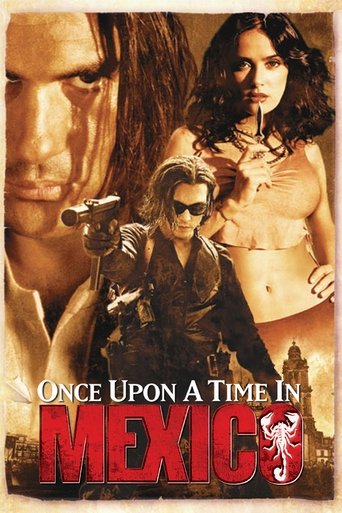
Once Upon a Time in Mexico
2003 · Film · 102 min
Part of Mexico Collection
Directed by Robert Rodriguez
A corrupt CIA agent Sands hires hitman El Mariachi to assassinate a Mexican general hired by a drug kingpin attempting a coup d'état of the President of Mexico.
1 positive2 neutralfrom 3 commenters
Where to watch
No streaming data for this title.
3 comments on Hacker News
You make a fair point about cultural conversation being important. I think that conversation is happening, but the focal point shifts from one generation of creatives to the next. It's an important part of cultural dialogue, not just reaching the same targets as previous works, but finding new targets, new mediums and methods of expression.
We saw the shift toward a more fractured landscape happen in music long before movies. If you grew up hearing the Beatles on mainstream radio, listening today might feel like a cultural low point. And that feeling isn't baseless. But treating the Top 40 as the whole of music ends up missing the new developments happening outside that narrow slice.
We're seeing similar shifts in film. The Blair Witch Project and Once Upon a Time in Mexico heralded the age of accessible digital filmmaking, leading to an indie boom that's still rippling out. Everything, Everywhere, All At Once showed that ambitious, effects-heavy filmmaking is no longer tethered to the traditional studio system. Those are the high profile bellwethers -- indie bands that sneak in a radio hit -- but I think they reflect the wider landscape of passionate creatives better than, say, the new Jurassic World.
So yes, blockbusters aren't what they used to be. But judging the health of the entire medium by looking at those is like judging transportation by looking at horse-drawn carriages after the arrival of cars. It focuses on what's leaving instead of what's emerging.
Collateral was not the first fully digitally shot feature film. In fact, Collateral was not even fully digital. (The first major, all-digital, HD feature film was Attack of the Clones, but there were other fully-digital feature films before that, just not as major, and/or not always HD. Robert Rodriguez' Once Upon a Time in Mexico (2001) was fully digital.)
But you are right that Collateral did do something very new/unusual at the time, and that was shooting scenes in higher frame-rates than 24, and mixing multiple frame rates in a film. (This might not sound like much, but until this time, pretty much every film was 24fps for the previous eighty years and it had a very specific look that everyone's eyes/brains were conditioned for, unbeknownst to them.)
And the other thing that was very interesting thing about it (though not something very visible to a viewer) was that it was shot on the Thomson Viper FilmStream camera[1], which was the first major attempt at shooting not just digital, but very close to "raw". It was also a huge pain in the ass. The camera itself was massive, but due to the bandwidth, it recorded to an external storage array that had to be pushed alongside it at all times, and that was itself about the size of a shopping cart. (This device was hilariously referred to as the "Director's Friend.")
In 2002, my friend and I, both cinema nerds in high school, drove an hour away to the nearest theater showing a film called Russian Ark[2]. Why were journeying to to see a strange little Russian film where a never-named character walks the viewer through Russian history? Because just like each episode of the recently-released Netflix show Adolescence, this entire film was a single, very long, very complicated, unbroken shot. One shot. No trickery, no cuts that were just hidden to the audience, one shot, through streets, buildings, snow, ballrooms with a couple hundred choreographed actors, it was crazy. This is easy now compared to how it was back then.
As we've now established with Collateral (and this film predates it by 2 years), digital cinematography existed, but the storage was a real problem, the power was a real problem. Since this film was one shot, it needed almost 100 minutes of both, unbroken. And since it was a very complex moving shot, it had to be operated handheld. So essentially they had an incredibly ripped director of photography who operated the camera on a steadicam the whole time while a giant array of daisychained batteries and hard drives were lugged behind him. And they did it something like 100 times until they had a few takes where there were no mistakes.
None of this really means anything to anyone anymore, but at the time, to cinematography nerds at least, this stuff was all absolutely insane!
[1] https://web.archive.org/web/20040103133953/http://www.thomsongrassvalley.com/products/cameras/viper/pdf/viper_ds.pdf
[2]: https://en.wikipedia.org/wiki/Russian_Ark
Presumably the "surprise me" would mean a random selection of the offerings rather than something not on the visible list? Americans are very fussy with their food so not knowing what it is until it arrives at your door may be going too far. But from a UX perspective I think that is shirking your responsibility to make the meals interesting.
You can certainly gamify things, and also take inspiration from the humour of Woot. For example bingo cards where you try to have meals covering the whole alphabet, or colours. Or "World Tours" where there are sequences of recipes that trace a path geographically around the world. Or voting certain ingredients off the "island". Or pick a film/TV show and make what the characters eat (or inspired by what they eat, or their locations). The Once Upon A Time In Mexico DVD has a 10 minute short on it showing how to make puerco pebil that I've done several times.
Here for example are the Indiana Jones locations: http://indianajones.wikia.com/wiki/Travel_with_Indy:_Locations
Out of that you'd get South America, France, Egypt, UK, India, Spain, Venice, Jordan and the US Southwest. My mouth is already watering :-)