 Hacker Cinema
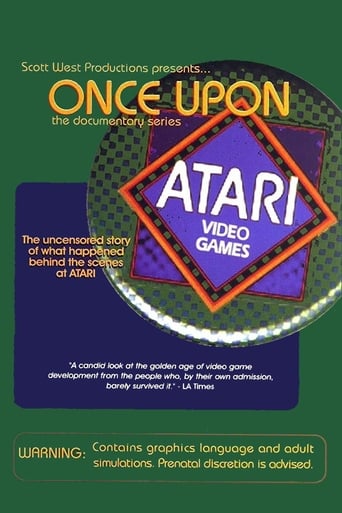
Once Upon Atari
2003 · Film · documentary · 120 min
Directed by Howard Scott Warshaw
In the late 70s and early 80s, ET phoned home on Atari 2600 and became the video game that New Media magazine later described as having toppled a billion dollar industry. We know the industry rose again as a pale, commercial version of its old self, but… did you ever wonder what it was like back in the wild days when the titans of gaming clashed, not on Wall Street, but inside the minds of designers? Want to learn first hand how the barren valley south of The Bay gave birth to cult celebrity that died as quickly as it was born? Take the ride with the folks who made it happen. Walk on walls, smoke the evil weed, and plunge head first into the uncharted (undocumented) world that was game production back in the bad old days.
1 positivefrom 1 commenter
Where to watch
No streaming data for this title.



2 comments on Hacker News
The documentary "Once Upon Atari" explains the story of the consumer division (Atari 2600). Some of their best game developers left to form Activision after they tried to renegotiate their compensation with the new CEO and failed (this was post-Bushnell when Atari started making real serious money). After third-party games became legitimized, dozens of game companies sprouted up and tried to poach people from Atari. This put enough pressure on the Atari management to give release bonuses and $0.10/cartridge royalties that made a bunch of the developers millionaires.
At the end of every episode in "Once Upon Atari," Rob Fulop (author or co-author of Demon Attack, Night Driver, Space Invaders, and Missile Command for the 2600) talks about how many children in the 80s played thousands of hours of Atari 2600 games and the effect that it had in their psychological development. Specifically, he believed it produced a nihilistic generation due to the overarching message that "you always lose" in the end. He contrasts it to the early television he watched as a child where the overarching message was "it will all work out" in the end. He says that he thinks about this a lot, and that him and everyone at Atari is responsible for that.