 Hacker Cinema
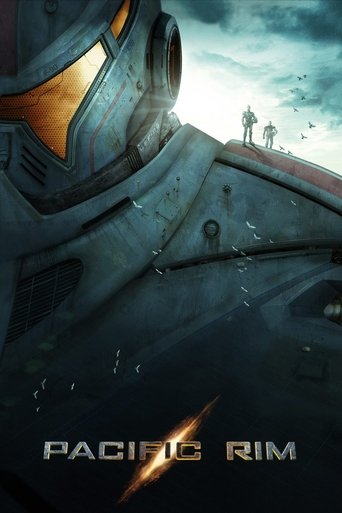
Pacific Rim
2013 · Film · 131 min
Part of Pacific Rim Collection
Directed by Guillermo del Toro
ActionScience FictionAdventure
Using massive piloted robots to combat the alien threat, Earth's survivors take the fight to the invading alien force lurking in the depths of the Pacific Ocean. Nearly defenseless in the face of the relentless enemy, the forces of mankind have no choice but to turn to two unlikely heroes who now stand as Earth's final hope against the mounting apocalypse.
9 positive6 negative1 mixed21 neutralfrom 37 commenters
Where to watch
No streaming data for this title.
39 comments on Hacker News
I never understood why they don’t ask you what you like about a movie or tv show. I do not use streaming platform rating system because it’s so dumb: if I say I like “pacific rim” I get recommended all the dumbest sci-fi action contents I already know I will never watch. I love pacific rim for its esthetic, lighting, photography, and music. I couldn’t care less about mecha and generally hate modern sci-fi.
Like, just ask me instead of trying to guess incorrectly
If data integrity is assured, and thus there is no change in the data to store/transfer, then that's the opposite of computationally transforming the data?
How do we see robot and AI and helping interactions in film and tv and games?
A curated list of films for consideration:
Mary Shelley's "Frankenstein" or "The Modern Prometheus" (1818), Metropolis (1927), I\, Robot (1940-1950; Three Laws of Robotics, robopsychology), Macy Conferences (1941-1960; Cybernetics), Tobor the Great (1954), Here Comes Tobor (1956), Jetsons' maid's name: Rosie (1962), Lost in Space (1965), 2001: A Space Odyssey (1968), THX 1138 (1971), Star Wars (1977), Terminator (1984), Driving Miss Daisy (1989), Edward Scissorhands (1990), Flubber (1997, 1961), Futurama (TV, 1999-), Star Wars: Phantom Menace (1999), The Iron Giant (1999), Bicentennial Man (1999), A.I. Artificial Intelligence (2001), Minority Report (2003), I\, Robot (2004), Team America: World Police (2004), Wall-E (2008), Iron Man (2008), Eagle Eye (2008), Moon (2009), Surrogates (2009), Tron: Legacy (2010), Hugo (2011), Django Unchained (2012), Her (2013), Transcendence (2014), Chappie (2015), Tomorrowland (2015), The Wild Robot (2016, 2024), Ghost in the Shell (2017),
Giant f robots: Gundam (1979), Transformers (TV: 1984-1987, 2007-), Voltron (1984-1985), MechWarrior (1989), Matrix II: Revolutions (2003), Avatar (2009, 2022, 2025), Pacific Rim (2013-), RoboCop (1987, 2014), Edge of Tomorrow (2014),
~AI vehicle: Herbie, The Love Bug (1968-), Knight Rider (TV, 1982-1986), Thunder in Paradise (TV, 1993-95), Heat Vision and Jack (1999), Transformers (2007), Bumblebee (2018)
Games: Portal (2007), LEGO Bricktales (2022), While True: learn() (2018), "NPC" Non-Player Character
Category:Films_about_artificial_intelligence : https://en.wikipedia.org/wiki/Category:Films_about_artificial_intelligence
List of artificial intelligence films: https://en.wikipedia.org/wiki/List_of_artificial_intelligence_films
Category:Films_about_robots: https://en.wikipedia.org/wiki/Category:Films_about_robots
Category:American_robot_films: https://en.wikipedia.org/wiki/Category:American_robot_films
I often think this when there's meant to be a big heavy thing moving around. I think it's one of my problems with Pacific Rim 2 vs the first film. In the first film, the robots were slow and heavy, in the second they were nimble and didn't have any of the weight behind them
In Pacific Rim, 2024 was when that movie took place
The 2010s in sci-fi gaves us:
- Dredd
- Melancholia (may not qualify for some sci-fi fans, I suppose, and I can understand why—it's so very allegorical)
- High Life
- Under the Skin
- Annihilation
- Ex Machina
- Edge of Tomorrow
- Looper
- Blade Runner 2049
- Sorry to Bother You
- Arrival
- Mad Max: Fury Road
- The Last Jedi (I know lots of people hated it—I think it's the only more-or-less good Star Wars movie since the original trilogy, and was shocked at the broadly-negative reaction, having come out of the theater thinking "finally, we got a good one, even if it did play the ending way too safe; everyone's going to be so happy!". We're not gonna change each other's minds in HN comments. Agree to disagree.)
And that's just the ones I've seen and thought were somewhere between good and great. And that I could remember or quickly find a reminder of with a quick search. I hear very good things about the new Planet of the Apes series (like, "each entry is better than the last" good) but have only seen the first one. Lots of people liked Rogue One, Snowpiercer, Ad Astra, and Interstellar (I didn't, or at least didn't think they were notably good, but hey, lots of people did). Godzilla, Pacific Rim, and Kong were OK romps. Heard good things about Upgrade and Attack the Block, but haven't seen them. The Martian was OK (some loved it). Inception was alright (again, lots of others like it way more than I do).
How many really good sci-fi movies did the 70s produce? The 80s? I think we're doing fine.
I haven't seen these mentioned yet: Galaxy Quest, The Fifth Element, Valerian and the City of a Thousand Planets, Oblivion, Tron: Legacy, Mission to Mars, Pacific Rim, Bicentennial Man, Alita: Battle Angel (some of these may be PG-13)
Treasure Planet and Titan A.E. are also good animated movies, although Treasure Planet is more science-fantasy.
I'd also second Back to the Future, Contact, Interstellar, Gattaca, October Sky
> Something I've noticed since about that time as well is a growing unease and pessimism with our collective future (and even present!).
This is why I like movies and stories about the world coming together to overcome great difficulties. Like Pacific Rim, for instance. I'd love to hear more stories like that, no matter how far-fetched. I'd especially like to get some of the pariah states (North Korea, Iran) to be welcomed in for some more team high-fives. We really do need optimistic visions of the future to keep us going.
Well, one angle is to qualify the use of the term "literacy", as in "visual literacy". Here is an article about the movie Pacific Rim that pointed out how much of the story (or rather, backstory) was visually communicated to audiences via production and character design in ways that entirely whoosh over the head of most viewers focused on dialog and acting:
https://www.stormingtheivorytower.com/2013/07/the-visual-intelligence-of-pacific-rim.html
And whichever organization selects which films get to be shown in China. Some films do much, much better in China than in the US thanks to this; some examples are the Transformers films, the Warhammer film, and someone else already mentioned Pacific Rim and Iron Man.
Basically, if there's a Chinese secondary actor and / or a Chinese location and they're not the definitive bad guys, it's been tweaked for and co-developed with China.
Now I don't say that's a bad thing per se, I kinda like there being a propaganda force in blockbuster films to compete with that of the US. I would much prefer no propaganda, but at the same time I feel like high budget action blockbusters can't do without.
Also take the word 'propaganda' with a grain of salt, it's usually nothing over the top, or limited to "this country or these people are not put in a bad light"
I for one would love to see more films where the Americans aren't considered the heroes.
Studio Ghibli's movies have been extremely popular in the US. Midnight Diner has a dedicated following on Netflix. Lost in Translation was set in Tokyo. Pacific Rim is quite clearly a Japanese cultural artifact, even if it wasn't filmed there. Giant-robot-movie is practically a genre.
Japan's influence on world cinema is bigger than just "movies made in Japan".
The problem with your wager is that on a long enough timeline, the doomsayers are always right.
So saying anything OR societal collapse is going to evaluate to true.
There are any number of disasters, both terrestrial and cosmic, that can radically change the landscape of the Earth.
I also don't really find discussions about what's going to happen beyond our lifetime that interesting for the most part. Often, they're just fantastic wishing attached to some loose thread of logic.
The Island
Escape from New York
The Running Man
Akira
Strange Days
A Scanner Darkly
Back to the Future II
Blade Runner
2001: A Space Odyssey
2010: The Year We Make Contact
Death Race 2000
1984
Terminator 2: Judgment Day
Freejack
Westworld
Real Steel
Pacific Rim
12 Monkeys
The Abyss
Timecop
And a host of other films and books are set in futures that are now our past. And while some of these are fantasy designed to entertain, they all make assumptions about what would be possible by that time. And we have fallen woefully short of those predictions. So short, that "flying cars and meals in pill form" is a meme about such predictions.
I suppose I'd agree with that, but then we have to start talking about what we mean by "bad" -- bad for whom; bad to do what with?
I once watched the action movie Pacific Rim with a friend who told me she didn't like it because it didn't have enough story and character development. She's right that it doesn't have much of that, but it also was never trying to. It may not have been the movie for her, but that isn't the same as being a bad - poorly executed - movie. Transformers, on the other hand, is bad at achieving even what it sets out to achieve. Much easier to call that bad, in my view.
So while I'll agree there are dangers, to play devil's advocate:
You ever see one of those crazy anime-inspired movies like Pacific Rim, with giant humanoid fighting robots? I was watching a video that discussed the practicality of this. On the surface they are completely ridiculous and ineffective. The video argued, however, that one reason an advanced society might create a machine like this is to reduce training costs. It takes knowledge and skill to do something like fly a plane or operate a tank. However every grunt soldier knows how to run, punch, and use a gun. If you can make giant robots with giant guns and a brain-computer interface, suddenly anyone can drive a superweapon.
The same kind of argument applies to AI and machines. We have massive amounts of knowledge and culture encoded in natural language, designed to be read and understood with human capabilities and logic. We have buildings, cars, appliances, machining tools, etc., all designed for human bodies. General AI that can think like a human (but faster) can quickly utilize all that knowledge, and humanoid robots (but stronger) can instantly utilize all that infrastructure. From that perspective it's an enormous value gain and not an unhealthy fetish.
This is irrelevant because a large portion of Netflix's catalog is filler trash. My favorite example of one of Netflix's suppliers is https://www.gq.com/story/sharknado-atlantic-rim-pacific-rim-asylum-movie-spoof
Apart from their first party content (of which Disney+ has more to draw from), most of Netflix is whatever they can get on the cheap of the cheap.
> A subscription to Netflix already grants me access to way more than I can reasonably watch. If my tastes were perfectly aligned with what Netflix offers
Your primary issue here is referring to volume. Netflix has their own content, then pays for a small handful of extremely popular/valuable titles (see the recent Seinfeld and Big Bang Theory streaming deals, as an example), and then the rest of their content library is cheap trash they got for pennies on the dollar. Entire markets now exist for making cheap movies just to fill out streaming catalogs. (Check out the business model of a company called The Asylum[1].)
Most of the value you're getting is in a very small portion of the overall library of any given company. People aren't going to stay subscribed to Disney+ because it has some old Disney shows which are $10 one-time to own on DVD. They're going to stay subscribed because it has the very latest handful of Disney titles.
[1] https://www.gq.com/story/sharknado-atlantic-rim-pacific-rim-asylum-movie-spoof
or your kid accidentally starts playing one of the "mock buster" movies. like the absolute garbage take off of Pacific Rim called "Atlantic Rim."
Now my feed is full of those. I wish Netflix would stop buying those movies.
Ever since I saw the movie Pacific Rim (2013) I have suspected that dialog in very expensive movies (that one was $190m) was a bit simplified so that translation could be easy for the Chinese market.
I know, that's why I tried IE, edge and also the native Windows app. The quality is still crappy. In fact I wanted to watch the movie Pacific Rim, and the quality was so bad that it was unwatchable. I torrented a 1080p copy and watched that instead.
As I said, the weird part is that their is no improvement in quality even if you pre-download the content.
Modern blockbuster movies are already plagued with hectic editing and an overabundance of excuses-for-people-to-be-making-a-helicopter-landing. But some of the Chinese scenes/collaboration have worked out nicely. I can't be the only American ignorant of Chinese cityscapes. The Shanghai scene in "Skyfall" was one of the most movie's visually memorable images. Maybe "Pacific Rim"'s latter half would have taken place in Hong Kong without concern about the Chinese market (its title is Pacific Rim, after all, and a movie about robots beating monsters has a lot of freedom to be in contrived places). But apparently its popularity at the Chinese box office helped pave the way for a sequel, despite its disappointing receipts in the U.S. https://qz.com/110683/pacific-rim-trashed-hong-kong-but-won-over-china-with-a-record-opening-day/
Olympus WS-600 dictation device. It's a slim thing about the size of a cigarette lighter, but it has actual physical buttons, and a built-in USB connector to dump it to my laptop. I review it every morning, and depending on the nature of the note, it goes into (a) Google Calendar, (b) a hand-written notebook, (c) an Emacs Org Wiki which I sync between my devices with Syncthing, or (d) the Notes folder for any of my specific projects.
It's the same thing Newt is speaking into in the movie Pacific Rim. I was tickled when I saw that. They're hard to get nowadays; the later 700 and 800 models are bigger, clunkier, and cheaper-feeling.
> Many seem to criticize this adaptation for not exploring the same themes or reaching the same conclusions as the original
It didn't need do that. It could've told a totally different story and been set in Rio and it would've been fine if the script wasn't in Hollywood formula 101. I saw this movie before and it was called Robocop. And the dialogue was beyond awful. Arrival took a chance and assumed that the audience wasn't intellectually sterile. Pacific Rim (which I love btw) and its intentionally bad plot was better.
The whitewashing bothers me not so much that the Major needed to be Asian per se. It's that Hollywood just doesn't think an asian person can be a lead in a movie that doesn't have kung fu in it.
Mechas will always remain SF. There's just so much that's impractical about them, where do you even begin. Balance is one issue: if you can make it fall over, you've killed it. Speed is another; anything that big will be extremely slow. Another issue is the ground pressure (weight divided by surface area of feet); they would destroy most surfaces (including all roads), and they would easily get stuck this way. Another issue is the huge amounts of fuel and frequent refueligs it would need. Another is the huge cost, which coupled with sluggishness and corresponding permanent proximity to the battlefront makes them a prime target for infiltration and sabotage.
Even something as comparatively small and practical as the Boston Dynamics robots have failed to gain traction; years after even being in actual service for testing with the military, LS3 has been literally shelved because it's just not useful.
One of the funniest battle mecha scenes is from Pacific Rim (which is chock-full of stupidity) where the one mecha is just a crappy missile delivery system. Once it's waded half way out to sea and spent its missiles in about two seconds, it's bloody useless. Why didn't they rather spend the cash on other, more sensible launch platforms that could deliver orders of magnitude more firepower using the same kind of missiles? Or why not just attack the alien things much further away from shore with torpedoes launched from fighter jets? Or why not just launch nuclear-tipped torpedoes down the portal hole? (Well, it would be a boring movie, that's why.)
pacific rim was a good movie (a stable 7 on a 4 year old movie). from what i can remember, most alien movies are liberal if not apolitical. the PHD, philosopher, or scientist somehow has keen insights on how to stop the alien juggernaut if it weren't for those stupid military people getting in the way. a bit ironic that you choose pacific rim and moved onto the topic of pro-walls, when that movie was very apposed to the idea of building a wall ;)
if you think capitalism is boring, try going back to pre-1990s russia. I bet you'd have an absolute ball! well they did have bears playing hockey, thats actually pretty exciting. but i digress, usually the quickest way to lose is to start comparing your odds because you'll quit before you begin. life is far too complex, dynamic, and full of resources to declare game over as if you were in a 4 sided monopoly game.
Yes to all of those questions. If people can't imaginatively project themselves into winning circumstances, then they become despondent because their escapist fantasies (which some people take seriously enough to make into real accomplishments) are now dashed forever.
This is something technologists and scientists largely don't get. People are always 'look at how many material comforts and and entertainment options you have now, are you not entertained?' Likewise scientists are often 'I spent years of my life and a small fortune learning to be expert about this obscure thing that you'll never be able to experience directly, isn't it awesome?' And people are entertained and they are awed - to an extent.
But they're also sad because the more the world is codified and quantified and parceled out for ownership. there are no new countries to discover, no more large exotic fauna to find, we're constantly reminded that religion and magic are illusory and that the economics of capitalism are inevitable, so there's nothing to look forward to in life beyond being ground up in the gears of the consumerist machine.
That's why there are so many movies about superheroes and rebellious people with psychic powers and so on. People need something to believe in other than the ultimately extremely boring prospect of working, raising a family, and retiring. They want 'adventure and excitement and really wild things.' This is why we now have an administration whose stated Big Idea is the construction of a giant wall* because at least that sounds like a project you could get absorbed in for its own sake, whereas preserving the earth for future generations feels nice but is never really done and so can't deliver any sense of adventure or accomplishment for more than a few people with the resources to get a PhD.
It's also why countries (soo to include the US) are apprehensive of war but develop tremendous enthusiasm for it once it's declared, because it provides a massive uncertainty that offers the possibility for drastic change, heroism, betrayal, defeat, victory and so on. I don't know how to articulate this better than by saying that capitalism is boring for most people, in the same way that if you are playing Monopoly there's a point at which you realize who's going to win and all the fun goes out of the game for everyone else in direct proportion to their declining odds of success.
* If you don't mind losing 2 hours on a bad movie. go watch Pacific Rim, a stupid science-fiction romp about giant robots vs giant aliens. It's stupid in the sense of not really caring about the science at all to the point o making jokes about how stupid it is - at one critical moment, someone 'solves' the problem of The System collapsing due to 3v1l h4x0rs but remembering that they have a nuclear-powered robot and exclaiming 'It's not digital! It's nuclear- it's analog!!'. The very badness of this movie makes it worth studying because the psychological symbolism is so thinly disguised. Almost all alien invasion movies are vehicles for conservative ideology, and it's not an accident that a political campaign for building a giant wall was anticipated by various movies involving the construction of giant walls.
Plot and story are very important. To me the most enjoyable movie of the year is usually the best script winner. Almost never the best movie winner.
But there's this thing called cinematography. And when it is done well, it adds another layer of enjoyment to the movie viewing experience. 3D is part of cinematography.
So, yes, plot is important. But if you are watching a movie instead of just reading a book, it is usually because the added elements are worth it.
And I say that as someone who usually reads the books as well.
3D is fun, and films like Avatar and Tron and Pacific Rim are totally worth in 3D.
It's insane how loud some movie theaters are nowadays. My first experience with this was three years ago in Hong Kong, watching "Pacific Rim". At first I thought it was a technical problem and looked around me to see how other guests react, but nobody seemed to mind, apart from our small group of Europeans. I seriously contemplated leaving because it was almost unbearably loud and I was worried about my hearing. Lately I've had similar experiences here in Austria, so it seems the trend is moving towards louder movies in cinemas, though I really hope they at least make an exception for children's movies, since it would be a shame to submit them to such a loud environment for hours at a time. (not that it isn't bad for grown-ups too, it's just especially worrying with children)
> It'll definitely be a shame if plots themselves become increasingly dumbed down for international reasons.
I'm curious to hear how you think it can get more dumbed down than Pacific Rim. I actually liked the film -- it did look spectacular, and sometimes you just have nothing better to do than watch Giant Robots vs. Giant Aliens -- but I don't see how a movie can get any more boilerplate.
With the exception of Star Wars: The Force Awaken, I haven't seen any of the blockbusters mentioned, though I wonder how much this article cherry-picks, given that the 2 top grossing movies this year (Civil War, Zootopia) [0] seem dialogue-dense based on their trailers despite being summer entertainment. Also, I would have attributed the disappearing of dialogue to our increasingly dumbed-down short attention spans, something that has been evident in Jerry Bruckheimer films. Also, Avatar, which had such shit dialogue that I found it hard to believe until I looked it up that James Cameron had written the screenplay for his Aliens, which has timeless (if brief) dialogue.
That said, it's completely believable to me that the cost of making universally clever dialogue is much harder than just doing it in one language, and will be the easiest line-item to justify cutting with international audiences being increasingly prized. I've always been OK with reading subtitles but it wasn't until Inglourious Basterds did I realize how jarring and unusual it is to have foreign languages hold equal screentime to your own native language (which makes me respect IB even more for its artistic achievement).
It'll definitely be a shame if plots themselves become increasingly dumbed down for international reasons. One thing the OP didn't mention in terms of the Chinese-market effect on Americans is the seemingly higher frequency of Chinese locales making cameos...though this is something I welcome, as the Chinese-based set pieces in movies such as Skyfall as Pacific Rim have usually been spectacular.
This isn't "instant learning" at all, but rather something more akin to a different movie, Pacific Rim, in which the two co-pilots of a giant robot enter a sort of mind meld.
This is really no less exciting, though, and no less sci-fi.
Why is our first response to new technology one of fear? This is a device designed to find alien life, the article is about it being used to save human lives, but all you see is a tool to find and attack you.
This isn't meant personally; you see this "Dystopia ex Technology" in Hollywood movies and popular novels. For every "Pacific Rim" we have, there's several "Matrix" clones ready to tear down our confidence in machines.
> 'The quality is also higher than pirated content because they have a fantastic encoding off of source material.'
This couldn't be further from the truth. x264 .mkv encodes look significantly better than the iTunes versions.
For example, from Pacific Rim;
x264 - http://imgbox.com/abwySllC iTunes - http://imgbox.com/adgle3KK
x264 - http://imgbox.com/abm2Jr9l iTunes - http://imgbox.com/acpmeiCt
The difference is night and day, in my opinion. The homebrew encodes usually come with higher quality audio, too.
Funnily enough, I have a Netflix account, an Amazon Prime account, and a Lovefilm account (UK based DVD/Blu-Ray rental service). Despite having all these services, I still prefer to pirate movies because it's simply more convenient and the quality is better.
Part of the experience that you mention is how you get your media to begin with.
The music and movie industries have tried their best to make it as hard as possible to consume legally bought media on anything other than what they want you to watch it on. Some of this is due to piracy concerns, some due to various contracts (you will only allow this movie on Starz for the first 6 months), but all of it is in their control.
Conversely, downloading a movie via bittorent will play on anything powerful enough to process an HD movie; downloading some MP3s will play on any device thinkable. The files require no complex codes to put into crazy websites, no additional software to install, no additional devices to buy. Being free is just icing on the cake.
Case in point: I bought Pacific Rim on blue ray when it was released a few months ago. Waited for it to arrive in the mail. Defeated its stupid plastic wrap. Popped some popcorn, turned the lights off, put the disc in my PS3 (the only blue ray player I own) and... nothing. It could not play the disc without connecting to the internet to download some new blue ray decryption keys or whatever. Never had this problem before, and sadly my PS3 is not connected to the internet. This disc was useless to me. Enraged, I downloaded an 18GB HD rip of it and had it playing on my $35 raspberry pi in an hour. Has this experience soured me on buying blue rays? Of course it has.
Swedes evidently think "too much of a good thing can be wonderful": they have had a Minister of Gender Equality since the 50's (http://en.wikipedia.org/wiki/Minister_for_Gender_Equality_(Sweden)) and there are efforts to introduce a gender-neutral pronoun (http://www.slate.com/articles/double_x/doublex/2012/04/hen_sweden_s_new_gender_neutral_pronoun_causes_controversy_.html, although this has been tried in English, too). In the Global Gender Gap Report 2012, Sweden is named as a world leader in gender equality (http://www.weforum.org/reports/global-gender-gap-report-2012), etc. etc. I mean, the country even has an official gender equality webpage in English (http://sweden.se/society/gender-equality-in-sweden/). It seems they can't go any further. And then this.
Even Jezebel (http://jezebel.com/sweden-introduces-new-movie-rating-system-based-on-the-1459696241) has to admit the "test" is not perfect:
"Sure, the Bechdel test is imperfect (Kathryn Bigelow's The Hurt Locker doesn't pass, for instance, but you could hardly argue that a female-helmed war movie doesn't empower at least one woman), but that doesn't make it useless as a starting line for sniffing out broad trends in gender bias. And that's what we're talking about here. Trends. Analysis. Examination. Critical thought. Information. I'm sure there are plenty of people who consider themselves scrupulously egalitarian who never even noticed that there are only like THREE WOMEN IN ALL OF MIDDLE EARTH."
I understand that this is just a thing introduced by a a few movie theaters, i.e. it's not the law or anything (yet). Yet, that's what riles me most: as librarians are the first to defend any censorship, movie professionals should push back on any arbitrary limitation on what can be shown. Some examples of movies that fail the test are given, e.g. LOTHR Trilogy, Pulp Fiction, Pacific Rim, etc. However, the test would also exclude many art films such as Tarkovski's Stalker and Solaris. How about movies with only a single female lead that don't quite fit the purpose of the test, e.g. Bergman's Through a Glass Darkly? How to handle movies with no dialog, or experimental movies such as Eraserhead? One can easily see that this sort of simplistic testing can have little artistic or practical merit.
> Elon Musk launch Robots like Pacific Rim
Sarcos had the technology for full-body haptic feedback harnesses of the type that were somewhat portrayed in Pacific Rim, and they had this in the 90's, if I recall correctly. DARPA had arm/shoulder/head haptic feedback projects even back in the 70's and 80's.
The problem is that the human form factor is quite complex, and it will always be cheaper to make a simpler specialized tool. Humans are scary good at controlling things, even without haptic feedback.
Transformers: Just physically impossible for anything more functional than a movie prop. (Ok, maybe Monster Truck rallies.)
I think it is very possibly a result of culture in America and to a lesser extent, Europe, showing people working in technology as unglamorous, lonely nerds with questionable personal hygiene.
Witness the many TV shows making fun of STEM-concentration people, The Big Bang Theory, The IT Crowd, etc. In any film, the hacker will typically be shown as the over-eager, quirky, physically weak character (think Charlie Day as the kaiju scientist in Pacific Rim). Unless the film is something edgy like the Matrix, people always expect to see computer professionals as low-status individuals.
In my opinion, this results in women being afraid to enter these fields, because they are painted as having low social worth even if they have high economic worth. (BTW, if you live in Silicon Valley and are used to coffee-shop discussions about your favourite JS libraries, remember that it is a distorted reality field; if you are male and work in tech elsewhere in the States, the most people will come up with is "Do you work in IT? Oh, I see...")
On the contrary, in the former Soviet Union, scientists and technologist had a high social worth. Boom, 58% of engineers were women, as the article says.
semi-related: I saw the trailer for Jobs before Pacific Rim and it was cut to be laughably bad, like a Daily Show or MADtv sketch. I have low hopes for the movie, but the trailer seemed almost intentionally terrible.
http://www.youtube.com/watch?v=nryTz9iBqEI
I simply cannot, for the life of me, understand why people think that it's their RIGHT to copy the works of others.
I don't think it's that hard to understand. The key is to realize that logic doesn't drive behavior. Rather, people do what comes naturally – i.e. that which is habitual – and then rationalize it as needed. The rationalization process is very strong. Logic is a mere speedbump on that road.
The only time people think carefully through a course of action is if they have no habits to fall back on.
People pirate music because they're habituated to think of music as free. The training process has been going on longer than digital music has existed, actually.
Which brings me to my observation that, of all the many dying forms of media, recorded music feels especially screwed. Yes, people pirate movies, books, and software, but somehow things seem a lot more dire among the poor musicians. Why is that?
I wonder if it's just a perfect storm of coincidence. So many things about recorded pop music make it extra-susceptible to piracy.
* Until recently, music was designed to be learned and performed by other people. That was the only way to hear it more than once. So not only is there a centuries-old tradition of performing other people's music, but there's techniques and instruments based on that art and schools to teach you how.
People often did this by ear. There's a story about Allegri's Miserere, the subject of the most famous act of music piracy in history: The Miserere was the personal property of the Pope, and would-be copyists of the work were threatened with excommunication. For 150 years it was only performed in the Sistine Chapel during Holy Week. Then Mozart came to town at age 14, heard the piece at the Wednesday service, went back to his room and wrote the whole thing down from memory, came back on Friday night to listen again and make minor corrections, and gave the transcript away to be published.
https://en.wikipedia.org/wiki/Miserere_(Allegri)
It may seem obvious, but if we took any modern Mozart to see Pacific Rim no amount of talent would enable him to produce a reasonable cover version in a day. It would take a year and hundreds of millions of dollars. Memorizing and recopying a novel is much more achievable, but the result would not be impressive except as a stunt: It's culturally understood that novels are intended to be printed verbatim, not reinterpreted or "covered", and it would be clear to everyone that the copied version was "plagiarism", not an homage or an interpretation. And many people are literally blind to features of a novel's "performance", such as its typesetting or the quality of its paper.
Novels were born in the age of cheap printing and are adapted to it. I predict that we will soon evolve genres of music that are similarly adapted to the era of cheap copying. It's not a difficult prediction, because the selection pressure that will drive this trend is starkly obvious.
* It's human nature to repeat the music that one hears. You can't stop humming. Often even if you want to.
* There's a tradition going back nearly a century of pretending that music is free: Music on the radio, and Muzak in stores. Of course, this music is all subsidized, but people don't think about that, if they even know.
If I were David Lowery and someone handed me a time machine and a gun, of course I'd probably go back and shoot Hitler, like you do. But then I'd hunt down the inventor of Muzak. Because after two generations of being marinated in free music it's no wonder people are habituated to think that music is free-as-in-oxygen.
* Pop music's designers spent half a century promoting a culture of repeat listening, in order to encourage everyone to buy singles. So we're trained to think of pop songs as something you collect, then listen to over and over. And we know that the best pop songs are the ones that are being heavily promoted, because being able to play "the latest single" is a fashion statement, even today.
Repeat-consumption of media is not some kind of natural law, it's genre-specific. I'm a big re-reader, but I think I'm an odd case: The majority of people read books only once, which explains why, even if they do read, they don't have a house full of books. Pauline Kael wrote about movies for a living, but never watched a movie more than once. And I have a huge Pinboard log of bookmarks, but I essentially never revisit them.
And, now that the money's been sucked out of the market for "original" recordings by the "original artists", there's no reason why musical culture should continue to encourage playing the same thing twice. Many genres don't: "Never the same way twice" pretty much defines jazz. (Unfortunately, jazz also evolved in an era awash with talented, classically-trained club and theater musicians, who eventually ran out of gigs because recording had been invented. The present and future of jazz is hip-hop and club music, built of improvised rhythm and rhyme instead of improvised melody and harmony, and of sampled recordings instead of sampled melodies and progressions.)
It was Pacific Rim, but regardless of director (loved Pan's Labyrinth), this movie is clearly catering to the Michael Bay mindless action crowd which, while having fans of all ages, generally are targeted at teenagers. Maybe that's disputable? Personally I don't think so... Also, it's not so much that people loved the trailer, more that it was 3000 comments of people explaining how much they "just came", and not a single critical voice. I really doubt that would be the case on HN if it had been submitted/allowed here.
What movie was it? If it was Pacific Rim as it sounds like, then that reaction could make sense. Guillermo Del Toro (Hellboy, Pan's Labyrinth) is directing it.
It might not be that movie though. Still, have you seen the top raved about films on HN (there was a frontpage show hn on this recently)? Pretty obvious, typical choices. And there is nothing wrong with that. I'm cool with your reddit opinions. Just weird to use comments about a movie as an example against reddit and then swing over to endorsing HN.