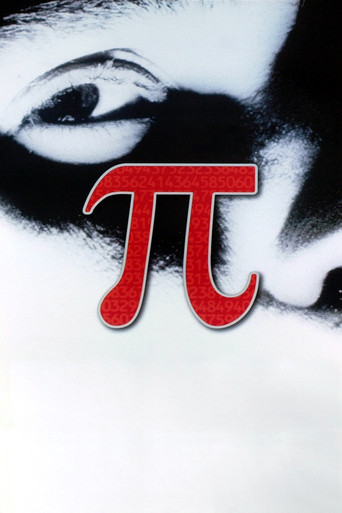
For instance, perhaps you remember some amusing detail in the background of a scene and want to show everybody. Perhaps they don't believe you, and the screenshot lets you say "I told you so". Perhaps you want to illustrate a post, like this one which uses screenshots from TV show Psych and the titles of Pi:
I love reading up on my fav musicians and have a listen at what their influences are and/or other fans recommend.
Or, in 2012, I torrented the then whole discog of a British duo called Autechre that I liked a track from on the soundtrack of the film 'Pi'.
12 years later, I have several vinyls, bought every release on multiple [streaming] services/shops, have been to one concert in '16... still cannot get enough and listen to their new releases all the time.
Funny to think about it this way, how a handful of beats in a movie can open you up to a world unseen, just gotta follow the tracks...
These are fantastic. Reminds me of the structures ("choruses"?) from "A Topiary" script by Shane Carruth (the same bloke who made Primer). The first act's "pattern-seeking" premise is great, too. I think anyone who enjoys films such as Aronofsky's Pi, Linklater, Kaufman, etc would enjoy at least skimming through the first act.
Is this a reference to the processor in the Aronofsky movie Pi? Always found that scene really funny. They're hyping up this chip as the most powerful chip in the world (called "Ming Mecca") and then the guy opens up the box to show a chip with like 4 pins.
Recently, Midsommer. I think if you go into it with an open mind (and not get too weirded out by the gore) it asks some really fascinating anthropological and social questions.
By the end of the movie, I was almost entirely on the side of the culture and their behavior made complete sense to me. During the course of the movie I experienced a shift of position and perspective and continues to affect me 4 years later.
All the token others… Pi, Memento, Waking Life, Fight Club, Requiem for a Dream, etc. etc.
I felt like Midsommer was the best interesting film in decades.
I love corporate/financial/technology/mathematics thriller film genres but they seems to be a very small niche. Good ones are especially rare. My favourite is "Michael Clayton" (2007), and "Margin Call" (2011) is my second favourite. "Sneakers" (1992) is old but pretty good. "Disclosure" (1994) is also old but quite watchable. Dare I mention "Pi" (1998)?
Someone here mentioned the TV series "Billions" which is my guilty pleasure. The stories are so absurd but the great cast manages to carry it off successfully. The only criticism I would make is that, although the show is ostensibly about a hedge fund manager, it seems to contain almost zero actual finance or game theory stuff. The only occasion, that I can recall, when finance enters the plot in a semi-serious way is the episode "Short Squeeze", which was one of my favourite episodes.
“You want to find the number 216 in the world, you will be able to find it everywhere. 216 steps from a mere street corner to your front door. 216 seconds you spend riding on the elevator. When your mind becomes obsessed with anything, you will filter everything else out and find that thing everywhere.”
This reminds me quote from Pi movie: "You want to find the number 216 in the world, you will be able to find it everywhere. 216 steps from a mere street corner to your front door. 216 seconds you spend riding on the elevator. When your mind becomes obsessed with anything, you will filter everything else out and find that thing everywhere."
> I can't think of any other language community that does this.
Comments under this particular PR are mentioning at least two languages like "why don't you us this <lang> instead?"
Also what does this have to do with veganism?
For every vegan person there is huge amount of people on the internet, like you, that have urge to mention it.
Reading that, it's hard not to see the parallels to Darren Aronofsky's movie Pi. Building a supercomputer in an apartment to find patterns in Pi that have some higher meaning, the computer constantly breaking, etc.
i feel so blessed not having severe headaches, i get normal ones from time to time but nothing debilitating. Watching the movie Pi and then reading about cluster headaches on wikipedia scared the crap out of me.
I won't call a film a ripoff unless it adds nothing to the world which wasn't given by the original.
Pi clears this bar easily. Sure, shooting 16mm off the hand, with oversaturated, Expressionist lighting, and some of the body horror (or did they both "rip off" Cronenberg there?) approaches homage. If one has seen Tetsuo first, there's more to appreciate.
But Pi is an excellent movie, which carries its own themes gracefully, Aronofsky made his reputation on that film and deserved to. The soundtrack was also groundbreaking.
If we were to adopt your idea of what constitutes a ripoff, the result would be more bland and defensive cinema, the kind where the script may as well have been written by the studio's attorneys.
Pi is a good psycho-thriller, but the maths aspect is weak and physics is nonexistent. If anything, it is more religious (namely, Jewish) than scientific.
Math here is used more as a way of showcasing the main character's madness than actual mathematical thinking.
It you like maths, you may want to watch Futurama, especially the "The Prisoner of Benda" episode, where they made an actual theorem just for the episode, and the formal proof can be seen on screen for a short time.
> Also when did “techno” become an umbrella term again?
I would guess in the '90s, when there was a lot more crossover between electronic music and other genres. Rock and hiphop oriented stuff like the Prodigy and Chemical Brothers were topping the dance charts, and other more conventional techno like Aphex Twin and Underworld were getting decent media coverage as well.
Plus movie soundtracks at the time tended to include a lot of techno. Trainspotting, Pi, Hackers, The Jackal, The Saint....discovered a lot of artists thanks to these.
I bet that Maria Chudnovsky in the article is related to the Chudnovsky brothers (Gregory and David) who were the inspiration of the 1998 mathematical/psychological movie Pi by Darren Aronofsky.
See also: https://www.newyorker.com/magazine/1992/03/02/the-mountains-of-pi
I have a feeling it might be "Plurality" by DUST on YouTube, a 15min short film - https://www.youtube.com/watch?v=pocEN5HprsM
DUST make a lot of cool sci-fi short films, worth checking some of their others too https://www.youtube.com/c/watchdust/videos e.g. Bleem, the number between 3 and 4, slightly remeniscent of the film Pi and the crazy mathematician trope https://www.youtube.com/watch?v=qXnFr1d7B9w or Orbit Ever After, a love story in a dystopian Brazil style future of orbital habitats https://www.youtube.com/watch?v=DpFXMIxlgPo
And just because, from another channel a https://www.youtube.com/watch?v=vBkBS4O3yvY a short about quantum suicide - One-Minute Time Machine | Sploid Short Film Festival.
>There have been times where, if I had the training and knew that self-surgery would lead to quick relief after only another few hours of excruciating sensation, I might have been willing to give it a go.
i've had similar thinkings about dental surgery during intense oral pain.
Tooth pain is pretty bad -- it's amazing that anything can make a human come to the conclusion of : "Well, if I ripped all the bad teeth out of my head..."
The lead in Darren Aronofsky's 'Pi' comes to a similar conclusion before self-trepanning due to intense migraines, although in that movie it is made intentionally unclear whether or not the peace the lead comes to is due to the hole in his head, or something else.
Looks like you're right. From an article in the Guardian (https://www.theguardian.com/film/1999/jan/05/features):
"Aronofsky was inspired by such real-life pi-chasers as the Russian mathematician brothers Chudnovski who built a supercomputer in their own cramped Manhattan apartment and calculated pi to two billion digits. But most people don't look for patterns in pi, he says: 'You basically use it to test the speed of a supercomputer. The brothers called me a quack - they told me there's no pattern.'"
I saw a sneak preview of Pi in Westwood, CA after finding a strange rack-card at Tower Records. The front of the card had the symbol pi and the digits printed in microscopic text in the background. The back had two showtimes, one that very night and one the next. This was 1998--the fledgling Google had no information on the film. I went to see it and was absolutely gobsmacked. I forced my friend to come to the second showing with me.
The math was fascinating to me but the thing that really made an impression was that computer. I could find no information at the time but later searches turned up that New Yorker article on the Chudnovsky brothers.
Given that Aronofsky grew up in New York, I would not be surprised if he heard about the Chudnovsky brothers in the Russian Jewish community.
It was a reference to the movie Pi :)
"It's a Ming Mecca chip! Those aren't even declassified yet!"
Applied Phlebotinum: The "Ming Mecca" computer chip that Dawson uses to bait Max, and provides Euclid the processing power to fully realize the number. Max is disbelieving that the firm can even provide it (because they're classified technology), but Dawson simply says that the firm has plenty of connections.
https://tvtropes.org/pmwiki/pmwiki.php/Film/Pi
But in seriousness. Thanks for the links. Also I didn't know there is that much indepth information about IBM mainframes on Wikipedia. Don't mind if I do, this will be a late night!
Also, the 1998 movie "Pi", about intelligence, insanity, chaos, and the game "Go", the game he's having with the head professor guy looks entirely one sided winning by one of the colors, and has no room for as many missing pieces to have been captured.
Either the game has an illegal board, or one player really wanted to lose and passed ~30 times while apparently still being worth discussing between the two characters.
The Wipeout packaging and some in-game graphics were made by The Designers Republic, which also designs the EP/LP covers for Autechre (which is featured in the movie Pi).
This is from 1994. My recollection is that the average American of that time would refer to any electronic music as “techno”, especially if it had a strong beat. Checking a few cultural markers (Wipeout and its soundtrack: 1995. Pi, the first movie I saw with a soundtrack full of the music I was listening to: 1998.) matches my memories.
My favorite work-life balance commentary comes from Darren Aronofsky's film Pi:
Sol Robeson
You remember Archimedes of Syracuse, eh? The king asks Archimedes to determine if a present he's received is actually solid gold. Unsolved problem at the time.
It tortures the great Greek mathematician for weeks. Insomnia haunts him and he twists and turns in his bed for nights on end.
Finally, his equally exhausted wife... she's forced to share a bed with this genius... convinces him to take a bath to relax.
While he's entering the tub, Archimedes notices the bath water rise. Displacement, a way to determine volume, and that's a way to determine density... weight over volume.
And thus, Archimedes solves the problem. He screams "Eureka!" and he is so overwhelmed he runs dripping naked through the streets to the king's palace to report his discovery.
Now, what is the moral of the story?
Maximillian Cohen
That a breakthrough will come.
Sol Robeson
Wrong! The point of the story is the wife. You listen to your wife, she will give you perspective. Meaning, you need a break, you have to take a bath or you will get nowhere. There will be no order, only chaos.
I used to put The Social Network on in the background as well. Pi is another, but I also like Million Dollar Traders [1]. It's a great documentary, but it also provides a good office / working ambience.
I'll tell you an open secret: Focusing very intently on difficult maths for an extended period of time can make almost anyone begin to experience aspects of mental illness.
The physics community has dealt with this, DOD code breakers deal with it, the manhattan project, etc. It's a well studied phenomena because of how it related to the war effort and much of the research documentation is declassified, in the public domain, and is a matter of the historical record.
My point is software development is just another domain where this research applies. This information is generally recognized by the pop culture as evidenced by the fact that there are several blockbuster movies about it, for example the film 'Pi' by Darren Aronofsky and 'A beautiful mind'. However this phenomena is generally not accepted by the startup community. I assume that the reason for this is because recognizing it could theoretically lead to a rise in insurance cases by engineers who developed serious mental illness over time due to prolonged exposure to what were known to be unsafe working conditions. In my opinion it should be thought of as a high risk job akin to scuba instructor, or roofer.
So the whole thing is swept under the rug. Never the less I will give my recommendations as a developer who works all the time and has wrestled with this phenomena in the past:
- Force yourself to hike/walk/bike outdoors for at least an hour per day. I'm convinced that merely jogging on a tread mill or gym excercise does not have the same benefit. Think of the outdoors (and the sun) as a relief valve for the "cabin fever" effect.
- A daily Zazen practice (15 minutes+) This is the kind of meditation from Japanese buddhism where you're not trying to accomplish or "do" anything, you just sit, in a good posture. I think of this as putting your overclocked CPU in hibernate mode long enough for the heat sync to do it's thing. I think this can provide a similar effect to having had a couple extra good hours of sleep, and all it costs is a few minutes of your day. The more you practice it, the better it works.
- healthy diet and exercise
- yoga (or just plain stretching)
- Do not under-estimate prolonged caffeine consumption as a likely co-factor for many symptoms. Always eliminate this as a possibility whenever you can
- As a relaxation excercise take a break during your day and spend a few minutes in a quiet place directing your attention to any area of your back, neck, shoulders, or even your face whereever you expereince a sensation of pressure or weight. Sometimes just stopping to pay attention that these muscle groups are becoming tense is enough to help them relax some.
- super mellow music at a low volume even if it's not what you prefer generally can help when writing software. Classical music, downtempo, ambient, chill-out, atomospheric drum and bass, even unusual stuff like gregorian chant. It can be slow and boring, after all it's less about entertainment and more about the cumulative effect it has on your brain when used as background music.
example of downtempo genre: https://www.youtube.com/watch?v=tYdebVcZDPw
soma.fm/groovesalad plays a good mix imho. There's good studies on this on mice. A good rule of thumb is asking yourself this question "could this song be characterized as 'intense' in any way ?" if so then save it for some other activity
Probably refers to "PI", the 1998 movie written and directed by Darren Aronofsky. The main character was an eccentric mathematician who was obsessed with patterns in the decimal expansion of the transcendal number pi. If you have not seen the movie I would encourage you to look for it as my summary is not adequate.
Interesting, and quite funny to read with a sense of humour that reminds me of the movie PI. The author of the compiler goes from rational to something more... spiritual.
"Day 52
I was looking for a mysterious bug for three days: ..."
Yes, it's a lot of work, which is one reason, even on a short you'll see a long list of credits (specialization definitely improves the product). You can make a film for nearly nothing and occasionally someone will have the idea and talent to put together a film on a shoestring budget that cuts through (Pi, Primer, This Is Martin Bonner, Paranormal Activity, etc). And shoestring budget has different definitions for different people, everything from couple hundred bucks to low millions. The Duplass Brothers made a short for nearly nothing, whatever camera they had and an answering machine that launched their career (following it up with the micro-budget feature The Puffy Chair). Robert Rodriquez shot El Mariachi for $7500 (couple hundred thousand was poured into after it was bought to make it ready for theatrical release). It's easier now with so many great digital cameras and editing software. But first and foremost, filmmaking is a collaborative art. If you're trying to do it all by yourself, you're doing it wrong (unless it works, then you're doing it right) and people cost money, especially talented well trained people.
> Since numbers are infinite and the ways we can manipulate them are infinite (or at least large) doesn't it mean that unlikely or strange things happen all the time?
They do. If you haven't seen it already I can recommend a movie about this topic. It can be enojyed for other reasons as well.
Pi: "A paranoid mathematician searches for a key number that will unlock the universal patterns found in nature."
http://www.imdb.com/title/tt0138704/
It's a quote from the movie "Pi", which has a protagonist who goes mad trying to find order in randomness. Which is kind of the point of the linked story, too.
The comment went up to 6 when I first posted it, and it's now at negative 2. Maybe morning folks think April Fools is serious business.
(Admittedly it's a fluff comment that I would not normally post but on the other hand it's no more fluffy than the story itself.)
>2. This is common in dense urban cities: Parking in urban cities is a nightmare. Parking in suburban sprawl cities is a breeze.
It seems like you missed the point entirely of samtp's comment on this one. He wasn't comparing "taking a long time parking" to "taking a short time parking", but was comparing "taking any time parking" versus "not having to park at all".
>3. Never seen the movie Pi?
No. Would you care to elaborate or educate us on its relevance to the topic? I'm not trying to be HN-passive-aggressive in a "tell me so I don't have to Google it" way. I looked it up, don't quite get what you're saying, and don't have the time to watch an entire movie this very moment.
EDIT: Removed my final question because you answered it elsewhere.
1. Sprawl cities have shorter commutes [1 - compare sprawl king LA to NYC].
Even within dense places like Manhattan & EU cities, commutes take a long time. Whilst studying abroad in EU Subway Wonderland, my ~3mi subway+walk commute took 20-40mins. In Sprawl City USA, my 15mi commute took 15-20mins, with easy parking both sides.
2. This is common in dense urban cities: Parking in urban cities is a nightmare. Parking in suburban sprawl cities is a breeze.
I'm kind of surprised this list doesn't include Darren Aronofsky's "Pi". The film touches on a lot of interesting topics such as digit repetition in pi, financial market machine learning, fibonacci spirals and number theory.
That's a great short story. It reminds me of the movie Pi, in which a man obsessively searches for a secret number, to the point of debilitating paranoia. If you enjoyed this short story even slightly, then I highly recommend watching Pi.
Hard-wiring the fundamentals is also the way Korean go players (go is an oriental board game, you maybe saw it in "A beautiful mind", "Pi" and some other movies, or read about it in Kawabata's "The Master of Go") develop their skills. And they have passed from "amateurs" to dominate the pro levels. Now China and Japan are starting to teach in the same way to their prodigies.
I believe this was also shown briefly in the movie Pi. At least, I think that's where I recognize it from. Great movie about finding patterns in numbers and pareidolia.
Historical note: In the movie "Pi", the golden ratio appeared in a drawing of the subdivided rectangle, but they got the ratio wrong! It should have been (a+b)/a = a/b, but they wrote (a+b)/a = b/a, which is obviously wrong.
btw, I enjoyed the movie.
btw^2, the plots and numerical tables in the movie were from a Dover publication "Tables of Functions, with Formulae and Curves" by Jahnke and Emde published in 1945.
That was one of the saddest movies I have seen. A great film, very well shot, good sound track, good actors. However, I don't have a desire to see it very often, because it just depresses the hell out of me.
Darren Aronofsky's other movie -- Pi is also great. Highly recommended.
Because in general you get the same thing: a ticket that allows you to go sit in a theater and watch a big screen for ~100 minutes. You could argue that long movies are worth a bit more (I personally prefer a long movie, but theater owners don't because they can't do as many shows per day, so if it's long it better be a crowd-pleaser).
The price of a movie doesn't have much to do with its overall quality, unless your primary interest is special FX or special stars. But I think a cheaply-made movie (like Pi, say - no stars, shot on 16mm, black and white) is worth the same price as an expensively-made one, for the simple reason that I'm willing to invest the same amount of time in watching it.
It also costs the movie theater the same amount to run the projector, clean up the theater, and rent the print of the film from the distributor, except in those very rare cases where someone self-distributes (called 'four walling') and makes a private deal with the theater owner to rent one theater, in which case they may agree on a special price for that show.
I like how it seems to tap into some preternatural intinct to guard, protect, and incur against other "theoretically" boundaries...
It's like you can see the player's minds working sometimes (maybe if I was better it would be more often), an interesting game to be sure.
I don't know if it's true, I could just be stealing a line from the movie Pi; but people in a movie once said that no two games are like, and thus the game serves as pseudo microcosm for the universe. Either way you should watch that movie: http://www.imdb.com/title/tt0138704/ , and give the game a whirl.
Content-based data may not help with Netflix prize, but they do help to quickly drill down to what people want to see. You can pick a "nano category" based on the meaning of the words in it, rating data can be superior but cannot be used interactively in such a manner.
I've thought of doing a service like this movie search engine, maybe I still will. Search engines don't really leverage interactivity as much as they should. Consider a simple example: I choose Pi as a movie I like and Drama genre and get a search box to search within dramas similar to Pi. Providing context can go a long way towards getting what the user wants.
89 comments on Hacker News
see also Pi, the movie, although it's more about numbers and the Kabbalah :) https://en.wikipedia.org/wiki/Pi_(film)
For instance, perhaps you remember some amusing detail in the background of a scene and want to show everybody. Perhaps they don't believe you, and the screenshot lets you say "I told you so". Perhaps you want to illustrate a post, like this one which uses screenshots from TV show Psych and the titles of Pi:
https://thevirtuosi.blogspot.com/2012/03/moving-pi-ctures.html
There's even a case where high resolution shots would be useful, to properly see little numbers written on a wall in the background.
https://en.wikipedia.org/wiki/Pi_(film)
I love reading up on my fav musicians and have a listen at what their influences are and/or other fans recommend.
Or, in 2012, I torrented the then whole discog of a British duo called Autechre that I liked a track from on the soundtrack of the film 'Pi'.
12 years later, I have several vinyls, bought every release on multiple [streaming] services/shops, have been to one concert in '16... still cannot get enough and listen to their new releases all the time.
Funny to think about it this way, how a handful of beats in a movie can open you up to a world unseen, just gotta follow the tracks...
These are fantastic. Reminds me of the structures ("choruses"?) from "A Topiary" script by Shane Carruth (the same bloke who made Primer). The first act's "pattern-seeking" premise is great, too. I think anyone who enjoys films such as Aronofsky's Pi, Linklater, Kaufman, etc would enjoy at least skimming through the first act.
- Script: https://indiegroundfilms.wordpress.com/wp-content/uploads/2014/01/a-topiary-numbered.pdf
- Script Reviews: https://www.goodreads.com/book/show/17338551-a-topiary
- Trailer (Not sure if legit) showing the Strandbeest-like creatures: https://www.youtube.com/watch?v=16vaQ9Tv8Lc
Is this a reference to the processor in the Aronofsky movie Pi? Always found that scene really funny. They're hyping up this chip as the most powerful chip in the world (called "Ming Mecca") and then the guy opens up the box to show a chip with like 4 pins.
Recently, Midsommer. I think if you go into it with an open mind (and not get too weirded out by the gore) it asks some really fascinating anthropological and social questions.
By the end of the movie, I was almost entirely on the side of the culture and their behavior made complete sense to me. During the course of the movie I experienced a shift of position and perspective and continues to affect me 4 years later.
All the token others… Pi, Memento, Waking Life, Fight Club, Requiem for a Dream, etc. etc.
I felt like Midsommer was the best interesting film in decades.
I love corporate/financial/technology/mathematics thriller film genres but they seems to be a very small niche. Good ones are especially rare. My favourite is "Michael Clayton" (2007), and "Margin Call" (2011) is my second favourite. "Sneakers" (1992) is old but pretty good. "Disclosure" (1994) is also old but quite watchable. Dare I mention "Pi" (1998)?
Someone here mentioned the TV series "Billions" which is my guilty pleasure. The stories are so absurd but the great cast manages to carry it off successfully. The only criticism I would make is that, although the show is ostensibly about a hedge fund manager, it seems to contain almost zero actual finance or game theory stuff. The only occasion, that I can recall, when finance enters the plot in a semi-serious way is the episode "Short Squeeze", which was one of my favourite episodes.
Yes, Pi is a good movie. I recommend it.
Reminds me of a quote in Pi [0]:
“You want to find the number 216 in the world, you will be able to find it everywhere. 216 steps from a mere street corner to your front door. 216 seconds you spend riding on the elevator. When your mind becomes obsessed with anything, you will filter everything else out and find that thing everywhere.”
[0] https://en.wikipedia.org/wiki/Pi_(film)
Throw in a bit of the movie Pi for good measure :)
Also a similar theme is in Darren Aronofsky's Pi: https://www.imdb.com/title/tt0138704/
It is secretly about org design in the same way that the movie Pi was secretly about a mathematician going insane.
The Angry Birds Movie was secretly about CG birds protecting themselves from an attack by invading green pigs.
Sounds like these artists watched Darren Aronofsky's Pi a few too many times. A very interesting film, but not something I'd want to emulate.
> It's never
Is it really?
> Anyone else notice this unique phenomenon?
This reminds me quote from Pi movie: "You want to find the number 216 in the world, you will be able to find it everywhere. 216 steps from a mere street corner to your front door. 216 seconds you spend riding on the elevator. When your mind becomes obsessed with anything, you will filter everything else out and find that thing everywhere."
> I can't think of any other language community that does this.
Comments under this particular PR are mentioning at least two languages like "why don't you us this <lang> instead?"
Also what does this have to do with veganism? For every vegan person there is huge amount of people on the internet, like you, that have urge to mention it.
Very true - there’s a famous scene from the movie Pi that talks about exactly this (and puts it very eloquently)
https://youtu.be/OGKPmBtBpBo
The movie "PI" was fun. There is another called life of pi but PI is nerdier though the premise of the film is kind of silly.
this one is interesting
https://www.youtube.com/watch?v=ibuiUXOTE4M
It is called "startup" about a dotcom or should I say, dotbomb company.
This sounds like ~the plot of the film Pi.
Reading that, it's hard not to see the parallels to Darren Aronofsky's movie Pi. Building a supercomputer in an apartment to find patterns in Pi that have some higher meaning, the computer constantly breaking, etc.
There is a movie from 1998 called "pi" about a number theorist who got sucked into it:
https://en.wikipedia.org/wiki/Pi_(film)
I saw it a long time ago, but still vividly remember some of the scenes.
Pi, directed by Darren Aronofsky: https://www.imdb.com/title/tt0138704
Also Halt And Catch Fire was decent: https://www.imdb.com/title/tt2543312
i feel so blessed not having severe headaches, i get normal ones from time to time but nothing debilitating. Watching the movie Pi and then reading about cluster headaches on wikipedia scared the crap out of me.
Pi has nothing to do with Tetsuo. Completely different movies.
I won't call a film a ripoff unless it adds nothing to the world which wasn't given by the original.
Pi clears this bar easily. Sure, shooting 16mm off the hand, with oversaturated, Expressionist lighting, and some of the body horror (or did they both "rip off" Cronenberg there?) approaches homage. If one has seen Tetsuo first, there's more to appreciate.
But Pi is an excellent movie, which carries its own themes gracefully, Aronofsky made his reputation on that film and deserved to. The soundtrack was also groundbreaking.
If we were to adopt your idea of what constitutes a ripoff, the result would be more bland and defensive cinema, the kind where the script may as well have been written by the studio's attorneys.
So let's not.
Robert Anton Wilson or PKD might have liked this. I think it's adjacent. Reminds me of the Pi film. Pretty crazy.
Sorry for the 70k I might have been thinking of Pi, which was another favourite film of mine!
Documentaries
- Citizenfour 2014: Actual interview between Glenn Greenwald and Edward Snowden
- Voyage of Time: Life's Journey 2016: Voyager probes development and deployment
- Zero Days 2016: The background story and effects from Stuxnet
Films
- The Challenger Disaster 2013: Dramatization of Richard Feynman and his investigative work of this event
- Batteries Not Included 1987: When mechanical-based lifeforms descend into NYC to help an elderly couple
- Pi 1998: Fun film with lots of computers and wiring
- I Am Mother 2019: Post-apocalyptic robotic "rejuvenation" of the human race
- Gravity 2013: Fairly accurate dramatization of what space is really like
- Real Genius 1985: Silly film of college hackers before the 1995 film Hackers
- The Abyss 1989: Aliens under the sea, somewhat related to the 1998 film Sphere
- Innerspace 1987: Fun scifi version of Honey I Shrunk the Kids!
I just read chapter one, and it has intrigued me enough want to read the rest.
It brought to mind the Aronofsky film Pi -- particularly this scene;
https://www.youtube.com/watch?v=3vi7043z6tI
Pi is a good psycho-thriller, but the maths aspect is weak and physics is nonexistent. If anything, it is more religious (namely, Jewish) than scientific.
Math here is used more as a way of showcasing the main character's madness than actual mathematical thinking.
It you like maths, you may want to watch Futurama, especially the "The Prisoner of Benda" episode, where they made an actual theorem just for the episode, and the formal proof can be seen on screen for a short time.
Pi (1998) directed by Darren Aronofsky
> Also when did “techno” become an umbrella term again?
I would guess in the '90s, when there was a lot more crossover between electronic music and other genres. Rock and hiphop oriented stuff like the Prodigy and Chemical Brothers were topping the dance charts, and other more conventional techno like Aphex Twin and Underworld were getting decent media coverage as well.
Plus movie soundtracks at the time tended to include a lot of techno. Trainspotting, Pi, Hackers, The Jackal, The Saint....discovered a lot of artists thanks to these.
I bet that Maria Chudnovsky in the article is related to the Chudnovsky brothers (Gregory and David) who were the inspiration of the 1998 mathematical/psychological movie Pi by Darren Aronofsky.
See also: https://www.newyorker.com/magazine/1992/03/02/the-mountains-of-pi
I have a feeling it might be "Plurality" by DUST on YouTube, a 15min short film - https://www.youtube.com/watch?v=pocEN5HprsM
DUST make a lot of cool sci-fi short films, worth checking some of their others too https://www.youtube.com/c/watchdust/videos e.g. Bleem, the number between 3 and 4, slightly remeniscent of the film Pi and the crazy mathematician trope https://www.youtube.com/watch?v=qXnFr1d7B9w or Orbit Ever After, a love story in a dystopian Brazil style future of orbital habitats https://www.youtube.com/watch?v=DpFXMIxlgPo
And just because, from another channel a https://www.youtube.com/watch?v=vBkBS4O3yvY a short about quantum suicide - One-Minute Time Machine | Sploid Short Film Festival.
>There have been times where, if I had the training and knew that self-surgery would lead to quick relief after only another few hours of excruciating sensation, I might have been willing to give it a go.
i've had similar thinkings about dental surgery during intense oral pain.
Tooth pain is pretty bad -- it's amazing that anything can make a human come to the conclusion of : "Well, if I ripped all the bad teeth out of my head..."
The lead in Darren Aronofsky's 'Pi' comes to a similar conclusion before self-trepanning due to intense migraines, although in that movie it is made intentionally unclear whether or not the peace the lead comes to is due to the hole in his head, or something else.
I am reminded of the movie Pi [0].
[0] - https://en.wikipedia.org/wiki/Pi_(film)
The GergoPlex is Pi (the film) themed too, and I went full cyberpunk/Pi with it a couple weeks ago,
https://i.redd.it/l8lafyi9lvy41.jpg
Looks like you're right. From an article in the Guardian (https://www.theguardian.com/film/1999/jan/05/features):
"Aronofsky was inspired by such real-life pi-chasers as the Russian mathematician brothers Chudnovski who built a supercomputer in their own cramped Manhattan apartment and calculated pi to two billion digits. But most people don't look for patterns in pi, he says: 'You basically use it to test the speed of a supercomputer. The brothers called me a quack - they told me there's no pattern.'"
I saw a sneak preview of Pi in Westwood, CA after finding a strange rack-card at Tower Records. The front of the card had the symbol pi and the digits printed in microscopic text in the background. The back had two showtimes, one that very night and one the next. This was 1998--the fledgling Google had no information on the film. I went to see it and was absolutely gobsmacked. I forced my friend to come to the second showing with me.
The math was fascinating to me but the thing that really made an impression was that computer. I could find no information at the time but later searches turned up that New Yorker article on the Chudnovsky brothers.
Given that Aronofsky grew up in New York, I would not be surprised if he heard about the Chudnovsky brothers in the Russian Jewish community.
It reminds me of the "math stuff" from Aronofsky's movie "PI"...with the exception that I enjoyed "PI".
It was a reference to the movie Pi :) "It's a Ming Mecca chip! Those aren't even declassified yet!"
Applied Phlebotinum: The "Ming Mecca" computer chip that Dawson uses to bait Max, and provides Euclid the processing power to fully realize the number. Max is disbelieving that the firm can even provide it (because they're classified technology), but Dawson simply says that the firm has plenty of connections. https://tvtropes.org/pmwiki/pmwiki.php/Film/Pi
But in seriousness. Thanks for the links. Also I didn't know there is that much indepth information about IBM mainframes on Wikipedia. Don't mind if I do, this will be a late night!
Also, the 1998 movie "Pi", about intelligence, insanity, chaos, and the game "Go", the game he's having with the head professor guy looks entirely one sided winning by one of the colors, and has no room for as many missing pieces to have been captured.
Either the game has an illegal board, or one player really wanted to lose and passed ~30 times while apparently still being worth discussing between the two characters.
The Wipeout packaging and some in-game graphics were made by The Designers Republic, which also designs the EP/LP covers for Autechre (which is featured in the movie Pi).
This is from 1994. My recollection is that the average American of that time would refer to any electronic music as “techno”, especially if it had a strong beat. Checking a few cultural markers (Wipeout and its soundtrack: 1995. Pi, the first movie I saw with a soundtrack full of the music I was listening to: 1998.) matches my memories.
Technically, and to quote the film Pi[0], "Mathematics is the language of nature".
[0] https://en.wikipedia.org/wiki/Pi_(film)
I am wondering how many of those are influenced by the movie Pi:
https://www.imdb.com/title/tt0138704/
also https://en.wikipedia.org/wiki/Pi_(film)
I haven't read the article yet but your comment just reminded me of one of my all-time favorite movies: Pi (1998). Please watch it if you haven't!
[edit] took a look and this is quite beautiful. Of course the search for a pattern in the primes could easily take over your mind...
My favorite work-life balance commentary comes from Darren Aronofsky's film Pi:
Sol Robeson
You remember Archimedes of Syracuse, eh? The king asks Archimedes to determine if a present he's received is actually solid gold. Unsolved problem at the time.
It tortures the great Greek mathematician for weeks. Insomnia haunts him and he twists and turns in his bed for nights on end.
Finally, his equally exhausted wife... she's forced to share a bed with this genius... convinces him to take a bath to relax.
While he's entering the tub, Archimedes notices the bath water rise. Displacement, a way to determine volume, and that's a way to determine density... weight over volume.
And thus, Archimedes solves the problem. He screams "Eureka!" and he is so overwhelmed he runs dripping naked through the streets to the king's palace to report his discovery.
Now, what is the moral of the story?
Maximillian Cohen
That a breakthrough will come.
Sol Robeson
Wrong! The point of the story is the wife. You listen to your wife, she will give you perspective. Meaning, you need a break, you have to take a bath or you will get nowhere. There will be no order, only chaos.
Go home, Max... and you take a bath.
Agree, reminds me of the movie "Pi" where the main character thinks so much about Pi that they start to see Pi everywhere they look.
I used to put The Social Network on in the background as well. Pi is another, but I also like Million Dollar Traders [1]. It's a great documentary, but it also provides a good office / working ambience.
https://www.youtube.com/watch?v=v6ciY8u04Kk
I'll tell you an open secret: Focusing very intently on difficult maths for an extended period of time can make almost anyone begin to experience aspects of mental illness.
The physics community has dealt with this, DOD code breakers deal with it, the manhattan project, etc. It's a well studied phenomena because of how it related to the war effort and much of the research documentation is declassified, in the public domain, and is a matter of the historical record.
My point is software development is just another domain where this research applies. This information is generally recognized by the pop culture as evidenced by the fact that there are several blockbuster movies about it, for example the film 'Pi' by Darren Aronofsky and 'A beautiful mind'. However this phenomena is generally not accepted by the startup community. I assume that the reason for this is because recognizing it could theoretically lead to a rise in insurance cases by engineers who developed serious mental illness over time due to prolonged exposure to what were known to be unsafe working conditions. In my opinion it should be thought of as a high risk job akin to scuba instructor, or roofer.
So the whole thing is swept under the rug. Never the less I will give my recommendations as a developer who works all the time and has wrestled with this phenomena in the past:
- Force yourself to hike/walk/bike outdoors for at least an hour per day. I'm convinced that merely jogging on a tread mill or gym excercise does not have the same benefit. Think of the outdoors (and the sun) as a relief valve for the "cabin fever" effect.
- A daily Zazen practice (15 minutes+) This is the kind of meditation from Japanese buddhism where you're not trying to accomplish or "do" anything, you just sit, in a good posture. I think of this as putting your overclocked CPU in hibernate mode long enough for the heat sync to do it's thing. I think this can provide a similar effect to having had a couple extra good hours of sleep, and all it costs is a few minutes of your day. The more you practice it, the better it works.
- healthy diet and exercise
- yoga (or just plain stretching)
- Do not under-estimate prolonged caffeine consumption as a likely co-factor for many symptoms. Always eliminate this as a possibility whenever you can
- As a relaxation excercise take a break during your day and spend a few minutes in a quiet place directing your attention to any area of your back, neck, shoulders, or even your face whereever you expereince a sensation of pressure or weight. Sometimes just stopping to pay attention that these muscle groups are becoming tense is enough to help them relax some.
- super mellow music at a low volume even if it's not what you prefer generally can help when writing software. Classical music, downtempo, ambient, chill-out, atomospheric drum and bass, even unusual stuff like gregorian chant. It can be slow and boring, after all it's less about entertainment and more about the cumulative effect it has on your brain when used as background music.
example of downtempo genre: https://www.youtube.com/watch?v=tYdebVcZDPw
soma.fm/groovesalad plays a good mix imho. There's good studies on this on mice. A good rule of thumb is asking yourself this question "could this song be characterized as 'intense' in any way ?" if so then save it for some other activity
Probably refers to "PI", the 1998 movie written and directed by Darren Aronofsky. The main character was an eccentric mathematician who was obsessed with patterns in the decimal expansion of the transcendal number pi. If you have not seen the movie I would encourage you to look for it as my summary is not adequate.
Interesting, and quite funny to read with a sense of humour that reminds me of the movie PI. The author of the compiler goes from rational to something more... spiritual.
"Day 52
I was looking for a mysterious bug for three days: ..."
http://www.imdb.com/title/tt0138704/
Yes, it's a lot of work, which is one reason, even on a short you'll see a long list of credits (specialization definitely improves the product). You can make a film for nearly nothing and occasionally someone will have the idea and talent to put together a film on a shoestring budget that cuts through (Pi, Primer, This Is Martin Bonner, Paranormal Activity, etc). And shoestring budget has different definitions for different people, everything from couple hundred bucks to low millions. The Duplass Brothers made a short for nearly nothing, whatever camera they had and an answering machine that launched their career (following it up with the micro-budget feature The Puffy Chair). Robert Rodriquez shot El Mariachi for $7500 (couple hundred thousand was poured into after it was bought to make it ready for theatrical release). It's easier now with so many great digital cameras and editing software. But first and foremost, filmmaking is a collaborative art. If you're trying to do it all by yourself, you're doing it wrong (unless it works, then you're doing it right) and people cost money, especially talented well trained people.
If you haven't seen it The Conversation is a brilliant film for a hacker. And Pi
Thanks, I was pretty messed up just now after watching the movie Pi, now I'm even worse....
Have you ever seen the movie PI? You sound like Max, the main character.
+1 for the movie Pi recommendation---it's proper good stuff.
> Since numbers are infinite and the ways we can manipulate them are infinite (or at least large) doesn't it mean that unlikely or strange things happen all the time?
They do. If you haven't seen it already I can recommend a movie about this topic. It can be enojyed for other reasons as well.
Pi: "A paranoid mathematician searches for a key number that will unlock the universal patterns found in nature." http://www.imdb.com/title/tt0138704/
This comment had an interesting score trajectory.
It's a quote from the movie "Pi", which has a protagonist who goes mad trying to find order in randomness. Which is kind of the point of the linked story, too.
The comment went up to 6 when I first posted it, and it's now at negative 2. Maybe morning folks think April Fools is serious business.
(Admittedly it's a fluff comment that I would not normally post but on the other hand it's no more fluffy than the story itself.)
>2. This is common in dense urban cities: Parking in urban cities is a nightmare. Parking in suburban sprawl cities is a breeze.
It seems like you missed the point entirely of samtp's comment on this one. He wasn't comparing "taking a long time parking" to "taking a short time parking", but was comparing "taking any time parking" versus "not having to park at all".
>3. Never seen the movie Pi?
No. Would you care to elaborate or educate us on its relevance to the topic? I'm not trying to be HN-passive-aggressive in a "tell me so I don't have to Google it" way. I looked it up, don't quite get what you're saying, and don't have the time to watch an entire movie this very moment.
EDIT: Removed my final question because you answered it elsewhere.
Behold:
1. Sprawl cities have shorter commutes [1 - compare sprawl king LA to NYC].
Even within dense places like Manhattan & EU cities, commutes take a long time. Whilst studying abroad in EU Subway Wonderland, my ~3mi subway+walk commute took 20-40mins. In Sprawl City USA, my 15mi commute took 15-20mins, with easy parking both sides.
2. This is common in dense urban cities: Parking in urban cities is a nightmare. Parking in suburban sprawl cities is a breeze.
3. Never seen the movie Pi?
[1] http://www.theatlanticcities.com/commute/2013/03/where-it-takes-longest-get-work/4870/
Reminds me of the movie "Pi."
"Max... You will find that thing everywhere... As soon as you discard scientific rigor, you're no longer a mathematician, you're a numerologist."
http://www.youtube.com/watch?v=d1IzNKIHhp0
I'm kind of surprised this list doesn't include Darren Aronofsky's "Pi". The film touches on a lot of interesting topics such as digit repetition in pi, financial market machine learning, fibonacci spirals and number theory.
Reminded me of the movie 'Pi' by Darren Aronofsky.
Darn, reminds me of the drill in the movie "Pi" :/
1. Ghost in the Shell 2. Ghost in the Shell Stand Alone Complex - series not a movie 3. Primer 4. Zizek The Movie 5. Pi 6. Gattaca 7. Waydowntown
No Pi? http://www.imdb.com/title/tt0138704/
Would you happen to have a list of the movies available?
And just a few recs (not really 'hidden', per se): Moon, Pi, Soylent Green, The Producers (2006), and Thank You for Smoking.
That's a great short story. It reminds me of the movie Pi, in which a man obsessively searches for a secret number, to the point of debilitating paranoia. If you enjoyed this short story even slightly, then I highly recommend watching Pi.
Also "Pi": http://www.imdb.com/title/tt0138704/
Hard-wiring the fundamentals is also the way Korean go players (go is an oriental board game, you maybe saw it in "A beautiful mind", "Pi" and some other movies, or read about it in Kawabata's "The Master of Go") develop their skills. And they have passed from "amateurs" to dominate the pro levels. Now China and Japan are starting to teach in the same way to their prodigies.
Take the concept of anything being encoded in pi, throw in the concept of the Jewish idea of the tetragrammaton, and you get the movie Pi.
I believe this was also shown briefly in the movie Pi. At least, I think that's where I recognize it from. Great movie about finding patterns in numbers and pareidolia.
Historical note: In the movie "Pi", the golden ratio appeared in a drawing of the subdivided rectangle, but they got the ratio wrong! It should have been (a+b)/a = a/b, but they wrote (a+b)/a = b/a, which is obviously wrong. btw, I enjoyed the movie. btw^2, the plots and numerical tables in the movie were from a Dover publication "Tables of Functions, with Formulae and Curves" by Jahnke and Emde published in 1945.
I'm surprised that nobody has mentioned Pi in this thread yet: http://en.wikipedia.org/wiki/Pi_(film)
It's a low-budget philosophical/mathematical/surrealistic geek film.
That was one of the saddest movies I have seen. A great film, very well shot, good sound track, good actors. However, I don't have a desire to see it very often, because it just depresses the hell out of me.
Darren Aronofsky's other movie -- Pi is also great. Highly recommended.
He's referring to the movie Pi, http://www.imdb.com/title/tt0138704/ The HN crowd would certainly find it to be interesting.
Yes, I've seen Pi as well. Good Movie.
But I think they put a little more thought into it before publishing it in the Science journal.
Paranormal activity an Pi are dirty cheap, but nonetheless good movies. I mean expensive is not necessarily good.
Because in general you get the same thing: a ticket that allows you to go sit in a theater and watch a big screen for ~100 minutes. You could argue that long movies are worth a bit more (I personally prefer a long movie, but theater owners don't because they can't do as many shows per day, so if it's long it better be a crowd-pleaser).
The price of a movie doesn't have much to do with its overall quality, unless your primary interest is special FX or special stars. But I think a cheaply-made movie (like Pi, say - no stars, shot on 16mm, black and white) is worth the same price as an expensively-made one, for the simple reason that I'm willing to invest the same amount of time in watching it.
It also costs the movie theater the same amount to run the projector, clean up the theater, and rent the print of the film from the distributor, except in those very rare cases where someone self-distributes (called 'four walling') and makes a private deal with the theater owner to rent one theater, in which case they may agree on a special price for that show.
I like how it seems to tap into some preternatural intinct to guard, protect, and incur against other "theoretically" boundaries...
It's like you can see the player's minds working sometimes (maybe if I was better it would be more often), an interesting game to be sure.
I don't know if it's true, I could just be stealing a line from the movie Pi; but people in a movie once said that no two games are like, and thus the game serves as pseudo microcosm for the universe. Either way you should watch that movie: http://www.imdb.com/title/tt0138704/ , and give the game a whirl.
Content-based data may not help with Netflix prize, but they do help to quickly drill down to what people want to see. You can pick a "nano category" based on the meaning of the words in it, rating data can be superior but cannot be used interactively in such a manner.
I've thought of doing a service like this movie search engine, maybe I still will. Search engines don't really leverage interactivity as much as they should. Consider a simple example: I choose Pi as a movie I like and Drama genre and get a search box to search within dramas similar to Pi. Providing context can go a long way towards getting what the user wants.
He saw the movie Pi.
Pi is amazing. It's also the only full length movie that I've watched with the director's commentary.
Fan of:
The headache inducing blue ribbon winner: Pi - http://www.imdb.com/title/tt0138704/
The slightly corny but worthwhile: Sneakers - http://www.imdb.com/title/tt0105435/
It's a line from Pi, the movie. (Hence my soundtrack comment.)
I first heard of Go when the film Pi came out: http://en.wikipedia.org/wiki/%CE%A0_(film)#The_game_of_Go
It has conjured up visions of crazy hackers ever since.
Has anyone seen the film 'pi'?If not, this would be a fine day to see it!